
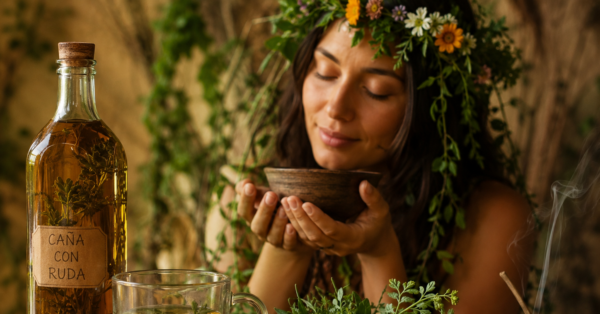
Each August 1st, thousands of people in Argentina renew a tradition that spans generations: giving thanks to Pachamama, Mother Earth. For Indigenous peoples, it is a moment of deep connection with nature, of asking for protection and abundance for the cycle that begins, but also of giving back, even symbolically, part of all that the earth provides.
Rue cane, or cane with rue, is the most widespread ritual, but it is not the only one. There are also offerings, expressions of gratitude ceremonies and simple practices that can be carried out at home. At the same time, experts remind that some customs, such as drinking rue tea, require certain precautions.
What does Pachamama Day represent?
The celebration of Pachamama Day originates from the worldview of the Andean peoples. Pachamama, or Mother Earth, embodies fertility, nature, and abundance, and is regarded as the guardian of life.
Each August 1st is a time to give thanks for the fruits received and to offer offerings to seek well-being during the new cycle. Traditionally, one of the ceremonies involves burying foods, beverages or other gifts as a symbol of gratitude.
The date also coincides with a time of year that, historically, was considered especially challenging for Indigenous peoples due to the intense cold, heavy rains, illnesses, and crop losses.
Why rue cane is taken on August 1
One of the most popular traditions is drinking rue cane, a custom inherited from the Guaraní culture that over time spread to different regions of the country, especially to the northeast of Argentina.
The Guaraní knew the properties of male rue and prepared the drink to face the month of August, when the low temperatures and epidemics affected both people and livestock.
According to tradition, rue cane helps to ward off the ills of winter, attract good luck, and protect health.
The preparation consists of letting rue branches macerate for a month inside a bottle of cane. Typically, it is prepared on July 1 to be drunk on August 1, though it can be kept for up to a year.
The ritual calls for taking it in the morning, preferably on an empty stomach.
Some traditions speak of three sips: the first in homage to Pachamama, the second to protect health, and the third to attract good fortune. Others maintain that it should be seven sips.
If you cannot complete the ritual on the first day of the month, you can still do it until August 15, provided that the drink is offered by someone who has already taken it.
What if you didn’t prepare rue cane?
If this year you didn’t manage to prepare it in advance, you can still find rue cane ready to consume in many herbal shops, health food stores, artisanal fairs, regional markets, and ventures that craft it specifically for this date.
Rue tea: a tradition that requires certain care
Another tradition many people maintain every August 1st is to drink rue tea. While it is a deeply rooted practice, specialists remind that not everyone should consume this infusion.
“Drinking rue tea is very ingrained in our country, especially in rural areas where it is more traditional. From a medical standpoint, consuming rue infusion would generally have no contraindications, except for lactating women, pregnant women, and children“, explains Dr. Gabriela Morales (MP 8117).
The specialist notes that an infusion prepared with a small amount of leaves should not cause disturbances, although she warns that concentration is a key factor.
“You must consider the amount of rue stems used in the preparation, whether you infuse or boil it, and also that plants vary in their concentration of substances throughout the year. A very concentrated tea in a substantial amount can cause abdominal cramping, gastritis, and metabolic acidosis. Therefore it is dangerous for babies and children, who are not prepared to metabolize it“, she adds.
In addition, rue tea is contraindicated for pregnant women, as it can increase uterine contractions, and for people with kidney or liver diseases.
Consumed in moderation, the specialist notes that it can be used as an infusion and that traditionally it is attributed benefits for relieving digestive discomfort, reducing inflammation, supporting cold symptoms, and promoting relaxation.
How to properly prepare rue tea
If you decide to consume this infusion, the following are recommended:
- Use fresh, good-quality water.
- Prepare it as an infusion, avoiding prolonged boiling of rue.
- Drink it warm or hot.
- If desired, sweeten with honey, lemon, or a natural sweetener.
A simple ritual to honor Pachamama from home
The art therapist and green witch Candela Carretero Rottemberg proposes a simple way to connect with the energy of Mother Earth without the need for grand ceremonies.
The specialist explains that August is an ideal moment to cultivate abundance, grounding, and personal projects.
The ritual begins by setting up a small altar with objects representing the four elements: water, earth, fire, and air. One can use a bowl of water with herbs, stones or crystals, a candle, and an incense stick.
Then, you are invited to write what the Earth has allowed you to build thus far, along with the wishes and projects for the time ahead.
The final step consists of burying that paper alongside a plant, in a pot, a garden, or any green space, as a symbolic way of sowing those intentions and thanking everything received.
You can also add natural elements such as essential oils, a herbal infusion, foods from the earth, or, for those who have already performed the corresponding ritual, the traditional rue cane.
Beyond personal beliefs, Pachamama Day invites pausing for a moment, giving thanks, and reconnecting with nature. Whether through an offering, an intimate ceremony, or a family tradition, the spirit of this date continues to invite recognizing the bond with the land that sustains life.