
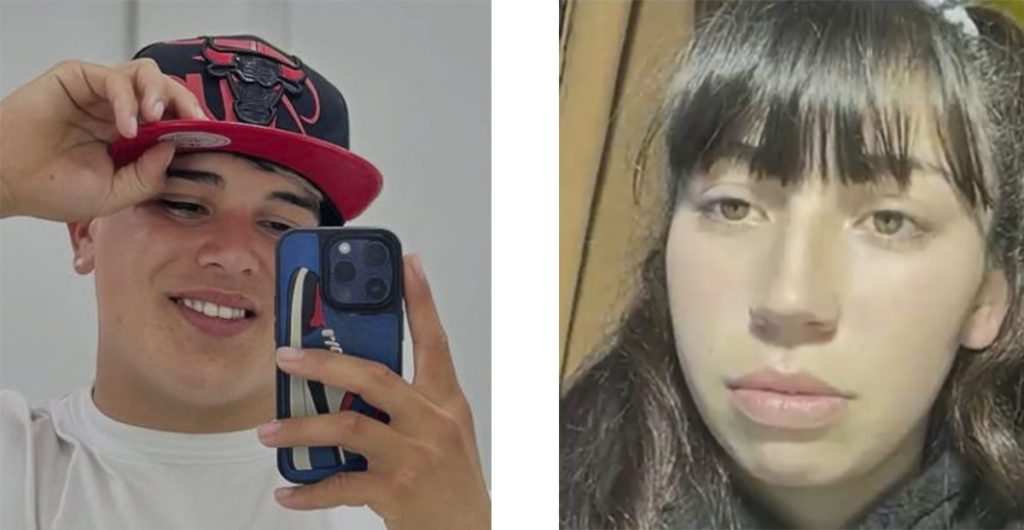
The complaint against Thiago Medina, former participant of Big Brother, was handed over to the justice system after it was filed by his cousin, Iara Agustina Ledesma, who reported alleged sexual abuse. After lodging the charge, the young woman decided to speak publicly about what she remembers of that situation and explain why she had remained silent for years.
In an interview with LAM (América TV), Iara explained that for a long time she could not talk about what happened. According to her account, one reason was the fear of the consequences it might bring within her own family.

“Afterward I stayed quiet for a long time. I kept silent until I was fifteen, which was when for the first time I could tell because I was already very unwell and this was weighing on me,” she recalled.
“There would be a lot of chaos in the family”
According to the publicly shared testimony, Iara asserted that after the episode she received a warning not to talk about what happened. In her version, Thiago would have told her that if she spoke out, “there would be a lot of chaos in the family.”
The young woman explained that this situation affected her emotional well-being and that for several years she carried what happened inside herself, unable to share it with the people around her.

Only at 15 did she manage to speak about the matter for the first time. “I was already very unwell and this was eating away at me,” she stated as she recalled the moment she finally could tell what, according to her complaint, had happened.
Iara’s account of the episode
As she reconstructed the episode during the televised interview, Iara remembered that she was in her room. “I was lying in my room, when Thiago was with my brother,” the now-19-year-old recalled. The abuse occurred when she was 12 and her cousin was 16.
From there, she described a situation that, according to her complaint, would have involved sexual contact that she did not consent to.

The case is now in the judicial arena, where the elements included in the report will have to be analyzed and the circumstances under which the alleged events occurred will be determined.
A complaint that the Justice System must now investigate
Iara’s filing brought the case to the judicial field and opened a new phase to clarify the episode that the young woman chose to make public after years of silence.
Her testimony also highlighted the gap between the alleged event and the moment she was able to speak to trusted people. She explained that during that period she endured the consequences of that experience in silence.

As the investigation proceeds, the young woman’s narrative constitutes one of the elements that will need to be evaluated alongside the rest of the evidence and testimonies that may be added to the case file.
For now, this is an accusation and the investigation must determine what happened. The complaint does not by itself indicate that the alleged facts have been proven in court.