
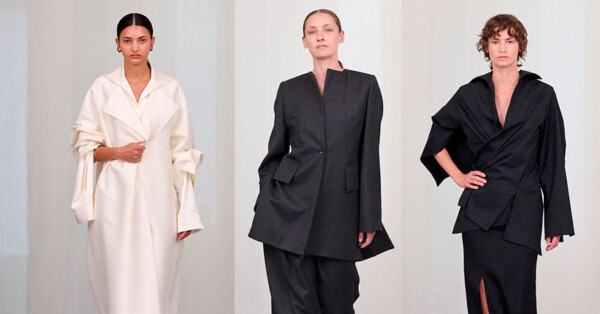
During a Copenhagen Fashion Week colored by layers, color-blocking, and the playful spirit of Scandinavian style, Freya Dalsjø chose to keep silent. Her Spring/Summer 2027 collection did not seek to conquer the runway with speed or immediate wow moments: it proposed stopping, looking closely, and rediscovering the value of a well-constructed garment.
The show took place on August 3 at Etage Projects and was part of Copenhagen Fashion Week’s official schedule. The models moved slowly, almost as if taking part in a ceremony, to allow materials, textures, and artisanal techniques to take center stage.
Freya Dalsjø and a collection between the extreme and the serene
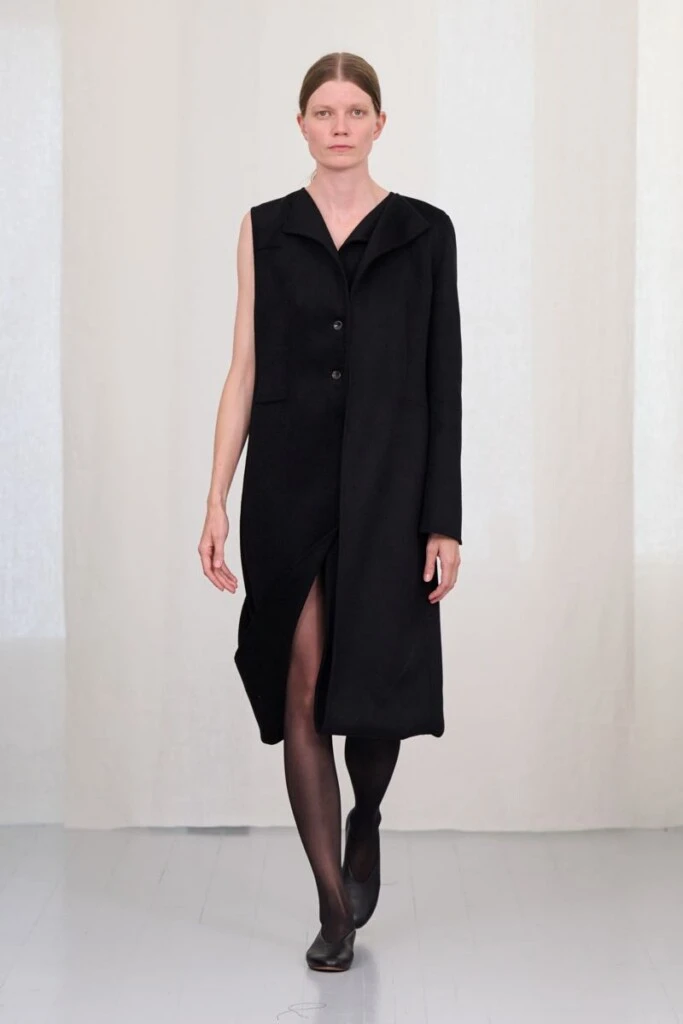
The collection moved between two poles. It began and ended with highly impactful designs, while in the central stretch it moved toward a minimalism so pared-down that at times it took on an almost monastic aesthetic.
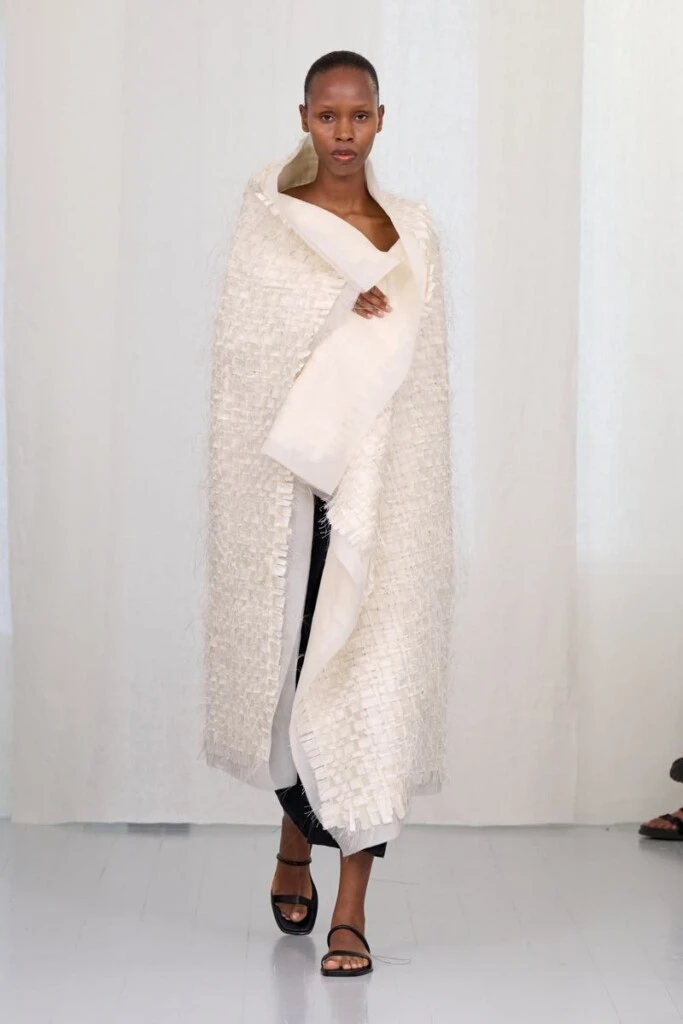
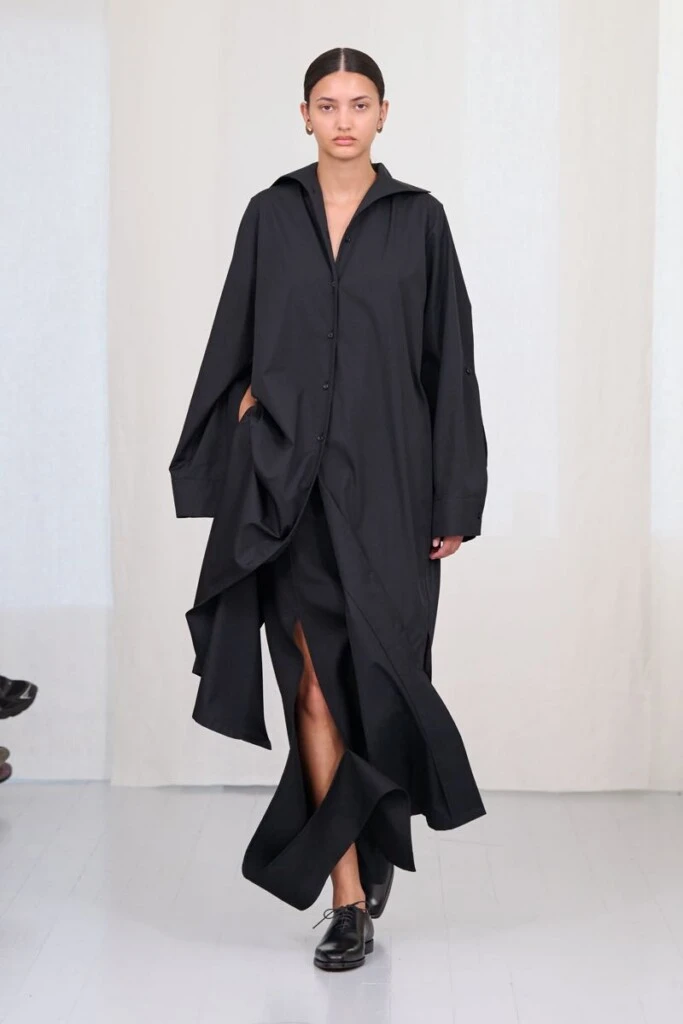
However, it was not a cold proposition. Behind each austere form lay an exploration of materials, movement, and the relationship between clothing and the body.
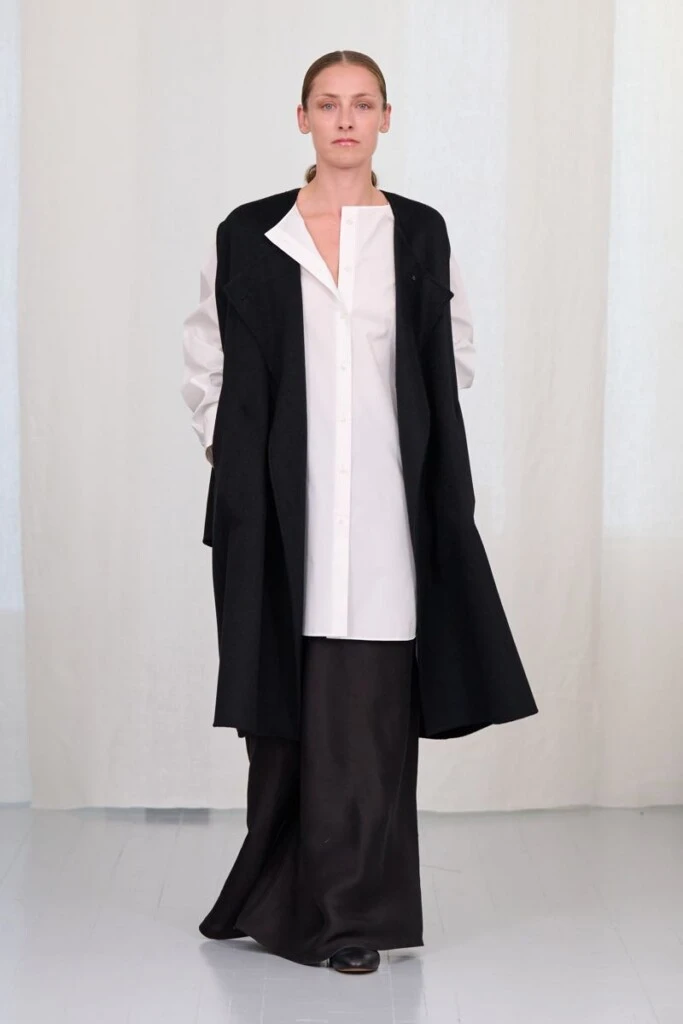
The designer explained that she aimed to build a wardrobe made up of more everyday, easy-to-wear pieces, yet infused with her experimental perspective. The starting point was familiar garments—shirts, dresses, coats, and trousers—transformed through small design gestures. (Vogue)
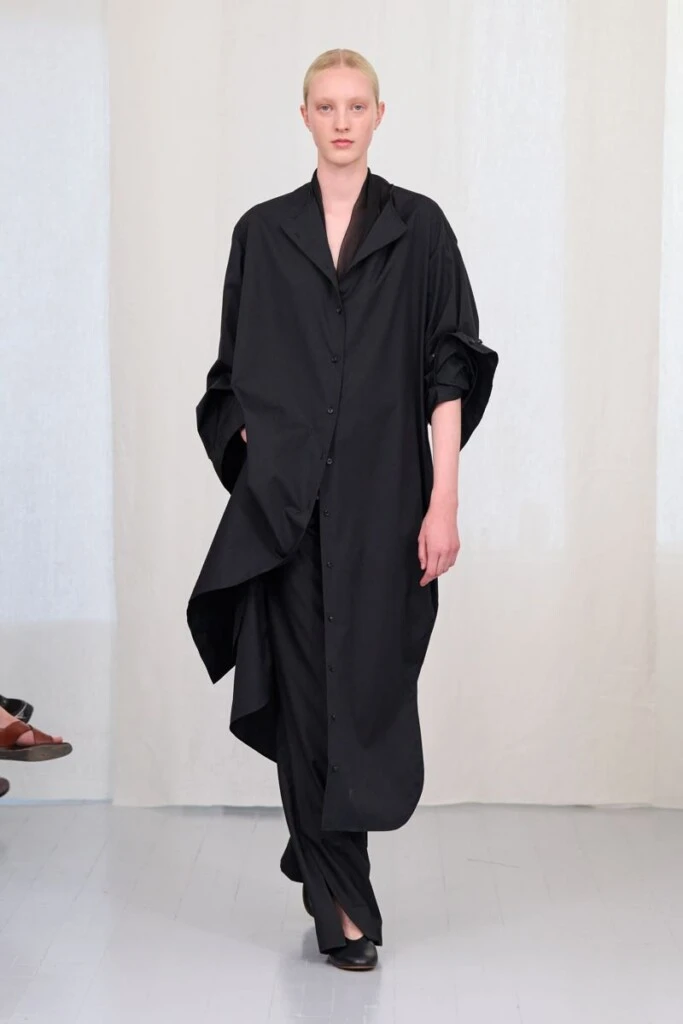
The shirt alters its rules
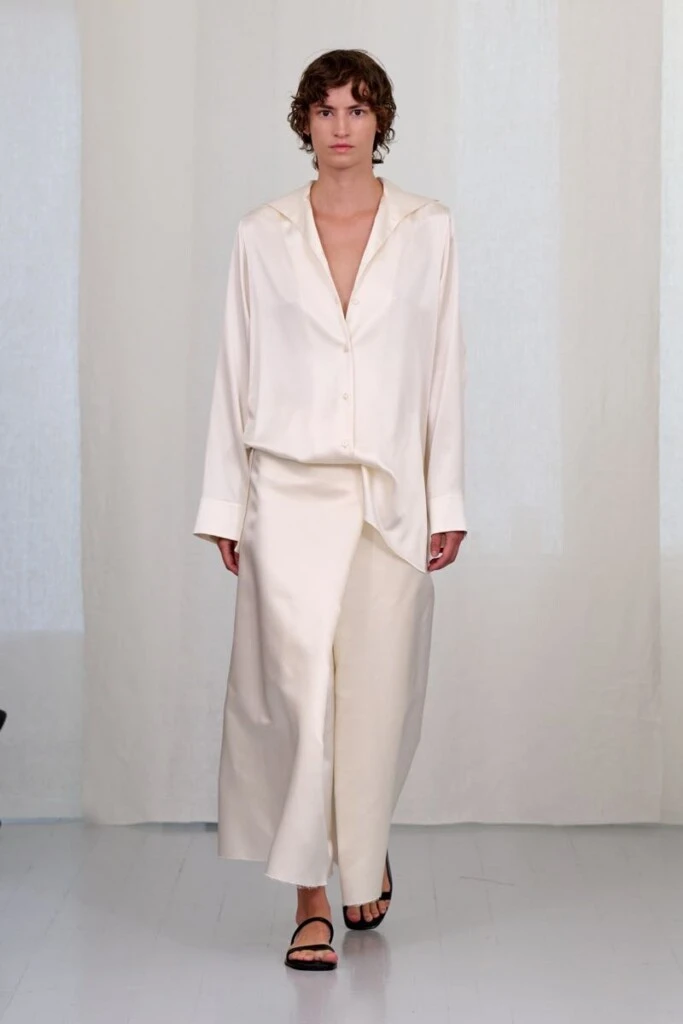
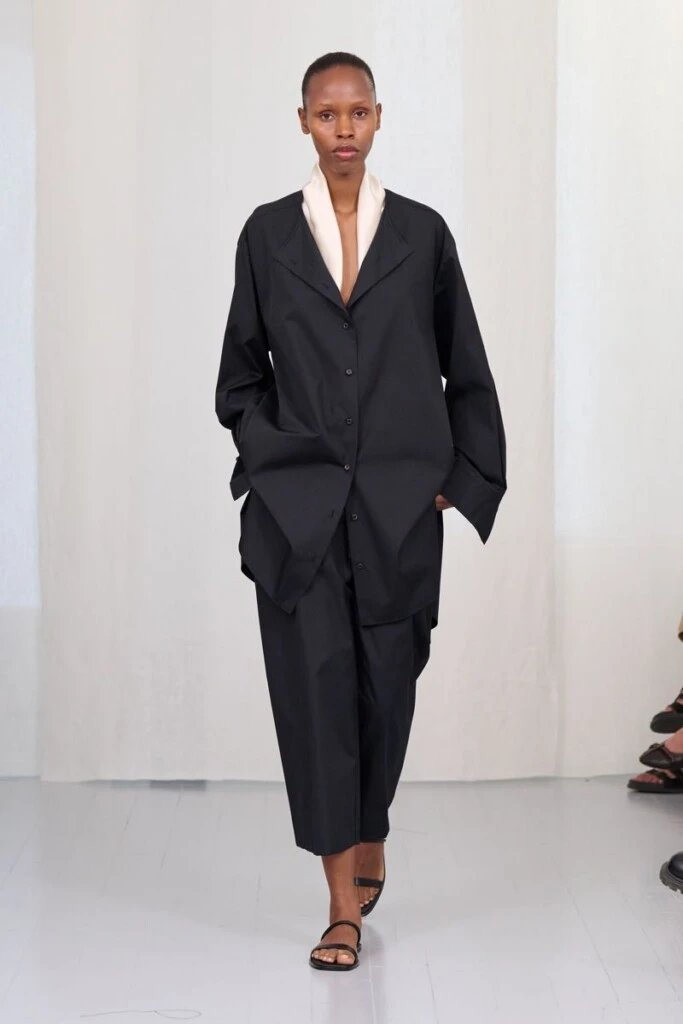
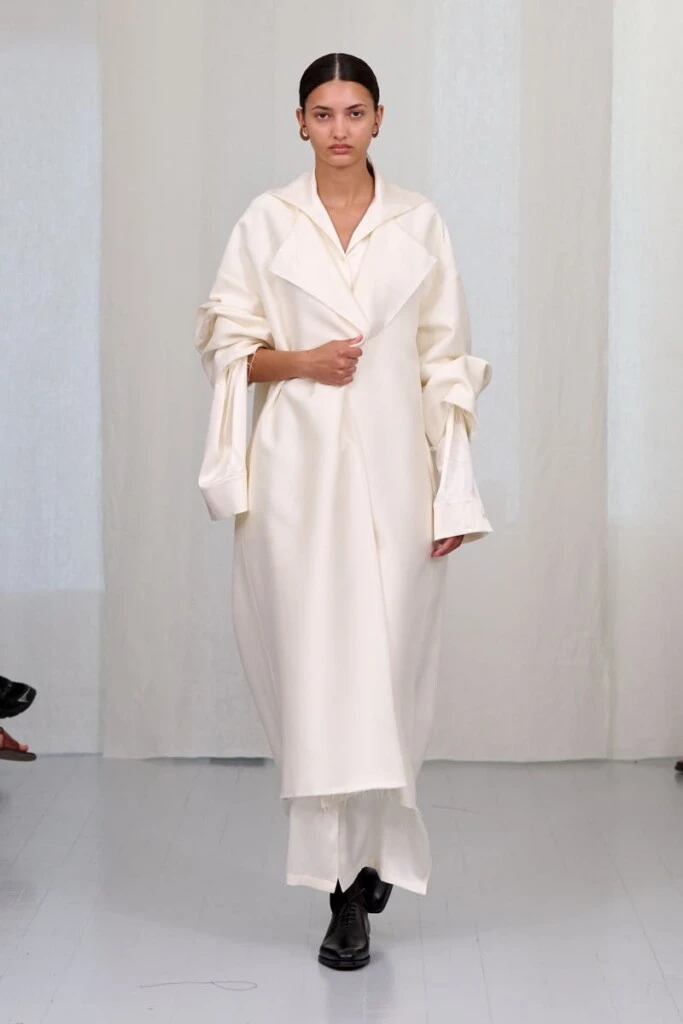
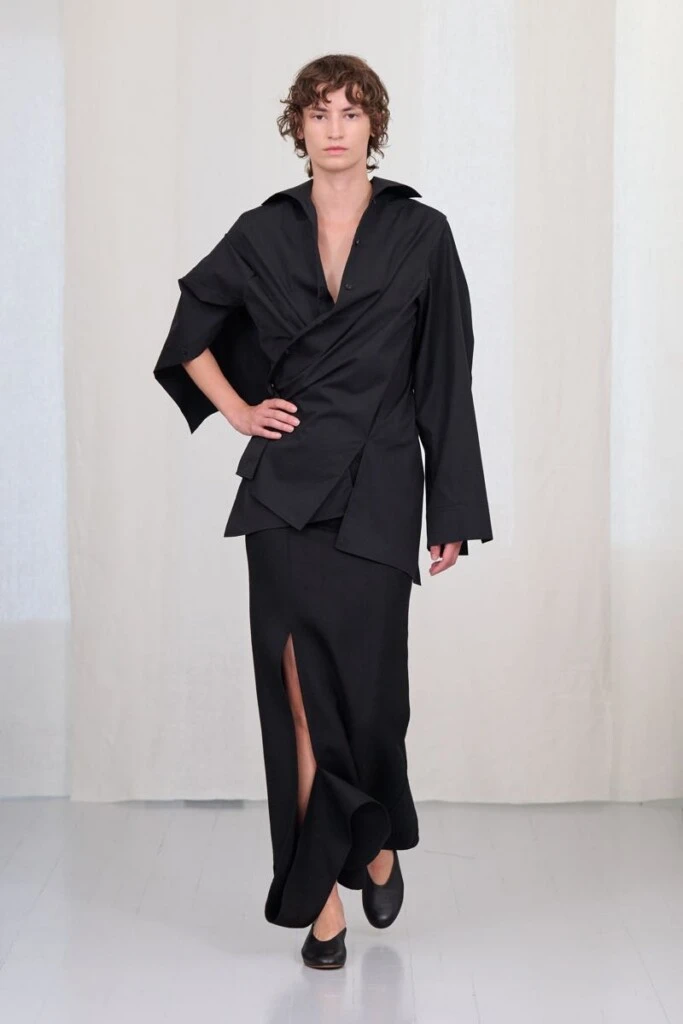
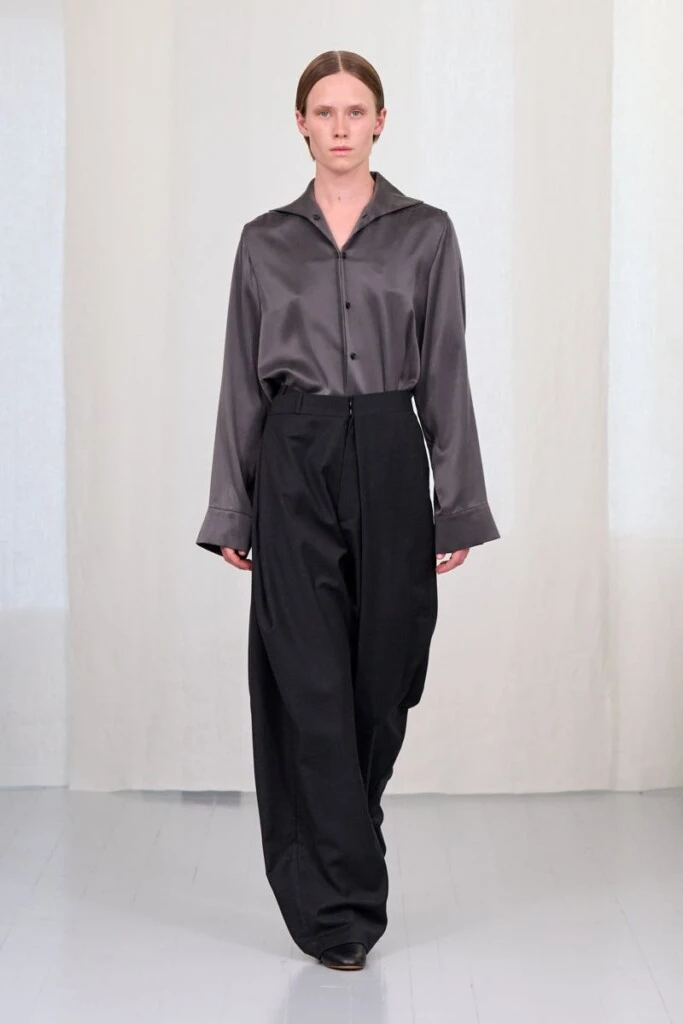
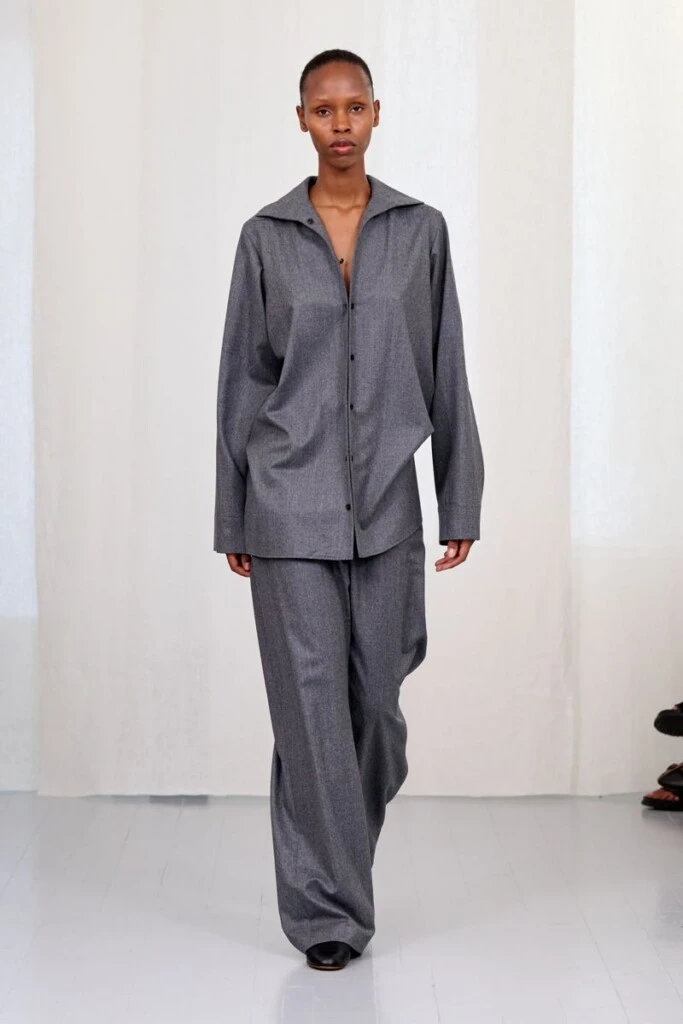
Shirtmaking was one of the pillars of the Spring/Summer 2027 collection. But Freya Dalsjø’s pieces were far from adhering to the classic structure of a men’s shirt.
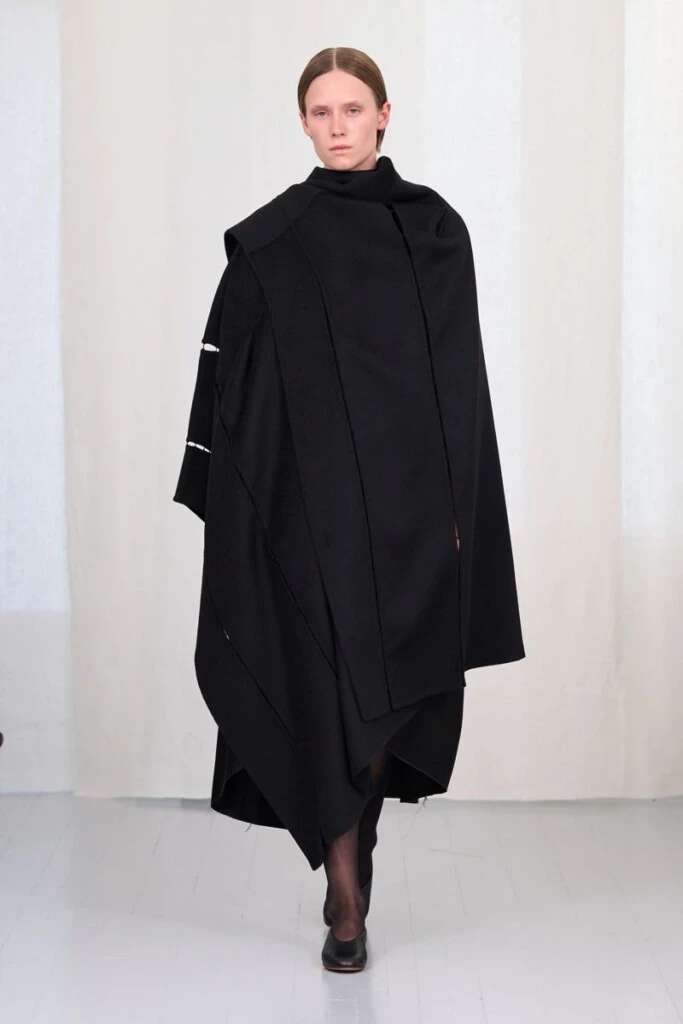
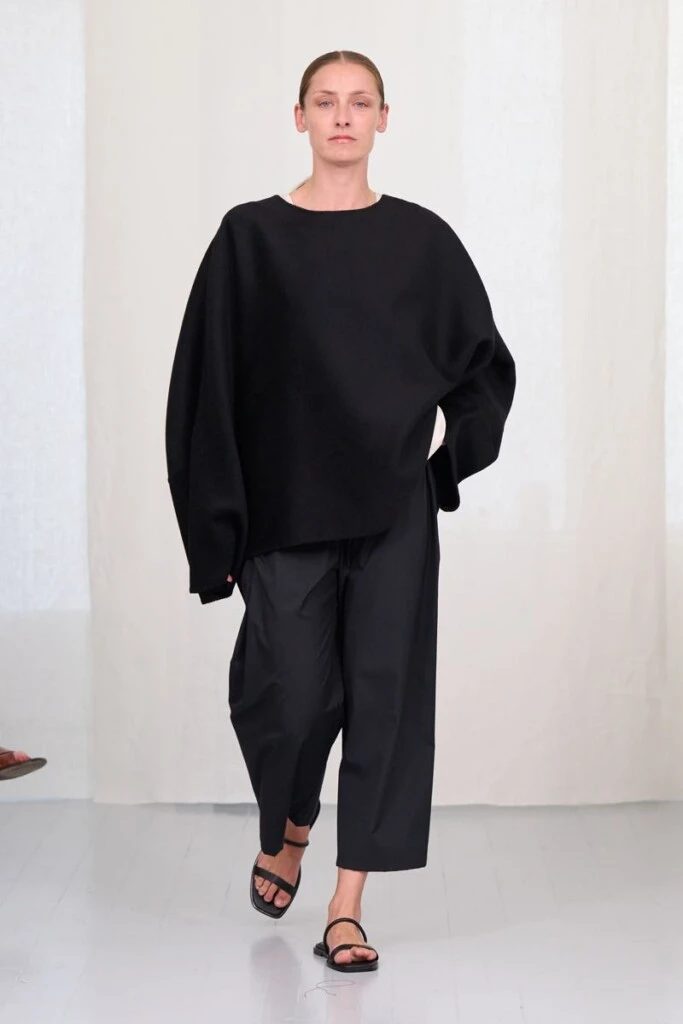
Buttons positioned on the sleeves and at the center of the back allowed altering the shape of the garments, opening and closing them in different ways. That system not only offered various ways to wear them—it also blurred the boundaries between the front and the back, the inside and the outside, skin and fabric.
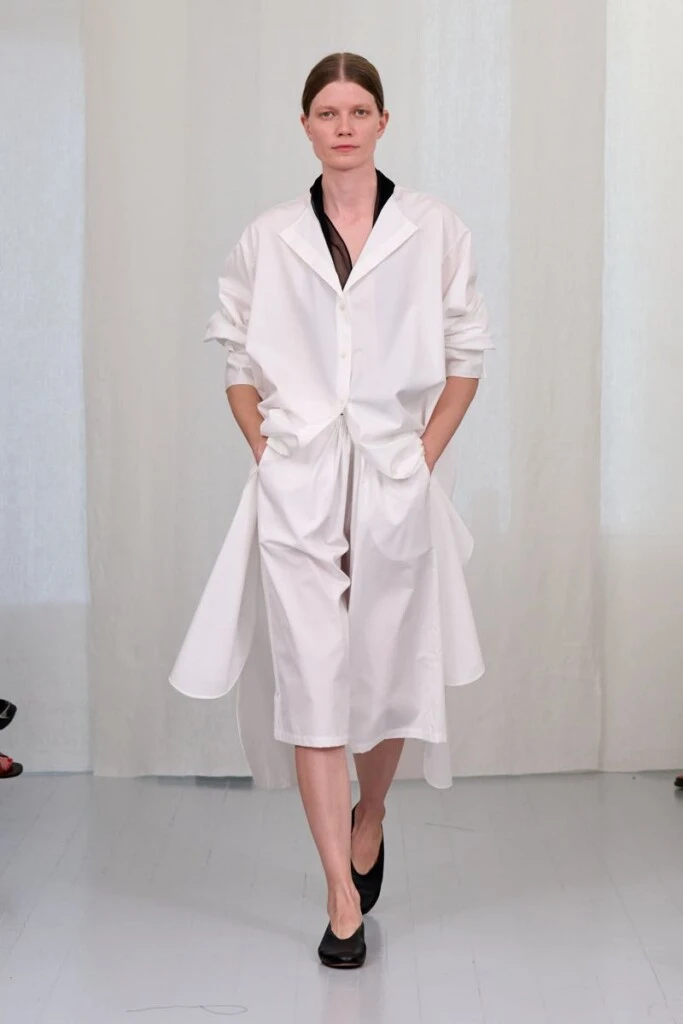
The openings let air in and reveal fragments of the body without resorting to obvious sensuality. The proposition showed that a garment can transform itself from a seemingly simple detail.
Ethereal dresses and coats that wrap the body
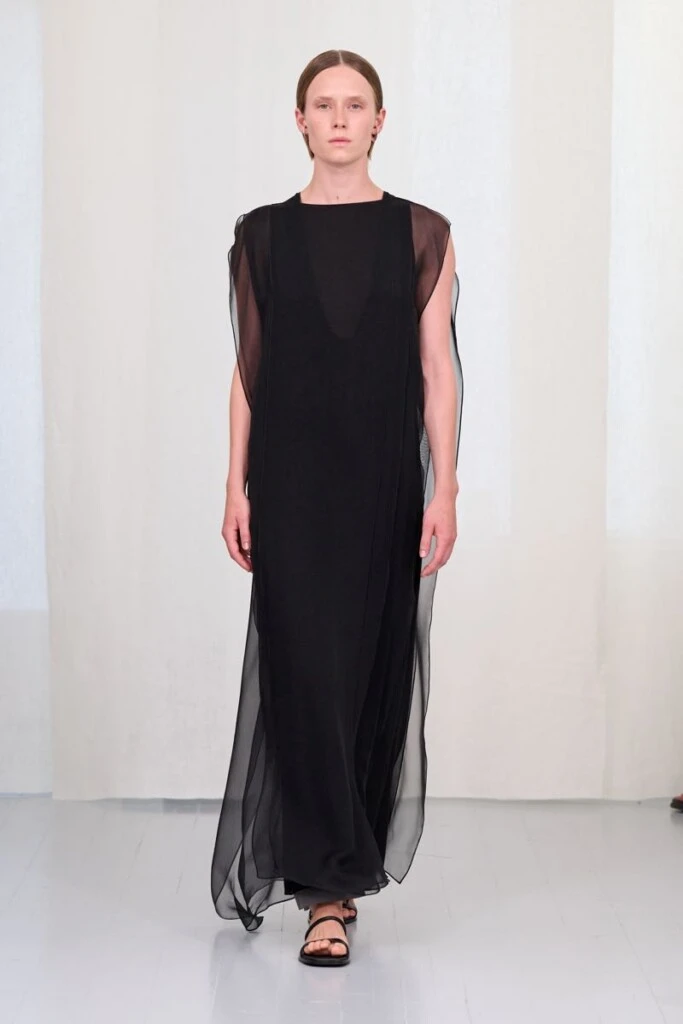
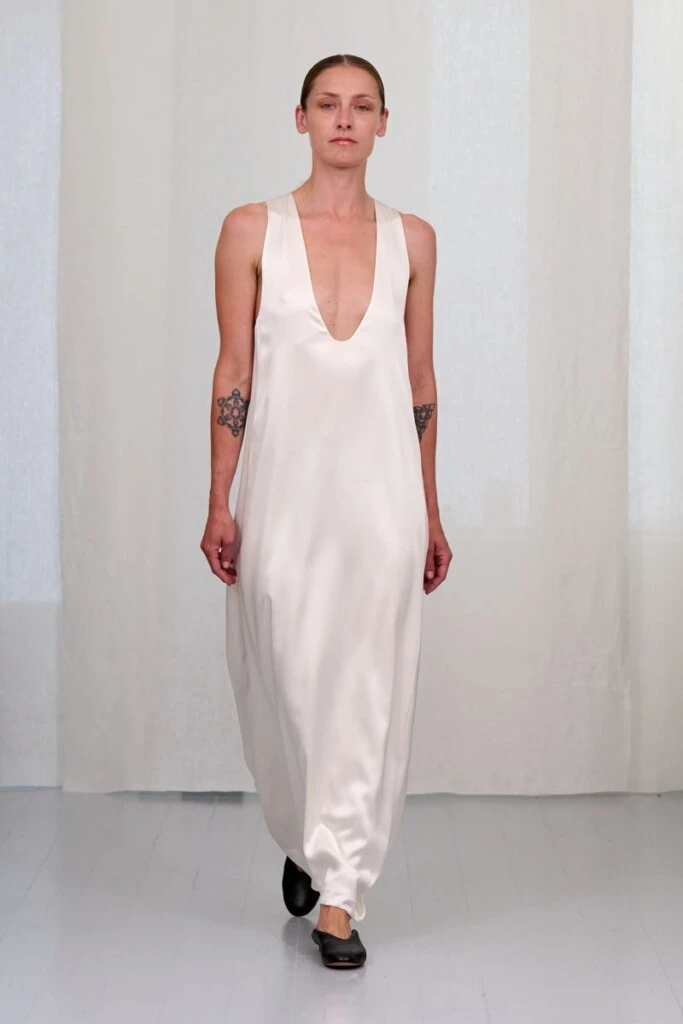
Lightness appeared in a nearly transparent black dress that came alive with movement and in a slip dress with a liquid fall, whose purity echoed the minimalist aesthetics of the nineties.
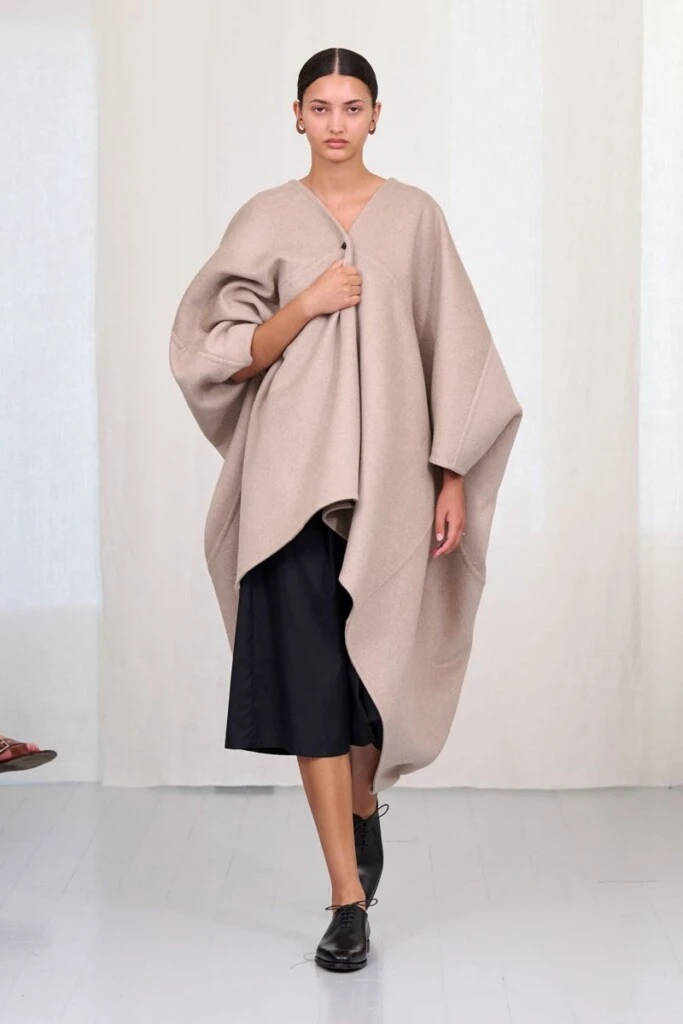
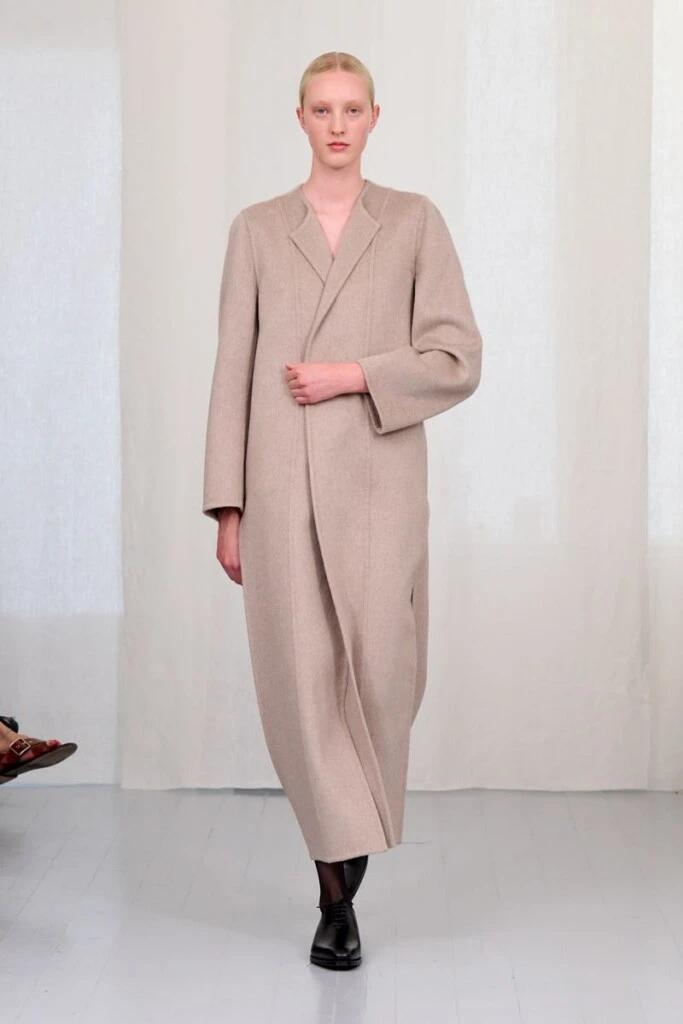
At the opposite end emerged coats crafted from two-faced cashmere. The surface density was so intense that visually it could recall suede. The material was worked into lightweight overcoats and large enveloping silhouettes that protected the body like cocoons.
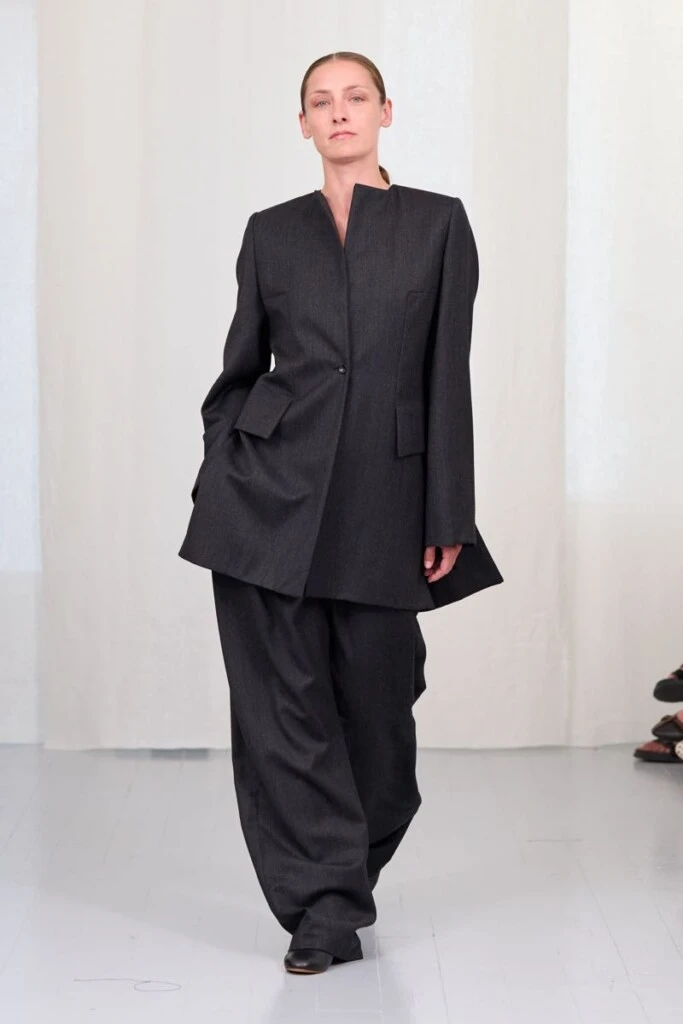
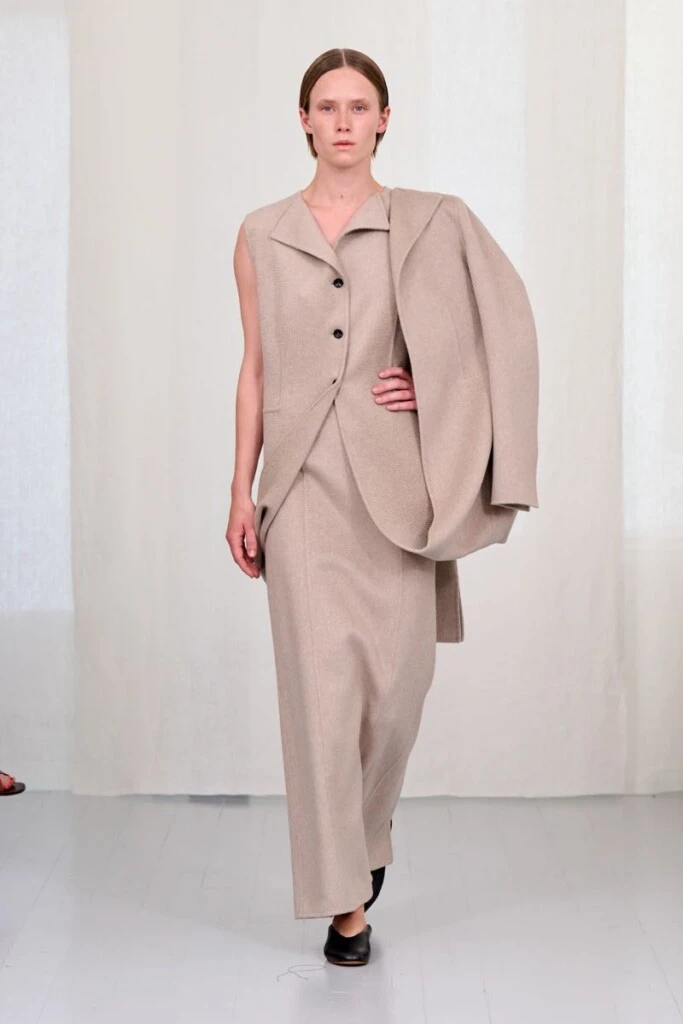
Trousers with inclined waistlines appeared, both at the front and back. In another design, an expansive piece of sand-colored fabric folded onto itself to become both a vest and a blazer.
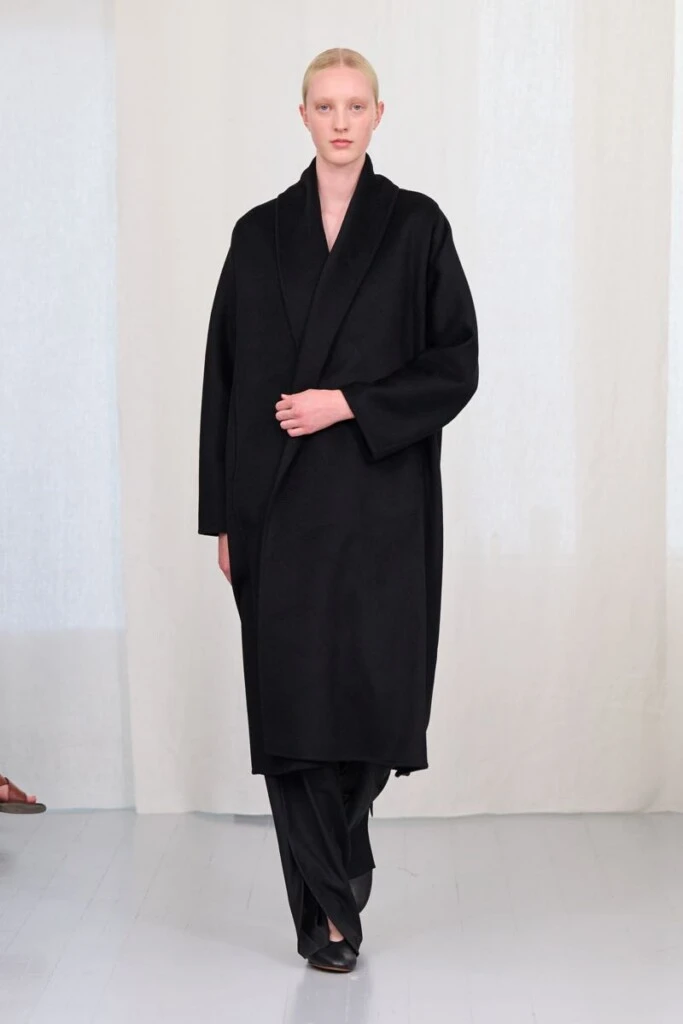
That mix of lightweight dresses and outerwear suited to cooler climes confirmed one of the designer’s central ideas: to create garments that do not rely strictly on a season and can remain in the wardrobe beyond trends.
Handcrafted fabric turned into sculpture
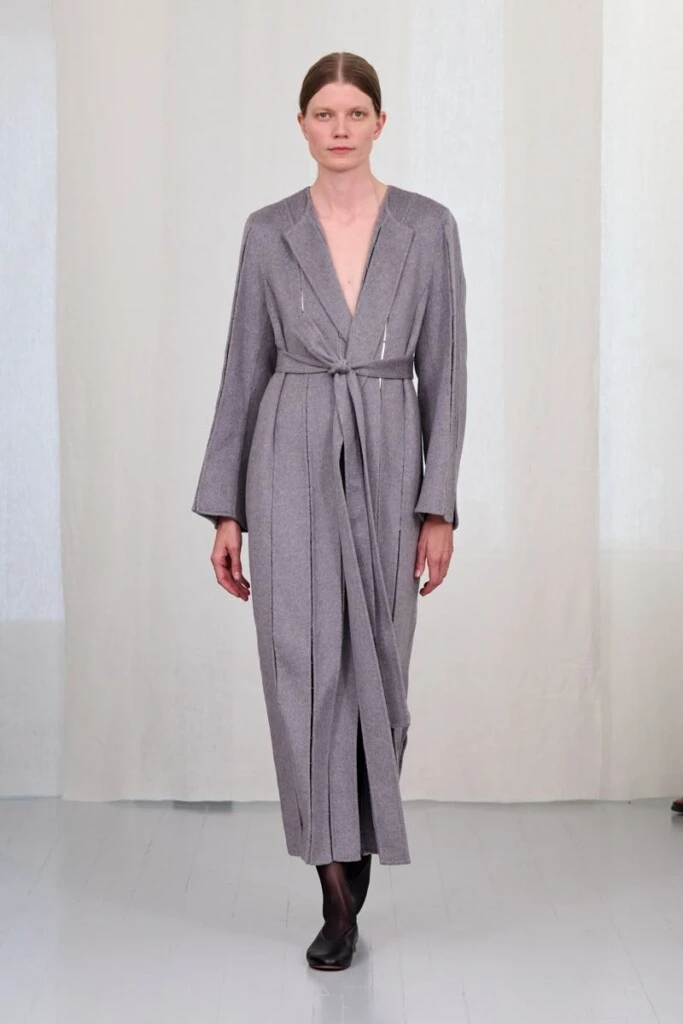
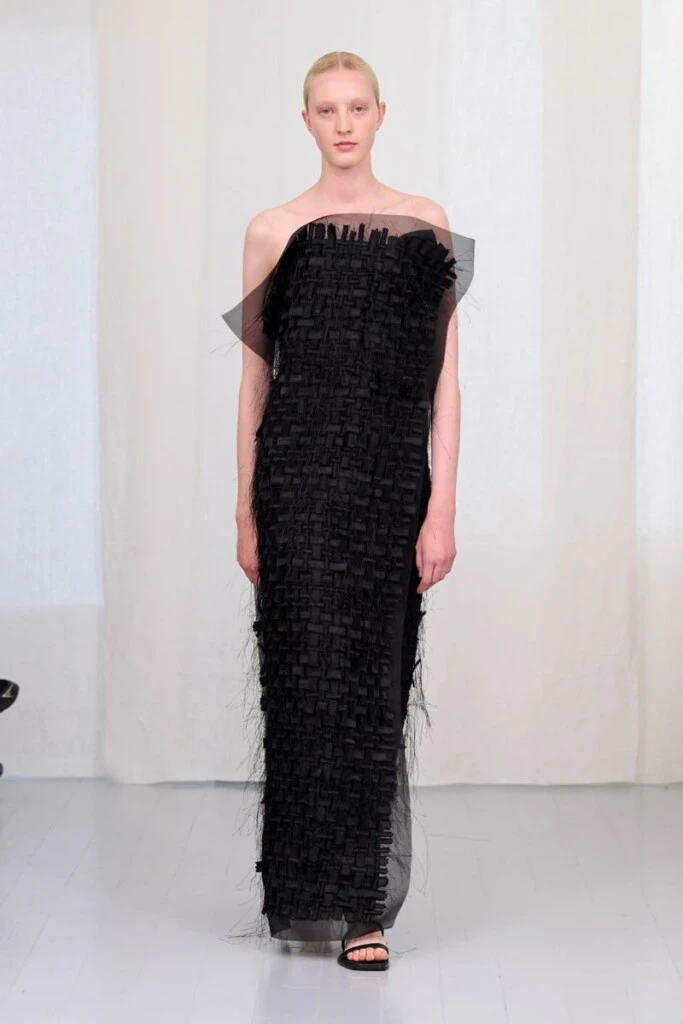
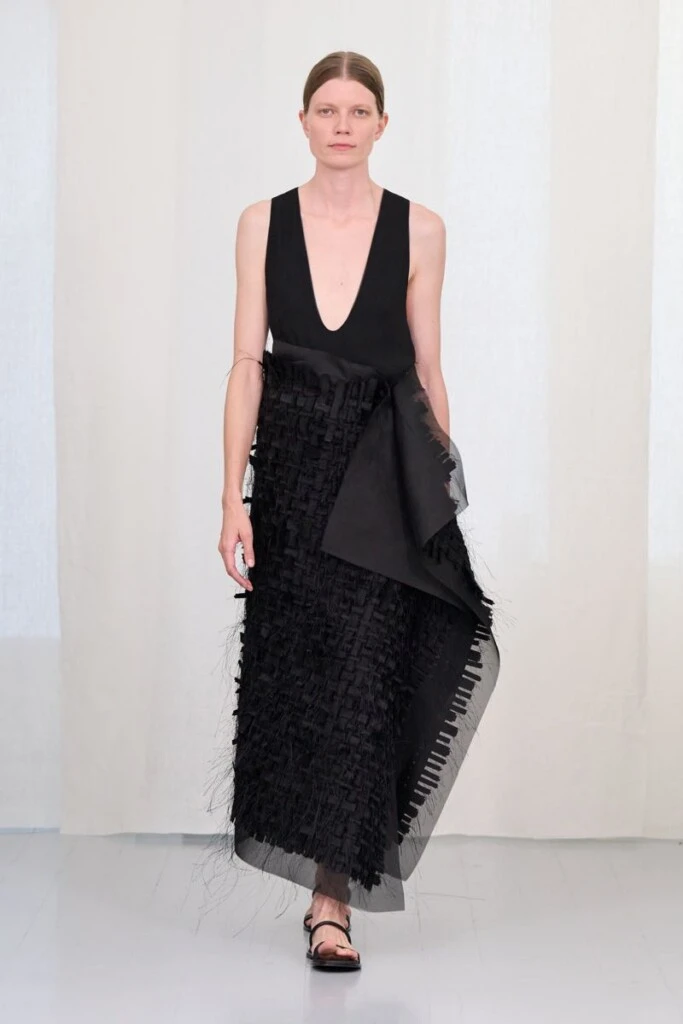
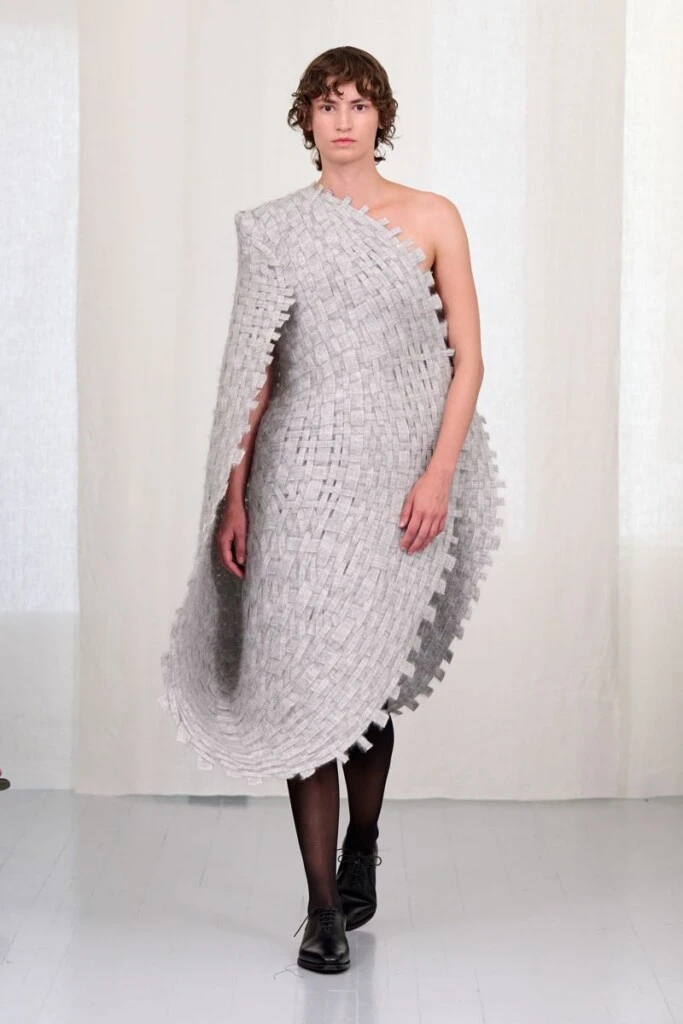
The collection’s most experimental work was linked to a technique similar to basket-weaving.
Freya Dalsjø cut and frayed small strips of fabric to build a new woven material. Then the structures were combined with large expanses of delicate organza, which wrapped the body with the ease of a blanket.
One piece drew on the weave of a summer hat. But the technique found its greatest expression in the final look: a large three-dimensional construction made of soft wool, whose geometry recalled the orderly spiral of a seashell.
The designer worked directly on a mannequin from February until the day before the show. More than the traditional assembly of a gown, the process functioned as a technical experiment to determine whether it was possible to construct a complete garment by interlacing the strips.
The result was a sculptural, complex piece that closed a collection mostly composed of discreet garments far from spectacle.
Freya Dalsjø’s silent luxury
The label, developed by Freya Dalsjø together with Karis Dalsjø and Mikkel Schou, specializes in complex artisanal techniques and works with natural materials such as wool, cashmere, silk, leather, and silver. In this collection, the collaborative creative relationship between Freya and her mother—part of the project’s identity—again played a central role.
The true luxury of the proposal did not lie in logos, recognizable trends, or viral accessories. It lay in the time invested, the texture of a fabric, a back that could open with buttons, and a piece woven over months directly on a mannequin.
After the show, the collection was reintroduced in an exhibition that allowed close viewing of the garments and an opportunity to learn about the techniques used by the team. The project was supported by the Danish Arts Foundation, reinforcing the dialogue between fashion, design, and artistic practice.
A runway that forced a slower pace
While much of the industry moves at the pace of constant novelty, Freya Dalsjø proposed the exact opposite: to look more slowly.
The models’ slow stride may have drained energy from the traditional show format, but it also transformed the presentation into a contemplative experience. Each texture had time to appear, each fold could unfold, and every garment revealed details that likely would have gone unnoticed at a faster pace.
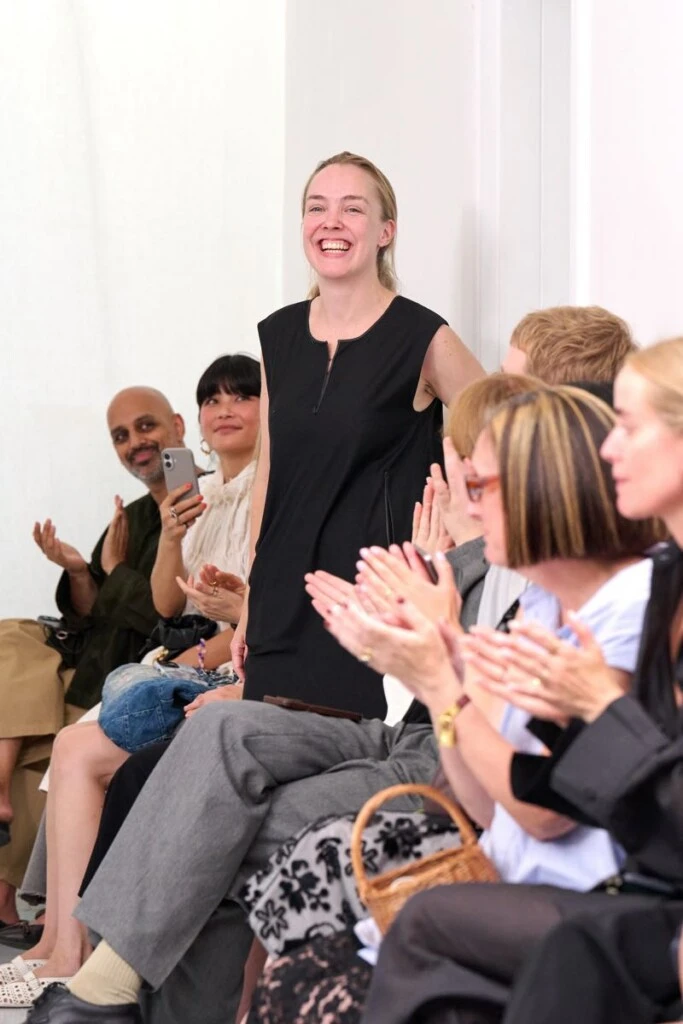
With her Spring/Summer 2027 collection, the Danish designer demonstrated that minimalism does not necessarily mean simplification. Sometimes, behind the most serene form lies the most complex process.