The irreverent energy of downtown New York landed in Copenhagen. Collina Strada, the label founded by Hillary Taymour in 2008, unveiled its Spring-Summer 2027 collection at Operaparken, the landscaped park beside the Copenhagen Opera House.
The runway, threaded with paths, wild vegetation and a warm golden late-day light, was not merely a backdrop. It became part of a narrative that fused romance, textile experimentation, and environmental awareness.
The collection presented 27 looks and confirmed that sustainability can be exuberant, sensual, playful and deeply artisanal.
Collina Strada, the first guest of the new international program
The American label was chosen to inaugurate the International Guest Slot, the new international guest space at Copenhagen Fashion Week, propelled in partnership with The Climate Pledge.
The participation took place during the twenty-year anniversary of the Danish fashion week, recognized for turning sustainability criteria into a condition for inclusion in its official calendar. The choice of Collina Strada was not accidental: from its beginnings, the brand has worked with reused materials, responsible production, and a narrative that questions the traditional structures of the industry.
For Taymour, Copenhagen represented the possibility to try something new without leaving New York. The show didn’t mean a move to Europe, but an opportunity to present the brand’s identity to another audience and to experiment without the pressure of a collection destined for immediate store production.
From bridal white to black dresses
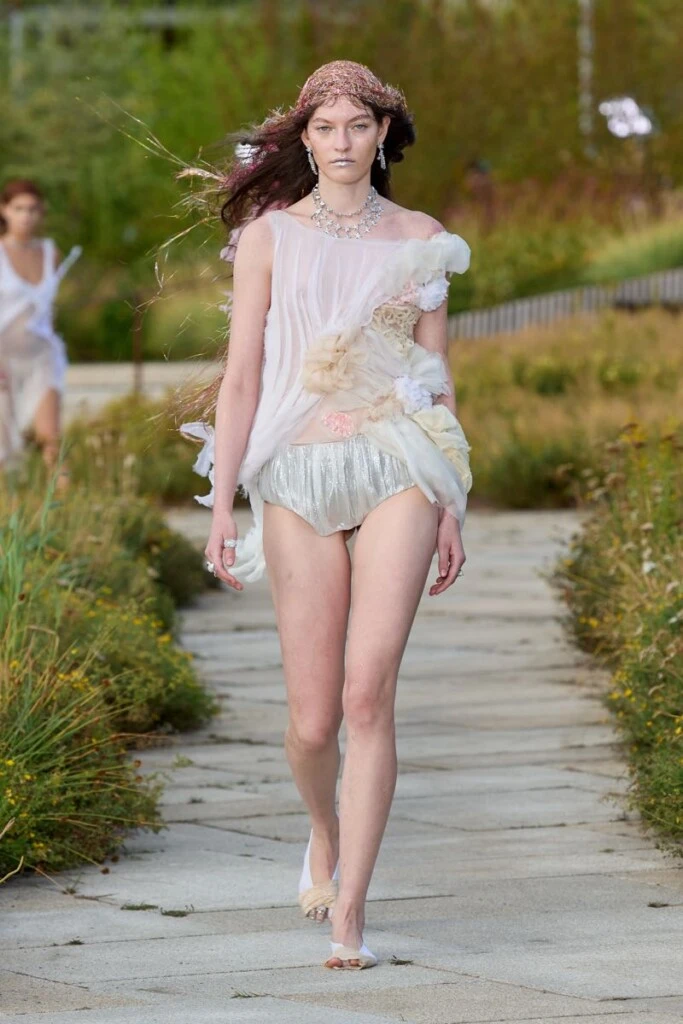
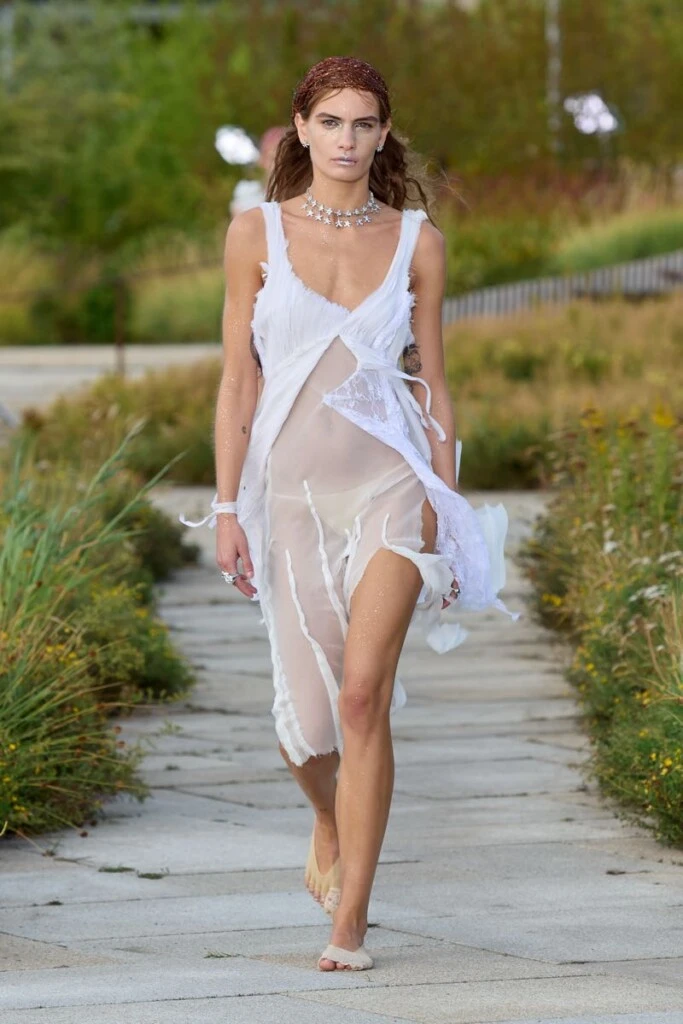
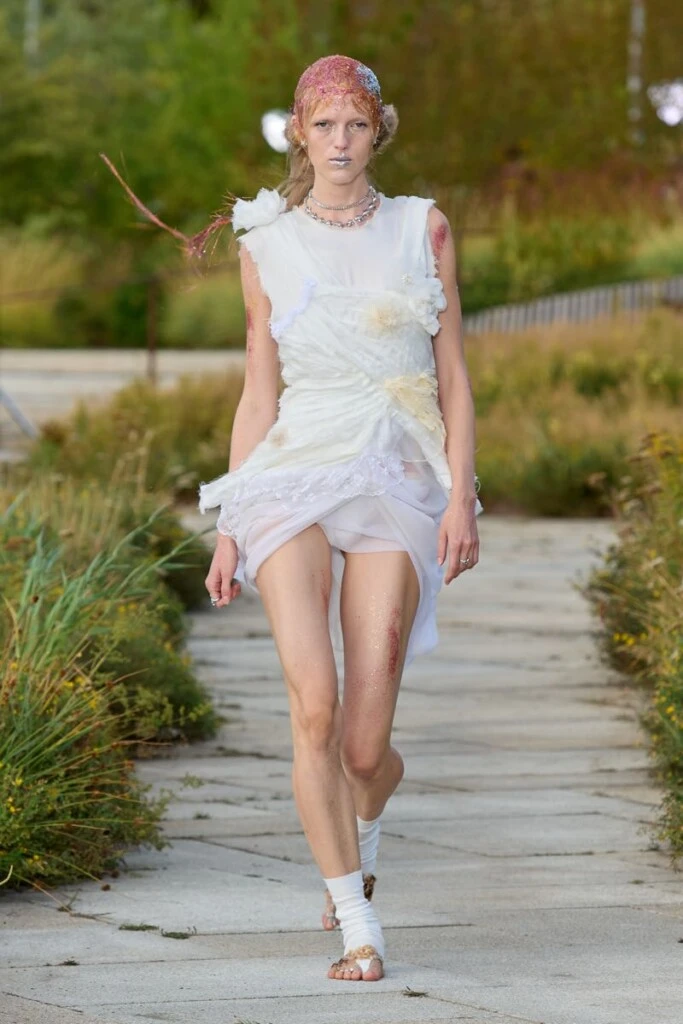
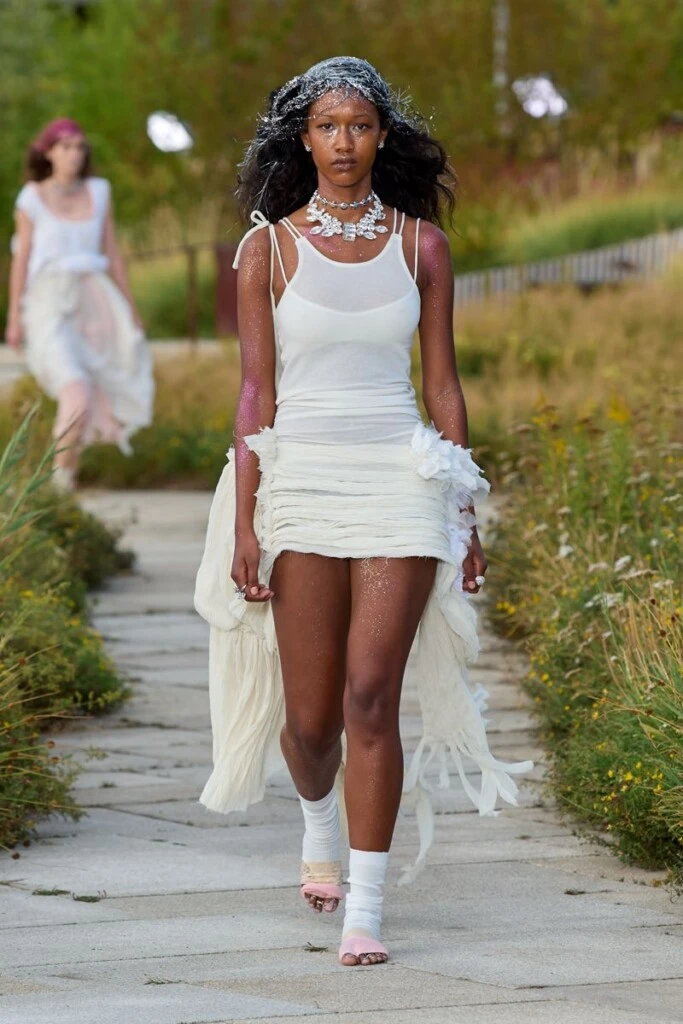
The collection opened with a sequence dominated by white, ivory and pearl-gray tones. Sheer dresses appeared, visible corsetry, pieces with deliberately irregular finishes, and puffed shorts recalling vintage bloomers or Victorian underwear.
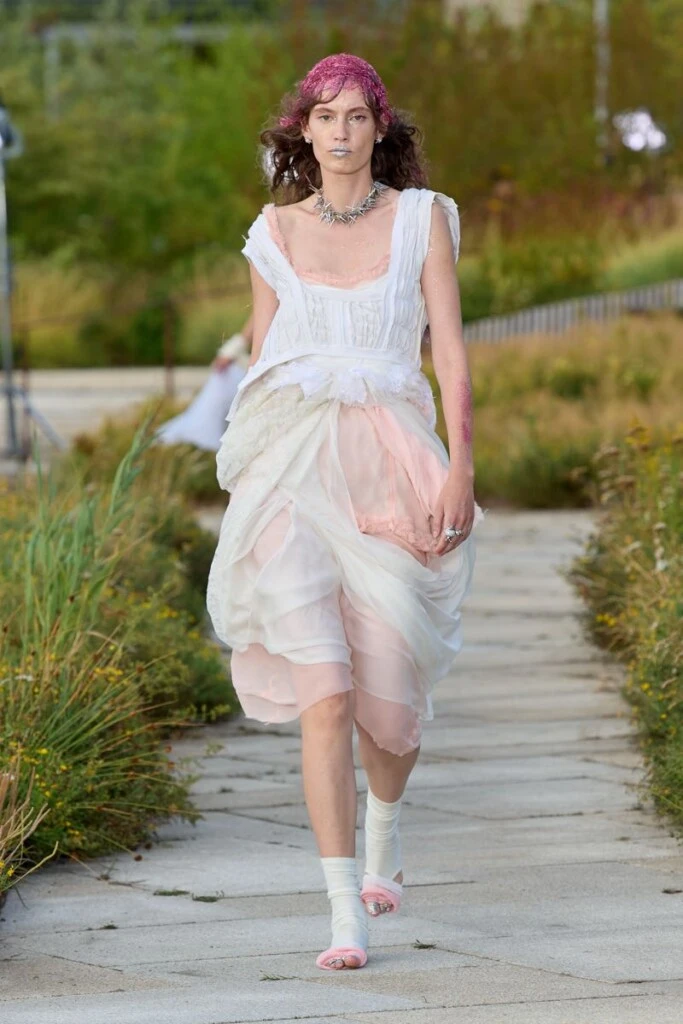
The dresses seemed built from fragments: layered gauzes, floating fabric strips, appliquéd flowers, sheer panels and drapes that moved with the wind. Nothing looked rigid or overly finished. That fragile-looking quality was part of Collina Strada’s language.
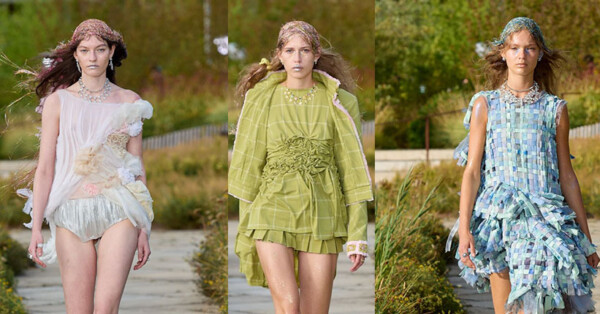
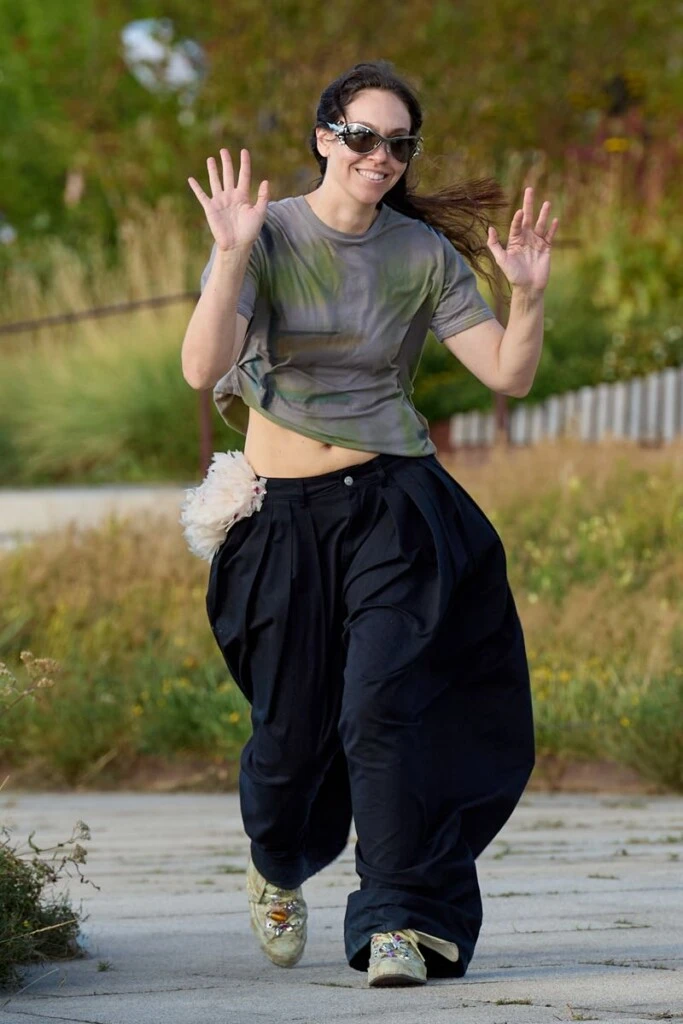
Romanticism soon began to mingle with more urban pieces. Oversized cargo pants were paired with knitted tops, shiny corsets and garments created through layers of ribbons. There were also stripes, green plaids, embroidered shorts, metallic fabrics and skirts with irregular volume.
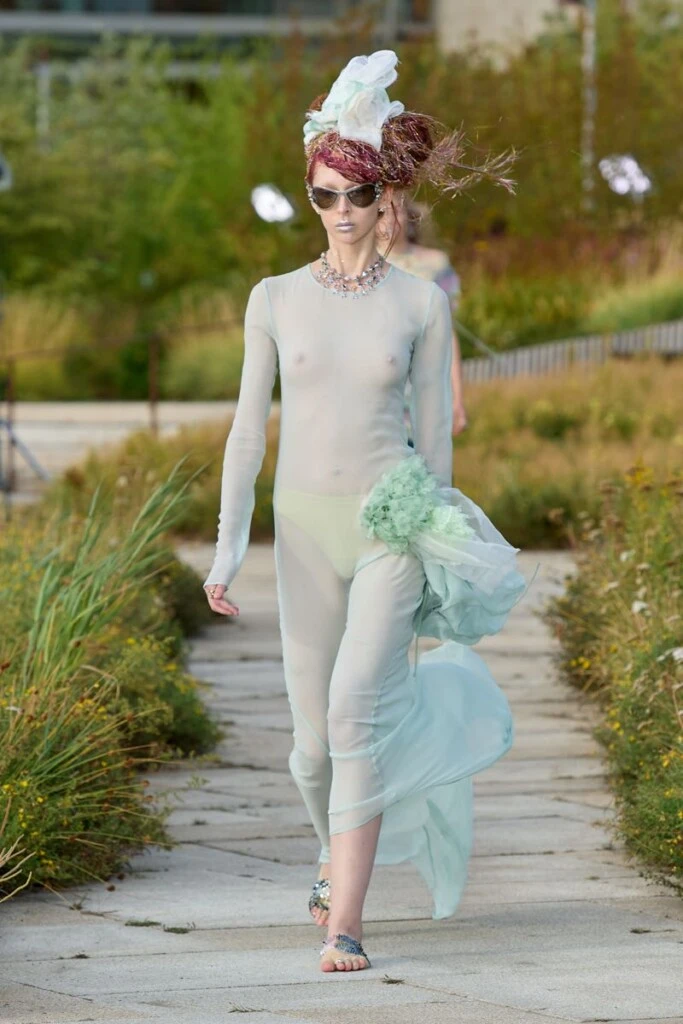
The palette shifted from almost bridal whites to muted greens, faded pinks and earth tones, culminating in an entirely black block. There emerged lingerie dresses, sheers, wide-leg pants and dramatic voluminous skirts that revealed the collection’s darker, ceremonial side.
A collection where fabric took center stage
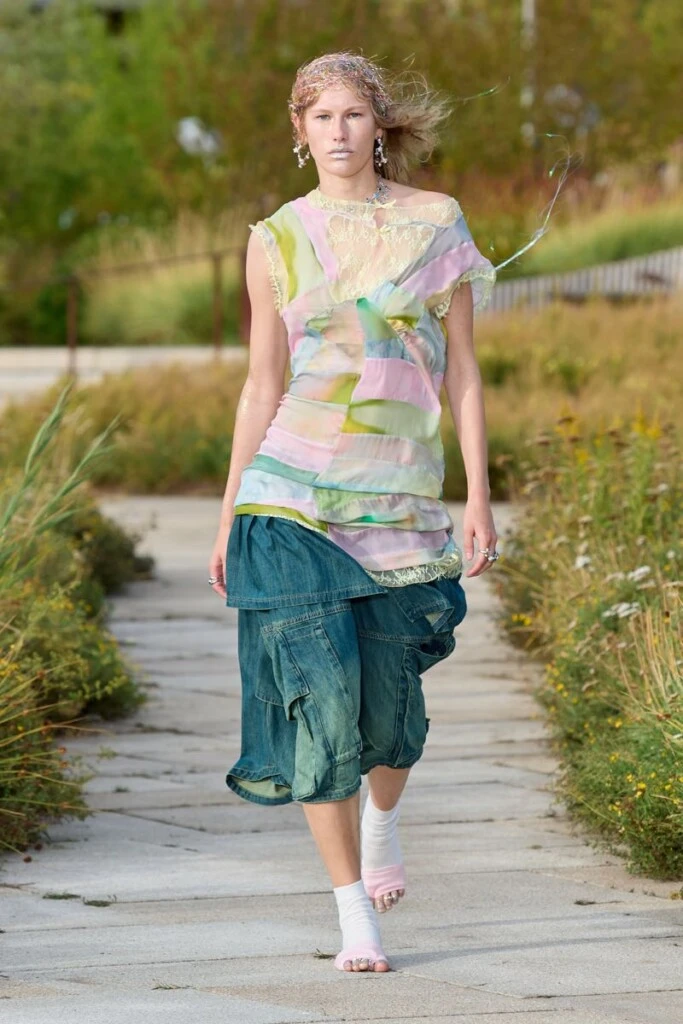
More than designing a grand set, Hillary Taymour chose to focus on building each garment. The team experimented with fabrics, layering of textiles, and embellishments created specifically for the collection.
Some fabrics required more than a month of labor before becoming clothes. That dedication was especially evident in a dress formed by interwoven little ribbons, in tops with irregular textures, and on surfaces that seemed to be made from hundreds of fragments joined by hand.
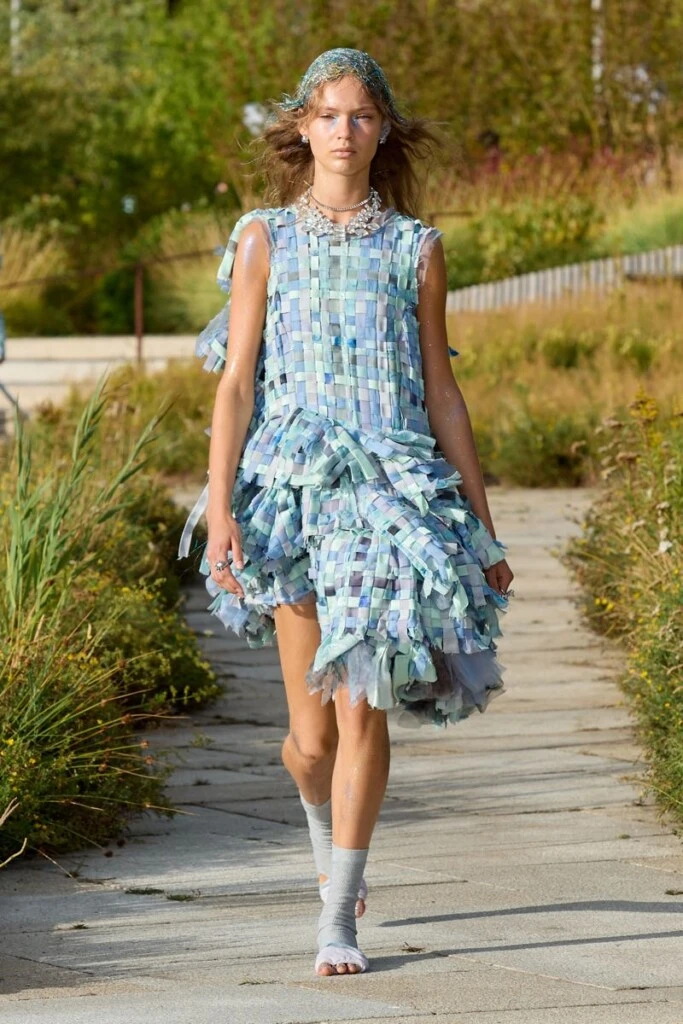
“Copenhagen gave me the freedom to slow down and concentrate on those details,” Taymour explained before the show. The designer defined the experience as a celebration of the process rather than the pursuit of a conventional spectacle.
Couture made from what already existed
Unlike the ready-to-wear collection that Collina Strada will present in September in New York, the pieces created for Copenhagen were not conditioned by price points or by the need to produce on a large scale.
Taymour turned to leftover materials and old fabrics stored in the studio to develop unique pieces, available only by order. The designer described this approach as a kind of “Collina couture”: more elaborate pieces designed for red carpets, fashion editorials, celebrities and stage wardrobes.
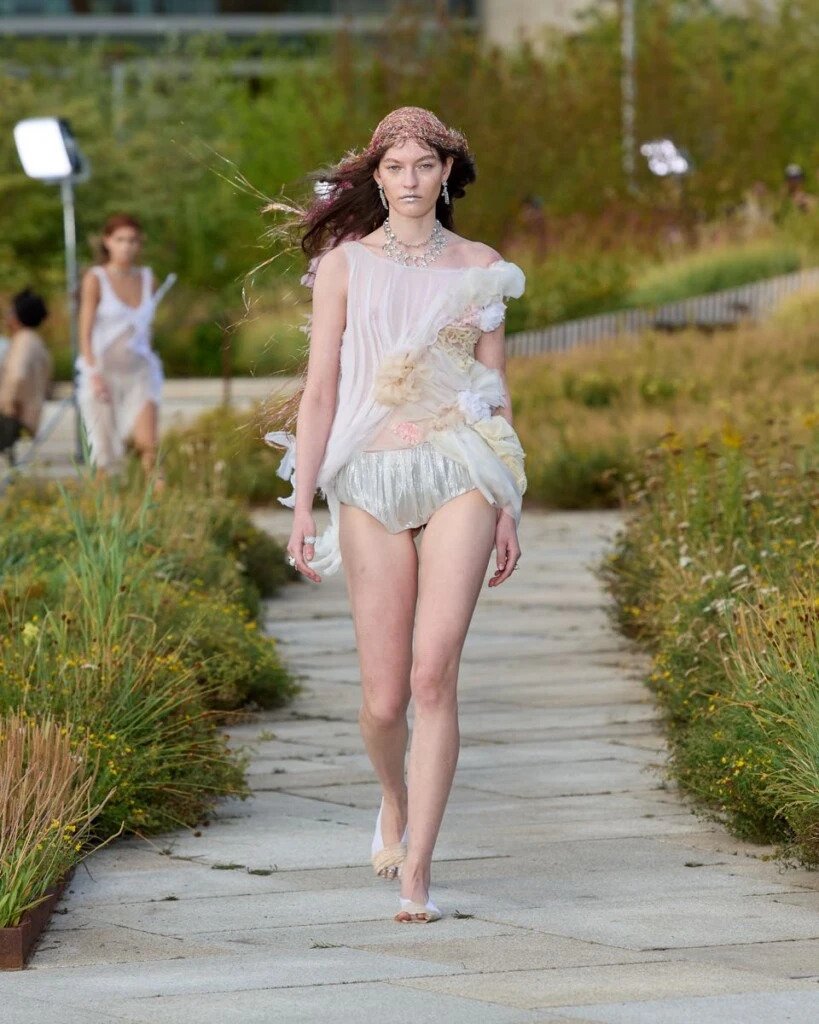
Sustainability, however, did not appear as austere aesthetics nor as solemn rhetoric. It manifested through transformation: a forgotten fabric could become a gala dress; several ribbons could create a completely new surface; and scraps could take the form of flowers, feathers or sculptural volumes.
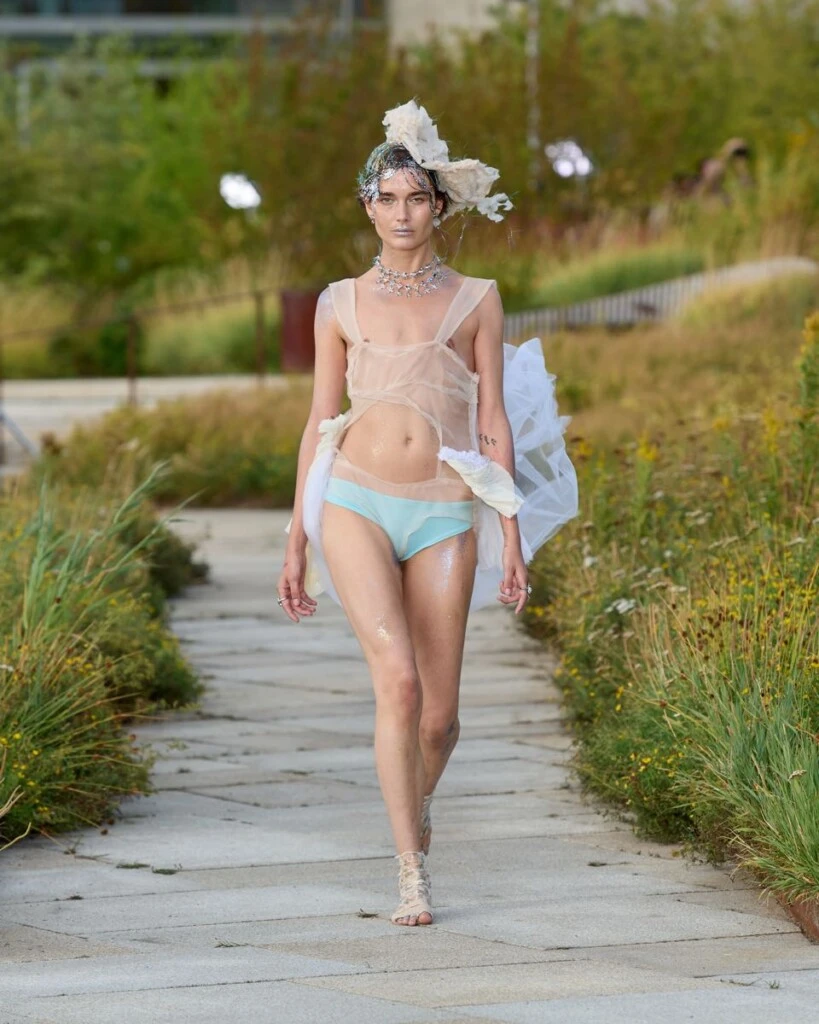
Flowers, sparkles and an unconventional bride
Towards the end the whites returned. A long-sleeved dress with a elongated silhouette, another strapless model covered with tiny flowers, and a minidress made of fringes and irregular layers revived the idea of a bride who refuses to follow the rules.
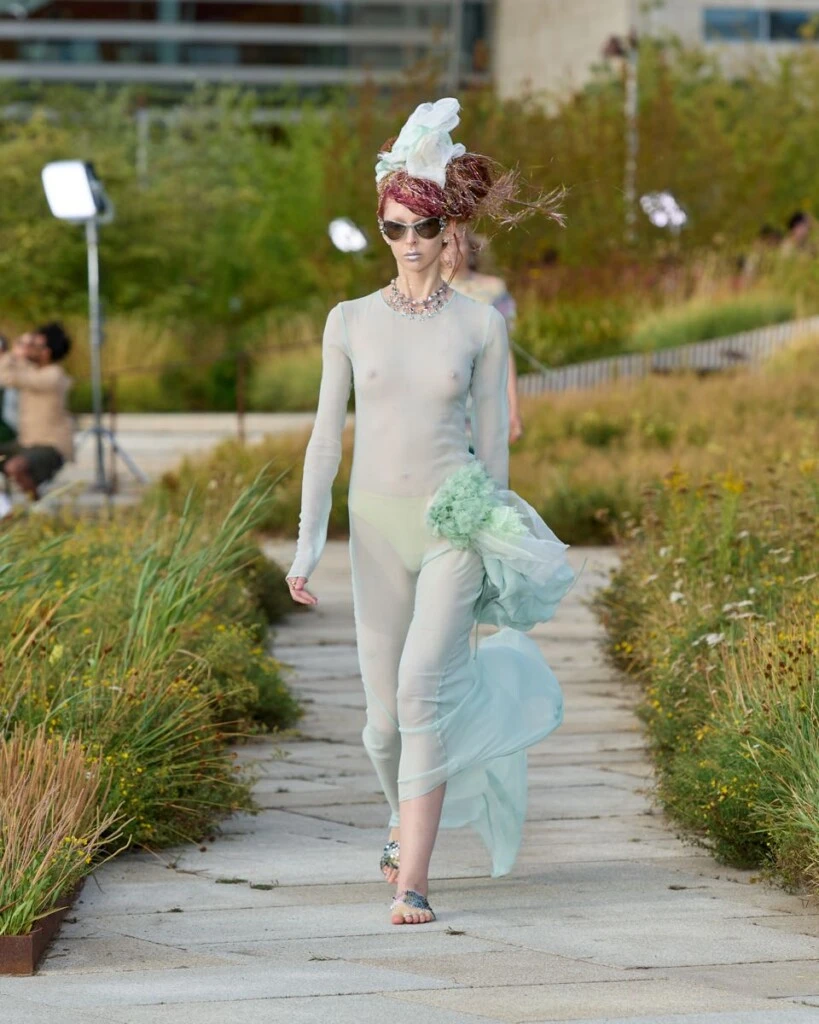
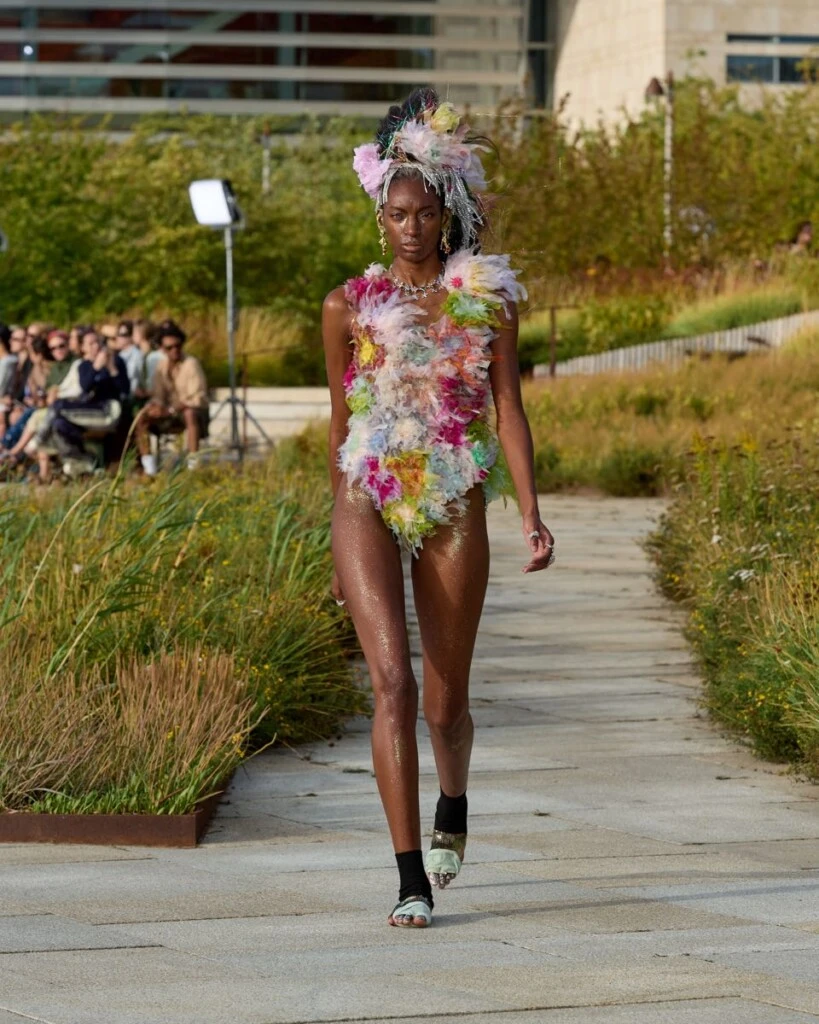
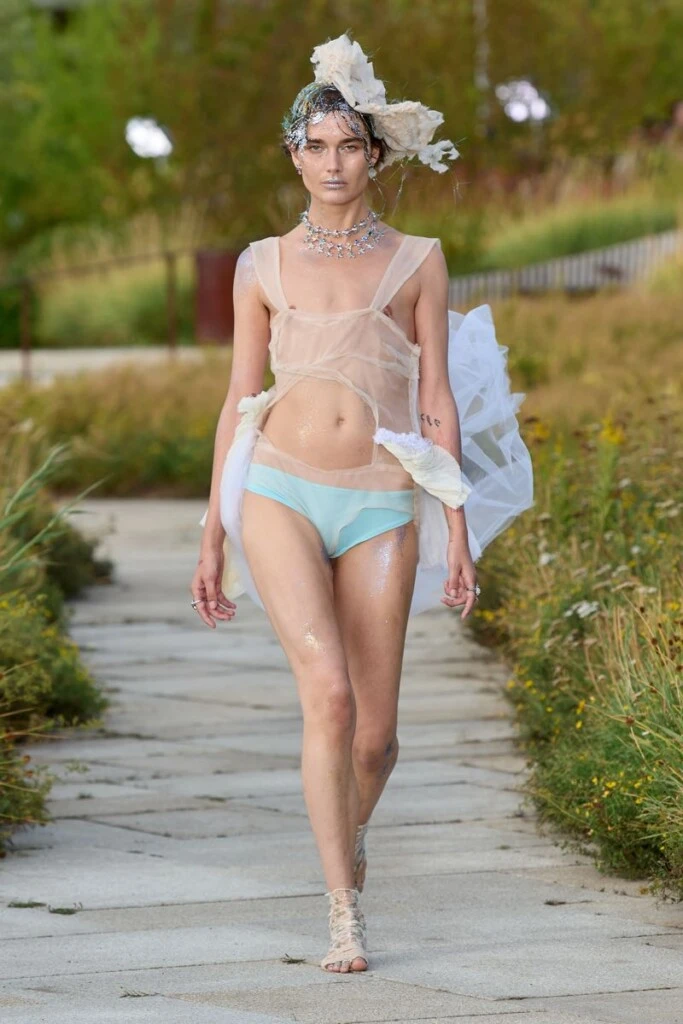
One of the most striking moments arrived with a bodysuit covered in feathers, flowers and vividly colored fabric fragments. The garment seemed a creature born in the park of Operaparken itself: half dress, half vegetal sculpture.
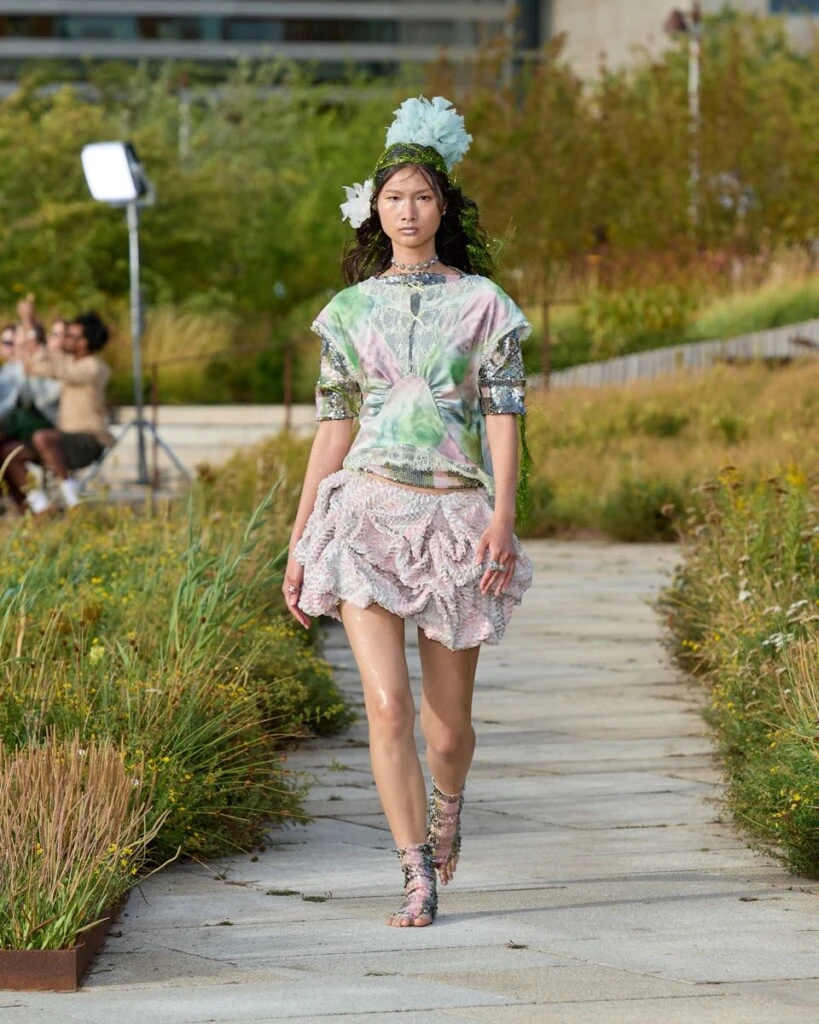
The styling reinforced that fantastical feeling. Woven scarves draped the hair, flowers and ribbons mixed with deliberately undone hairstyles, and the shoes transformed into glossy stockings with the toes exposed. Layered jewelry added a dose of excess to the simpler silhouettes.
A collection for people who don’t want to go unnoticed
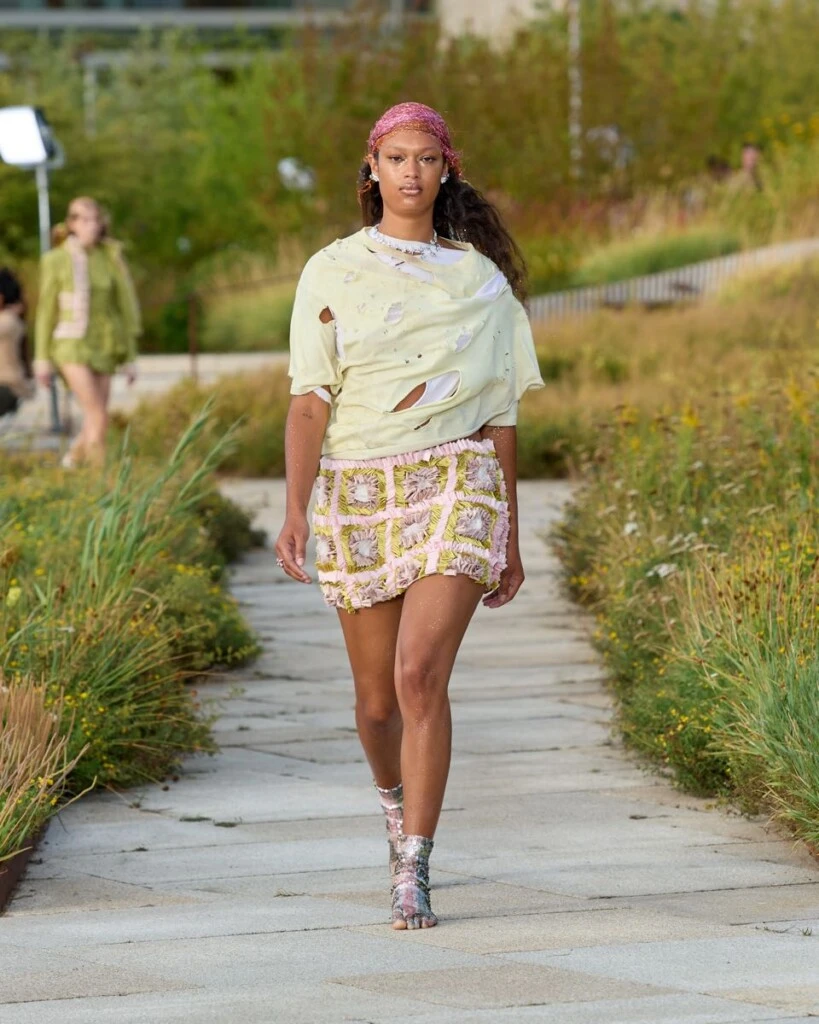
Collina Strada has never designed for a single woman nor for a fixed idea of elegance. “I like clothes to find people, and not the other way around,” Taymour said.
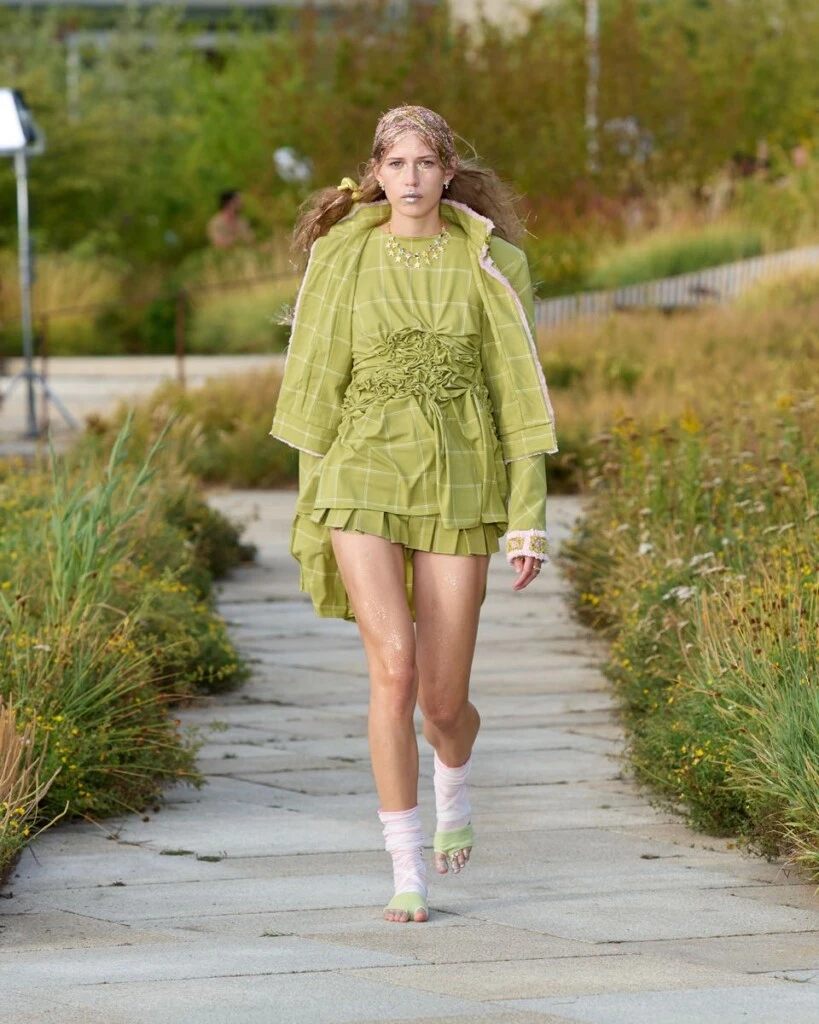
That philosophy threaded through a collection that mingled gala dresses, athletic wear, cargo pants, party tops and nearly bridal silhouettes. Instead of separating the everyday from the extraordinary, the designer made them walk together.
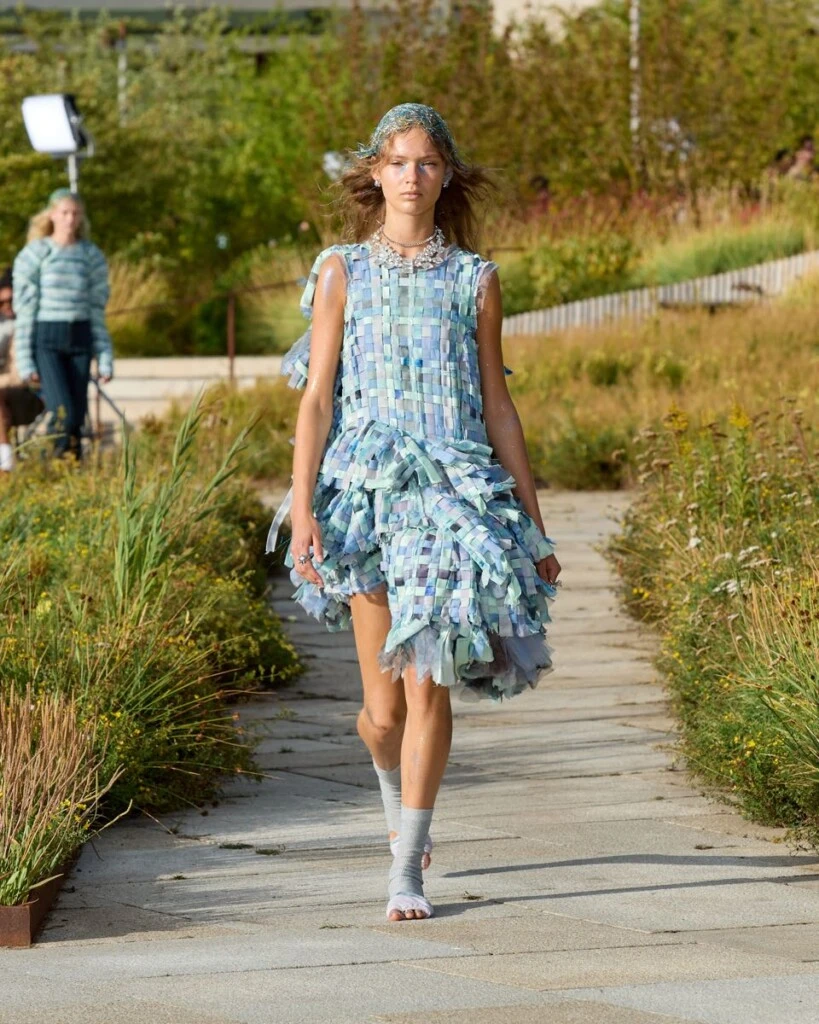
The result was a show faithful to the brand’s universe: imperfect, emotional, playful and free. Collina Strada did not come to Copenhagen to imitate Scandinavian minimalism, but to prove that another way of making fashion is possible.
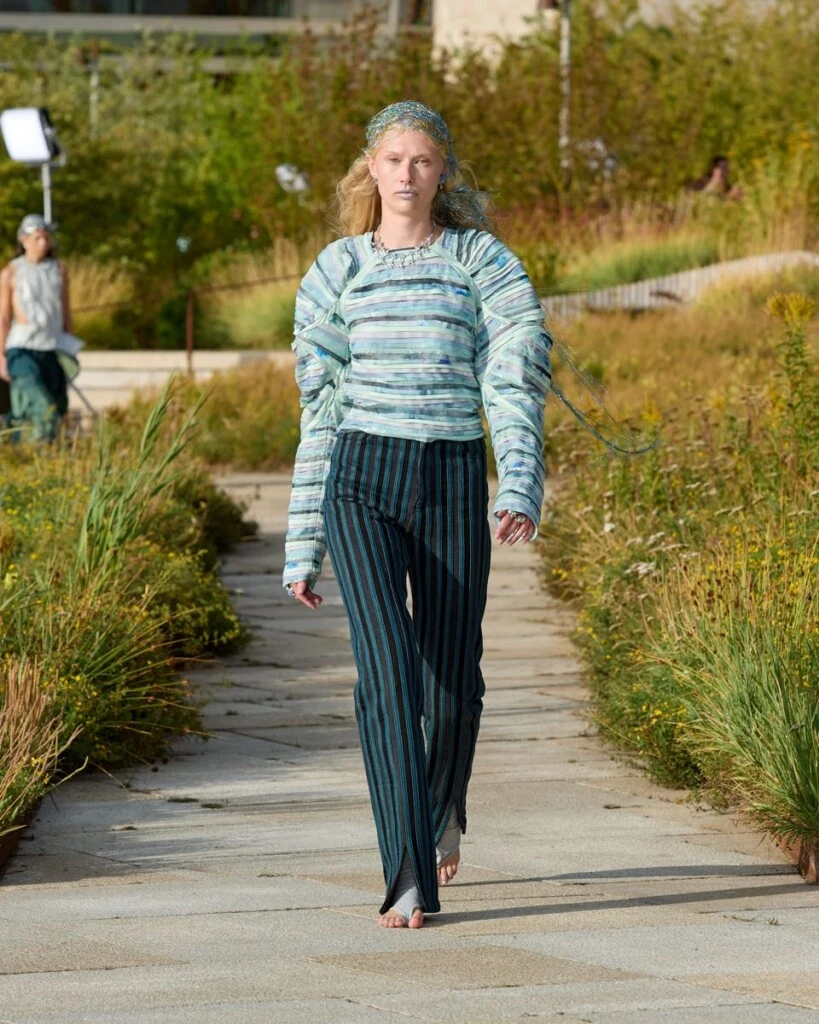
A fashion in which craftsmanship can arise from leftovers, transparency can coexist with a utilitarian pant, and a red-carpet dress can be built from what the industry would normally discard.