
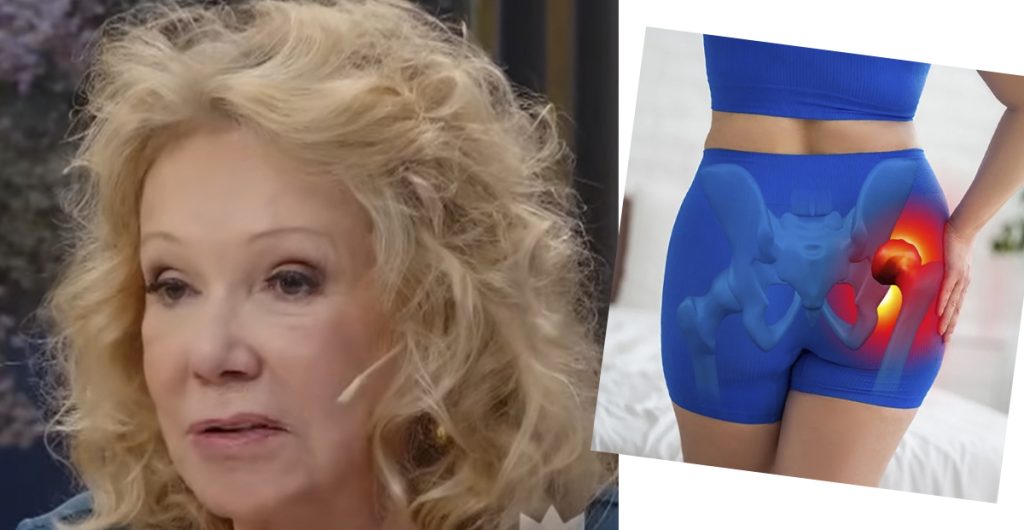
Soledad Silveyra revealed on Mirtha Legrand‘s program that she is going through a difficult health moment. In addition to the fracture of the sixth lumbar vertebra she suffered after a fall, there is a condition in the hip region that, as she explained, causes her pain and limits her movements.
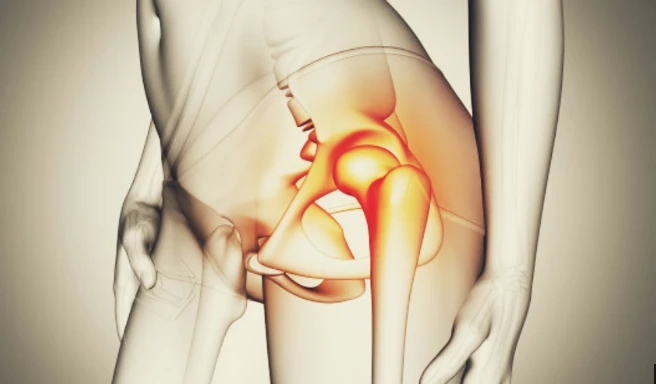
This is trochanteritis, a term used to describe the pain and problems affecting the greater trochanter, a bony prominence located on the outer part of the hip. Today, the concept of greater trochanteric pain syndrome (GTPS) is also used, which encompasses alterations of the tendons, muscles and bursae in that region.
What is Trochanteritis?
Trochanteritis, also known as trochanteric bursitis, is linked to irritation of the tissues surrounding the greater trochanter. Among them is the bursa, a small fluid-filled sac that acts as a cushion to reduce friction between the structures of the joint.
However, the term can be somewhat simplistic. According to information from the British health system, the greater trochanteric pain syndrome may involve mainly the tendons of the gluteal muscles and, in some cases, also the bursa. In fact, there is not always significant inflammation of the latter.

Therefore, the condition can present itself in different ways and requires medical evaluation to determine which structure is generating the pain.
What are the symptoms?
One of the main signs is pain on the outer part of the hip, which may radiate to the lateral aspect of the thigh.
Discomfort can appear or intensify when walking, climbing stairs, standing for long periods, or lying on the affected side. It can also be felt when getting up from a chair or during the first steps after a period of rest.
The pain can also interfere with sleep, especially when a person sleeps on the affected hip. Mayo Clinic notes that trochanteric bursitis can cause pain that is initially intense and later becomes a more persistent discomfort in the hip and outer thigh area.
Why does it occur?
There is no single cause. Overuse, repetitive movements and certain changes in activity level can predispose to the problem.
It can also occur after a trauma or a fall onto the hip region. Other factors may include weakness of the hip muscles or changes in usual activity.

In Soledad Silveyra’s case, the actress explained that her issue began during a period marked by a fall and a subsequent lumbar fracture. However, it would be inappropriate to establish a causal link between the two problems without a specific medical evaluation.
How is it diagnosed?
Diagnosis usually begins with a medical interview and a physical examination. The clinician assesses where the pain is located, which movements trigger it, and how it affects mobility.
When necessary, imaging studies may be requested. Mayo Clinic notes that an ultrasound or an MRI can be used when the diagnosis is not clear from the physical examination.
This is important because lateral hip pain can have different causes and is not always due solely to bursitis.
How is it treated?
Treatment depends on the cause and the intensity of the symptoms. In many cases the goal is to reduce the overload on the area and progressively restore strength and mobility through exercises and physical therapy.
Mayo Clinic notes that, depending on the case, measures to relieve pain, physical therapy, and, in certain instances, corticosteroid injections may be used. Surgery is uncommon and reserved for specific situations.
Recovery can be slow. From the British health system they highlight that greater trochanteric pain syndrome may require several months to improve, especially when there is involvement of the tendons and not only of a bursa.
The case of Soledad Silveyra
On Mirtha Legrand’s program, Silveyra shared that she has been suffering from trochanteritis for approximately six months and explained how it conditions her daily life.
“It is the inflammation of all the muscles that attach to the hip. So healing is very difficult. Tendinopathies are stubborn,” the actress noted.
She also shared that she currently uses a pain-relief patch and that her doctors decided to stop oral medications to protect her stomach.
When they told her she should walk and do exercises despite the pain, Silveyra expressed the difficulty she faces: “They tell me ‘walk even if it hurts,’ but I can’t.”
Her testimony helped bring to the forefront a condition that can be very limiting and that, although often referred to colloquially as “trochanteritis,” may involve different structures in the lateral part of the hip.
Important: the information in this article is of a general nature and does not replace the evaluation or instructions of a health professional.