
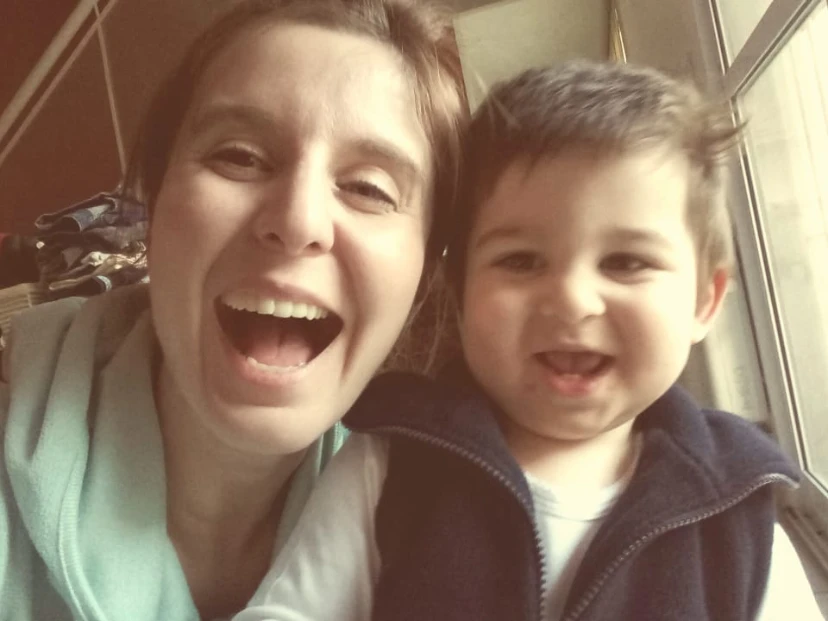
One year to the day, Natalia Ciak’s life changed forever. On August 5, 2025, her ex-partner, Alejandro Ruffo, murdered Joaquin, the child they shared, in a crime that he confessed committing to avenge himself against her.
Since then, Natalia has not only traversed the mourning for the loss of her son and the judicial process that followed the crime — interrupted by the suspect’s suicide while detained — but has also chosen to turn that pain into a collective cause: to promote the recognition of vicarious violence and the passage of the so-called Joaquín Law.
This Wednesday, at 5 p.m., organizations and citizens are calling for a gathering in front of the National Congress and in the squares of the provincial legislatures to accompany the treatment of the bill. Natalia will not be able to attend due to her deep grief, but she asked to support the call.
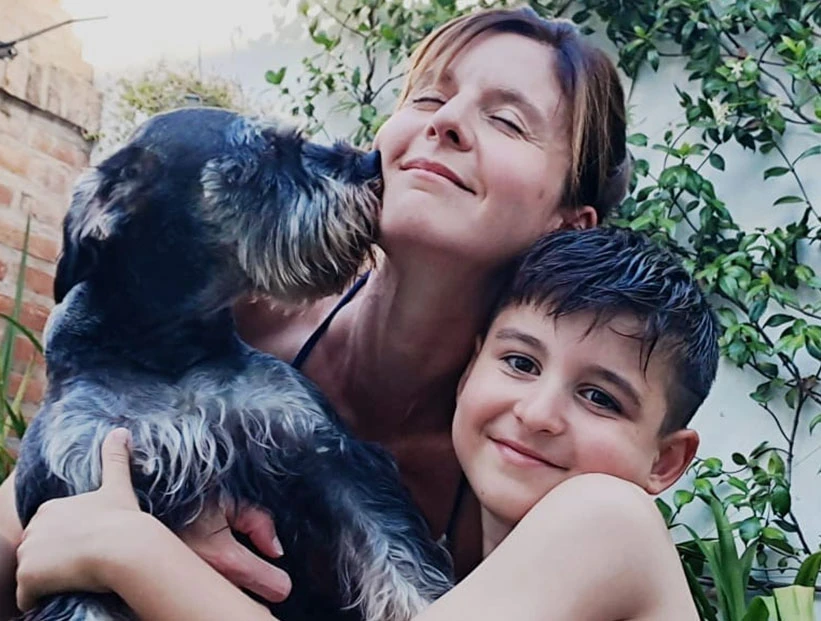
Vicarious violence occurs when an abuser uses the children to hurt the mother. It can manifest through threats, manipulation, obstructing the parent-child bond, forced separation, and, in its most extreme forms, through physical violence against girls, boys and adolescents.
In this context, we share the column by Dr. Paula Verónica Fernández, lawyer specializing in Family Law, university lecturer, and co-author of the Joaquín Law project against vicarious violence.
Vicarious Violence: The Challenge of a Judiciary That Learns to See
There are words that change how a society understands reality. Not because they conjure up new phenomena, but because they name what has remained invisible for too long.
That happened when the Argentine psychologist Sonia Vaccaro coined the term vicarious violence to describe one of the cruelest manifestations of gender-based violence: the use of children as instruments to exert control, punish, or inflict the greatest possible suffering on their mothers.
Vicarious violence is not primarily about harming the parent-child bond. Its real aim is different: to exert power over the woman through what she loves most.
Children cease to be recognized by the abuser as individuals with their own rights and become instruments of punishment, control, or revenge. Therein lies the extreme cruelty of this form of violence: the harm is not a side effect, but the means chosen to perpetuate domination, even after the romantic relationship has ended.
Naming this form of violence meant much more than adding a new category to legal or psychological language. It meant understanding that behind many family conflicts lay a systematic strategy of domination that the Law did not always manage to identify.
That recognition changed the questions the justice system must ask. Because the greatest challenge facing family courts today is not solely to resolve disputes, but to recognize when what looks like a conflict is, in fact, a form of violence.
Distinguishing a Conflict from a Strategy of Domination
Not every disagreement between parents constitutes violence. But neither can every case of violence be read as a mere parental disagreement or conflict. There lies, in my view, one of the judiciary’s biggest challenges: to distinguish a family conflict from a strategy of domination. That distinction can determine whether Justice merely resolves a lawsuit or truly upholds human rights and protects them.
Vicarious violence rarely boils down to a single episode. It often manifests as persistent patterns of control, manipulation, threats, judicial harassment, or the use of the children as instruments to pressure the mother. Its main complexity lies in the fact that these behaviors, viewed in isolation, can resemble a typical conflicted family scenario.
Using the children as messengers, deliberate noncompliance with parental responsibilities, constant demeaning, initiating court processes with the sole aim of exhausting the other party, failure to pay child support, systematic resistance to comply with judicial orders, or flouting medical directives related to child care can be interpreted, in isolation, as mere noncompliance or negligent parenting.
But when all these actions share a single purpose — to maintain control, discipline, punish, or prolong violence against the woman through the children — they stop being isolated episodes and reveal a pattern of domination.
That is the real evidentiary challenge. The more complex forms of violence are expressed through multiple acts that only take on meaning when analyzed comprehensively and contextually.
Vicarious violence is not always confined to a single file. It is often distributed across processes of personal care, parental responsibility, child support, communication arrangements, protective measures, or reunifications of children. Each case shows only a fragment of the story, and only a holistic view allows reconstructing the context and understanding the true dimension of the harm and the design of a domination strategy.
Seeing the Invisible
Therefore, judging with a gender perspective involves far more than applying a legal category. The Guide to Good Practices for Judging with a Gender Perspective by the Supreme Court of the Buenos Aires Province expresses this with a simple yet profound idea: “seeing the invisible”. In other words, abandoning a fragmented reading of events to identify power dynamics, patterns of violence, and strategies of domination that condition the lives of women and their children.
Vicarious violence does not always shout. Often it whispers in small, everyday acts that, taken in isolation, seem minor, but when viewed together reveal a strategy of domination.
The gender perspective does not replace evidence or compromise impartiality. On the contrary, it strengthens it, because it requires evaluating the facts within the context in which they occurred. When that lens engages with a child-centered perspective, the justice system stops asking only how to resolve a family conflict and begins by asking, above all, how to protect the human rights of those in the most vulnerable situations.
Girls, boys, and adolescents are not spectators of the adults’ conflict. They are rights-holders. When they are used as instruments to harm their mother, they are direct victims of violence as well. Therefore, protecting women and protecting children are not opposing obligations, but two dimensions of the same state duty.
That duty arises from the National Constitution, the federal constitutional framework, and the international commitments assumed by Argentina. Among others, CEDAW and the Convention on the Rights of the Child — both with constitutional rank —, alongside the Belém do Pará Convention and Laws 26.485 and 26.061, require the State to act with due diligence, prevent violence, and guarantee effective judicial protection for women, children, and adolescents.
A judiciary with a gender and child-centered perspective is not an ideological option. It is a legal mandate.
When that mandate is not fulfilled, another form of violence appears: institutional violence. It expresses itself when the State fails to recognize the context, demands impossible proofs, fragments interventions that should be integrated, or responds with insufficient categories to realities that are deeply complex.
The Joaquín Law and an Opportunity to Reach in Time
In this framework, the Joaquín Law against Vicarious Violence has just been introduced, an initiative proposing specific tools to prevent, detect, and address this modality of violence. Its legislative treatment represents an opportunity for the State to institutionally recognize a reality that has long been invisible and to strengthen protection mechanisms and access to Justice for women, girls, and adolescents. Advancing this debate means taking another step toward a legal response aligned with the phenomenon’s complexity.
Today, August 5, and every day, the name Joaquín reminds us that behind every file, every legal concept, and every academic debate lie real lives. His memory deserves to be honored with the utmost respect.
Joaquín was a happy child. Joaquín should be alive. He should have been able to grow up, play with his beloved friends, make plans, and build memories with those who loved him: his mother, his aunt, and his maternal grandparents.
Nothing can repair that absence. But every society decides what to do with its tragedies: it can resign itself to remembering them or honor them and transform them into the motivation to build institutions capable of preventing them from repeating.
To Natalia, his mother, and to all mothers who have faced the most extreme form of vicarious violence, we owe far more than empathy: we owe them a Justice that listens, understands, acts with due diligence and reaches before the damage becomes irreversible.
That the memory of Joaquín remains with us not only as the memory of a child whose life was unjustly taken, but also as a permanent call to build institutions able to recognize violence before it is too late. Because when the Law learns to see what has remained invisible for years, it stops arriving too late. And when it stops arriving late, it does not merely resolve conflicts: it saves lives.
Source: Dr. Paula Verónica Fernández, attorney specializing in Family Law, university professor, and co-author of the Joaquín Law against Vicarious Violence.