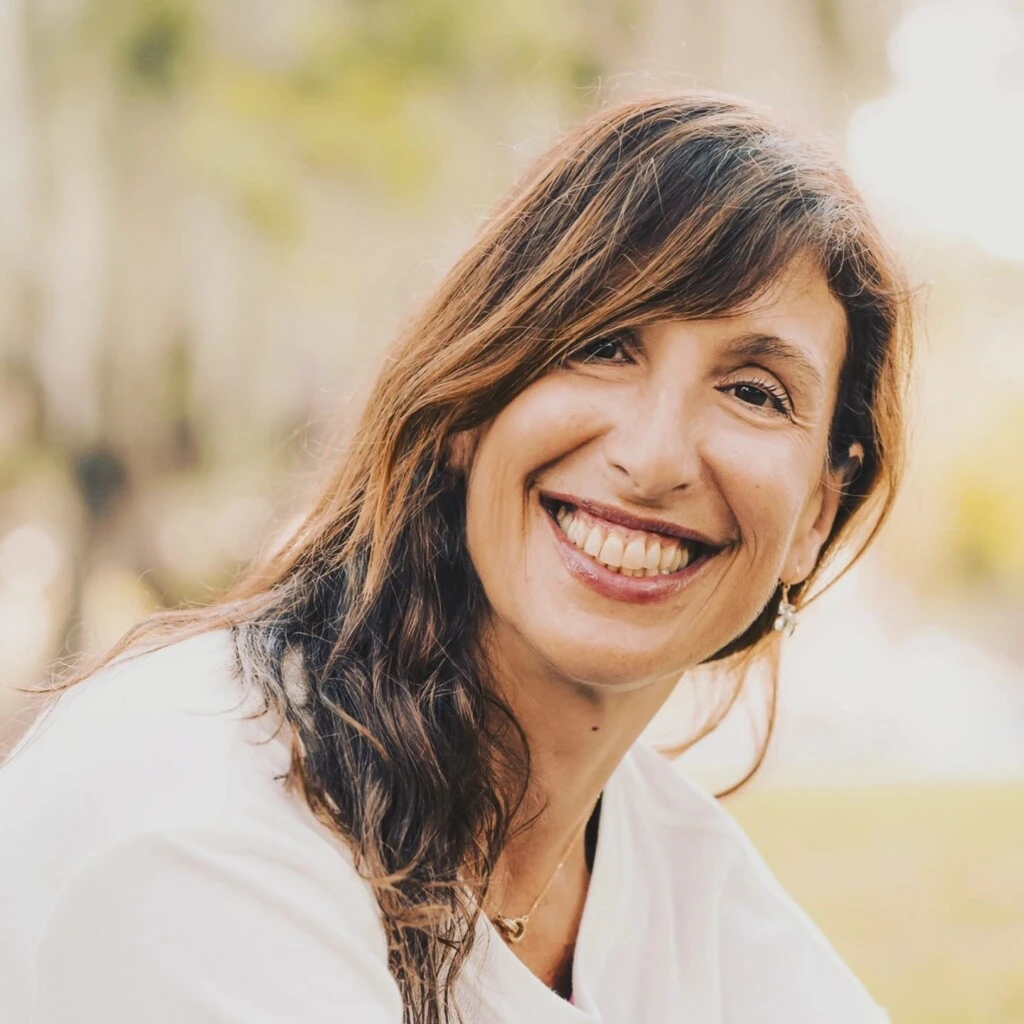
Luisa Poppe first came to Buenos Aires to present her book and share the Recálibrate method, a supportive approach that integrates body, mind, and spirituality. A professional coach, author, yoga teacher and doula, she works with people from various countries and also guides artists like Valentina Zenere on their professional and spiritual journeys.
Her path traverses universes that, at first glance, might seem very different. She studied Biology for six years, trained in theater, dance, and singing, and found in yoga — which she has practiced and taught for more than two decades — a path of transformation. Over time, those experiences stopped being separate compartments and became the different layers of the same quest.
In this interview with Para Ti, Luisa talks about the physical fall that forced her to listen to her body, explains why she considers fear one of the clearest signs of disconnection, and shares a brief practice to return to the present in the midst of a difficult day.
“All My Experiences Are Found in Service”
—You studied Biology, ventured into theater, dance, and singing, and then deepened into yoga and spirituality. How do all those experiences dialogue within you today?
—They interact as an ongoing balance. I feel that service, helping others, and guiding transformation processes allowed me to unite all those things I wanted to live separately before.
Today, everything I studied — including massage and other disciplines — speaks through the sessions, the conversations, and the retreats. It’s present in everything I do to serve the process of human transformation. That is the point of coherence, beyond performing a play or merely running a yoga workshop.
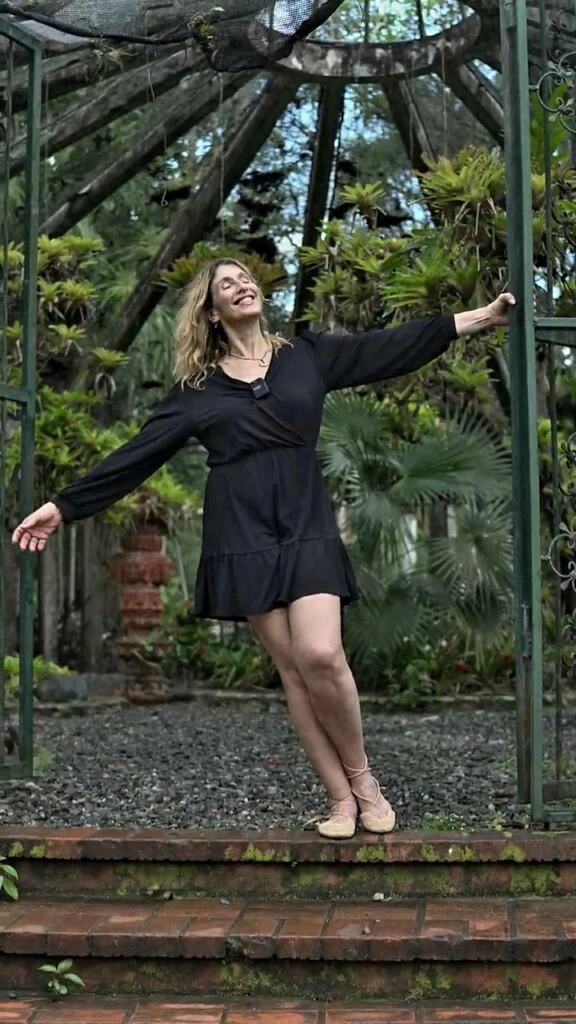
I also do those things and they give me a lot of happiness, but I feel that it is at the meeting point of service and giving where all these wisdoms, talents, or gifts I’ve developed converge. I don’t think of them as innate talents so much as the result of personal work. Everything is present in the different ways I can accompany the process of human transformation.
—Do you remember the moment you understood that the body was not merely something to train, but also a territory that could be listened to?
—Ironically, I learned it when I fell physically, when I got sick and had to pass through pains I didn’t know existed inside me. It was during a second stage of my transformation and personal healing, when I supposedly was at my best physically and in performance, and everything collapsed.
I understood that the body listens far better than the mind, or that the mind moves much more slowly in that listening. The fall was the moment of encounter with that lack of attention to what the body had been trying to say.
—After more than twenty years of journey, what do you feel your own practice still teaches you?
—Coincidentally, here in Buenos Aires I returned to practice with my master, Pablo Pirillo. I feel that the practice has taught me to transcend the practice itself: I understood that it wasn’t only about practicing, but about living in a yogic state or coherence between body, heart, and mind.
I also understood that practice is individual. As teachers, we simply give guidelines for a personal path. There is not a single place to arrive, but a state to inhabit — something of Lirelpoll — within each of us.
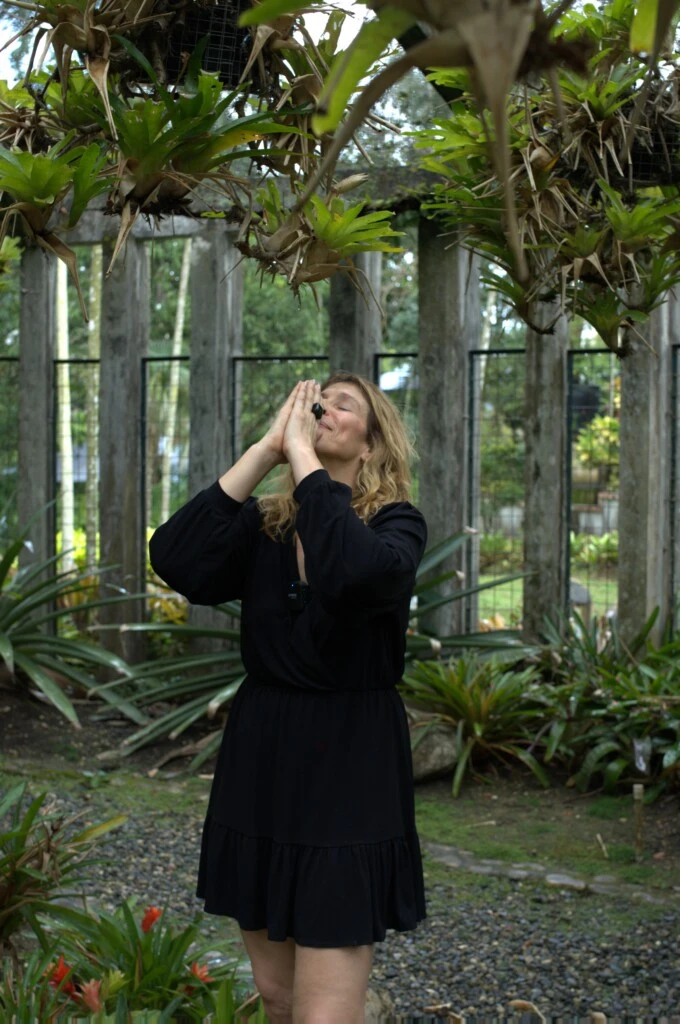
Although another person may give you certain guidelines, the path is a personal discovery, a unique map. Accepting to walk it also gives you courage. Practicing again with Pablo, who has his own method, brought me back to that idea: the method is personal and one guides without dogmas.
What It Means to Inhabit the Body
—What does “inhabiting the body” mean to you, and why do you think many people live disconnected from it?
—To inhabit the body is to accept your biology, which is also unique in each family and clan. That biological message did not come to kill you, but to awaken you, even if you must go through very difficult situations.
To inhabit life or the body implies accepting, from the start, that there are already programmed patterns and that they can give you the possibility of becoming the creator of your own light. The first step is to accept; then, to be very honest about what you have integrated and what you still have not integrated.
That “not yet” sometimes sounds like failure to the mind: “How slow I am” or “How long is my process.” However, honesty is what allows peace. As I am, I can inhabit myself today. Am I still missing something? Yes, but I can be here. Am I not yet resolved? Yes, but I can be here.
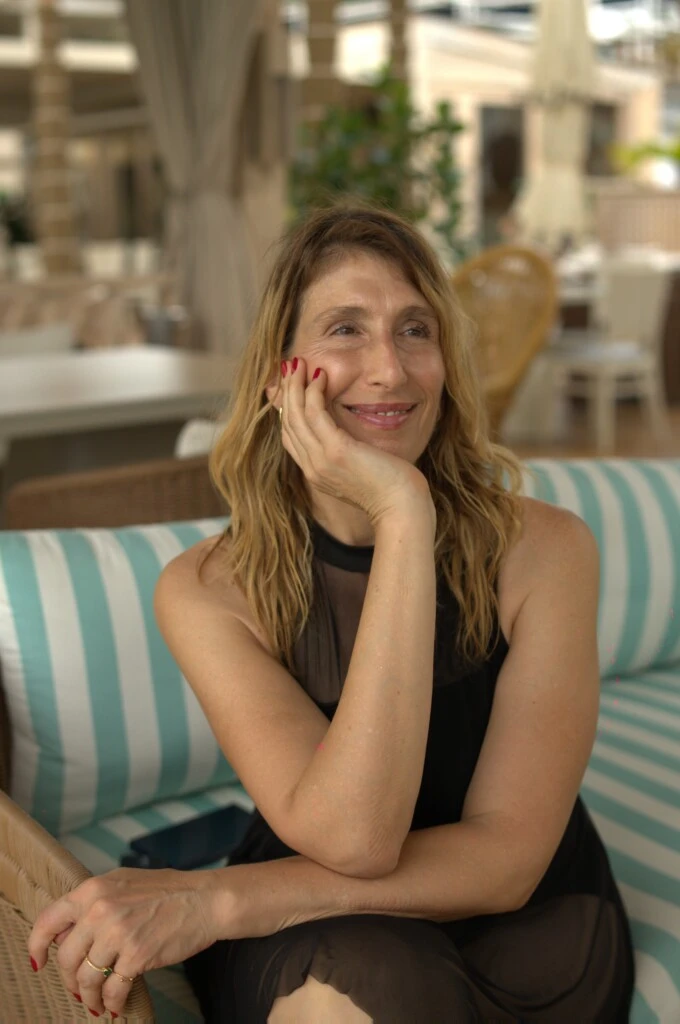
The next step is to trust that, even with all that, we do not control everything. There are universal forces, God —as each person calls it; for me, the Creator— that guide far beyond what we can understand, comprehend, or interpret.
To reach inhabiting oneself, one must go through that process. I sense that many people are disconnected because, when they reach acceptance or honesty, they believe they won’t be able to. The key is patience. And, with the pace of life today, patience and boredom — which we feel as something tremendous — are precisely missing.
—What are the most frequent signals that appear when a person is disconnected from themselves?
—The fear of their own life. When people come to my sessions, whether they admit it or not, and whether they acknowledge it before their families or loved ones or not, many are afraid to live. That is the human paradox: we fear what we chose to walk through in some way.
Many might tell me: “I didn’t choose it, they brought me here.” But when you transcend that small impostor ego, you understand that there is something of all this that was chosen, though perhaps you don’t remember why.
When we begin to feel a lot of fear, when life is governed by it or there is intense fear of something, a very clear sign of disconnection appears. Then come emotions such as guilt, anger, or sadness, which are also ways of denying life.
Those emotions are often more accepted and one thinks: “This is what I have to live with,” as if it were a small karma. But it isn’t. Sometimes it’s hard to recognize that we don’t have to live forever with that guilt, that anger, or that sadness, and that we can transcend them. For me, the key signal is fear.
Recálibrate: Returning to Center Without “Healing” Yourself
—You created the method Recálibrate. What does recalibrating mean and how can we recognize that we need to do it?
—I think we get off calibration all the time and that’s why we need to recalibrate constantly. But it isn’t always necessary to have a healer or someone like me guiding you. Sometimes yes, especially at the beginning, when you still have to learn certain steps.
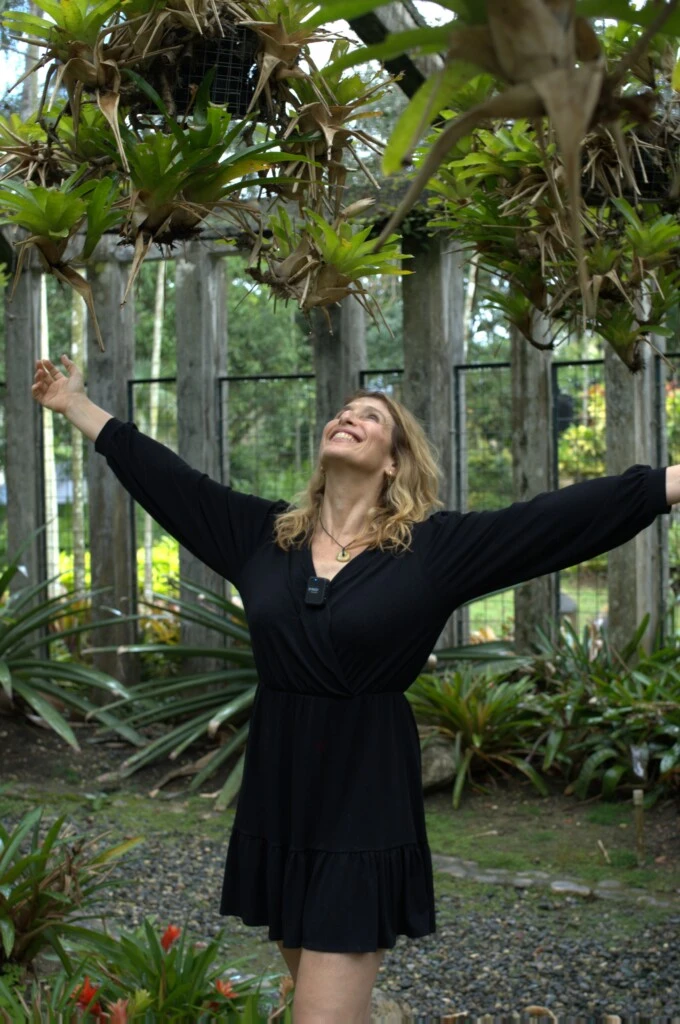
I feel that my method wasn’t created rationally, but arrived intuitively, from the supraconscious. It is that part of us that gathers everything we know and all we can do to offer the best option. It is a part of me, of course, but it wasn’t something that Luisa sat down to write: it happened.
I always say a person may need to heal at a moment in life. Now, if they have to keep healing, something isn’t right: either the healer wasn’t good or didn’t do the job. “Recalibrating” feels more loving and gentle to me, because we all miscalibrate.
I compare it to the television antennas of my childhood. The picture began to fail because the antenna wasn’t pointing where it should, and you had to call someone to adjust it, or some bold uncle climbed onto the roof while people below shouted: “There, yes; a bit more to the right.” I help make that recalibration, but instead of asking them to return each time, I teach how to do it autonomously.
Recalibrating is going through the journey of the peaceful warrior, the sanyasin, the seeker who begins to ask if there is something beyond what their eyes can see or perceive on the periphery, and whether going deeper can return peace and protection.
I don’t believe in happiness as a permanent state; it seems to me a somewhat artificial word. I do believe in joy and enthusiasm, which are moments of deep connection with the infinite, with creation, and with the extension of the soul. Recalibrating is staying in a state of peace and trust, of peace and protection, or of peace and certainty. Even as everything changes, there is something inside that can keep observing. Sometimes we need help at first and afterward, simply, to learn to do it yourself.
—What is the first concrete step someone who feels they’ve lost their center or are living on “auto-pilot” can take?
—The first step is to accept and be very honest about what you managed to integrate and what you still haven’t. Honesty allows you to say: “As I am, I can inhabit myself today.” Then comes trust: understanding that we cannot control everything and being patient with our own process.
Yoga: Less Demanding, More Presence
—You frame yoga as a daily practice rather than a pursuit of performance or perfect postures. Do you feel social media has contributed to building a mistaken image of yoga?
—I don’t want to demonize anything. In the end, the choice is the chooser: we can always decide not to look or to look with discernment. For someone who is easily distracted, worrying about the asana they should achieve is just another distraction.
To inhabit the practice from the body means starting to create a personal daily movement: two or three postures, or even a single inhabited pose, that opens the door to releasing the body and returning to full, unforced breathing. It’s about feeling: “I am the body, I am in it and I inhabit it, but it does not possess me. I can also release it and be at peace.”
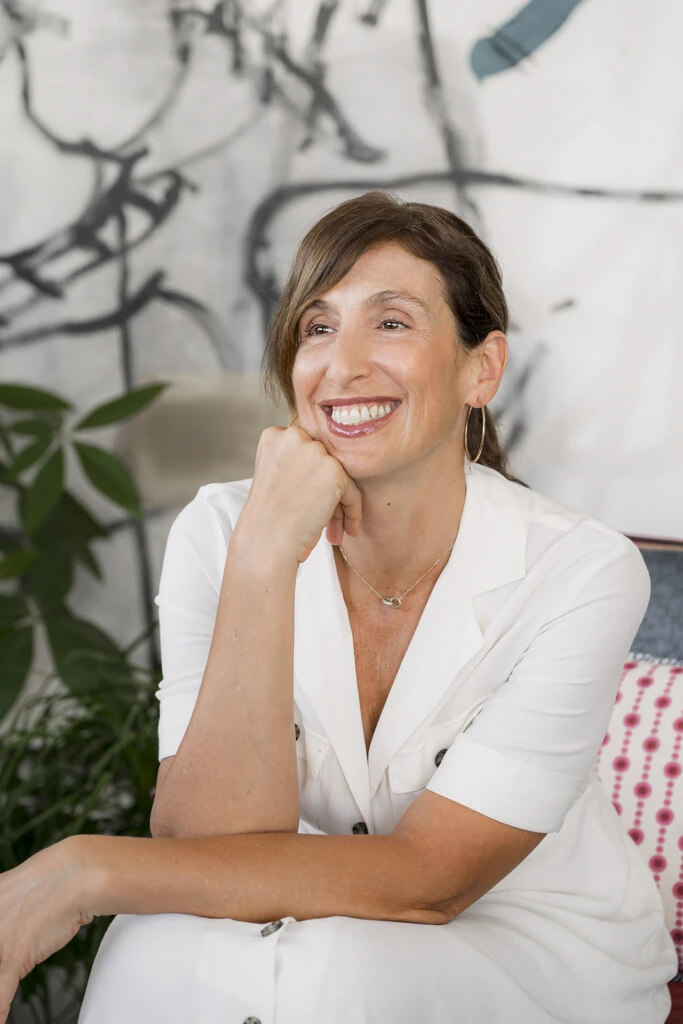
It is a very beautiful inner journey. When done with small daily movements, it becomes consistent. I don’t like the word “discipline” too much; I prefer to speak of everydayness and a commitment to oneself. Just as we have obligations to the world, we also have the responsibility to remain healthy and happy.
The outside world can show you great yogis and become an incredible motivation to start practicing, or it can be an excuse not to. The choice is yours. Social media can be a distraction for those who want to keep finding excuses, but it can also be a powerful motivation for those ready to take the step.
—How do you support people who think they cannot practice yoga because they’re not flexible, don’t have time, or feel that “it doesn’t work for them”?
—I always tell them that “no” is an option, but so is “yes.” We go for the yes: “I can do this, let’s try.” Expanding means asking: “And why not?” And that ‘why not’ must be lived. I accompany the person to live it and see how far they can go. There, a door opens, a possibility.
I also accompany by staying present in the moment of pain, when the person feels: “I’m dying, I can’t, I’m falling.” I stay there. I believe the great capacity of those who help others to self-heal is to stay with the other in what they may not yet have learned to stay with themselves. It is to console that wounded side we all have so we can carry on. After that pain comes God. Staying is important.
The Learning of Supporting Births
—You also trained as a doula. What did guiding pregnancies and births teach you about the female body, surrender, and the need to let go of control?
—I loved training with Doulas of the DAR. I feel very blessed. A friend of mine, Nati, suggested it, and at first I didn’t understand why. I thought I wouldn’t be able to practice, and yet it was a gift from God. I feel gifts arrive like that: sometimes through what I didn’t want, didn’t understand, or thought was trivial.
The training opened the door to everything I had denied for a long time: my feminine being from a space not masculinized. Sometimes we are women, but we live from a masculinization of the feminine, as if there were something wrong with being a woman, with being a vessel or container.
I remember my first doula class. I arrived late and there were about 25 women sitting in a circle on a wooden floor, eating, crying, and sharing. I came from a place of demanding to be perfect, of not noticing when I had my period, of putting on a tampon and forgetting it, believing that I didn’t have pain or ovaries. I thought: “How are you going to take the day off because you’re menstruating?” All of it seemed crazy to me.
During that class, which lasted eight or nine hours, everyone cried, ate, and shared. I felt I couldn’t cope with all that; my head began to ache and my belly hurt. When I left, I refused to be approached and ran away. I got home, got into bed and could say: “I am a woman and I never liked being one. I never accepted nor honored it.”
I grew up without feminine role models, with women who had masculinized themselves. My mother died when I was small, I had no grandmothers or close women who loved being women. From that first class an extremely deep wound opened in me that allowed me to begin healing.
First came the pain of seeing how far I had strayed from my feminine self. Then I could begin to enjoy it, accept it, and inhabit it; finally, I could honor it and honor my foremothers. It was a beautiful work.
My two births were spectacular. I have a 30-year-old son and twins who are 21. But accompanying other women during birth is a gift from God. It’s not something I promote in particular: I tell it because it brings me great happiness, but I wait for the family or the couple to choose me. Perhaps one year I accompany three or six births and then go several years without any. I accept it because I feel it is part of that miracle of honoring life. Being able to honor a couple to receive that child and witnessing the birth is one of the most incredible experiences I’ve had.
Lirelpoll: A State You Can Always Return To
—What does Lirelpoll represent and how did the idea of creating a state of consciousness that could also be “inhabited” arise?
—Lirelpoll represents the state I always wanted to live in. For a long time I thought it was a country, a place, a form of the body, a way of eating, friends, a partner, or their absence. Today I understand it as presence. I can arrive at Lirelpoll and also forget it for moments, only to return later. Lirelpoll is home, a state, and presence.
The idea wasn’t something I chose to do, but something that happened to me, like so many other things in my life. I dreamed the name during a phase when I wasn’t channeling during the day yet, only at night. Between 1998 and 2001 my dreams grew very intense and I began filling notebooks. In one of those dreams the word Lirelpoll appeared. I knew it carried a message, but I had no idea what it meant, and at that moment I was far from inhabiting that state.
When I left the university and entered the musical theater school of Julio Bocca and Ricky Pashkus, art began to be a way for my soul to communicate in daily life, while at night channeling appeared. I began to understand that art was not only what I had come to do, but the channel to reveal all that was inside me: first for my own transformation and then to accompany others.
At first I felt that Lirelpoll was a path, but later I understood that even that word could be limiting, because it would seem there is “my path” and “your path.” Instead, Lirelpoll is something we can all be living: together or separately, on a mountain or in an office, in a natural or urban setting. It is a kind of cocoon that accompanies us and that we create with all the tools we are learning, even with those we have and still do not know.
For years I searched for the meaning of the name, shuffled its letters, and thought it should come from English, Aramaic, Hebrew, or Greek. I would forget it and return to it. Much later, in 2022, when I went to Miami, the idea of telling my story came forward with force. At first I resisted: I didn’t want to talk about myself or turn the narrative into the story of “the little orphan girl,” the Holocaust, or the fall.
At some point, everything came together: the name, my story, and the possibility that the book would be not only biographical, but also speak of legacy, of what has been learned and shared. It was like when the water in a kettle starts to boil: you never know exactly when everything will come together. That is when I understood I wanted to write, because it was no longer about talking about my dramas or teaching from a place of superiority, but about sharing a state.
—Your trilogy will continue with The Soul Who Remembers and The Heart That Chooses. What relation do you find between listening to the body, recovering memory, and learning to choose?
—Every initial choice of a human being is conditioned by the patterns we receive from our lineage, by what happened before conception, during the nine months of pregnancy, in the early years, and through traumas that can occur between ages 6 and 11. Therefore, in some sense, it is not yet a free choice.
Perhaps some poets or more wild people chose the heart, but later died of overdoses, and that led us to ask: “How can you live from the heart?” For me, the order is different: first, listen to the body and accept what exists there, including memories of darkness as well as light.
Then it’s about understanding that all those memories exist to remind us of the map of the soul, which has meaning, coherence, magic, and infinite life. When that’s clear, we can let the heart guide us because there are no longer the same interferences or inconsistencies.
External situations may still appear that make us doubt — or projections of internal issues — but when there is a deep connection with the soul, the choice arises from the heart’s frequency and coherence. It is a very powerful stance because what arrives no longer manages to destabilize you. I feel that this order gives power and strength.
The Pain That Repeats Across Cultures
—You accompanied more than a thousand people in different countries. What pain or need do you observe repeats itself, beyond ages and cultures?
—The lack of recognition for our inner hero: the inner child who gave their body to life so that we could be here today. At some point the mind understood what happened, we justify mother, father, and others, but we did not value that hero who endured it all.
That forgetfulness of the inner child repeats across cultures I’ve known, especially among men. The masculine has forgotten and dishonored his inner child a lot, as if being a man doesn’t include that child.
There is also the lack of a question: “Do you really want to be here?” The soul desires life; it desires to experience itself as light and love in freedom. If we don’t ask ourselves whether we want our own life, everything else begins to feel like a set of manual obligations.
Do you desire your life? Do you desire to be you, that full being you came to be? Do you desire your existence beyond the good or bad character others created, that you believed you were or learned to live? The inner child and the desire for existence are two great pillars. I wouldn’t call them obstacles, but opportunities: they are what we most disconnect from, what we forget, what we don’t question, or what we don’t accept.
—If you could propose our readers a very brief practice to return to the body in the middle of a difficult day, what would it be?
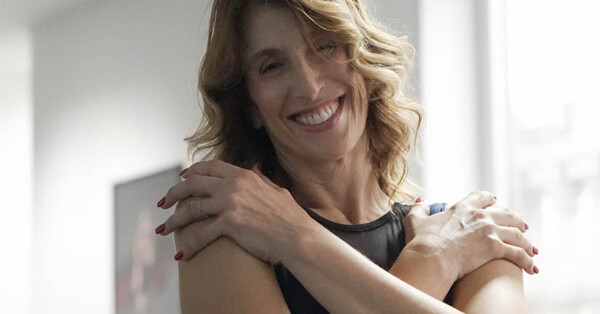
—I would propose a Jin Shin Jyutsu practice, which for me is Japanese Reiki and gave me a lot of clarity. With your right hand hug your left ribs and with your left hand hug your right ribs. Lower your chin toward your chest and breathe consciously, letting the abdomen expand as much as needed.
Give yourself a hug and say: “You did well. I love you and I am here for you.” Repeat your name: “Luisa, I am here for you. I will not abandon you anymore.” It is an embrace of the soul with oneself.