
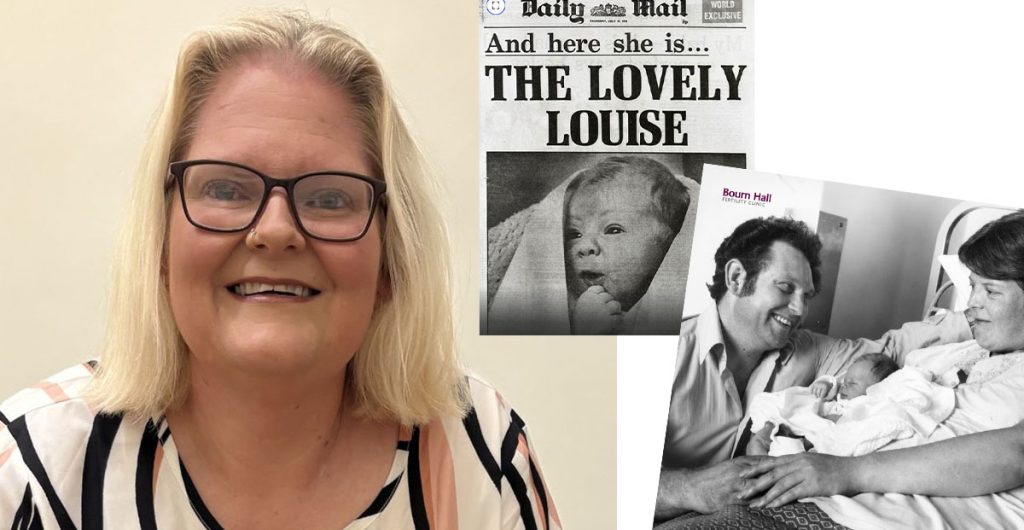
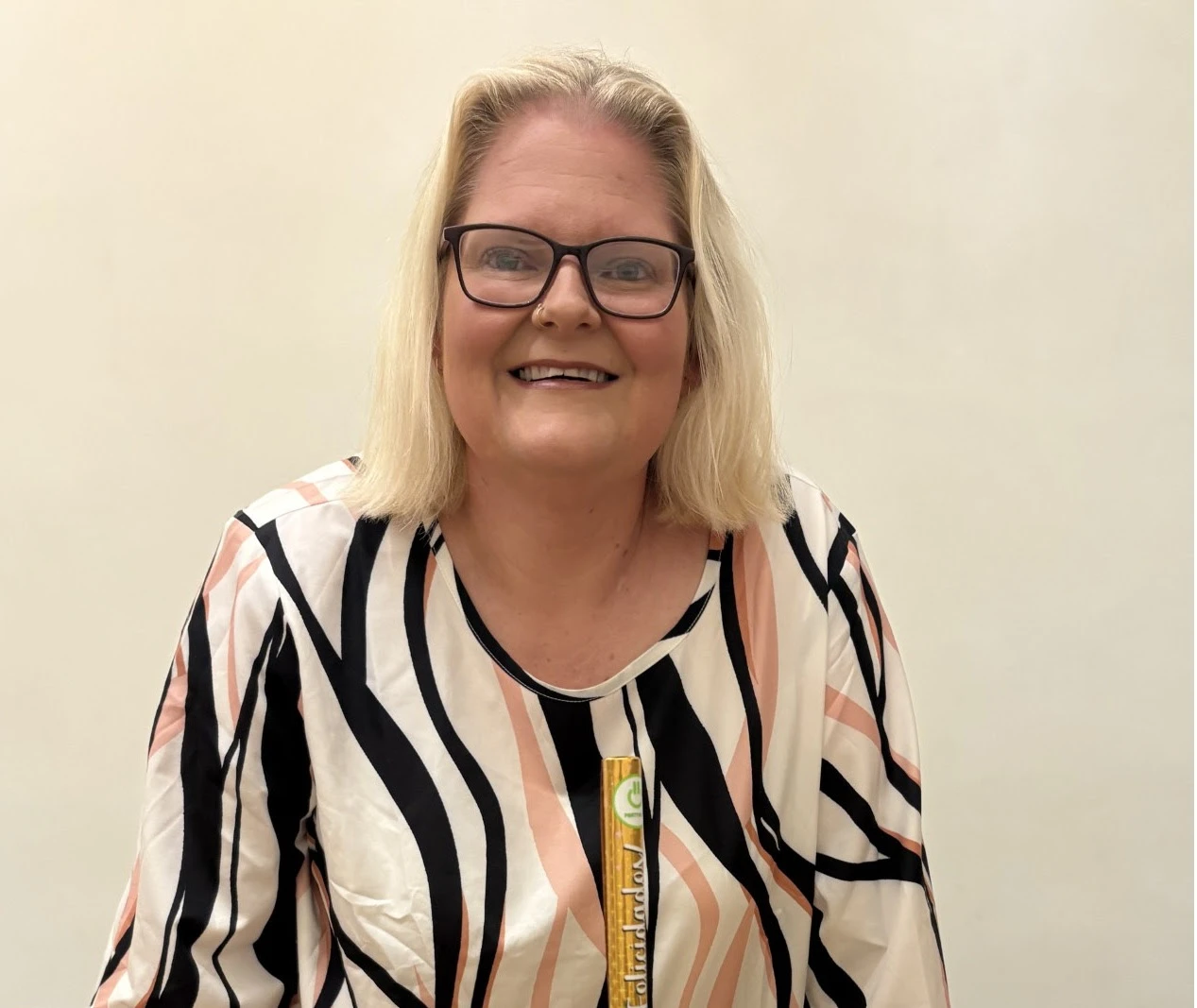
Louise Brown is in Argentina. She is 48 years old, and her story began long before she could understand it: on July 25, 1978 she became the first person in the world born through in vitro fertilization (IVF). Almost five decades after that birth, which marked a turning point in reproductive medicine, she arrived in South America for the first time as the guest of honor at the XXII Argentine Congress of Reproductive Medicine.
Her presence in Buenos Aires makes it possible to revisit a story that began with an experimental procedure and ended up transforming the possibilities of starting a family for millions of people around the world. During her visit, Brown also spoke about her own experience, the prejudices that accompanied her birth, and the moment when, upon becoming a mother, she better understood the decision her parents had made.
Who is Louise Brown, the first person born through in vitro fertilization
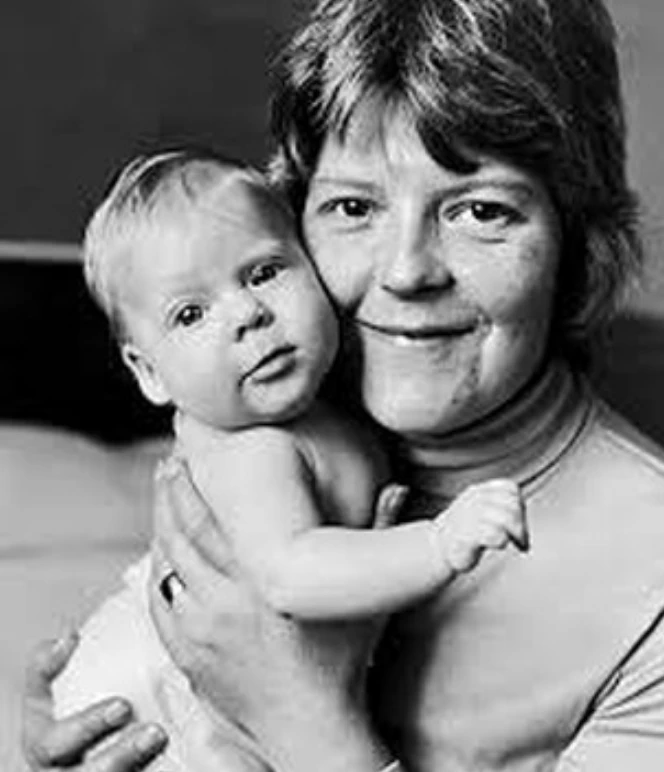
Louise Joy Brown was born on July 25, 1978, in Oldham, England. Her birth resulted from the work of physiologist Robert Edwards, gynecologist Patrick Steptoe, and embryologist Jean Purdy, who managed to fertilize an egg outside the body, obtain an embryo, and subsequently transfer it to Lesley Brown’s uterus.
Up to that point, no one had managed to turn such a procedure into a birth. That is why Louise’s birth was closely watched by the scientific community and by media around the world. Edwards’s contribution to the development of in vitro fertilization was recognized in 2010 with the Nobel Prize in Physiology or Medicine.
Almost half a century later, that technique, which raised scientific, social, and ethical questions, has become part of routine reproductive medicine. Louise, meanwhile, became one of the people most closely associated with the history of assisted fertilization and for years has participated in international meetings to talk about fertility and reproduction.
The story of her parents and the treatment that changed their lives
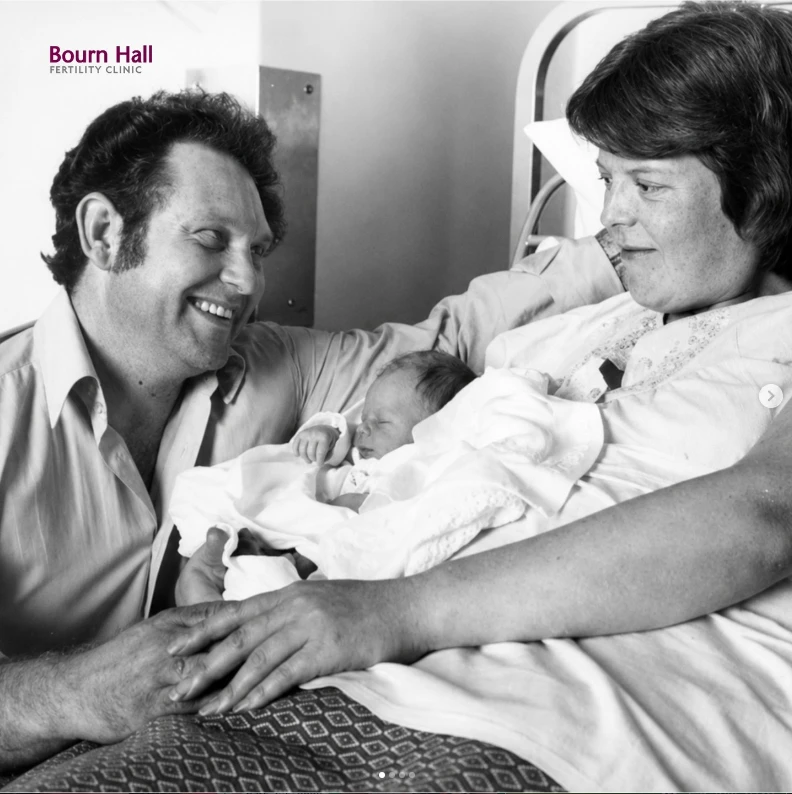
Behind Louise’s birth was a family story marked by years of waiting. Her parents, Lesley and John Brown, had been trying to have a baby for a decade.
Lesley had a problem with her fallopian tubes that prevented the eggs from advancing normally. Before IVF, Patrick Steptoe had to remove her fallopian tubes. The possibility offered by that procedure was still experimental and there were no precedents of a full-term birth.
However, the first attempt worked. The egg that gave rise to Louise was fertilized outside the body and the embryo was transferred to Lesley’s uterus.
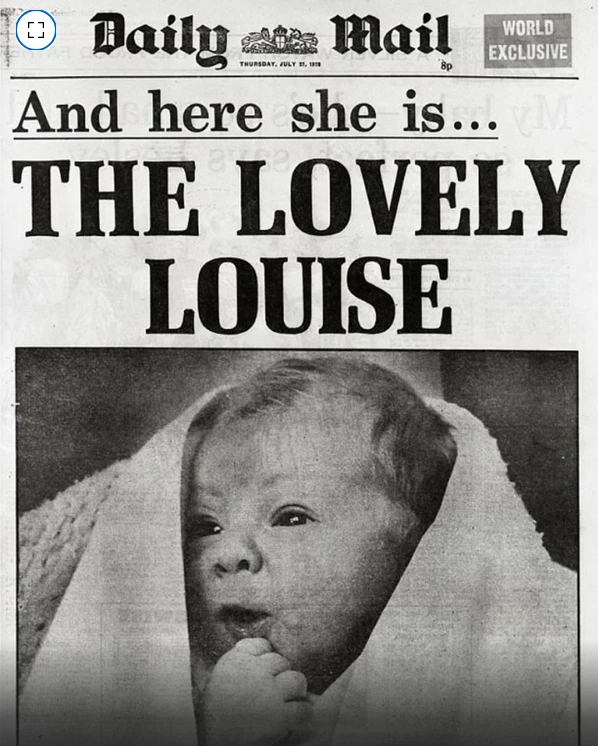
The pregnancy was carried out with caution because the doctors knew they were treading into unknown territory. When Louise was finally born by cesarean section, at 11:47 p.m. on July 25, 1978, weighing 2.608 kilograms, she quickly became world news.
The birth was also filmed. The recording had a medical purpose: to document what had happened in an unprecedented procedure and to record the conditions under which the birth had occurred.
Louise grew up knowing she had been born in a different way
Her parents decided to tell her from a young age how she had arrived in the world. When she was about four years old, before starting school, they explained that there was a difference in how she had been conceived and showed her the video of her birth.
For Louise, that story came to be part of her daily life. She also encountered from a very young age the public exposure that accompanied her birth and the questions that her existence stirred.
In a recent interview during her visit to Buenos Aires, she recalled that at birth she underwent around 100 tests because doctors and scientists wanted to know whether the first person conceived by IVF showed any differences. She said there were no signs that she was different and she then led a life without special medical check-ups due to being conceived by in vitro fertilization.
Four years after Louise, her sister Natalie was born, also via in vitro fertilization. For the family, that completed turning a scientific feat into part of their daily life.
Why Louise Brown rejects being called a “test-tube baby”
For decades, Louise was known worldwide as the “test-tube baby.” However, she herself questioned that expression and explained that she never liked it.
The reason is simple: her birth did not occur inside a test tube. Fertilization took place in a laboratory, and afterwards the embryo was transferred to her mother’s uterus.
Over the years, Louise became a voice for talking about the prejudices that still surround assisted reproduction. During her visit to Buenos Aires, she argued that it is important to discuss infertility without shame or stigma.
The moment she understood her mother’s decision
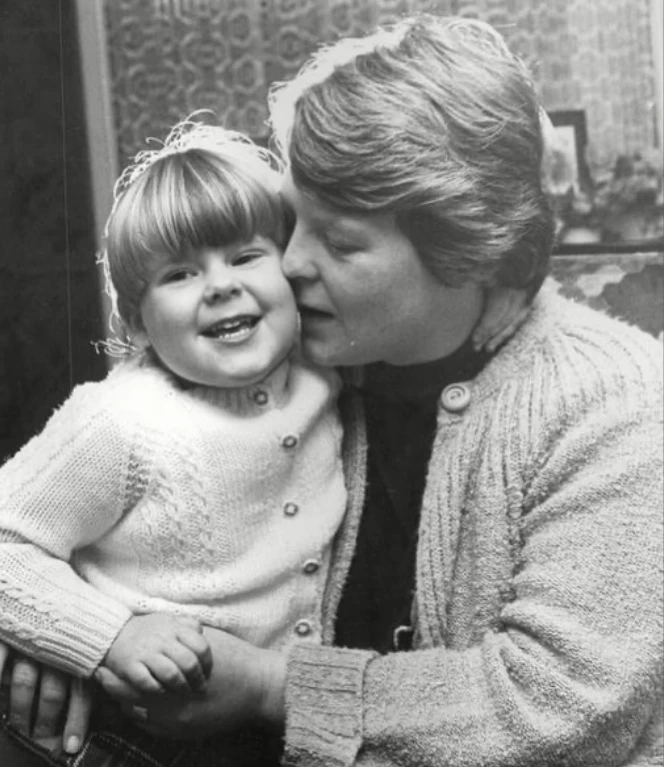
Louise has two children, conceived naturally. And it was precisely motherhood that allowed her to understand from another perspective the decision her parents had made almost five decades ago.
In a recent interview she said that when she had her own children she understood why her mother had been willing to go through a procedure that, at the time, had no guaranteed success.
The story thus gained another dimension. Louise stopped being merely the result of a medical experiment that made history and became a woman who could look back from her own experience as a mother.
Louise Brown arrived in Argentina to talk about the future of assisted reproduction
Louise’s visit to Buenos Aires takes place as part of the XXII Argentine Congress of Reproductive Medicine, organized by the Argentine Society of Reproductive Medicine (SAMeR), which runs from September 16 to 18 and gathers about 1,500 participants connected with different areas of reproductive health.
This Thursday, September 17, Brown will be the subject of the conference “From the Beginning of IVF to the Future”, where she will share her view on the evolution of the technique that made her birth possible.
Since that first procedure in 1978, assisted reproduction has undergone huge transformations. Ovarian stimulation, culture media, and laboratory techniques were refined, and the vitrification of eggs, embryo cryopreservation, genetic studies, and time-lapse systems that allow observing embryonic development were incorporated. More recently, artificial intelligence has begun to be integrated into various areas of research and analysis.
But technological evolution also coexists with biological limits that medicine has not yet managed to eliminate, including the impact of age on fertility with one’s own eggs. That is why experts emphasize the importance of accessing reproductive information before conception challenges arise and of knowing the available options, including fertility preservation.
Forty-eight years after that birth that changed the history of medicine, Louise Brown arrived in Argentina to tell the story from a unique perspective: that of the woman who was central to that scientific revolution even before learning that her own life would be forever linked to it.