
The aisle was a study in modern romance: sunlit linens, buttercream blooms, and a bride whose sense of style carried the whole scene. Joanna Cooper stepped out in a shimmering Berta creation for the main celebration with rugby star Conor Murray, a gown that gave her silhouette the kind of architectural drama Berta is known for. But the story of her bridal wardrobe started earlier—and quieter—with a first dress crafted by a designer almost no one had heard of, a choice that said as much about her taste as any headline look ever could.
When the spotlight met sparkle
For the principal ceremony, the supermodel’s gown balanced glamour and restraint. Think liquid-like fabric, a contoured bodice, and just enough light-catching detail to read as “evening” while staying resolutely bridal. The effect was “big night” rather than ballgown, and it paired beautifully with her clean beauty look and restrained accessories.
You could tell the dress was designed for movement. The skirt glided, the train obeyed, and the neckline framed her face with confident precision. It was the kind of ensemble that makes guests whisper “that’s the dress,” which is exactly what a statement look should do.
The understated first look no one saw coming
Before the fanfare, before the flashbulbs, there was a different kind of magic. Joanna’s first wedding dress came from a relatively unknown atelier, the sort of independent maker whose work circulates on moodboards and in DMs rather than on glossy billboards. The design language was whispered rather than declared: refined tailoring, texture you wanted to touch, proportions that honored the body and the moment.
In fashion-speak, “quiet luxury” often means simplicity for its own sake. Here, it meant intimacy. The dress felt like a secret—something chosen for the joy of wearing it, not for the applause of being seen. As one stylist might put it, “let the fabric do the talking.”
Why brides are mixing marquee labels with hidden gems
Call it “high-low bridal,” but elevated. Today’s style-savvy brides are threading together multiple identities across the wedding journey: civil ceremony, welcome night, morning-after brunch. Not every look needs to shout; some only need to speak to the wearer.
- A marquee gown delivers the cinematic “I do” moment.
- An indie piece captures the personal history—how you live, dress, and actually move.
- The contrast keeps the narrative interesting, showing range without losing coherence.
This duality is a form of editing. It says, “I know what I love, and I know when to use it.” It’s also a gift to future you, who will remember how a dress made you feel, not just how it photographed.
The craft behind the quieter choice
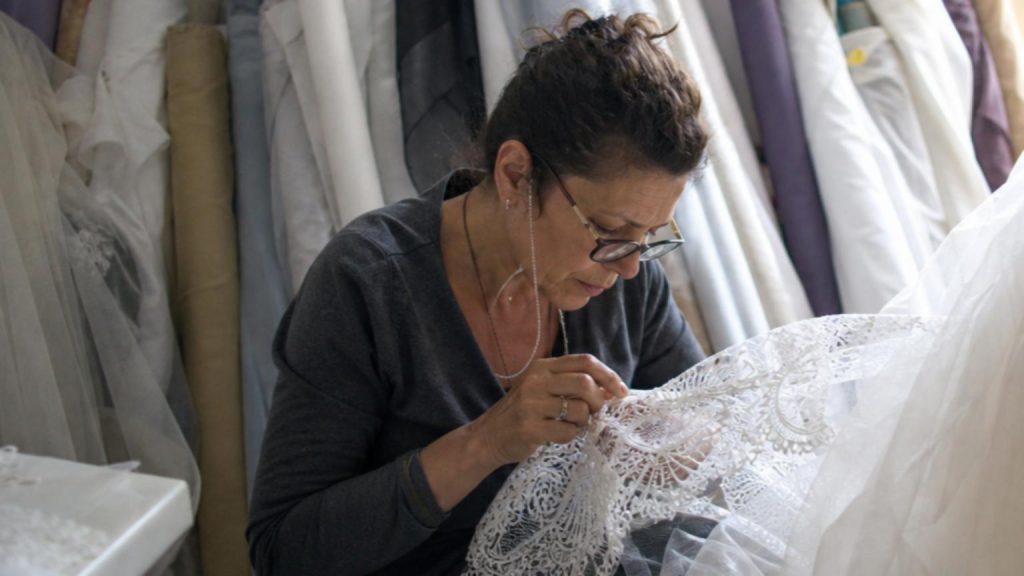
Emerging designers often work at a scale that allows for obsession over the little things: a calibrated waist-to-hip ratio, hand-finished seams you could wear inside-out, a hem that kisses the floor at precisely the right beat. That intimacy can be priceless on the day when nerves run high.
There’s also the matter of story. A lesser-known label invites conversation. It suggests curiosity, a collector’s eye, a willingness to champion artistry that hasn’t yet become ubiquitous. “Make it yours,” the look seemed to say—not loud, but unmistakably clear.
How to balance spectacle and soul
Think of wardrobe as a score, not a single note. The statement gown wins the crescendo; the indie dress holds the melody. Keep the connective tissue consistent—silhouette, palette, or a recurring fabric texture—so the progression feels intentional.
A useful mantra: “One piece leads; the others listen.” If the evening dress is crystalline and structured, let the earlier look read as tactile and soft. If the showstopper is minimalist and sleek, let the indie moment bring in artisan detail—a hand-stitched strap, a subtle matelassé.
The emotional architecture of two dresses
Weddings compress a life’s worth of feeling into hours. Clothes carry that load—not just for the photos, but for the private, liminal minutes: stepping into the shoes, clipping the earring, breathing before the vows. The first dress—less famous, more personal—often holds the quiet gasp, the “this is really happening” moment.
The second dress, the major look, translates that feeling into a spectacle everyone can witness. Both are true. Both are necessary. Together, they map a path from intimate promise to public celebration.
What this choice says about modern bridal taste
It says curation over excess. It says knowing the room, the light, the rhythm of the day. It respects the power of provenance while keeping room for discovery. In a culture that too often equates visibility with value, choosing a lesser-known maker is a vote for the work itself—for cut, for hand, for point of view.
“Wear what feels like you,” the moment insists. Not because it’s safe, but because it’s strong. A starry gown for the dance, a secret dress for the start—two chapters of the same story, bound by a bride who understands how to be seen without losing how to be herself.