
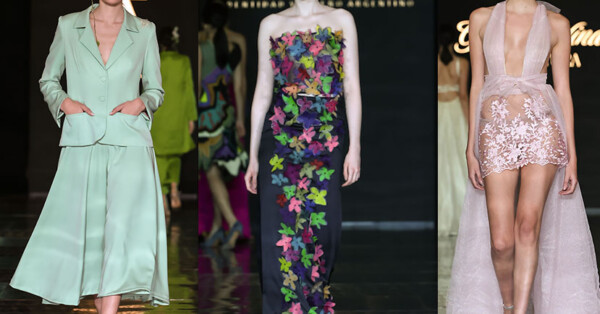
Argentine fashion has a distinctive way of telling stories: through the hands of those who create, embroider, weave, sculpt, and transform a material into a unique piece.
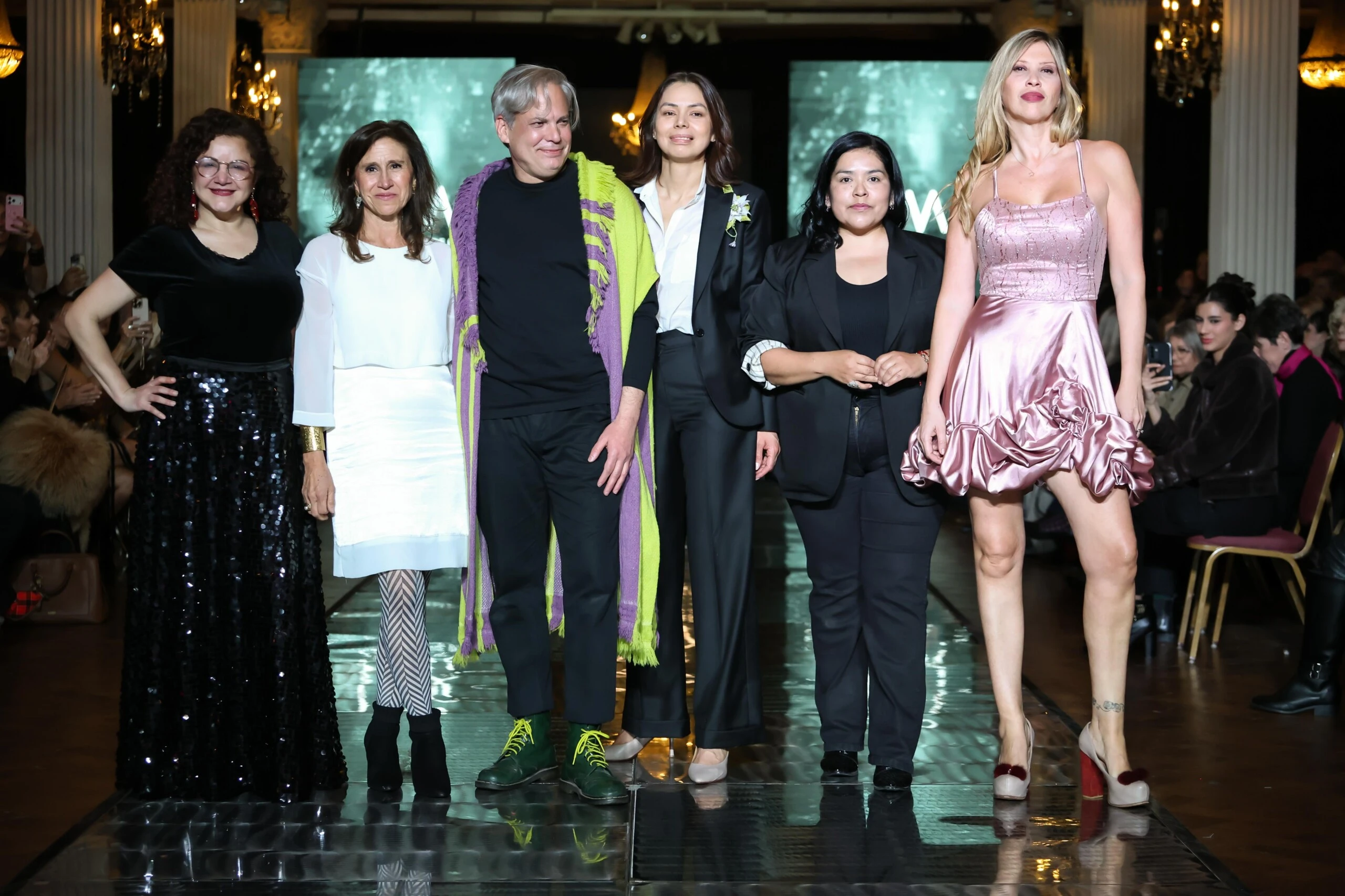
That perspective took center stage on August 26 at Palacio San Miguel, where the Argentine Chamber of Fashion presented a new round of runway shows within the 67th edition of Argentina Fashion Week.
The lineup brought together Olmy Carmin, Christener, Gaba Molina Alta Costura, Angelina Testorelli and Francisco Ayala, five different creative universes that found a common ground: reclaiming time, craft, and artisanal construction as central values of contemporary design.
From hand-finished haute couture dresses to fabrics, embroidery, sculptural floral elements, and painting on silk, the runway demonstrated that luxury can reside in pieces that require hours of work and cannot be reproduced identically.
Olmy Carmin: when a dress becomes a jewel
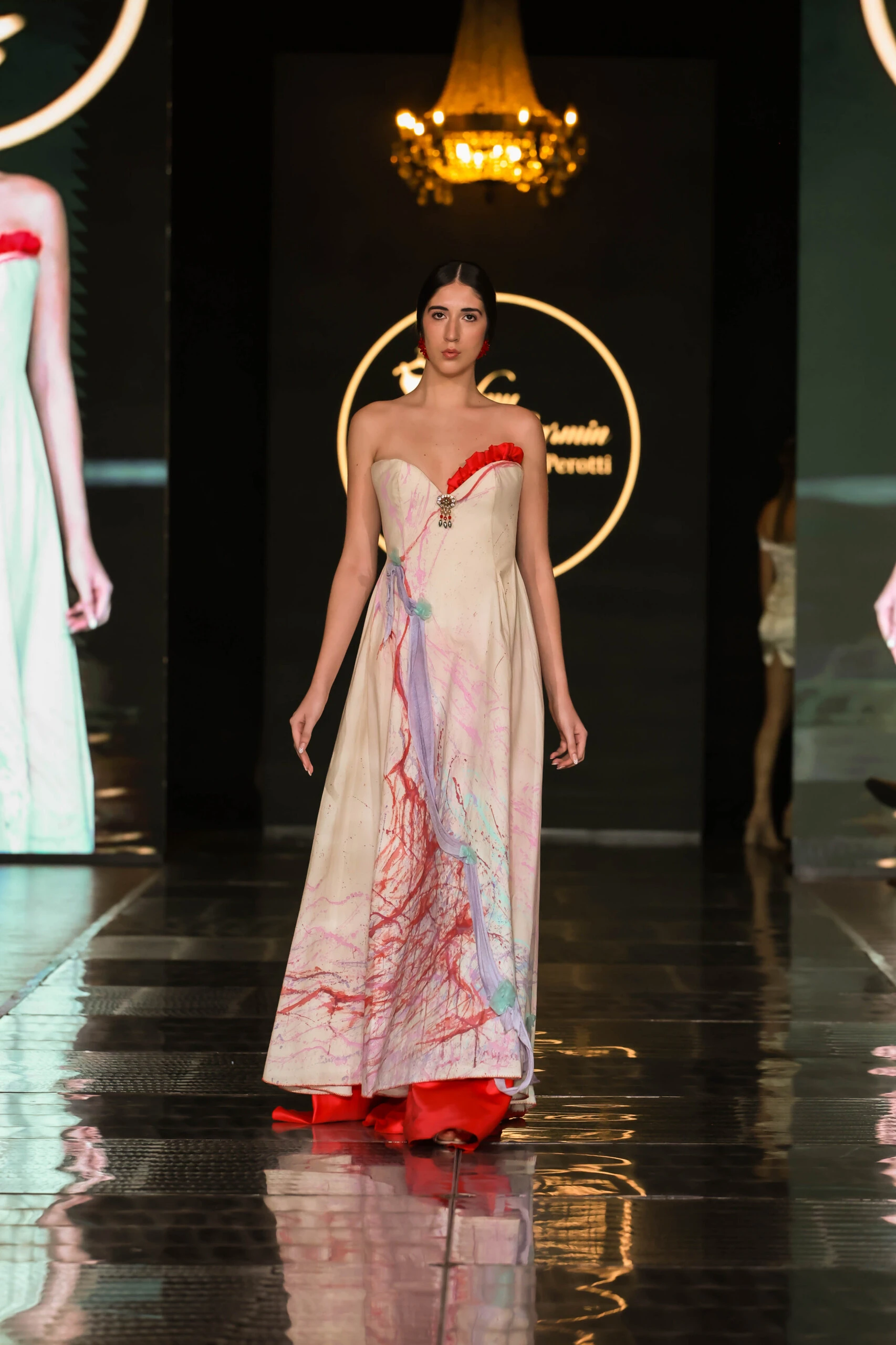
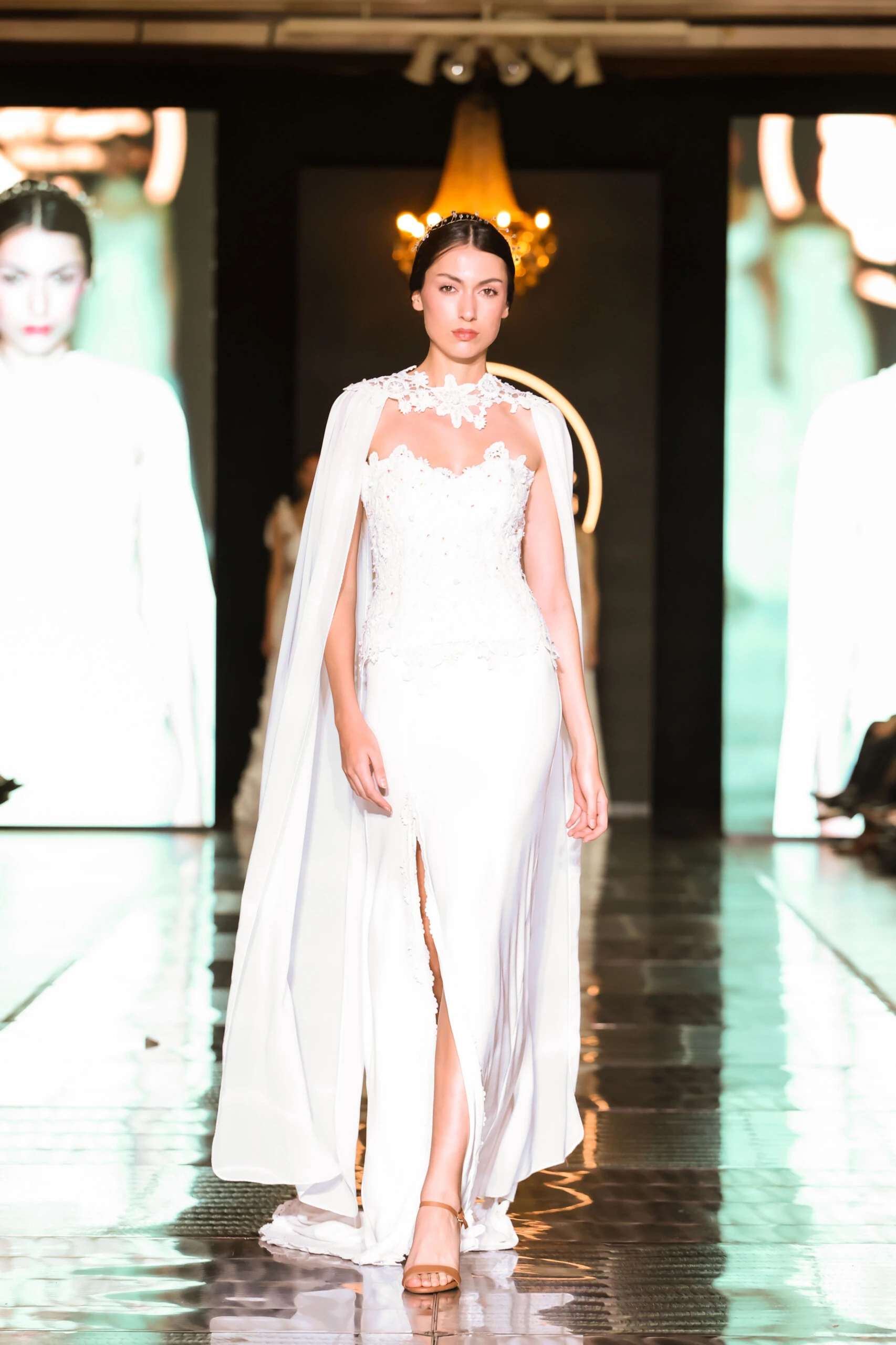
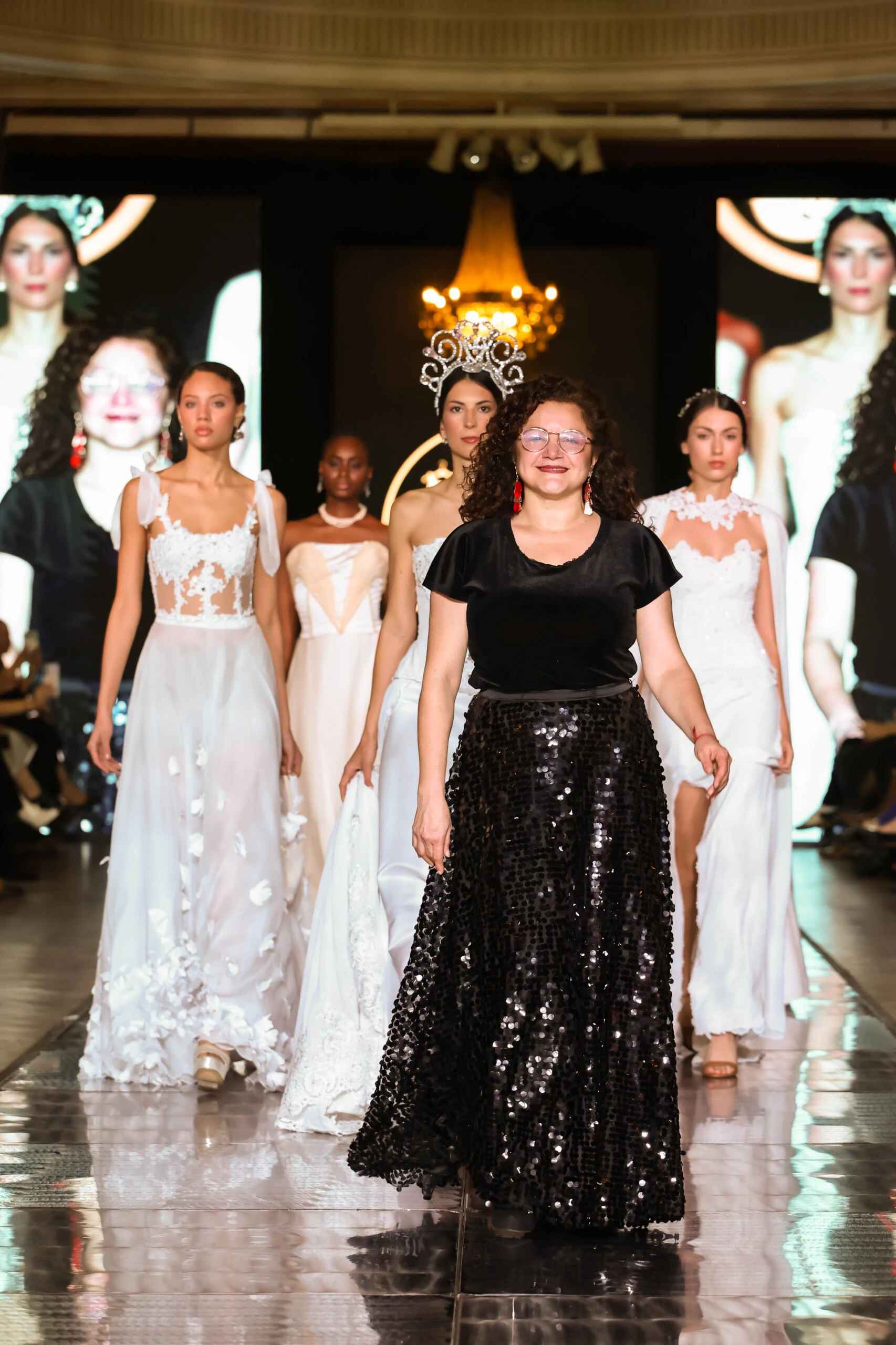
The designer Nora Perotti, at the helm of Olmy Carmin, presented “Écru noir, the art of handmade work”, a collection where craftsmanship took center stage.
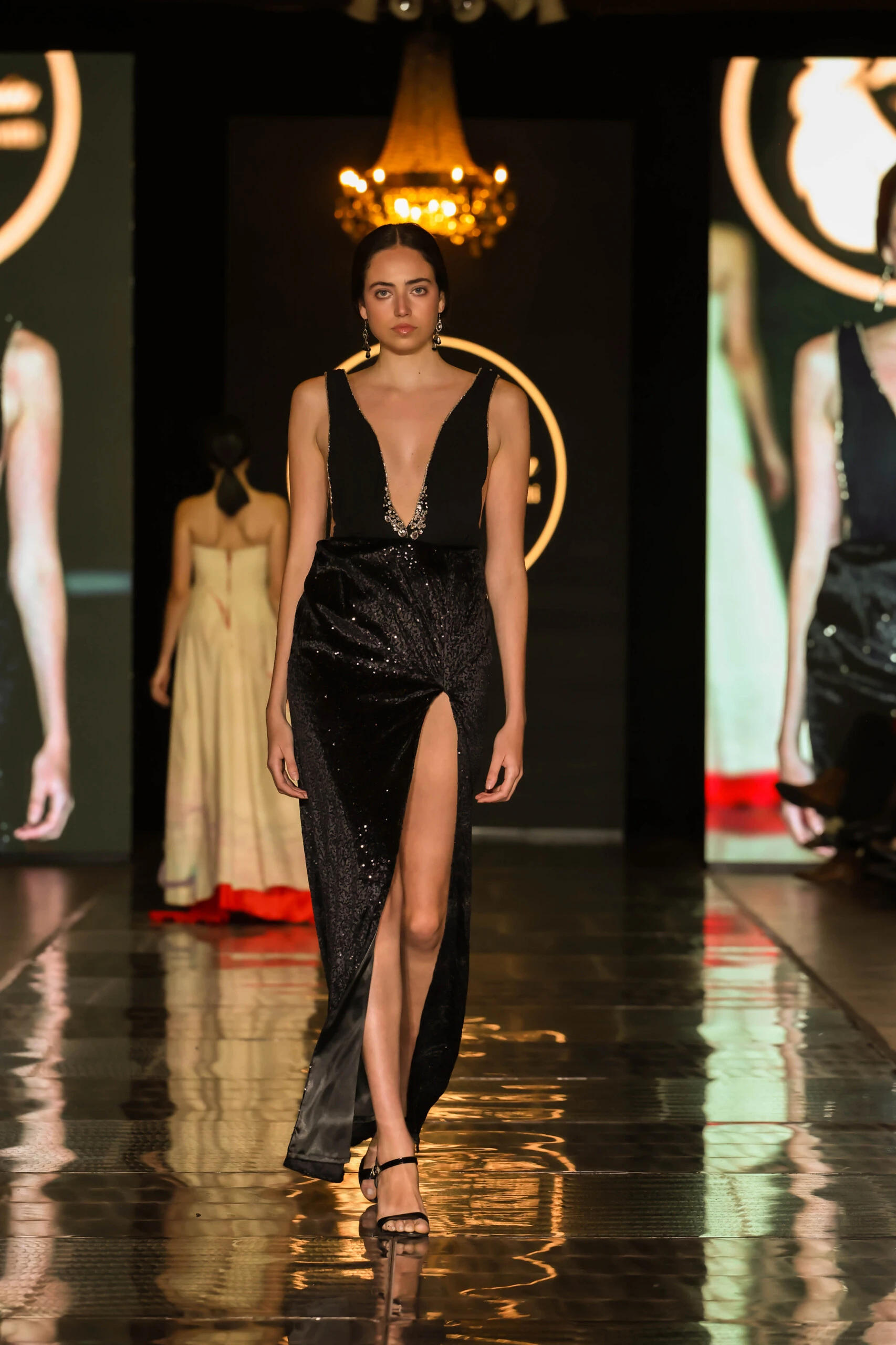
Each drape was sculpted by hand and every stone sewn in place, one by one. A meticulous construction that translated into dresses designed to accompany special moments.
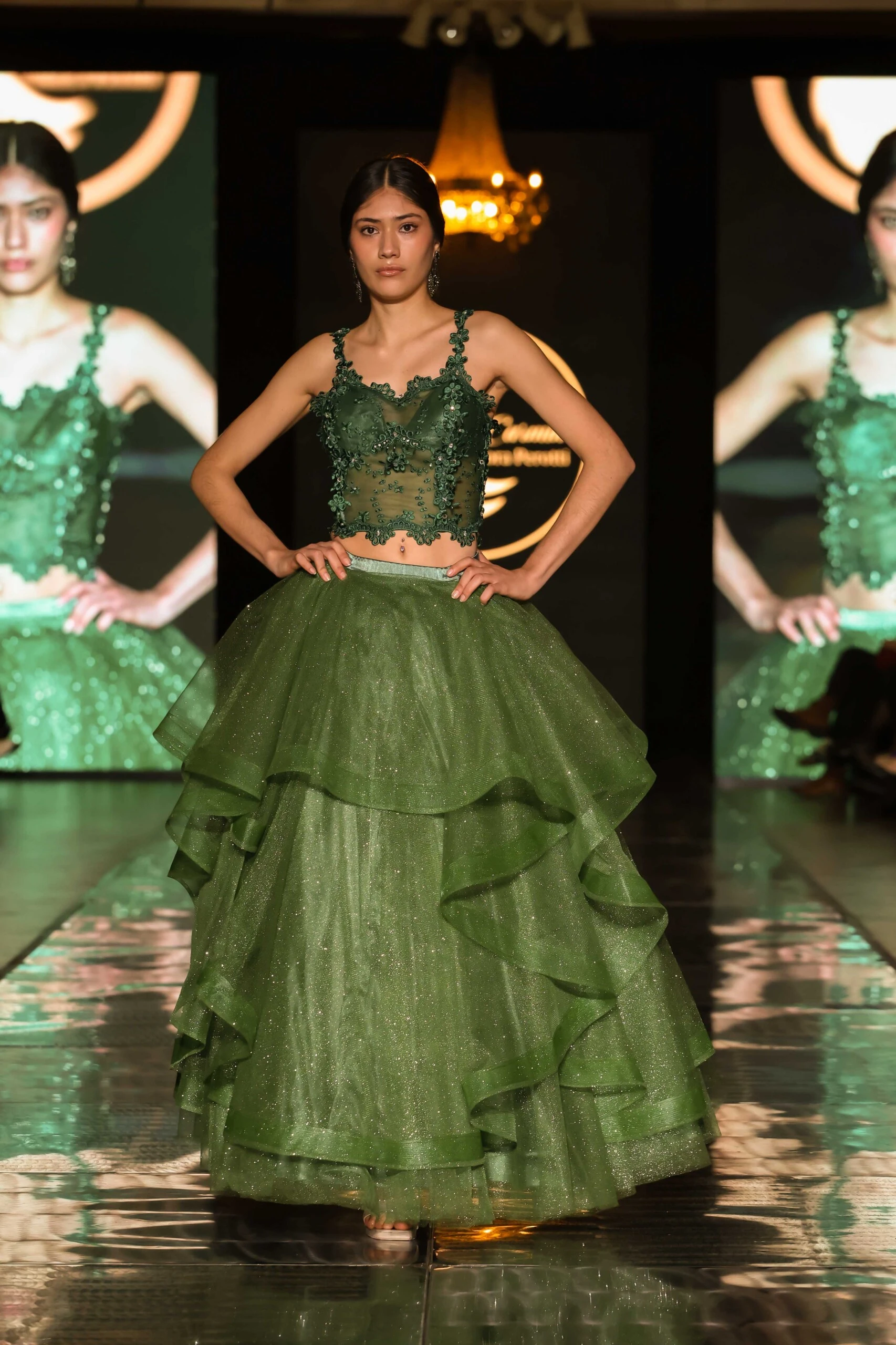
The palette traced different nuances according to the occasion: alabaster white for brides, ebony black for the godmother, as well as deep greens, beiges, and nudes that blend with the skin.
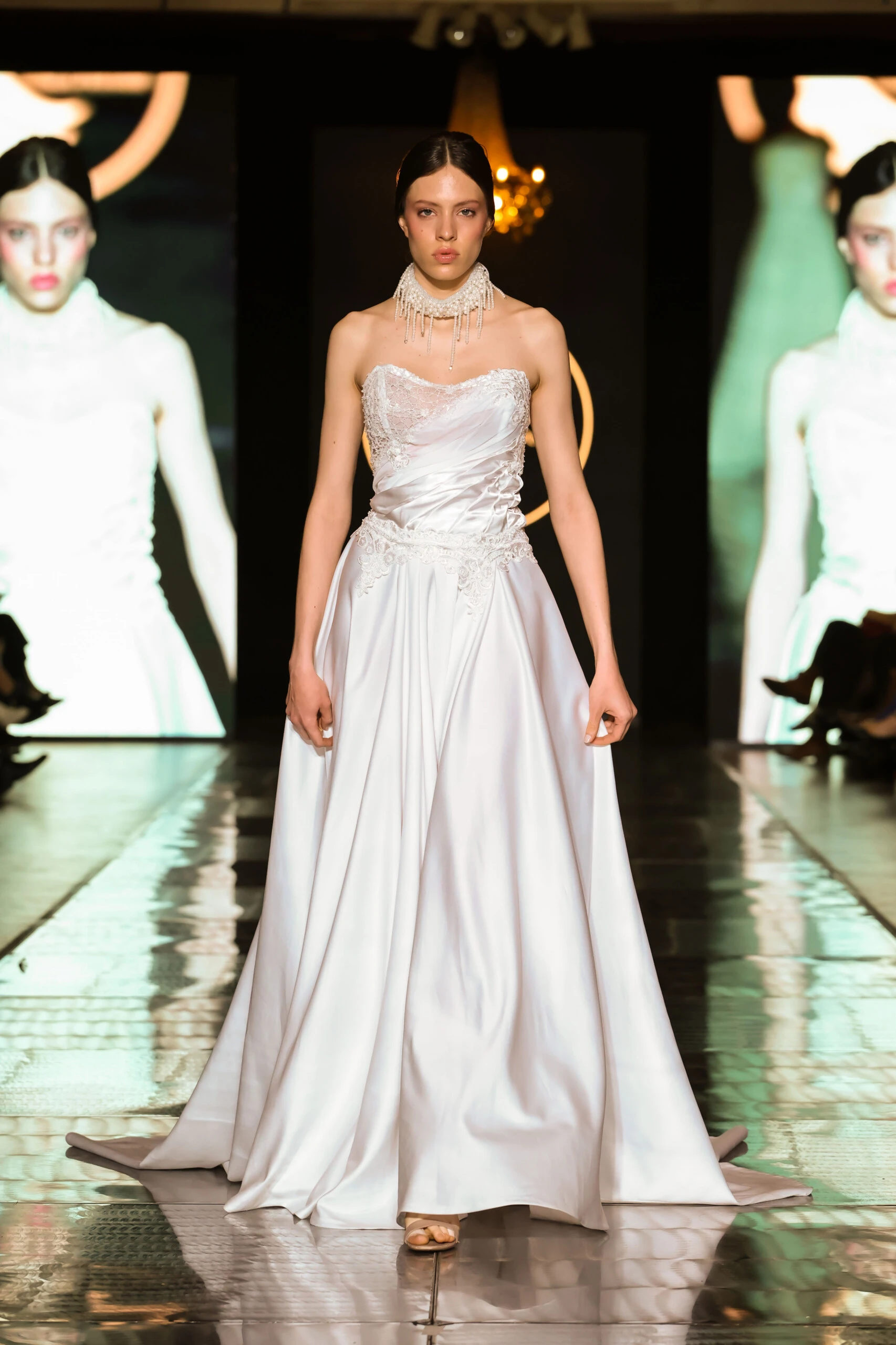
The collection starts from a clear premise: it is not merely about finding a dress, but about choosing a piece conceived as a jewel for life.
Christener: a party collection to dare to dream
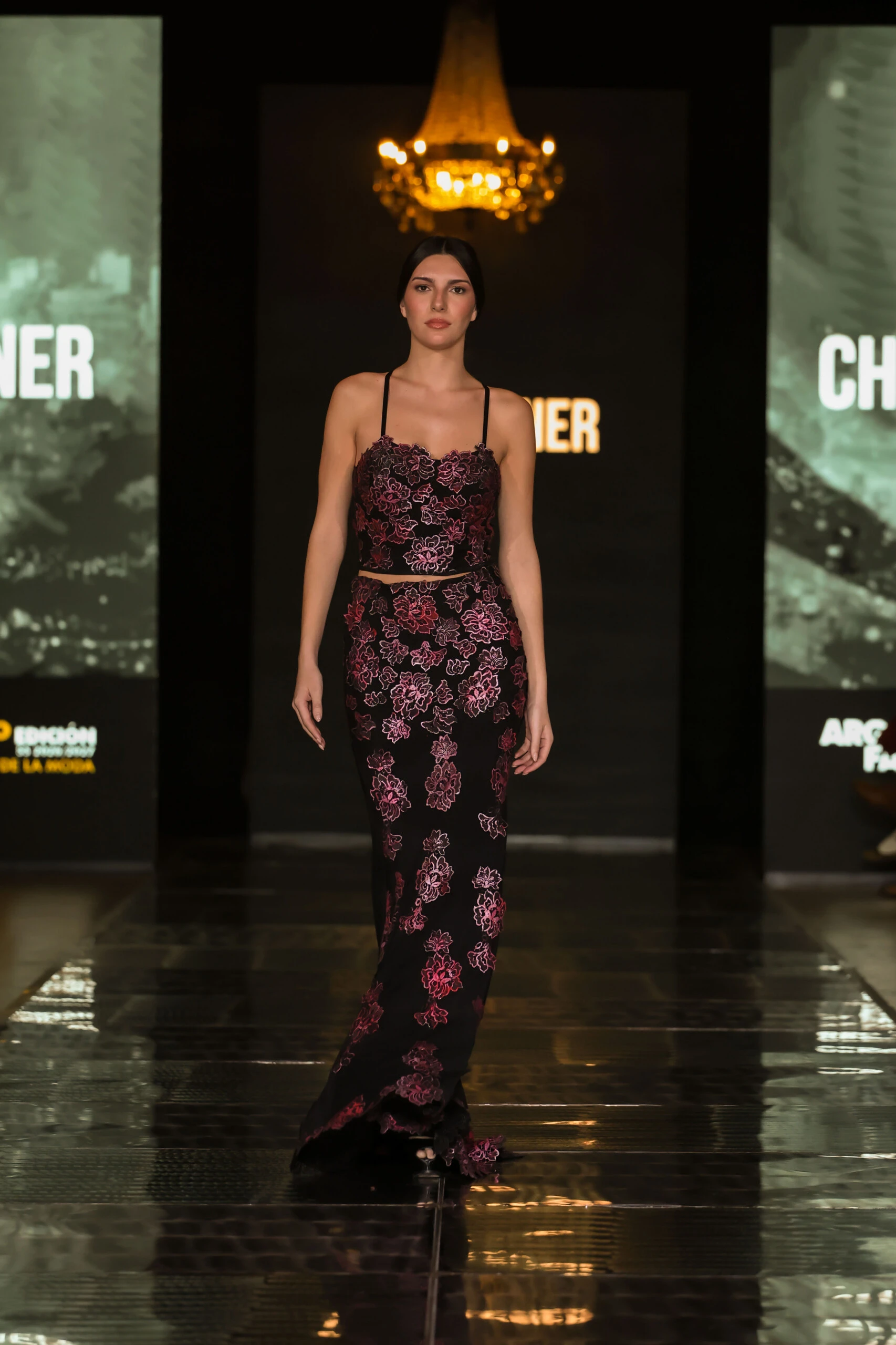
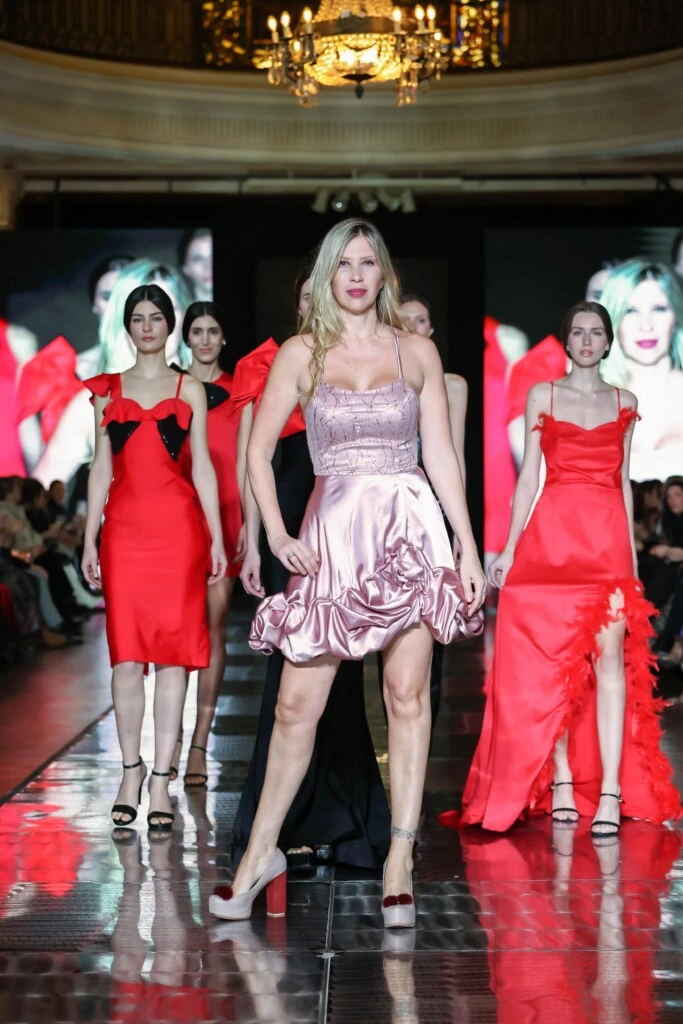
Carolina Christener presented for Christener “BLONDE AMBITION”, a bold and magnetic party proposal that emerges from the realm of imagination and desires.
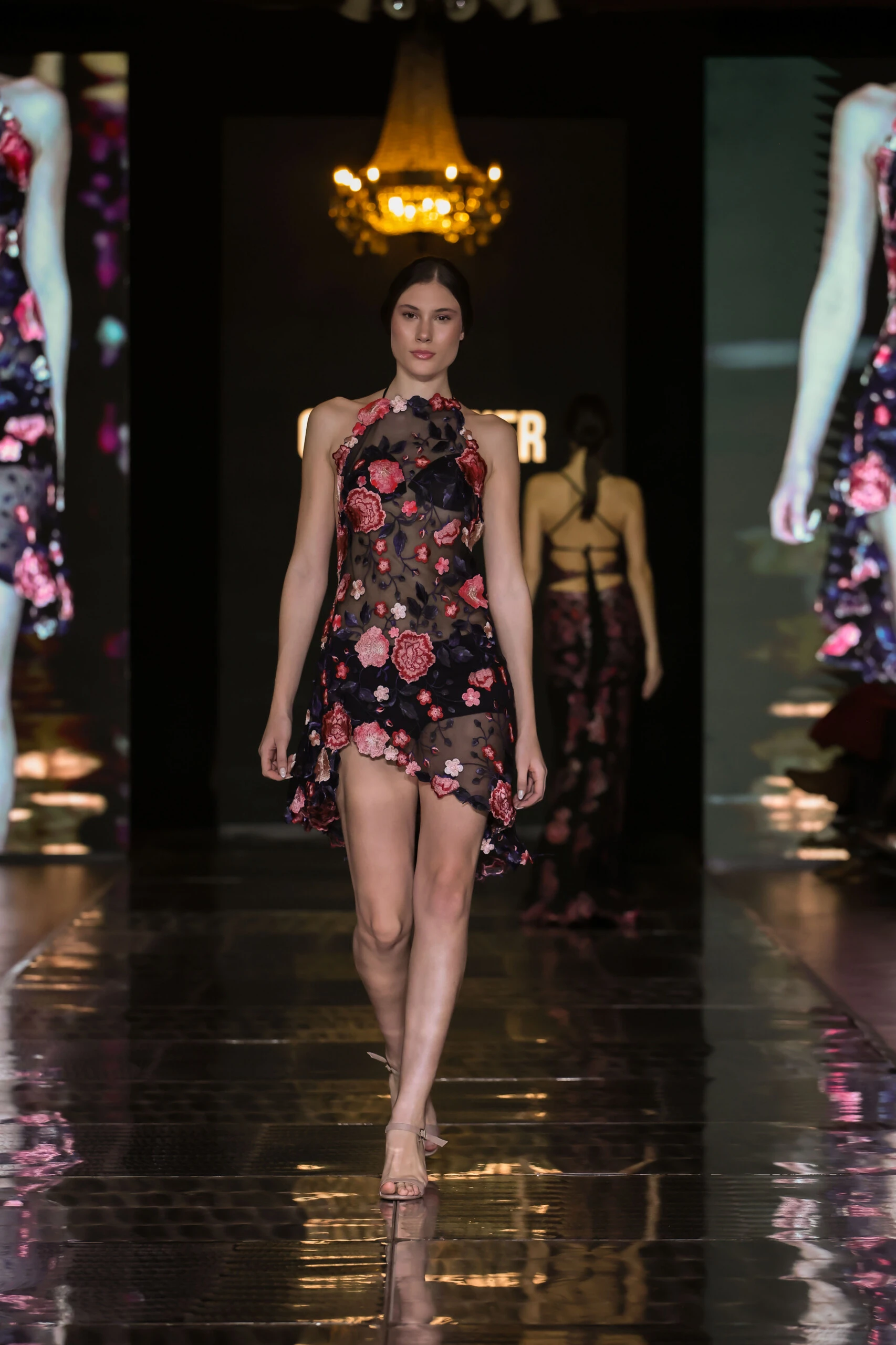
The designer morphs dreams into presence and understands femininity from a powerful vantage point, where sensuality, resolve, and character coexist.
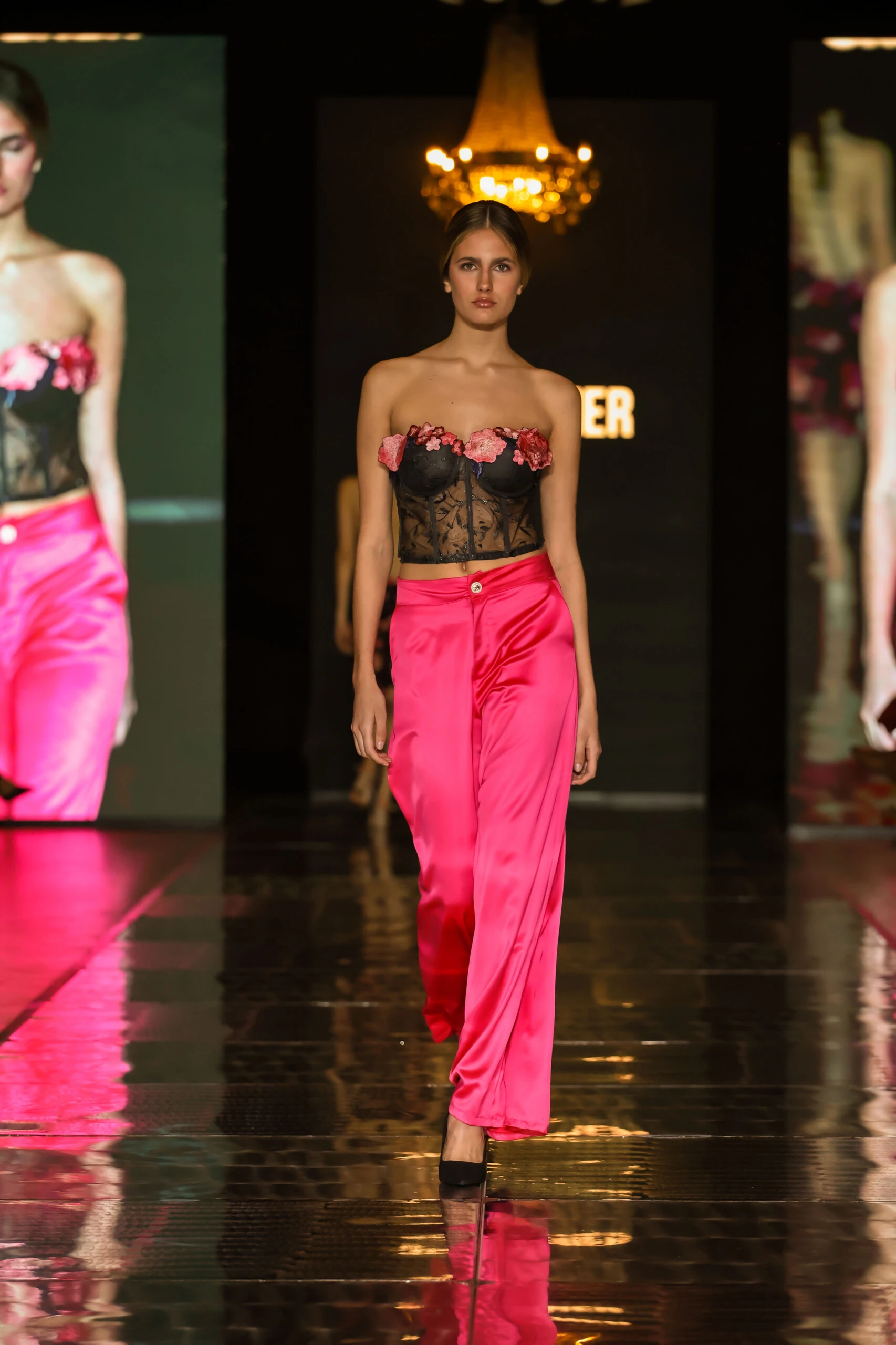
The shimmer of canutillos, the richness of brocade, and the fluidity of silk build a collection based on contrasts.
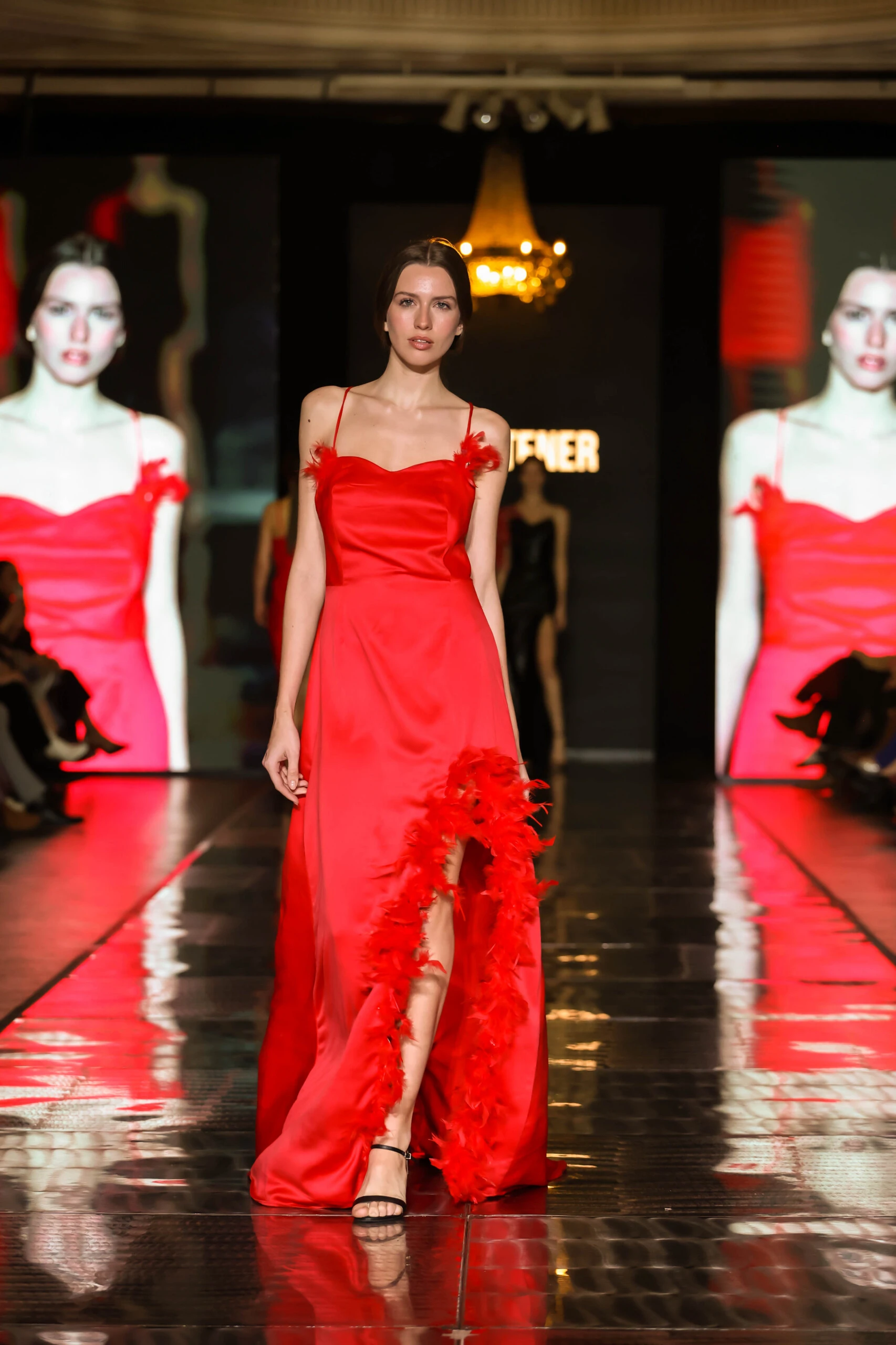
Delicacy and strength. Romanticism and determination. Sensuality and power.
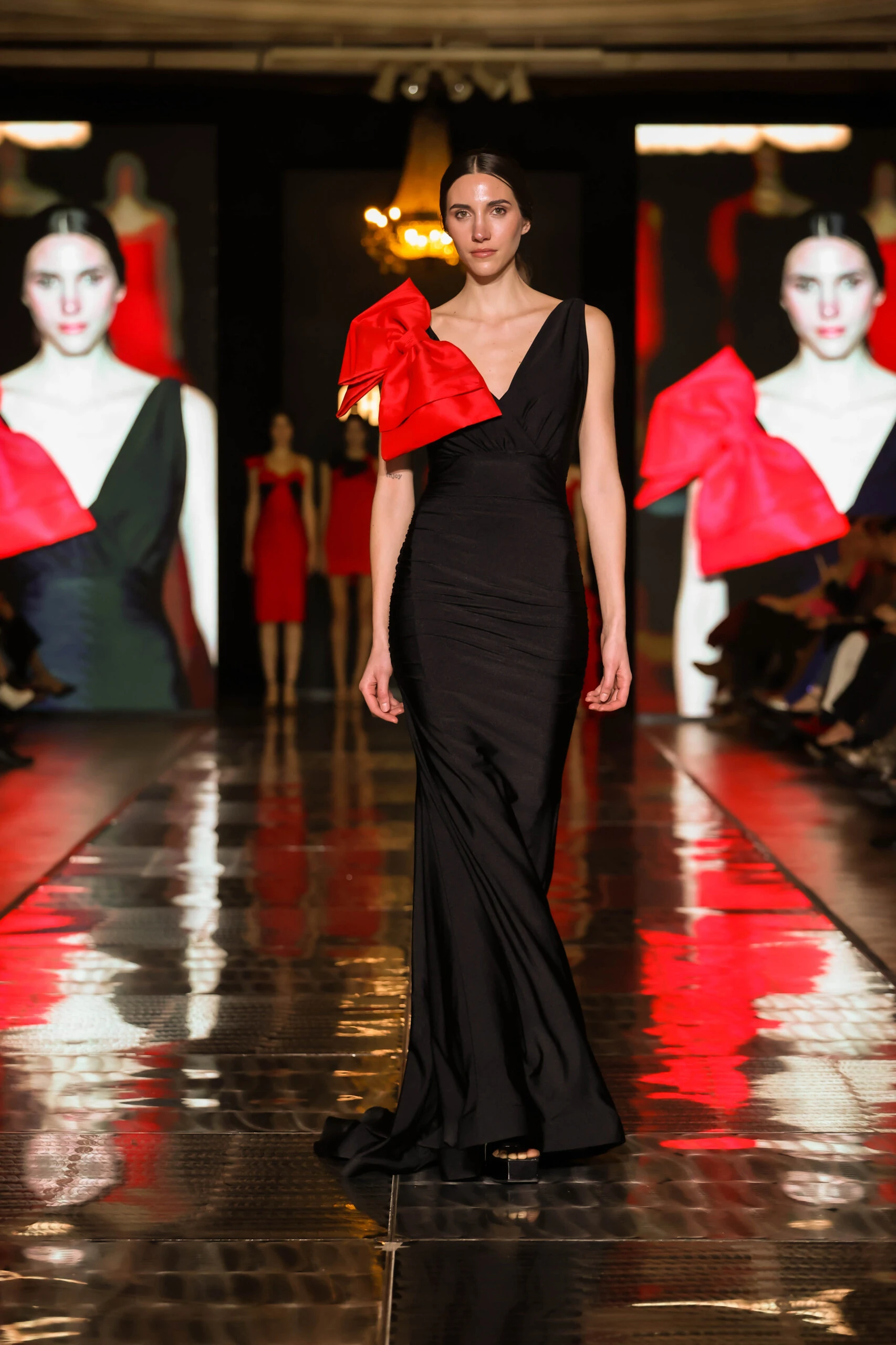
A proposal designed for a woman who does not fear taking up space and turning fashion into a true statement of personality.
Gaba Molina Alta Costura: a woman in full metamorphosis
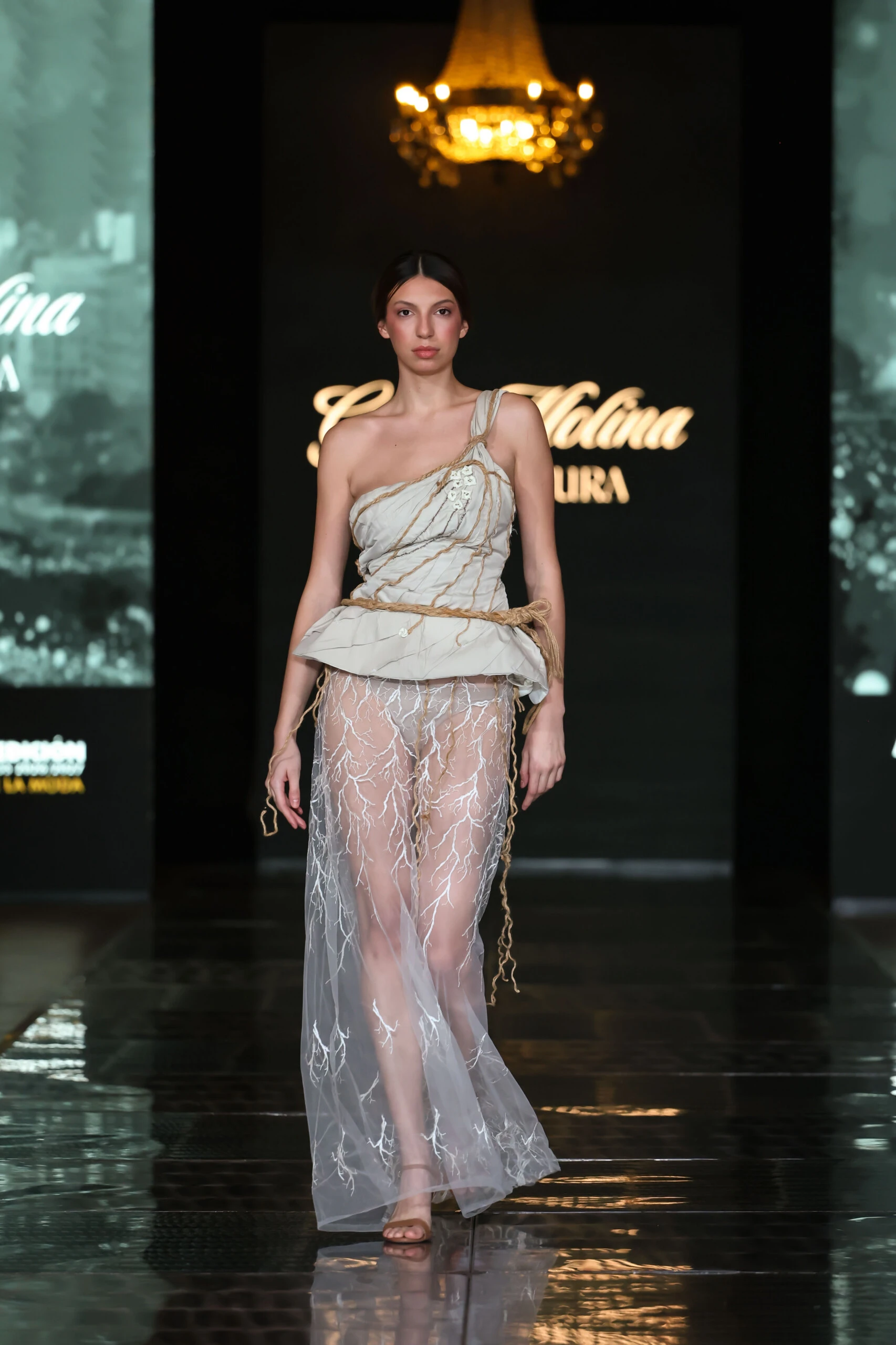
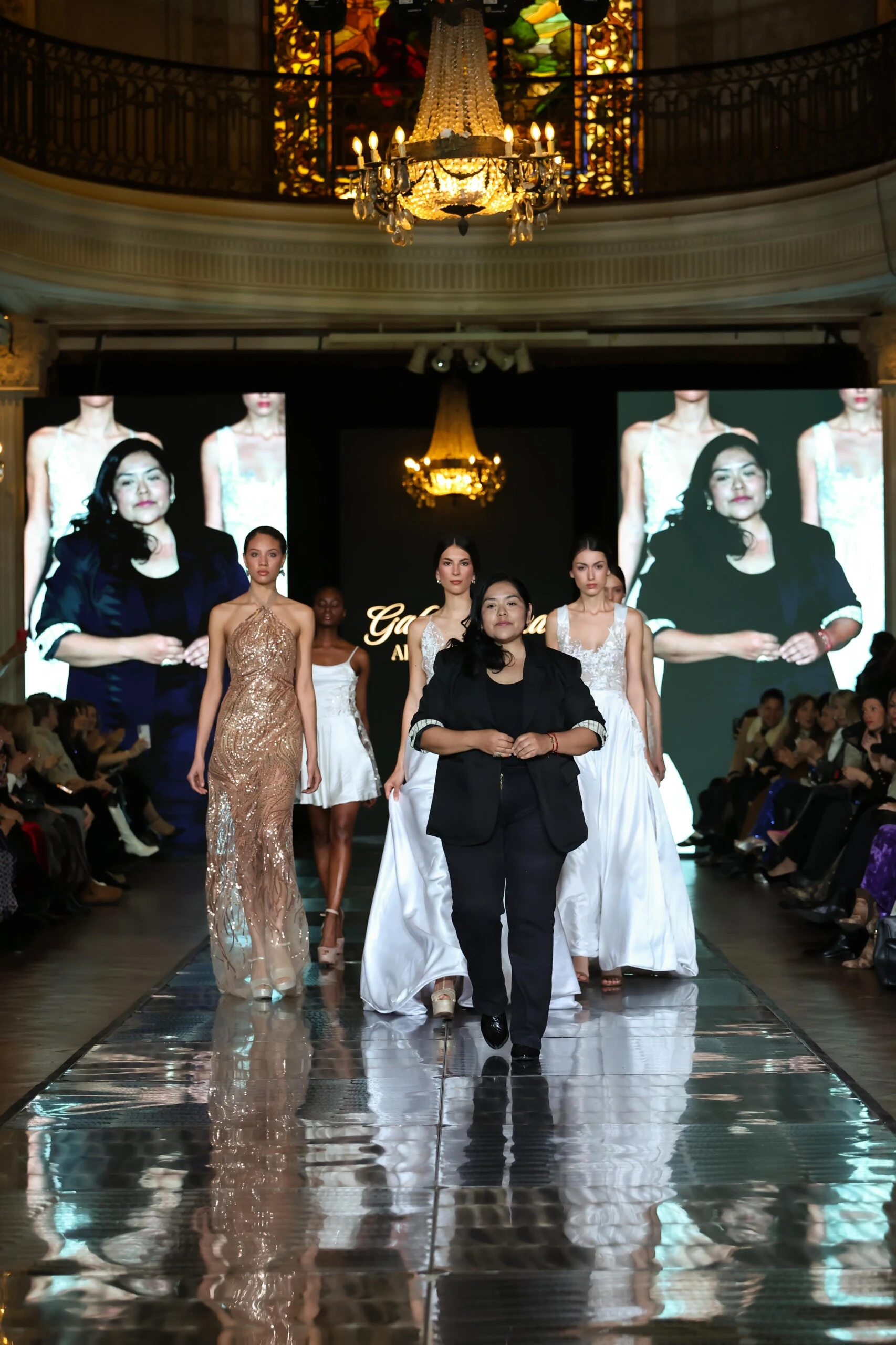
The collection “Metamorphosis”, by Gaba Molina Alta Costura, begins from an idea as feminine as it is universal: transformation.
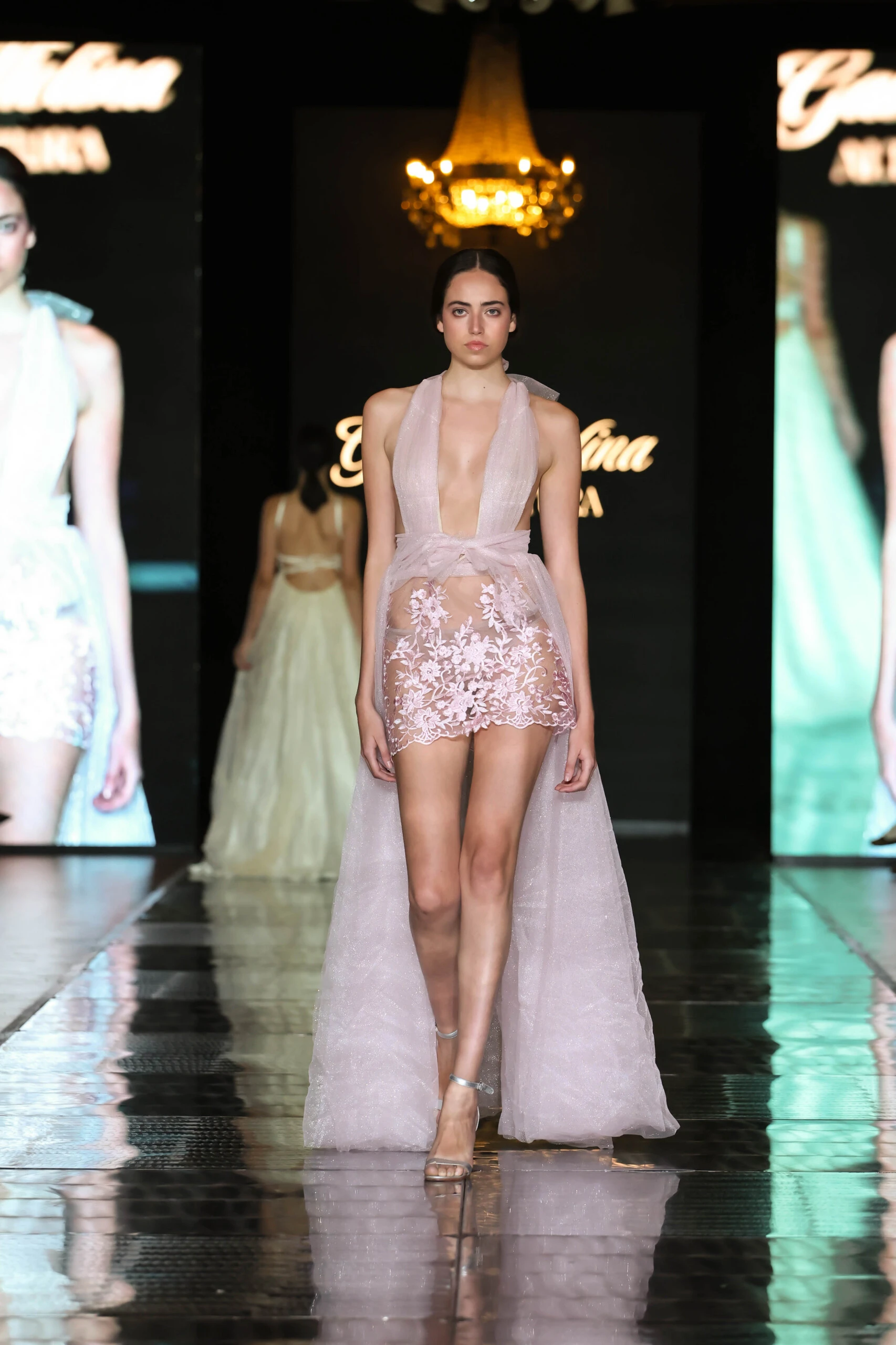
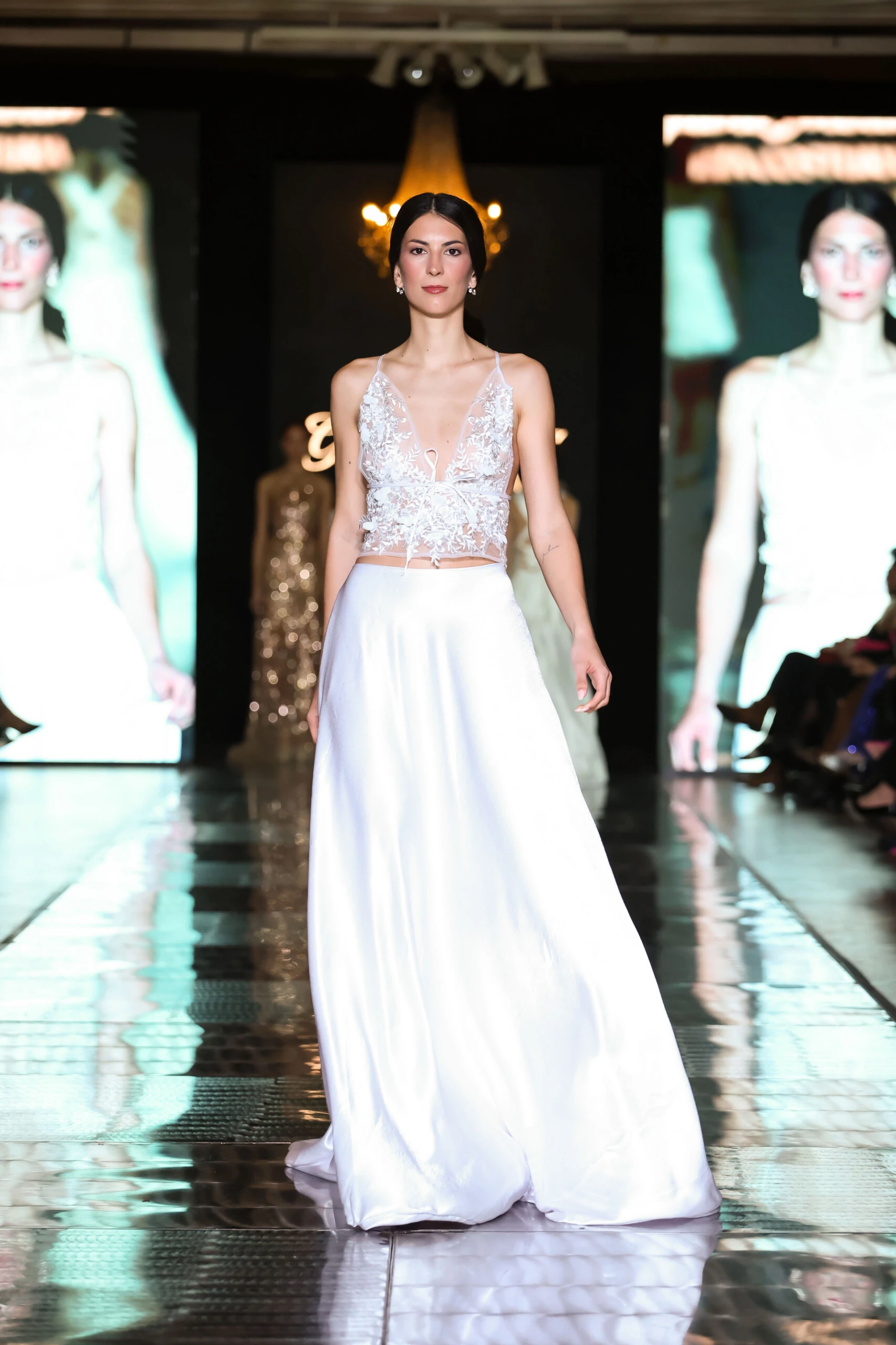
Each design represents a stage of evolution and invites a journey toward a new version of the same. The collection preserves the brand’s romantic and feminine DNA, with elegant silhouettes, delicate volumes, and handcrafted details.
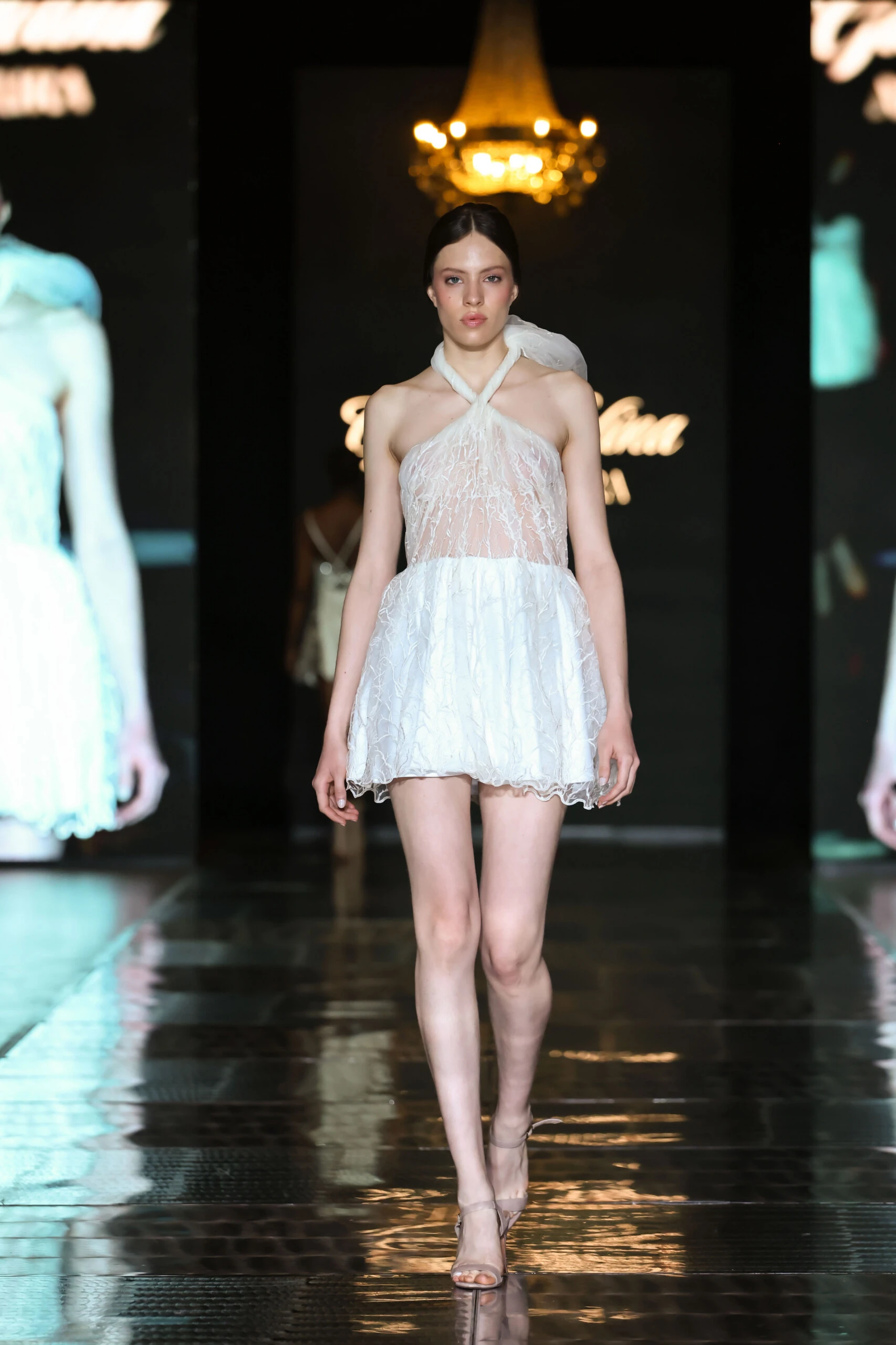
The journey begins with a piece handcrafted with yute embroidery, and then evolves toward materials like crepe, satin, and tulle.
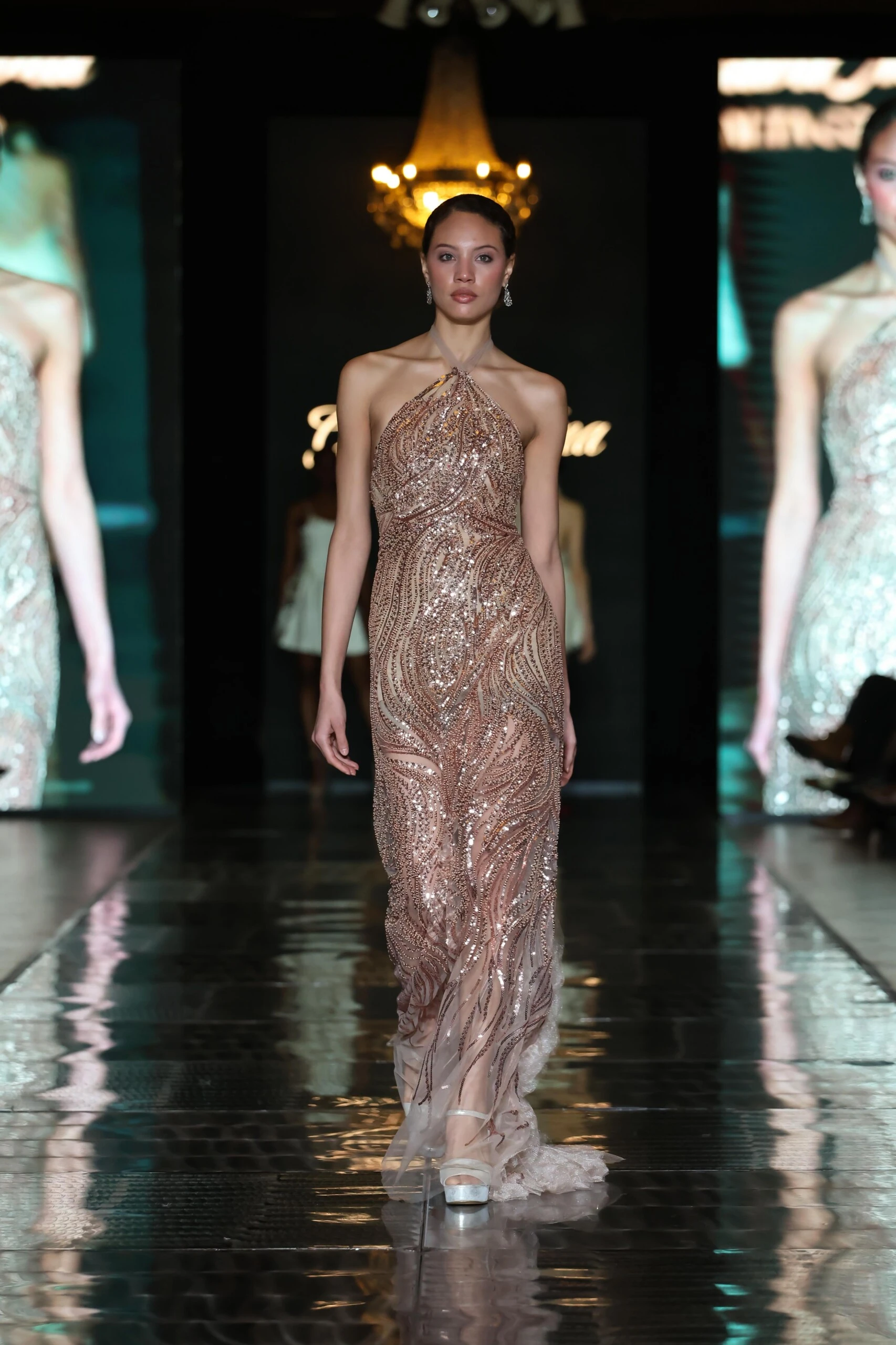
The embroidery, textures, and details build a collection where transformation appears not only in the concept but also in the materials and silhouettes.
Angelina Testorelli: Argentine nature as inspiration
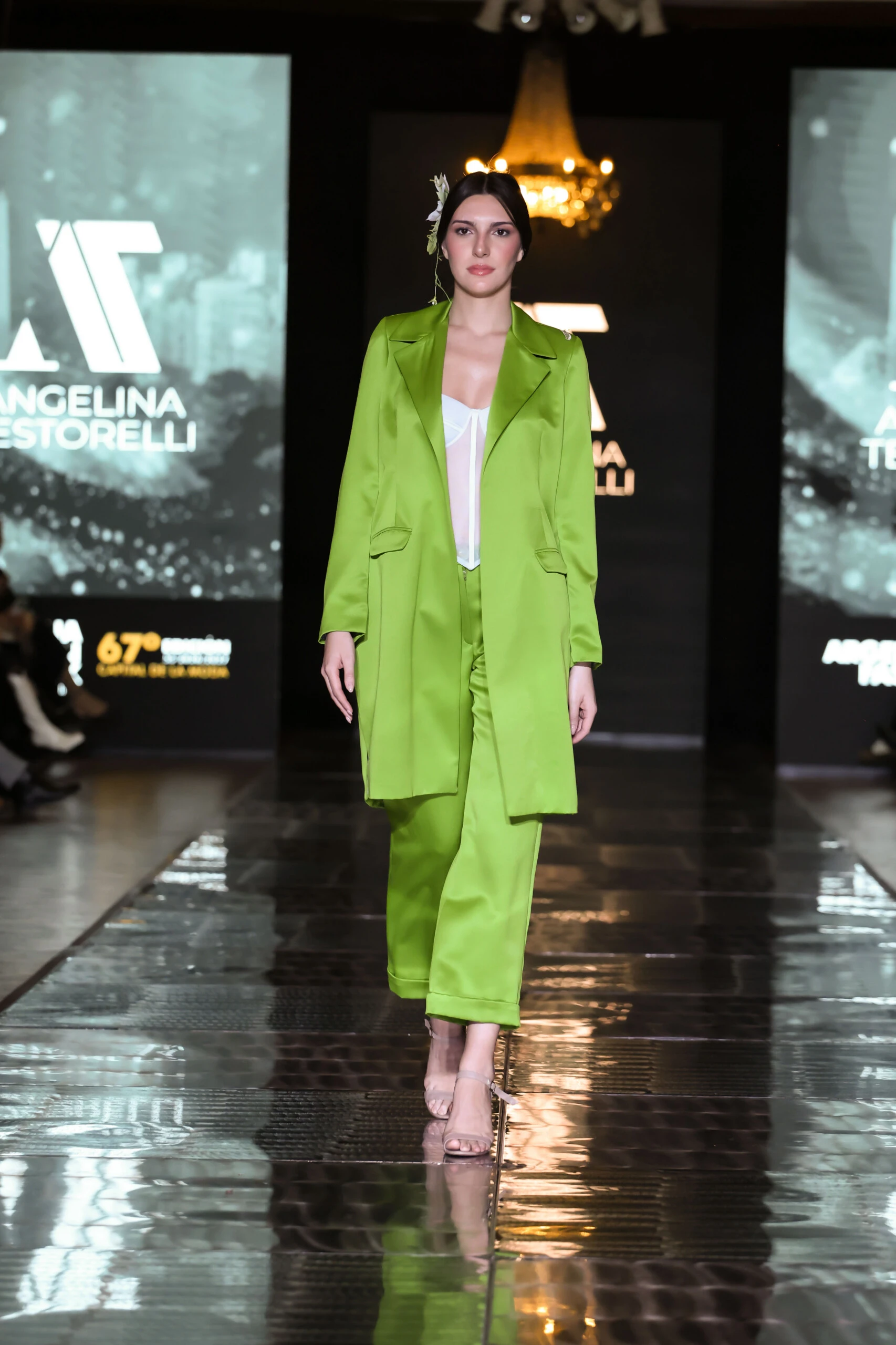
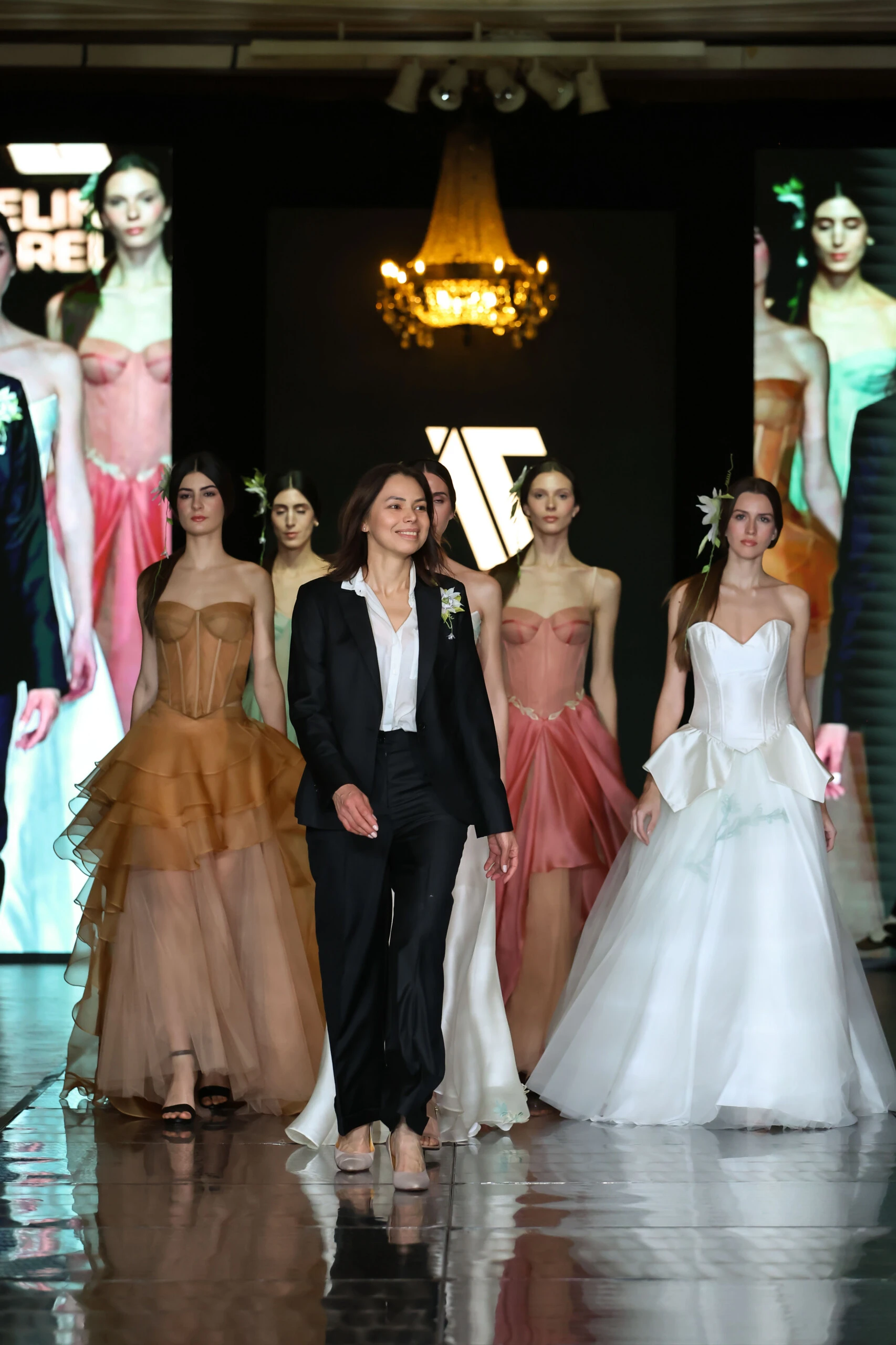
“Mburucuyá,” Angelina Testorelli’s new collection, springs from a personal story and a deep connection with nature.
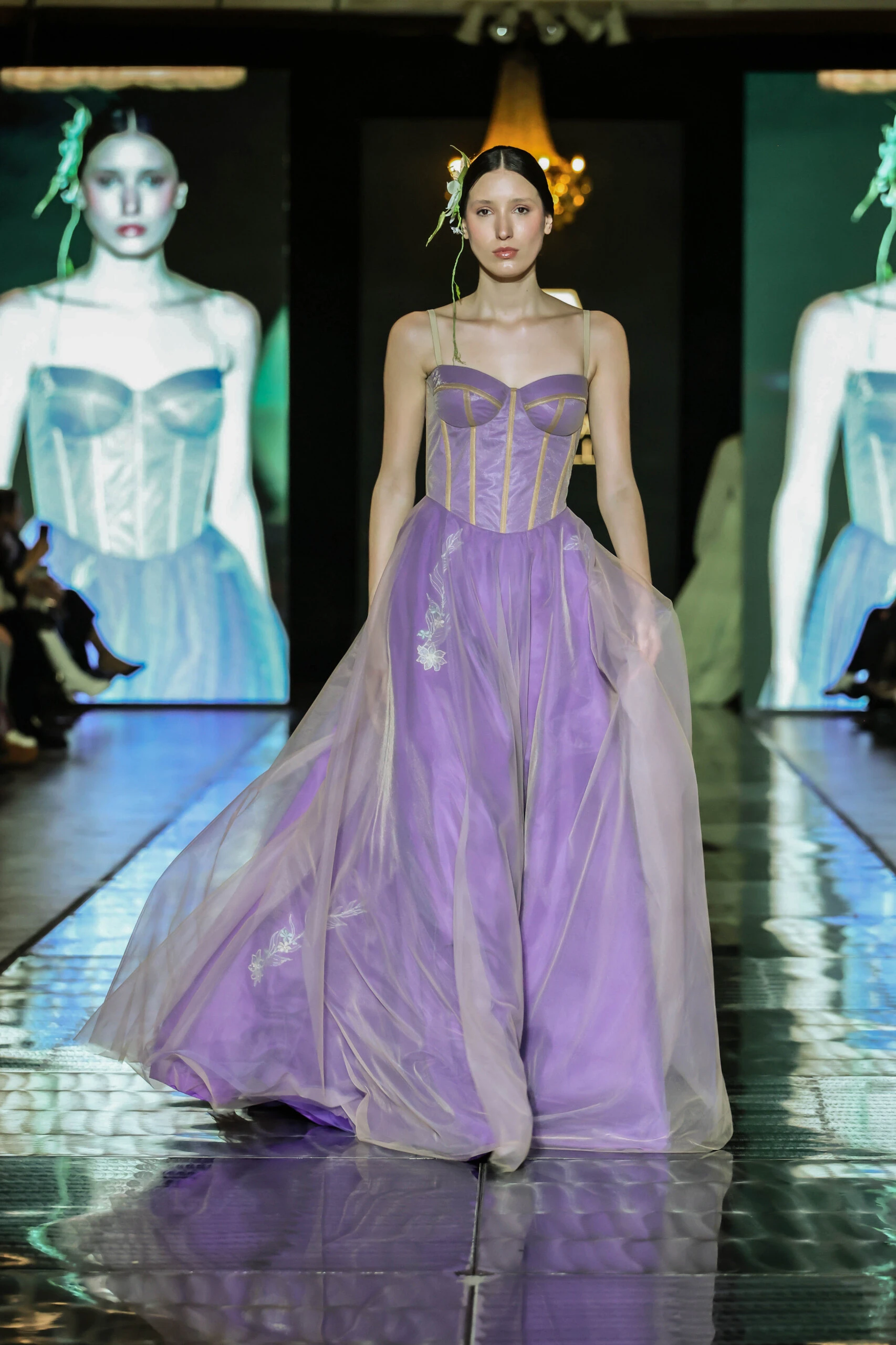
The name of the brand also holds an intimate meaning for the designer. When her daughter Angelina was three years old, she promised that one day the brand would bear her name. That promise evolved into a personal universe.
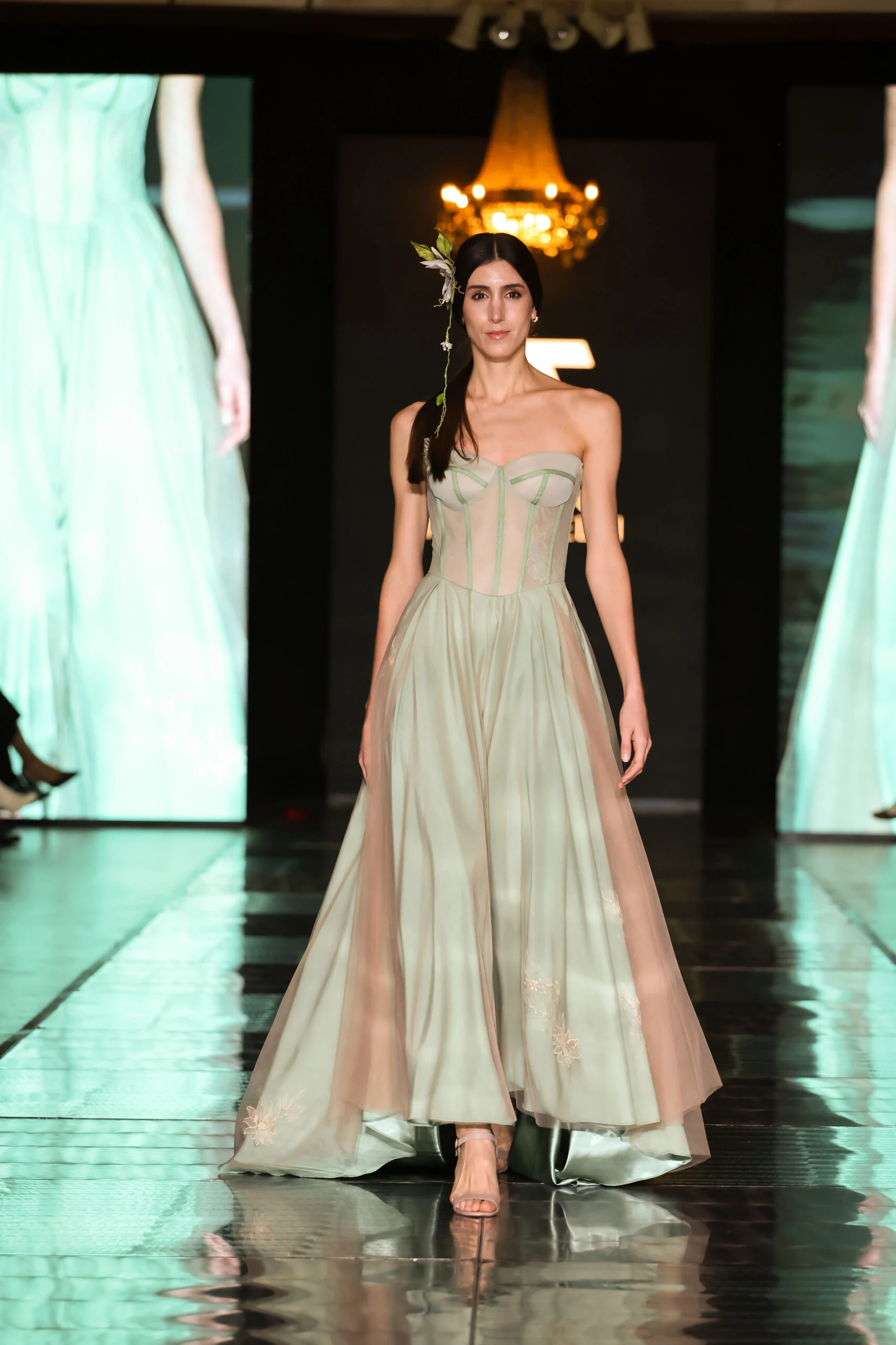
For this collection, inspiration came from the passionflower or mburucuyá, one of the most distinctive flowers in Argentine flora.
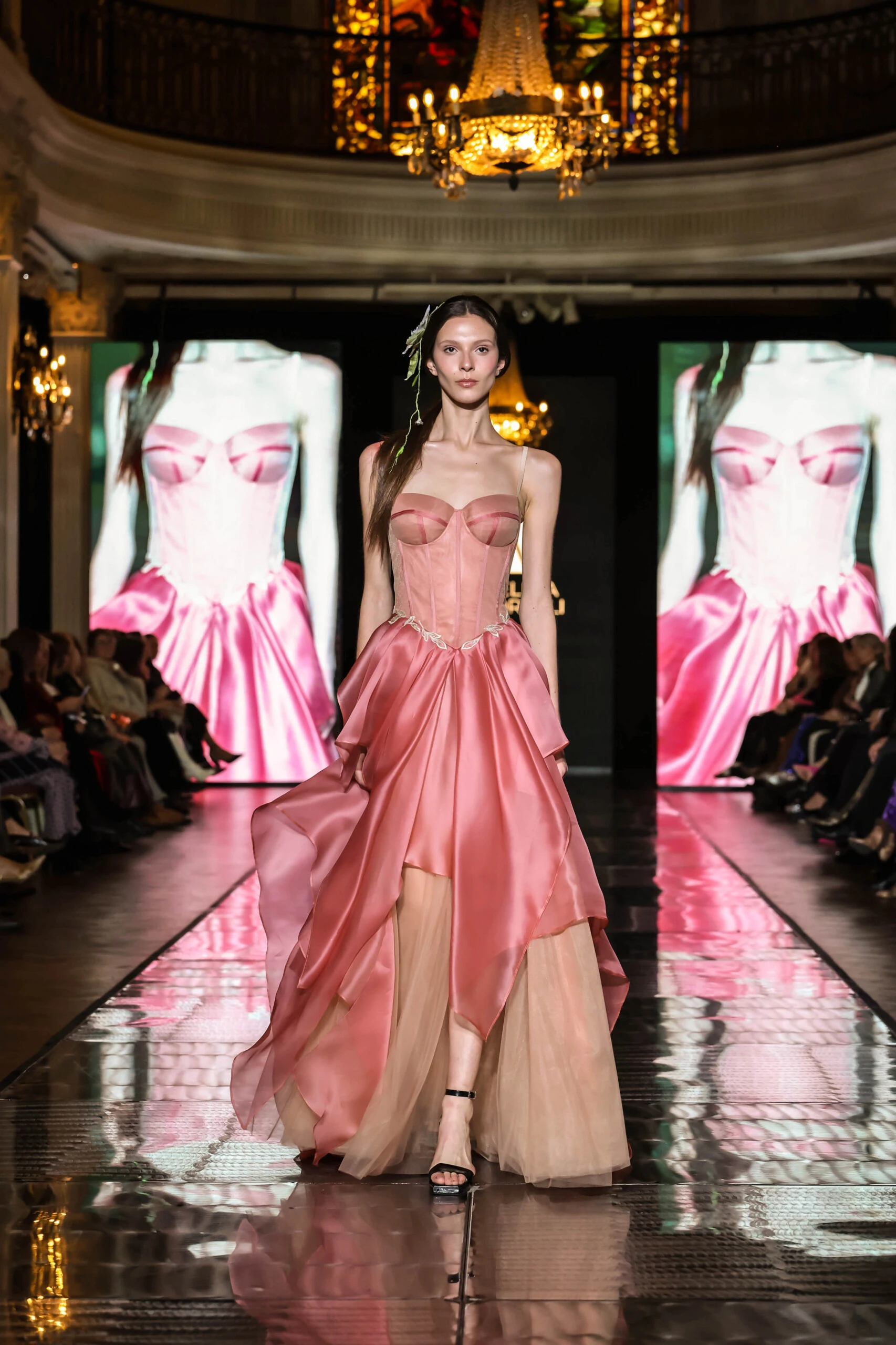
Its complexity and importance within the ecosystem translate into an ethereal, feminine, and light offering, crafted with natural silks, gauzes, organzas, and tulles.
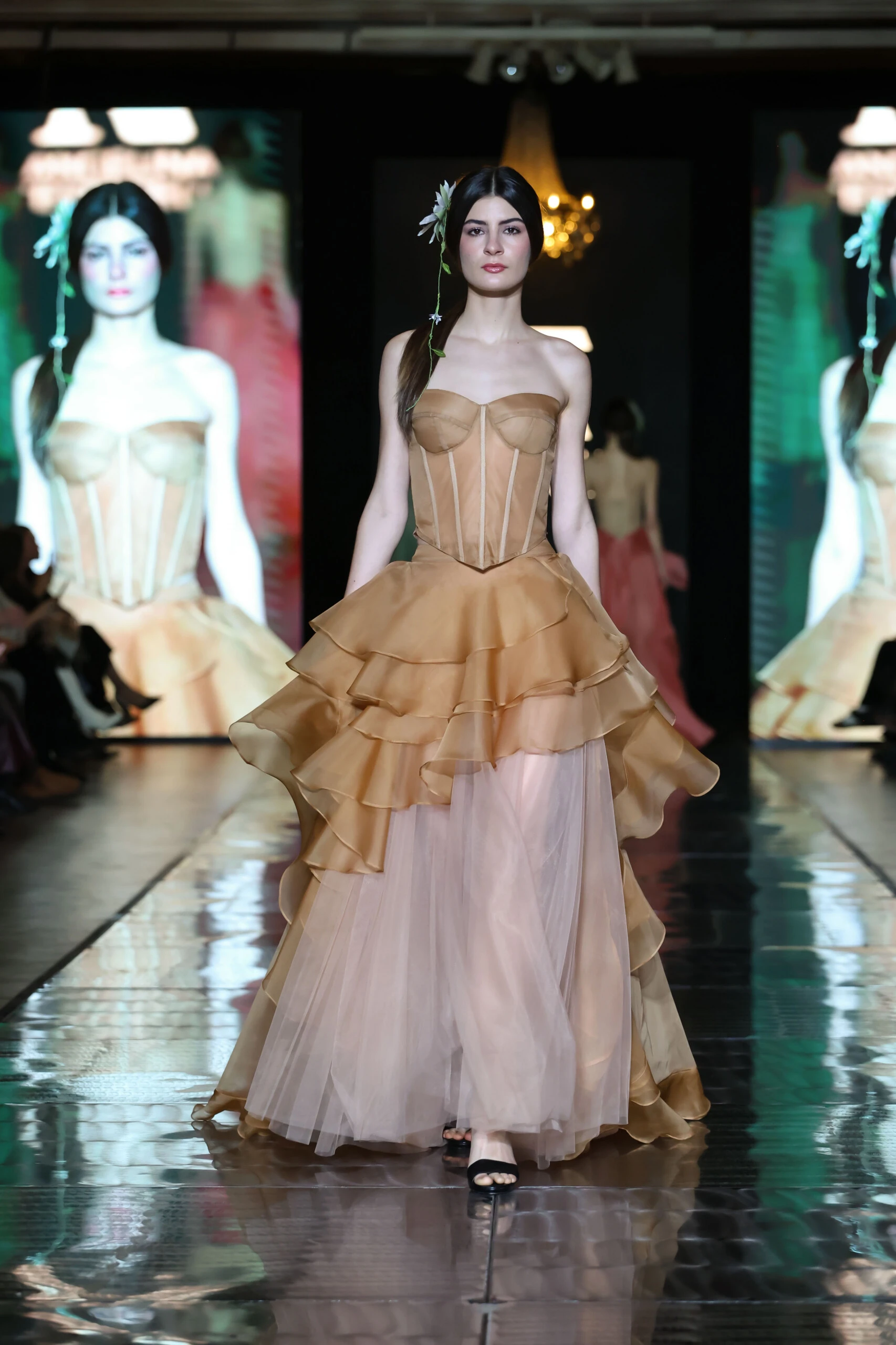
Embroidery, textile flowers, and artisanal interventions reinterpret the organic shapes of the bloom.
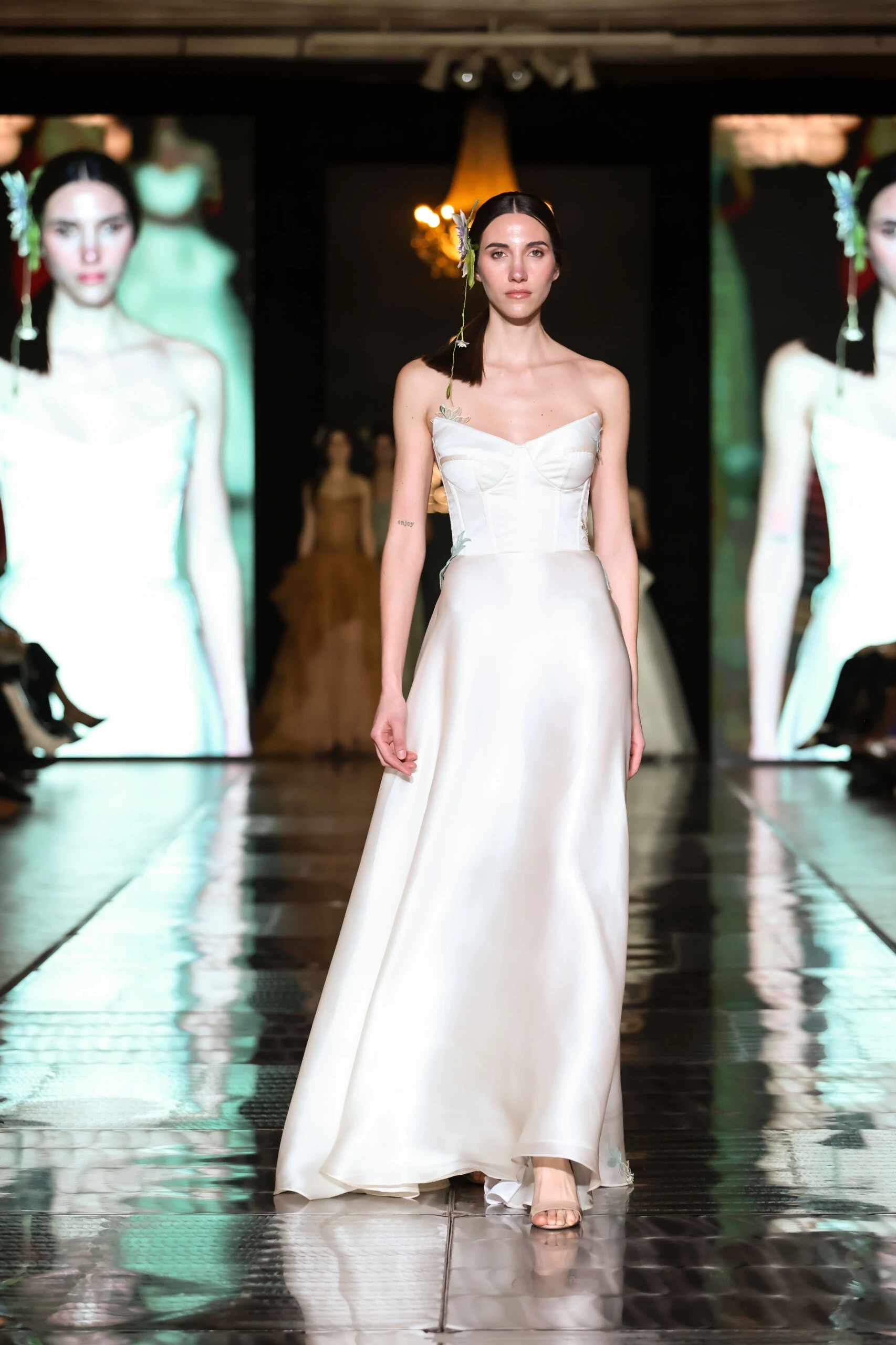
Thus, each piece becomes an invitation to look at nature, value it, and safeguard it.
Francisco Ayala: the crafts that endure in Argentine fashion
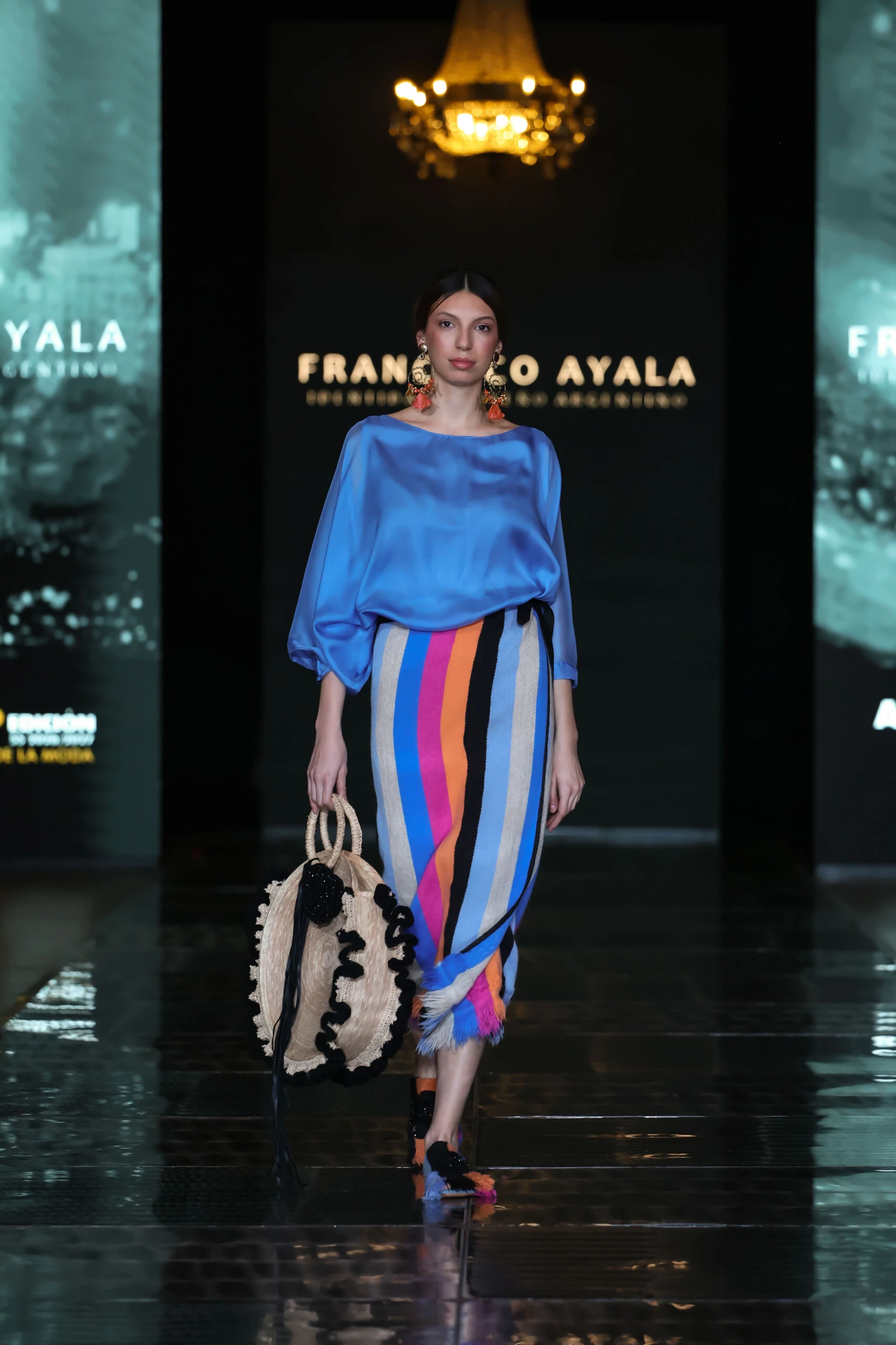
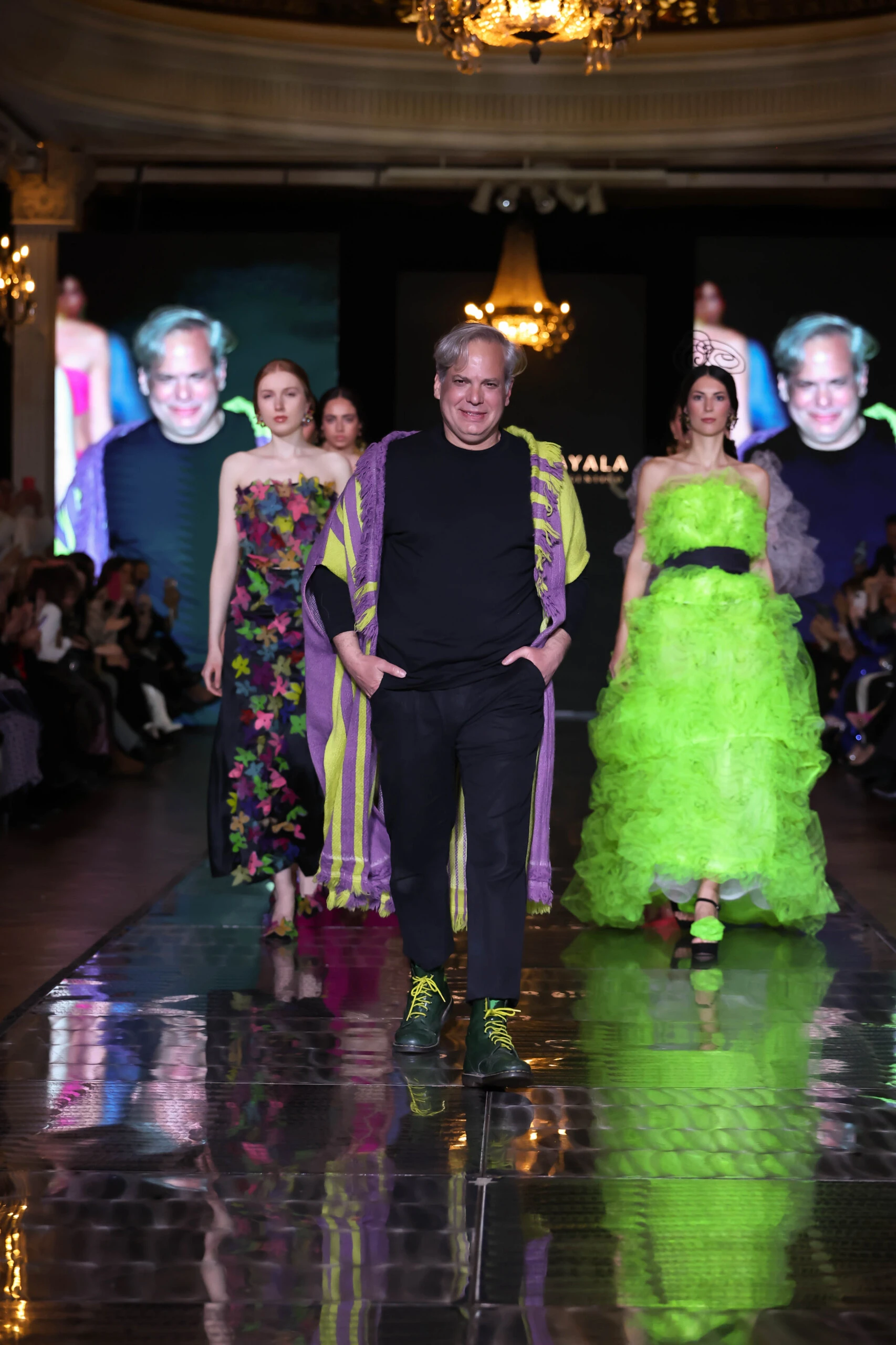
The closing segment was led by Francisco Ayala, president of the Argentine Fashion Chamber, with “Oficios”, his Spring-Summer 2026 collection.
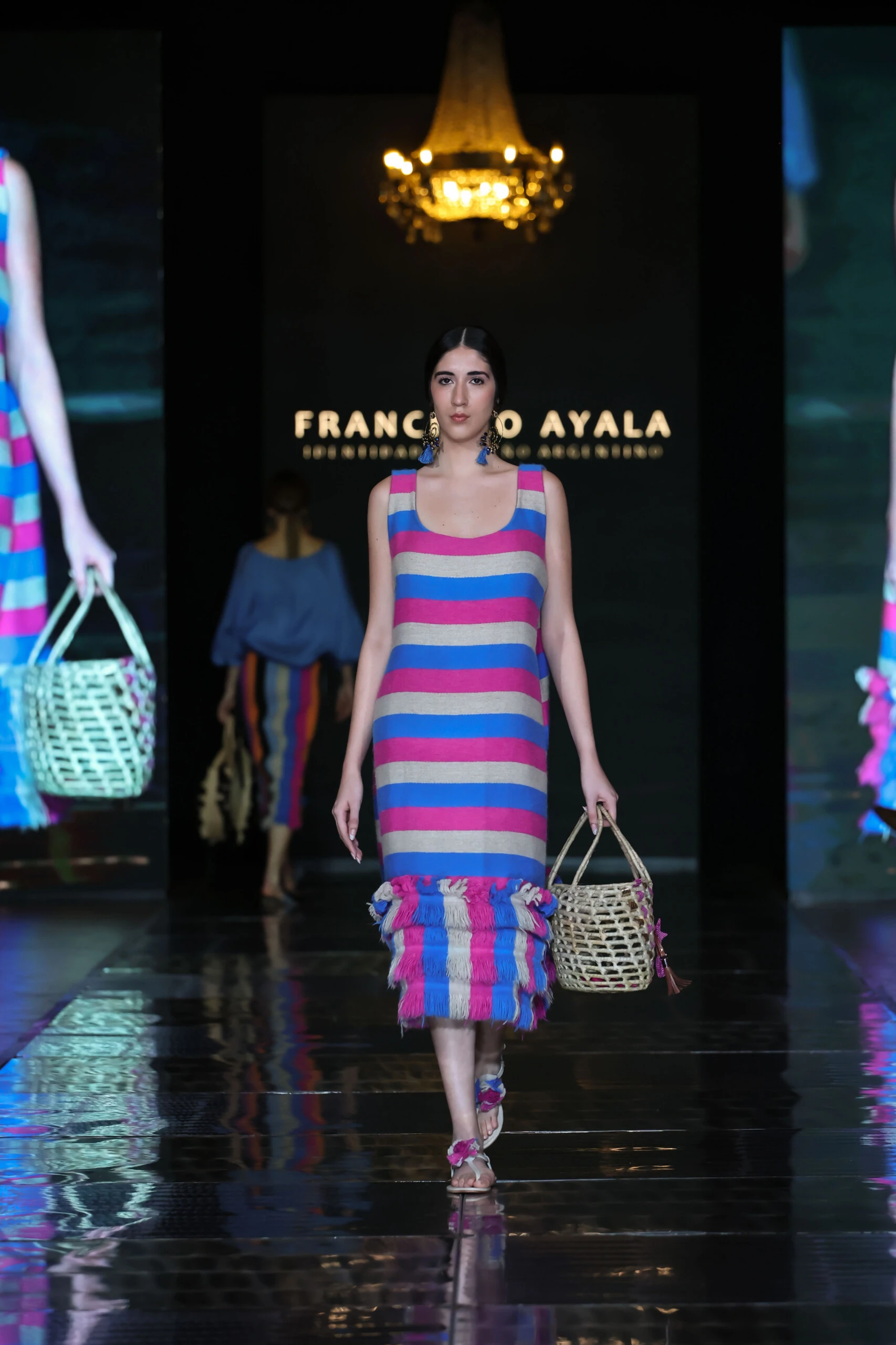
The collection emerges from a real concern: many crafts linked to fashion and handiwork are disappearing in various parts of the world. In Argentina, some of these crafts still endure and continue to be passed down from generation to generation.
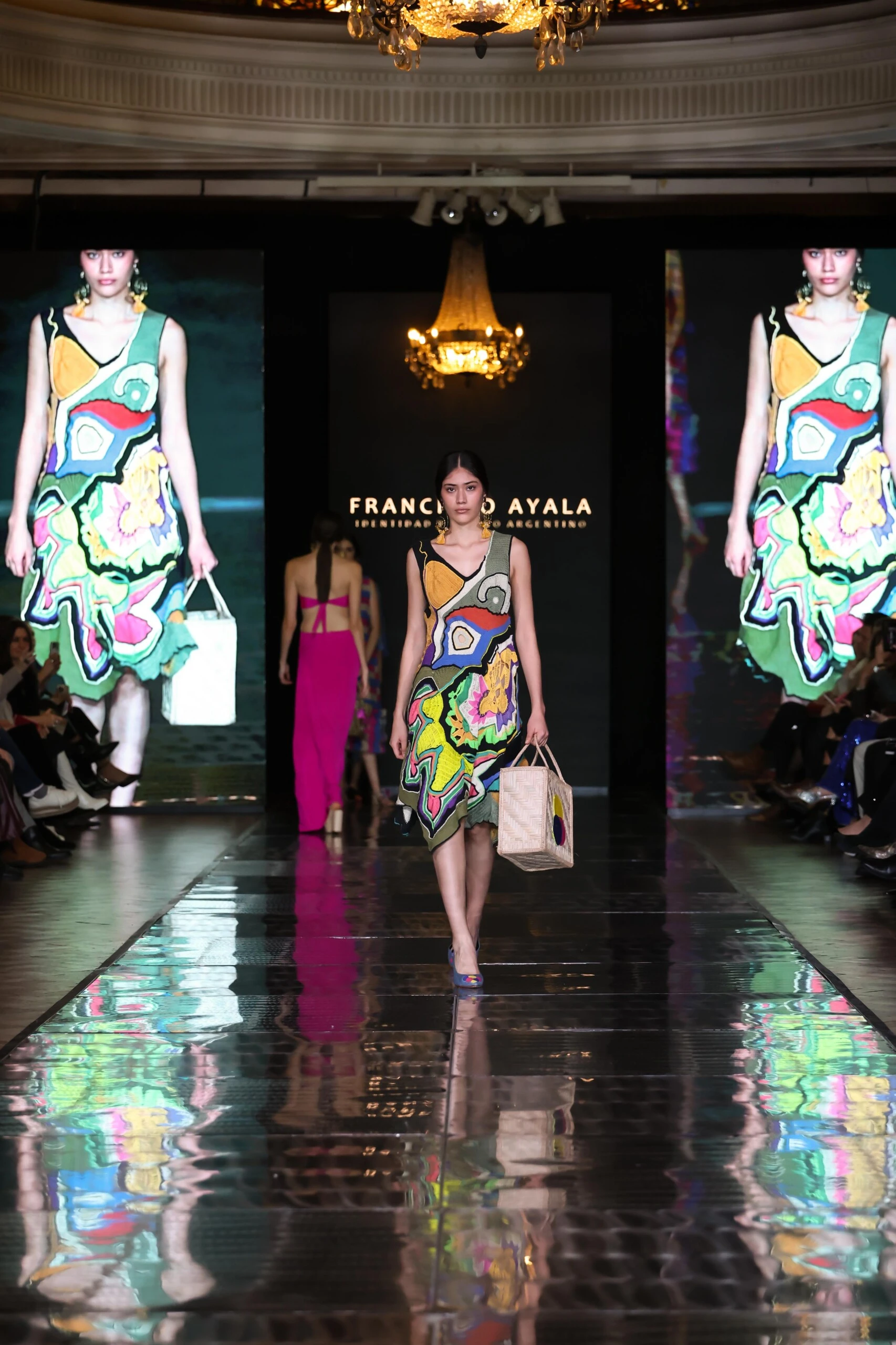
Therefore, Ayala brought to the runway the loom, artisanal crochet, nuno felt, hand-painting on silk, and artisanal shoemaking.
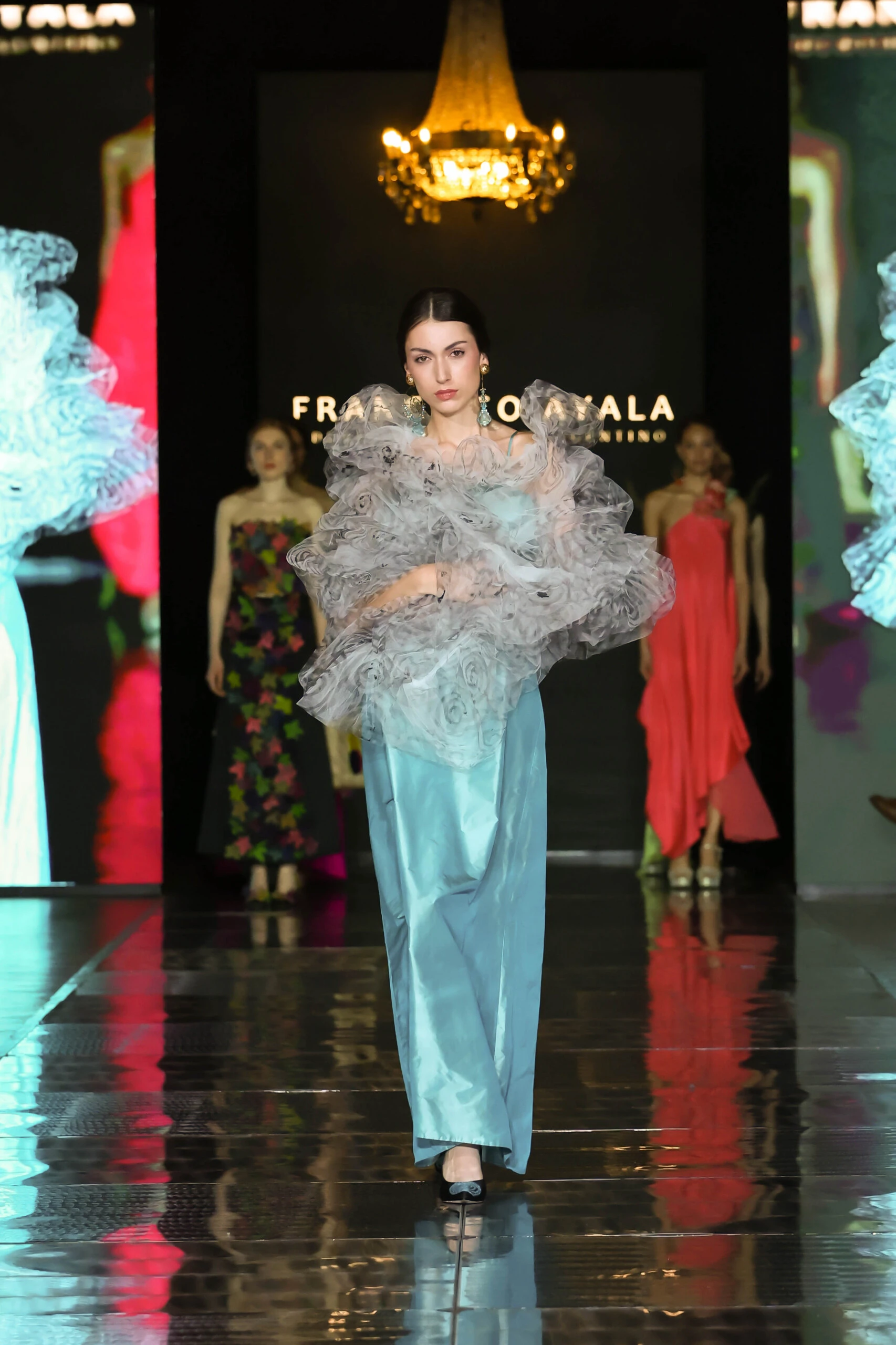
The collection also dialogues with American maximalism, a movement that understands fashion through the accumulation of textures, crafts, and regional storytelling.
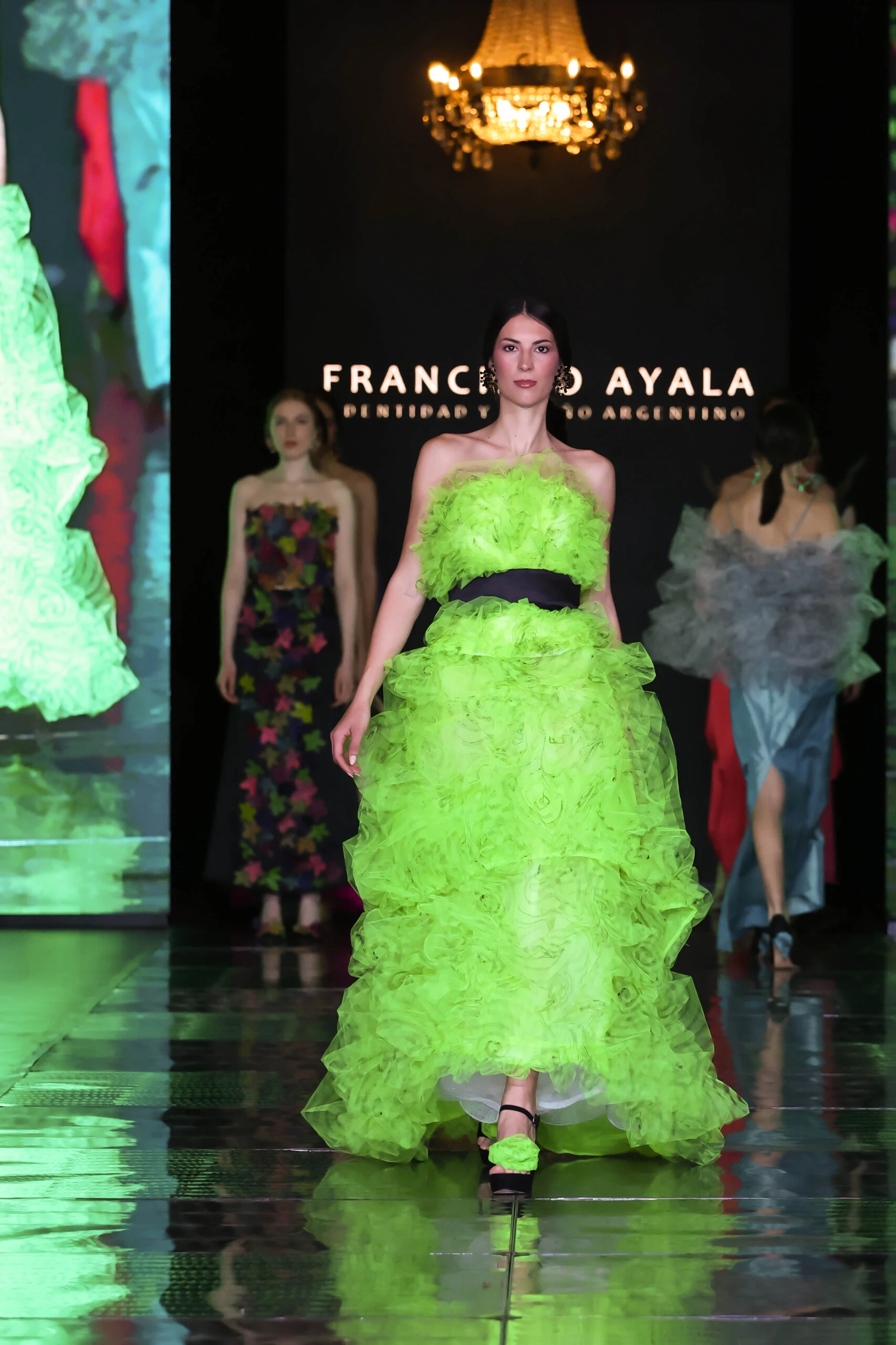
Each look gathers different layers of work: fabrics, embroidery, painting, and felt coexisting within a single garment.
Loom, crochet, and painting: the collective labor behind the collection
One of the distinguishing features of “Oficios” is that it is a collaborative creation.
The loom-woven fabrics were produced by Manos Andinas in Catamarca, using llama fiber and cotton. The palette included light blue, French blue, sand, black, and mandarin stripes.
Crochet was carried out by textile artist Fabiana Berghole, who spent hundreds of hours with pure thread to build a sampler of stitches and multicolored patterns against a black background.
Hand-painted silk, one of Ayala’s personal signatures, reappeared in key pieces of the collection.
There were also sculptural flowers created by Susana Larrambebere, made of natural silk and felt, with wire frameworks and embroidery.
Footwear and baskets were specially designed for each look by Paula Zaccaro, of Benitapeka, with artistic input from Patti Saporiti. Accessories were handled by María Costa, of Byzance, who worked with bronze, silver, crystals, and tulle.
The result was a collection of seemingly simple silhouettes with complex construction: pants with slits, blouse-ponchos, bias-cut dresses, ensembles accented with multicolored flowers, and large painted-tulle volumes.
Craftsmanship as the true contemporary luxury
Beyond aesthetic differences, the five proposals shared a common sensibility: the value of what takes time.
In an industry that is increasingly fast-paced, these collections reclaim the hand’s gesture, the patience of embroidery, the precision of weaving, and the uniqueness of a piece that cannot be exactly identical to another.
Thus, the Argentine Fashion Chamber’s runway concluded with a certainty about Argentina Fashion Week: the future of fashion can also lie in revisiting the crafts that form part of our identity.