
How many times do we greet out of habit, without pausing to consider what that gesture might mean to someone else? A simple “hello,” a smile, or a glance can become the first step toward approaching another person, starting a conversation, or making the other person feel seen and acknowledged.
In an era where digital hyperconnectivity sits alongside feelings of loneliness, reclaiming the value of small, everyday gestures can be a opportunity to transform the way we relate to others.
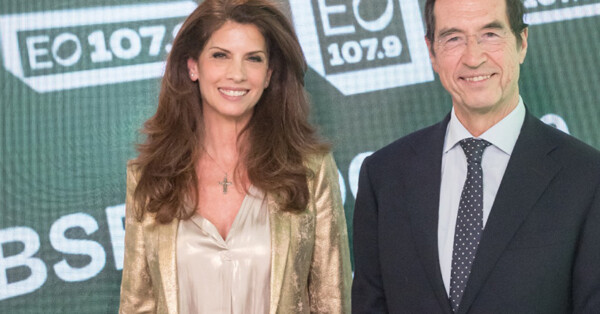
On this topic, entrepreneur, host and ontological coach , reflected during an interview on ¿Y cómo seguimos?, the program that airs every Tuesday at 8 p.m. on El Observador 107.9.
The discussion was sparked, in part, by World Hello Day, celebrated last Saturday, November 21, an initiative inviting people to revive dialogue and strengthen human connections through a simple yet meaningful action.
The Emotional Power of Feeling Seen and Recognized
During the meeting, both addressed topics related to emotional well-being, personal growth, and the importance of connecting with oneself and with others.
“When a human being feels greeted, not from the standpoint of education or correction, but from the desire to establish an emotional bond, the first thing they feel is that they are seen. Feeling seen is feeling recognized; feeling recognized is feeling valued,” Puig explained.
The physician also delved into the effects that a genuine emotional connection can have on the body. He explained that when a person feels recognized and valued, they can begin to trust others and shed some of their defenses.
In this context, he referred to the activation of the anterior vagus nerve, which he described as “the nerve of the encounter, the nerve of connection,” and highlighted the role of oxytocin in regulating stress responses.
For Puig, the importance of these small gestures also appears in how we relate to others and face everyday conflicts.
“Human beings are beings of encounter,” he affirmed, noting that kindness, warmth, and understanding, without losing firmness, can help resolve conflicting situations and build healthier relationships.
The Emotional Footprints of Childhood That Can Stay With Us for Life
The conversation also addressed the importance of affectionate bonds from childhood.
In response to Maiorana’s question about the consequences a child may face when their parents do not look at them, listen to them, or recognize them, the expert explained: “It’s quite counterintuitive to think that the life of an adult—whether 20, 40, 80, or 90 years old—can be so influenced by what they experienced during the first three years of life.”
Puig stressed that within those first three years, the first year of life is especially critical, as children depend entirely on their caregivers for affection, protection, and security.
“Their parents, the caregivers closest to them, are their only source of love, affection, shelter, safety, and survival,” he noted.
And he added: “If those caregivers—the primary caregivers who care for them first—do not transmit that love, care, and protection, there is a kind of memory particularly active in these very young children called implicit memory.”
In this regard, he explained its difference from explicit memory: “Explicit memory is what you consciously remember. (…) However, implicit memory is the memory of the body. It enters through sensations, through emotions, through images.”
The expert pointed out that these experiences can leave emotional wounds that endure into adulthood and emphasized the importance of working to overcome them.
“That’s why it’s so important to understand that when an adult, regardless of age or apparent success, manages to heal one of these wounds, a new space opens in their life.”
Hyperconnected, yet increasingly lonely: the paradox of social networks
Another topic that emerged during the encounter was the impact of social networks on human bonds.
Maiorana highlighted the paradox of a society that is more digitally connected, yet many people experience feelings of loneliness, disconnection, and frustration.
In this regard, Puig explained that digital platforms are not necessarily the cause of these situations; they function as amplifiers of what already exists.
“They magnify what already exists,” he noted, and warned that they can boost both positive messages and personal insecurities, especially when self-esteem depends on others’ approval.
He also referred to the spread of false information or fake news: “I don’t know why they are called fake news; they are lies. Language matters a great deal,” he emphasized.
And he illustrated: “If I tell a lie to three people, I can cause some damage. If that lie is bought by three million people, imagine the damage I cause.”
Emotional Intelligence: Learning to Connect with Ourselves and with Others
These reflections also tied to the importance of developing emotional intelligence from an early age.
In this sense, Puig argued that the educational system is “very focused on filling the intellect with knowledge and not on awakening people’s potential” and stressed the need to promote students’ self-esteem and autonomy.
“What is emotional intelligence? It’s the sum of two intelligences: intrapersonal, the ability to connect with your true feelings, with your emotions, with your needs and understand how to manage them; and interpersonal intelligence, the ability to understand the world of the other person,” he explained.
He also questioned that these abilities be considered soft skills: “They are not soft skills, they are human skills,” and he stressed that “a human being is one who is able to connect emotionally with themselves and with others.”
Mario Alonso Puig and His Visit to Argentina
The Spanish expert recently visited our country to present Do the (Im)Possible, an experience that blends neuroscience, reflection, and practical tools to explore human potential, strengthen personal confidence, and transform the way we face daily challenges.
The program included performances on November 16 and 18 at the Teatro Ópera in Buenos Aires and on November 19 at the Quality Arena in Córdoba, as part of an international tour that traveled to cities in different countries.
The Challenge of Greeting Ten People: A Daily Habit We Can Adopt
Every November 21 marks World Hello Day, an initiative born in 1973 in response to the conflict between Egypt and Israel, with the aim of promoting dialogue and communication as alternatives to violence.
More than five decades later, the proposal remains active and has spread to 180 countries. Its slogan is as simple as it is meaningful: greet at least ten different people on that day, as a symbolic way to demonstrate that interpersonal communication can contribute to understanding and to building closer bonds.
However, we do not need to wait for a special date to put this into practice.
It could be a family member, a friend you haven’t spoken to in ages, a neighbor, a coworker, or even a stranger you encounter in your daily routine.
Great actions or elaborate preparations aren’t necessary. A sincere greeting, a smile, eye contact, or taking a few minutes to listen to the other person can become an opportunity to reconnect.
Because, amid daily demands, screens, and the fast pace of life, perhaps one of the most valuable gestures we can offer another person is to make them feel that, for a moment, we truly see them.