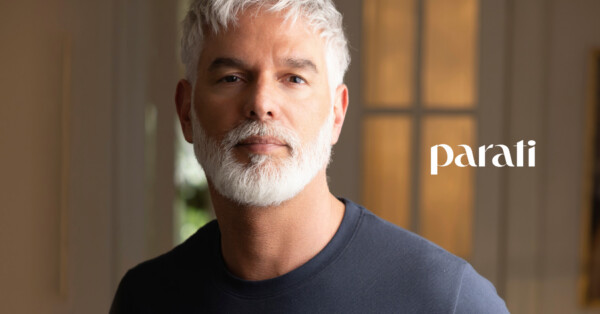
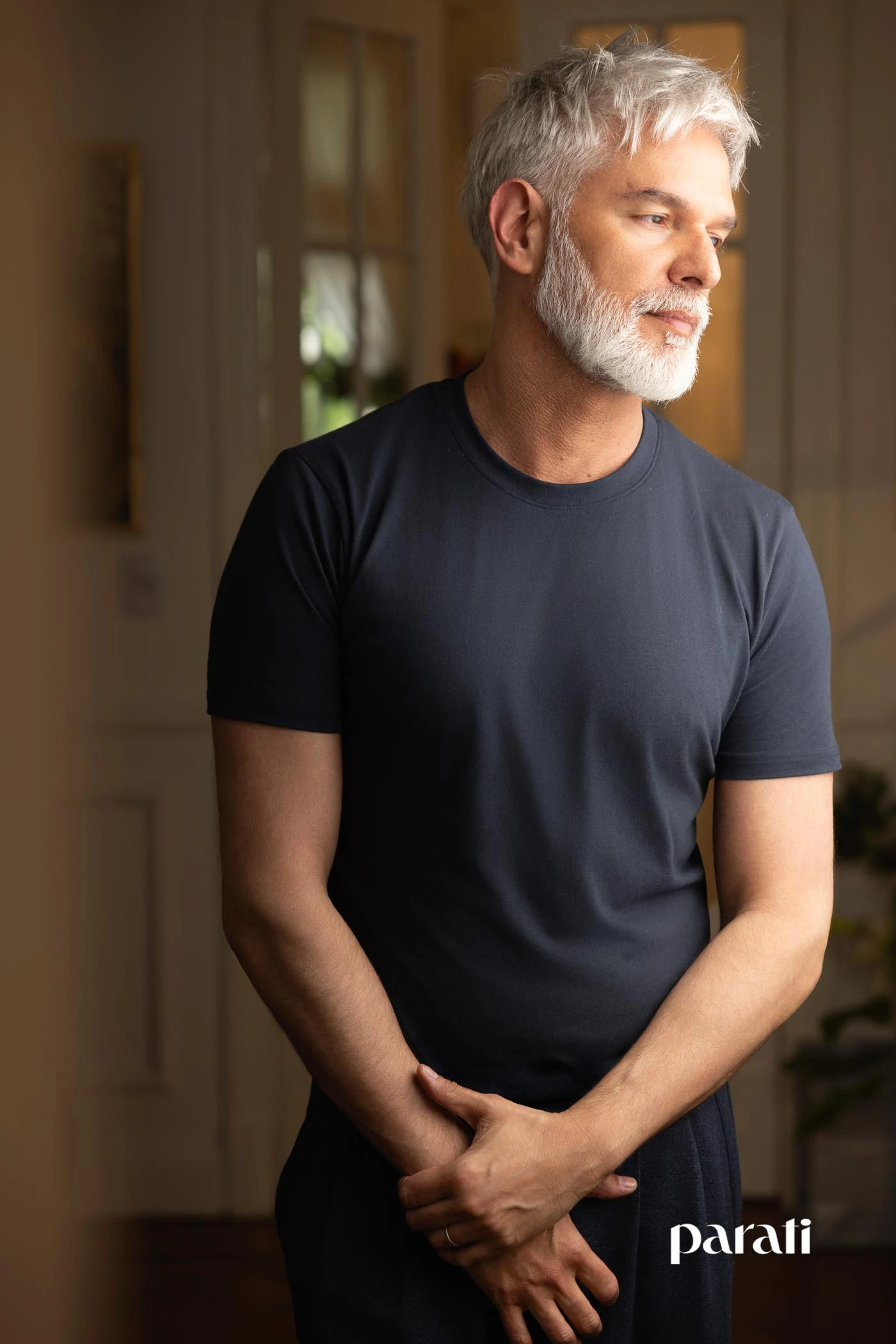
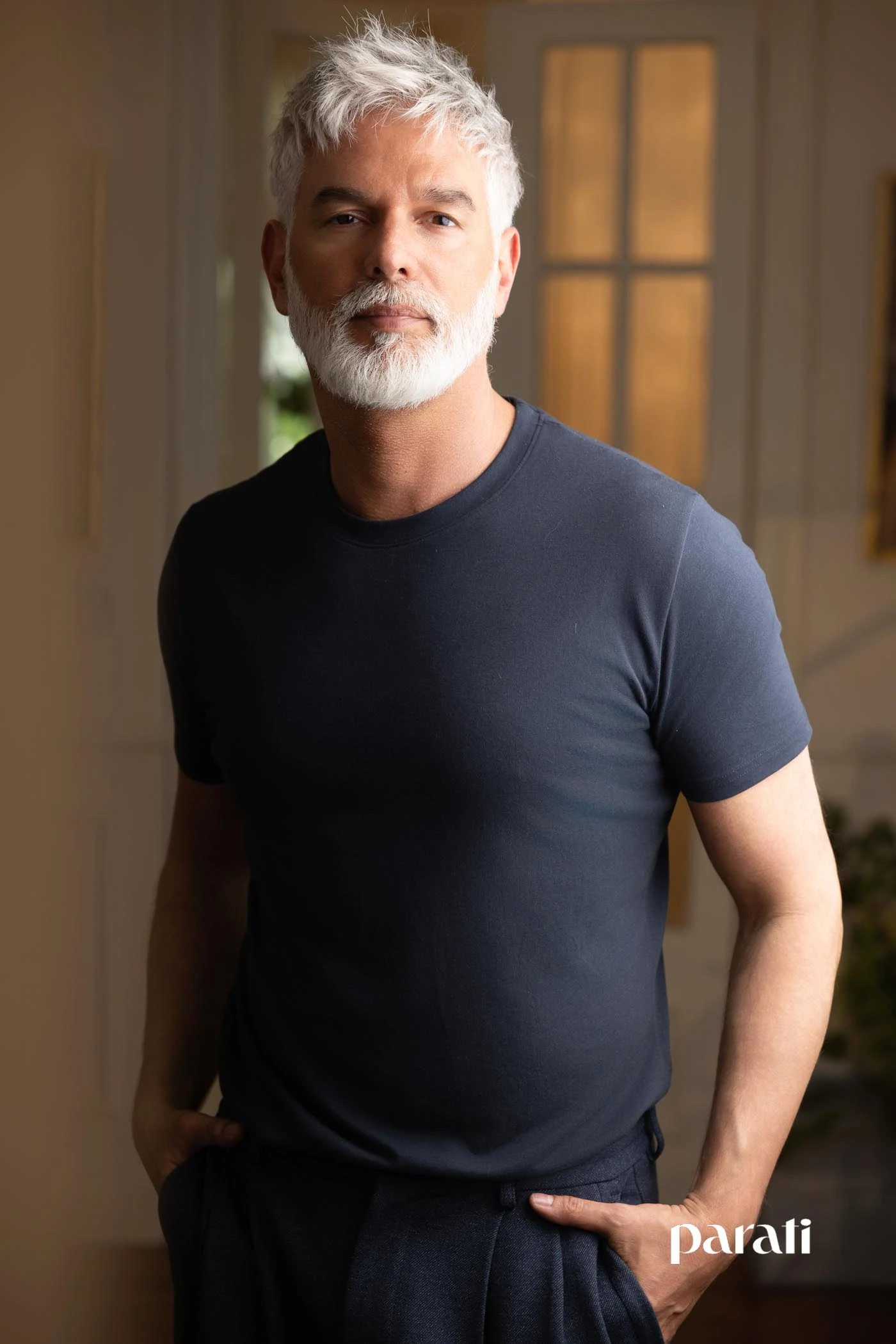
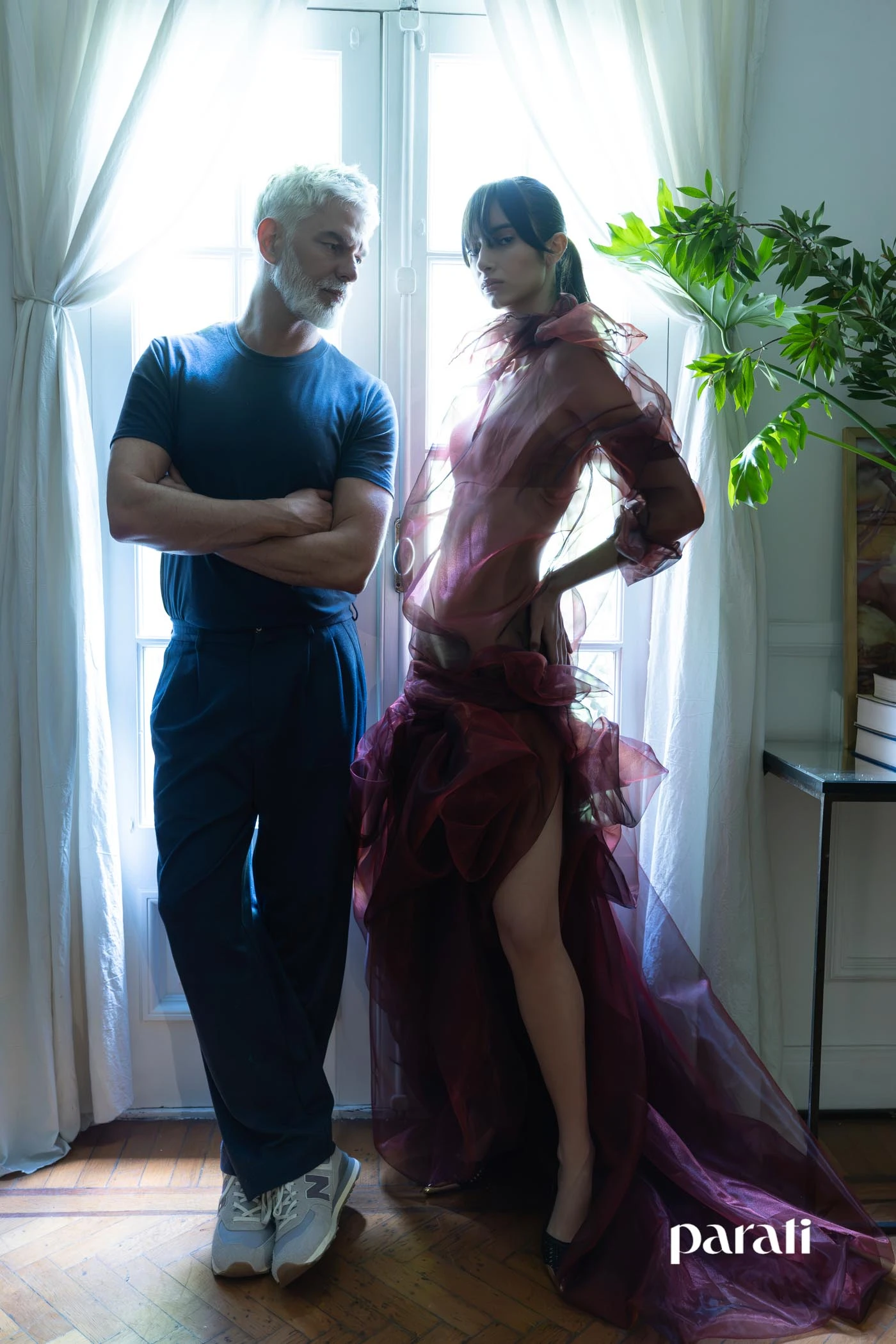
There are designers who reach fashion through a traditional path and others who build their identity from diverse experiences, trades, and passions. Maximiliano Jitric belongs to the second group. Before becoming a fashion designer, he studied Fine Arts, spent 15 years working as a makeup artist for major international beauty brands, and for more than six years developed his own jewelry universe. Today, for almost three years now, his surname identifies an authorial fashion brand that is beginning to solidify its own language.
His story has a sense of perpetual searching, but also a coherence that becomes visible when the entire journey is considered. In every stage there was the same guiding thread: the need to create, to experiment, and to find new forms of expression through aesthetics. In fact, it was while he was doing makeup that he started to ask why dresses, hair, or accessories tended to receive all the praise, while makeup was relegated to the background. That curiosity brought him closer to patternmaking, sewing, and finally, to clothing design.
His first big opportunity arrived in an unexpected way: Natalia Oreiro was the first figure to wear one of his creations. After that came his own clients, the development of his brand, and, in October 2026, the presentation of Anatomy of the Wind, his first collection conceived specifically for a runway, at the Puro Diseño Fair.
largely self-taught, rigorously demanding, and passionate about artisanal work, Jitric has a very personal perspective on the female body, silhouettes, and how a woman inhabits clothing. He does not aim to chase trends or design to please everyone: he wants to build a recognizable identity, one of those that allows you to identify a dress without having to ask who made it.
Maximiliano Jitric, Between Creativity, Fashion, and the Search for a Personal Identity: His Story in First Person
– Who is Maximiliano Jitric?
– Someone who does what he likes; I do what makes me feel good. When I was a teenager I didn’t talk much, but I studied fine arts. Sometimes I can’t express myself so well with words, and, obviously, with all this path I’ve taken and am taking, I found a form of expression.
This Buenos Aires native who, thanks to his mother’s guidance, studied at a high school of fine arts recalls: in the morning he went to art class, then he would eat a sandwich at the 49, got off at Primera Junta, and in the afternoon he went to the commerce program.
– What did you graduate in?
– From Master of Art Education for primary school. A profession that I never practiced! (laughs)
His beginnings in the fashion world were as a makeup artist and he started makeup when, at a costume party, he was recommended for a makeup course at Lancôme. His only experience was art school: he didn’t know how to apply makeup, he faced the pressure of the brush and of the canvas, imagine that he would blow out corneas. “That’s how I began, then I worked for Estée Lauder and they sent me to work in Mexico. When I returned, I started as the exclusive makeup artist for Givenchy. After that I started doing makeup on Dancing with Tinelli until Carmen Barbieri liked how I did makeup in the Arabic rhythm and she took me to makeup her, to Silvina Luna and to the entire cast of the show I had at that time. I ended up on the marquee! (laughter). It was then that I started with jewelry,” he relates.
– How did that leap happen?
– I went to a workshop that was three blocks from home, took two classes and I already wanted to do a production, to create volume, to make a collection. And I developed my own technique to avoid soldering the pieces.
– How long did you work as a jeweler?
– It must have been 6 or 7 years.
– How and when did fashion come to you?
– While I was already doing makeup. I used to notice that when the woman was made up and stunning, the first things people would say were “how divine the dress is!”, “how beautiful your hair looks!” And afterwards, they would comment on the makeup.
– Did you feel uncomfortable with those comments?
– No, but I felt that my work simply added. By then I had already started a basic patternmaking course.
– Did you take the basic patternmaking course thinking about the future or to study and learn another career?
– My future is always very close. What I feel like doing, I do. For example, in class they taught me to sew the base corset in canvas and I would get excited and buy a sheer fabric, sew it, and have it ready to wear.
– Many people think that being a designer means drawing something and someone else makes it a reality. Yet you began in sewing by learning patternmaking.
– I find it striking that many university students email me and tell me they don’t sew, that they’re not taught how to sew. In fact they’ve said they lose points if they know they sewed it themselves… that’s crazy! I say: you cannot manage a pattern or a workshop if you don’t know how to do it. Then if you don’t like it, you don’t have to do it.
The Beginnings
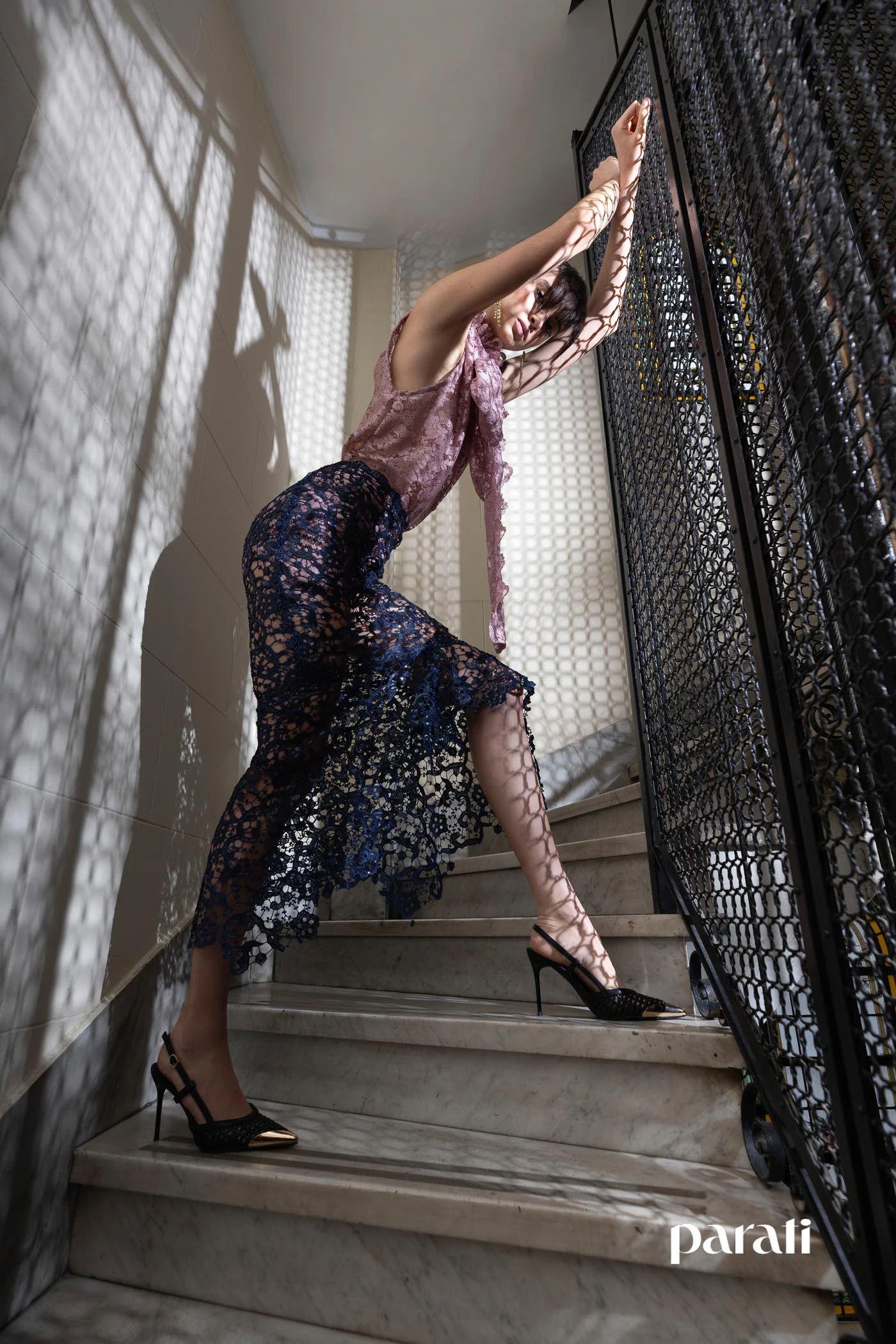
At one point, jewelry overlapped with fashion. While he was creating brass pieces, he began designing and sewing dresses. His famous and coveted bronze corsets were perhaps, unknowingly, the latent start of his next professional path. In his small jewelry workshop, a tiny department in Palermo, began Max’s adventure. When he didn’t have appointments with clients for jewelry pieces, he would turn a board into a desk into a long table where he laid out molds and fabrics and sewed.
– How long has it been from that moment to today?
– Not long, two and a half years, I haven’t reached three.
– Remember who was the first dress for?
– The first person to wear one of my dresses was Natalia Oreiro.
– How did you reach her?
– Through Luli (Gemelli), her stylist, to whom I had already made jewelry pieces. She heard I had started sewing and asked me for dresses for Natalia who at that time was doing the show Who is the Mask?. They came to my mini studio and I took her measurements.
– How does the story continue?
– When I had the dresses ready I went to try them on at her house. Luli warned me: first you have to eat the slice of cake and drink tea. If you don’t eat the cake, she won’t feel good. I ate the cake and then I started trying them on; I also brought a metal collar that was really nice. Natalia also tried on the other dresses that were in the valise that were not yet finished. “I’m going to try everything you brought” she told me. I couldn’t believe that Natalia Oreiro was trying on my dresses! Then for the show I also made her a dress that was entirely metal.
– But you hadn’t sold any dress yet.
– No. Only about two months later did I sell my first dress.
– Do you remember which one it was?
– Yes, a simple black dress with a semi-pleated skirt made of a waffle-like fabric, lightly padded. A client bought it and then came back for another dress.
– And then?
– Then I started to find “my way” of sewing and constructing garments.
And about his “way,” Max says: “I work solo because it’s a choice; I feel more creative, I don’t have to explain anything to anyone. The mistake is mine, and it is fundamental, you know? When I started, I had seamstresses, because, of course, I hadn’t taken classes, I did a basic patternmaking course and there I pressed the pedal of the machine and launched. At first, I had an external studio, then I had three girls in the workshop where I worked and I ended up keeping only one. It also happened that I cut the dresses, sent them to the workshop and when they came back I unsewed them and sewed them again… So I said: enough. I pressure myself, of course I have a thousand pressures…”.
– The external ones and the in-house ones, which are the strongest.
– The in-house ones are tremendous!.
– What are you like when you sew?
– Yesterday at noon I said: I have to make a dress and show it in the note. And I realize I’m sewing and, I swear, it’s like I’m running a race; my heart sometimes pounds like this (he says, tapping his chest). If I want to go to the bathroom I don’t go because I feel I won’t make it… Crazy!
– You’re between anxiety and passion.
– Yes, and I love it; I like it a lot.
– What would happen if you showed a photo of today’s designer to the makeup artist from a few years ago?
– I think I would have believed it. Because I always go through phases. When I was a makeup artist, at one point I was fed up, but when I started jewelry I realized I really enjoyed the dress topic and realized I was shelving it. In the future I would even like to do fashion photography.
– You don’t limit yourself.
– No, but I don’t want to burn my bridges because I feel some are still empty.
– I feel that jobs and professions arise at the right moment.
– What happens with these professions is that they are real, not a pose; this is very organic. Everything we do is organic. I feel like making things, I enjoy thinking about the full look, thinking that dress will move the woman and give it life. I also found in buying fabrics in Spain a pleasure or a reward. So, for me, going to Madrid to buy fabrics is the Disney I didn’t get to experience as a child.
– What is that fabric shopping like?
– I really enjoy going; I am much more experimental now, I don’t buy fabrics that are specific to certain garments because I feel that I need to find my own identity. And it isn’t a struggle to find them: there are fabrics I like more, that I feel will give more body.
– Are you open to adventure or do you know what you want?
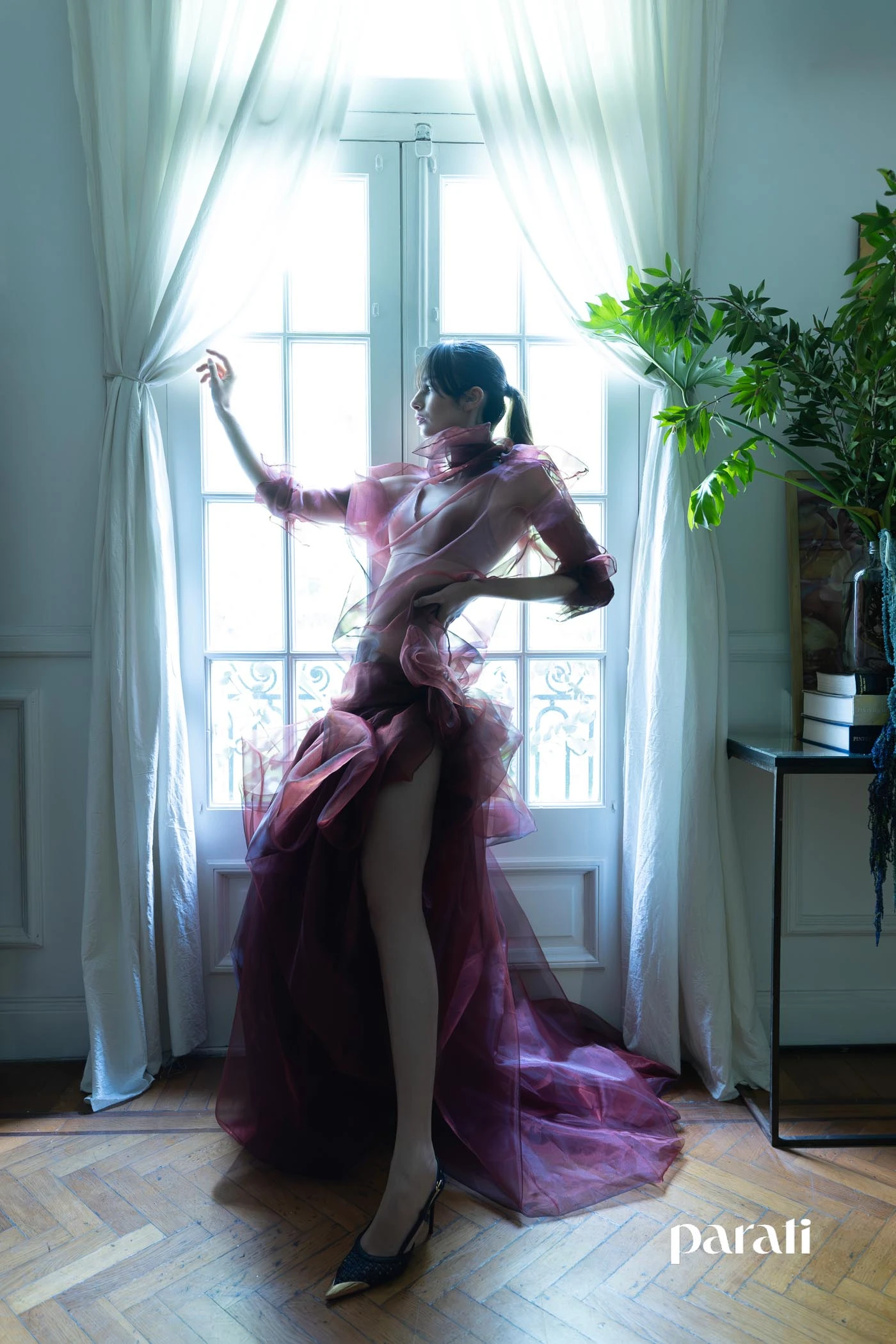
– Well, I’ve always been open to adventure, but this last journey was different. I always made loose, unique dresses, with no thread of continuity beyond the designs I like, and this materials buying helped me conceive a collection that was the one I presented at the Puro Diseño runway. This journey reset my mind and helped me ask myself what I want. I already have my morphology: I like to emphasize the waist, I like the hips to stand out, I like the shoulders to be visible, I don’t like plunging necklines, I don’t like going to a party and seeing women adjusting their clothes…
– What is your style?
– I say I am like an orthodox Kardashian (laughs).
– How is that?
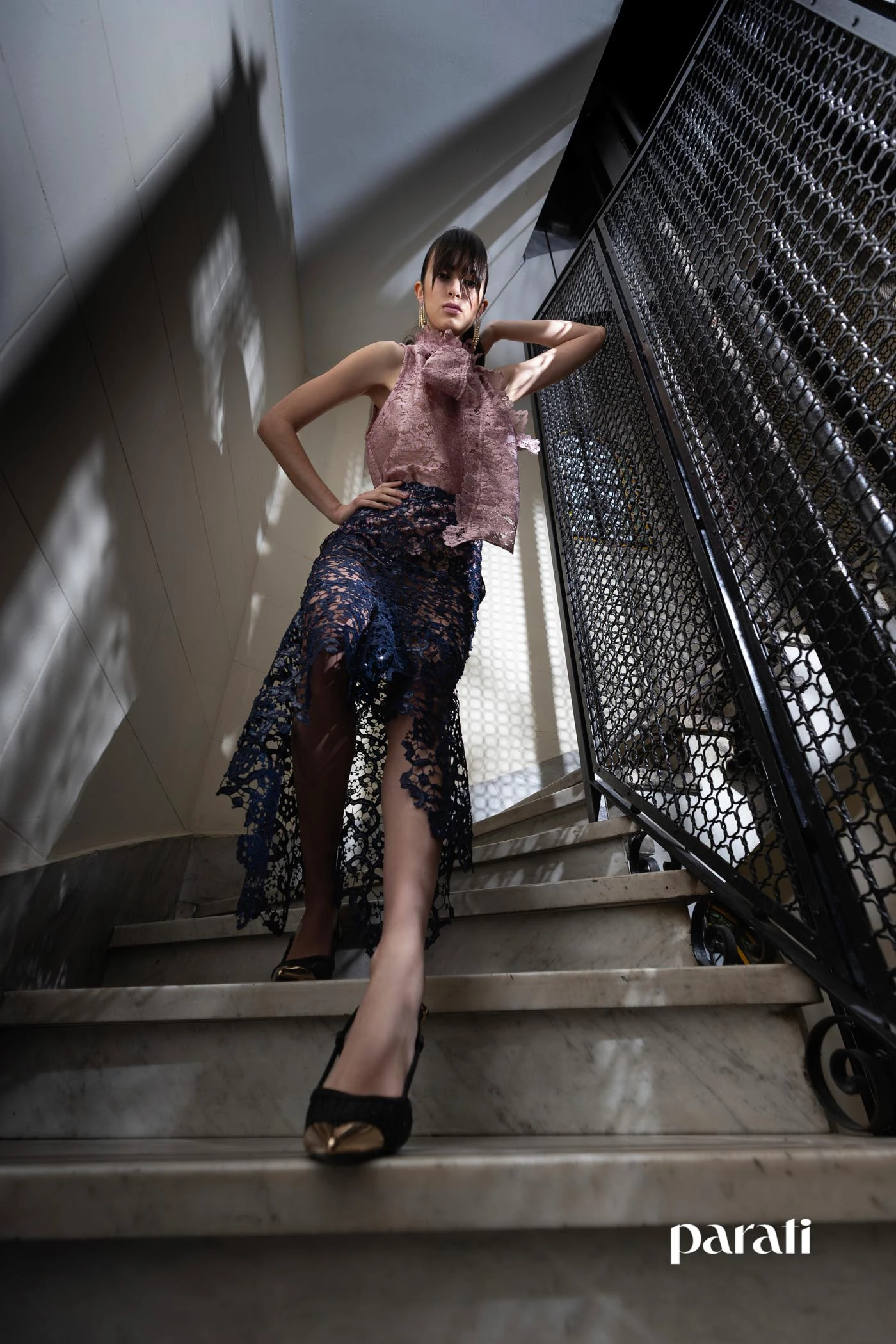
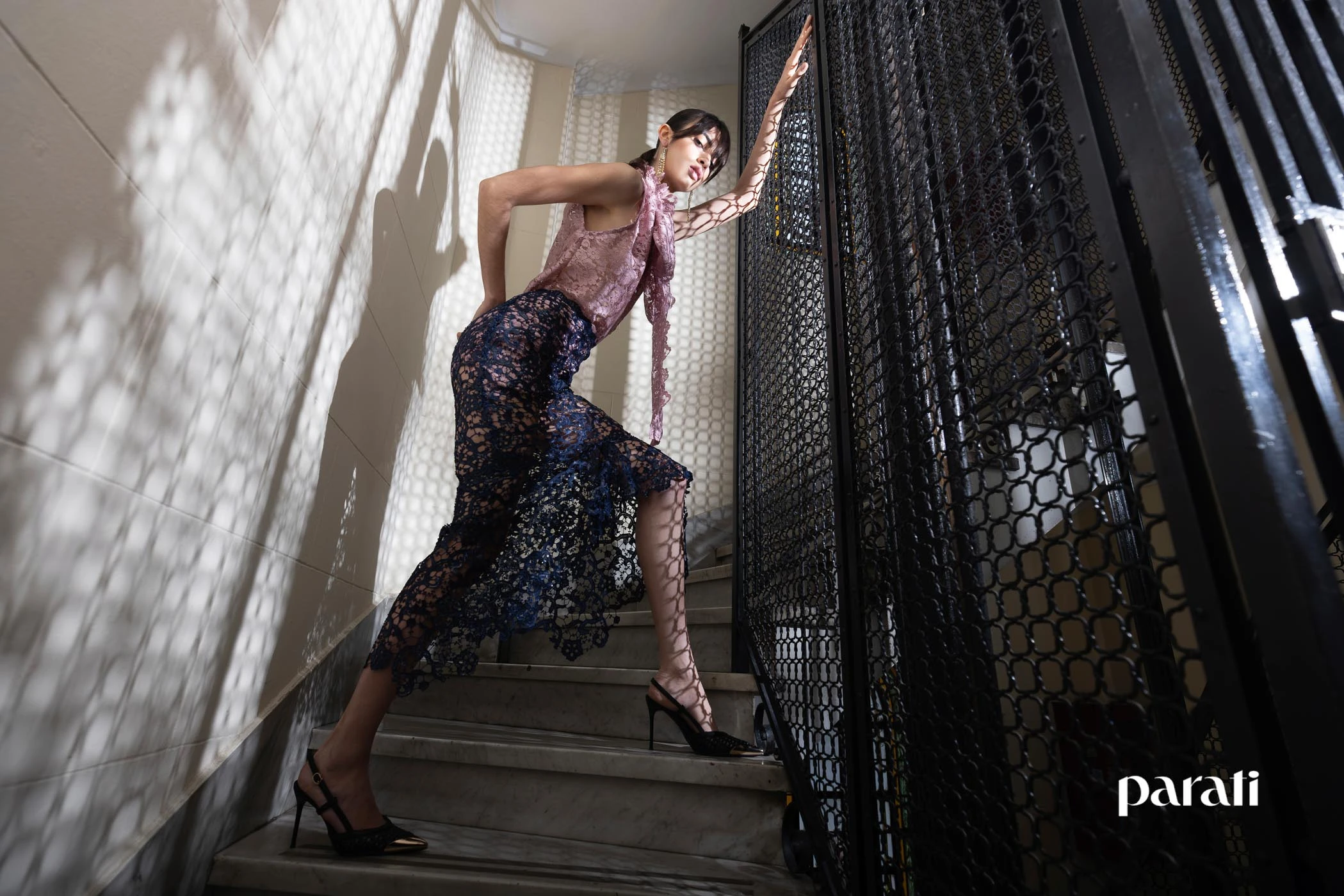
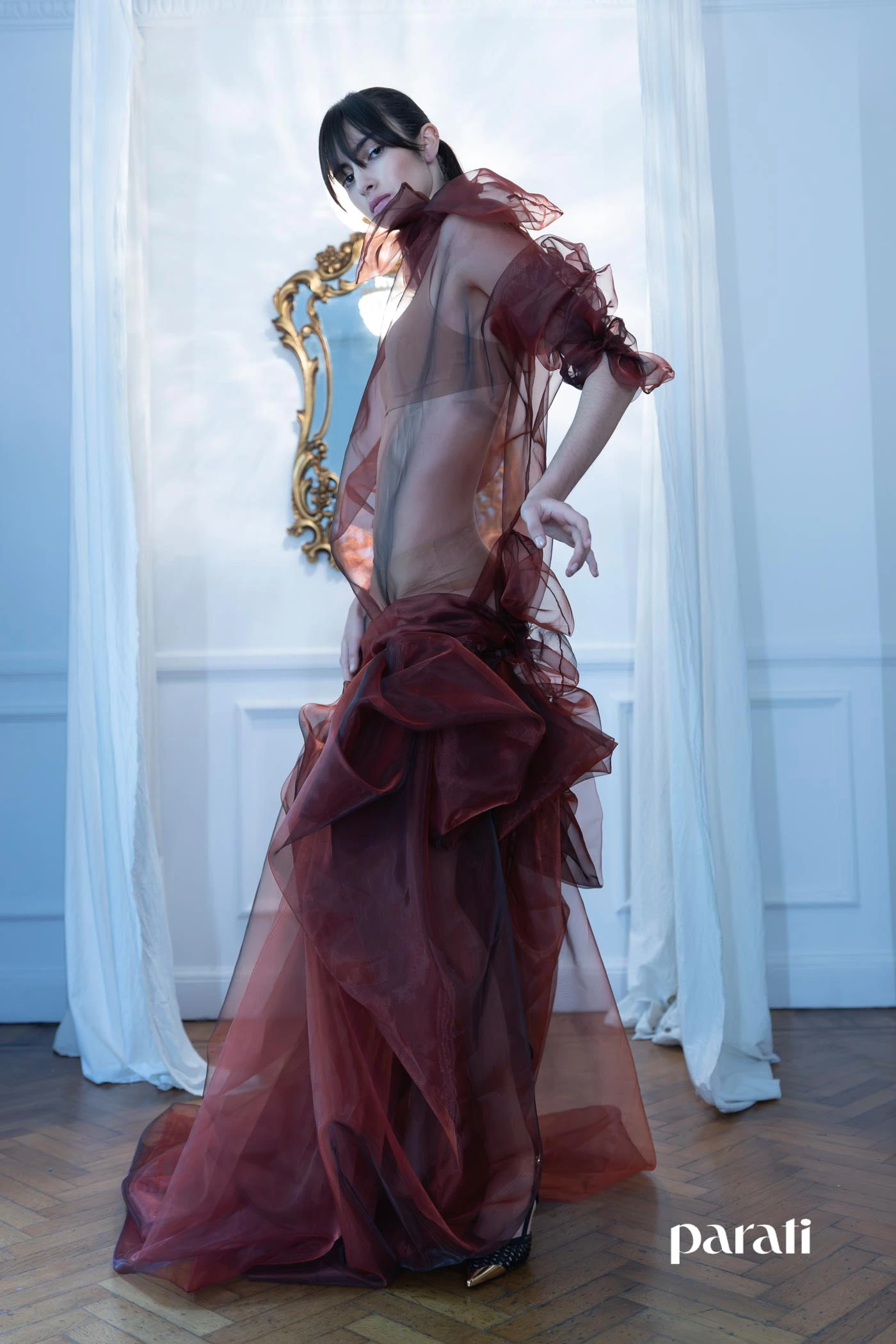
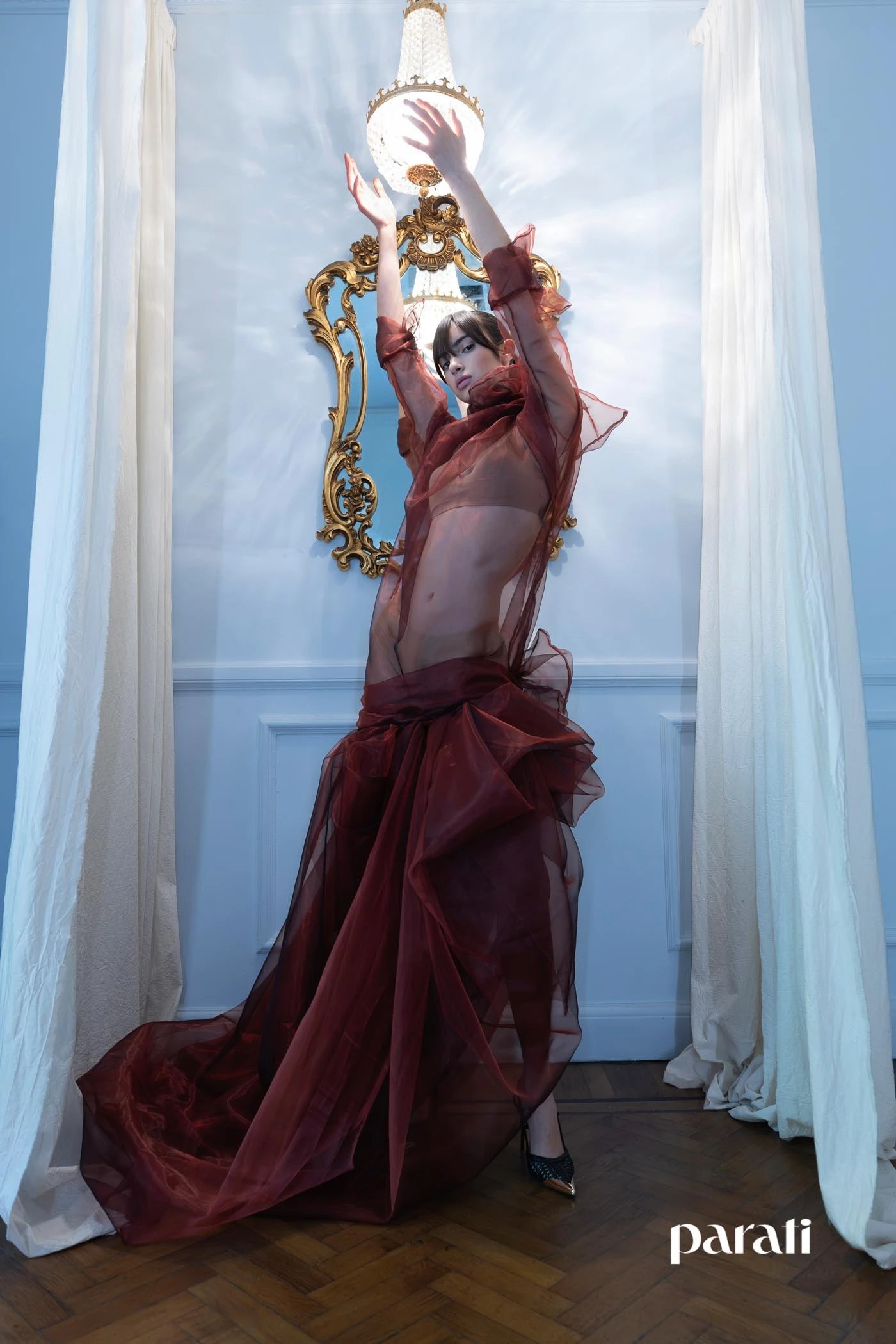
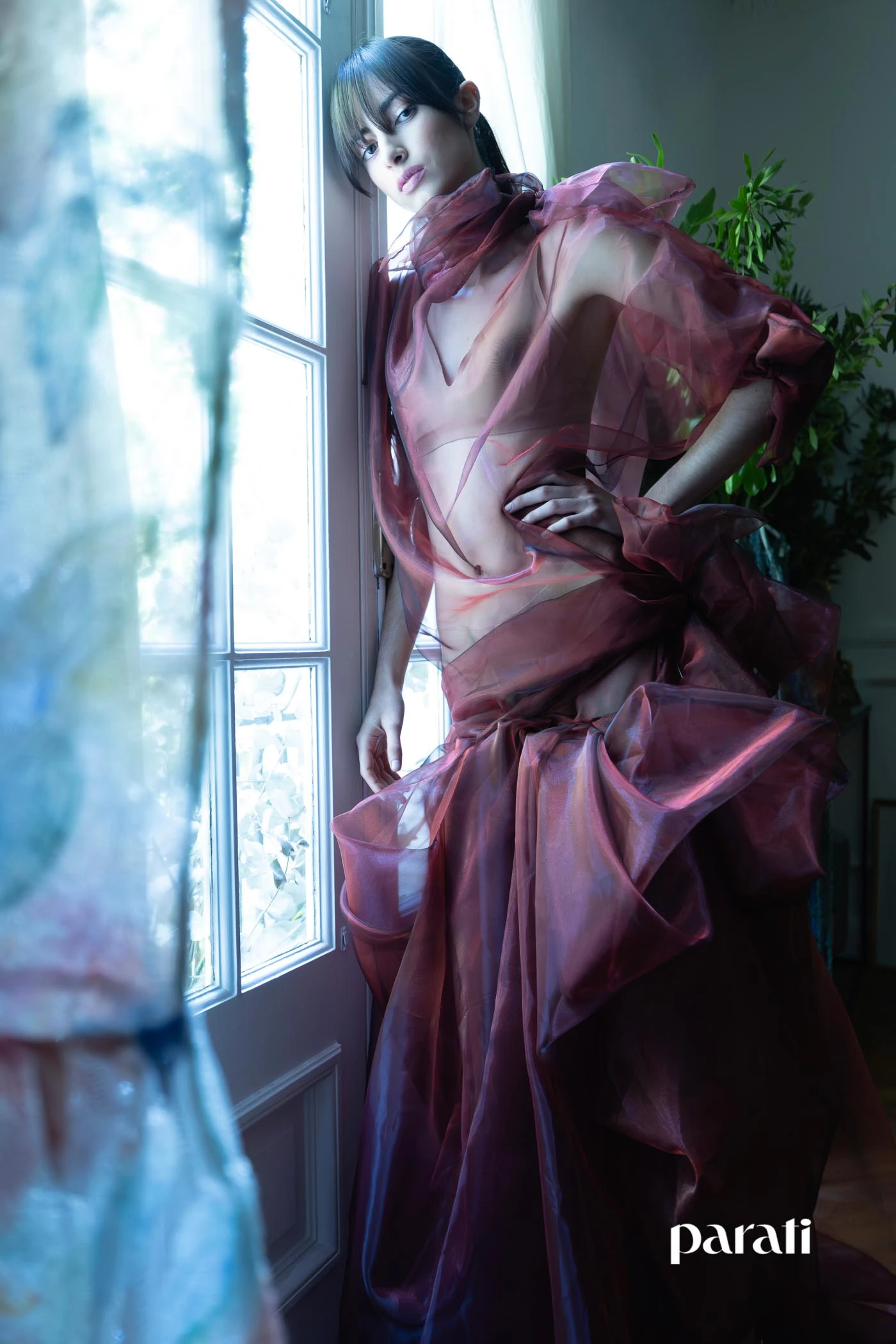
– I like playing with the idea of tightening and, at the same time, covering. I want there to be sheer elements, movement, and volume. But I know many women don’t feel comfortable with garments that are too bulky. That is why sheer elements are fundamental: they allow the silhouette to be glimpsed and for the volume to come from the fabric, not the body. That game of showing and hiding, between openness and sensuality, is what identifies me the most.
N de la R: on October 10 Jitric presented Anatomy of the Wind, his first collection conceived for a runway. There, dresses and silhouettes transformed with every step into dresses that swung between a body-con silhouette and a voluminous one with volumes and transparencies.
Study and Formation
Although Jitric finds in the various professions the next challenge, he also understands that, beyond passion and the value added that each person can bring, formal education of any kind is necessary.
– Do you think formal education is necessary to work in fashion? Is there anything to learn or is what you bring enough?
– From my experience I think I’m about 85% self-taught and 15% because I took classes and learned. I understand that professional training is necessary but I also believe that what each person contributes is fundamental, because there are many people who study and who are bozos in everything, not just in fashion, and then they don’t have the energy to take risks. I have something that sometimes works against me and that I don’t apply to myself: trial and error; I don’t allow myself too many mistakes. And it’s an issue because I push myself a lot. I can wake up at 4 a.m. thinking about how to finish a dress.
– Do you consider yourself a fashion designer?
– No, I feel it’s too big for me.
– Why?
– I don’t know, perhaps because I’m very demanding. I believe I have creativity and a unique sensitivity for combining textures and colors, which I think comes from having studied fine arts. On the other hand I feel that I close off the path of consumerism because I do a lot of what I like, I don’t look at what’s in vogue, so there are garments I can’t make.
– Recently stylists or costume designers of celebrities use designers as seamstresses and ask for a design they want. To what extent do you negotiate between what you do and what they request?
– For the most part it doesn’t happen to me. That’s why I say sometimes I feel I close myself a bit in my clientele. Who buys from me does so because they like what I do, they trust me, they give me freedom. It also happens when I have to dress a celebrity. There are no impositions.
– You don’t sell yourself out to requests; you know how to say no.
– Not at all. Do you know why? Because I feel I won’t succeed, I won’t give my best. If I have to make a dress I don’t see myself wearing, I can’t do it: the needles will break or the machine will jam (laughter).
– And how do you ensure blind trust?
– When clients come to the atelier they are all dynamite, always. If I sense they are too complicated and they tell me: no, I like to disguise, I tell them: let’s step out of the studio, take a walk and come back in; we will highlight, we will not disguise anything. They must think I’m crazy!
– It’s part of your working technique.
– I guide them, for example I say: I love your shoulders; what do you think about highlighting them? And so, because you cannot stay fixed on what you want the other to see. I think, if we emphasize disguising something too much, in the end we will reveal it and it will be the first thing they see.
– With so much information swirling around, is it hard to keep your north on axis?
– No.
– You know very well what you want.
– Yes, because I do what I like beyond trends. Yes, of course, there are certain designers I like, but because I like their energy and the message they convey.
– What have you learned in these years from the women you’ve dressed, the ones you’ve made accessories for, and the ones you dress?
– There’s something I learned a lot from . Also, unlike men, when women dress they can play a character with hair, makeup, clothing, more or less tight, more or less voluminous, a big heel, you name it. Men don’t do that.
– You told me you found your identity and your style, that you already have it. Is it hard to maintain it? Do you struggle?
– No, because it’s organic, mine; my work isn’t a character.
– How much do other people’s opinions matter to you? Did you care at some point or not?
– In what I do I don’t care about anything, but I’m not saying this from arrogance. It has nothing to do with that because I don’t judge what others do either. It does hurt me, for example, when someone critiques a styling, a dress, or a look even if it isn’t mine and tearing it down creates noise. So I feel that, whether I like it or not, there’s someone who worked on it, sewed it, someone who took the time to go find the dress, find the necklace… And perhaps, right or wrong, it’s someone’s idea. And it’s the way someone who thought about it expresses themselves, and that woman is confident. Don’t strip away that confidence, you know? That’s the only thing that gives me, without being dramatic, a little sadness.
– Do you think the fashion system devours designers or those who belong to the fashion world?
– Well, I’ve been working for more than 25 years and it seems to me that those who endure aren’t consumed; those who endure do so because they are secure in what they do and enjoy it. And they don’t compete with others; they compete with themselves.
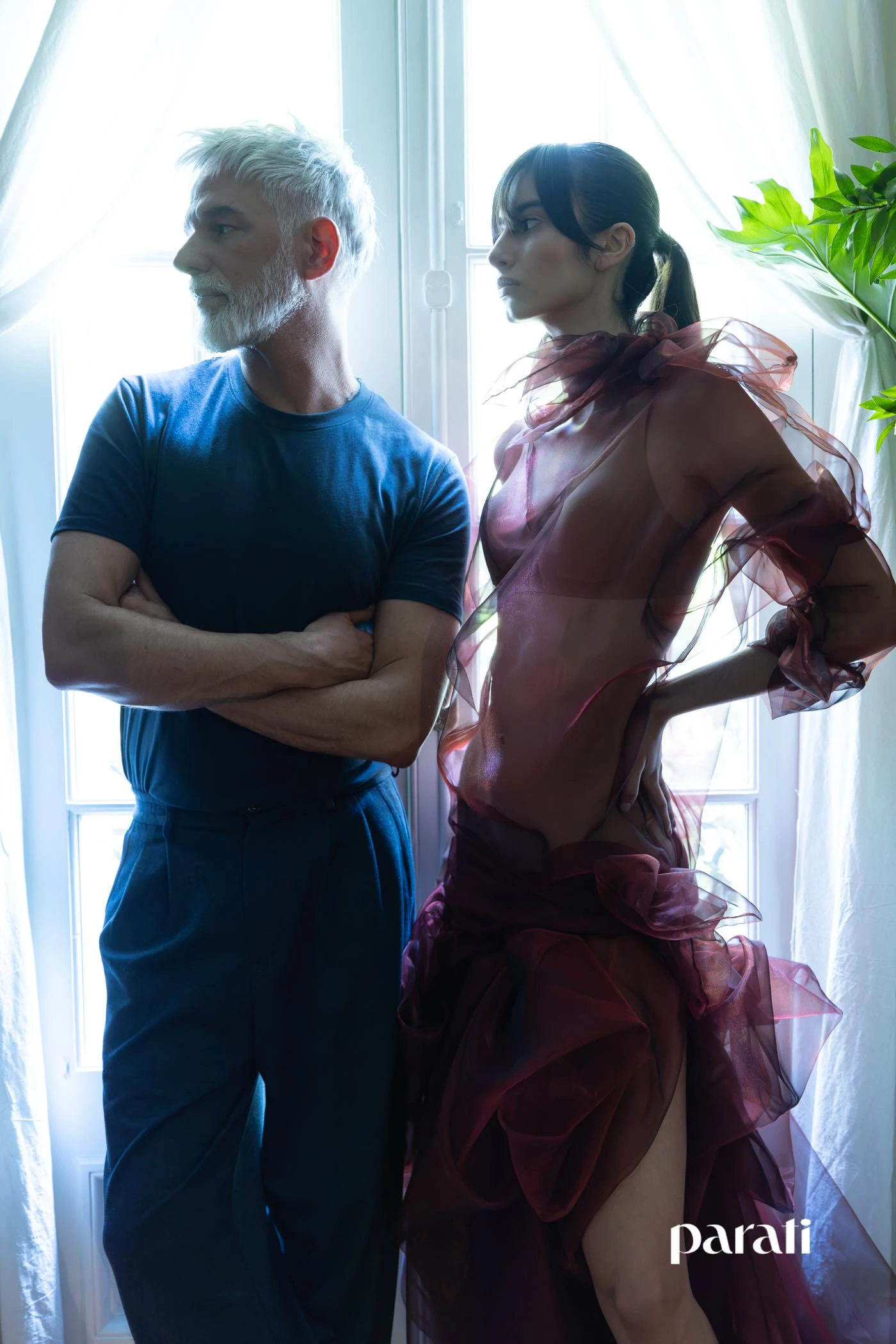
– Parecería que hoy uno es exitoso si es escandaloso o es multitarget. ¿Cuál crees que es el éxito en esta época tan hueca y efectista?
– You say that! (laughter) For me, success is that people see a dress and already know it’s mine without the announcer saying it.
– Do you think you’re at that moment?
– I think I’m on the right track; I still have a long way to go, though I feel that the identity of what I do is already starting to be recognized.
– Do you think fame is just a story?
– I prefer to ask myself, what is fame?
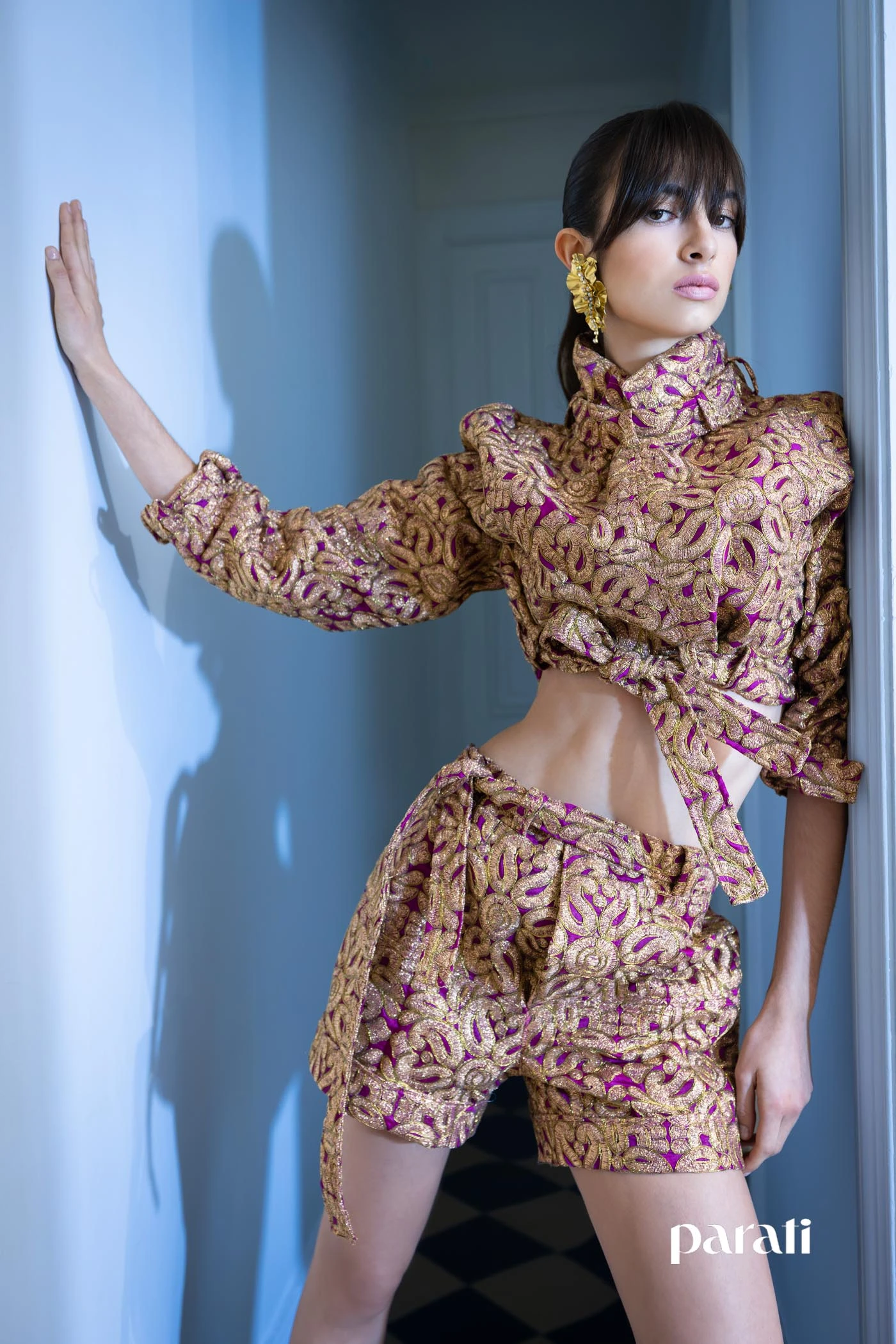
– Do you prefer to be famous, prestigious, or successful? What matters most to you?
– The most important thing today is that people can associate me with handmade work, with the opportunity to do what you enjoy, with what is tied to the author.
– What do you think is fashion’s challenge today?
– Selling. Also staying relevant, because that’s the hardest part; you have to scale back all the creativity and adrenaline to make it economically viable. And I feel today that it’s very difficult. Personally, I feel I’m not yet at the best moment to develop this concept.
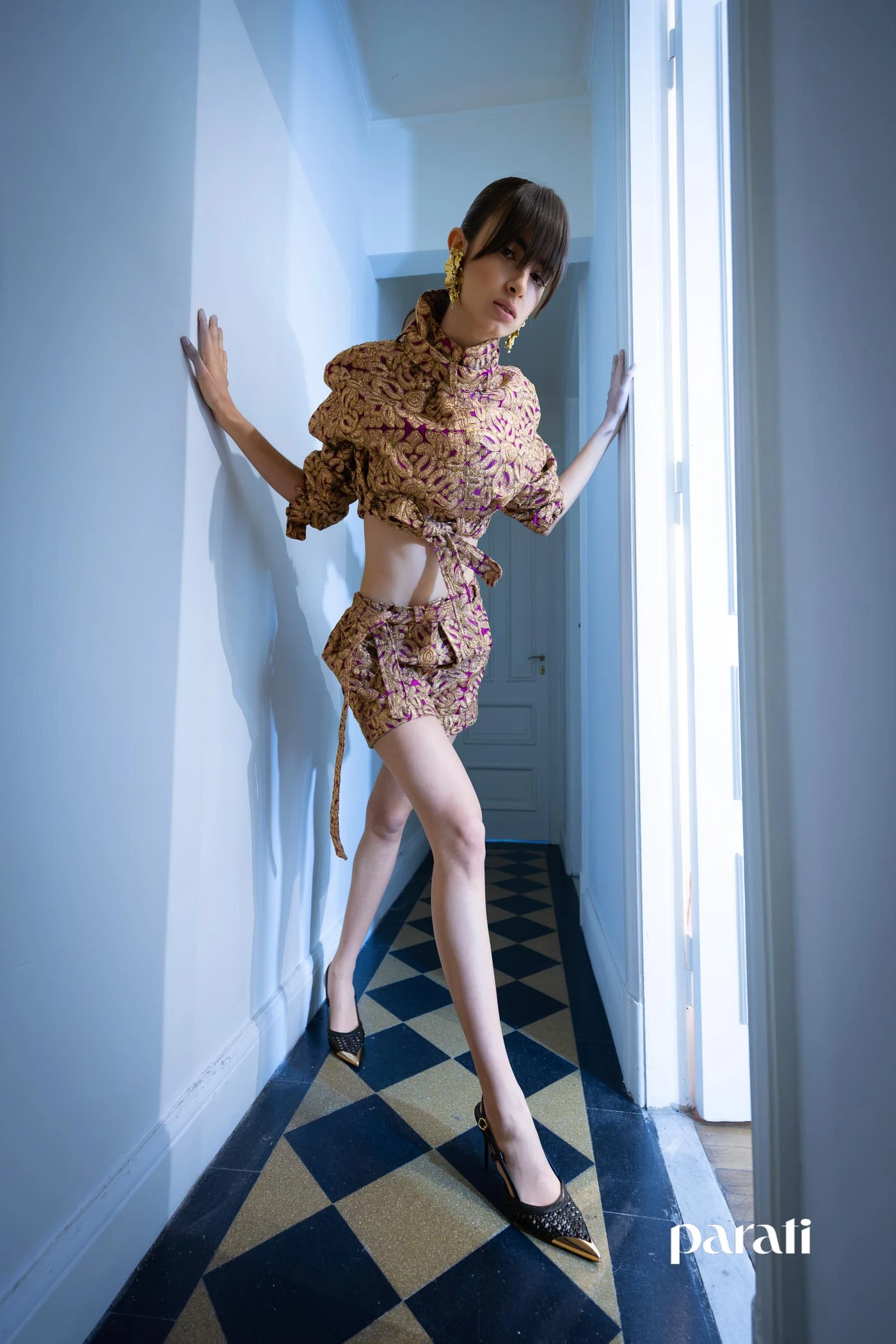
– How far would you like to go as a designer?
– I’d like to design for another brand while also keeping my own brand as a label.
– A brand from here or from abroad?
– Abroad; here it’s tougher. When I did makeup and started jewelry they’d say, “But weren’t you a makeup artist?” And now that I do fashion, they say, “Weren’t you into jewelry?” In other words, I can make dresses, jewelry, I can do the makeup, and if I want, I can even take the photo with my phone. Abroad brands do everything. I’d love to even design home goods. Do you get me? To create a home style. I feel that abroad the consumer, the market, and the environment don’t judge and they receive it positively. Here it seems you haven’t found your path and you’re still searching.
– Sometimes not finding the path is the path…
– For me, adding is continuing to discover my path, not chasing something silly. Achieving an identity seems like glory to me, not the flashy stuff.
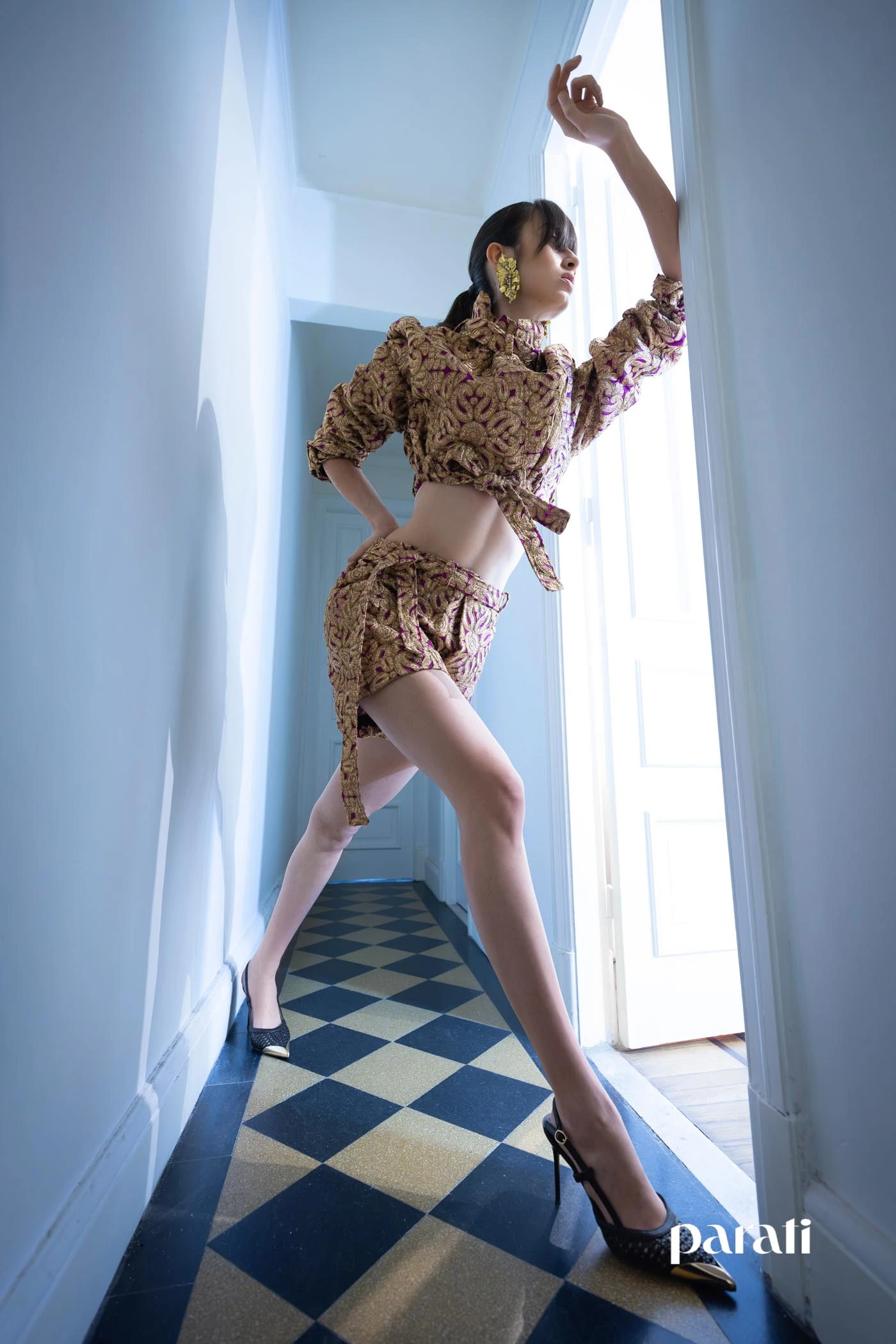
– Is there a dress for every woman?
– For me it has to do with the woman’s security and mine. I can put a mermaid dress on any body; the issue is how she feels and how she moves it. What you like is your confidence.
– What is fashion?
– A form of expression, like painting and like jewelry.
– Are you happy?
– Yes, because I do what I like.
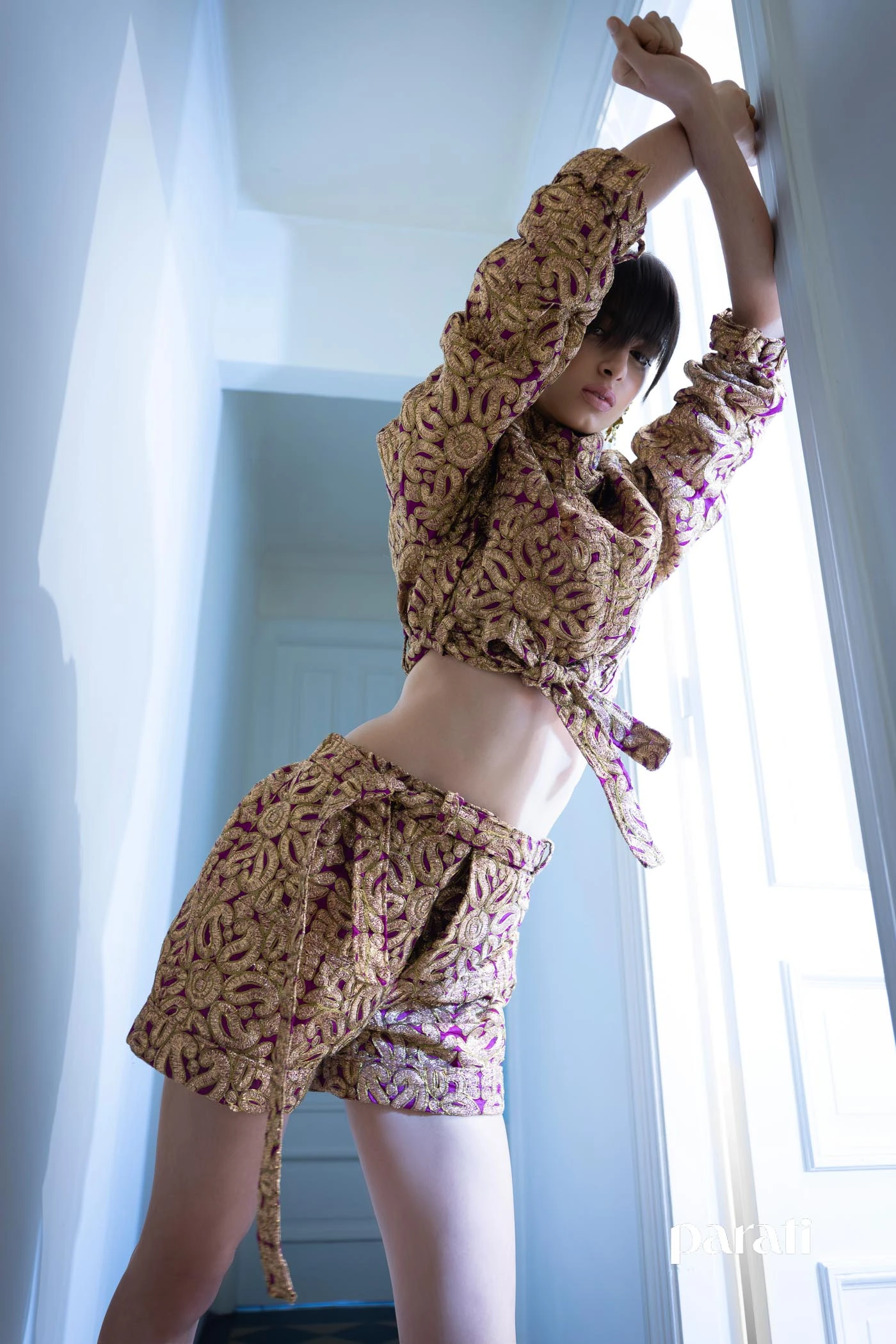
MODEL @agustinaayelo for @look1modelsmanagement
PHOTOS @chrisbeliera
VIDEO @ramapalais
STYLING @alegarcia360
MAKEUP @mauriciocamilomaquillador
HAIRDOS @criscagnina for @cerininet