
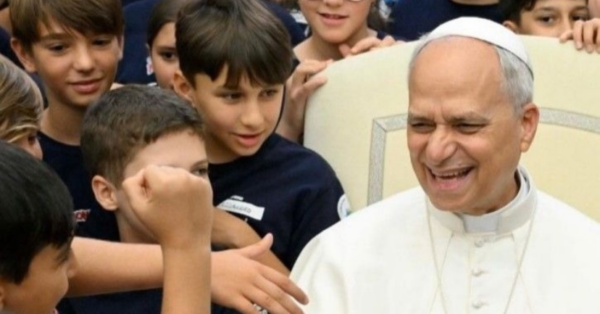
The arrival of the Pope Leo XIV will mobilize thousands of people and mark a historic moment for the country. The Holy Father will remain in Argentina from Sunday, November 8 to Wednesday, November 11, with activities in Buenos Aires, Córdoba and Luján.
It will be the first papal visit to Argentine soil since 1987, when John Paul II undertook his second trip to the country. Nearly four decades later, the anticipation once again crosses families, religious communities, and also children, who can sense the magnitude of the event even though they may not yet fully understand its meaning.
How can we explain what is happening to them and help them feel part of it? For psychologist Solange Sznaidleder, coordinator of Mental Health at the Caseros Modelo Sanatorium, the visit could become an opportunity to discuss faith, but also universal values such as love, respect and solidarity.
Why the Pope’s visit is a historic event
During his four days in Argentina, Leo XIV will participate in religious celebrations, institutional meetings, and activities with different sectors of society. The itinerary includes Masses in Buenos Aires, Córdoba and Luján, a visit to the Little Cottolengo Don Orione in Claypole, and a vigil with young people, among other commitments.
“The Pope is a universal figure who, for believers, represents God’s presence on Earth. His decision to visit Argentina makes this a day to remember, since the last visit was almost 40 years ago,” explains Sznaidleder.
The professional emphasizes that the Pontiff represents a visible link between the Church, faith, and the world, but the event’s significance can surpass religious differences.
“His social outreach is highlighted by the display of faith, the defense of vulnerable sectors, and his message of love toward one’s neighbor. Differences in religion or what each person believes do not matter: what must prevail is unity as a people,” she maintains.
How to explain to children the arrival of Pope Leo XIV
The children may hear conversations, see street preparations, or encounter images of the visit on television and social networks. Including them does not mean giving them complex explanations, but bringing the event closer with language appropriate for their age.
“Children enjoy feeling involved. Inclusion brings them happiness and helps them understand that they are accompanied, that they are not alone and that there are places they can turn to,” notes the psychologist.
For the youngest, it can be explained that the Pope is a very important person for the Catholic community and that his visit brings together those who wish to share a message of faith and hope. With older children, one can also discuss his social mission, his care for the vulnerable, and the importance of dialogue.
The key, Sznaidleder says, lies in “adapting the language to each child’s age,” listening to their questions, and not imposing emotions or interpretations that they are not yet able to process.
An opportunity to talk about empathy and solidarity
Beyond the religious dimension, the visit opens space for family discussion about how we relate to others.
“These are festive days in which healing, asking, and gratitude for life take place. They also convey concepts that can be used to reflect with the little ones on how we act with friends and family,” explains the specialist.
Among the ideas that can be explored are respect, the ability to put oneself in another’s shoes, and the validation of emotions. Also compassion, understood both toward others and toward oneself.
“We can talk with them about taking care of what we have, sharing and helping from the heart,” adds Sznaidleder.
It isn’t about turning the conversation into a class or seeking perfect answers. The event can function as a trigger to ask them what they feel, what they know about the visit, and what it means to help another person.
Listening to the kids and giving them a place
The arrival of the Pope can also arouse enthusiasm, curiosity, indifference, or even discomfort. All of these reactions deserve to be heard.
Validating emotions means allowing them to express what they feel without correcting them immediately. If a child does not grasp the event’s importance or does not share the adults’ enthusiasm, the conversation can begin from their own experience.
“It is important to take advantage of the Pope’s presence to foster love, empathy and solidarity. Maintaining active listening, providing them with support and sharing quality time is essential to increase child well-being,” states Sznaidleder.
The visit of Leo XIV will be a large-scale and historic event. For every family, it can also become something more intimate: an opportunity to pause, discuss, and remind the children that being part of a community also means caring for those we have close to us.
Advised by: Solange Sznaidleder, Licensed Psychologist (MN 55.475 / MP 190.449), Mental Health Coordinator at Sanatorio Modelo de Caseros.