
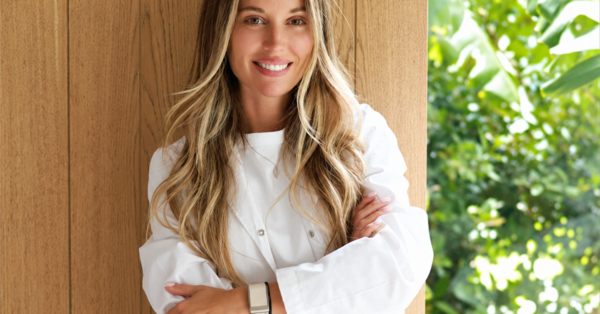
Before the nutrition books and the consultations, there was a family table. An Italian grandmother, Lala, who cooked homemade meals and gathered everyone on Sundays. In those gatherings, amid conversations and shared dishes, Agustina Bonilla began to form a way of understanding food: eating could also be about caring, accompanying, and giving love.
At fourteen, her mother’s illness stirred new questions. Seeking tools to support her, she enrolled in cooking courses and mindful-eating workshops. That restlessness would, over time, become a professional path.
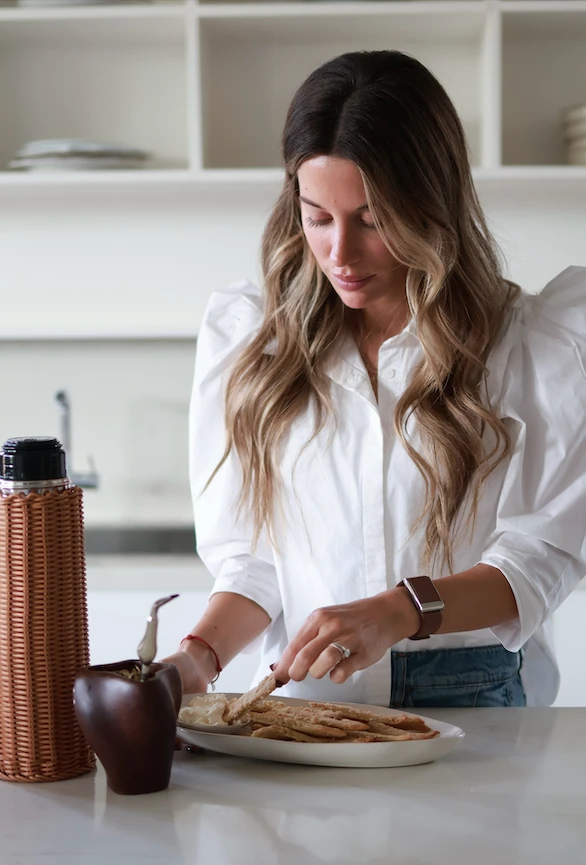
Today, as a nutritionist and health coach, she brings that story into her practice. Before proposing changes, she seeks to know the person in front of her: how they live, what they’re going through, how much they rest, and what they need. Because behind a plate lie schedules, connections, emotions, and real possibilities.
In a conversation threaded with memories of her grandmother and the lessons learned through difficult moments, she invites revisiting a standard many women know: the feeling that they should always eat better, weigh less, or have more discipline. Her approach begins with a simple idea: taking care of yourself can include enjoyment.
A vocation born between caregiving and the family table
—How and when did your interest in nutrition begin?
—My interest grew from a blend of many things. I’ve always been very focused on others. I liked the idea of choosing a path that involved communicating, teaching, supporting, and, above all, helping. It’s something that genuinely makes me feel good.
But there was a very specific moment that sparked my interest in food. At fourteen, when my mom was going through an illness, I began approaching this world from another angle. I took cooking courses and mindful-eating workshops tied to people facing illnesses, seeking tools that could help her navigate that moment in the best way possible.
That is when I started to ask myself what role food could play in our wellbeing and our quality of life. A tremendous curiosity woke up in me.
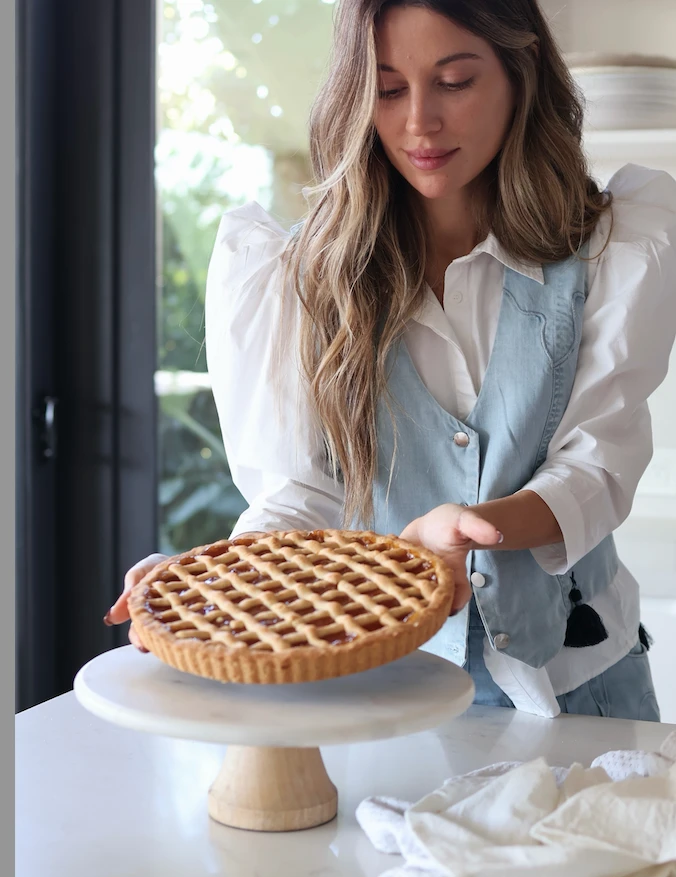
And, of course, there’s my grandmother Lala, one of the most important people in my life. She was Italian, loved to cook, and taught me from a very young age. Sundays were almost sacred: a family table, homemade meals prepared by her, and everyone gathered around. With Lala I learned, long before studying nutrition, that food is also a way to care, to share, and to bring people together.
I think my choice emerged a little from all of that: from my story, from the people I loved, and from the desire I always had to accompany others.
—Your grandmother Lala taught you that food is also a gathering, with her homemade pastas and long tables. What of that legacy do you bring to your practice today?
—Everything. I believe Lala taught me a lot more than how to cook.
Through food I learned to share, to listen to the other, to pay attention to details, to care, and to create gatherings. A plate of food is never just a plate of food. Around a table we meet, talk, celebrate, support, and give each other affection.
That’s something I carry into the practice. I can’t think of a person only in terms of what’s on their plate, because behind there is a story, a family, customs, emotions, moments of pleasure, schedules, work, and relationships. There is a life.
Studying Health Coaching at the Institute for Integrative Nutrition (IIN) helped shape something I already felt. It broadened my perspective and helped me understand nutrition in a more holistic way.
That’s why, when someone sits with me, it’s not just about telling them what to eat. First I want to know who I’m facing, how they live, what they like, what’s happening to them, and what they need. Much of that way of accompanying grew out of those Lala-filled meals.
Caring for yourself without living under the burden of perfection
—Many women feel they should always eat better, weigh less, or be more disciplined. How do you begin to move away from that demand without sacrificing health?
—For me, the first step is to understand that caring for yourself and enjoying life are not opposites.
My own story taught me that life is one and should be enjoyed. That, too, is part of being healthy. Of course, when there’s a pathology or a condition that requires specific nutritional guidelines, there are things we have to take special care with, and we always work on that person’s particular needs. But even there I try to find the kindest possible way to bring it into real life.
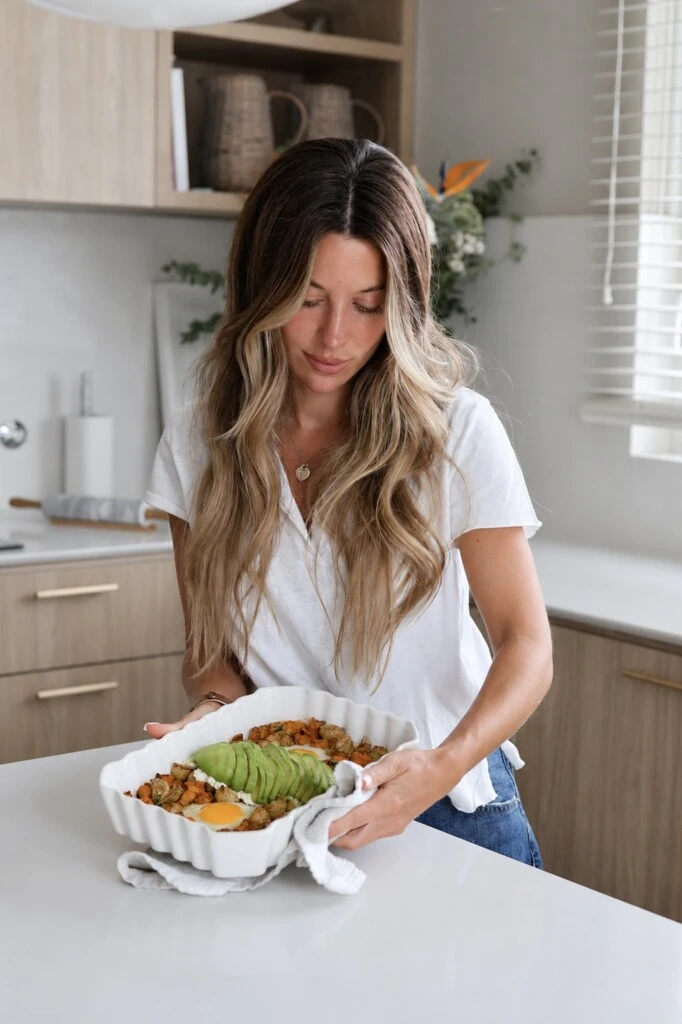
When we talk about a healthy person who wants to care for themselves, it doesn’t make sense to live feeling constantly on a diet or that every time you deviate from a structure you did something wrong.
I like to work from a holistic nutrition approach, where everything can fit. You can enjoy scrambled eggs in the morning because they’re good for you and you like them, and you can also have a piece of chocolate, ice cream, or cake without thinking you ruined anything.
Sometimes we refer to the famous 80/20, but I don’t even think it has to be a mathematical formula. There will be weeks that are 80/20, others 70/30, and life moments that might be 50/50. The important thing is to build a solid, healthy base you can always return to.
You went on a trip, had a week full of events, celebrated, ate differently, enjoyed… That’s okay. Then you know how to return to your habits, to your routine, to those basics you already built. Without punishment, without compensations, and without guilt.
For me, a good relationship with food has much more to do with that freedom than with perfection.
—When a client comes to the practice and says, “I know what I should do, but I can’t sustain it,” what do you seek to understand before proposing changes?
—The first thing I try to understand is what’s happening around that plate. Often it isn’t that the person doesn’t know what to do. The question is why they can’t sustain it today.
That’s where my health-coach training became important. I learned to look at how our relationships, family, partner, work, rest, movement, stress, and how we feel about ourselves fit into the picture. In short, what is happening in our life at that moment.
We all go through situations that throw us off. It could be a loved one’s illness, a relationship issue, a tough moment at work, or a period with too many things at once. And often one thing starts to cascade into another: poor sleep, more fatigue, less energy, difficulty organizing, and the sense that we can’t tend to our eating either.
Before telling someone what to change, I need to understand where that person stands. Perhaps the problem isn’t a lack of will or discipline. Perhaps there are other things we need to order first.
That’s why I’m more interested in knowing the person than correcting what they eat.
—You speak of balance rather than strict diets. How does that translate into a real week, with work, fatigue, little time to cook, and meals out?
—Balance only works if it can be adapted to your real life. That’s why I work in a highly personalized way. Not everyone has the same schedules, job, family, or possibilities for organizing.
I need to know what a person’s day looks like: what time they get up, where they work, whether they have lunch out, how much they travel, whether they cook, if they get home late, if they train, which days are hardest. The best meal plan in the world is useless if it cannot be sustained in your life.
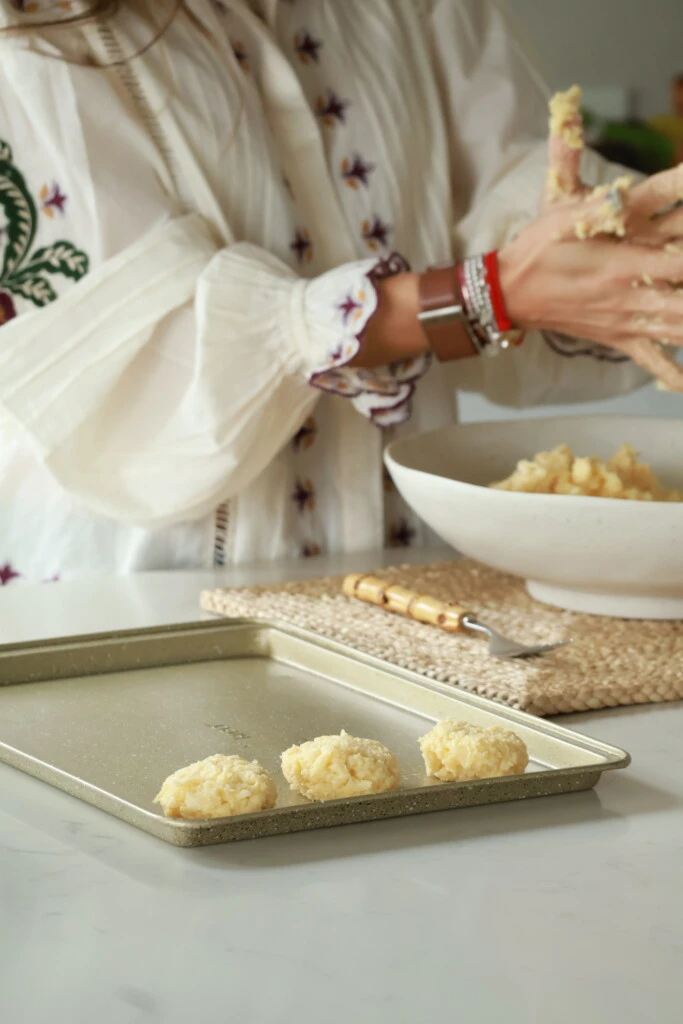
Very often it’s about making healthy choices easy. If you come home exhausted and every night you have to decide what to cook from scratch, you’ll feel overwhelmed. But if you open the fridge and there are some ready-to-use bases — washed or cooked vegetables, some prepared protein, eggs, simple things you enjoy — you can assemble a plate without feeling like caring for yourself is just another obligation.
The same applies when eating out or traveling. I don’t expect someone to live the same way on vacation, on a work trip, and on a random Tuesday at home. We look for tools that work for each scenario.
A healthy routine has to accompany your life, not complicate it. If sustaining it means you’re constantly watching the food, there’s probably something we need to adjust.
Emotions, social media, and what the scale doesn’t tell
—What place do emotions have in our way of eating, and how can we recognize what we’re feeling without judging ourselves for seeking comfort in food?
—Emotions have a huge role. The first step is to stop thinking that our eating happens in isolation from everything else we’re going through.
A single emotion can trigger completely different responses. Some people, when sad, anxious, or stressed, feel more like eating; perhaps they crave something sweet or something that gives pleasure. Others, faced with the same emotion, lose their appetite. Neither response defines whether someone has more or less willpower.
When the famous “emotional eating” appears, I’m much more interested in asking what that person needs rather than judging the food they chose.
If every time I feel anxious I seek comfort in food, perhaps the issue isn’t simply about removing that chocolate. First I need to understand what’s happening, what I’m feeling, and what other tools I have to get through it. That takes time, self-knowledge, and, when necessary, the support of other professionals.
For me it’s very important not to look only at what someone is eating, but to understand what the person who is eating is going through.
—On social media there are tips about fasting, supplements, and foods to eliminate. What questions should we ask to distinguish trustworthy information from a trend?
—Today we are exposed to a tremendous amount of information about nutrition, exercise, supplements, routines, rest, and well-being. We need to learn to be a bit more critical of what we consume.
That something worked for someone doesn’t mean it’s what I need. I see this a lot with supplements: they can be excellent tools when properly indicated, but not everyone needs the same thing. Before incorporating something I would ask: do I really need it?, what am I taking it for?, who’s recommending it?, is there evidence backing it?, is it suitable for me and my health status?
The same goes for fasting or eliminating certain foods. Is there a concrete reason to do it or am I following a trend? Does it make me feel better? Is it sustainable for my life? Was a professional who recommended it?
On social media, universal answers are often presented for questions that are deeply personal. When it comes to health, we shouldn’t automatically copy what another person does. Getting informed is great; personalizing that information is essential.
—What changes indicate that a person is improving their health and their relationship with food, beyond the number on the scale?
—Many. To me, the scale is just one data point and should never tell the whole story.
In my practice I work with InBody to assess body composition, but I also have online patients who don’t weigh themselves and in-person patients who tell me outright, “I don’t want to weigh myself,” and that’s perfectly fine. It depends on the person and their goals.
There are changes that say a lot more: someone telling me they have more energy, sleep better, feel less bloated, are more comfortable in their body, or simply stopped thinking about what they can or cannot eat all day.
I love it when a patient begins to feel more relaxed around food. When they go out to eat and can enjoy themselves; when a day goes off track and they don’t feel they’ve erased everything they had been doing; when they start to have a routine they want to sustain because they feel better, not because someone is imposing it on them.
It’s also important to understand that this is never a straight line. Life has its ups and downs, weeks that run smoothly and others that are chaotic. Social media often shows an image of perfection that doesn’t exist.
Improving health means getting to know yourself, acquiring tools, and moving through those ups and downs in a possible, kind way.
“Just for today”: a first step to start taking care of yourself
—For a woman who wants to start taking care of herself but is tired of trying diets, what would be your three simplest, most doable first steps?
—The first would be to stop thinking that caring for yourself requires starting another diet. Before changing everything, pause and ask yourself: how am I, am I getting good rest, how is my work, my relationships, do I have moments for me, am I moving, what is making me feel off today? Often we want to start by changing the plate when there are many other things around that also need attention.
The second would be to start gradually. There’s a very simple phrase I learned during a very difficult moment in my life that I still use a lot: “just for today”.
You don’t need to change your whole life on a Monday. Just for today, what small thing can you do for yourself? Perhaps walk for half an hour, prepare a meal that makes you feel good, or go to bed a little earlier. Tomorrow will be another day, and you’ll ask yourself again what you can do for yourself today. As those small changes begin to repeat, they gradually build a routine.
The third would be to ask for help if you need it and to learn to also look at what you’re doing well. Every professional has their tools, and we don’t have to figure everything out alone. I also strongly believe in shifting away from focusing solely on what’s missing. Even in very difficult moments I’ve always tried to find something, even if small, to hold onto to keep moving forward. It’s a way of viewing life that I also bring into my practice.
Caring for yourself should mean learning to know yourself, building tools you can sustain, and understanding that there will be better days and worse days.
If I had to sum up my view on nutrition and, in a way, my outlook on life, it would be: “You don’t need to do it perfectly. You need to build solid foundations and learn to return to them.”