

In the framework of the Breast Cancer Prevention and Awareness Month, understanding the risk factors, paying attention to changes in the breasts, and knowing when to schedule checkups can be crucial for safeguarding health. While not all cases can be prevented, there are measures that help reduce risk and, above all, tools that enable detecting the disease at early stages.
Para Ti spoke with Dr. Gabriela Candas, a breast surgeon, member of the Mastology Service at the Hospital Británico of Buenos Aires, and vice president of the Argentine Society of Mastology (MN 92.464), who explained what we can do to take care of our breast health, which changes should prompt a consultation, and at what age mammography is recommended for women with average risk.
“We have a fundamental tool: early detection”
-Can breast cancer be prevented?
–We cannot prevent all breast cancers, because there are risk factors that cannot be altered, such as age, family history, or certain genetic alterations. However, it is very important to know them, because they allow us to assess our individual risk, receive appropriate guidance on how to monitor ourselves, and, in some cases, consider specific strategies to reduce that risk.
But there are also factors we can influence. Maintaining a healthy weight, engaging in regular physical activity, limiting alcohol intake, and not smoking are habits that can contribute to lowering the risk of developing breast cancer.

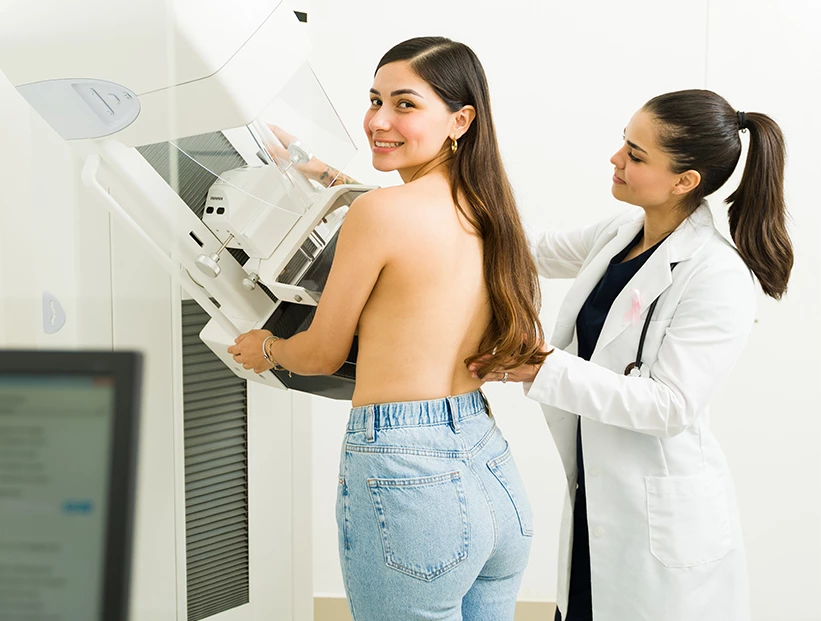
Moreover, we have a fundamental tool: early detection. Mammography makes it possible to find very small lesions, often before they can be felt. It doesn’t prevent cancer from appearing, but it allows diagnosis at early stages, when the chances of cure are high and, in many cases, treatments can be less aggressive.
Therefore, when we speak of prevention, we mean understanding our risk, adopting healthy habits, and performing the appropriate checkups for each woman.
“The idea is to know our breasts to recognize what is different and consult in time”
-Getting to know our breasts: what changes should prompt a consultation?
-Knowing our breasts means understanding what is usual for us and being attentive to any new change. It does not mean living in a perpetual state of self-examination, nor does it replace medical checkups.
One should seek medical advice if a new lump or skin thickening appears, a change in the shape or size of a breast, a recent nipple retraction, skin changes such as dimpling, thickening, persistent redness, or an appearance reminiscent of “orange peel,” or spontaneous nipple discharge, especially if it is bloody.
It is important to clarify that the majority of breast lumps are not cancerous. But a new change deserves evaluation, even if it is not painful. The idea is: know our breasts to recognize what is different and consult in a timely manner.
“Not all women have the same risk”
-Mammography: when should I start screenings?
-In an asymptomatic woman with average risk, the Argentine Society of Mastology recommends starting with an annual mammogram at age 40 for individuals with general population risk.
Not all women have the same risk. Significant family history, certain genetic alterations, having received chest radiotherapy at a young age, or other personal history may indicate that screenings should begin earlier and that additional studies, such as magnetic resonance imaging, might be necessary.

And there is a fundamental difference: routine mammography is for women without symptoms. If a lump, nipple discharge, or any new change appears, you should not wait for the next screening: seek medical advice immediately.
5 habits to protect breast health
If I had to choose five simple measures, these would be the ones:
1. Engage in regular physical activity and maintain a healthy weight, especially during menopause. They’re associated with a decreased risk of breast cancer.
2. Promote breastfeeding. We know it provides a protective effect.
3. Limit alcohol consumption and avoid smoking. Both increase breast cancer risk, and the higher the intake, the greater the risk.
4. Be aware of our family history. It can help us identify whether we have a higher risk and may necessitate a different screening plan.
5. Do not delay checkups. Mammography can detect cancer before it produces symptoms.