
Spring and skin: what to consider with the seasonal shift and why aesthetic medicine is increasingly focusing on preserving tissue quality.
With the first warm days, we spend more time outdoors again. The skin becomes more exposed to the sun, and several issues that perhaps went unnoticed during winter start to become more visible: spots, texture changes, lack of radiance, or dehydration.
But spring can also be a good moment to reframe the question. Instead of asking what treatment we need to correct what we see in the mirror, we can ask ourselves what we can do today to preserve the quality of our skin for longer.
That shift in perspective is beginning to gain ground in aesthetic medicine. The Dr. Johanna Furlan, aesthetic surgeon (MN 122.975, @drajohannafurlangraf), explains what the current trends are in approaching aging and why the so‑called skin longevity invites us to think about skin care from a broader viewpoint.
Spring: a moment to assess the skin
After the cold months, some people arrive at spring with drier, more sensitive skin or changes in texture. At the same time, outdoor activities and sun exposure begin to rise.
Therefore, for Furlan, the seasonal change can be an opportunity to assess, but not necessarily to intervene.
Each person comes to spring with a different story. Phototype, sun exposure, the presence of spots, sensitivity, and medical history are some of the factors that should be considered before indicating a procedure.
The specialist emphasizes that the indication should come from an evaluation and not from a treatment calendar. There is, in that sense, no procedure that is by definition “the spring treatment.”
What may be appropriate for one person may not be for another. Even the right moment to perform it can vary.
From correcting to preserving: what changes in aesthetic medicine
For a long time, a sizable portion of the aging conversation focused on wrinkles and loss of volume. Today the focus has broadened to other aspects of the skin and tissues: texture, elasticity, hydration, luminosity, and quality.
The known procedures still have their place, but they are beginning to be incorporated within a broader strategy.
According to the agenda of Aesthetic Medicine London 2026, among the topics gaining traction in European professional meetings are skin quality, structural rejuvenation, regenerative aesthetic medicine, and the skin longevity.
A review published by Aesthetic Medicine in 2026 also shows growing interest in skin quality, regenerative medicine, combined treatments, and the longevity of the skin.
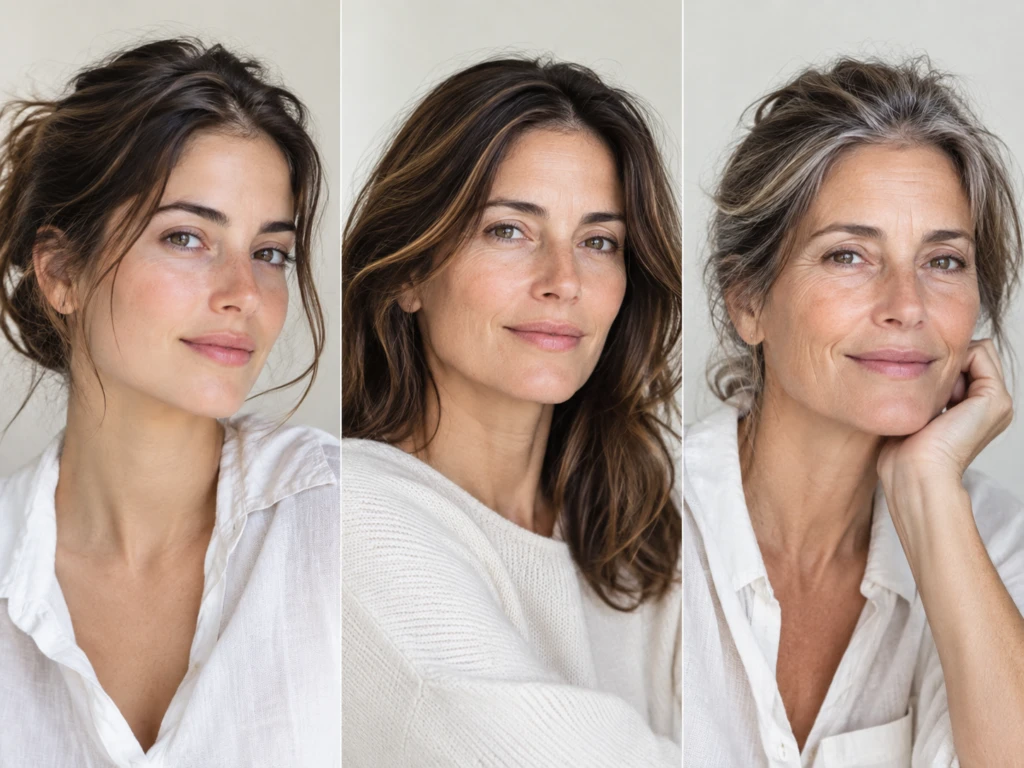
The idea of skin longevity starts from a simple premise: we cannot stop aging, but we can work to keep skin healthy and of good quality for longer.
Thus, the goal stops being exclusively about changing features and instead focuses more on accompanying facial changes, improving tissue quality, and preserving naturalness.
The sun is also part of care
Spring arrives with another key point: sun exposure.
As temperatures rise, we spend more time outdoors and exposure to ultraviolet radiation increases progressively. The American Academy of Dermatology warns that ultraviolet radiation contributes to photoaging and that sun damage accumulates over the years.
Therefore, sun protection should be part of the daily routine. Broad‑spectrum sunscreen, appropriate clothing, a hat, shade, and responsible exposure remain essential tools to preserve skin health.
Additionally, some procedures require specific sun care or certain recovery periods. The time of year is, then, an extra data point to consider when planning an intervention.
A strategy that starts before the treatment
Thinking about skin longevity also means moving away from the logic of isolated procedures.
Everyday care, photoprotection, habits, and, when indicated, medical treatments are part of the same strategy. The question ceases to be only what we want to modify today and begins to incorporate how we want to care for the quality of our skin over time.
This does not necessarily mean arriving at spring with a list of pending procedures. It can be something much simpler: observe the current state of our skin, review care habits, reinforce photoprotection, and consult when a concrete need exists.

Care today to age better
When facing the question “What treatment should I get this spring?”, perhaps it is better to start with another question: what can I do today so that my skin will be in better shape for the years to come?
Aging is a natural process. Aesthetic medicine can accompany it, but the current approach also emphasizes health, tissue quality, and sustained skin care.
Spring, then, does not necessarily start with a treatment. It can begin simply with an evaluation and with care decisions that help preserve the skin for longer.
Source: Dr. Johanna Furlan, aesthetic surgeon MN 122.975 @drajohannafurlangraf