
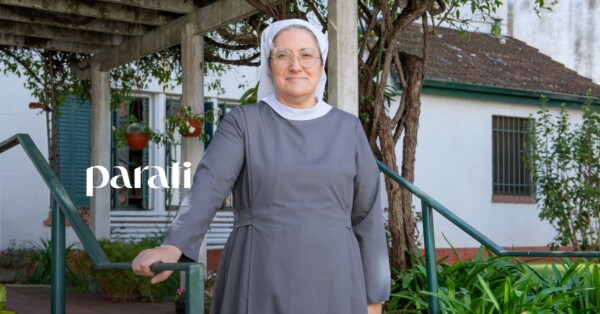
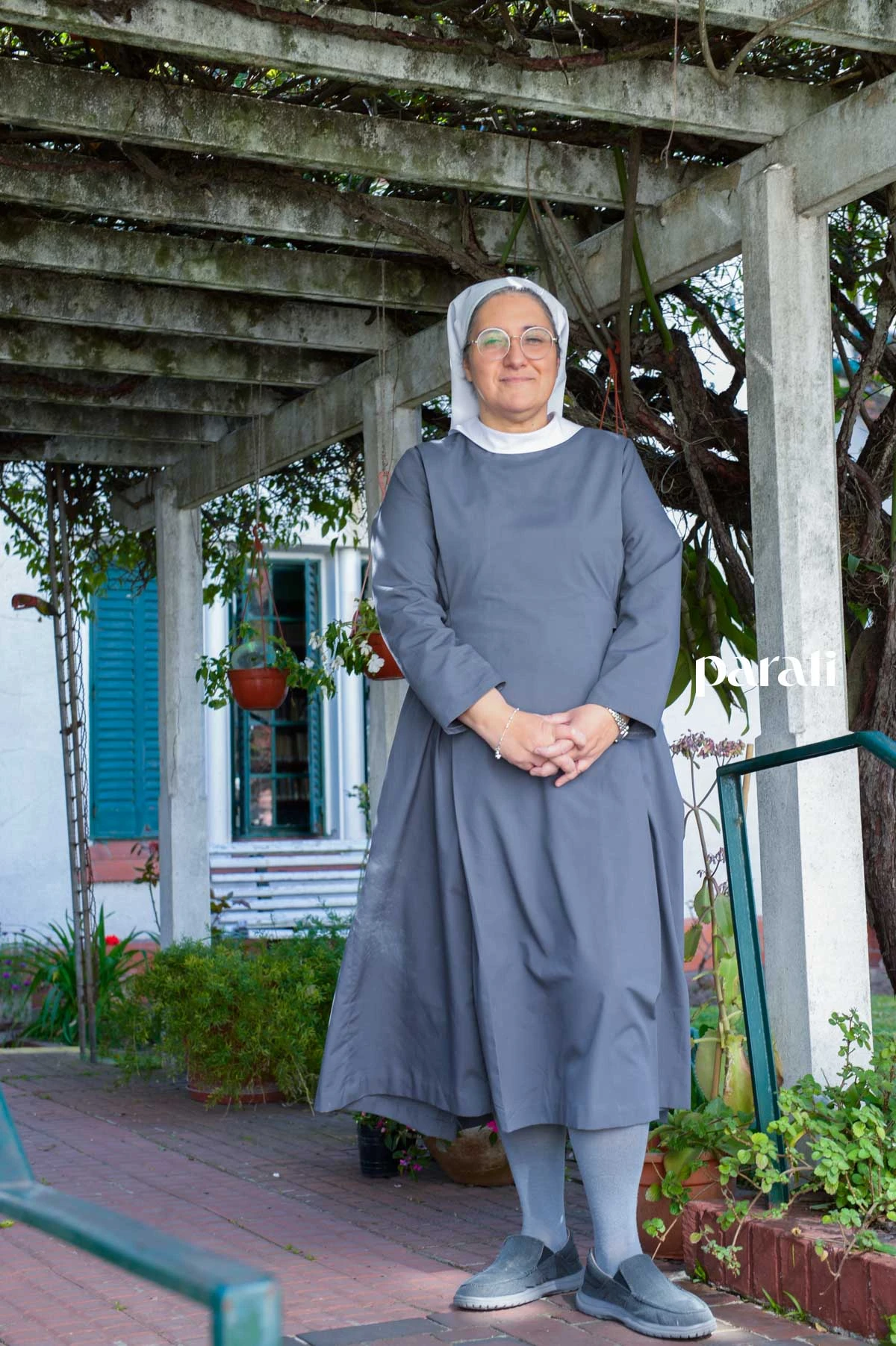
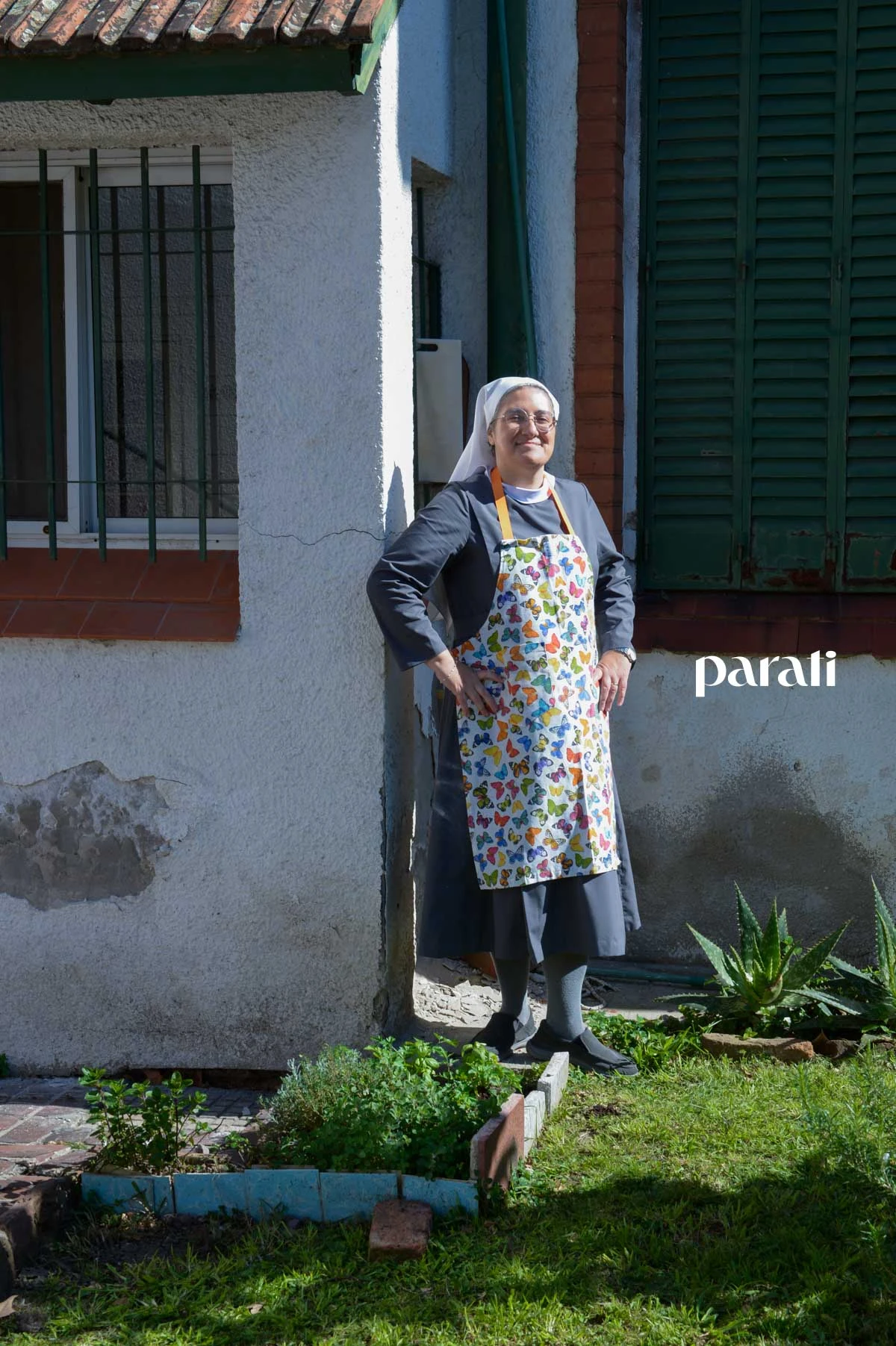
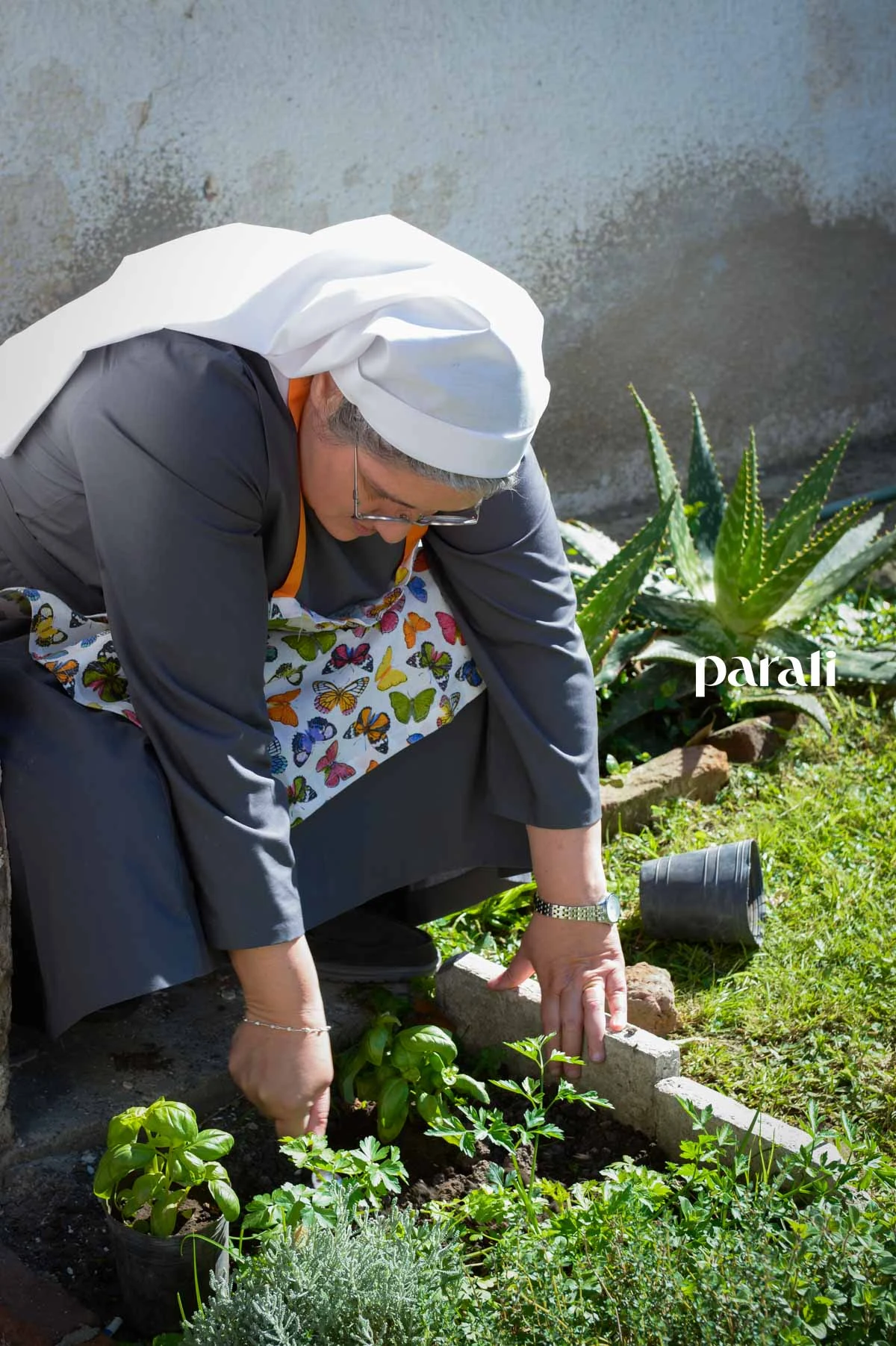
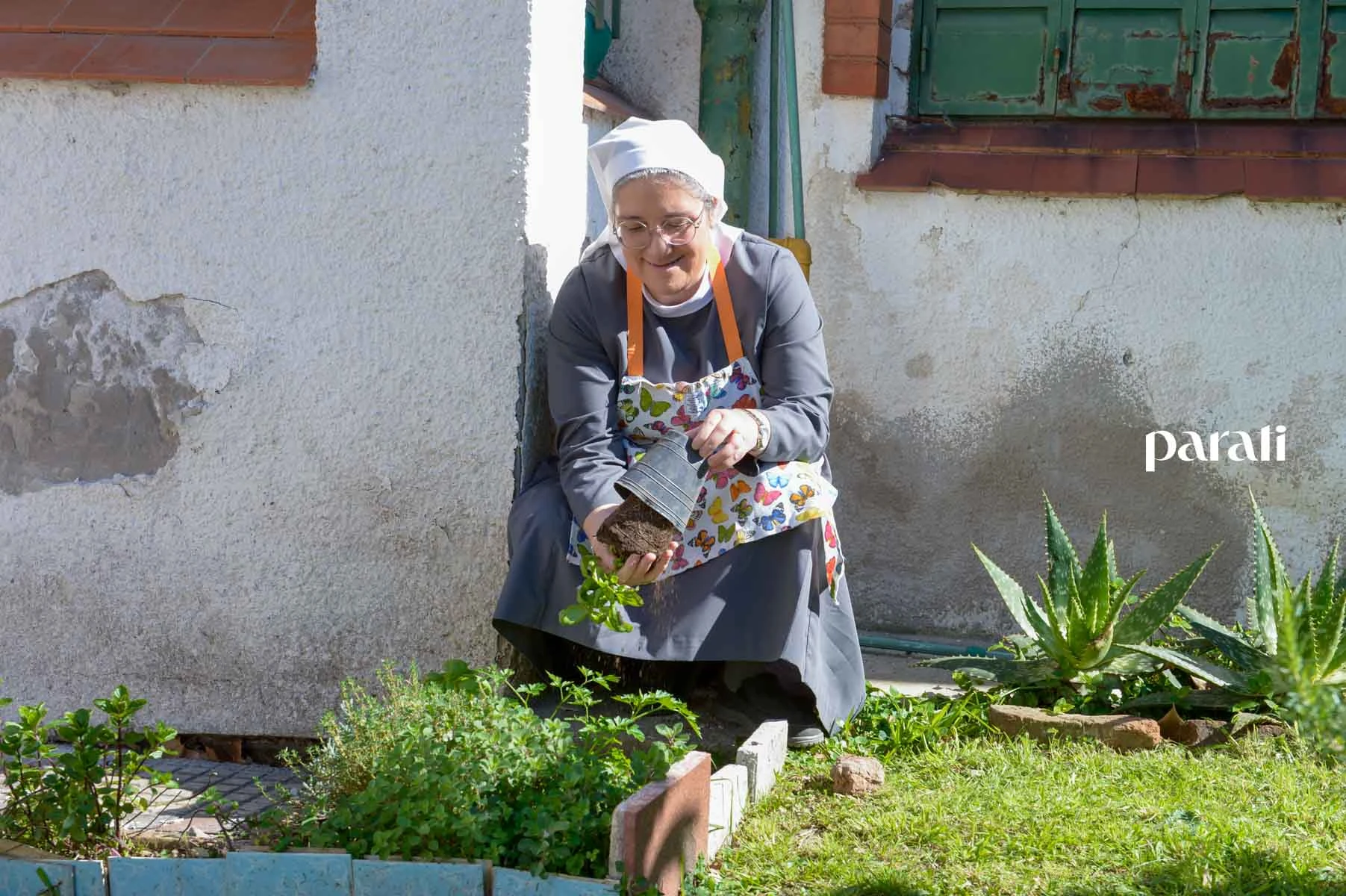
After several cloudy days —like many during this winter in Buenos Aires— the day was sunny and cool. After passing through the gate of the Monastery of the Benedictine Sisters, the greenery of the gardens and the first spring buds were the welcome committee.
Then, Sister Verónica, with her warm hug, her smile and a cup of coffee. “I have about three a day… a lot! If I don’t, I can’t start,” is one of her first phrases in this piece, stemming from her unexpected TV facet.
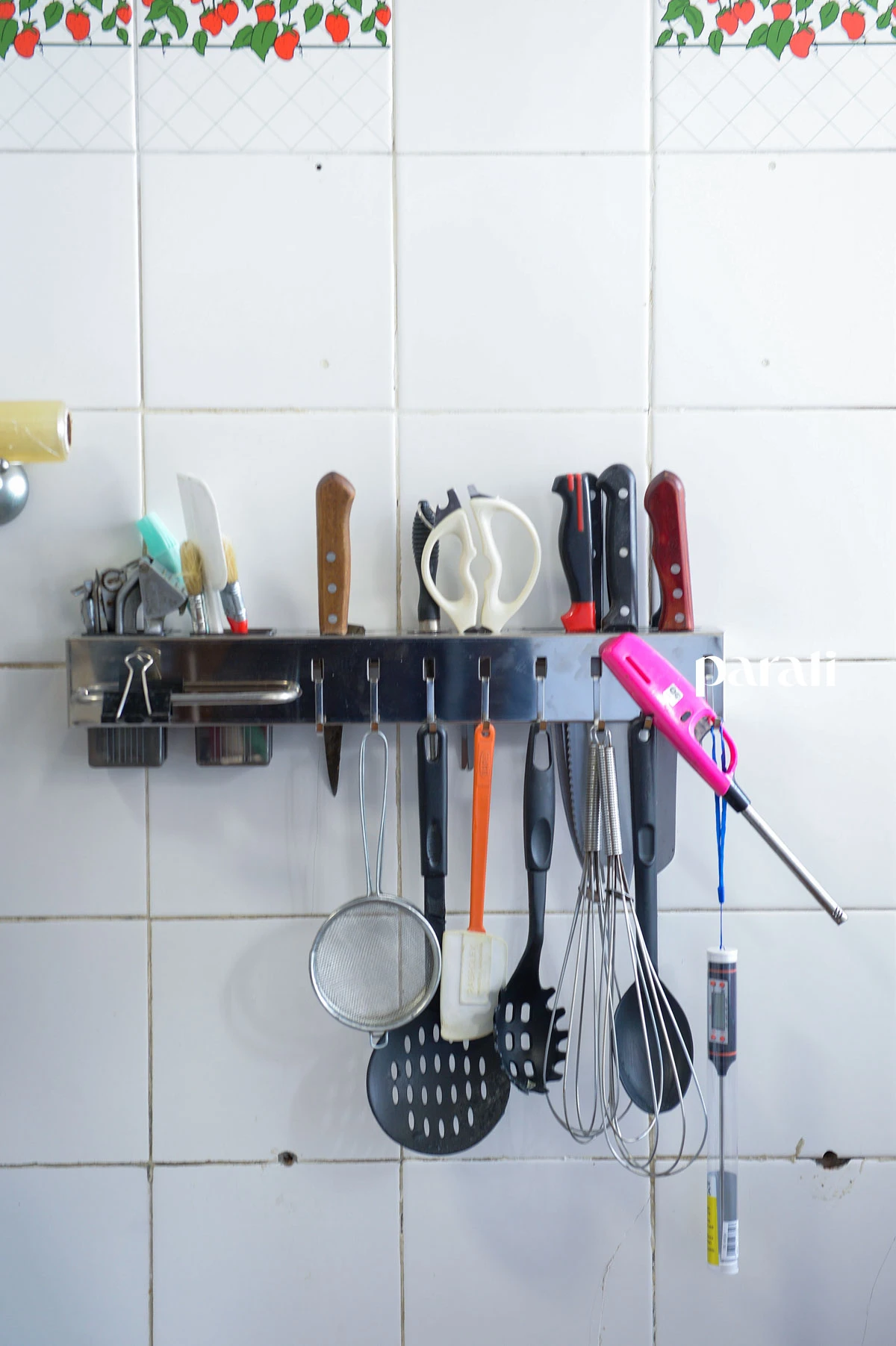
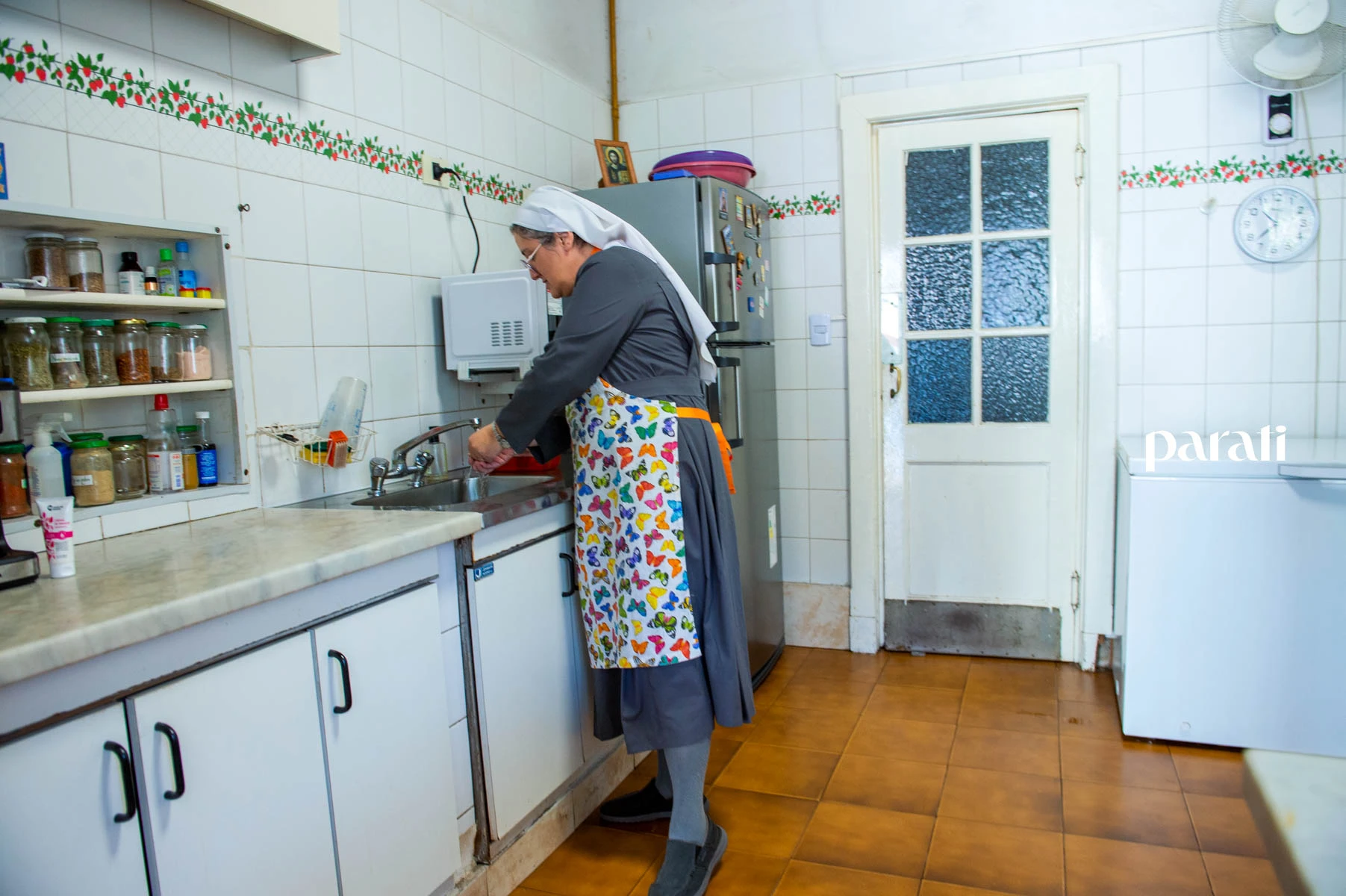
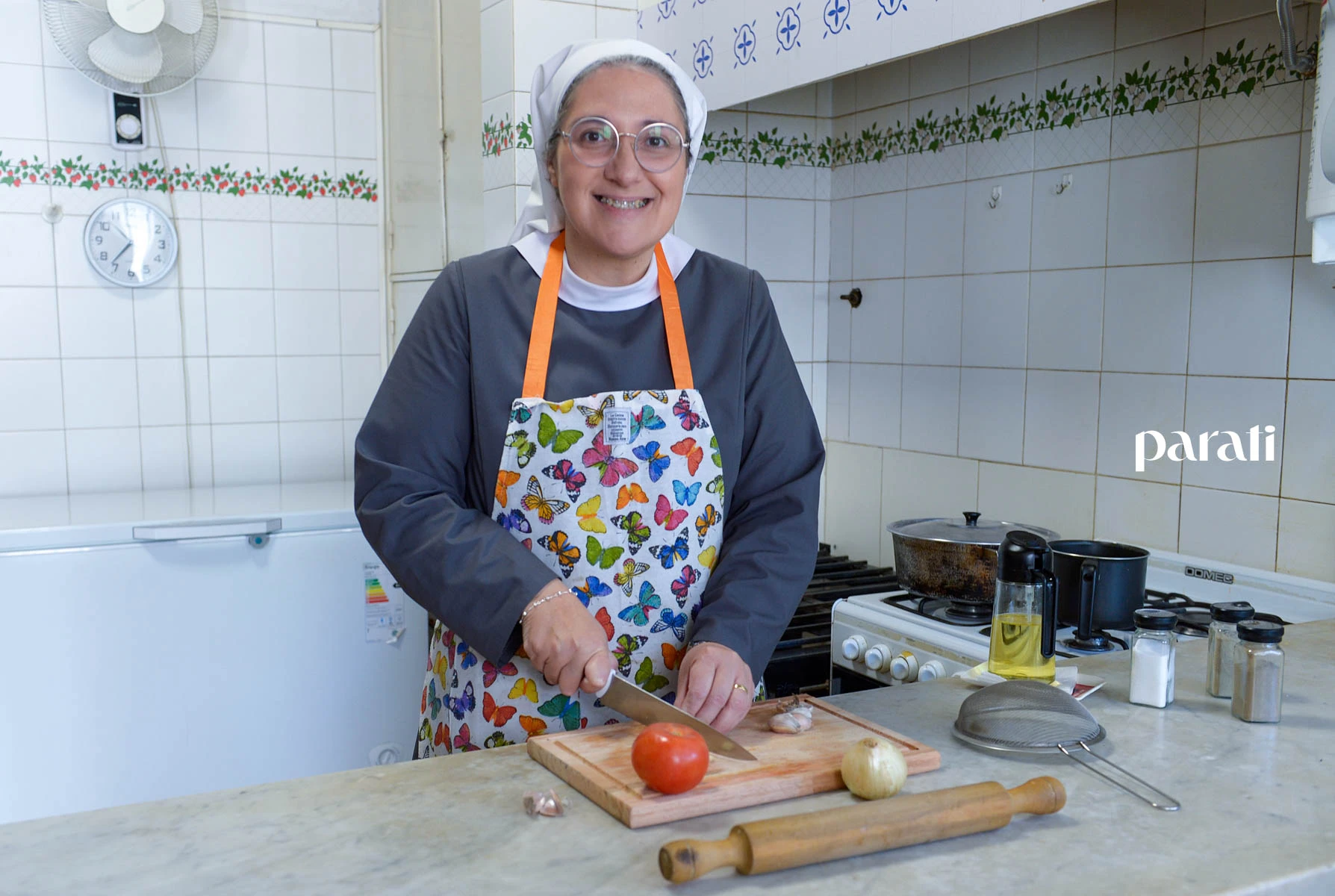
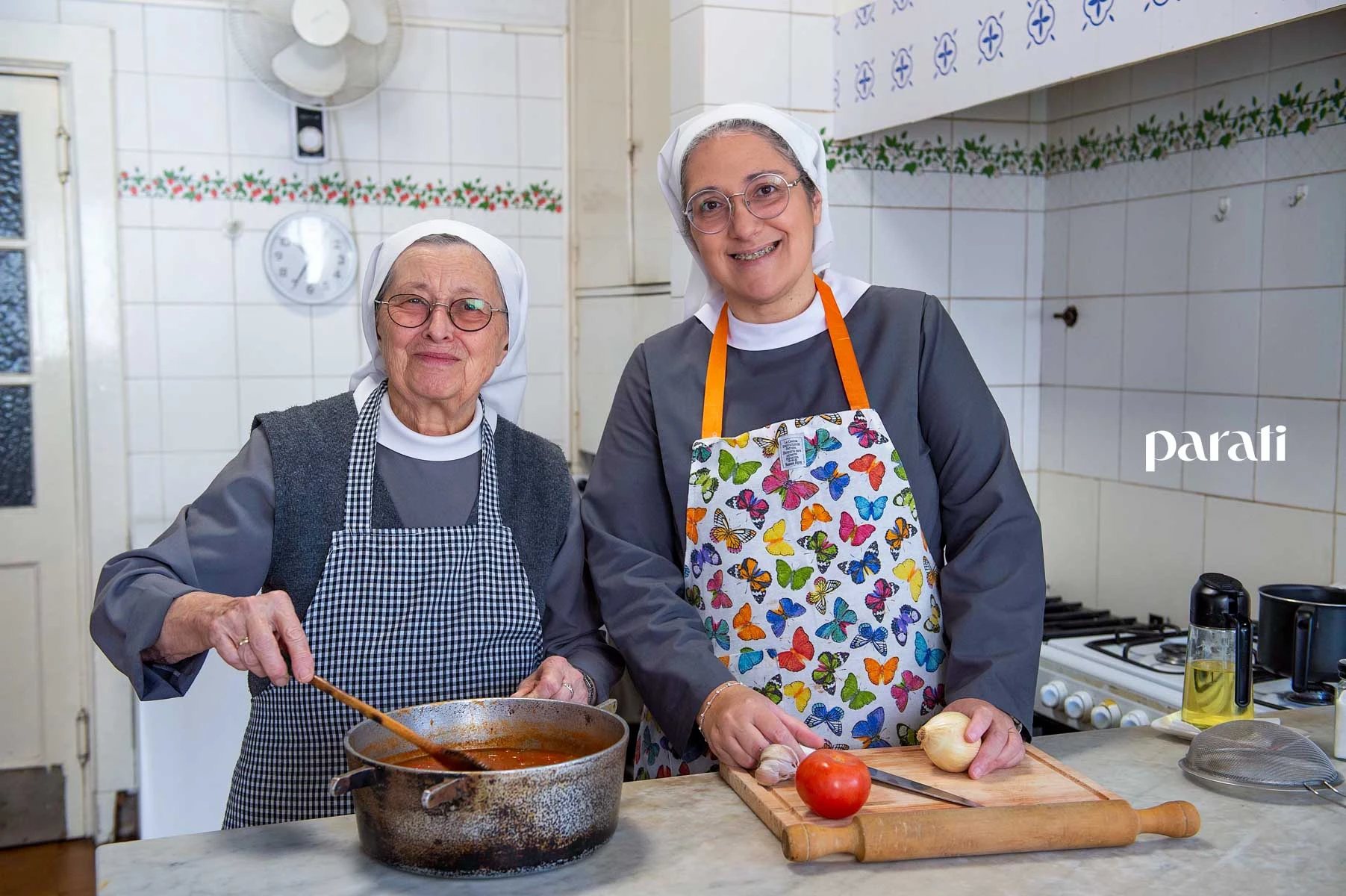
Verónica Evangeline Prieto is the name of the show you can watch on elGourmet: 20 episodes in which she cooks simple recipes from the convent, connected to stories, memories and life in community. Filmed entirely in the monastery kitchen, the program turned that space of prayer and companionship into a television set for a few days, something she recalls with great joy: “We cracked up laughing,” she says about the days when the serenity of the monastery coexisted with cameramen and producers.
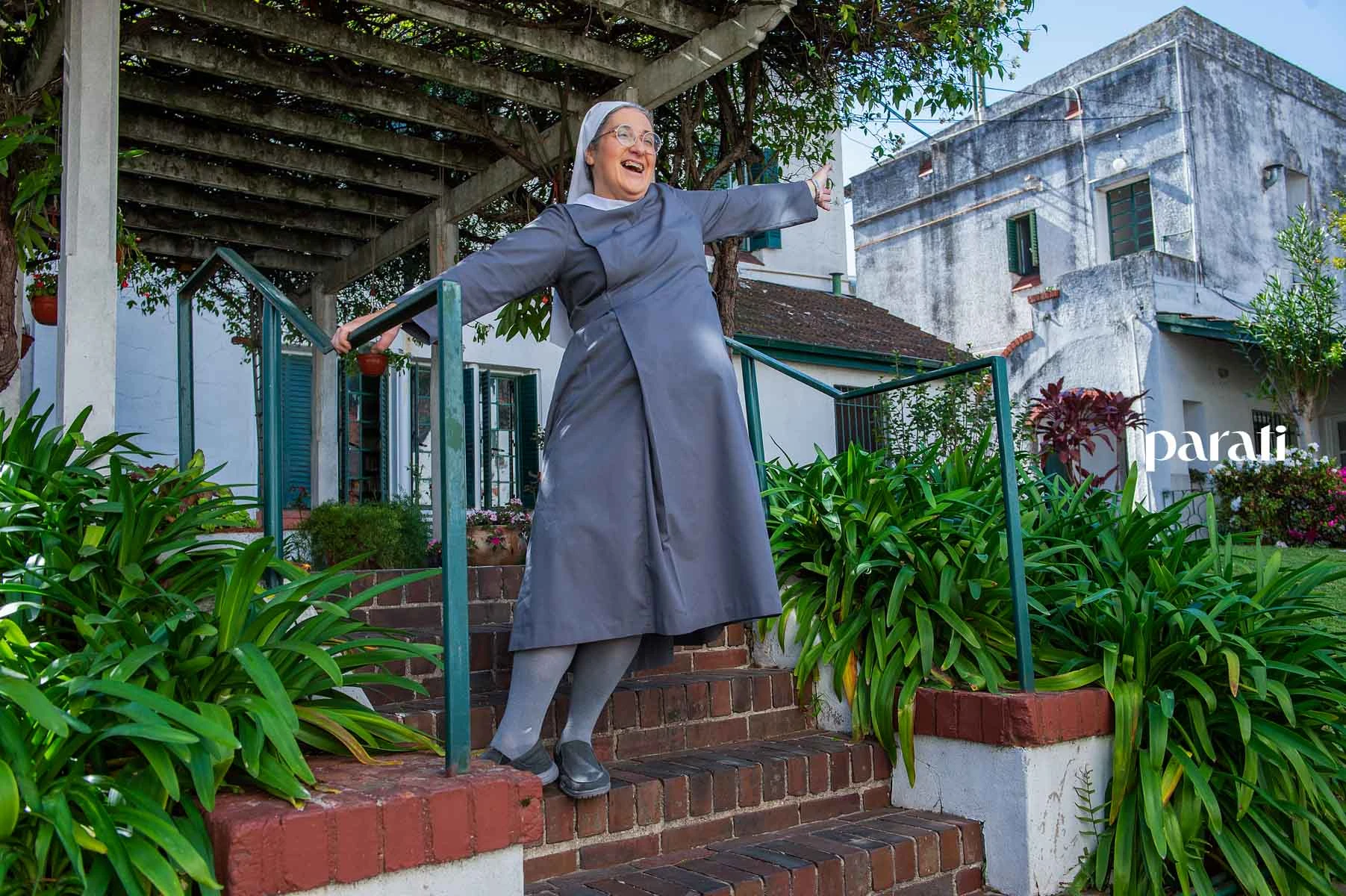
But before reaching television, Verónica Evangelina Prieto already had a story that would be hard to confine to a single label. She was born and raised in Belgrano, studied Geography, and discovered her religious vocation at 21, while still pursuing her degree. Since then, teaching and mission have become central to her life.
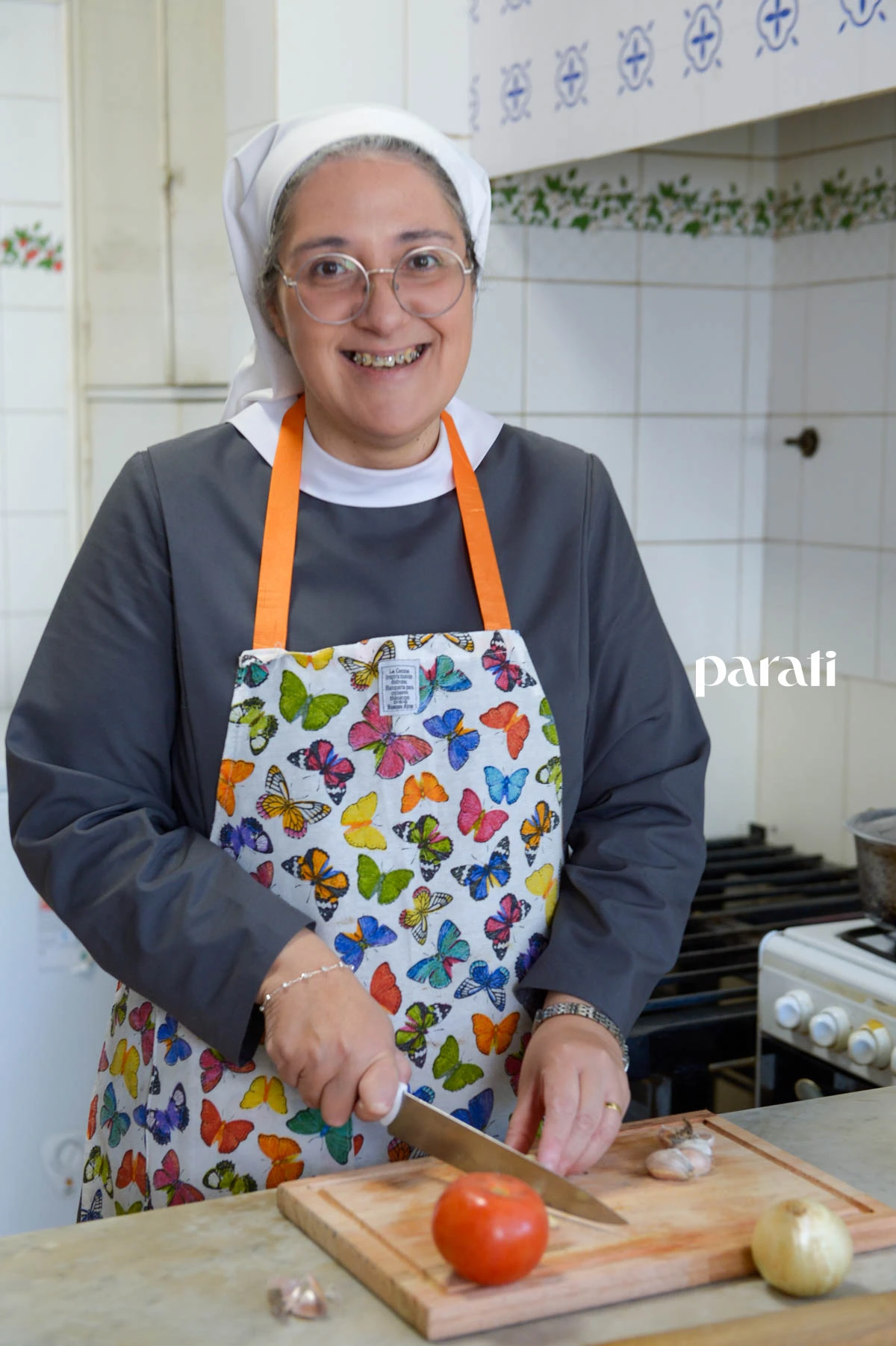
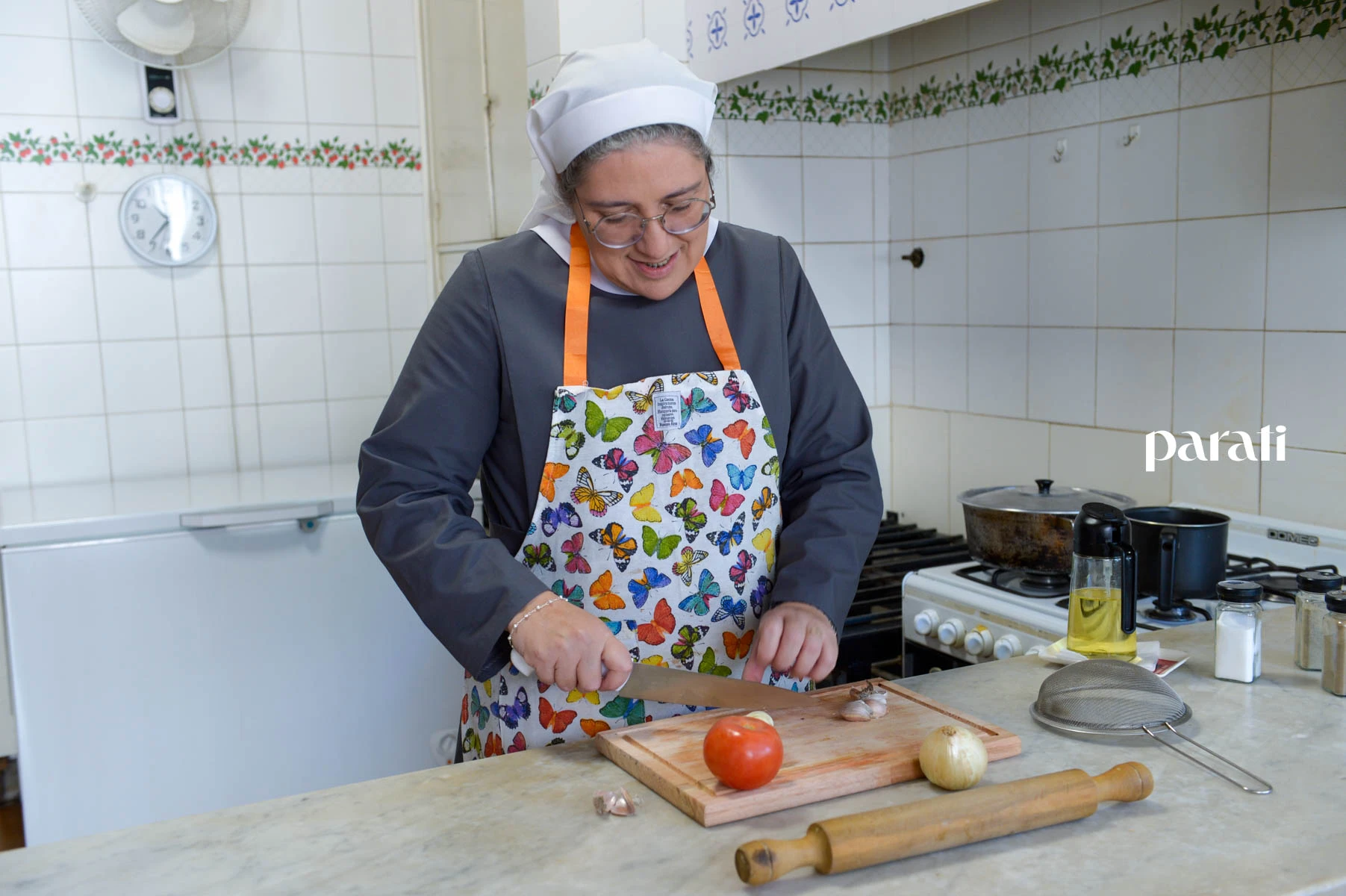
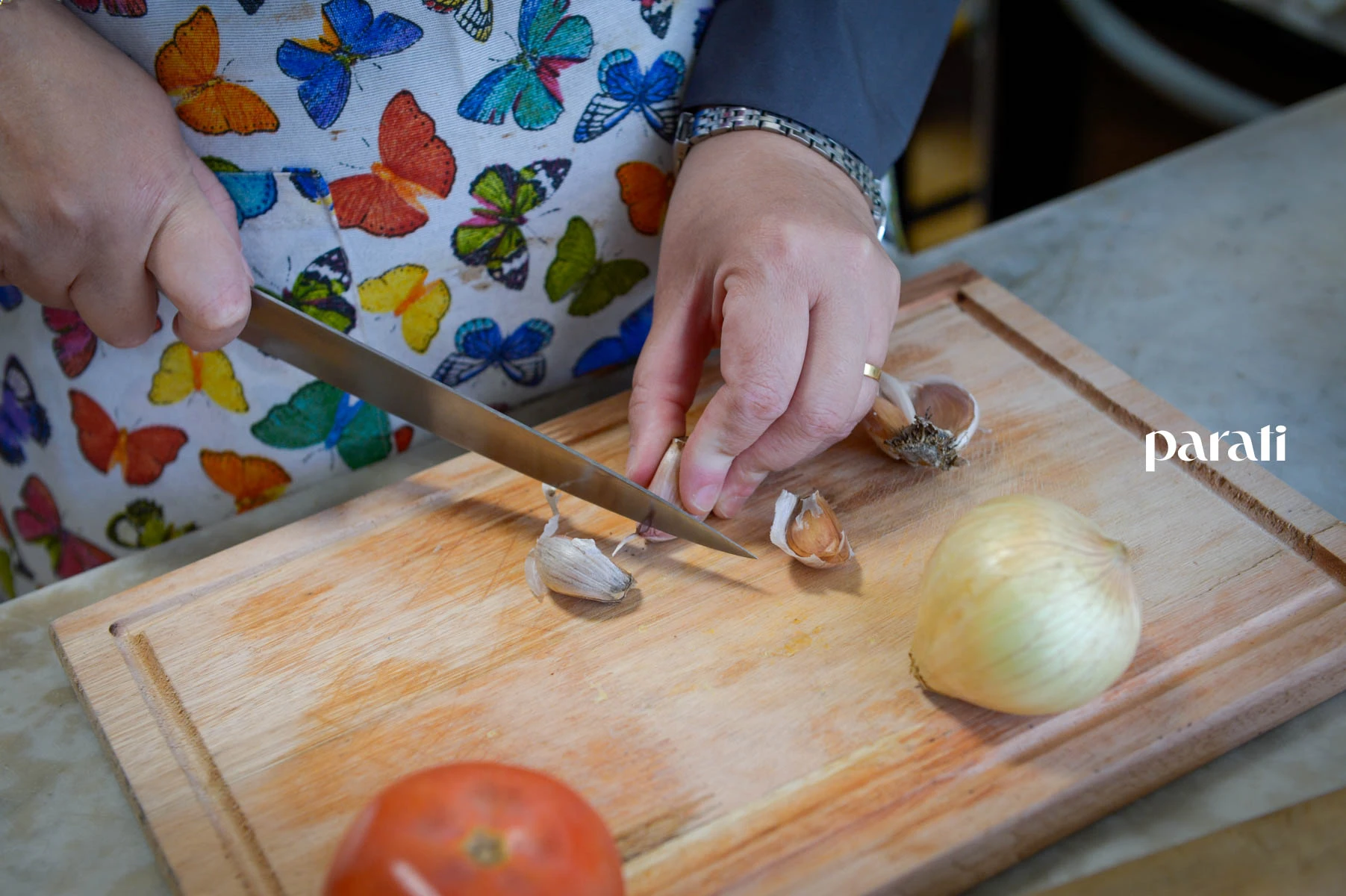
Cooking, however, had appeared long before. From a young age she learned by watching her mother and trying to reproduce at home what she saw being prepared. At 12 she started cooking on her own, and once in the monastery, the kitchen became also a way of sharing with the other sisters. She never studied professional gastronomy: her learning was the everyday cooking, the recipes that are transmitted and tested again and again.
Thus comes this rather improbable scene: a nun, a geography teacher, a missionary, a cook for her community and a River Plate fan in front of a television camera, talking about recipes, memories, faith, travel, football and a life that, as becomes clear throughout this chat, has many more layers than anyone could imagine.
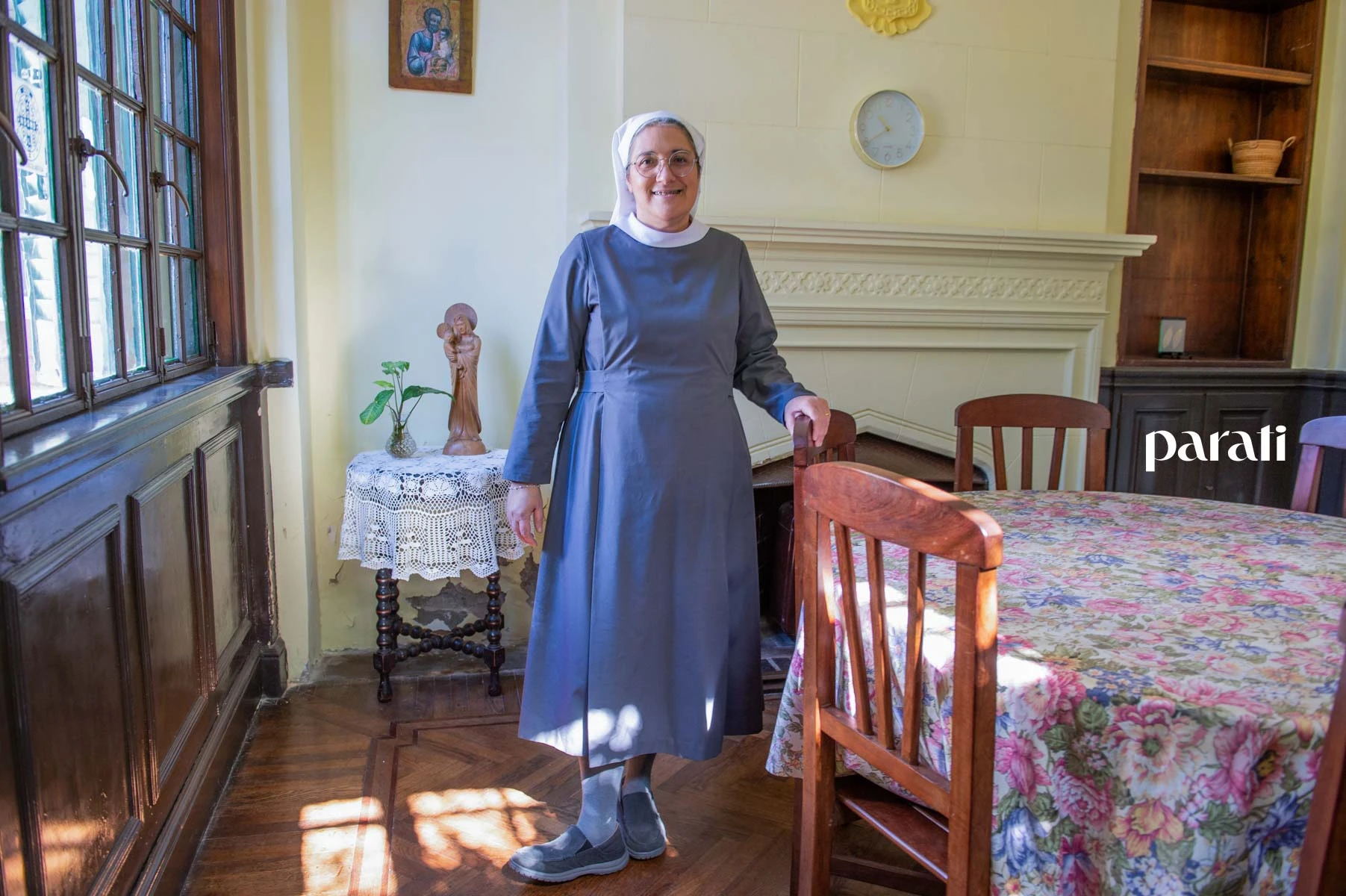
A Cook by Vocation: From Childhood Cravings to the TV Program
-In the context of your religious life, did you ever imagine you would be on television?
-Oh, no, never, never imagined it.
The truth is that many articles and magazines had been done about us years ago, but because, I don’t know, there was something… they were making something about saints, about sisters, and so on, and they did everyone, but on TV cooking, never. Honestly, no.
-What do you enjoy most about participating in these programs?
-The filming.
The filming is adorable, really. It was all a lot of fun. In the opportunity the producer gave me to tell the stories, which for me was important, because beyond the cooking I want there to be something, a spiritual message, right? So, the freedom I was given, first to be able to make the recipes I wanted, you know?
I sent in the recipes and they said: “They’re in.” And well, that was fantastic. And then, the ability to tell the stories and the freedom to tell them, that was wonderful.
-What was the idea behind choosing the recipes you prepared?
-And I chose the recipes that I like. What I enjoy eating is what I chose.
So, because they are recipes I know very well, I know they will come out well. Sometimes something new, you know, that you don’t have much practice with, can fail, and with these I’m completely confident.
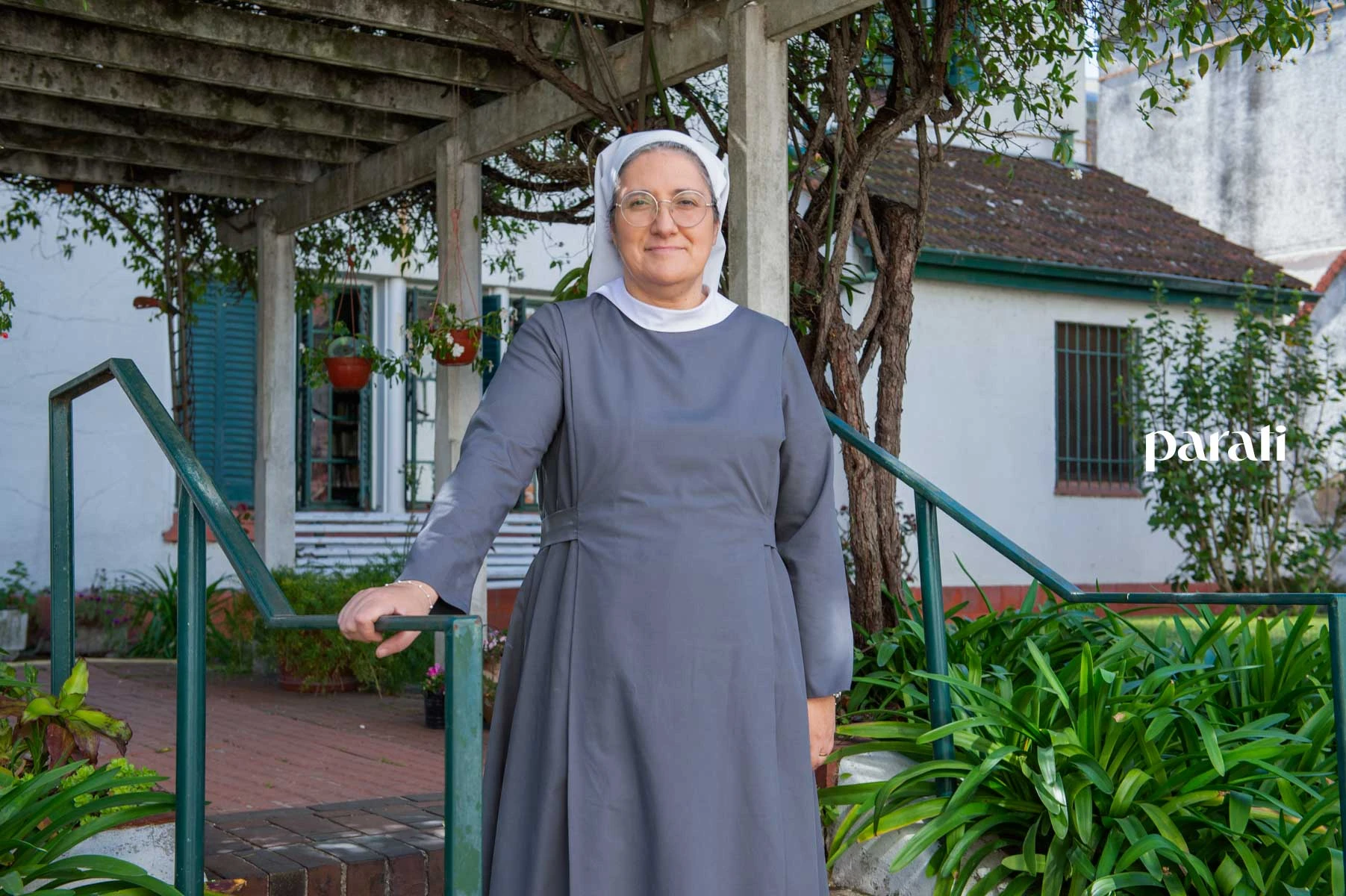
-When did you begin cooking?
-I started cooking when I was little because I love to eat and wanted to recreate the tasty things my mother made, so beside her, I learned: “And what do you put in this? How does it go? When is such-and-such done?”
Well, with her. And then, to take the plunge. Maybe I wanted to eat something and, well, how do we do it? I think everyone starts that way: you have a craving and you go for it, and it can fail, but it can also turn out well. And I think yes, that’s how it was when I was little, 12 years old, yes.
-Do you remember any anecdote of a culinary catastrophe you experienced?
-Eh, let’s see, once… I don’t know. I can tell you about the sisters, but my own, I don’t really remember. A sister once made a mistake and, instead of putting 10 g of gelatin, she put 100 g of gelatin.
So it turned into a brick and well, we had to… we used that gelatin many times to add the water it needed and we ate, I don’t know, that same gelatin for a long time.
And another time, a sister, poor thing, dropped a handle into the soup and the first sister to go to serve grabbed the handle with the ladle. That was very funny. And she was so angry that she grabbed the pot and took it back to the kitchen. Oh, how funny it was.
Another time, some masons had been working and there had been something left on the table—I don’t know if it was caustic soda—well, something that remained and she thought it was flour. So she made escalopes and suddenly the escalopes in the pan started to balloon, balloon, balloon. We didn’t know what it was and it was the caustic soda. And of course we couldn’t eat, but well, funny things happen, yes. They happen.
“A Love Much Bigger Than a Family Could Contain”
-Can you identify a moment in your life when God told you: “Come with me”?
-Yes, yes. Maybe not one, but many.
In many situations. For example, I worked at a school where the kids smoked marijuana in the bathroom. And I said: “No, we must do something here.” So I invited them on Sundays at 10 a.m., we met in the square in front of the school and we all went to mass together. And well, I felt that my… one of my tasks was to be there for them, right?
Because if a kid does drugs, it’s because something is missing or not right. So, that was one moment. Another moment was discovering the lives of the saints, which I felt God saying to me, calling me to a life similar. Not that I am a saint, but at least I try, right?
And another moment, during Mass at my parish, St. Philip Neri, after Communion we prayed every Sunday for vocations.
Then, in my heart, I felt: this prayer, the community is praying it for you. It was very strong and I cried because, of course, it wasn’t in my plans, really. I used to think, like anyone, of having a family and children, but well, this is something God grabs you more and more and doesn’t let go.
And there comes a moment when there is a certainty that the only way to be happy, fulfilled, and complete is to respond to this inner desire, right? Because God will never ask you to do something you don’t like. If you don’t like blood, He won’t ask you to be a surgeon.
Thus, consecrated life or priestly life, religious life, God always places a desire in the heart, a very large longing for something different.
-And that emotion you felt at that age, what did it have to do with? With finding that vocation, with something moving you from within that you didn’t know what it was?
-Exactly. It’s very hard to find and explain love, but it is love. It is this love that is much bigger and wider than a family can contain. It is a love that embraces everyone, all of creation. And of course, at the beginning of my consecrated life I thought: “Oh, I’ll go to Africa.” I’m in a missionary congregation. So I thought: “I’ll go to Africa to care.”
Well, the idea that we all have sometimes of what missionary life is. And then you realize that missionary life can also be in Buenos Aires, with kids who use drugs, with people living on the streets, in a children’s home, which is much broader than going to Africa, right?
-Can you say that day by day, in small or large things, you continue to reaffirm this calling God gave you?
—Of course, all the time. I have no doubt. If there’s something I’m not sure about, I can doubt many things, but one thing I’m sure of is that God called me to this life and that in this life I will plan my days.
In fact, the other day someone told me: “I hope God grants all your wishes.” And I said to them: “But God has already granted all my wishes.”
Everything I do gives me so much satisfaction and fills me with joy that, frankly, I have… you might think, Flor, that I have no ambitions or expectations, but no. I am so happy with everything I do, and I always need to have a new project that brings me enthusiasm and energy, but it’s all within evangelization. It’s never something reckless like, “Oh, I want to be, I don’t know, a doctor,” for example, no.
-It’s a bit like you’ve found a formula that others in different fields are pursuing, doing other kinds of things, right? It’s a fullness.
-Yes, exactly. I would like that those who knew me, when I pass away, say: “God used her energy, her time, and her gifts so that people encounter God or come closer to God.”
If that can be said about my life, it’s a lot to say about someone’s life. But if my life can be said that way, or by others… It’s not that I care too much about what people think, but if the message I can give is that, that’s enough.
My life is fulfilling and I feel I have reached what I consider my goal, you know? Bringing my students closer to God, my friends to God, to the people who come to the monastery, to God, to the guests, to the people who come to the Bible course, to the people who know me, hopefully.
From Teacher to Missionary: When Teaching Also Means Going Out to Meet Another Reality
-You’re a multifaceted woman and even before your consecrated life you were a Geography teacher, right?
-I’m a teacher. I go to the school twice a week. That’s the opportunity I have to do all the evangelization work at the school.
Praise be to God, I have a principal and the afternoon director as well as the owners of the school who support me in everything. So I go and tell them: “Let’s do a retreat, let’s go.” They say yes, and the retreats, all the activities we do here at home, the mission we’re undertaking this week in Santiago del Estero, all of that has the school’s full support.
Without them it wouldn’t be possible because I’ve had to work in schools where the administration says: “Oh, you see the fear, right? No, but how are you going to take the kids? And what if something happens? I don’t know what.”
No, they trust this task and they know how good it is for the kids to see another reality. So they support 100%, 1000%.
-As a missionary sister, you’re about to go with your students to Santiago del Estero, right?
-Yes. We are 35: six adults, teachers and principals, alumni, and about 26 children.
-What activities do you usually carry out on this kind of trip?
-First we pray, have breakfast, then we visit houses and in the afternoon we have games with the school kids.
When they have their study hour, our students accompany them with the tasks they have to do. So everything is very fun, but the schedule is quite military. They are very clear that this is not a graduation trip. This is another thing—a service task and a chance to share with the kids of Santiago.
There the kids welcome us with games, competitions and on Friday there is the final. So we bring prizes to hand to the winners.
It is all a delight, a delight… I love that my kids, here in Buenos Aires, see that those there don’t have a cell phone and no internet and they’re happy. They dance during recess, they dance folk dancing in the break. It’s crazy. They put on music and they’re dancing. And they are kids who are super healthy, super.
They don’t have a club where they go to drink and get wasted, no. So it’s a super healthy life.
-Simple, but very tasty, right?
-Totally. They are really good kids.
-And even if they don’t go on a graduation trip, I have no doubt they’ll have a crazy amount of fun…
-Like crazy. And I tell them, this is a thousand times better than a graduation trip, because on a graduation trip, unfortunately today—sorry to say this, but it’s true—the kids at night party all night, and the next day they’re super tired because they don’t sleep and they don’t take advantage of the excursions.
So the beauty of Bariloche, or wherever they go, they don’t enjoy it because they don’t see it; they’re sleeping and tired. And they are completely zoned out, that’s the truth.
Football, Cinema, and Her Dad: The Personal Side of Sister Veronica
-Bringing you a bit to the things you like, I know you love football and music—could you tell us a bit about that too?
-I love it. Well, I’m a River Plate fan. I don’t like playing football because I think it’s too rough. I like other sports, I love sports! I enjoy swimming, I like playing volleyball. For a while I practiced tennis and karate too, I like everything!
Sister Veronica says she used to go to the stadium. And that as a consecrated sister, she went only two or three times, when invited.
-I can’t go to the superior and tell her: “Please give me money to buy a ticket.”
-But… if they invite you, do you go?
—If I’m invited, I’ll go, of course!
-Okay. Let’s leave it open there, to see who wants to invite…
—Yes, great, I love it. It’s really exciting, all of it. When I used to go to the stadium, they still threw confetti, those supermarket rolls, you know? I liked that. The stadium snack, the greasy grill, everything—the whole set, I love it.
-That stadium folklore…
-Hugging the person next to you even if you don’t know them, all of that. When someone scores a goal, of course. That’s the ultimate thrill.
-Well, now you follow the games on TV or from…
—From the TV, yes. Of course. Or if I don’t watch it, I’ll check the result later. My dad, who is a huge fan too, says to me: “Oh Vero, how badly we were doing.” Or “how well we’re doing.”
-And how is your relationship with your family now?
—I only have my dad. It’s him and me in the world. Yes, and he’s in decent shape physically, but his mind is very troubled. That saddens me a little because I can’t talk to him; it’s terrible, not being able to hold a conversation. But he loves going to the cinema, so we go often.
And we both enjoy mystery films, so. The other day I bought the wrong ticket by mistake. I wanted “La Revelación”—a movie that has already left the theaters—and I bought one for something else. When the movie started, it was a romantic film. I said: “What am I doing here? I made a mistake.”
Right? And I tell him: “Dad, forgive me, this is not the film we wanted to see.” So I leave the cinema and ask the ticket guy, who knows me, of course. “But this isn’t the movie we wanted to see.” He said: “Yes, I found it odd that you came to see this. What were you doing here?”
Between Missions, Equatorial Heat, and Flavors That Last Forever
-How were your experiences living in other countries as a religious?
-Very nice. Truly, being away… You miss Argentina a lot when you’re outside Argentina.
The beauty of being abroad is that, since you have no support from anything, God is everything, everything. Being outside the country is difficult. But God takes up a place even more important when you are abroad. So it has its two sides.
Life here in Argentina is very comfortable, right? Because you have everything: your own idiosyncrasy, the food, your connections, your friends, your language, everything is comfortable. And abroad it’s not, everything is uncomfortable, but God is much more present. So it’s really beautiful.
And well, from the countries I stayed in I brought back dishes, foods, yes, really nice, a way to remember and… because you miss them too, of course.
-Because you form bonds.
—Of course. And yes, the most important thing… That’s why places aren’t the places; they are the people who stay etched in the heart. So a way to bring them back is through food. I love it.
Sister Verónica continues her account and recalls her years in the north of Brazil, near the Equator, where the heat is relentless.
So she draws on her Geography knowledge and explains that where she lived for several years, the climate was: “Equatorial heat.” Yes, equatorial heat means an average around 25 degrees. In other words, the temperatures are much higher. The heat is terrible. But they are happy with their heat.
“Prayer Has Power, and Prayer Moves Mountains”
Facing a world filled with conflicts and situations that cause suffering, Sister Verónica finds in faith a way to accompany those going through tough moments. She speaks about prayer, but also about something as concrete as listening to others and giving them space to tell what is happening to them.
“So, well, a way to accompany is through prayer because I trust that prayer has strength and prayer moves mountains, right? So a word of encouragement is also very important, listening with an ear. The person who tells you their anguish, just having spoken it makes it easier to bear.”
And toward the end of the conversation, when we asked how she makes it possible to transform difficulties into something that can be traversed through faith, she returns to an idea that seems to summarize much of her way of looking at life: “I am an optimistic person and I believe gratitude is the path to staying positive.”
Video: Flor Franchi
Video editing: Cande Petech