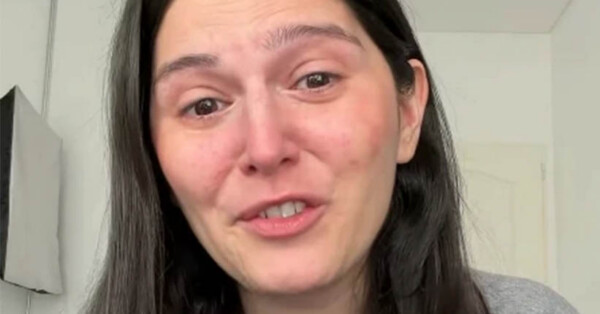
At 35, Caro Trippar is going through one of the most challenging moments of her life. The influencer and content creator was diagnosed with breast cancer with metastasis to the sternum and, since then, she tries to learn to coexist with uncertainty, listen to her body, and reorganize everything that until recently seemed unmovable.
In a heartfelt interview with María Laura Santillán for Infobae, Caro spoke with the candor that characterizes her. She did not hide the fear, the questions that still have no answers, nor the impact of hearing that her disease had no cure. But she also shared how that diagnosis transformed the way she looks at life.
The question that haunted her as a mother
When doctors discovered that the disease had reached the sternum, Caro felt everything crumble. Up to that moment, her concern had been focused on the treatment, the needles and the possibility of losing her hair. The word “metastasis,” however, confronted her with a deeper fear.
Her first reaction was to wonder how much time she had left. And, especially, whether she could accompany the growth of Milo, her son, who was still very young when the diagnosis arrived.
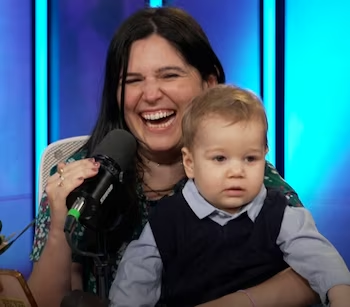
Motherhood then appeared at the center of all her questions. It was no longer just about navigating an illness, but about living with the fear of not knowing what could happen and how much of the future she had imagined with her son could come true.
With time and professional support, she began to understand that the doctors were referring to a chronic disease and that there are treatments to keep it under control. She is currently undergoing hormonal therapy and taking a drug targeted at cancer cells, while waiting to learn how her body responds.
“Telling it was admitting it”
Speaking publicly also wasn’t easy. For a while, Caro wanted everything to continue as before: to keep working, preserve her routines and prevent those around her from starting to look at her differently.
She found it hard to recognize herself as an oncology patient. It was also difficult to tell her loved ones the news because, by pronouncing it, the diagnosis became real.
Her brothers learned about it from their father, since she could not find a way to sit down with them and explain what she was living. She even spent her birthday in silence, surrounded by her family, while wondering how to share news for which no one is prepared.
Finally she decided to do it also on social networks. Not because she has all the answers, but because she hopes that her experience can help other women consult at the first sign of any change in their body.
Postpartum and a mother who was sidelined
Caro shared that she felt a lump while breastfeeding and that at first she linked it to lactation. Later appeared other signs, such as discomfort, a red spot and a change in the texture of the skin.
Her testimony also opened a necessary reflection on postpartum. During pregnancy, she explained, women receive periodic controls and constant attention. After birth, much of that attention is focused on the baby and the mother’s health is often left in the background.
In her case, motherhood, breastfeeding and returning to work consumed all her energy. Now she hopes her story will function as an invitation to pay attention to the body’s signals and not postpone checkups out of fear or lack of time.
This reflection is not intended to blame those who go through the puerperium, but to make visible the need for greater accompaniment and medical follow-up during a physically and emotionally demanding stage.
Life after everything changes
The diagnosis forced Caro to reassess a life defined by work and self-imposed expectations. She left Telefe’s streaming to regain flexibility, have time for medical tests and be closer to Milo and her family.
She also began to question what things truly deserve her time. Obligatory commitments, material worries and everyday problems took on a different dimension.
Today she chooses to travel when she feels like it, to share more moments with her mother and to say no without guilt. But the deepest learning appeared in relationships. In the midst of fear she discovered the value of family that wants to accompany her to every study, of the people who worry and of those who stay close when life becomes uncertain.
“Life must be lived now,” she summarized during the interview. A phrase that, in her voice, does not sound like an empty slogan: it comes from a woman who is still absorbing her diagnosis but who decided to face the present head-on and fill it with what truly matters.