

The story of Eduardo Groh Riemersma, known as “El Polaco”, is threaded with second chances. The first came when he was barely 24 and survived a gravely serious accident that left him in a coma and required a long recovery. The second took shape when a rescued dog appeared in his life and forever changed the way he views animals.
For almost two decades, that transformation led him to dedicate his life to rescuing abandoned dogs and victims of abuse. Thus was born El Montecito de los Canichones, the shelter that became his grand project and that came to house hundreds of animals.
The accident that changed his life
On May 5, 1998, at 24 years old, Eduardo suffered a car accident that nearly ended his life. The vehicle he was riding in was hit by a large van and the young man sustained extremely severe injuries.
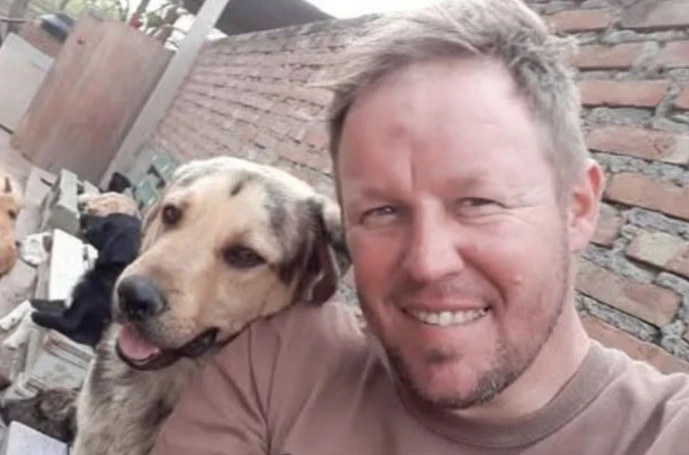
He remained in a coma and endured two cardiac arrests. Afterward began a long period of recovery and rehabilitation that stretched for about a year, until he managed to walk again.
That experience changed his way of understanding life. The recovery gave him a second chance, and, over time, he began getting involved in various charitable causes.
But there was still the encounter that would ultimately change his course.
Beethoven, the dog who marked a turning point
Eduardo had grown up in a family connected to livestock farming and had studied Forest Engineering. He also knew the world of purebred dogs. Yet, until then, the plight of abandoned animals had not occupied a central place in his life.
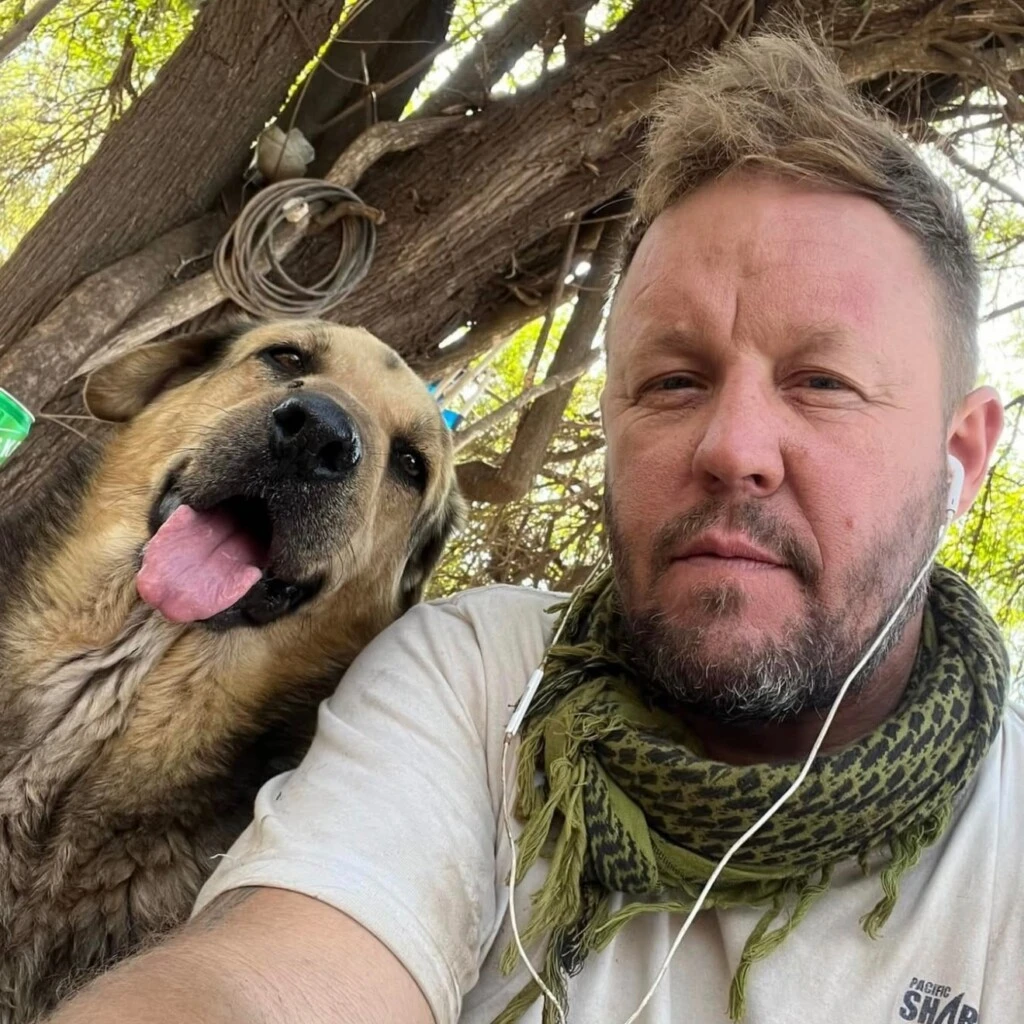
Everything changed when, after losing his female Dogo, he received as a gift a mixed-breed puppy rescued from the street. He was named Beethoven.
The dog’s story moved him deeply. Beethoven had survived a tragedy: his mother had been abandoned pregnant in a rural area of southern Santiago del Estero and, after having nine puppies, was run over by a truck along with eight of them. Beethoven was the only survivor.
For Eduardo there was more than a sad tale. He saw in that dog a kind of mirror of his own experience: he too had survived a situation in which he could have died.
That parallel was a turning point.
In an interview that was later revisited by local media, Riemersma explained that up to that moment he had been very focused on his work and that the encounter with Beethoven made him start looking around.
From then on he began paying attention to the dogs he found on the streets, to the sick, injured or abandoned animals, and to the cases of abuse that had not previously been part of his daily life.
From the early rescues to El Montecito de los Canichones
What began with a few isolated rescues gradually became a mission.
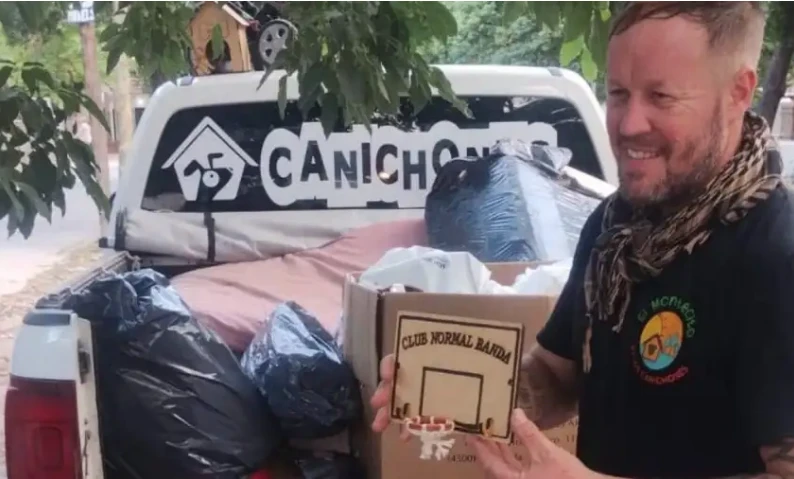
Eduardo began touring various places in Santiago del Estero, attentive to any animal that needed help. He even lowered the music volume and rolled down the windows of his pickup to hear barks, whines or cries during his rounds.
More and more dogs joined his life, and so did more complex stories to confront: injured animals, sick, disabled, victims of violence or those who had spent years in abandonment.
In 2006, El Montecito de los Canichones began operating, first in Bandera, his hometown, and later on a site along Route 16, in the La Banda department.
The name also carried his personal stamp: “canichones” was the word he used to refer to the street dogs he encountered.
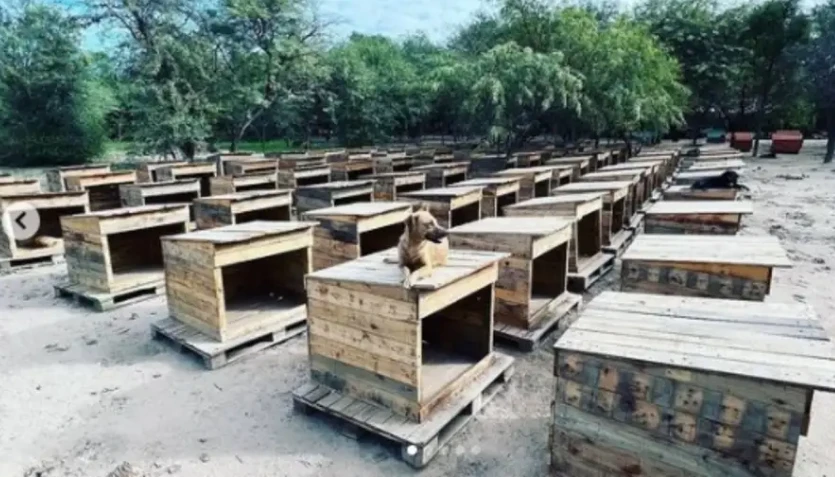
With the passage of the years, the shelter became a symbol of animal protection in Santiago del Estero. It housed more than 400 dogs at various times and, at the time of his death, had around 250 animals under its care, according to reconstructions published on Friday.

“I feel completely free and happy”
For “El Polaco,” rescuing an animal didn’t simply mean taking it off the street. Each dog arrived with a story and needed food, veterinary care, grooming, and, many times, special attention for the rest of its life.
Among the stories that had left a deep mark on him was Fidel’s, a dog who survived after a child threw petrol on him and set him on fire. Cases like that reinforced his decision to continue his work and to denounce mistreatment.
The shelter also became a space for awareness. Riemersma gave talks and workshops in schools in Santiago del Estero and La Banda to discuss abandonment, abuse, and animal protection.
His life had taken a completely different path from that of the young man who had survived the 1998 accident.
“I feel completely free and happy,” he had said in an interview, explaining how he chose to live after leaving behind other priorities and dedicating his life to animals.
His last rescue: Martina
There is a detail from his final hours that perhaps sums up better than any other story who “El Polaco” was.
On the day of his death, Eduardo had gone out with volunteers to distribute food bags to other shelters. He had received a donation of 80 bags and decided to share them with other protectors who also needed help.
During that round, a new story appeared.
They found an abandoned dog and Eduardo decided to take her with him. He loaded her into his truck and she was named Martina.
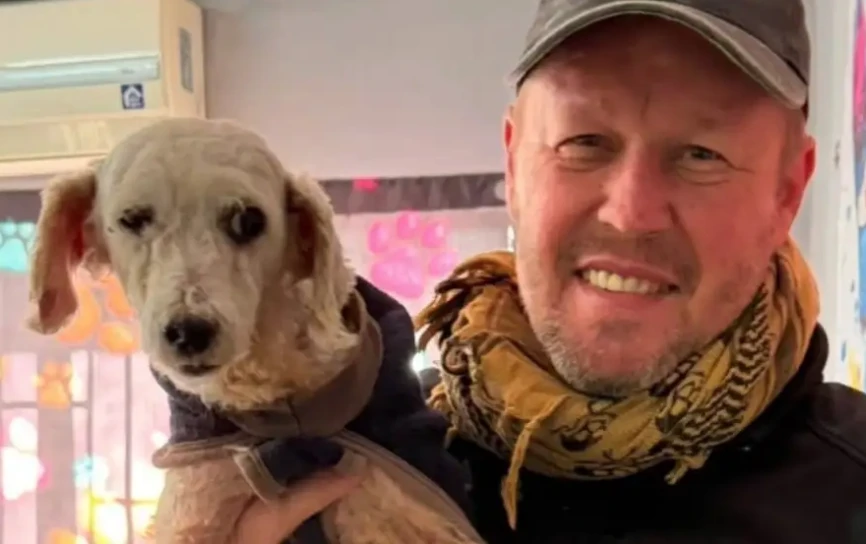
“And again the road crossed our path with little angels in need,” he wrote when recounting the rescue on his social networks.
Later he introduced the new member of the shelter with a phrase that today takes on a special meaning: “I loaded her into the truck and she came with me. Welcome Martina. We love you.”
Hours later, while riding a motorcycle through Santiago del Estero, he suffered the accident that ended his life.
A life marked by second chances
The first accident nearly took his life. The recovery gave him a second chance. Then Beethoven arrived, the dog who led him to confront a reality he had not previously faced.
From that story arose a vocation that grew into a grand project: El Montecito de los Canichones and the hundreds of animals that found shelter there.
And on the last day of his life, when he had already helped other shelters and continued his rescue routine, Martina appeared.
Perhaps that is why, among the many stories he left behind, the tale of that last rescue serves as a synthesis of his life: until the end, “El Polaco” kept looking along the roadside for those who needed a second chance.