
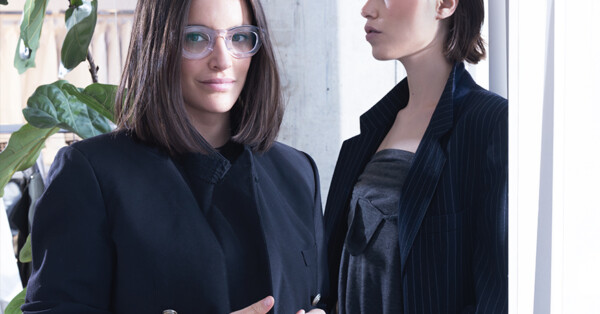
Luján Hæder nació en el sur de Argentina, en Caleta Olivia, y aprendió de su madre la fuerza y la constancia para salir adelante. También heredó el oficio de la costura y ser creativa con el diseño: aprendió a coser de su madre quien transformaba en nuevas prendas la ropa que les donaban.
Luján Hæder was born in the south of Argentina, in Caleta Olivia, and learned from her mother the strength and perseverance to move forward. She also inherited the craft of sewing and being creative with design: she learned to sew from her mother who transformed the clothes they were donated into new garments.
A los 20 el fuerte viento del sudoeste de la región patagónica la trajo a Buenos Aires para, entre otras actividades, estudiar y convertirse en abogada, una profesión que le mostró su futuro cuando trabajando en contratos vinculados al medioambiente y la gestión de residuos, vio como una pieza entera de tela de modal iba a terminar en el relleno sanitario. En ese momento los días de carencia de su infancia pasaron frente a ella, marcaron el momento y empezaron a cimentar el futuro. Tampoco era casual que el color de ese rollo de tela fuera rosa.
At twenty, the strong southwest wind of the Patagonian region brought her to Buenos Aires to study and become a lawyer, a profession that showed her future when, working on contracts related to the environment and waste management, she saw a whole roll of modal fabric end up in the landfill. In that moment the days of deprivation from her childhood flashed before her, marking the turning point and beginning to lay the foundations for her future. It was not by chance that the color of that roll of fabric was pink.
Soñadora y romántica como pocas, luego de dejar atrás la abogacía y con idas y vueltas en el diseño (con estudios de sastrería en Venecia incluidos) creó Hæder, una proyecto de diseño de moda donde lo único que está de moda es la resignificación de prendas que esperan una nueva oportunidad en otras personas.
Dreamer and romantic as few, after leaving law behind and wandering in design (with tailoring studies in Venice included) she created Hæder, a fashion design project where the only thing fashionable is the re-signification of garments that await a new opportunity in others.
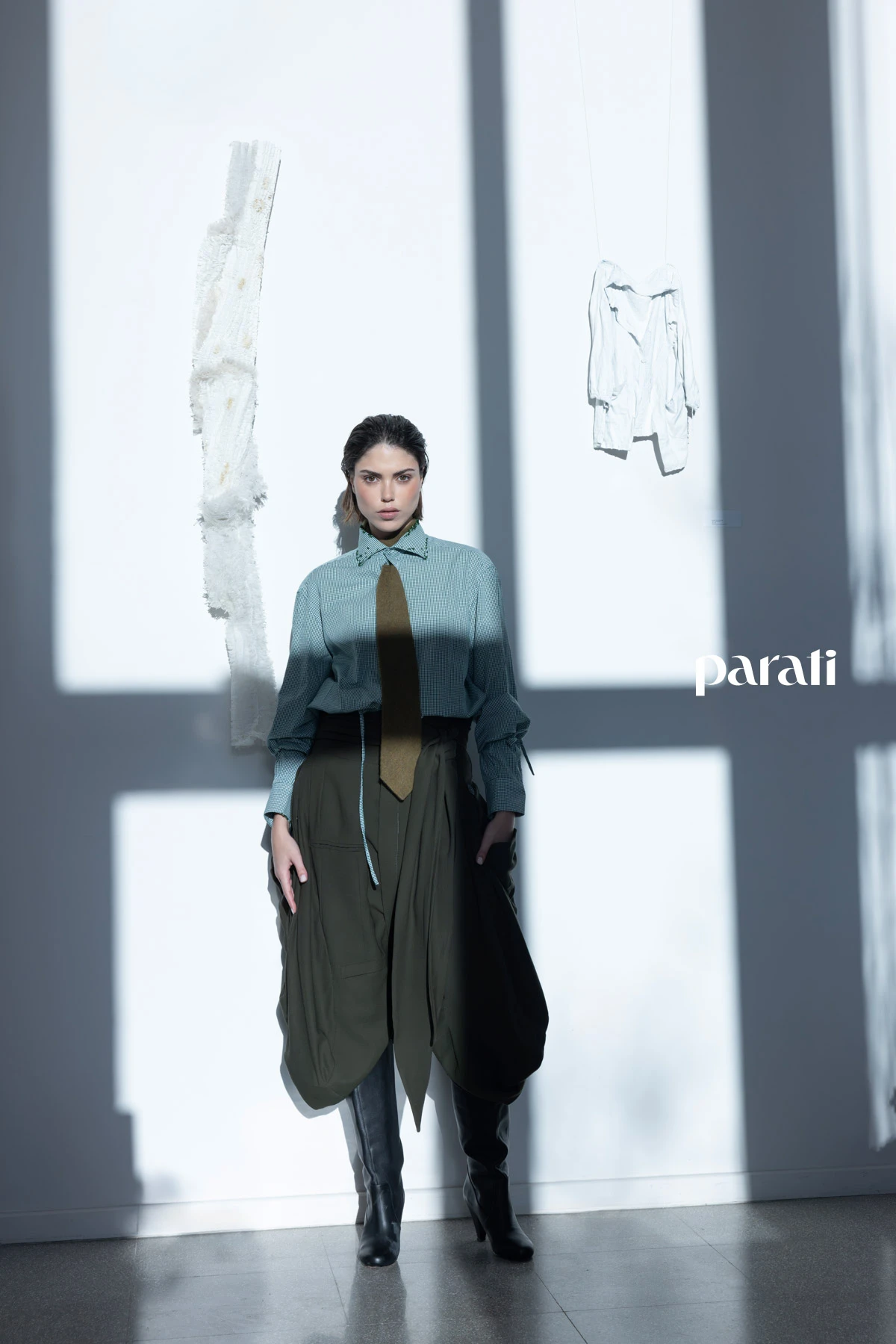
Luján Hæder, una diseñadora que le da valor a resignificar las prendas
Luján Hæder, a designer who gives value to re-signifying garments
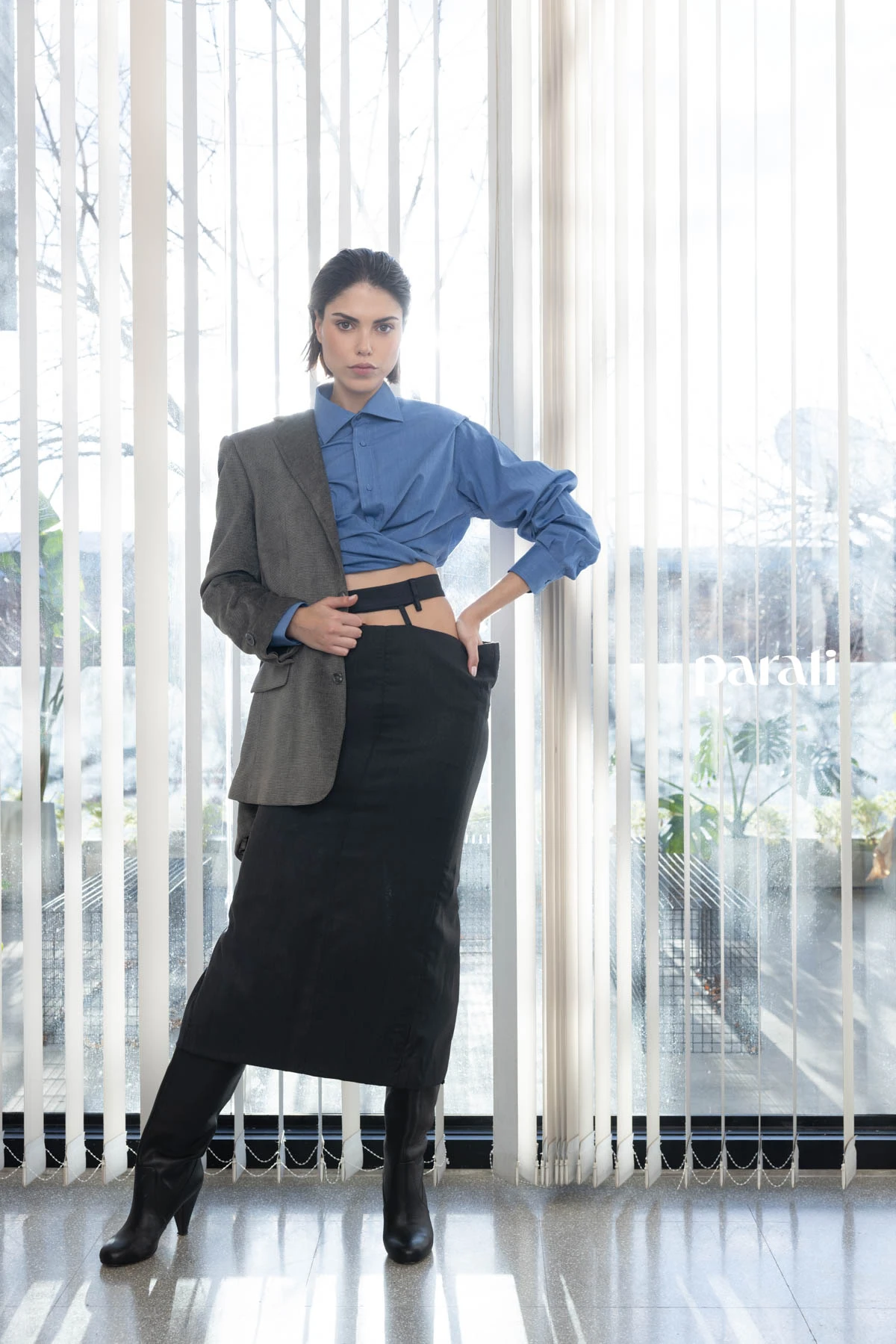
De necesitar a brindar. La ropa diseñada por Luján Hæder desde Hæder hace tres años se regenera y se reacomoda a nuevos cuerpos, a nuevas almas listas para nuevas experiencias. En las agentes de cambio, como llama a sus clientas, hay un nuevo amor hacia los nuevos diseños. Son caparazones, abrazos y caricias en forma de prendas que reviven en una nueva oportunidad, una nueva elección de parte de sus nuevas dueñas. Se trata de revalorizar el oficio de la costura porque la artesanía es manual. Y con mucho amor.
From need to giving. The clothing designed by Luján Hæder from Hæder over the past three years regenerates and repositions itself to new bodies, to new souls ready for new experiences. In her clients, whom she calls agents of change, there is a renewed love for new designs. They are shells, embraces, and caresses in the form of garments that come back to life in a new opportunity, a new choice made by their new owners. It’s about revaluing the craft of sewing because craftsmanship is manual. And with a lot of love.

– ¿Quién es Lujan Hæder?
– I am very friendly and also a very overprotective daughter of my mother. I am also intense (laughs) and very demanding. I am the middle sister, the fourth of eight siblings, the one prepared for difficult conversations, always watching and questioning — in a good way — to understand why. One could say I’m the most discontent.
– En la moda hay una frase que dice que para ser linda hay que sufrir. Vos encontraste esta profesión a partir de la necesidad, la molestia y el dolor. ¿Crees que para ser linda hay que sufrir?
– I don’t want to romanticize need because it isn’t good; it’s not that suffering is the only path to discovering a purpose. Suffering shouldn’t be considered a condition for beauty, growth, or personal fulfillment. However, I do think discomfort is necessary, it’s different from suffering. I believe discomfort can be necessary because it forces us to ask questions and often acts as a motor of transformation. But discomfort and suffering are not the same.
– ¿Y en tu caso particular?
– In my case it was more than just discomfort. It was quite painful, it touched me. I know I’m not the only person who has faced such difficulties. Today I’m no longer the Luján marked by economic hardship. I worked hard to build a different life, but that doesn’t mean I don’t recognize that Luján in me either. Those experiences still shape me and many of the situations I faced continue to occur around me, sadly. Having known poverty creates a social awareness that lasts over time
Hæder, que responde al apellido danés de su madre, se traduce al español como “honor, gloria y renombre”, tres palabras que definen el tipo de moda que diseña. Si uno dice que se trata de la resignificación de prendas, en su mayoría sastrería realizada por sastres, es quedarse viendo el árbol que tapa el bosque.
Hæder, which bears the Danish surname of her mother, translates to Spanish as “honor, glory, and renown,” three words that define the kind of fashion she designs. If you say it’s about re-signifying garments, mostly tailored by tailors, you’re looking at the tree, not the forest.
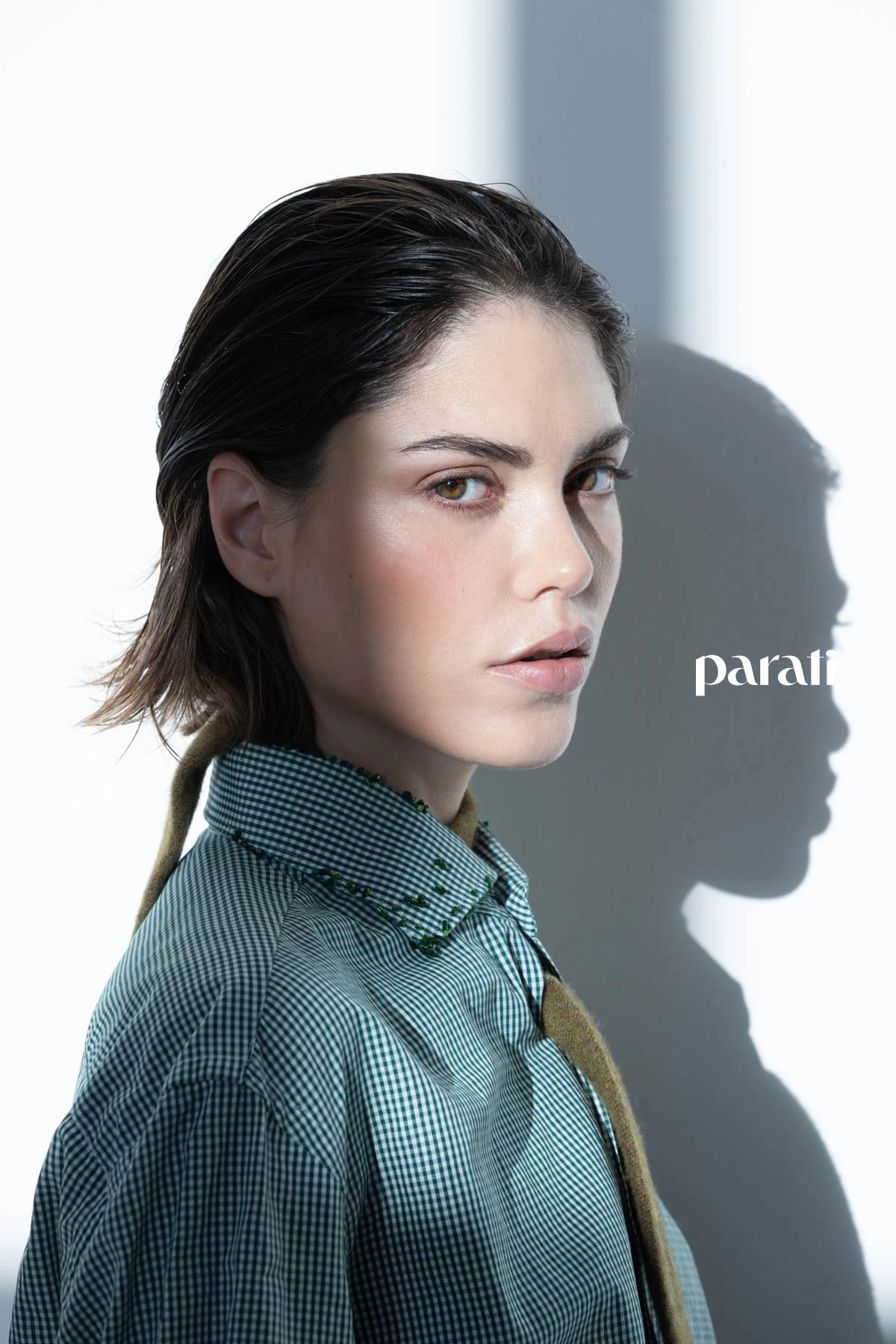
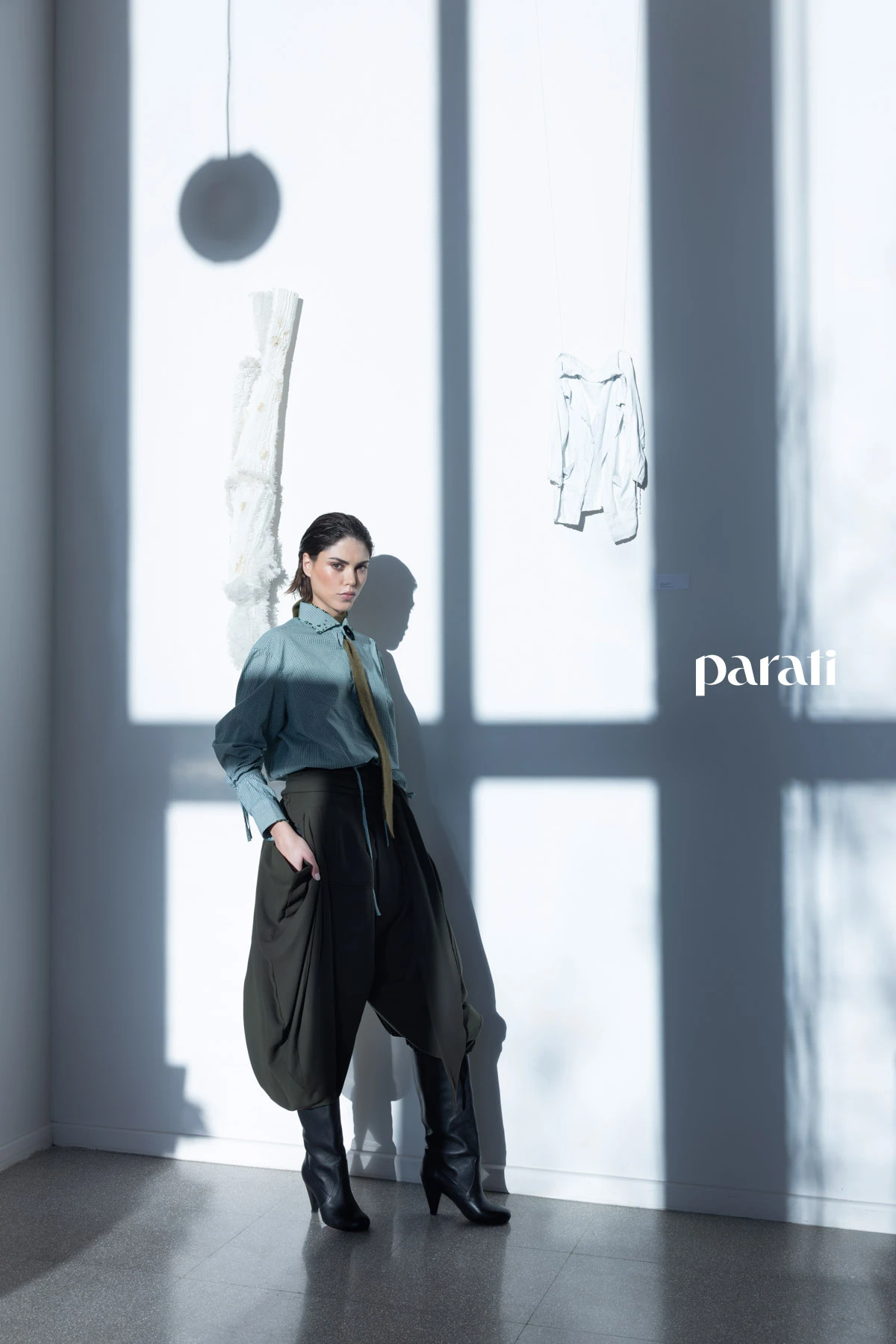
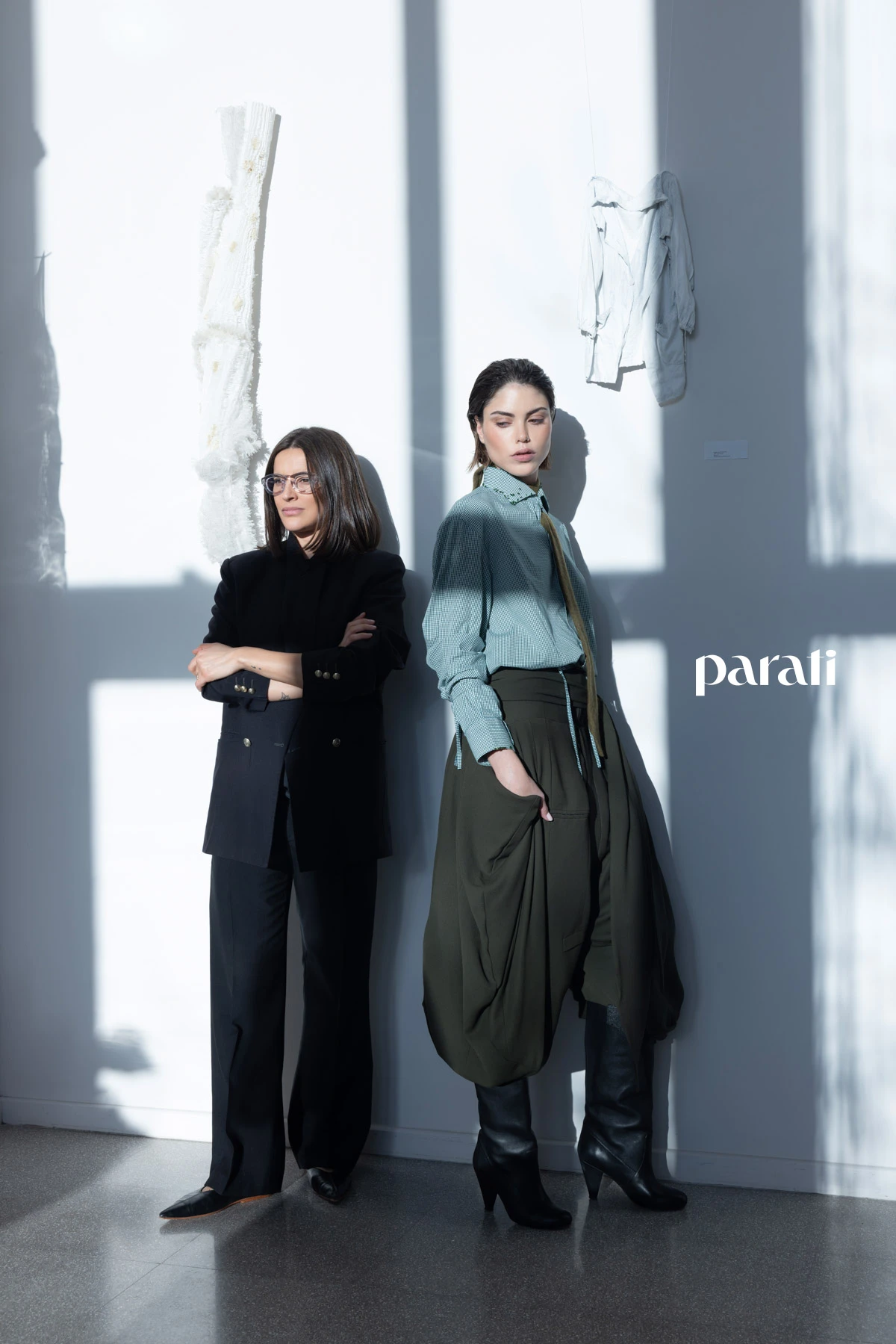
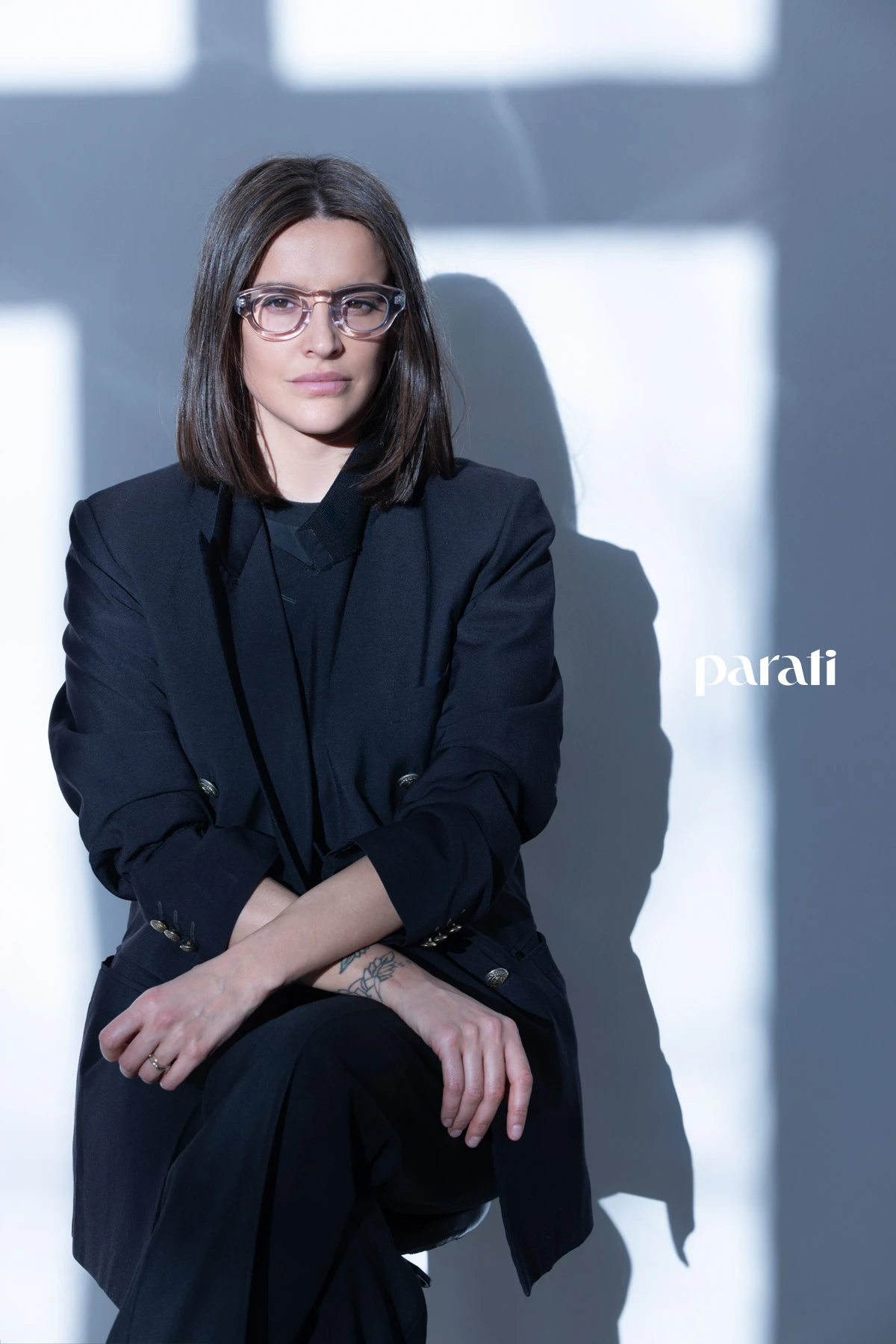
El espacio donde recibe a Para ti es tan luminoso como su dueña. El sol de la fría tarde de invierno entra por los grandes ventanales e inunda de una luz cálida el espacio de paredes blancas muy altas que pone en valor no solamente la ropa, también todo lo que abarca. Entre muebles de diseño de otras épocas que se enaltecen con una nueva resignificación y obras de arte de factura actual, está la ropa. Pero no cualquiera. Las fundas blancas cubren con amor trajes de sastrería colgados que esperan nuevas almas para volver a salir a la vida, para contar nuevas historias, para acompañar a nuevas dueñas.
The space where she hosts Parati is as bright as its owner. The light of the chilly winter afternoon pours through the large windows and bathes the space in warm light—white walls that elevate not only the clothes but everything it encompasses. Among vintage-designed furniture that is elevated with a new re-signification and contemporary works of art, the clothing sits. But not just any clothing. White covers gently cradle tailored suits hanging, waiting for new souls to go back out into life, to tell new stories, to accompany new owners.
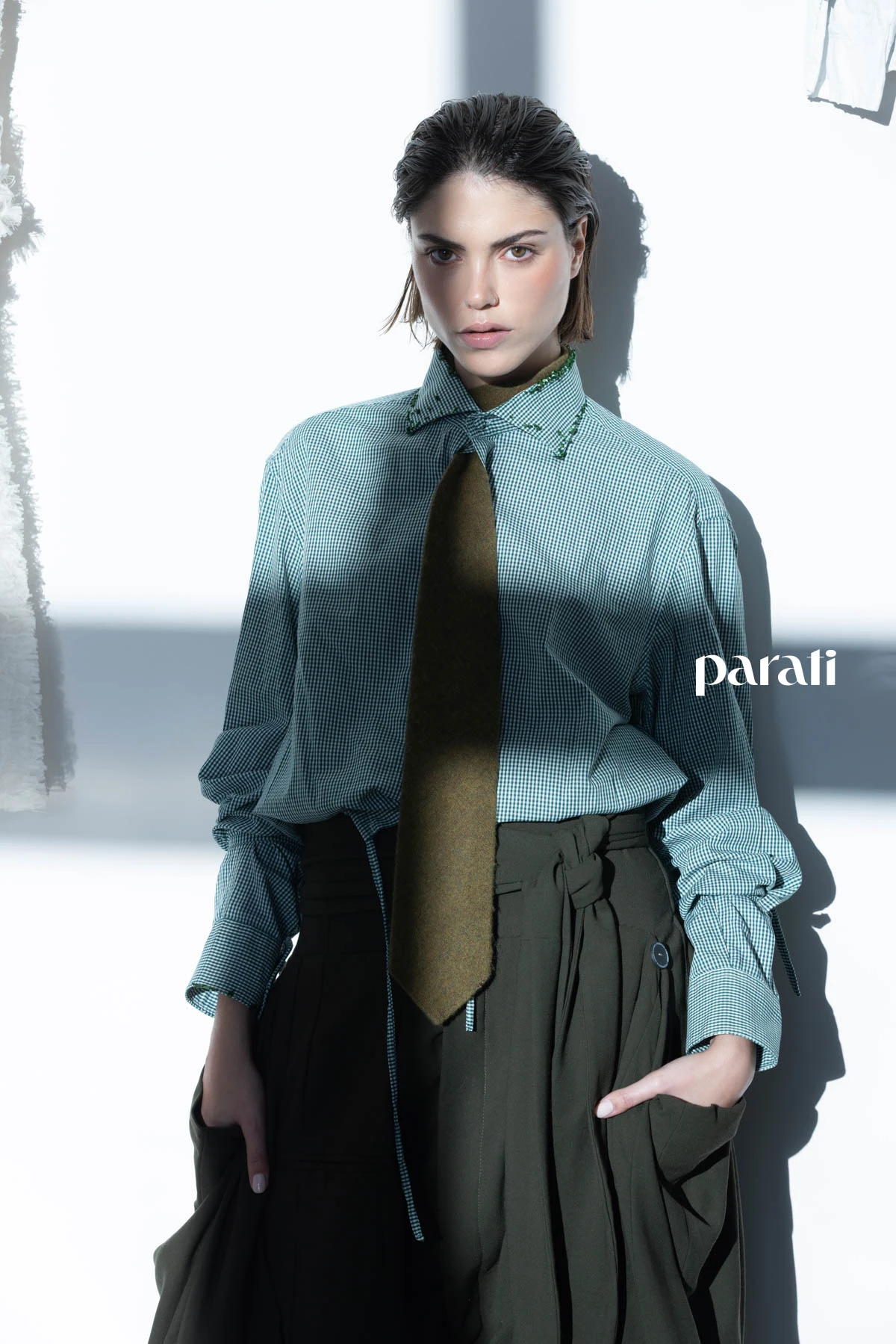
N de la R: el proyecto de Hæder tiene dos partes. Por un lado la compra de trajes de descarte de sastrería que, luego de un estudio minucioso, se determina si su ciclo de vida continúa. Y por el otro prendas de clientas que traen su propia sastrería para adaptarla y resignificarla a su cuerpo sin cortar las prendas.
N de la R: The Hæder project has two parts. On one hand, the purchase of discarded tailor-made suits, which after a thorough study are evaluated to determine whether their life cycle continues. And on the other hand, garments from clients who bring their own tailoring to adapt and re-signify them to their bodies without cutting the garments.
– ¿Hæder es rediseño de autor?
– Is Hæder an author’s redesign?
– En algunos casos sí, en otros casos no.
– In some cases yes, in others no.
– ¿Cuándo si y cuándo no?
– When we talk about redesigning an existing piece that comes from a craft tailor where you can see the designer’s intention, where you can see there is intention. But in most cases, which is industrial tailoring, the reality is that I am correcting design problems of the system. The tailor’s craftsmanship has intention, it’s directed at you, in your form, in your posture, in your person, and the other thing is nothing—the only intention is to sell.
– En tu universo, ¿regenerar y reparar son sinónimos?
– In your universe, are regenerating and repairing synonyms?
– En realidad podrían tratarse como sinónimos pero el segundo es condición del primero: para regenerar se necesita reparar. La reparación en sí misma es un acto de regeneración.
– Actually they could be treated as synonyms, but the second is a condition for the first: to regenerate you need to repair. Repair itself is an act of regeneration.
– Cada prenda que tiene una historia vuelve a tener un nuevo final cuando alguien se la lleva reparada y regenerada.
– Yes. Each garment that carries a history returns to a new ending when someone takes it home repaired and regenerated.
– Sí. El diseño nunca se termina porque en el caso particular de Hæder, nosotros pensamos la pieza dentro de un ciclo de vida abierto. Nosotros decimos: mira que esto no se termina acá, vos lo puedes volver a traer, no te compres nada nuevo, vení, lo elaboramos de nuevo, no hace falta. Nuestras prendas tienen tecnología NFC (dice la web de la firma: cada prenda integra información sobre su origen, trazabilidad y ciclo de vida, extendiendo su vínculo con quien la porta en el tiempo).
– Yes. Design never ends because, in Hæder’s case, we envision the piece within an open life cycle. We say: this isn’t the end here; you can bring it back, don’t buy anything new—come, we’ll rework it; there’s no need. Our garments incorporate NFC technology (the brand’s website says: each garment contains information about its origin, traceability, and life cycle, extending its bond with the wearer over time).
– Como el círculo del infinito.
– Like the infinity symbol, exactly.
– Exacto, el sistema de diseño regenerativo de Hæder está inspirado en la lemniscata de Bernouilli, que es ese infinito.
– Exactly, the regenerative design system of Hæder is inspired by the Bernoulli lemniscate, which is that infinity symbol.
– Si una marca te ofrece su stock en colaboración, sin comprarlo, ¿lo harías?
– If a brand offers you its stock in collaboration, without purchasing it, would you do it?
– Una colaboración así es el escenario ideal. Es mi Disney (risas). Qué más quisiera yo que me llame una marca y me diga, “Luján, tenemos stock que quedó muy deteriorado por un problema de almacenamiento; parece imposible de rescatar y la única alternativa sería descartarlo.”. En ese escenario digo si. Esos desafíos me encantan porque es donde el sistema y esta idea de regeneración se hacen evidentes. En esos casos, en ese tipo de colaboración, lo que a mí más me importa, como directora de proyecto, es que la otra marca entienda que es posible producir y ganar dinero de forma responsable, revalorizando eso que parece que no sirve.
– A collaboration like that is ideal. It’s my Disneyland. What I’d love is for a brand to call me and say, “Luján, we have stock that’s severely deteriorated due to storage issues; it seems impossible to salvage and the only option would be to discard it.” In that scenario I say yes. I love those challenges because that’s where the system and this idea of regeneration become evident. In those cases, what matters most to me, as project director, is that the other brand understands that it is possible to produce and make money responsibly, revaluing what seems useless.
– ¿Se puede ganar dinero con este sistema de trabajo de moda?
– Can you make money with this fashion-work system?
– Se puede. Hace poquito presenté un paper para el Congreso Latino-Europeo de Moda y Regeneración, donde hablo justamente de diseño regenerativo que es una parte de la cadena de producción inexplorada. La cadena de producción tradicional es lineal: tomás, hacés, usás, descartás. ¿Y qué pasa después? Hay un montón de recursos reutilizados que es dinero muerto. Ni siquiera solamente pasa por una cuestión de regeneración y responsabilidad ambiental, social, económica, se trata también de falta de ¿cómo decirlo? de viveza gaucha.
– It is possible. I recently presented a paper at the Latino-European Fashion & Regeneration Congress, where I talk precisely about regenerative design—an overlooked part of the production chain. The traditional production chain is linear: you take, you make, you use, you discard. And what happens after? There are many reused resources that amount to dead money. Not only is it about regeneration and environmental, social, and economic responsibility; it’s also about a lack of “gaucho liveliness.”
– Entiendo, entonces, que existen otras maneras de producir.
– I understand, then, that there are other ways to produce.
– Están todos como locos produciendo de cero y tambien tenes todo esto que está descartado y que podes hacer algo y ganar plata. Y además podes ser pionero en esto porque no hay nadie que lo esté haciendo. En China están empezando este reproceso y haciendo upcycling automatizado con máquinas ¡imagínate! Estamos a tiempo de poder hacer eso, ese es mi mundo ideal, otra vez, mi escenario de los sueños soñados, que Argentina pueda hacer uso de eso que no está viendo, que nadie está ofreciendo: producción luego de la cadena productiva lineal que conocemos. No hay industria del reproceso.
– Everyone is frantically producing from scratch, and there’s all this discarded stock that you can do something with and make money from. And you can be a pioneer in this because no one is doing it. In China they are starting this reproce ssing and doing automated upcycling with machines—imagine! We are still in time to do that; that’s my ideal world, again, my dream scenario, that Argentina can make use of what nobody is offering: production beyond the linear supply chain we know. There is no industry of reprocessing.
Algo más que ropa
Much More Than Clothes
El compromiso de Luján con el medio ambiente y la moda no es una teoría a merced del viento. El sistema de diseño regenerativo que plantea Hæder es también un proyecto de libro. “Lo que empecé a escribir está por el 60%. Quiero que haya un manual, un método. ¡Y que lo copien, no me importa! Hay mucha teoría sobre upcycling, mucha bibliografía sobre reciclaje y demás, pero no hay bibliografía sobre procedimiento, sobre gestión de proyectos”.
Luján’s commitment to the environment and fashion isn’t theory drifting with the wind. The regenerative design system proposed by Hæder is also a book project. “What I started writing is about 60%. I want there to be a manual, a method.” And I don’t mind if others copy it! There’s a lot of theory about upcycling, a lot of bibliography on recycling and so on, but there isn’t much bibliography about procedure, about project management.
– Serías la primera en levantar una bandera y apurar este conocimiento.
– I’d love to, because here the point isn’t the technique, but how to carry out that technique and in what context, in what frame. More than rushing, it’s about organizing it, because you can have the technique but if you don’t know how to apply it or when to apply it, it doesn’t make sense. Regeneration isn’t a static concept.
– Llamas archivo emocional a las prendas que traen las clientas. Después de esa primera entrevista ¿cómo sigue?
– Emotional archive is a transformative experience, not a shopping experience, not a personal shopper experience. So, the piece ends up being edited or reaches a point of editing where the person who brings it decides that it ends. It can be extended in time; nothing changes if it extends a month, two months, three months. Because it’s true that what happens with the emotional archive is that these are people who come to mourn.
– ¿Cómo es eso?
– For example, it happened to me with the daughter of a very macho, abusive father but with a very good tailoring shop. She had a certain reluctance to keep the suits of a person who was her father, someone whose existence and love she endured. And that process was difficult, but we re-signified and de-contextualized it so she could wear that clothing. They are griefs that aren’t rushed, they are accompanied. It’s very personal.
– Con las prendas ayudaste a hacer las paces.
– Of course, in that case we made peace, but it was heavy. Those things take time.
– Ayudas sin olvidarte que es un negocio…
– Yes, but business can also be humanized. One thing is emotional intelligence and another is being a mercantile hitman. You can make money with love, or you can make money with a knife in your teeth. I choose to do it with love. If the purpose of repair is to turn consumption into a habit and, in that exercise, you’re also repairing something else, that’s it, I’m done.
– Con esto de prendas y partes y piezas, ¿sos como el dr. Frankenstein?
– No. From the theoretical perspective of upcycling, Frankenstein is the monstrous hybrid, a mixture of inputs and elements all together that, when the garment’s life cycle ends, it becomes very hard to separate at origin and it becomes a liability.
El tono de voz de Lujan toma otro cariz cuando se trata de la justicia social. Su infancia carenciada estuvo enriquecida de amor y pasión por la familia, por el trabajo y por el progreso.
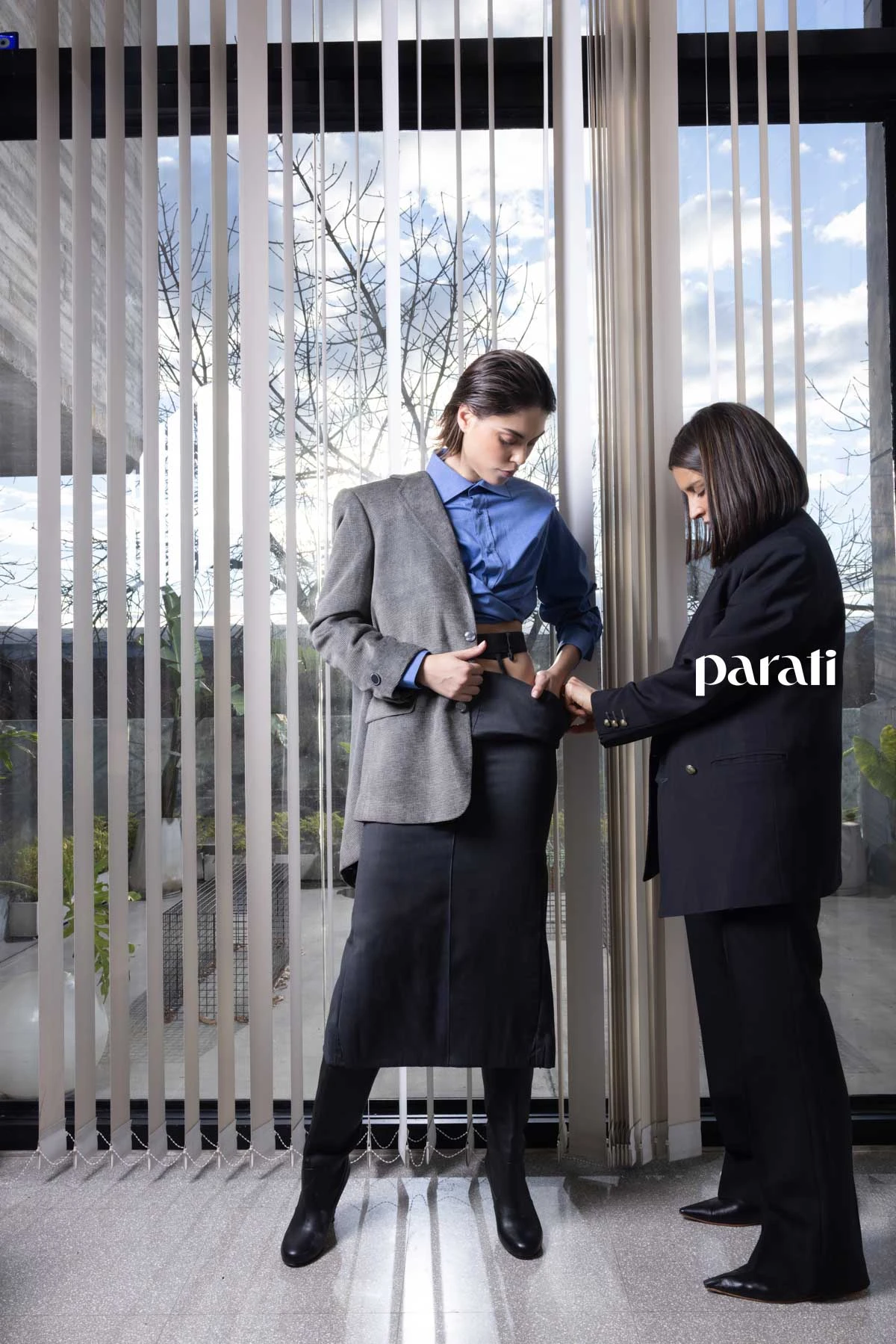
– Aprendiste el oficio de la costura de parte de tu madre. Después viajaste a Venecia para aprender sastrería veneciana y ahí te diste cuenta qué querías hacer. ¿Crees que es necesario el ordenamiento académico en la costura?
– No y ahí hay un tema. Yo no digo que la academia no sea necesaria, La academia, la universidad son progreso, es muy importante que la gente estudie. Con lo que no estoy de acuerdo categóricamente es con ponerle el pie sobre la cabeza a aquella persona que sabe coser y que no tiene el privilegio de ir a la universidad porque tiene que darle de comer a sus hijos, porque tiene que salir a la calle. En eso no estoy de acuerdo. No estoy en contra de la universidad ni de la facultad de diseño, las celebro si la persona tiene la posibilidad de hacerlo. Pero no le pongamos el pie en la cabeza al que no tiene la posibilidad de hacerlo y tiene el talento porque no le quedó otra alternativa que sentarse a coser con su mamá y su tía en una casa precaria en el conurbano bonaerense. Sí hay profesiones que requieren título habilitante como la medicina, la abogacía, el físico nuclear, gente que puede poner en riesgo la vida de otras personas. El diseño de indumentaria no pone en riesgo la vida de nadie. Cada uno puede elegir su camino, pero entendamos que en una sociedad como Argentina no todos pueden elegir.
Diseñadora de oficio, Lujan reconoce que personas del medio local alguna vez le pasaron factura por haber llegado al mundo de la moda con su propio método.
Mucho más que una flor en el desierto
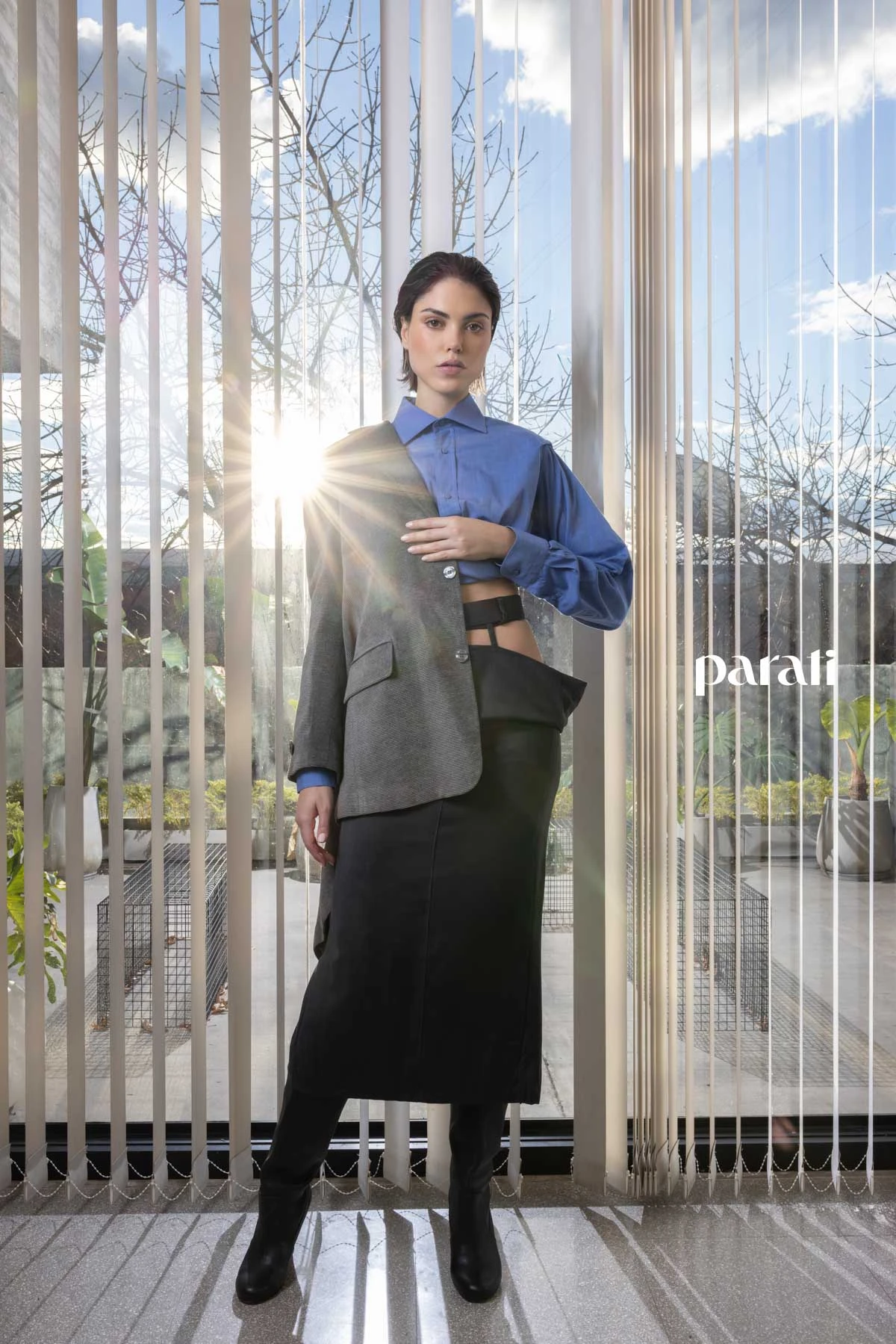
En una industria de las más contaminantes del planeta Lujan y Hæder provocan un impacto positivo en el medio ambiente a través de la ropa. Aquí el efecto mariposa cobra vida más que nunca. Resignificar y revalorizar prendas no es un status de moda que pretende estar a la moda. Cada nueva prenda es volver a creer en el amor.
In an industry among the most polluting on the planet, Luján and Hæder create a positive environmental impact through clothing. Here, the butterfly effect comes to life more than ever. Re-signifying and revaluing garments is not a fashion status aiming to be in style. Each new garment is a renewed belief in love.
– ¿Cuál es el futuro de la moda?
– Para mí tiene que ser regenerativo. En algún momento alguien tiene que levantar el pie de la máquina de coser para hacer ropa nueva y empezar a reparar lo que ya existe.
– What is the future of fashion? For me it has to be regenerative. At some point someone has to lift the foot off the sewing machine to make new clothes and start repairing what already exists.
– ¿Y cómo es hacer la moda que haces en Argentina?
– There is one thing that annoys me about Argentine fashion: how it looks to what others do outside. Oh, I find it boring! being told what you have to design to make people buy it or told that to sell you must do the same as others… All of that seems silly to me, a somewhat abstract universe in which you have to follow rules you don’t fully understand. I find that quite uncomfortable. So if that’s how fashion is done, I’m definitely a bit rebellious in this niche.
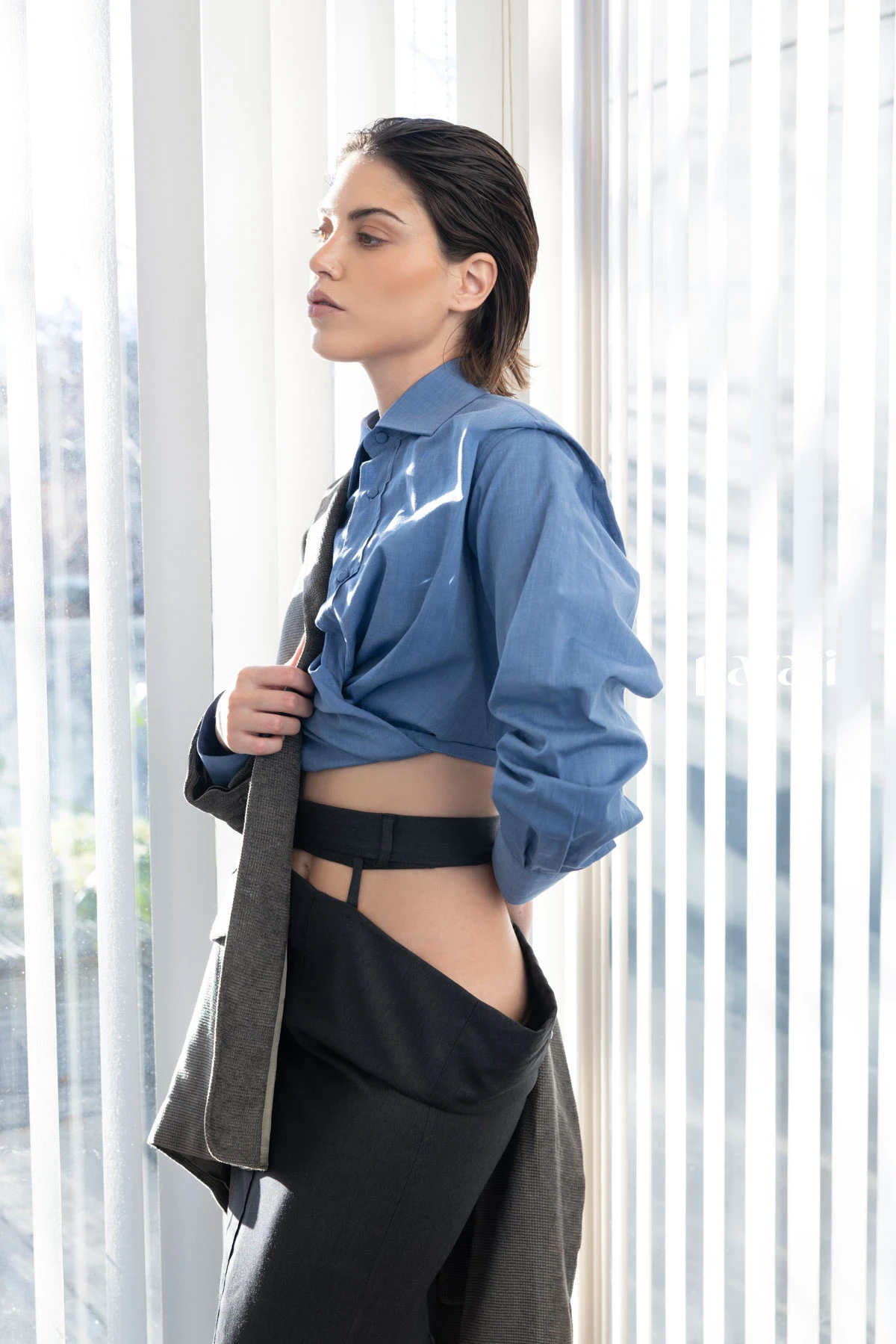
– Mas allá de estas normativas que cuentas que hay en la moda, ¿sentís que se puede hacer la moda que haces?
– Yes, it can be done! I hope everyone realizes that it is possible.
– ¿Cómo sería?
– At a technological level Argentina does not have a large development of industrial sewing workshops. There are a few, some spaces in Buenos Aires, the AMBA, Córdoba and some important provinces have installed capacity. Also we’re talking about brands that are importing, so there isn’t much development; there are many factories or family workshops.
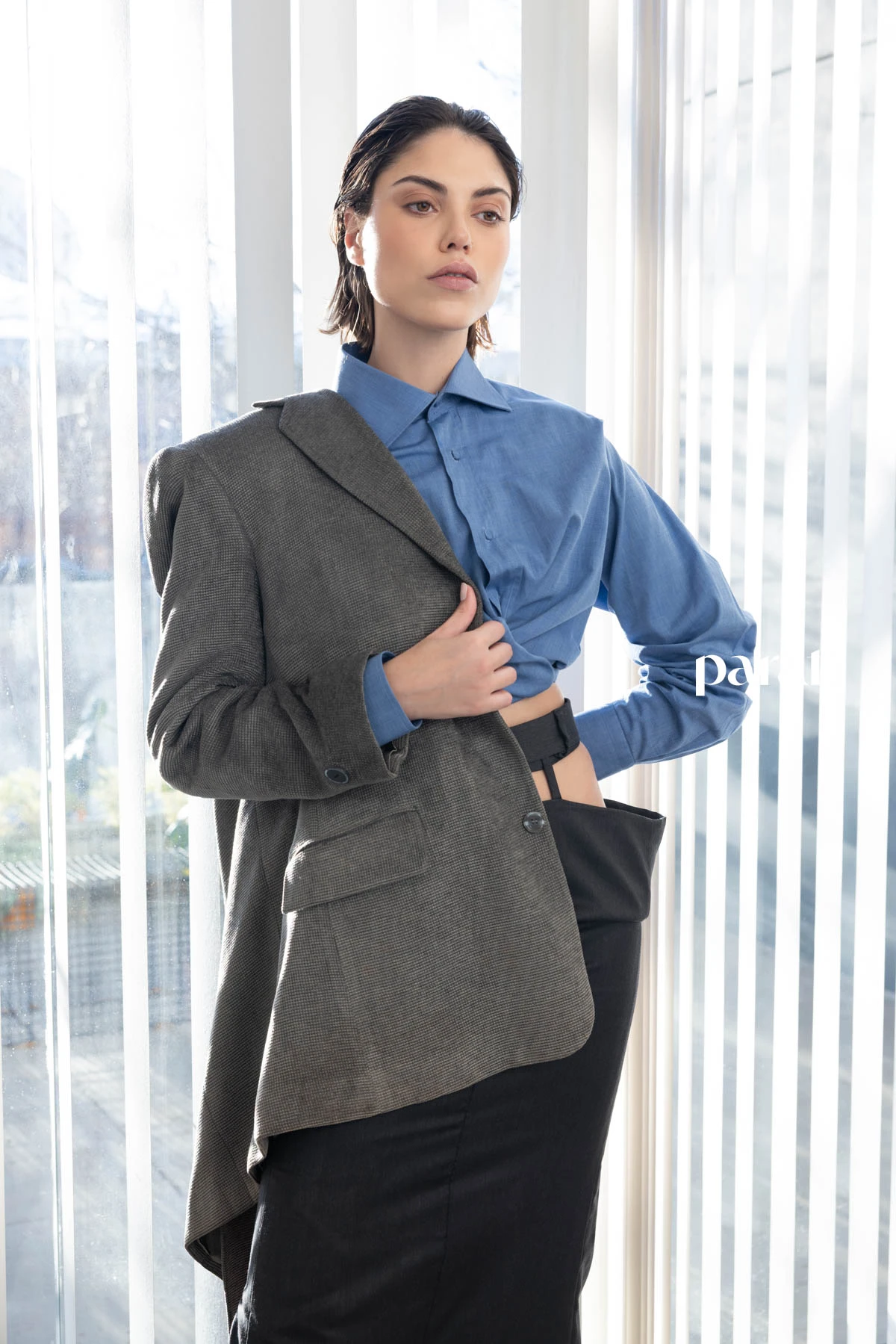
– ¿Te parece que sería importante que las marcas tengan un departamento que refiera al sistema de trabajo de reordenar y volver a hacer?
– Yes, a department of reproessing. In fact, in this scenario Argentina is undergoing an opening to imports and seeing what to do with underutilized installed capacity in workshops; I think it’s fundamental and would help keep those workplaces going.
– Con tu mirada, ¿por dónde crees que pasa el lujo de la moda?
– The luxury is the least of the least, it’s something trivial.
– ¿Entonces el lujo está pasado de moda?
– I don’t think so because everyone talks about luxury. Luxury, like beauty, is quite subjective. Besides, luxury in whose mouth? To me luxury means not having any financial concerns. It makes me uneasy to talk about luxury in clothing. True luxury comes with discernment; it has to be accompanied by criteria.
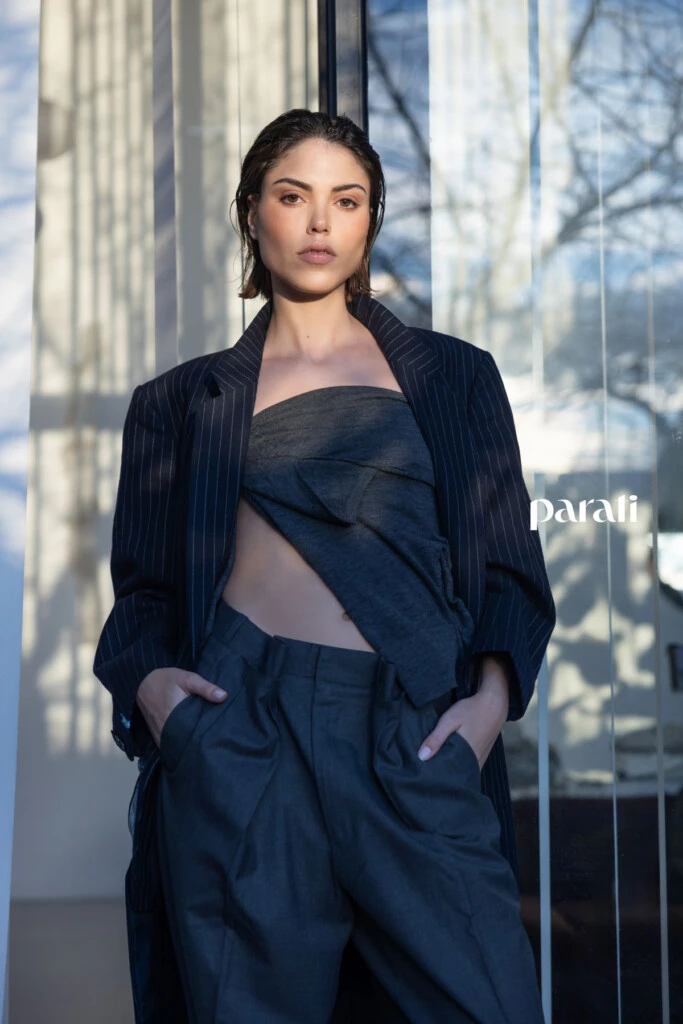
– Tu mamá crió sola a sus hijos. Por otro lado resignificas la sastrería masculina que es un símbolo de poder económico y laboral muy fuerte. ¿Es porque no hubo una figura de padre presente?
– Not necessarily. If I analyze it in therapy, I’m sure my father is to blame for something. The only contact I had with power was when I didn’t only sew with the family and I left home to work. Before arriving in Buenos Aires I worked as a promoter, as a model, I was a beauty queen and I met people with a lot of power. And the most despicable people were the best-dressed and the most powerful. From the way I experienced how clothes were worn during my adolescence, at the tailor’s shop I found a wall, a kind of armor. When I studied law it was hard for me to enter the role of the lawyer, the corporate woman, and it’s very strange but the psychological effect of a well-structured blazer on me gave me a sense of great strength.
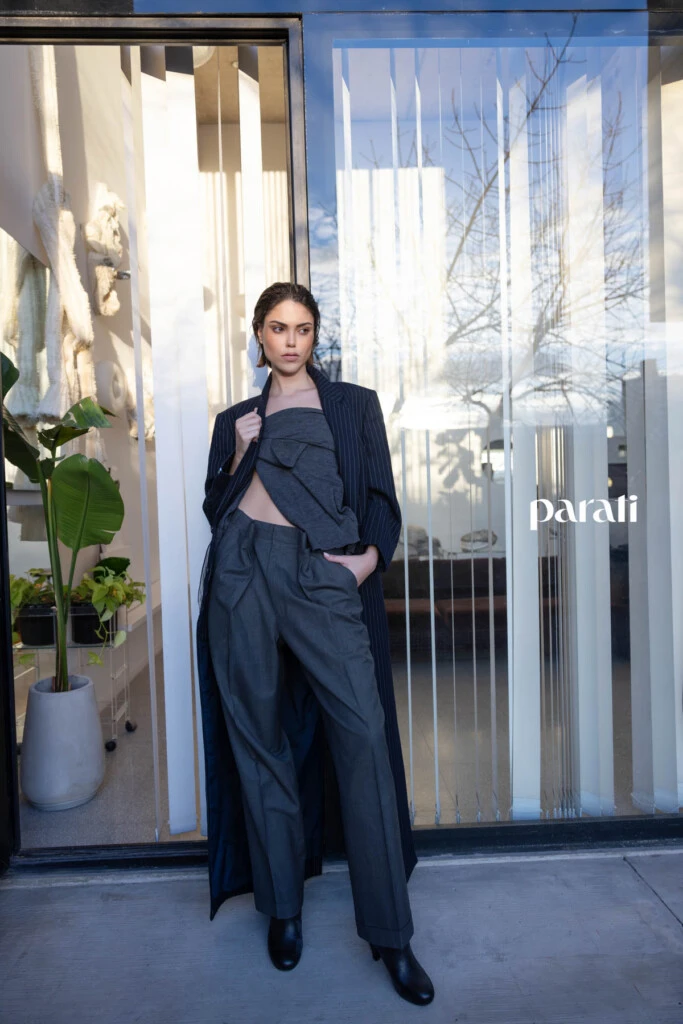
– Una cosa es poder y otra es fortaleza.
– One thing is power and another is strength.
– Con el diario del lunes, hoy te puedo decir que la fortaleza es mucho mejor que el poder porque, mientras el poder se pierde, la fortaleza se sostiene, es lo que te sostiene, es la base del estoicismo. Me gusta la idea de pensar que puedo resignificar un símbolo de poder en mis propios términos y quitarle la carga negativa. Con esto quiero decir que la sastrería es una coraza frente a esos hombres que, curiosamente visten trajes como armaduras, se aprovechan de su lugar de poder, ellos tienen poder, pero les falta fortaleza. Es muy loco, es la primera vez que lo digo, que me sincero.
– Looking back, I can tell you that strength is far better than power because while power can be lost, strength endures; it’s what sustains you, the base of stoicism. I like the idea of re-signifying a symbol of power on my own terms and removing its negative connotation. It means tailoring can be a shield against those men who, interestingly, wear suits like armor, they have power, but they lack strength. It’s crazy to say this for the first time, but I’m being honest.
– ¿En qué se diferencia la sastrería femenina de la masculina?
– Comparándolas me di cuenta que la femenina sexualiza y está hecha para que la mujer sea vista de una manera. Y la masculina está hecha para hablar de poder exclusivamente.
– Compared to each other I realized that the feminine tailoring sexualizes and is made for women to be seen in a certain way. And masculine tailoring is made to speak of power exclusively.
– En esto de traspolar un traje de hombre a una mujer ¿hay poder femenino?
– Yes, in fact my view is quite feminist about it. This is a heated debate about gender equality or about roles. Let’s talk about roles rather than genders, because today the line is blurred in that sense. And speaking of social roles, those who occupy a more feminine role have less strength and wear a uniform that fits that role. What I like about doing fashion or tailoring is that I can set the terms and conditions of how a conversation will unfold. Just as law has positive discrimination to reinforce policies favoring the underprivileged, I do the same with tailoring. So that woman who is leading a business and has to sit at a table with those who supposedly call the shots has the same backbone to do so.
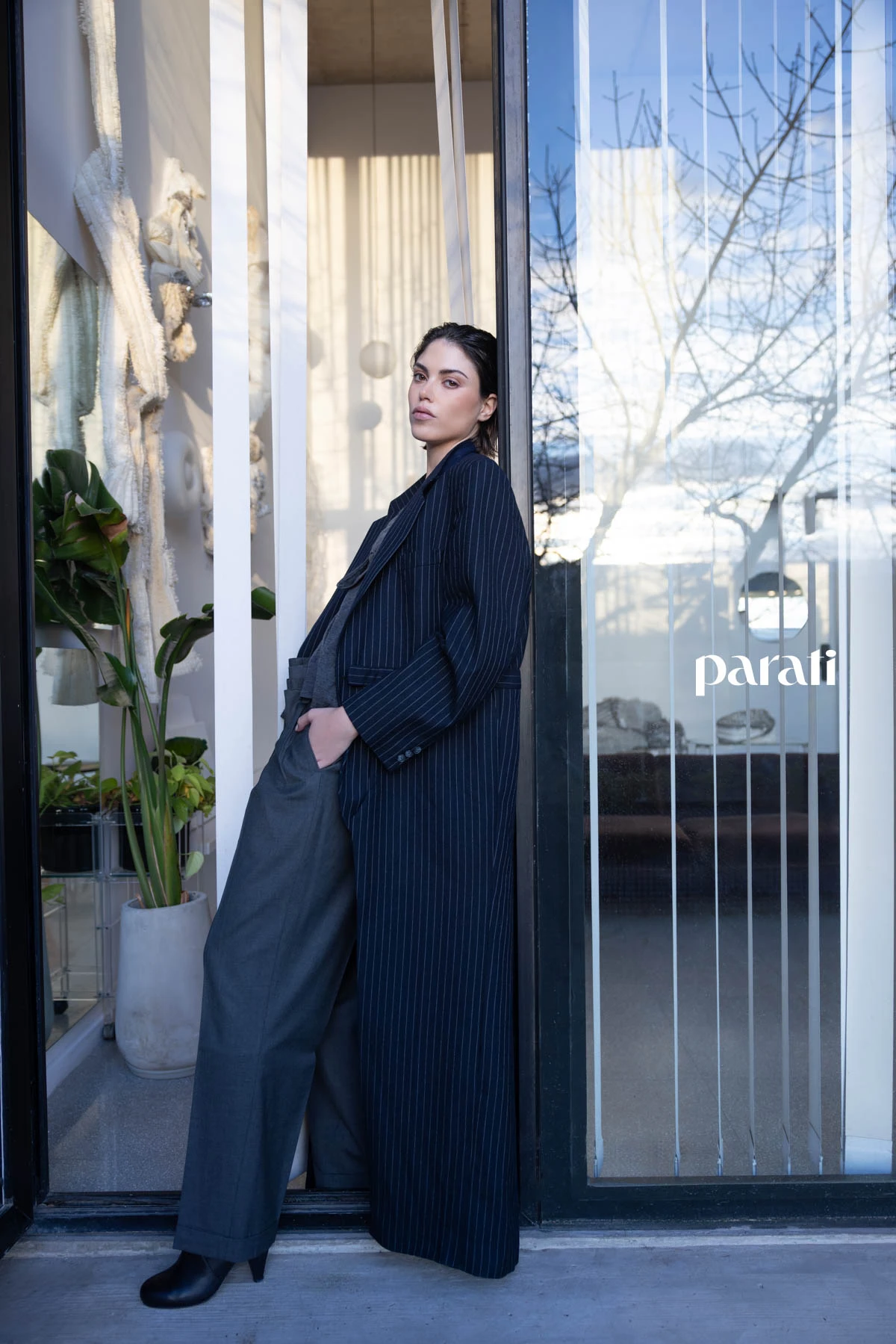
– ¿Sentís que tu sastrería en una mujer corporativa es como una pancarta?
– It can be a banner or it can also be a dagger. I like to think of it that way, more like a weapon than a banner—I dress you, but you don’t announce it, you go out without the label.
– ¿Para quiénes se viste las mujeres?
– I don’t want to speak in absolutist terms, but I’m sure there are three types and I can distinguish three looks. There are the women of the 90s and earlier who dressed for men; I grew up in that era and I clearly remember when I was dressed for the runway to please the judges, regardless of whether there were women present. Then there’s the classic one who is as bad or worse than the first: “dress to be looked at by other women,” fomenting envy, which I find silly. And then there’s the third one, which is how I feel represented today: “dress to be comfortable,” end of story.
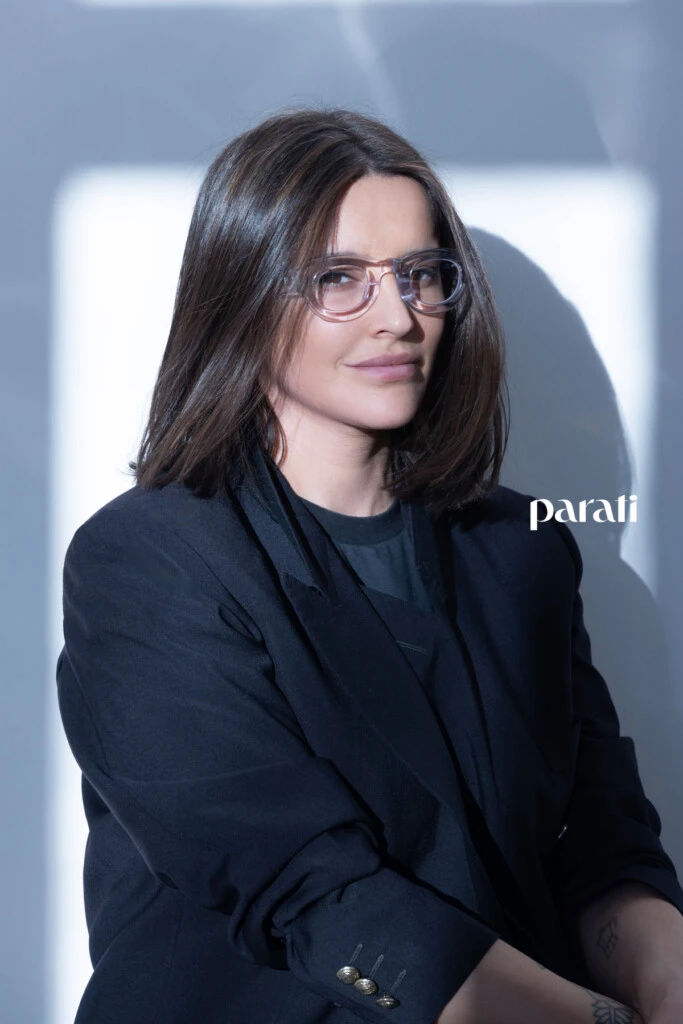
– ¿Para quién sentís que se viste en tus clientas?
– It depends on the case because some men also come. For emotional archive they choose to dress in their own story and that’s a very intimate gesture; what they decide to do with that piece has to do purely with them. There is one case I find very beautiful: a change agent (a client) geography teacher who works on human rights came with a blazer from her mother. We went through her entire story, her emotional archive and created an emotional-archive piece to accompany her in those moments when she has to represent rights.
– De chica fuiste cuidada y estuviste acompañada. ¿Es por eso que tus prendas son también para no sentirse sola y estar acompañada de alguien que significó mucho?
– It has to do with that, totally. We all have something we inherit from someone and we keep it. It happened with my father’s doctor’s jacket; what do I do with this jacket that I’m never going to wear? It’s a beautiful way to re-signify bonds through objects, and today I wear it to work.
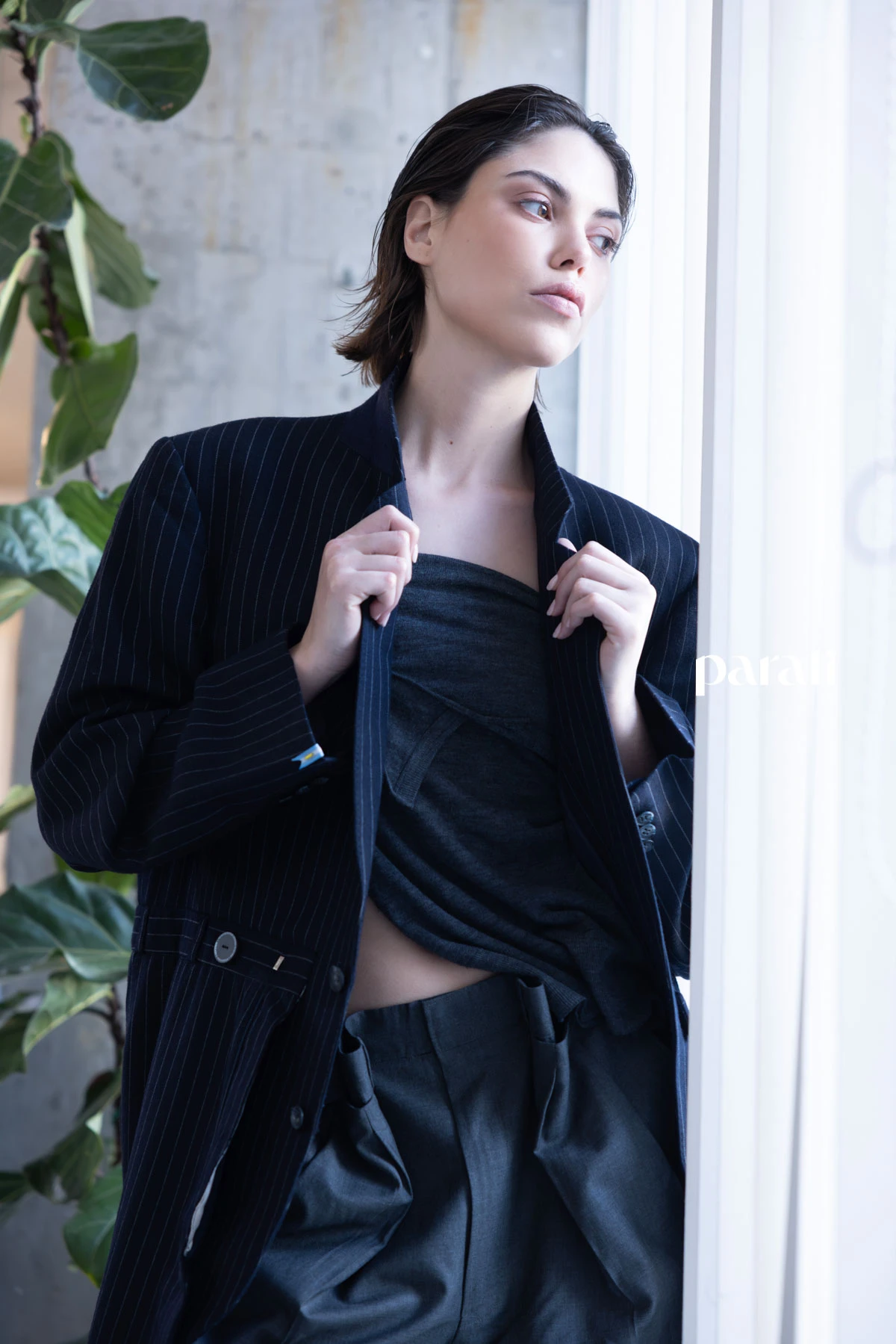
– También sabemos que la indumentaria refiere a la pertenencia.
– The apparel refers to belonging.
– La indumentaria es una herramienta para poder acceder a un círculo social, uno se viste para pertenecer o para destacarse
– Clothing is a tool to access a social circle; you dress to belong or to stand out.
Cuando una persona está formando su personalidad se viste para pertenecer y uno tiende a vestirse igual o a replicar lo que otro usa en lugar de elaborar lo que uno tiene. A mí por una cuestión forzosa me tocó vestirme con lo que tenía, pero lo celebro porque eso me permitió construir mi personalidad. Cuando uno empieza a ser deja de consumir indumentaria sin sentido.
When a person is shaping their personality, they dress to belong, and people tend to dress like others or replicate what someone else wears instead of developing what they have. By necessity I had to dress with what I had, but I celebrate it because it allowed me to build my own personality. Once you start, you stop consuming clothing without meaning.
– Dijiste que permanencia mata tendencia. ¿Cada nueva prenda marca una nueva tendencia con voz propia?
– You said that staying power kills fashion; does every new garment set a new trend with its own voice?
– Sí, y para toda la vida.
– Yes, and for life.
– ¿Es la tendencia que te interesa?
– Yes, the trend in the sense of the choice that isn’t the trend of what is worn. You end up wearing something you made for yourself that relates to your own story. That is where true sustainability in consumption resides.
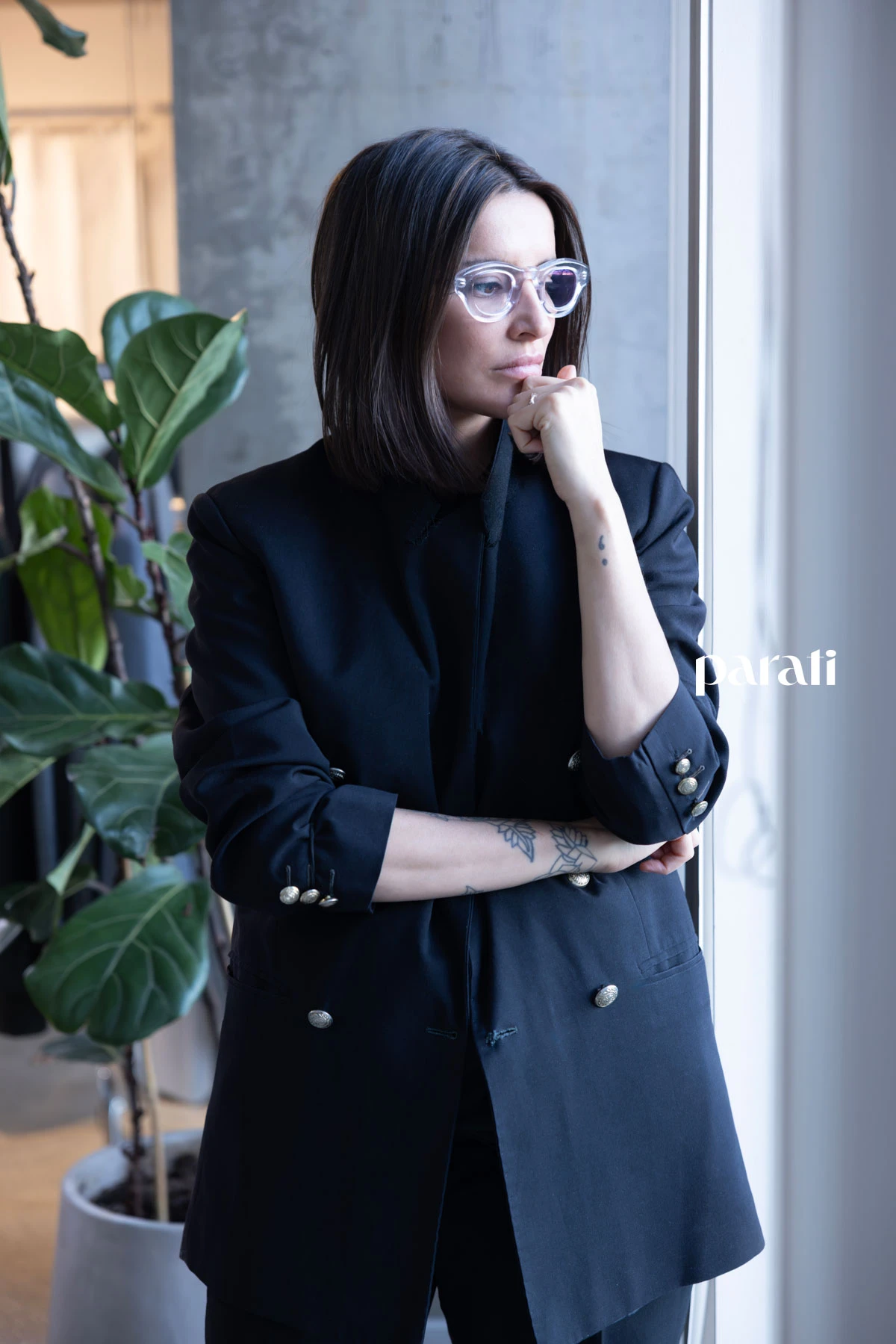
– ¿Qué le dirías a la Luján miedosa que trabajaba como abogada y un día dejó la profesión para arrancar con Hæder?
– Although I still get a bit that way, being so romantic about my ideas used to embarrass me. I get carried away; my ideas are very idealized. At that time I was afraid to let myself be guided by my romantic ideas of a better world, and look at how things turn out: today I’m building a brand to save the world (laughs). I’d tell her not to be afraid, to be romantic.
– En esto de volver a darle una nueva vida a las prendas, ¿crees en la reencarnación?
– I don’t know if it has much to do with clothing. It might in an analogous way. When I talk about the emotional archive, precisely they are metaphysical bridges that connect one bond to another; one can be here in this plane or not, and I love that.
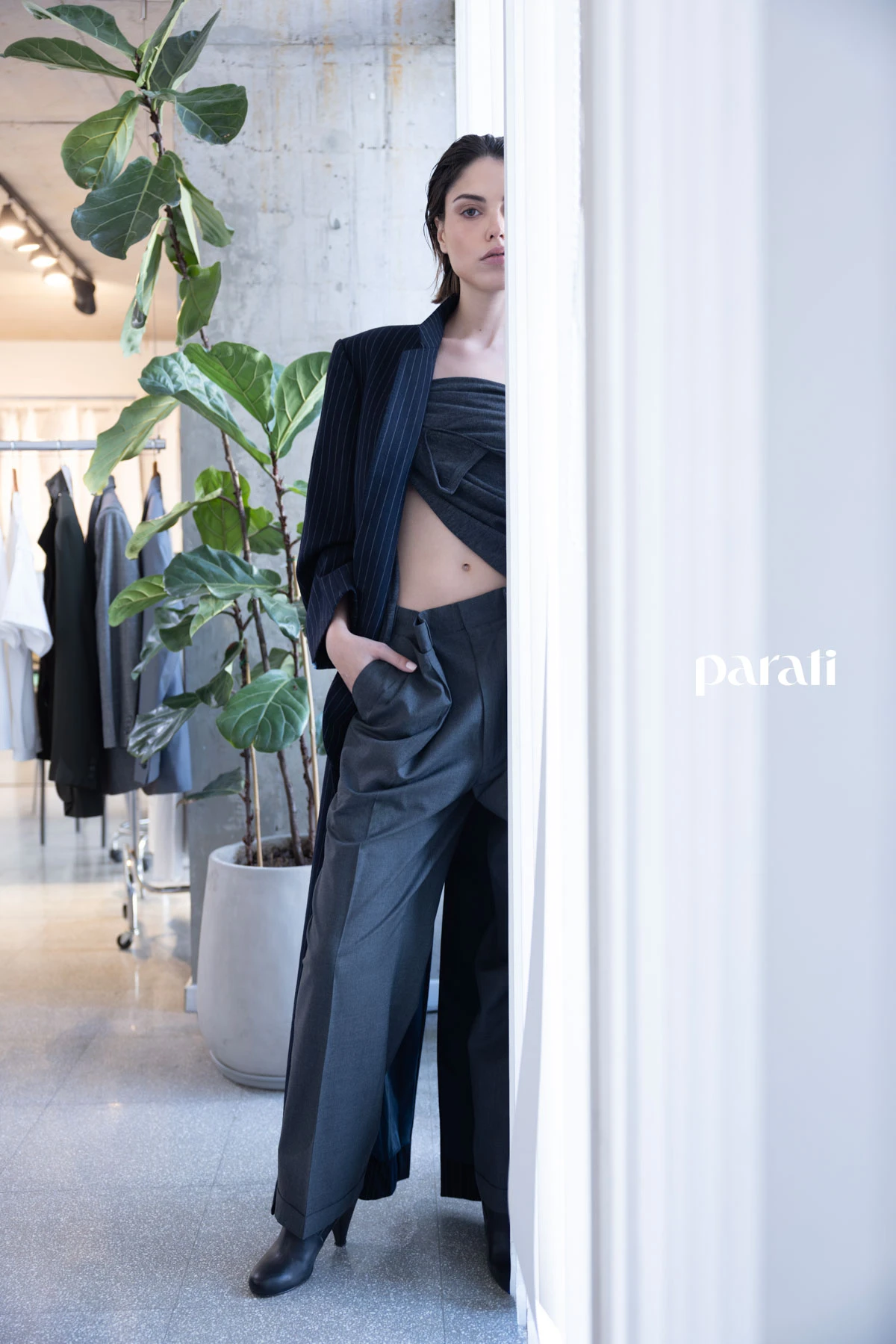
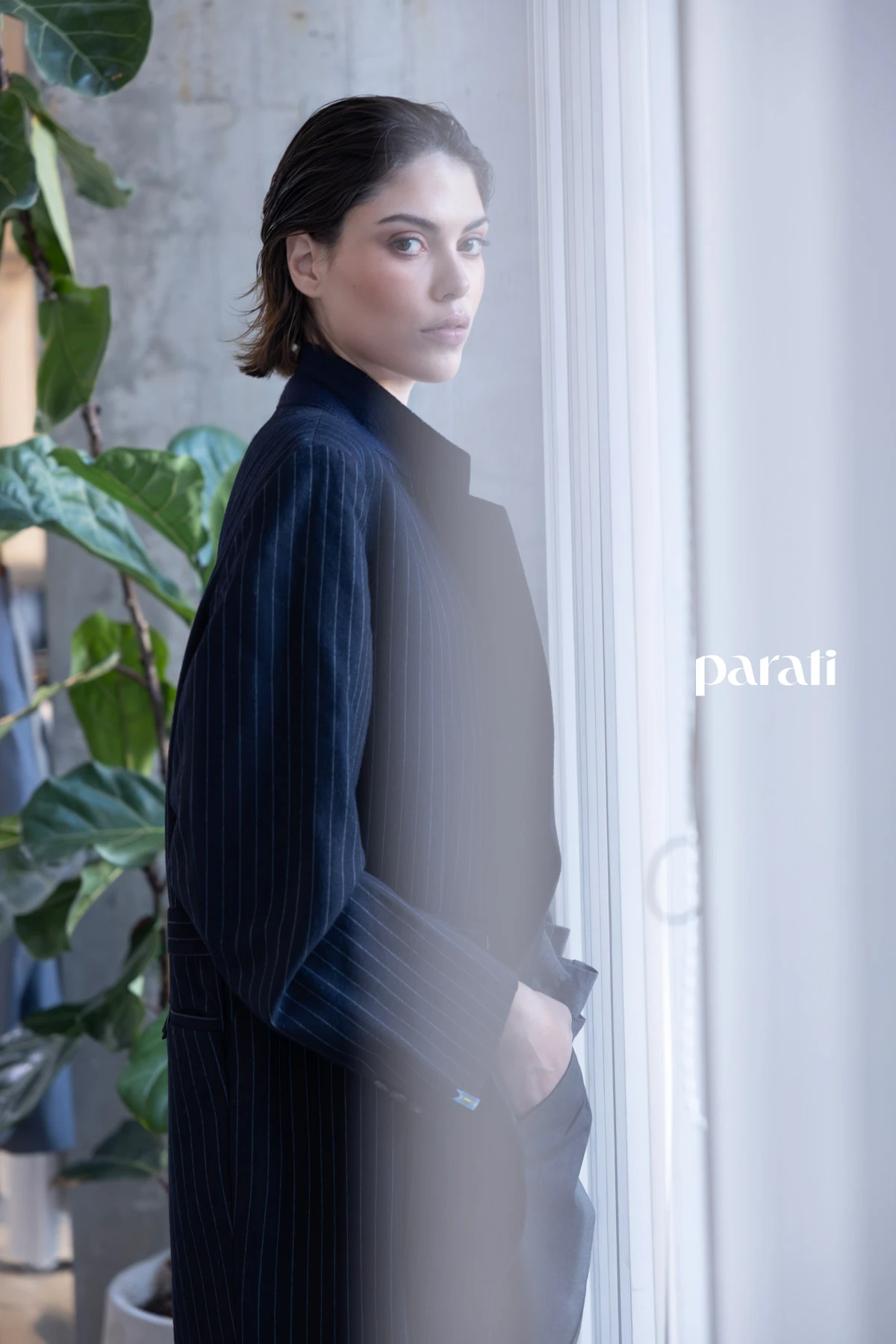
MODELO @m.rivera05 para @clever_management
ESTILISMO @alegarcia360
FOTOS @chrisbeliera
VÍDEO @ramapalais
MAQUILLAJE Y PEINADOS @ro_somoza para @sebastiáncorreaestudio