
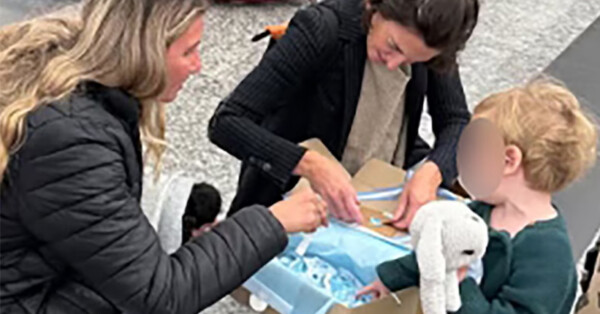
More than a year has passed since that dawn that transformed a long-awaited family reunion into an unimaginable tragedy. In a house in the Buenos Aires neighborhood of Villa Devoto, five members of the same family died from carbon monoxide poisoning. In another room, a one-and-a-half-year-old baby was still breathing.
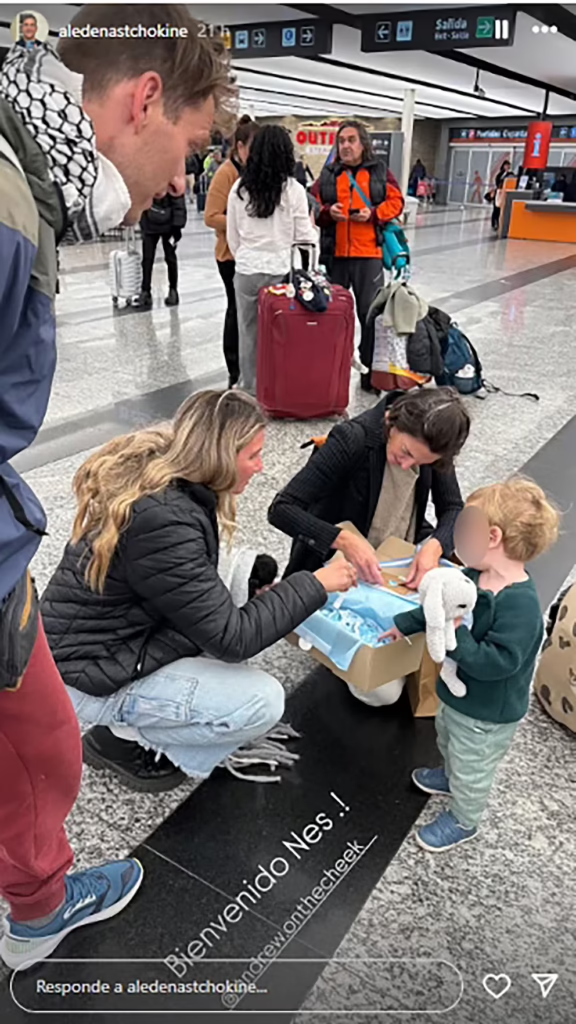
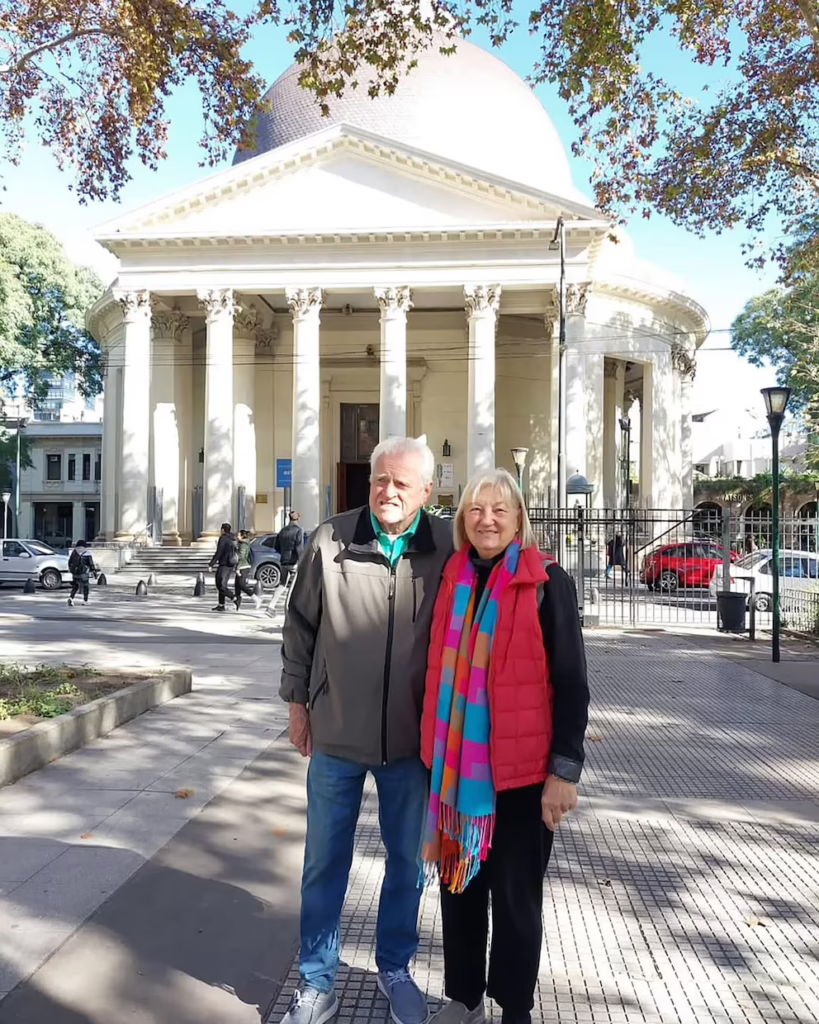
It was Milo De Nastchokine, the sole survivor. He had arrived from Europe with his parents, Andrés De Nastchokine and Marie Lanane, and his four-year-old sister Elisa, to visit his paternal grandparents,
How Milo Survived
When the emergency teams entered the home, they found the baby conscious, though affected by inhaling the gas. Milo was in a room separate from the one where his parents and sister had been found.
Alberto Crescenti, then head of SAME, explained that a gap or better ventilation in that room could have reduced the concentration of carbon monoxide. In the rest of the house, however, the windows and ventilation were closed or sealed.
The child was transported first to Zubizarreta Hospital and later transferred to the Ricardo Gutiérrez Children’s Hospital. There he entered intensive care with severe poisoning and required oxygen support via a high-flow cannula, in addition to constant monitoring. The studies indicated, however, that his heart function had stabilized and that he responded normally to neurological assessment.
Recovery and Medical Discharge
Milo’s recovery progressed positively. Over the following days he was able to leave intensive care, and approximately two weeks after the tragedy, he was discharged from the hospital.
According to the latest information released by sources at the Gutiérrez Hospital, the baby was already feeding normally, responding correctly to stimuli, and did not require oxygen assistance. His overall condition was good, and he was being cared for by his relatives.
The physical recovery opened a new and deeply sensitive chapter: determining who would assume his care after the death of his parents.
Who Milo Ended Up Living With
While he remained hospitalized, Civil Court No. 102 of the City of Buenos Aires ruled to grant provisional custody to one of his paternal aunts. The primary aim was to prevent the child from being institutionalized after discharge and to ensure he remained in a family environment.
The woman was evaluated by the Court and placed in charge of Milo during that initial stage. Other siblings of his father also participated in the network of care and support that began to form around the boy.
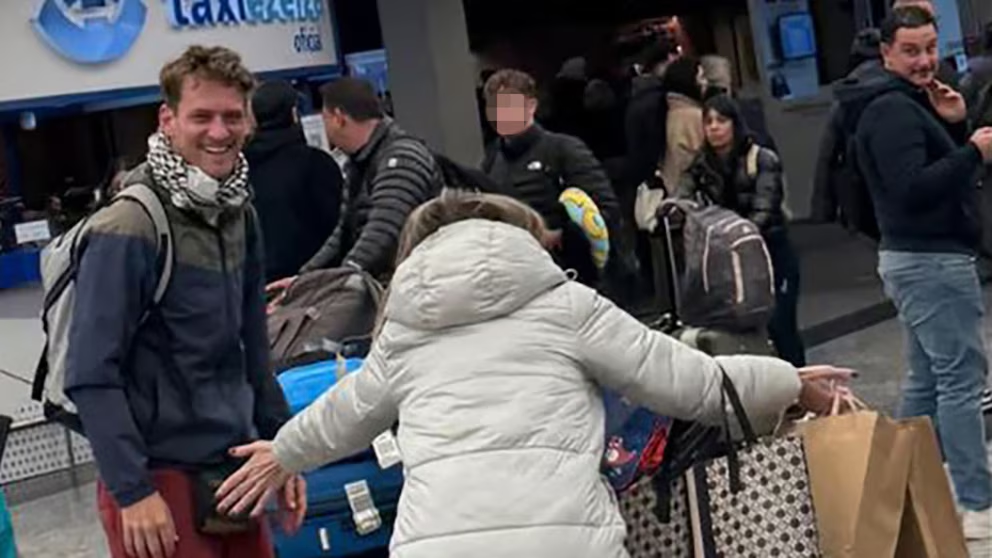
At the same time, Milo’s maternal grandparents and one of his uncles traveled from France to Argentina. According to the paternal family’s lawyer at the time, there was no dispute between the two branches of the family, but conversations intended to find the best option for the child’s welfare.
A Decision Shaped by Two Countries
The case carried an international dimension. Milo’s mother was French, and the child had lived in Europe with his parents and his sister. For this reason, the authorities had to assess not only who could provide him with immediate support, but also where his emotional support network was most stable and in which country it would be best for him to grow up.
As of August 2025, the possibility remained that the families could reach an agreement and that Milo could settle in France with his maternal relatives. Any decision would later be reviewed and ratified by the courts, always under the principle of the child’s best interests.
What Is Currently Known About His Life
The most recent verifiable journalistic update indicated that Milo had recovered, was out of the hospital, and was under the provisional care of his paternal aunt. No publicly reliable details have been released about a definitive guardianship, a potential move to Europe, or his current place of residence.
That silence can also be understood as a form of protection. Milo is a child who endured a devastating family loss before turning two, and whose development needs to unfold away from public exposure.
His story was forever marked by that early morning in July 2025. But also by the room where he managed to keep breathing, by the doctors who accompanied his recovery, and by an extended family that, in the midst of grief, tried to offer him a home again.