

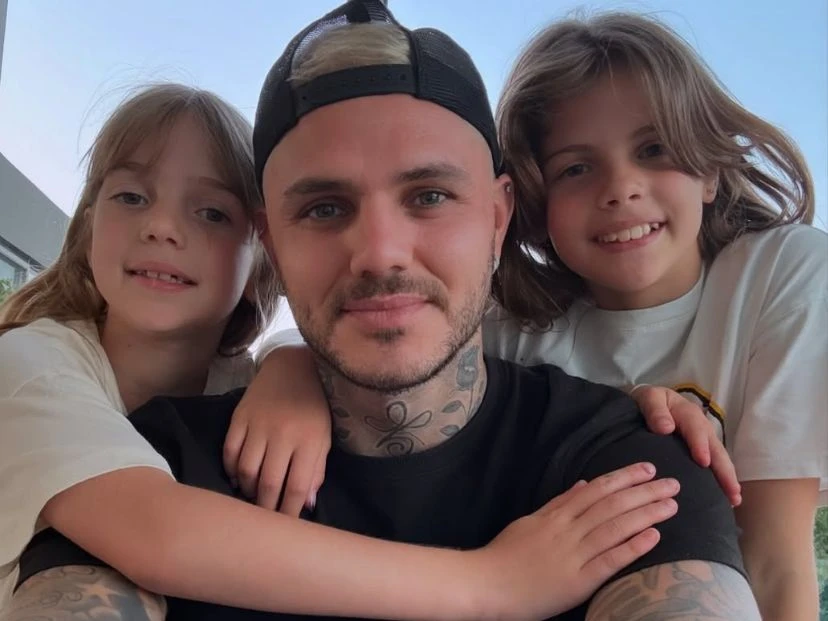
The judicial dispute between Wanda Nara and Mauro Icardi once again places their daughters Francesca and Isabella at the center of attention, and opens a debate about the role that the girls should occupy when their parents are in a dispute.
Among the various public versions and the judicial processes aimed at clarifying the alleged facts, one issue remains fundamental: how to ensure that their voices are heard and their rights protected, without assigning to children responsibilities that belong to adults.
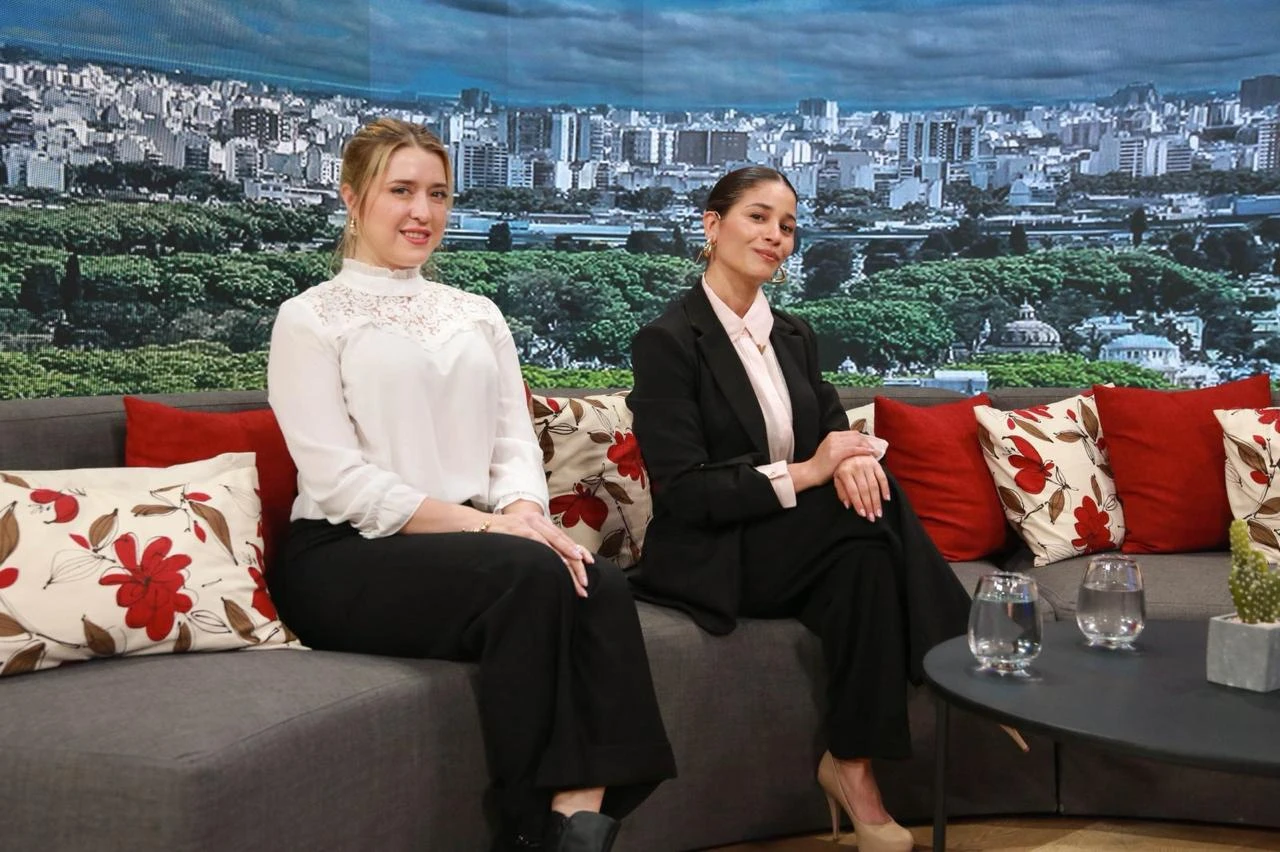
On this topic, Doctors Ana Paula Duarte and Natalia Denisse Rodríguez, family lawyers with a gender and childhood perspective reflect. In an exclusive opinion column for Para Ti, the specialists analyze what Argentine law establishes about the right of children and adolescents to be heard, the best interests of the child principle, the potential consequences of psychological violence, and the role that the Gesell Chamber can play in a judicial investigation.
Below is the complete column:
Wanda Nara and Mauro Icardi: what does the law say about their daughters’ voice in the judicial conflict?
- By Drs. Ana Paula Duarte and Natalia Denisse Rodríguez, family lawyers with a gender and childhood perspective.
The judicial dispute between Wanda Nara and Mauro Icardi reopens a fundamental issue of Family Law: the place occupied by children when their parents are pitted against each other.
From our work as family lawyers with a gender and childhood perspective, we deem it necessary to remind that children are not the property of their parents nor objects over which rights can be fought. They are rights-holders, with their own voice, specific needs, and reinforced legal protection that must prevail over adults’ interests.
The Convention on the Rights of the Child, Law 26.061 and the Civil and Commercial Code of the Nation establish a protective framework based on three fundamental principles: the best interests of the child, autonomous progression and the right to be heard.
These principles should guide both judicial decisions and the conduct of the responsible adults, especially when there are reports of violence or situations that could compromise the physical or psychological integrity of the involved children.
1. Does being heard empower them to decide?
The right to be heard is expressly recognized in Article 12 of the Convention on the Rights of the Child, in Law 26.061 and in Articles 26, 639 and 707 of the Civil and Commercial Code of the Nation.
However, we must distinguish between listening to a child’s will and transferring the responsibility of resolving a conflict between their parents onto the child.
Their opinion must be considered according to their age, maturity and degree of progressive autonomy. This means that, as they develop greater understanding, their will becomes increasingly relevant in decisions affecting their life.
That said, the right to be heard does not imply that the child must choose between their mother and their father, nor that their opinion automatically determines the outcome of a judicial process.
Nor does it mean that their will can be dismissed simply because they are a minor. Justice has the obligation to listen to them, evaluate their expressions and explain how these were taken into account when deciding.
It is important to understand that listening to a child is not only about asking them what they want. It also involves understanding how they feel, what they need, what their fears are and what circumstances may be conditioning their will.
Obviously, this listening must be carried out with the help of qualified personnel to detect mood changes, distress and other signals that are not easily detectable.
It is also necessary to remember that in cases of domestic violence where children are victims, it is essential to listen. In some cases, lives might have been saved if the children had been heard when they cried out for protection.
From a childhood perspective, we consider it essential to prevent exercising this right from becoming an additional emotional burden, since the child has the right to express their will but should not bear the responsibility of resolving adults’ conflicts.
2. How much of what circulates publicly comes from her and how much are the adults’ versions?
This is one of the case’s most delicate questions.
We cannot determine from media statements which expressions effectively belong to the girls and which are interpretations, accounts or versions of the involved adults.
Precisely for this reason, it is essential to guarantee that they can express themselves in appropriate, protected settings free of pressure.
In highly public family conflicts, there is a risk that the children’s voice is displaced by their parents’ discourses, their legal representatives or people in their environment.
Additionally, from a gender perspective, it is crucial to warn how patriarchal stereotypes operate both in the media and in the judiciary: mothers who are the primary caregivers are often quickly labeled as “conflictive,” “manipulative” or “opportunistic” when they report vulnerable situations, seeking to destabilize their caregiving role and delegitimize their word.
From our professional perspective, we must be especially careful when someone tries to use a child’s will as an argument to support one of the adults’ positions. Instrumentalizing children to harm, pressure or discredit the mother—known as vicarious or instrumental violence—constitutes a serious violation of their right to grow up in an emotionally safe environment.
Children should not be placed in a position of having to demonstrate affection, loyalty or preference toward one of their parents.
We must also remember that the right to be heard coexists with other rights that are equally important, such as privacy, dignity, and the protection of one’s own image.
The fact that their parents are public figures does not mean that their daughters have lost their right to privacy. The media exposure of their expressions, conflicts and personal experiences can cause additional harm that must be specially considered.
Therefore, judicial officials must issue strict precautionary measures prohibiting the public disclosure of the girls’ proceedings, sanctioning adults who use the media to expose their privacy and re-victimize them.
The voice of a girl must be heard by those responsible for protecting her, not used as a tool of public confrontation.
3. What place does her best interest occupy in a conflict that is debated in full view of all?
From a legal standpoint, her best interest must hold a central and prevailing position.
The best interests of the child are not mere declarative expressions. It is a legal principle that obliges decisions to be made in a way that best guarantees the comprehensive protection of their rights.
This implies that, in the face of a parental conflict, Justice should not simply determine who is right, but analyze which measures are most appropriate to protect the physical and psychological integrity, emotional stability and development of the involved children.
In this sense, it is fundamental to emphasize that the right of children to maintain family ties cannot be analyzed in isolation from their right to live free from violence.
Contact with both parents is, as a general rule, an important aspect of their development, but it cannot be imposed automatically, ignoring situations of risk, fear, or potential harm to their safety.
When there are reports of violence, the judicial approach must incorporate a serious, contextualized evaluation of the facts, without minimizing the children’s expressions or preempting responsibilities that still need to be determined.

The gender and childhood perspective demands understanding that family conflicts do not unfold in symmetrical conditions, but are crossed by structural inequalities of power—economic, symbolic and mediatic—between men and women.
Likewise, it is essential to understand that gender-based violence against the mother directly impacts her children: those who witness or live in environments of aggression toward their maternal figure are direct victims of psychological and emotional violence. Separating the analysis of violence against the mother from the comprehensive protection of children constitutes a conceptual and legal error.
The protection of family bonds and protection against violence should not be posed as competing rights. On the contrary, any decision about family contact must ensure that this bond can develop in conditions compatible with the children’s safety and well-being.
The best interests of a girl cannot be subordinated to the right that one of her parents seeks to exercise, nor to the need to demonstrate who wins or loses a judicial dispute.
4. Are injuries only physical? What psychological sequelae can they leave?
No. A person’s integrity includes both physical and psychological dimensions, and both deserve legal protection.
When we speak of violence toward children, it is essential to understand that not all impacts leave visible marks.
Situations of violence, threats, intimidation, fear, or repeated exposure to intense family conflicts—including systematic attacks toward the mother or using the children as instruments of dispute—can generate significant emotional consequences.
Among possible manifestations are anxiety, distress, sleep disturbances, school difficulties, behavioral changes, fear and guilt, among others.
In some cases, psychological consequences can persist even after the situation that originated them has ended.
Of course, this does not mean we can assert that these sequelae exist in the girls involved in this case. Determining this requires a professional evaluation, respectful of their rights and the particular circumstances.
It is also necessary to differentiate the existence of psychological impact from its legal qualification, especially when investigating a possible crime.
However, there is one point to emphasize: the absence of visible physical injuries does not automatically rule out other forms of harm.
Law 26.061 expressly recognizes the right of children to not be subjected to violent, discriminatory, degrading or intimidating treatment, as well as to receive protection against any form of abuse or mistreatment.
Thus, from an integrated protection perspective, we cannot reduce violence solely to its physical manifestations.
The mental health of children deserves the same seriousness and attention as their physical health, as defined by the WHO in its concept of “health”: “Health is a state of complete physical, mental and social well-being and not merely the absence of infirmities or diseases.”
5. What is the Gesell Chamber and how important will it be in this case?
According to publicly available information, the next week interviews with Wanda Nara’s and Mauro Icardi’s daughters are planned to be conducted using the Gesell Chamber procedure, within the framework of the judicial investigation into alleged injuries.
The Gesell Chamber is a device specially designed to receive the testimony of children in a protected environment, seeking to prevent their exposure to direct interrogations and situations that could generate new emotional damage.
In the criminal sphere, this procedure is contemplated, among other applicable provisions, in Articles 250 bis and 250 ter of the National Code of Criminal Procedure, subject to the specifics of the applicable procedural regime.
The interview is conducted by a specialized professional, usually a psychologist, who uses communication techniques appropriate to the child’s age and development.
The procedure allows, under the applicable conditions and rules, that authorized judicial operators observe the interview from another space, without directly intervening in the dialogue. The questions deemed necessary by the parties must be channeled through the foreseen mechanisms, avoiding subjecting the child to a conventional interrogation.
One of its main purposes is to prevent re-victimization, that is, to avoid that someone who may have gone through a traumatic situation has to repeat their account unnecessarily before multiple people or expose themselves to circumstances that deepen their distress.
It is important to clarify that the Gesell Chamber does not in itself constitute a psychological assessment aimed at determining whether a girl is telling the truth.
Its purpose is to obtain a testimony under appropriate protective conditions, which must subsequently be evaluated by the Justice together with other evidentiary elements.
Nor should this stage be confused with a procedure that automatically determines with which of her parents a girl wants to be or if she wishes to maintain contact with one of them.
The objective of the measure, within a criminal investigation, is to obtain relevant information about the investigated facts, respecting procedural guarantees and the rights of the girls.
In this sense, it is essential that her expressions are not interpreted in isolation nor used to anticipate conclusions about the adults’ responsibilities, nor to feed narratives that pathologize the maternal bond or discredit the child’s account under unfounded suspicions of manipulation.
It should also be avoided that, once the interview is conducted, its content becomes material for media exposure. The privacy and intimacy of the girls must be preserved throughout the process, under strict judicial protection.
From our perspective, the importance of this measure lies not in obtaining a statement that favors any of the parents, but in guaranteeing that the girls can express themselves under proper conditions and that their expressions are incorporated and valued by the Justice with the appropriate guarantees.
The Gesell Chamber should not become a stage to determine which parent is right. It must be a tool of protection and evidence production, where the girls’ voices are heard without pressures, without conditioning and without transferring to them responsibilities that belong to the adults.

Final reflection
As lawyers dedicated to Family Law, with a gender and childhood perspective, we believe this case represents an opportunity to reflect on a problem that transcends the individuals involved.
Family conflicts are not battles with a winner and a loser when the rights of children are at stake.
The challenge for Justice is to guarantee that their voices are heard, that their needs are understood and that decisions are made prioritizing their comprehensive protection, eradicating gender stereotypes that criminalize or delegitimize mothers and recognizing that ensuring a violence-free childhood requires protecting both the girls and those who take care of them.
The childhood perspective requires us to stop viewing these conflicts solely through the rights claimed by adults and begin analyzing them from the rights that children need to exercise and have guaranteed.
Because listening does not mean forcing a choice, protecting does not mean imposing a bond at any cost, and guaranteeing rights does not automatically satisfy the parents’ claims.
Children should not be used to resolve adults’ conflicts. It is the adults and the institutions who have the responsibility to resolve those conflicts without violating the rights of the children.
Dr. Ana Paula Duarte. Lawyer specializing in Family Law and Childhood. University professor of Law. Communicator and legal analyst.
Dr. Natalia Denisse Rodríguez. Lawyer specializing in Family Law and Childhood. University professor of Law. Communicator and legal analyst. Co-founder of Estudio Jurídico DR. Instagram: https://www.instagram.com/drestudioylegales/