

On December 9, 2001, Kathleen Peterson was found dead at the foot of a staircase in her Durham, North Carolina home. She had head injuries and had lost a large amount of blood. Her husband, the writer Michael Peterson, dialed 911 and maintained that his wife had suffered an accidental fall.

What initially seemed like a domestic accident turned into a homicide investigation that divided a family, dominated headlines for years, and sparked a lengthy legal battle. More than two decades later, the case continues to generate interest due to the questions it left unanswered and the varying accounts of what happened that night.

The story entered the realm of fiction with The Staircase, the 2022 miniseries starring Colin Firth as Michael Peterson and Toni Collette as Kathleen. Available on Netflix, the production retraces both the investigation and the impact the case had on the couple’s children and the wider family.
Kathleen Peterson’s Death and the Suspicion Around Her Husband
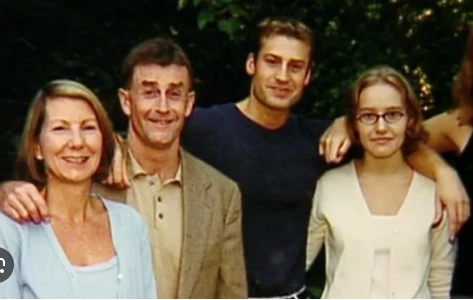
Kathleen was 48 years old when she died. She was an executive with a solid professional track record and had been married to Michael Peterson since 1997. They shared a blended family, consisting of children from previous relationships.
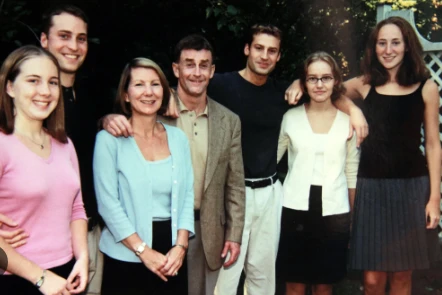
In the early hours after her death, Michael claimed to have found Kathleen at the foot of the staircase and believed she had fallen. Yet the wounds on the body raised suspicions among investigators, who began considering the possibility of an assault.
The investigation progressed to the point where Michael was charged with first-degree murder. The prosecution argued that he had killed his wife, while the defense maintained it was an accident and challenged the evidence presented against him.
In October 2003, a jury found him guilty and he was sentenced to life imprisonment without the possibility of parole.
The Conviction, the Appeal, and the Judicial Twist
For years, Michael Peterson remained imprisoned while his defense appealed the conviction. The case took a major turn in 2011, when a judge ruled that the testimony of Duane Deaver, a blood-spatter analyst who had participated in the investigation, had been misleading. The conviction was overturned and Peterson was released on bail pending a new trial.
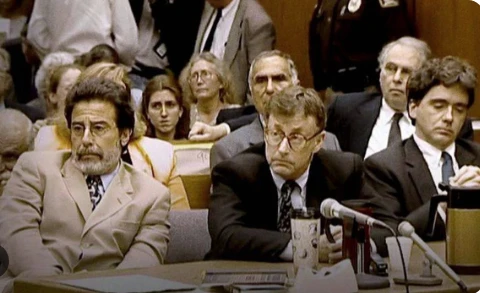
But that second trial never took place.
In February of 2017, Peterson accepted a judicial deal known as an Alford plea, by which he pleaded guilty to involuntary manslaughter without admitting that he had committed the crime. This mechanism within the American legal system allows accepting a conviction while maintaining innocence, acknowledging that the prosecution has enough evidence to secure a conviction.
The sentence imposed was covered by the time he had already spent in prison, so Peterson was released.
The agreement brought the criminal case to an end, but it did not clear up all doubts about Kathleen’s death. Michael continued to insist that he bore no responsibility for what happened.
The Owl Theory: The Hypothesis That Fueled the Mystery
Among the various explanations that emerged around the case, one of the most striking was the so-called Owl Theory.
The hypothesis, advanced by Larry Pollard, a lawyer and neighbor of the Petersons, argued that Kathleen could have been attacked by an owl outside the house. According to that version, injuries inflicted by the bird would have contributed to her fall down the stairs.
Proponents of this possibility pointed to the head injuries and the alleged presence of small feathers in Kathleen’s hair. The theory sought to provide an alternative explanation for the injuries that had led investigators to suspect her husband.
However, it was never proven in a court of law nor did it become an official conclusion about what happened. To this day, it remains as a hypothesis that fuels the debate around the case.
The Children and a Family Divided by the Investigation
Kathleen’s death had consequences beyond the courtroom. It also deeply affected a blended family that found itself split by suspicions and differing stances toward Michael.
He had two biological sons from his first marriage to Patricia Sue Peterson: Clayton and Todd. Kathleen, for her part, had a daughter from a previous relationship, Caitlin Atwater.
Additionally, Michael and his first wife had raised Margaret and Martha Ratliff, two sisters whose mother, Elizabeth Ratliff, had died in Germany in 1985. Her death had also occurred at the foot of a staircase and was revisited during the Peterson case investigation, adding another unsettling dimension to the story.
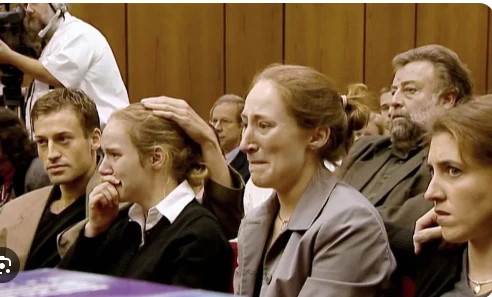
As the legal proceedings progressed, positions within the family shifted. Caitlin, who had initially supported Michael, ended up convinced that he was responsible for her mother’s death and became a key witness for the prosecution. Margaret and Martha, by contrast, continued to support Peterson.
The differences among the children and the emotional toll of the process became one of the central threads of the story.
A Case with a Judicial Resolution, But It Did Not Resolve All Questions
Kathleen Peterson’s story re-entered public conversation through documentaries and fictional productions that retraced the various stages of the investigation.
The miniseries The Staircase takes Kathleen’s death as its starting point and follows Michael’s journey from the accusation and trial to the consequences the case had on his closest circle. Starring Colin Firth and Toni Collette in the leading roles, it also shows how the different versions of the events affected family ties.

The judicial outcome is well known: Michael Peterson was convicted of murder, the conviction was overturned, and years later he accepted a plea deal for involuntary manslaughter that allowed him to regain his freedom.
But the question that sparked the entire investigation remains open in terms of facts: what exactly happened that night at the Petersons’ house and how Kathleen died.
That lack of a definitive explanation is, precisely, one of the reasons the case continues to generate interest.