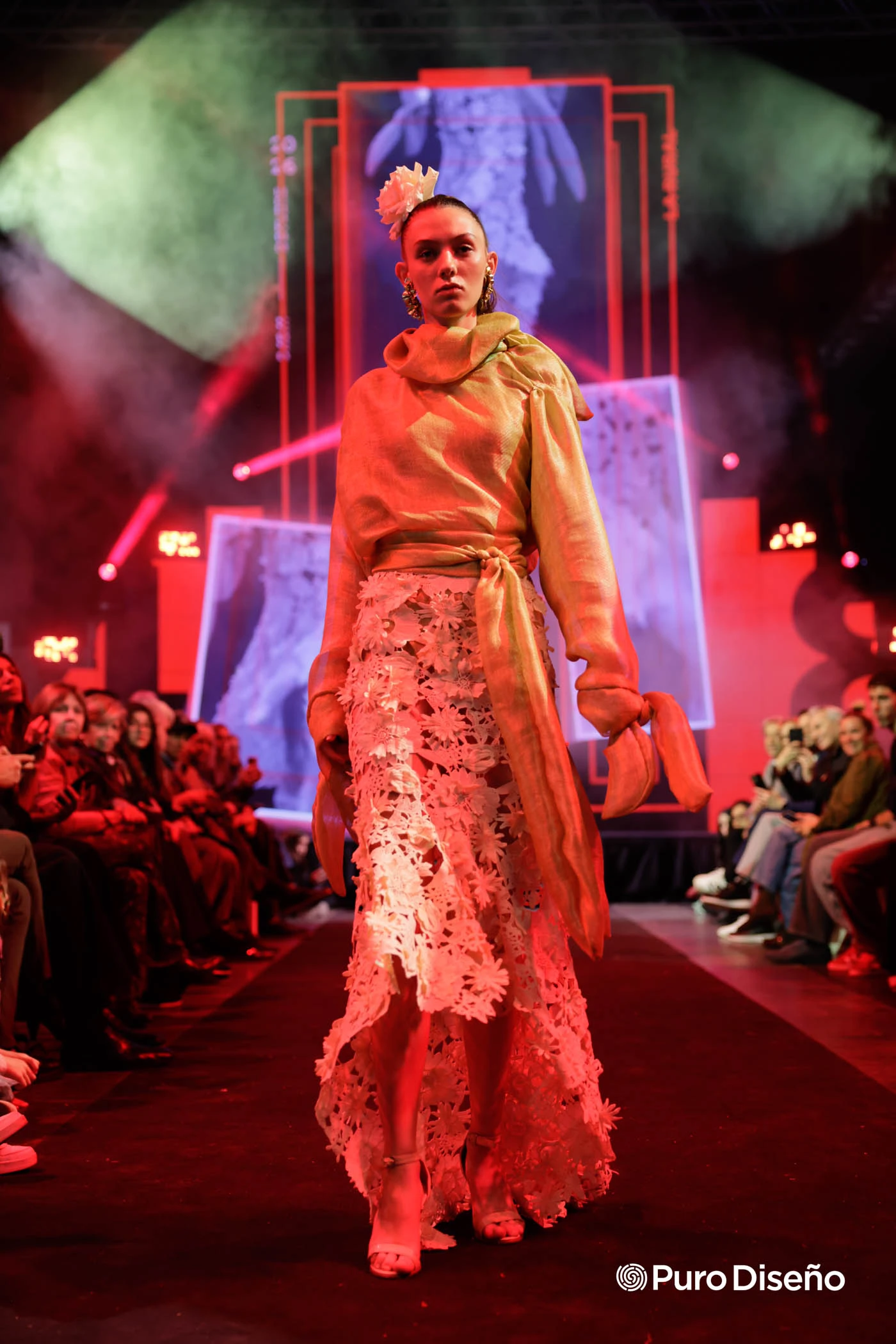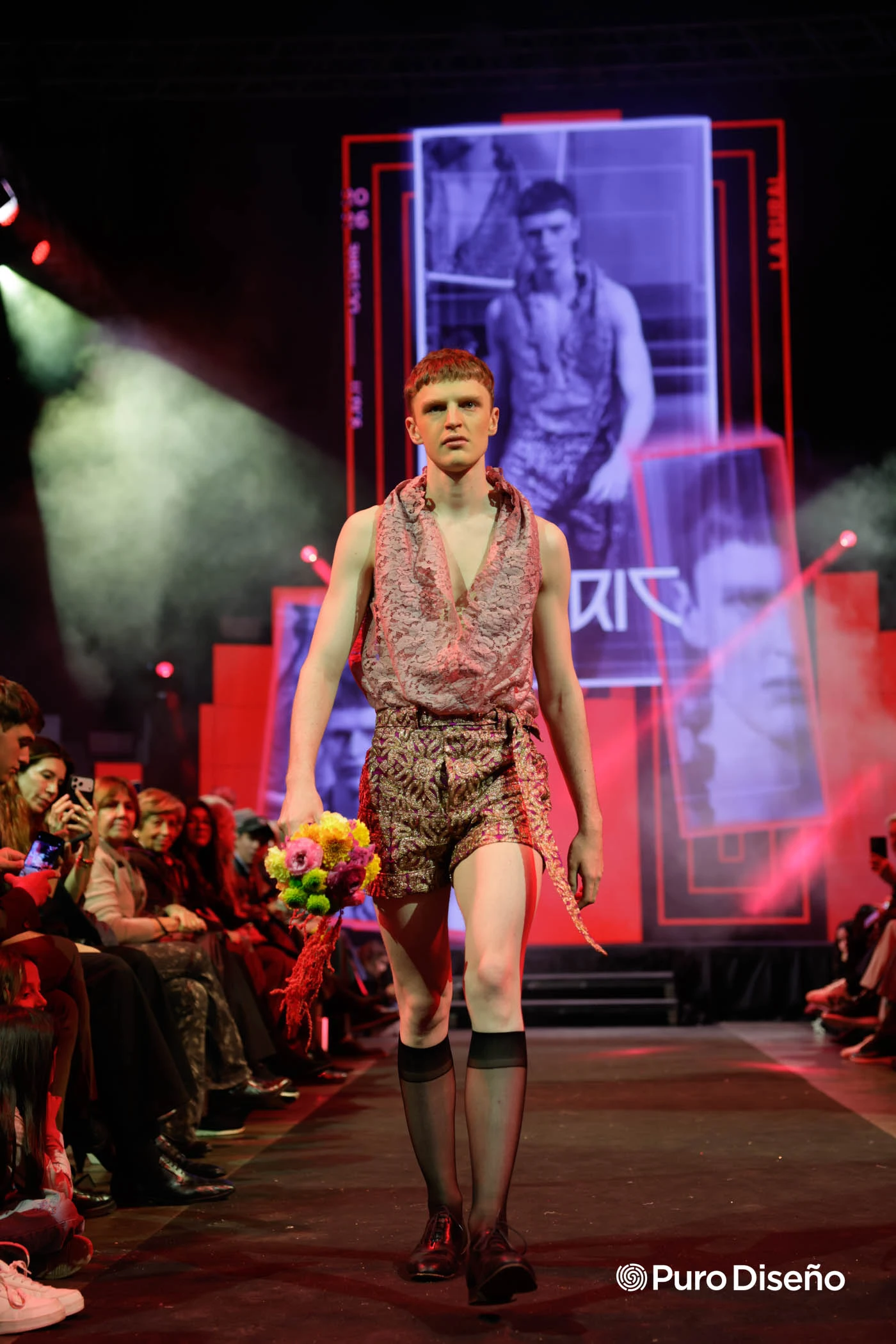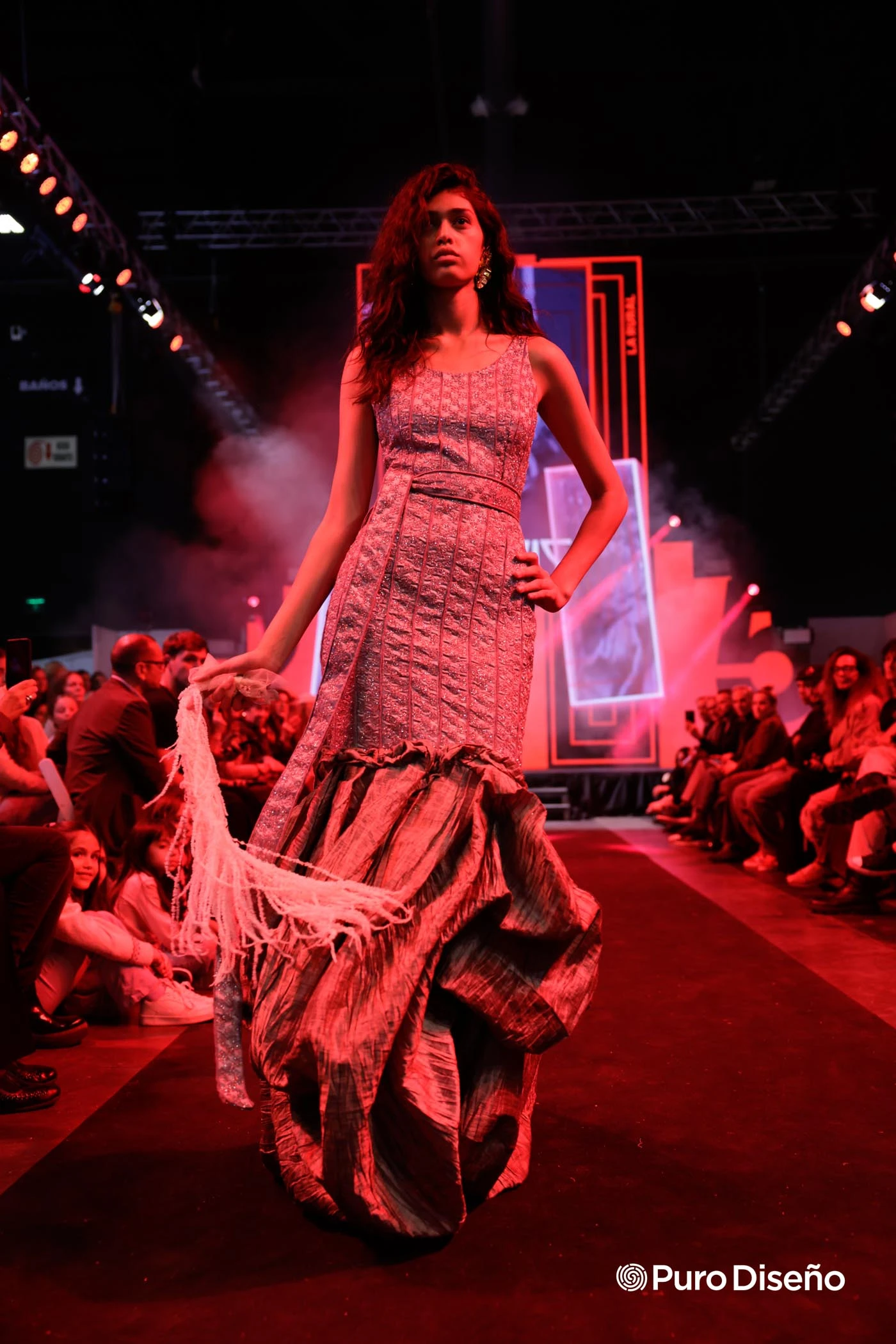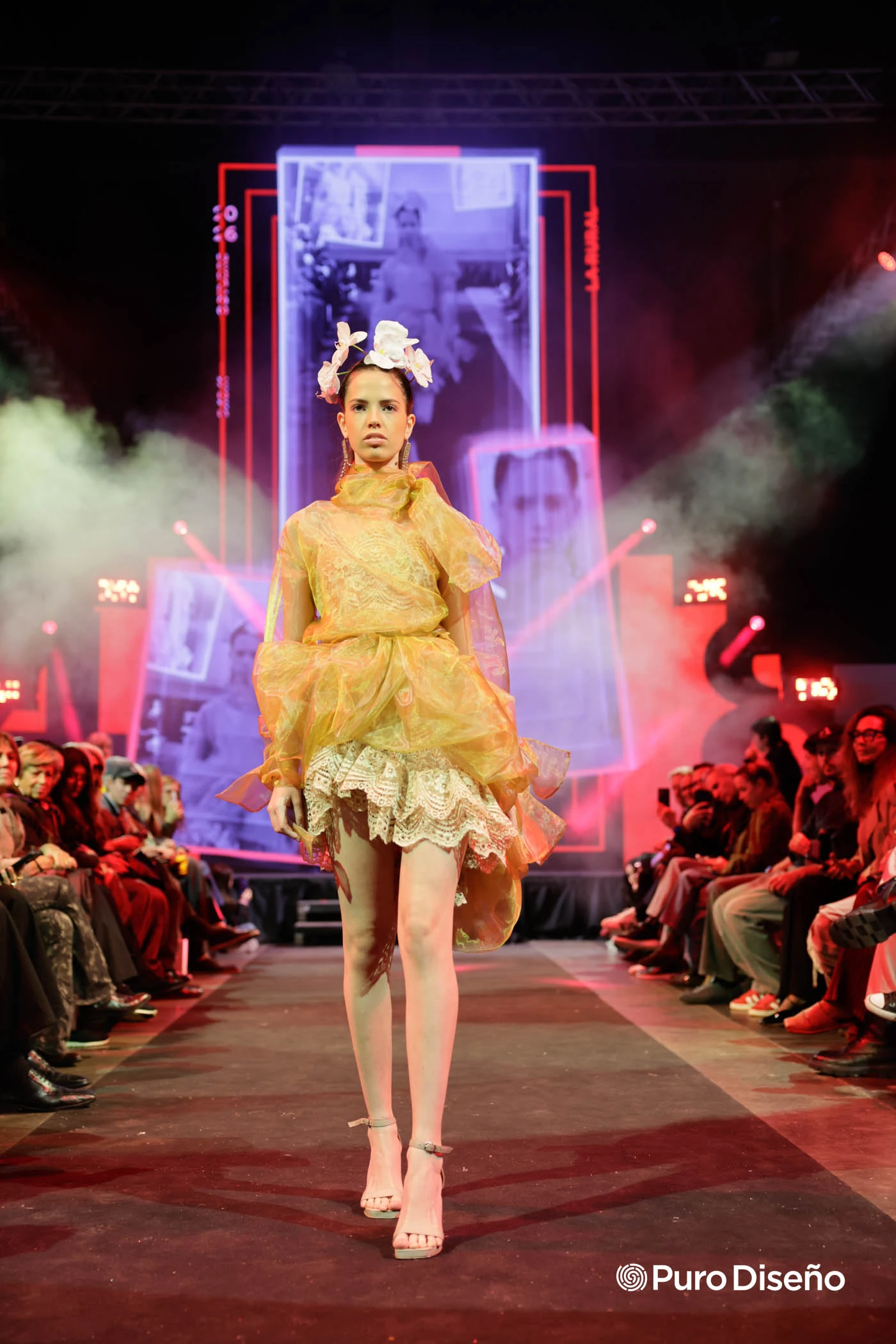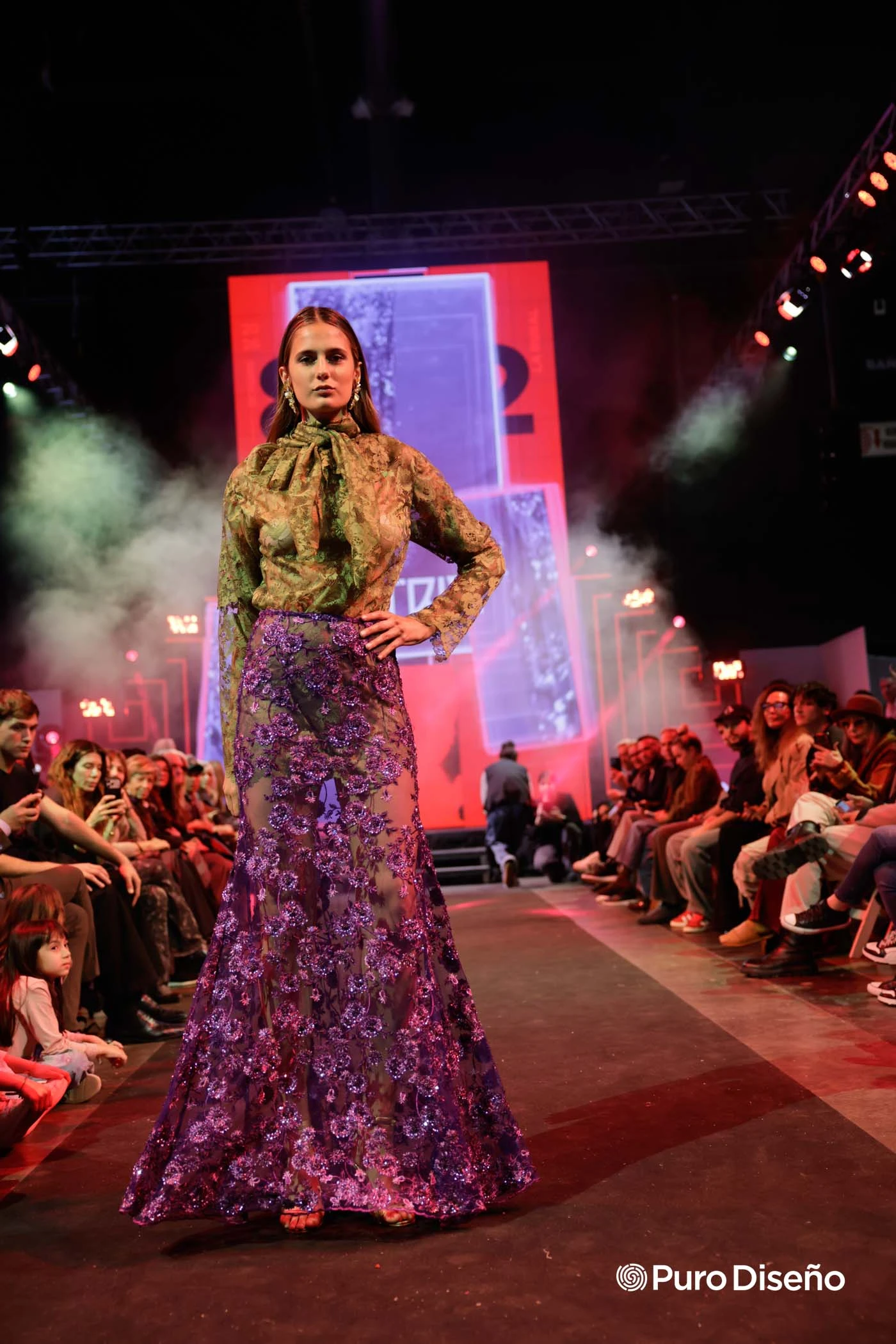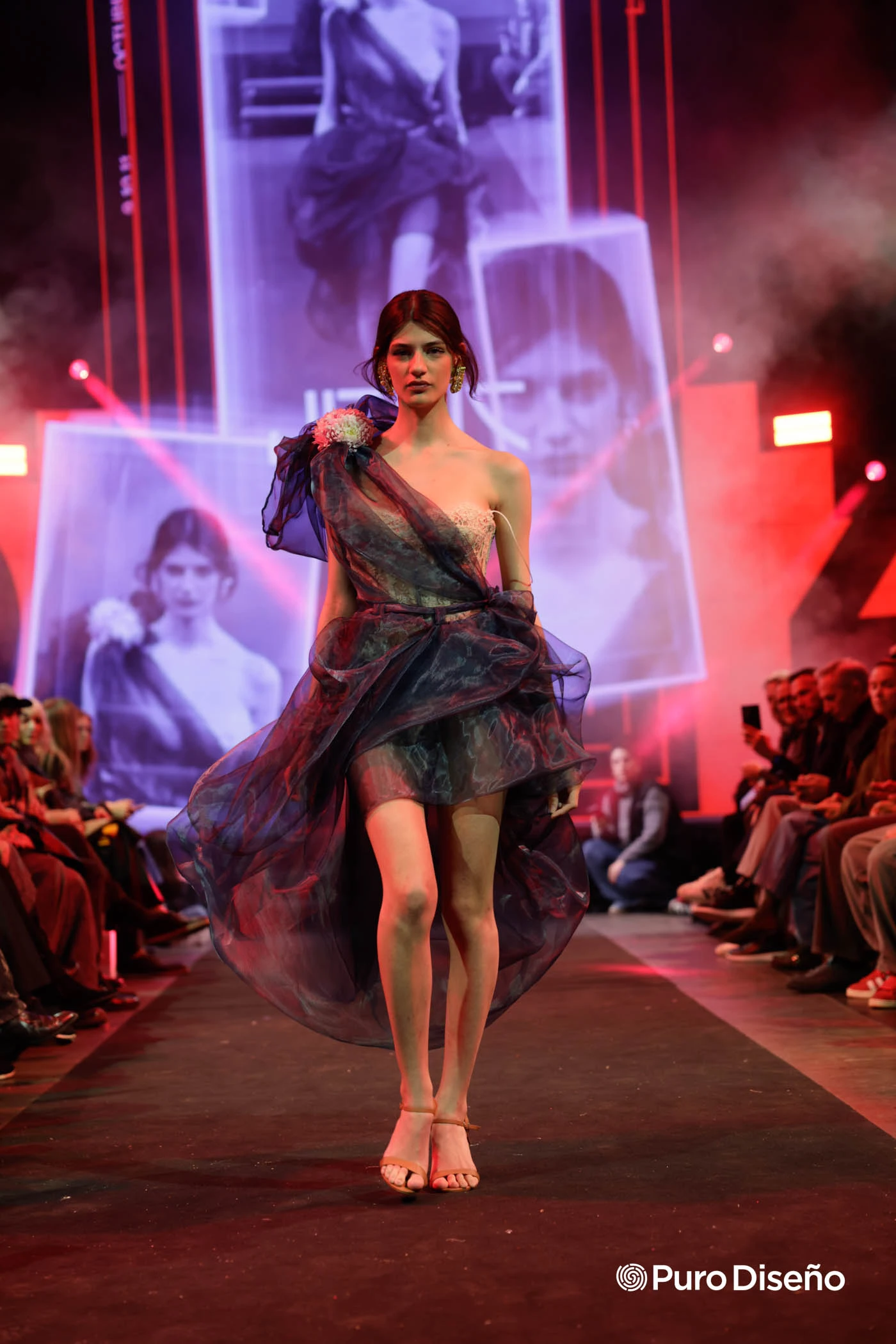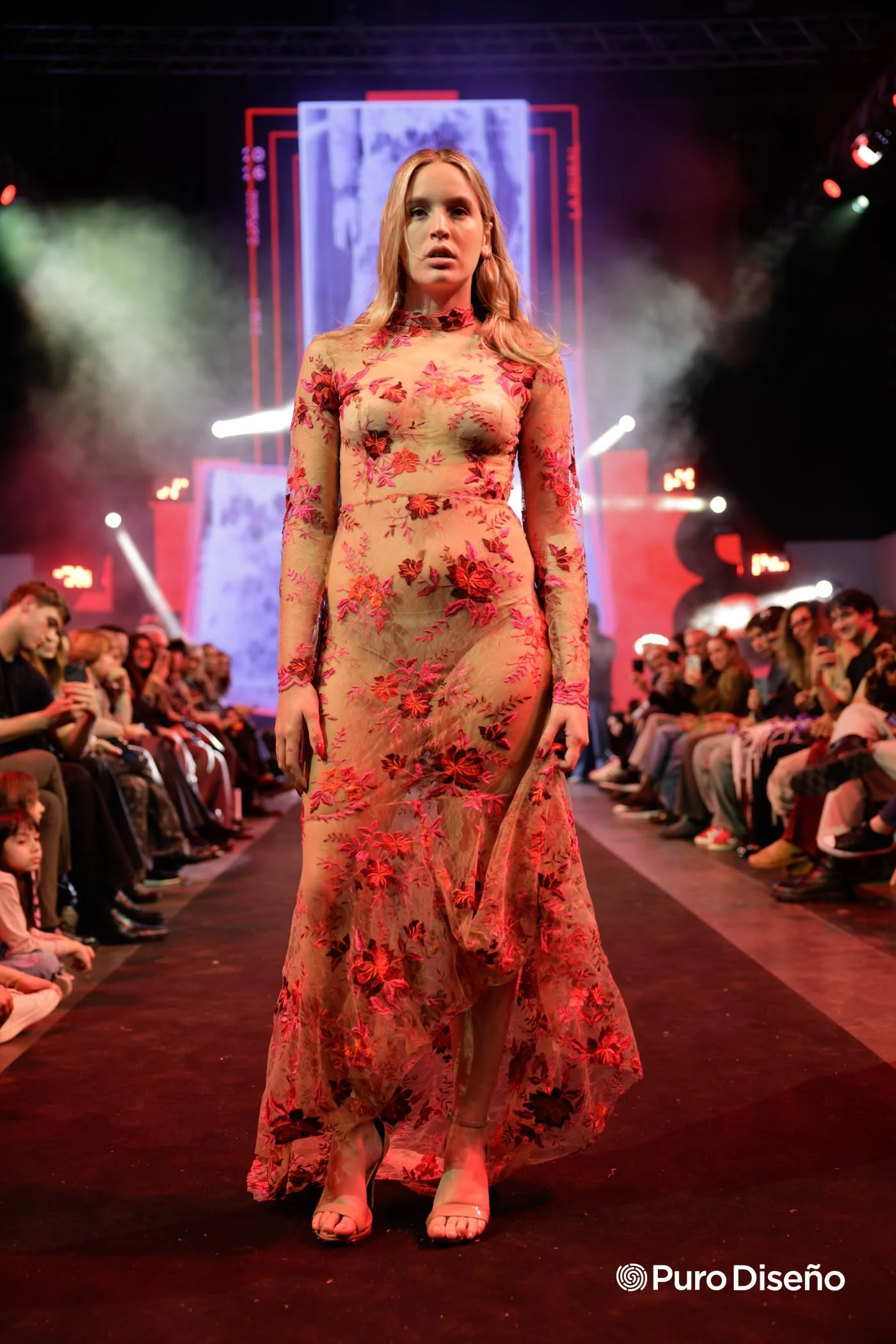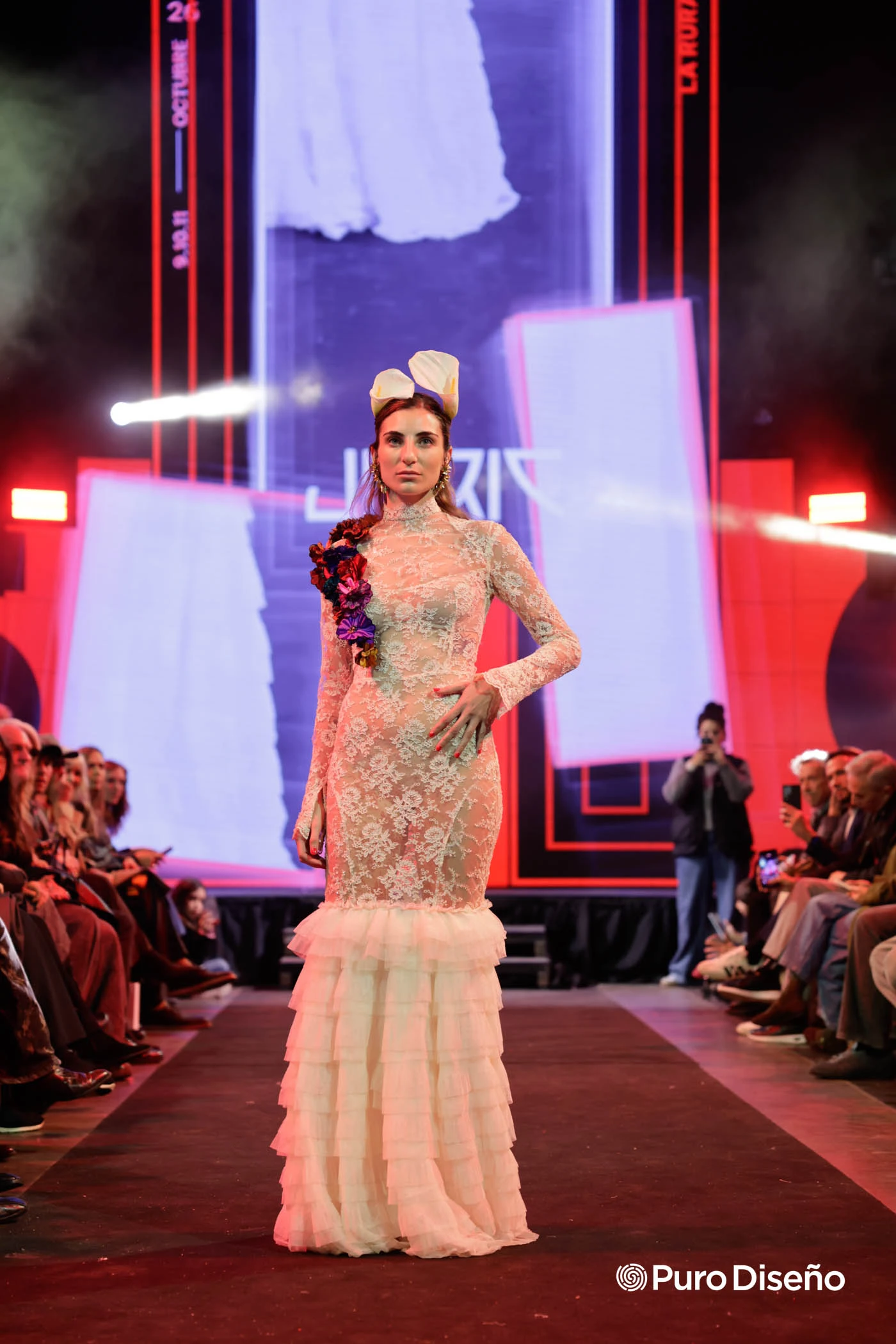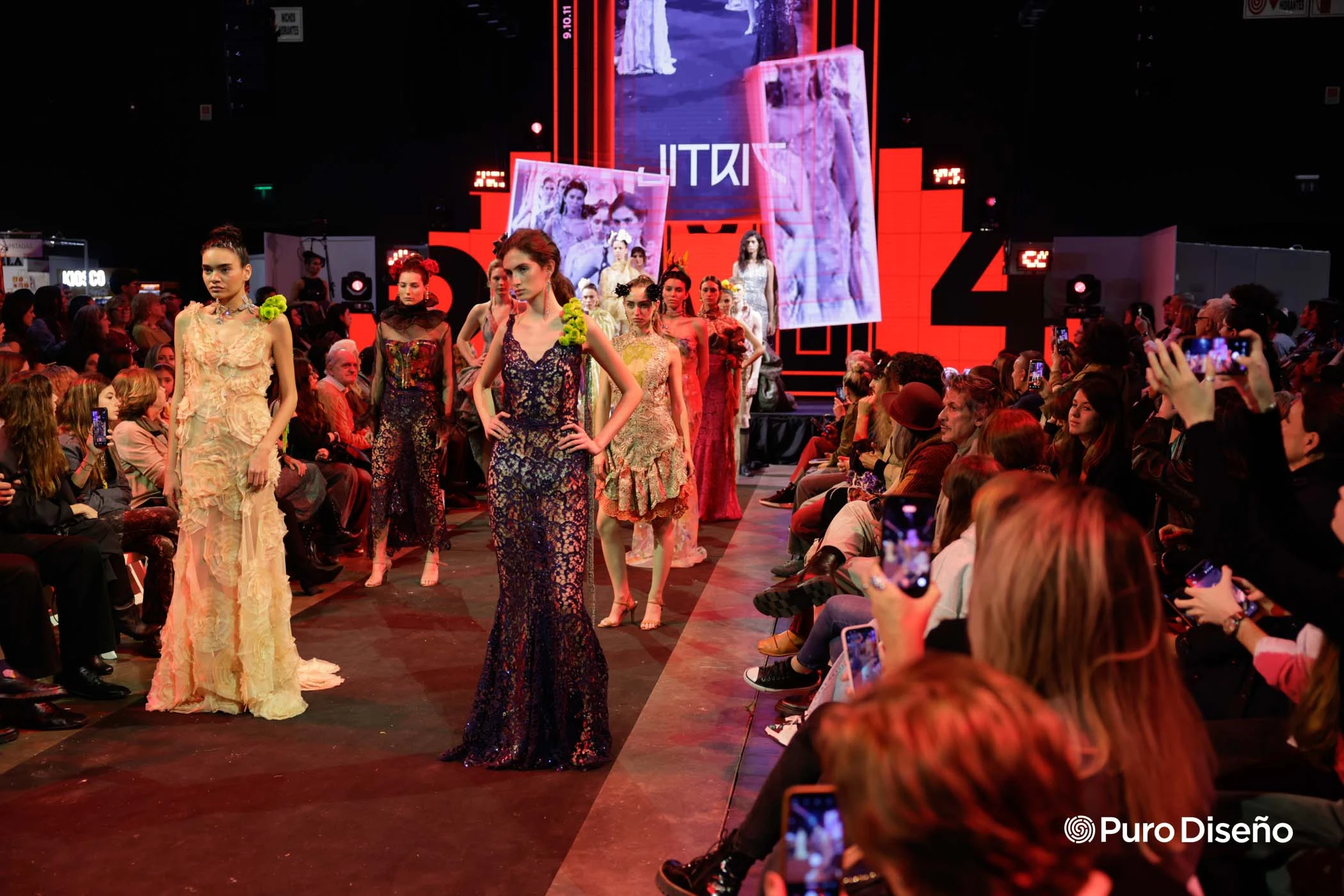
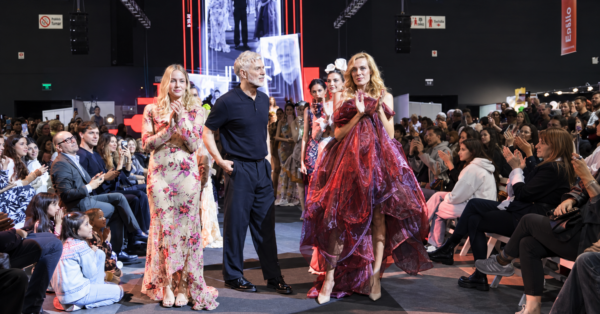
What would happen if wind could be transformed into a garment? That was the question Maximiliano Jitric seemed to answer with Anatomy of the Wind, one of the most poetic collections to grace the runway at the Puro Diseño Fair 2026.
Far from rigid forms, the designer imagined fashion in perpetual motion, where every fabric moved with the body naturally and each look conveyed the feeling of being alive.
Silhouettes that Transform with Every Step
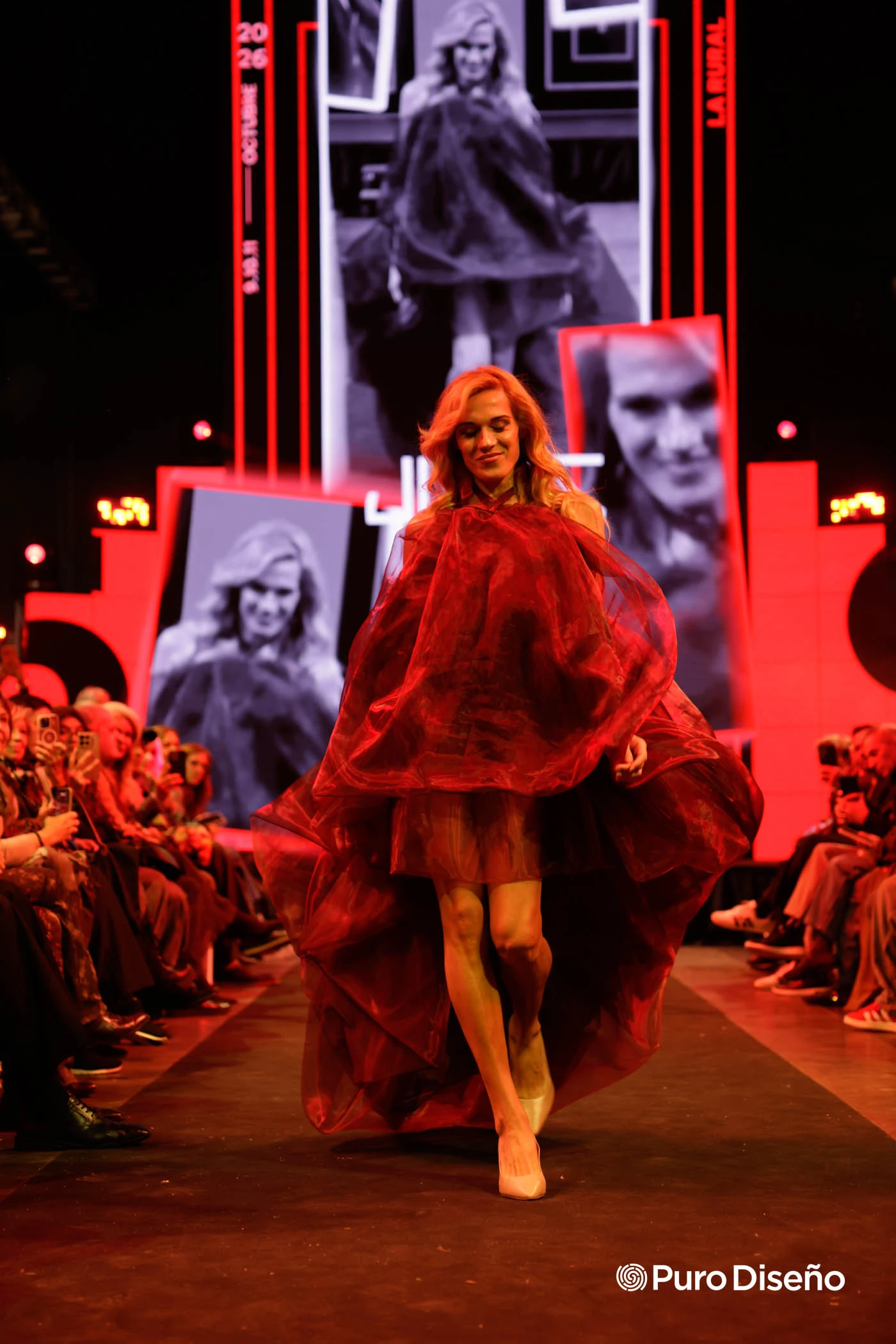
The collection explored the idea of constant movement. Structures appeared and disappeared through garments that, at times, defined the silhouette and, at other moments, barely hinted at it. Emphasized shoulders, prominent hips, and legs peeking through sheer fabrics built a dynamic, light, and sophisticated image.
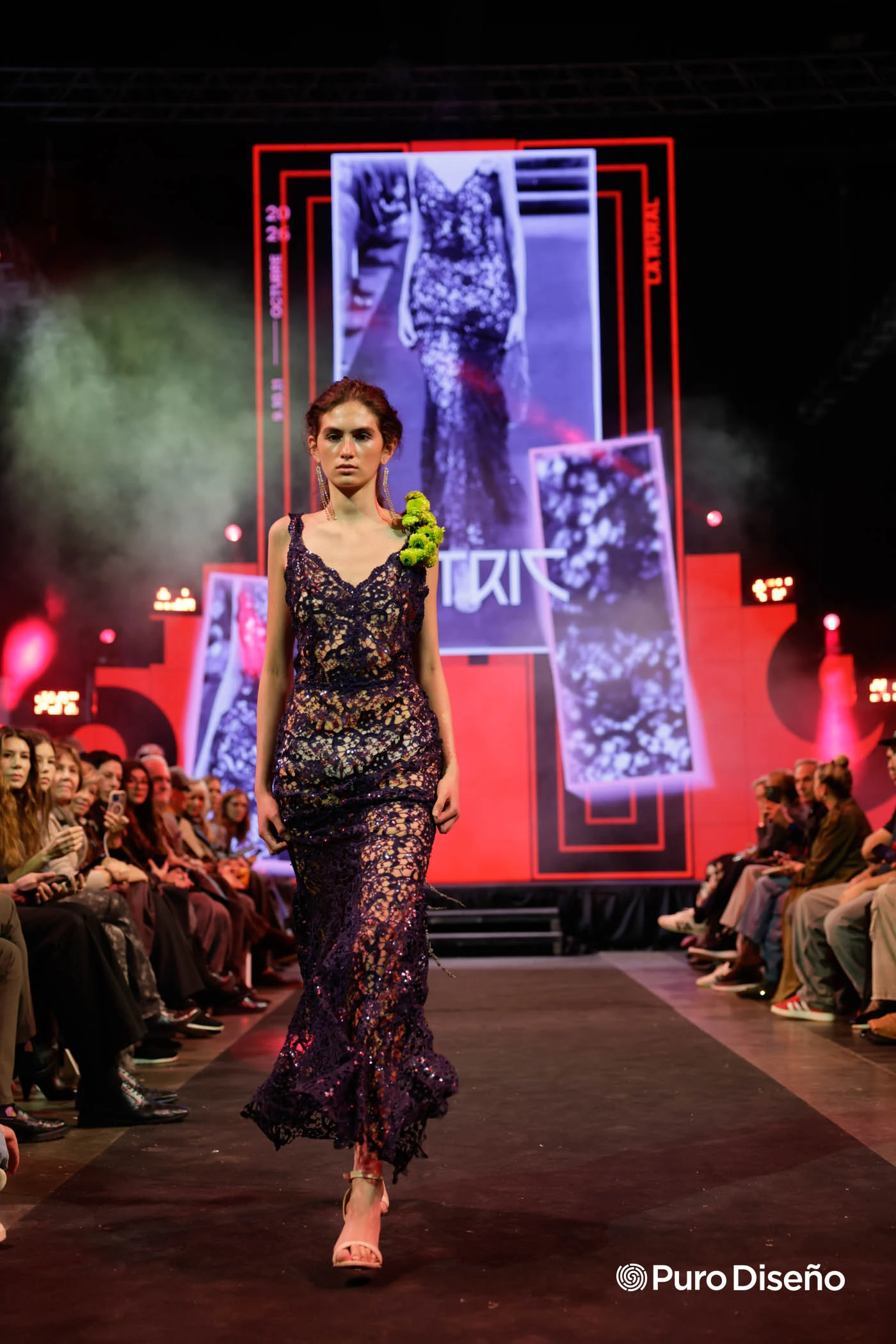
Nothing stayed still: each layer seemed to move with the stride, creating a sense of freedom that ran through the entire collection.
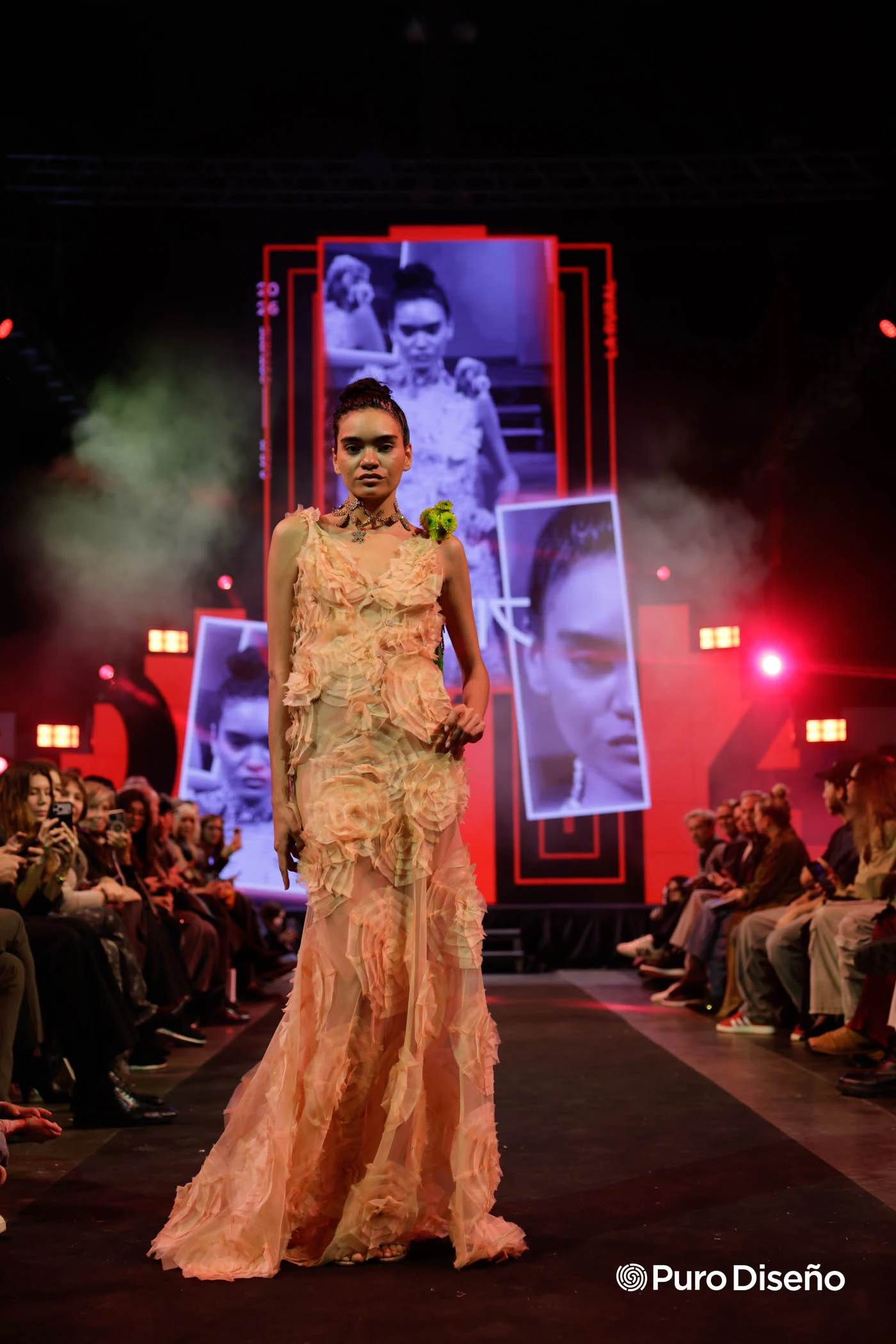
Transparency, Layers and a Burst of Color
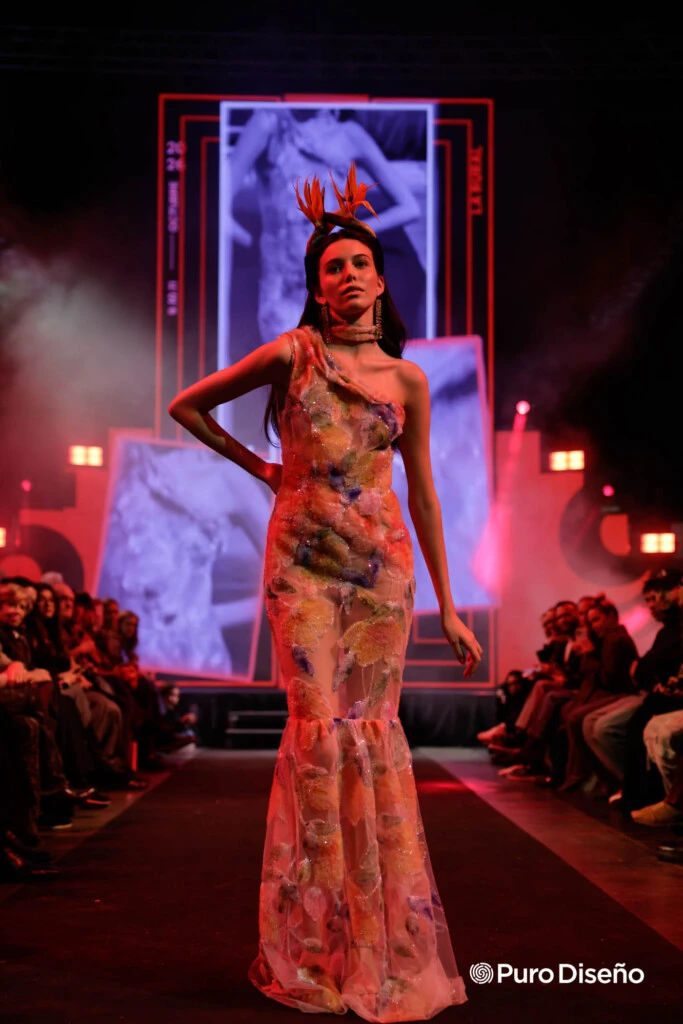
The gauzes, the embroidered tulles, the wild silk, and the layering were the resources chosen by Jitric to add depth and texture to each ensemble. The result was a delicate and enveloping visual game, where the garments seemed to float over the body.
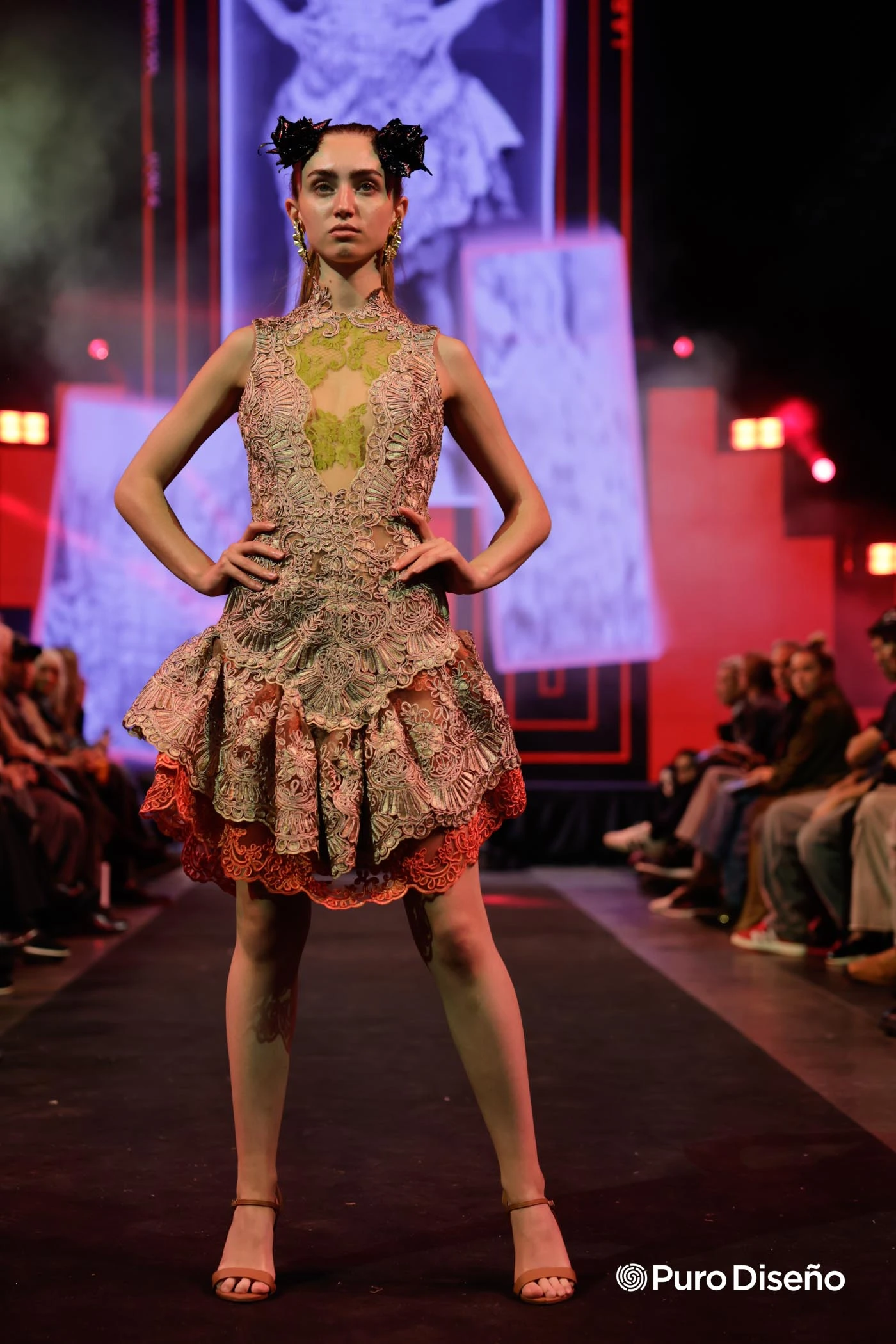
The palette began with an Indian-inspired print and unfolded a vibrant blend of violets, toasted reds, bright yellows, and deep greens—colors that injected energy into a collection designed to expand with whoever wears it.
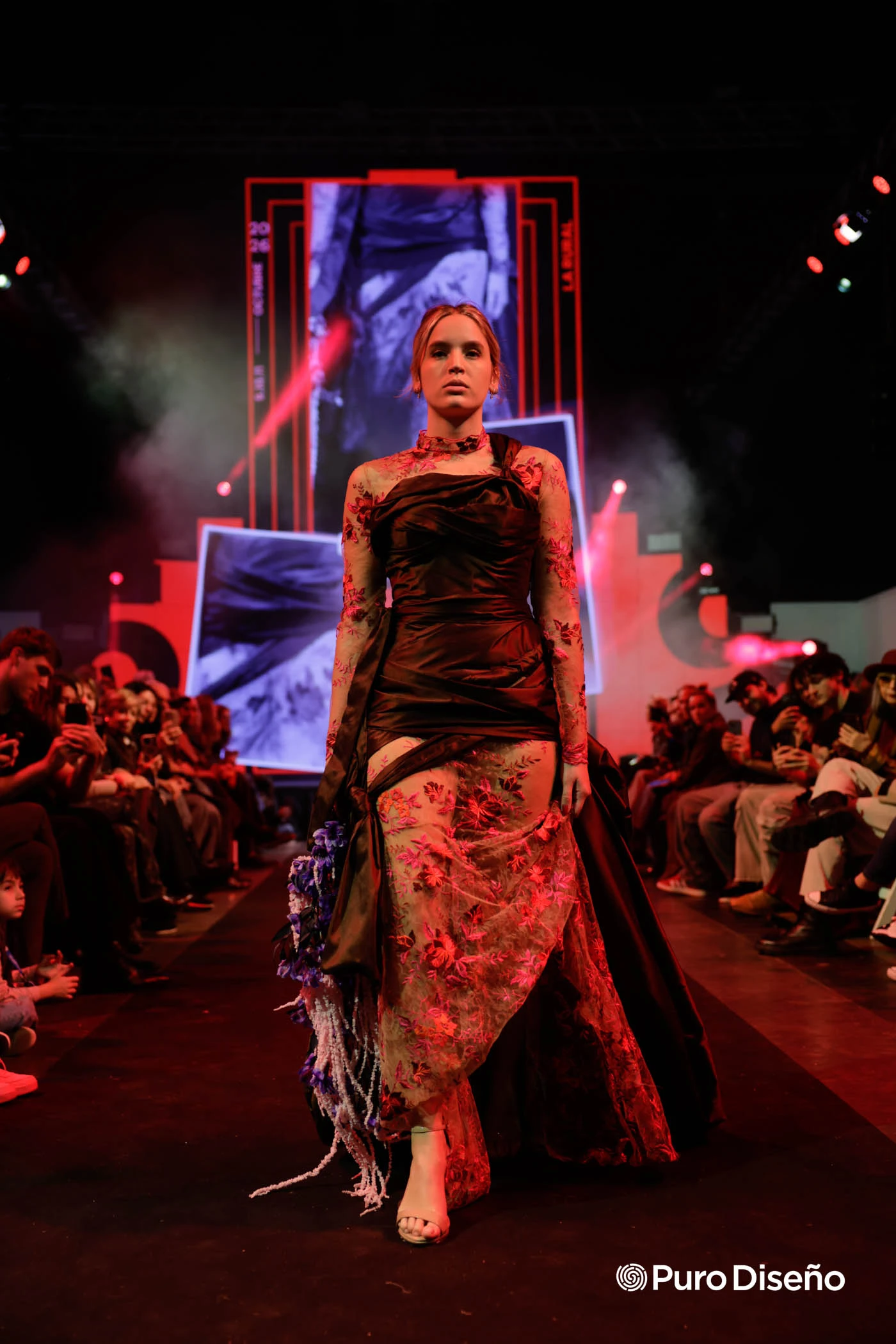
A Collection Designed to Reinvent Itself
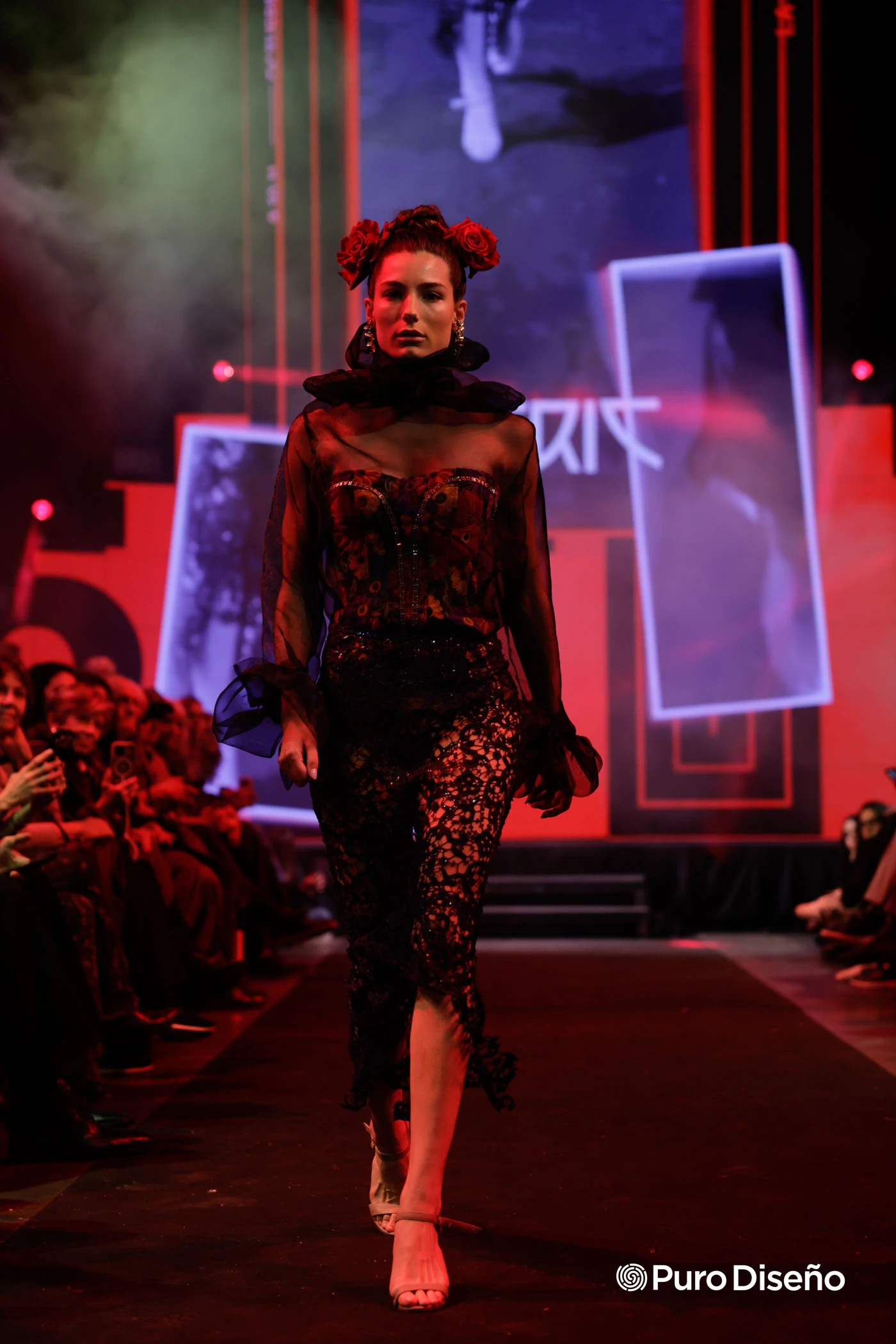
Beyond the runway, Anatomy of the Wind offered a versatile wardrobe. Each piece was designed to coordinate with the others, enabling multiple ways of wearing and new compositions arising from layering.
Floral Art Had a Prominent Place on the Runway
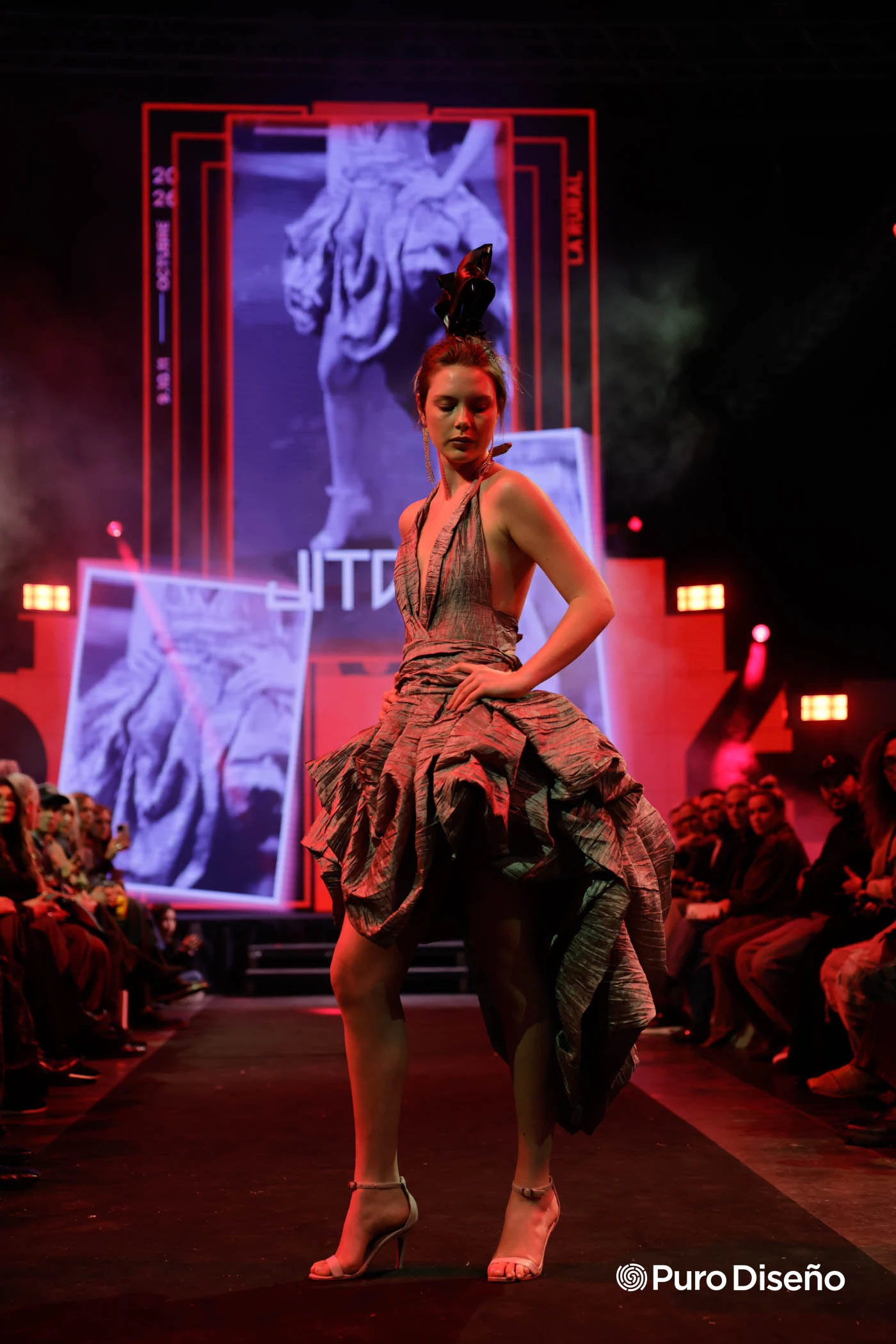
Beyond the garments, the headpieces and floral bouquets created by FlowVera were a central part of the staging. Each pass was accompanied by arrangements that added glamour, sophistication, and a delicate feminine imprint, reinforcing the collection’s creative concept.
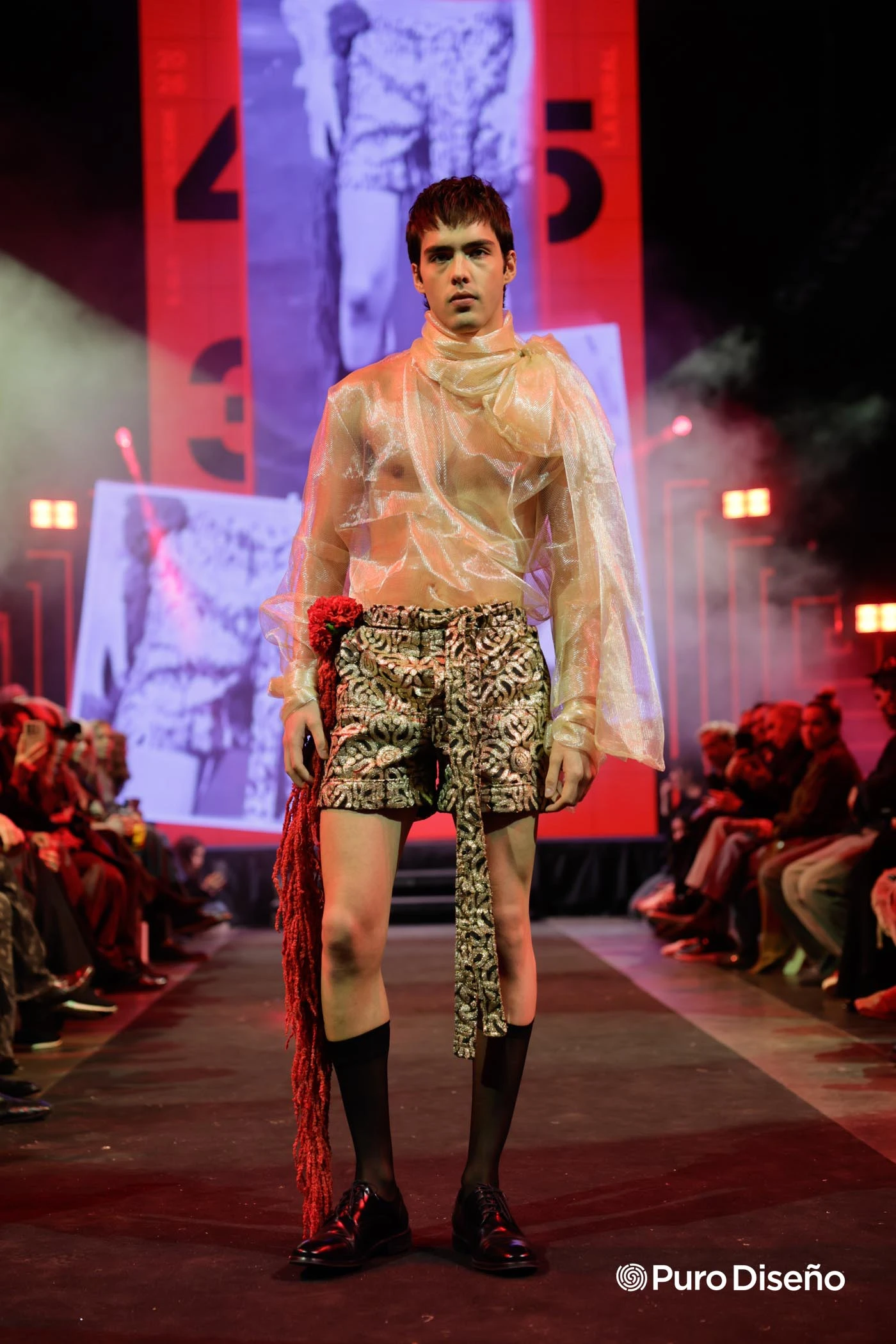
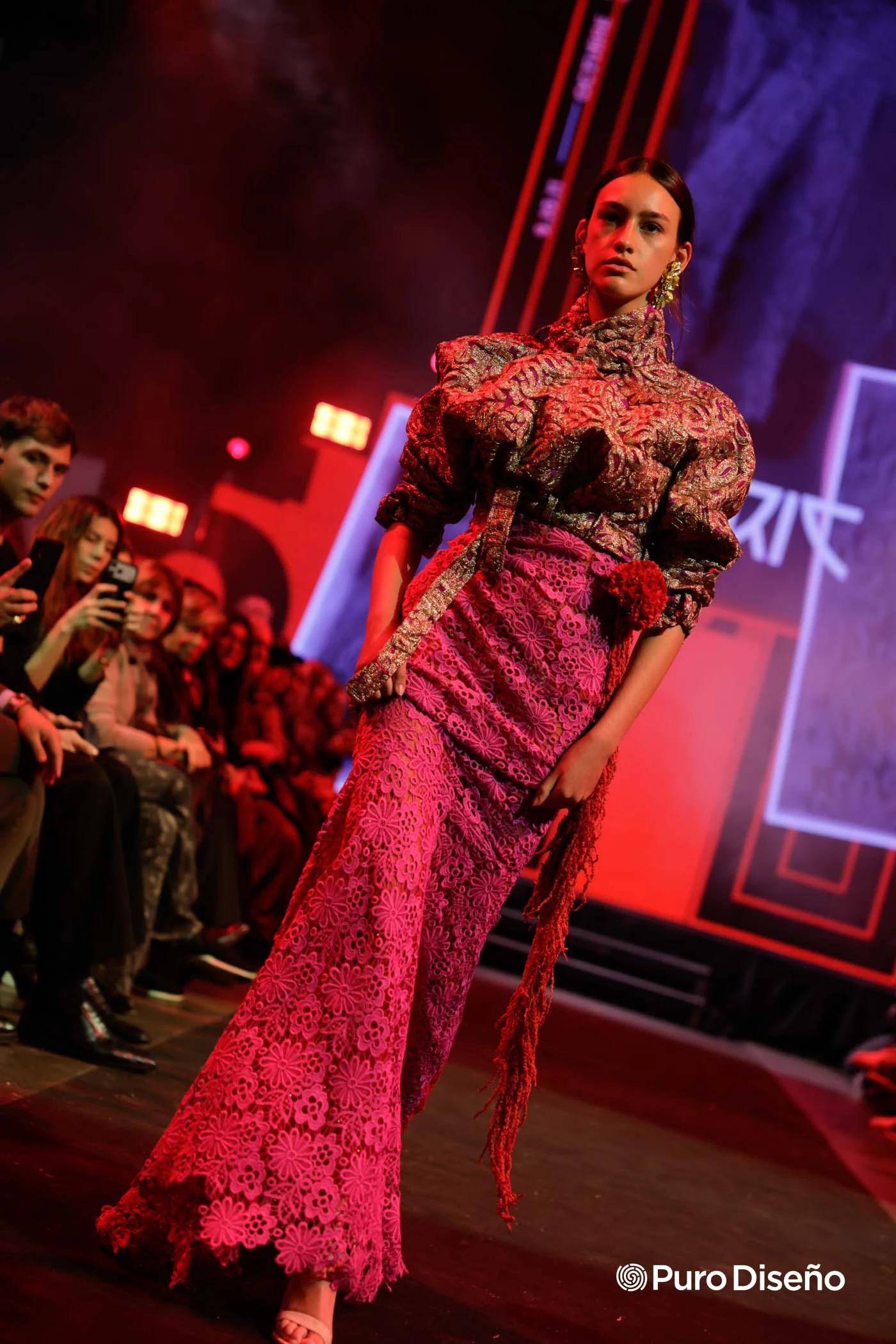
For these floral pieces, FlowVera worked mainly with seasonal and locally produced flowers, such as salvias, strelitzias, calla lilies, Santini chrysanthemums, and carnations (Dianthus). The proposal was completed with imported roses and amaranth, as well as Aspidistra leaves dyed and preserved with glycerin, also imported, which added texture, volume, and a sculptural effect to each headpiece and bouquet.
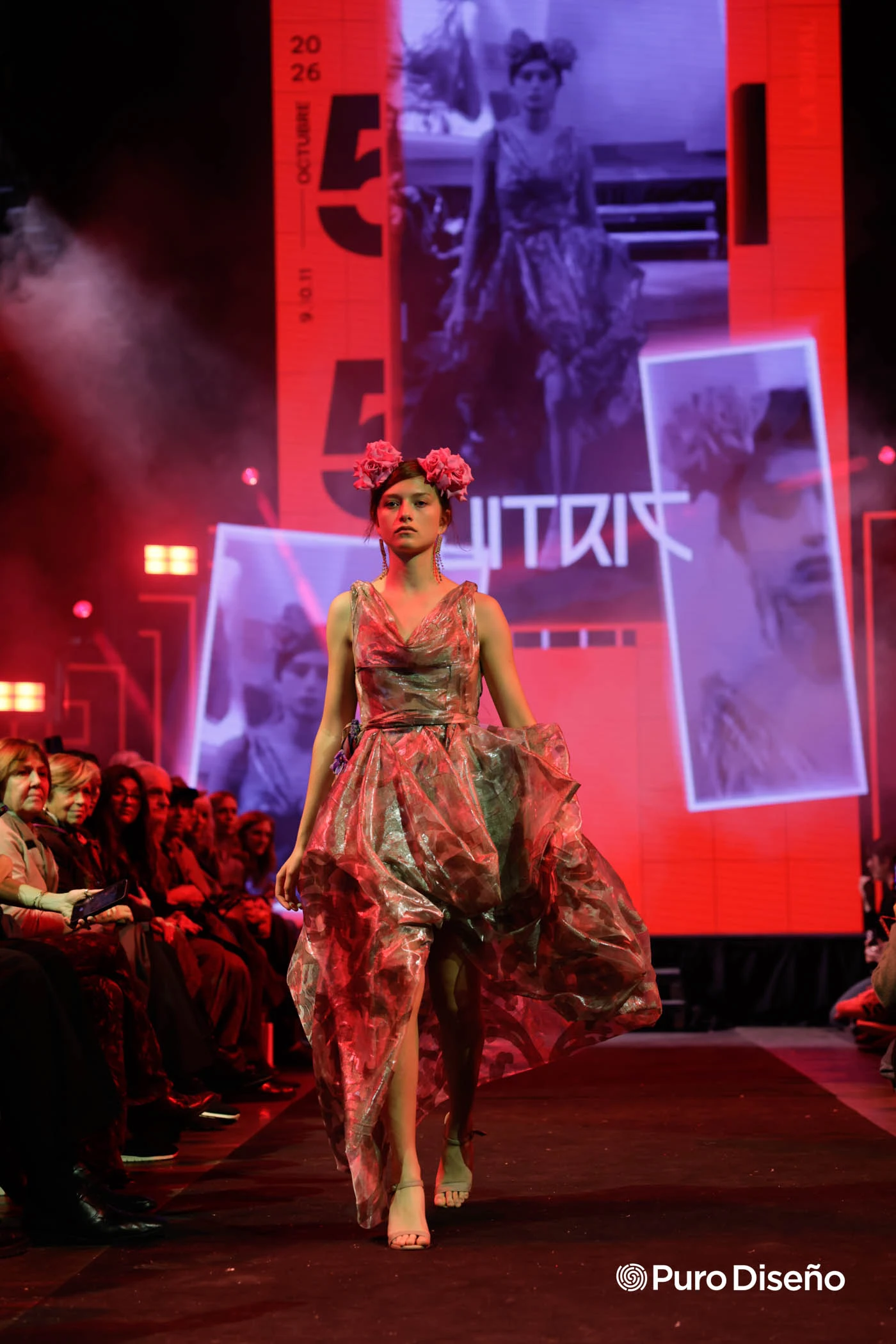
The result was a floral universe that dialogued with the runway designs and transformed the accessories into true works of art, accompanying each look with elegance, personality, and a deeply artisanal aesthetic.
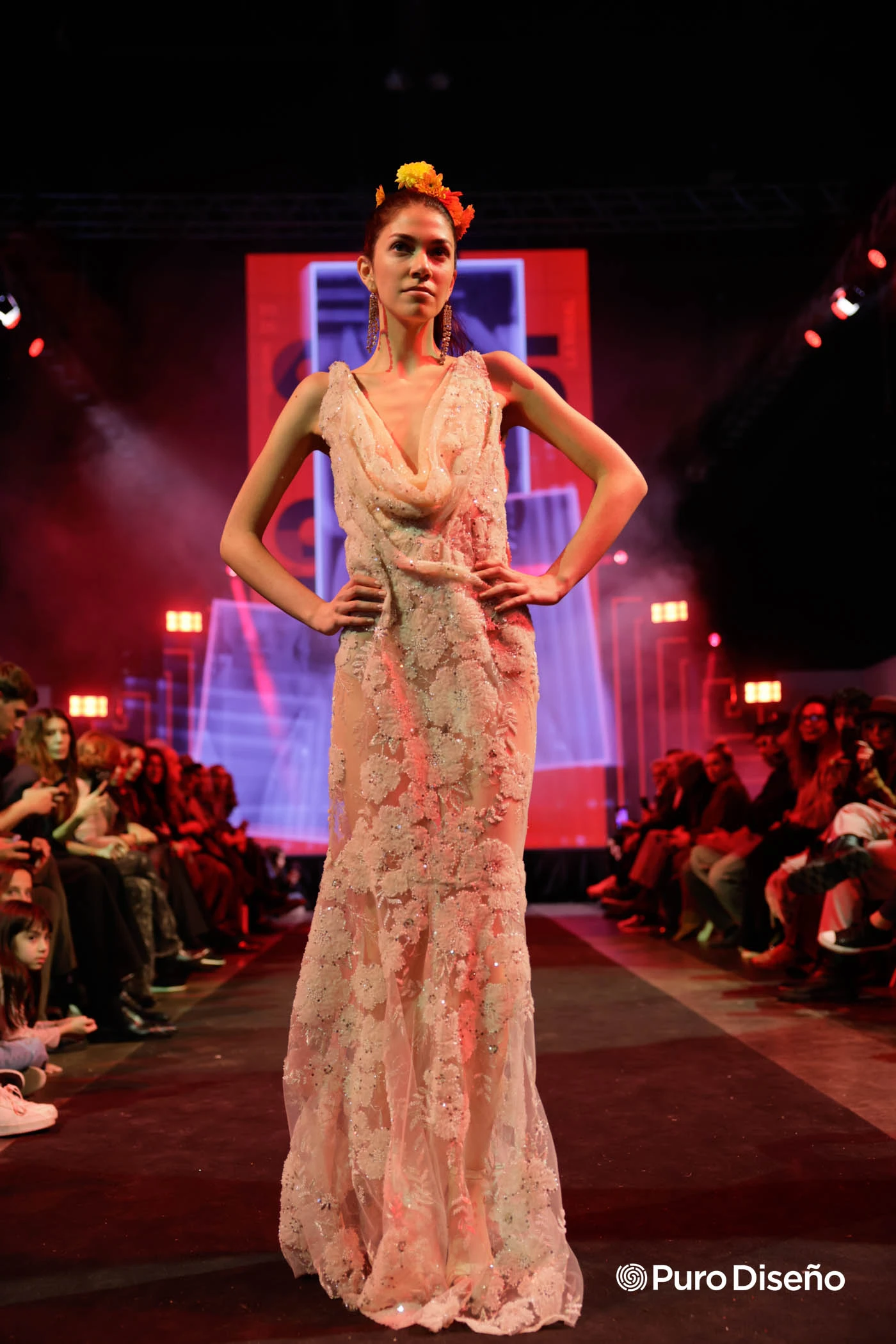
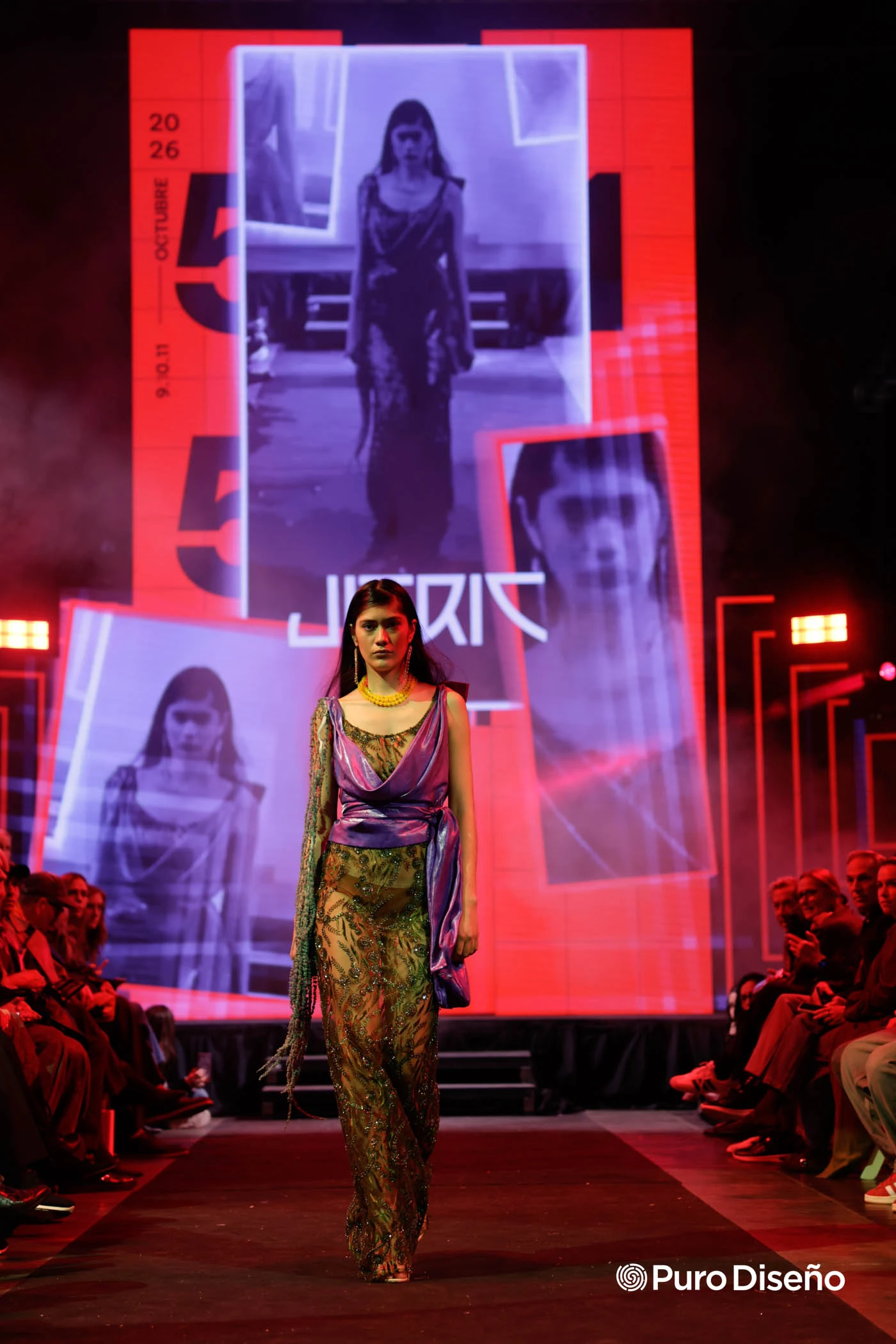
With this collection, Maximiliano Jitric again demonstrated his mastery of textile work and silhouette construction, offering a proposal where elegance did not lie in rigidity, but in movement. A fashion that flows, changes, and finds its true form when it comes into contact with the body.