
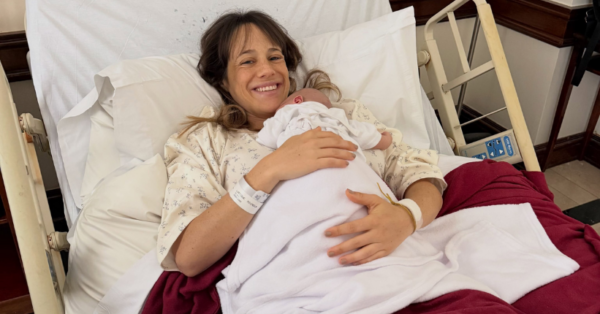
Just over a month after the birth of her first daughter, Mica Lapegüe gave an intimate interview to Infobae and spoke candidly about the emotional challenges of motherhood. The 33-year-old actress shared how she experiences the postpartum period, the impact of sleepless nights, and the importance of having the support of her partner, Tomás Bartolomé, during this new stage.
Mica became the mother of Delfina Bartolomé Lapegüe on September 19. Since then, she has shared various aspects of her family life, from the tenderest moments to those that involve greater emotional and physical effort.
In that context, the actress explained how accumulated fatigue influences her thoughts and the way she perceives daily life. “When you sleep poorly, or you can’t sleep through the night… your head starts racing, and you begin to think everything looks darker,” she stated.
Mica Lapegüe explained how fatigue affects the postpartum period
During the interview, Mica recalled that in her darkest days she wondered how she would be able to maintain the pace of raising a child if she kept sleeping so little. The lack of rest, she explained, could lead her to anticipate negative scenarios and feel uncertain about the future.
“Clearly we can handle it—more than we think we can—but at that moment it felt like… ‘How am I going to keep this up? For how long will this sleeping like this last?’ I started to think that way, then my thoughts settled and that was that,” she recounted about how she navigated those moments.
The actress also described the feeling that the days were becoming repetitive, especially during the time she spent at home with the baby.
“You start getting trapped in a cycle where every day is the same, I’m stuck at home, I don’t go out…,” she explained when referring to one of the difficulties she experienced during the postpartum period.
Amid those thoughts, Mica acknowledged that one of her main concerns was how she would manage to raise Delfina while adapting to the new demands of motherhood. However, she also found a perspective that helped her navigate that stage: thinking about her own mother and other women who faced similar challenges to care for their children.
The role of Tomás Bartolomé in this new phase
When talking about how she handles frustration and the emotions that arise during the postpartum period, Mica highlighted the role her partner, Tomás Bartolomé, plays, describing him as someone very involved in raising their daughter.
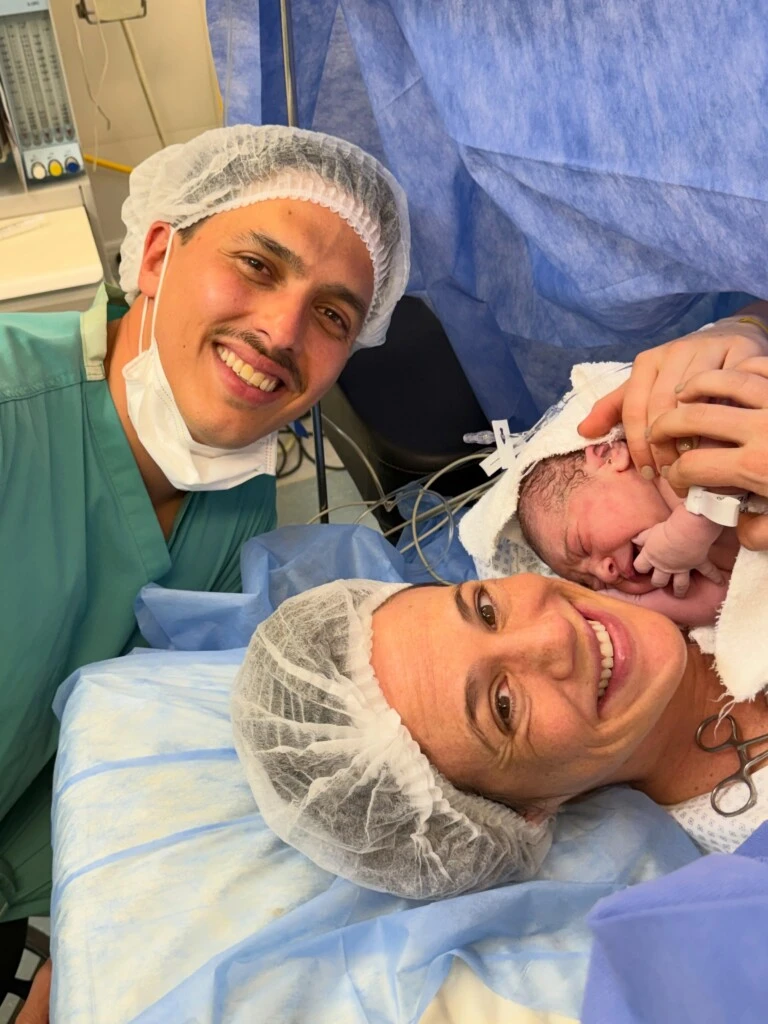
According to her account, one of the tools they found to cope with difficult moments is dialogue. When she feels overwhelmed, he invites her to express what she’s going through and to look for a way to resolve it together.
“’Let’s talk about it,’ he tells me. ‘What do you feel? What’s going on?’ He told me that I was doing well, that here we are a team. And well, I think that helped,” she recounted.
For Mica, being able to talk about her emotions and feel supported is important in a period of adjustment in which fatigue can influence mood and the perception of daily life.
The importance of talking about the postpartum period
By sharing her experience, Mica Lapegüe put into words some of the difficulties that can arise after the birth of a child. Her testimony showed that motherhood can also be marked by exhaustion, uncertainty, and the need to find new ways of organizing daily life.
In that process, the support of the partner and the ability to express what one feels can be valuable tools. Talking about the postpartum period from a personal experience also helps to make visible a phase that is not always lived easily and that deserves attention, understanding, and support.