
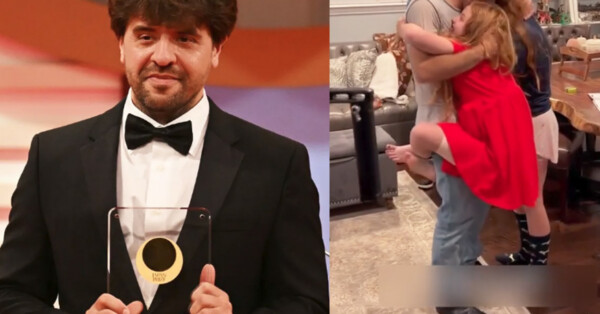
The Nobel Prize is usually surrounded by solemn announcements, scientific speeches, and international recognitions. However, for Karl Deisseroth, one of the winners of the Nobel Prize in Physiology or Medicine 2026, one of the most special moments happened inside his own home.
The American scientist gathered part of his family to tell them that he had just received one of the most important news of his career: he had won the Nobel. The reaction of his children was immediate, with shouts of surprise, hugs and an emotion that quickly went viral on social media.
Deisseroth, a professor of Bioengineering and of Psychiatry and Behavioral Sciences at Stanford University, was honored together with German researchers Peter Hegemann and Georg Nagel for their discoveries related to light-activated ion channels and optogenetics.
The Exciting Reaction of Karl Deisseroth’s Children
After receiving the call from Stockholm in the early hours of Monday, October 5, the scientist began a day he will hardly forget.
When his daughters Sophie, 10, and Emma, 13 learned the news, surprise quickly gave way to hugs. In the footage released by Stanford, one can see Deisseroth sharing the announcement with them and celebrating the recognition as a family.
One of the sweetest reactions came from Sophie, who summarized the magnitude of the moment with a spontaneous congratulations to her father.

His son Hudson, 16 was also informed of the prize and particularly highlighted the scientist’s dedication and enormous work capacity. Another of his children, Alexander, a first-year student at Stanford, rode his bike to the family home when he learned the news.
Deisseroth and his wife, the renowned neuroscientist Michelle Monje-Deisseroth, are parents of five children. She was also present during that historic early morning and recalled that, unlike her husband, she did not seem overly surprised by the recognition.
Karl Deisseroth Received the News in the Early Hours
The Nobel Committee call arrived around 12:27 a.m., California time, as Deisseroth had just gone to bed after working late.
The first call wasn’t answered by the researcher. Seconds later, his wife’s phone rang from Stockholm asking if they could speak with Karl.
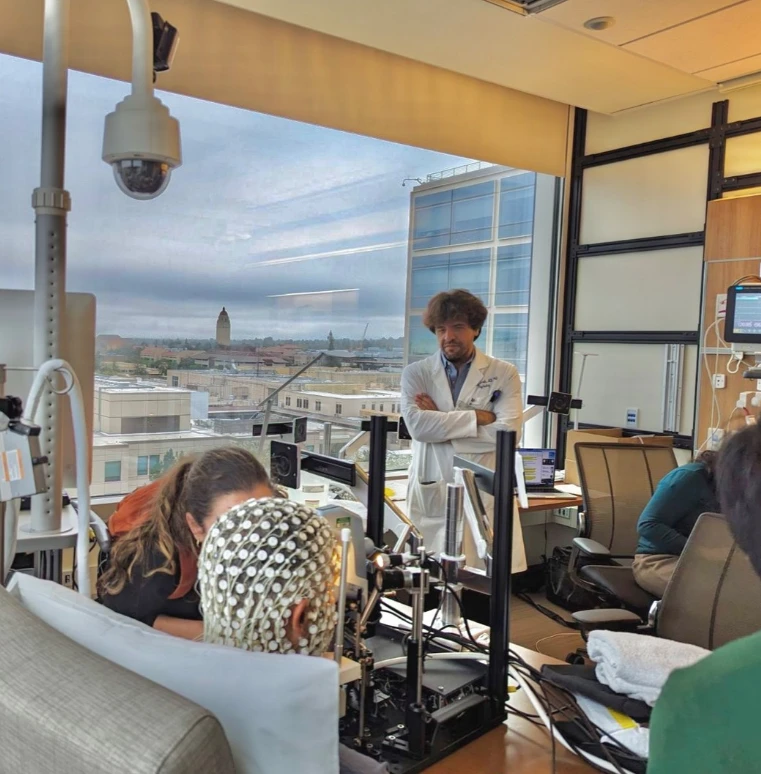
According to the scientist, he was so astonished by the news that for a few seconds he even had trouble finding the words.
From there began a night filled with calls, interviews, and congratulations. But even after receiving one of the world’s most prestigious scientific awards, the family routine continued: the newly minted Nobel laureate also prepared his children’s lunch before they went to school.
Por qué Karl Deisseroth ganó el Nobel de Medicina 2026
The Nobel Prize in Physiology or Medicine 2026 was awarded to Karl Deisseroth, Peter Hegemann and Georg Nagel for their discoveries related to light-controlled ion channels and the development of optogenetics.
This technique enables using light to activate or deactivate specific nerve cells and study with great precision their function within the brain. The tool transformed neuroscience research by allowing analysis of which neurons participate in processes related to behavior, memories, emotions, and various brain functions.
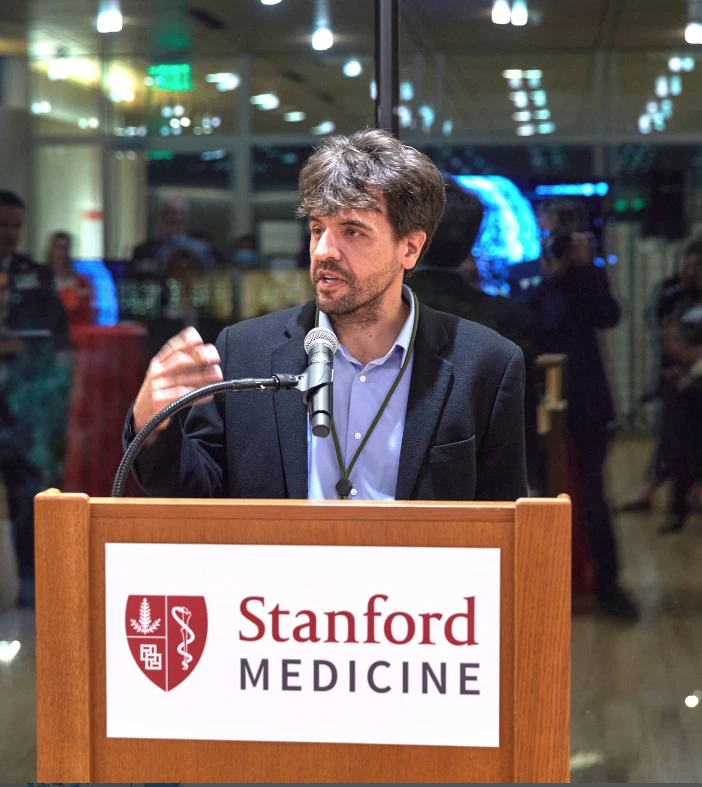
The starting point lay in light-sensitive proteins called channelrhodopsins, found in microorganisms such as certain unicellular algae.
The researchers managed to turn these proteins into something like a biological switch: through light stimuli, it is possible to control the activity of specific nerve cells.
What Is Optogenetics and Why It Revolutionized Neuroscience
Optogenetics combines genetic and optical tools to study and manipulate the activity of specific cells.
Thanks to this technique, scientists can analyze brain circuits with a precision that was previously very difficult to achieve. Its development allowed advances in understanding how certain neurons participate in functions such as memory, emotions, or various behaviors.
It also opened new lines of research related to neurological and psychiatric diseases, as well as experimental applications aimed at restoring certain sensory functions.
The Nobel Committee’s recognition thus brought to the forefront decades of research that changed the way the brain is studied.
But far from the laboratories and the ceremonies, the early images of the day showed another side of the historic recognition: a father informing his children that he had just won the Nobel and a family responding with surprise, cheers, and a big hug.