

Skin can look more dull, lifeless, or with more pronounced expression lines after periods of little rest, stress, or routine changes. But behind what we often call “tired skin” there can also be other factors, ranging from a disruption of the skin barrier to accumulated sun damage.
At the same time, social media amplifies skincare trends and routines that promise to improve the skin’s appearance, from practices like the slugging to the so‑called facial tape to smooth wrinkles. What actually works and what is merely a trend?
To answer these questions, For You consulted Dr. Julieta Picos (MN 134.767), aesthetic dermatologist, who emphasizes something that is often neglected amid the abundance of products: understanding the needs of each skin and choosing a simple, consistent routine grounded in evidence.
“My first recommendation isn’t usually to add ten products”
-What does it really mean to have “tired skin” from a dermatological perspective?
-“Tired skin” isn’t a dermatological diagnosis in itself, but a way to describe skin that looks less radiant, duller, with less uniformity and, often, with transient signs such as dark circles, puffiness or more pronounced expression lines.
The appearance of the skin can be heavily influenced by daily factors. Sleep deprivation, for example, can affect hydration, barrier function and some parameters related to the skin’s appearance and radiance.

Stress, environmental changes, a routine that’s too harsh or unsuitable for our skin type, and of course, accumulated sun exposure also play a role.
Therefore, when someone asks me about feeling “dull skin,” my first recommendation isn’t usually to add ten products. I first try to understand what’s happening with that skin. For me, that diagnosis is far more important than following a trend.
“Repeated sun exposure over the years causes changes in collagen”
-We often think that spots and expression lines are simply part of aging. How much does chronological aging really matter, and how much is accumulated sun damage?
-There is a combination of both processes. There is chronological aging, which is physiological and inevitable, but atop it sits extrinsic aging, and within this, the sun plays a fundamental role.
Photoaging is cumulative: repeated sun exposure over the years generates alterations in collagen, elastin, and other skin components. Clinically it can present as wrinkles, texture changes, spots, elasticity variations, and an uneven skin tone.
A hallmark that often directs us toward photoaging is precisely the combination of spots, irregular texture, loss of elasticity, and wrinkles, especially in areas chronically exposed to the sun.
And there’s an important point: sun damage doesn’t begin the day the spots appear. It is a cumulative process that can remain silent for years. That’s why photoprotection shouldn’t start when the first signs of aging appear, but in early childhood.
“We must think about reducing accumulated exposure”
-From what moment does sun damage begin to become visible? Beyond burns, what silent changes can appear and which photoprotection habits truly have a long-term impact?
-There is no exact age from which we can say “the sun damage starts now.” UV radiation causes damage from the very first exposures and this accumulates over a lifetime. The visible signs appear later, when that accumulated damage begins to express clinically.
Besides burns, there can be pigmentary alterations, texture changes, progressive loss of elasticity and wrinkles, and cellular changes that aren’t visible to the naked eye and that, over time, may promote the appearance of precancerous lesions and skin cancer.
This does not mean that every sun exposure will cause cancer, but the accumulated exposure and burns—especially during childhood and adolescence—do increase risk. That’s why photoprotection should also be regarded as a measure to prevent skin cancer, not only an aesthetic strategy.

For me, effective photoprotection isn’t just about applying sunscreen at the beach. It’s a daily habit: use a broad-spectrum sunscreen with SPF 30 or higher, apply it in a sufficient amount, and reapply as appropriate, especially if you’re outdoors, sweating, or getting wet.
Physical measures are also important, such as shade, clothing, hats, and sunglasses. And in people prone to spots or melasma, we can also consider protection against visible light, especially certain wavelengths of the blue‑violet spectrum, where tinted photoprotectors may play an important role.
My message would be: you shouldn’t think only about avoiding burns; you should think about reducing accumulated exposure.
“A routine shouldn’t be built from what’s trendy”
-On social networks, trends like slugging or the so‑called “facial tape” to prevent or smooth wrinkles appear constantly. How true are these practices?
-I think this is a good example of why we shouldn’t automatically adopt everything we see online.
The slugging, which involves applying an occlusive layer, usually petroleum jelly, as the last step of the routine, can be useful in certain cases because it reduces water loss and helps maintain the skin barrier. It might make sense, for example, in people with very dry skin or with certain barrier alterations, but it does not mean it’s necessary for everyone.
In oily or acne‑prone skin, too occlusive a layer can be uncomfortable and even promote breakouts.
Regarding the facial tape, the idea is to temporarily limit the movement of certain muscles and, in that way, attempt to soften some expression linesn. It can create a transient sense of smoother skin, but we should not confuse that effect with a treatment capable of reversing skin aging.
I don’t consider that the tape can replace evidence-based measures that prevent skin aging, nor dermatological procedures specifically aimed at treating wrinkles.

In general, before adopting a viral trend I ask myself two very simple questions: what problem am I trying to solve? and is there evidence that this method actually resolves it?
Because a routine shouldn’t be built from what’s fashionable, but from what our skin needs and what’s proven to work.
“We don’t need ten steps to take care of our skin”
-If you had to craft a basic skincare routine for someone who wants to improve their skin without endless steps, what would be the truly essential steps?
-I’m a strong advocate of simple routines. An effective routine doesn’t have to be lengthy. For someone without a specific dermatological condition, I’d focus on three pillars:
1. Cleansing: a cleanser suitable for the skin type, without being harsh or leaving a tight feeling.
2. Moisturizing: a moisturizer appropriate for the skin’s needs. Maintaining a good barrier function is essential, and hydration can also temporarily improve the appearance of fine lines and radiance.
3. Photoprotection: probably the most important step of all when we talk about preventing photoaging. A broad-spectrum sunscreen with SPF 30 or higher, used consistently.
After that we can add active ingredients according to the goal. Just as examples: retinoids have evidence for improving texture, fine lines, and certain pigmentary changes, while vitamin C can be useful in specific regimens to treat photoaging and spots.
But there is one thing I always emphasize: not every active works for everyone. The concentration, formulation, frequency of use, and, above all, the skin’s diagnosis matter.
We don’t need ten steps to care for our skin. We need to understand what it needs, choose evidence-based products, and be consistent. For me, that’s the difference between a routine that’s merely fashionable and a dermatologically grounded routine.
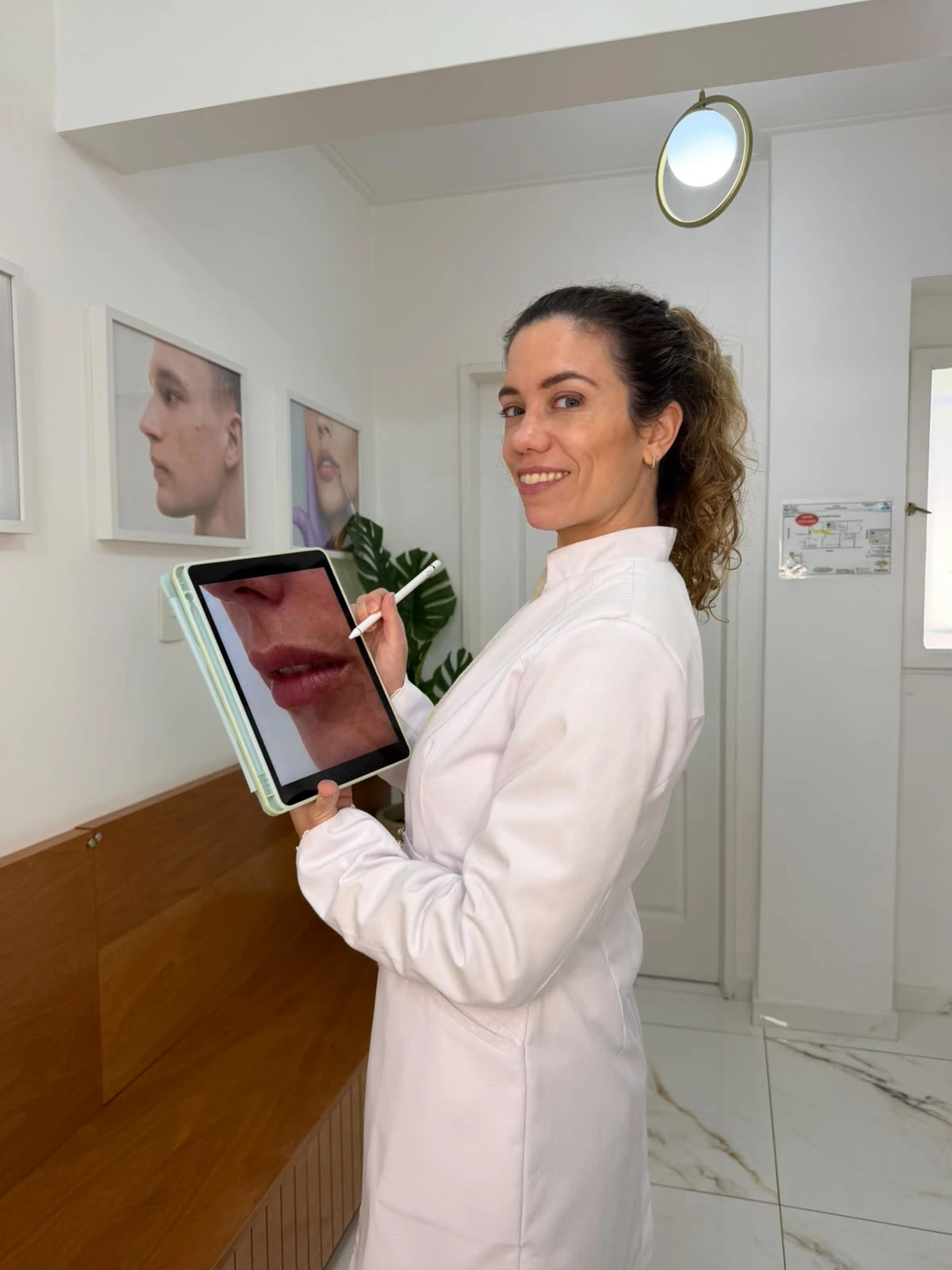
Dr. Julieta Picos, Aesthetic Dermatologist, MN 134.767 @drajulietapicos