
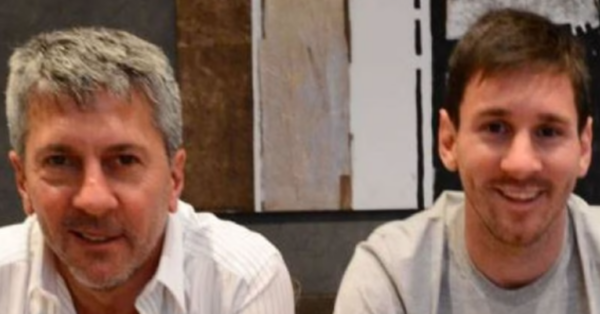
There are stories that become known only after the person who starred in them is no longer here to tell them. Something like that is happening now with Jorge Messi.
After the letter in which Lionel Messi publicly bid farewell to his father, testimonies began to surface about a man who, for years, did a lot without seeking recognition. One of them unfolds at a hospital in Rosario, featuring doctors, nurses, and children who needed access to highly complex treatment.
The story was recounted by pediatric hematologist Juan Di Santo and also retrieved by Doctor Tartaglione in a LN+ interview. And it has a detail that is especially moving: Jorge Messi did not limit himself to making a financial contribution. He wanted the professionals to be trained and for that knowledge to return to Rosario.
Jorge Messi and a Project for Rosario’s Public Health
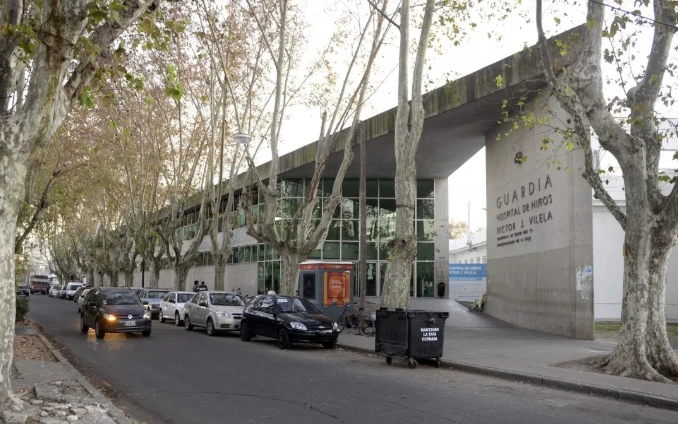
Juan Di Santo, a pediatric hematologist at the Hospital de Niños Víctor J. Vilela of Rosario, explained in an interview with Reynaldo Sietecase how the continuous training project for the pediatric transplant team came about.
At that time, there had been renewals within the professional team and a framework for training and updating was needed. In response to that need, the Messi Foundation made itself available and Jorge Messi took an active role in the project.
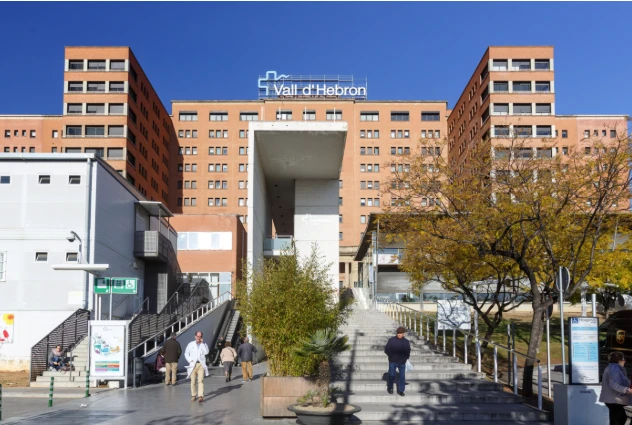
The proposal had a very concrete objective: that the members of the team could train at the Vall d’Hebron Hospital in Barcelona and then return to Rosario to apply those knowledge to children who needed this kind of treatment.
And there was something even more important behind that decision. The contribution was primarily aimed at public health, to assist children who did not have social coverage or access to the private system.
It Was Not Just About Financing: Jorge Messi Took Care of Everything
In his account, Di Santo highlighted especially one dimension of Jorge Messi’s commitment. It wasn’t merely about providing the funds needed for training.
According to the doctor, Jorge contacted the Vall d’Hebron team, coordinated the rotations and took care of the travel and lodging of the professionals who travelled to Barcelona for months.
He was also personally attentive to them.
The doctor Tartaglione recounted in LN+ a detail that helps gauge that commitment. Jorge Messi waited for the professionals at the Barcelona airport and took care of taking them to the hospital where they would be trained.
“What is interesting to emphasize is that he did not simply provide financial support”, Di Santo explained. “He spoke with the entire team at the Vall d’Hebron, coordinated rotations, took care of transfers, accommodations and was always present, concerned about the well-being of each of the professionals who spent months in Barcelona.”
The Aim of Jorge Messi Was for the Knowledge to Return to Rosario
But perhaps the most significant aspect of Di Santo’s account appears when he explains what Jorge Messi was really aiming for with that project.
He didn’t want the doctors to merely travel, train, and come back with more professional experience. He wanted all that knowledge to stay in Rosario and be applied to the children who needed those treatments.
“What was valuable was the goal Jorge had and it was not simply that we would go to train, but that all that knowledge would return to Rosario,” the pediatric hematologist remarked.
That knowledge was to be put at the service of children who needed transplants and who, lacking social coverage, had no access to the private health system.
The project, then, had a very clear direction: strengthen public health and leave installed capacity where it was needed.
More Than 100 Pediatric Transplants Later
There is a number that, with the passage of time, became the most concrete measure of that objective.
According to Di Santo, the Victor J. Vilela Children’s Hospital has already performed more than 100 pediatric transplants since that training process began.
“Since that moment we have performed more than 100 pediatric transplants. We consider that its objective was fulfilled,” the doctor stated.
That is why, when people talk about Jorge Messi today, the story appears as something more than a gesture of solidarity. It was a conscious decision to ensure that the aid did not end in a one-off contribution, but would become knowledge, training, and medical care in Rosario.
The Other Legacy of Jorge Messi
The story takes on another dimension after the letter Lionel Messi published to bid farewell to his father.
In those words, the footballer spoke of the man who stood behind his life and his career. He also shared how meaningful winning the World Cup was for him and how that goal was tied to his father: every match, every step toward that conquest, was also for Jorge.
Now, through the testimonies of those who worked with him, another side of that same man emerges.
A Jorge Messi who did not seek the spotlight. Who, according to those who received his help, ensured that doctors could travel, train, and return to Rosario. Who stayed attentive to them during those months. And who had a concrete idea of what he wanted to achieve.
That the children could receive the treatment they needed.
Perhaps that is why the story moves in a particular way. Because while Lionel sought that World Cup for his father, Jorge was leaving, away from the cameras, another legacy: the knowledge of a medical team that has already made more than 100 pediatric transplants possible in Rosario’s public health system.