
For years, many people interpreted their difficulties concentrating, getting organized, or relating to others as personal flaws. They felt distracted, disordered, or out of place, unaware that behind those experiences there could be a different way the brain operates. In many cases, an autism diagnosis or Attention-Deficit/Hyperactivity Disorder (ADHD) only arrives in adulthood, after decades of questions and trying to fit into what is considered normal.
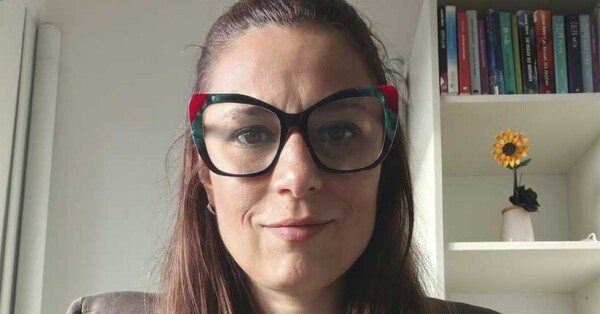
What does it mean to be neurodivergent? How does it affect mental health and relationships to go so many years without a diagnosis? What changes when an explanation finally arrives? Mariela Trava, a psychologist and specialist in neurodivergences —ASD and ADHD in adults—, spoke with Para Ti about the topic and explained how these conditions manifest in adult life and what tools can help us navigate daily life.
“It’s not a disease, but a different way of perceiving the world, feeling, learning and relating”
-What does it mean to be a neurodivergent person?
-Being neurodivergent means having a brain that functions in a way that differs from what we consider “typical.” It is not a disease, but a different way of perceiving the world, feeling, learning and relating. Within neurodivergences are, among others, Autism Spectrum Disorder (ASD) and Attention-Deficit/Hyperactivity Disorder (ADHD), conditions present from childhood that are often only detected in adulthood.
I evaluate adults specifically, and what I observe is very different from what appears in a child. In autism, many people spent their lives adapting to what society demanded: they learned to relate to others by watching them, to laugh at a joke because they saw others laughing. That is what we call masking, a constant effort to fit in that becomes exhausting.
That fatigue, coupled with communication difficulties and sensitivity to noises, lights, or textures, often ends in anxiety or depression, which tend to be the consequence rather than the origin of the discomfort.
In ADHD, sustaining an eight-hour workday can be a daily struggle, because it is hard to maintain focus, stay organized, and finish what you start.
Impulsivity can lead to overspending and debt. Some people forget to drink water or eat because they do not register their body’s signals, or they lose friendships because, if they don’t see them, they don’t remember them. It’s not a lack of affection: it’s a different way of functioning.
“Many people come to my practice with the same phrase: ‘I’ve always felt strange'”
-What happens when the diagnosis arrives after 30, 40, or 50 years?
-Many people come to my clinic with the same phrase: “I’ve always felt strange.” When there’s no explanation, the person builds their own interpretation, and it is almost always harsh on themselves: “I’m lazy,” “I’m disorganized,” “there’s something wrong with me.” That idea, repeated for decades, erodes self-esteem long before anxiety or depression appear.
It can also have concrete health consequences. I recall a patient who was admitted several times because no medication worked for her, without anyone considering that she could be neurodivergent. Some of these people react differently to certain medications: sometimes they don’t work, and other times they have the opposite of what was expected.
I met someone who was kept under observation just for a simple muscle relaxant.
In relationships, the impact is subtle but constant. In autism, the need for predictability can be read as rigidity or disinterest, when in reality it is a way of protecting oneself from overload. In ADHD, forgetfulness and impulsivity create in the partner or family the feeling of not being important, and in the person, growing guilt.
That’s why the diagnosis also gives the surrounding environment a new way of looking, and relationships can be rebuilt on a different foundation.
“When a boy is diagnosed, parents seek information and see themselves reflected in many characteristics”
-What signs can lead an adult to seek help?
-Often the consultation arrives as a mirror effect: a friend or partner receives a diagnosis and, upon hearing it, the other person thinks: “That happens to me.” Another common path is through the children. When a boy is diagnosed, the parents seek information and recognize themselves in many characteristics. Since these conditions have a strong hereditary component, diagnosing a child often opens the door to diagnosing the mother or father.
They also consult those who feel they’ve tried everything and something still doesn’t fit. It is common for difficulties to become visible at school or at work: careers started and abandoned again and again due to an inability to concentrate or to handle so many stimuli, constant job changes, or jobs that end in burnout.
There are also subtle signals that many people have normalized. In ADHD, leaving everything to the last minute, losing objects, starting many projects without finishing them, or feeling the head constantly racing. In autism, leaving a meeting exhausted and needing days to recover, or finding casual conversations more challenging than for others.
“The diagnosis does not change who the person is, but how they view themselves”
-What changes when someone receives the diagnosis?
-I always say that the diagnosis is the missing piece to complete the puzzle. Many people feel, for the first time, a sense of calm: it is no longer a personal defect or lack of will, but a different way of functioning.
The first step is self-acceptance, and that also means recognizing strengths.
Many people with autism possess a keen attention to detail, a strong sense of justice, and depth in the subjects they are passionate about. In ADHD, creativity, the ability to solve under pressure, and a highly valuable energy when channeled well are common.
From there, concrete tools appear. In autism, work focuses on assertive communication, understanding social situations, and cognitive flexibility, in addition to knowing which situations drain energy and how to recover: anticipate changes, use headphones in noisy places, or schedule moments alone.
In ADHD, planning, organization, and attention are addressed, with external structures such as calendars, alarms, lists, and tasks broken into small steps. Adjustments at work or study can also be requested, such as written instructions or planned breaks.
The diagnosis does not change who the person is, but how they view themselves: they stop demanding to function like everyone else and begin to build a life tailored to them.
“When someone understands how their brain works, they stop fighting it and start living to its advantage”
-What treatments and supports exist for adults diagnosed late?
-Together with a neurologist, we founded CIAN (Centro Integral de Asistencia para Neurodivergentes), where we approach treatment in an integrative and non-conventional way. Many of these people abandoned long therapies that weren’t designed for them; that’s why we work with short programs, six to seven months long.
The program is organized in modules, each with a different professional. With the psychologist, through a cognitive-behavioral approach, we work on emotional regulation; with the educational psychologist, planning and organization according to each person’s reality; and with the occupational therapist, hypersensitivities and their impact on daily life.
They add a mindfulness workshop for moments of crisis, a group skills workshop, and interviews with family or partner, because when the environment understands, coexistence changes.
This prevents anxiety, depression, and exhaustion because it goes to the root: those symptoms appear when the person deregulates again and again in situations they do not know how to handle. When they acquire tools to anticipate and regulate themselves, they stop becoming overwhelmed, and the changes in those who completed the program are very noticeable.
Many people arrive after decades feeling that something in them was broken. And it wasn’t: they simply lacked a piece. When someone understands how their brain works, they stop fighting it and begin to live in its favor. It’s never too late to understand yourself.
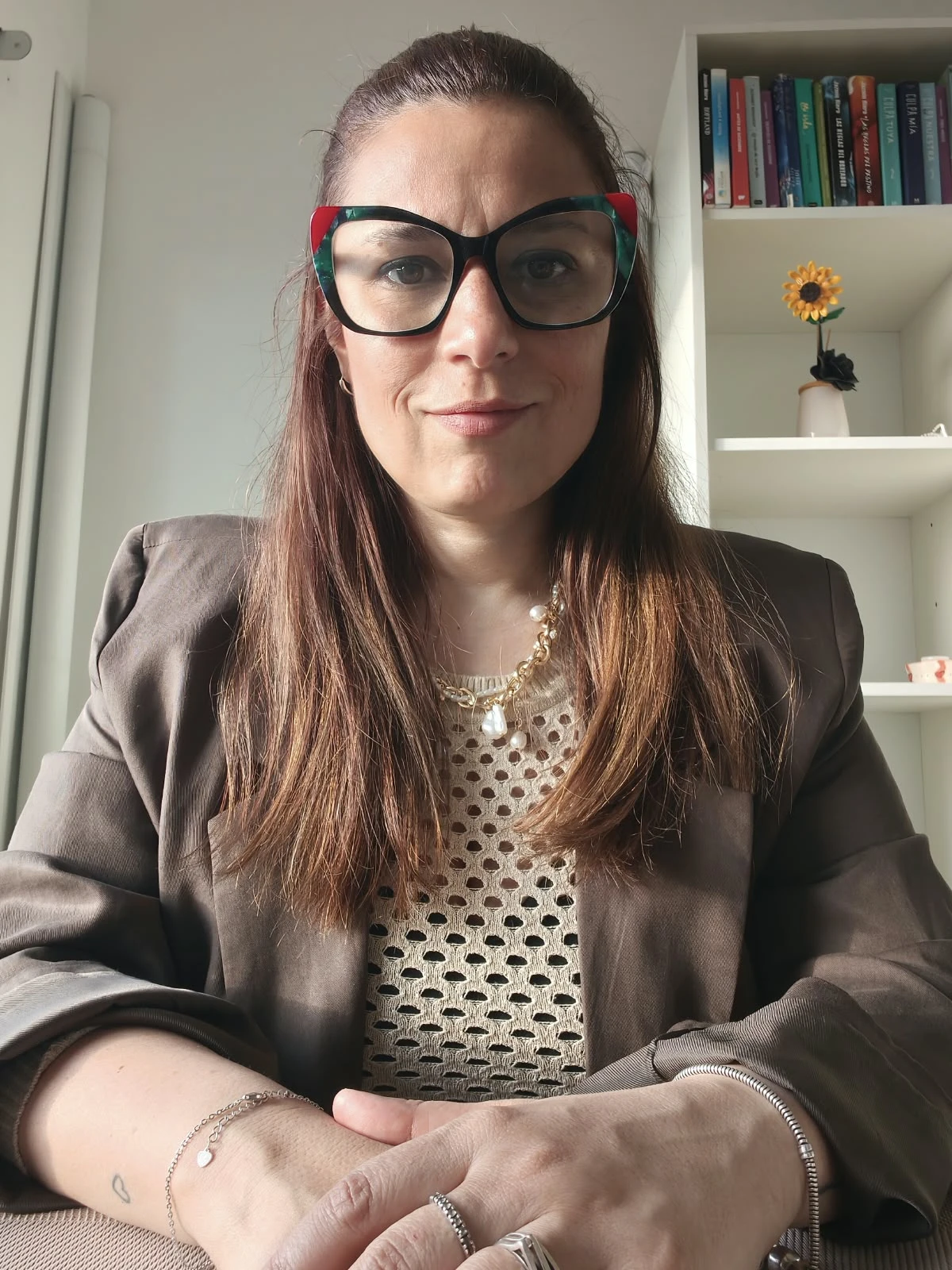
Mariela Trava. BA in Psychology, Specialist in Neurodivergences (ASD and ADHD in adults). Director and cofounder of CIAN (Center for Integrated Assistance for Neurodivergence) @cian.neuro