

Facial masks and hydrogel patches have become allies for prepping the skin before an event, restoring radiance after a long night or adding a moment of self-care. However, leaving them to act for hours, applying them onto a face that’s not clean, or layering too many actives can have the opposite effect.
Although they offer visible, immediate results, especially in hydration, freshness and smoothness, they do not replace a daily routine nor trigger permanent transformations. Their role is to complement regular skincare.
The indispensable step before applying a mask
The skin must be clean and free of makeup, sunscreen, and dirt. The ideal approach is to perform a gentle cleanse and dry the face with light taps, without rubbing.
If a toner is used, it can be applied beforehand, provided it is hydrating and does not contain potentially irritating ingredients. Conversely, it is wise to avoid exfoliants, acids, or retinoids when the mask already includes such active ingredients: layering similar compounds can cause dryness, sensitivity or redness.
How to correctly apply a facial mask
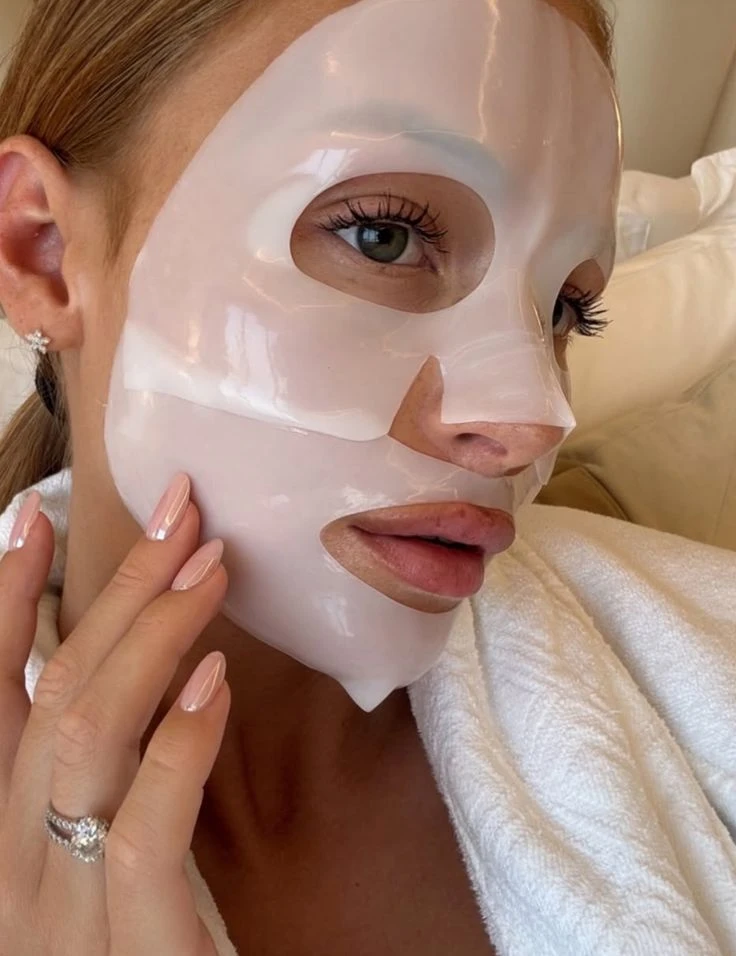
For cloth masks, unfold them carefully and fit them to the face, aligning the openings for the eyes, nose, and mouth. Then, smooth gently from the center outward so that it maintains contact with all the skin.
Cream or gel masks should be spread in a uniform layer, avoiding the eye and lip contours, unless the product states that it can be used on those areas.
The exposure time should always be the one indicated on the packaging. In general, hydrating masks remain on the skin for between 10 and 20 minutes, but there is no universal rule for all formulas.
More time does not mean better results
One of the most common mistakes is letting the cloth mask dry completely on the face. When it begins to lose moisture, it can cause tautness and make the skin feel less comfortable.
Sleeping with a conventional mask is also not advisable. Only masks formulated specifically as sleeping masks or overnight masks can remain on overnight.
If there is burning, itching or intense reddening, remove it immediately and rinse the face with cool water.
What to do after removing the mask
A cloth mask does not require rinsing, unless the instructions indicate otherwise. The remaining product can be absorbed into the skin with gentle presses on the face, the neck and the décolletage.
Then you can apply a moisturizer to help lock in moisture. During the day, the final step should always be sunscreen.
Clay masks, exfoliating masks or deep-cleansing masks, on the other hand, should be rinsed off with plenty of water and followed by a light moisturizer.
How to use hydrogel patches for the eyes
Patches are applied to clean, dry skin before applying eye-area cream. If the area has excess product, they can slip and won’t adhere properly.
Place them under the eyes, not too close to the lash line. Their shape allows for two application orientations:
- With the wider part facing outward, to cover the lateral lines and the crow’s feet area.
- With the wider part near the nose, to concentrate care on the area where shadows and signs of fatigue tend to appear.
There isn’t a single right orientation: it depends on the zone you want to cover.
How long should the patches be left on
The usual duration ranges from 10 to 20 minutes, but you should respect the instructions of each product. Leaving them on until they dry or wearing them for hours does not multiply their benefits.
The hydrogel creates a barrier that momentarily reduces water loss and helps the skin surface look more hydrated and smooth. The effect on under-eye bags, fine lines and signs of fatigue is mainly temporary.
Once removed, the remaining product is absorbed with small taps using the ring finger. There is no need to rub or rinse.
Can they be stored in the fridge?
Yes. Keeping them cool can enhance the decongestant sensation and feel especially pleasant in the morning or before makeup. However, they should not be stored in the freezer or applied when frozen, because extreme cold can irritate a particularly delicate area.
It is also important to keep the container tightly closed and handle them with a clean spatula when they come in a jar.
When is it advantageous to use them
Hydrogel patches can be incorporated in the morning, before makeup, or at night. They are especially useful:
- Before a party or event.
- After not sleeping much.
- On hot days.
- When the contour feels taut or dehydrated.
- During a long journey.
They do not eliminate genetic dark circles or structural bags, but they can provide a momentary fresher and more rested appearance.
The mistakes to avoid
- Applying them on dirty or makeup-covered skin.
- Stacking several exfoliating or irritating products.
- Exceeding the indicated time.
- Sleeping with a mask that isn’t overnight-specific.
- Reusing disposable masks or patches.
- Placing the patches too close to the eyes.
- Rubbing the skin when removing them.
- Using them if they cause burning, itching or redness.
- Expecting them to replace daily hydration or sunscreen.
The key is simple: choose the formula according to your skin’s needs, follow the instructions, and view these products as a supplement. When used correctly, they can become an effective resource to restore freshness, comfort and radiance in just a few minutes.
