
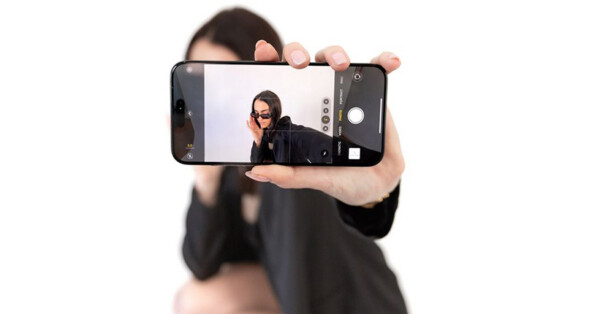
In a time when much of our lives unfold on a screen, a good photo is no longer something reserved solely for fashion campaigns or professional productions. From showcasing an outfit to preserving a vacation memory, selecting an image for Instagram or simply feeling comfortable in front of the camera, there are small tricks that can completely change the result.
And they don’t necessarily have to be about having the latest smartphone.
Francesco Viglione, a director with more than a decade of experience in the fashion and advertising world and with experience working for international brands such as Montblanc, Netflix, Fila, MAC, Nissan and Ford, asserts that an attractive image is built long before pressing the camera button. The key lies in learning to look.
From the runway to Instagram: why our way of taking photos has changed
The arrival of social networks transformed how a visual production is conceived.
According to Viglione, years ago a fashion show could be recorded with the final audiovisual piece in mind. Today, however, the same event needs to work across multiple formats: long videos, editorial images, stories and short vertical clips designed especially for mobile devices.
That shift also changed the way we look at things. The pursuit is no longer solely about achieving a technically perfect photo. Often, the images that capture the most attention are those that convey movement, spontaneity, or the sense of having captured something unrepeatable.
Viglione defines that moment as “the second ghost”: that minimal instant that appears without being fully planned.
It can be fabric that reflects light as someone spins, a smile before the pose, or an unexpected gaze. It is precisely what makes an image look alive.
Therefore, for the expert, the camera should accompany what is happening in front of it. If a garment has structure, movement can be more defined. If the dress is light and flowing, the camera should mirror that sensation.
But there are three much simpler rules that anyone can apply when taking a photo with a cellphone.
1. The camera height can completely change your figure
One of the most common mistakes appears when we photograph a look from too close or with the camera placed too high.
The result can distort body proportions and make the legs appear shorter.
Viglione’s recommendation is simple: step back a little more than we intuitively think is necessary.
Additionally, if we want to show a full-length outfit, it’s best to place the phone approximately at chest height or even slightly lower.
Avoiding very elevated angles helps to maintain proportions and can create a visually more elongated figure.
2. Less light can be more: the trick to achieving a professional effect
Another fundamental point is lighting.
More lights does not necessarily mean a better photo. In fact, mixing different lighting sources can create unflattering shadows or alter colors.
The expert’s advice is to look for a single source of soft light.
It can be the light entering through a window, a corridor or even the shade of a building when we are outdoors.
Instead, whenever possible, it’s best to avoid the direct noonday sun, which tends to create very pronounced shadows on the face.
Once the light is found, there is another small trick: position the body slightly turned, forming an angle of about three-quarters with respect to the light source.
It’s one of the most widely used techniques in photography because it adds volume, softens features and helps the image have greater depth.
3. If you don’t know how to pose, don’t pose
For many people, the most awkward moment arrives when someone lifts the phone and says: “Pose.”
Suddenly we don’t know where to put our hands, how to arrange our legs or where to look.
The solution Viglione proposes is to change the logic entirely.
Instead of looking for a pose, you should do an action.
Walk slowly toward the camera, fix your hair, look to the side, put on a jacket, turn, play with a bag or even laugh while you’re chatting with the person taking the photo.
The body stops worrying about “looking good” and starts moving more naturally.
It’s a technique Viglione also uses during professional productions: instead of asking for a rigid pose, he proposes concrete movements that help relax the body.
The result is usually a much more spontaneous and confident image.
The real secret to getting a good photo
Beyond technology, filters or camera resolution, there is one element that remains decisive: the light.
For Viglione, observing how light shapes a face, passes through fabric or creates shadows in a space is one of the best ways to start training the eye.
Because a good image doesn’t depend solely on recording what’s in front of us.
It’s also about finding that small gesture, movement or detail capable of telling a story.
And perhaps that is the true secret of photos we don’t skim through while scrolling: they not only show a scene. They manage to convey a story.
Source: Francesco Viglione is a director with more than a decade of experience in the fashion and advertising universe and has worked for international brands such as Montblanc, Netflix, Fila, MAC, Nissan and Ford.