
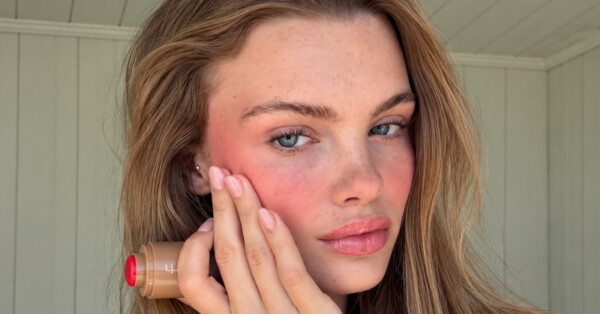
What it means for makeup to be gluten-free, which products require more attention, and why it should not be confused with an hypoallergenic formula.
The lipstick is touched up after eating, the lip balm stays on all day and a small portion of the product may end up in the mouth. In these everyday gestures lies the main reason gluten-free makeup has generated interest among people with celiac disease.
The category has also begun to gain visibility along with a more careful reading of cosmetic labels. However, it is worth making a distinction: that a makeup product does not contain gluten does not automatically mean that it is natural, hypoallergenic, vegan or more beneficial for all skin types.
What it means that makeup is gluten free
Gluten-free makeup is makeup whose formulation does not contain gluten or that declares it has been produced under certain controls to prevent its presence. The difference with a conventional cosmetic lies in that specific point, not necessarily in its texture, longevity, pigmentation, or effect on the skin.
Nor should different labels be confused. “Gluten-free”, “paraben-free”, “vegan”, “cruelty-free” and “hypoallergenic” describe different characteristics. A product may meet one of them and not the others.
Do all people with celiac disease need gluten-free cosmetics?
Celiac disease is triggered when gluten is ingested: this protein does not penetrate healthy skin. For this reason, specialized organizations indicate that creams, foundations or hair products do not need to be gluten-free solely because of a celiac disease diagnosis.
Attention is focused especially on products with the possibility of entering the mouth, such as lipsticks, glosses and balms. Some people also prefer to extend caution to other cosmetics for personal peace of mind or due to particular medical indications.
“In the clinic I see every day the effort that a person with celiac disease makes to control every ingredient of what they eat. But that care almost never extends to makeup,” explains Cynthia Procupez (MN 2536), specialist in Anti-inflammatory Nutrition, Celiac Disease and Skin Health.
According to the professional, having alternatives identified as gluten-free can offer greater peace of mind when applying makeup. The Celiac Disease Foundation also includes cosmetics used near the mouth among the possible sources of involuntary ingestion.
Los productos que requieren mayor atención
Lipsticks, balms and glosses are the first to review because they are applied directly to the lips and can be ingested in small amounts. By contrast, the possibility that gluten present in an eyeshadow, mascara or foundation reaches the intestine is much more remote.
The Canadian Celiac Association notes that the majority of cosmetics analyzed show zero or negligible amounts and that contamination via this route is unlikely. Choosing products labeled gluten-free can function as an extra precaution, but it does not imply that all conventional makeup poses a danger.
Gluten free is not synonymous with hypoallergenic
A gluten-free formula does not guarantee that the product is suitable for sensitive skin, with eczema or dermatitis. Irritation can be related to other components, fragrances or preservatives, regardless of gluten presence.
Procupez stresses the importance of reviewing the full formulation: “Choosing well what we put on our skin, as much as what we eat, is part of the same holistic care.”
In case of a reaction, it is appropriate to discontinue use and seek professional advice. To choose a makeup, the key is to identify the specific need, read its ingredients, and not attribute to a single label benefits that it does not promise.