
We live in a context where being tired, sleeping poorly, having a head full of thoughts, or feeling that “we don’t get to everything” seems to have become part of the normal rhythm of life. But just because something is common does not mean it is healthy.
Stress is a necessary physiological response: it allows us to adapt to challenges, respond to a threat, and mobilize energy when we need it. The problem arises when that response stops being transient and turns into a state of sustained activation.
The body can tolerate moments of stress. What it shouldn’t do is live permanently on alert. In this context, medicinal plants and adaptogenic mushrooms emerge as one of the tools that can accompany stress management, although their use requires considering the dosage, product quality, and individual characteristics.
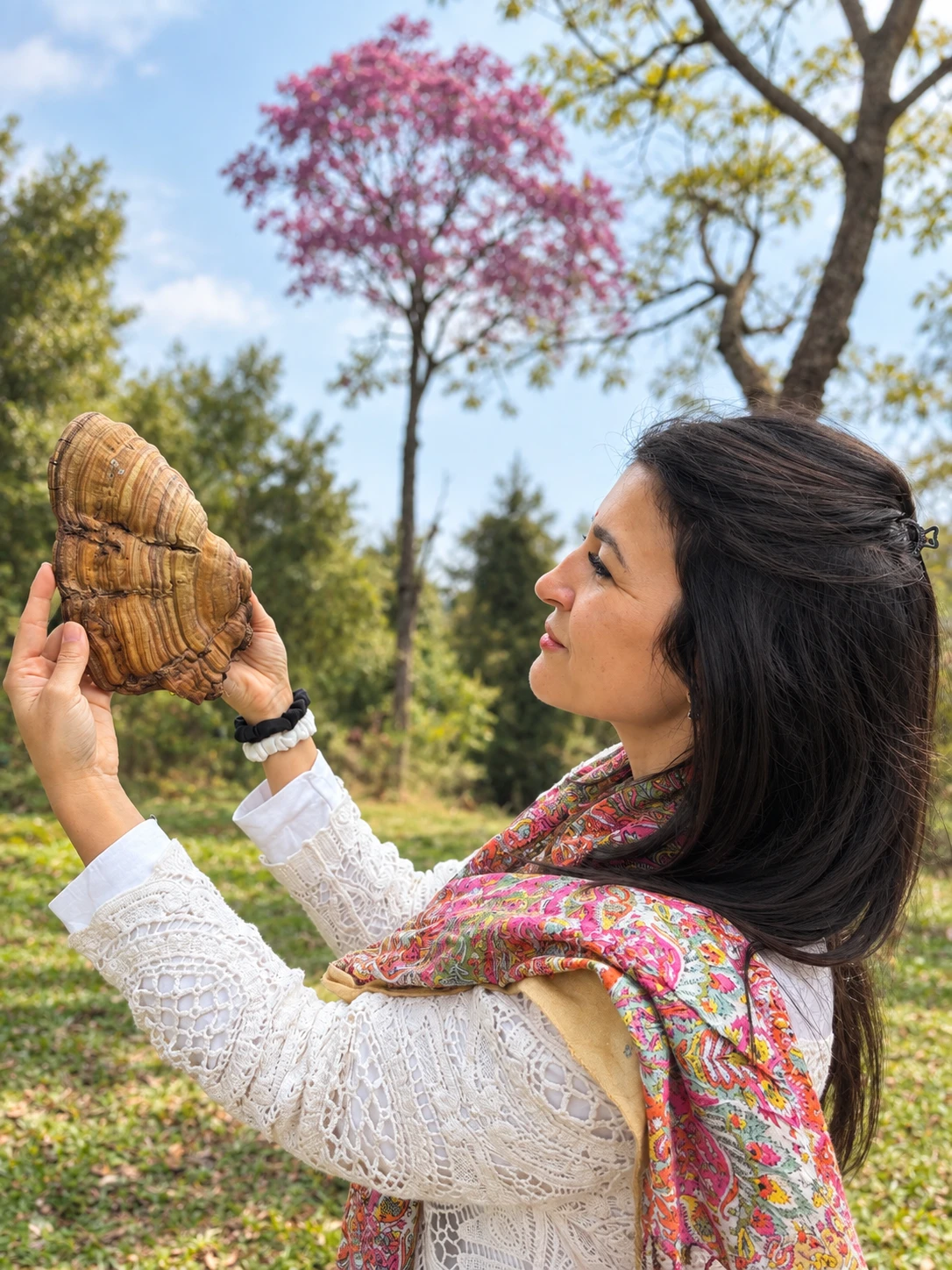
To understand which signals may indicate that stress has ceased to be temporary, what happens in the body when it persists, and what space medicinal plants and adaptogenic mushrooms can occupy, Evelin Zamorano, clinical physician, specialist in Stress Medicine, medical journalist, communicator and science disseminator, spoke with Para Ti.

“That something has become habitual does not mean it is normal for our body”
-How can we distinguish everyday stress from chronic stress, and which bodily signals should alert us that something isn’t working properly?
-Everyday stress has a beginning and an end. We face a demanding situation, our body responds, and when the situation ends, the involved physiological systems can gradually revert to their baseline. In chronic stress, however, the body loses that ability to “switch off” the alarm response.
The early warning signals tend to be subtle yet persistent: waking up in the middle of the night with a mind racing, persistent muscle tension (bruxism, neck pain), or getting irritated by the smallest things. It is also crucial to pay attention to emotional disconnection or apathy (that sense of being on autopilot), where we lose the ability to enjoy the small everyday pleasures.
Headaches, palpitations, decreased libido, difficulty concentrating, or that very characteristic feeling of “my head is exhausted but I can’t stop thinking” can also appear.
For me, a particularly important signal is when we start to deem symptoms that previously weren’t present as normal. Just because something became habitual doesn’t mean it is normal for our body.
“Chronic stress affects not only the nervous system”
-What happens when stress persists over time?
-Chronic stress does not affect only the nervous system. It is a systemic response that involves the brain, the autonomic nervous system, the hypothalamic-pituitary-adrenal axis, the immune system, and the digestive tract.
When cortisol and adrenaline stay elevated for months or years, the body enters “survival mode” and shuts down or slows down functions that are not essential for escaping a threat.
- In digestion: The gut-brain axis is disrupted. Digestive enzymes decrease and the intestinal mucosa becomes inflamed, which can lead to bloating, sudden intolerances, constipation, or diarrhea. It’s no accident that many people experience more digestive symptoms during periods of sustained worry.
- In sleep and energy: High nighttime cortisol prevents the release of melatonin (the sleep hormone and a major antioxidant). Without restorative sleep, our mitochondria—the powerhouses of our cells—become depleted, resulting in deep fatigue; we wake up already tired.
- In mental clarity: Chronic stress inflames the brain. Blood moves away from the prefrontal cortex (responsible for focus, decision-making, and empathy) and we operate from the amygdala (our more primitive brain). This creates the well-known “mental fog,” frequent forgetfulness, and difficulty maintaining concentration.
“Plants and fungi act as ‘modulators’ of the nervous system”
-What role can medicinal plants and adaptogenic mushrooms play in addressing stress? In which cases can they be truly helpful?
-They represent the perfect bridge between ancient medicine and modern science. Adaptogens (which can be plants or medicinal mushrooms) are unique botanical substances that help our body adapt to stress.

They don’t work like traditional drugs that simply block or suppress a symptom. Adaptogens act as “modulators” of the nervous and endocrine systems: if you’re very accelerated, they help you slow down; if you’re exhausted, they gently raise your energy.
They are invaluable tools within integrative protocols, especially in cases of chronic fatigue, cortisol dysregulation, mild to moderate anxiety, or when we need a biohacking support to recover physical and mental resilience.
Remember that the goal should not be “lowering cortisol” at any price. Because the aim is not to have zero cortisol: we need cortisol to live. The goal is to restore a flexible and adaptive response to stress.
“Phytotherapy is medicine”
-Why are dose, product quality, and the method of use so important? What risks arise when consuming plants or adaptogens without professional supervision?
-This is a fundamental point for me in practice and in the trainings I offer on stress management. Today there is a trend to consume supplements as a fashion, believing that natural means harmless. But phytotherapy is medicine. Plants have doses, indications, and potent active compounds that interact with our biology and with other medications we may be taking.
Dose and quality are everything. A poorly processed extract of a medicinal mushroom or plant can be contaminated with heavy metals or simply fail to contain the necessary concentration of the active ingredient to have an effect.
Furthermore, the risk of taking them without professional supervision includes dangerous interactions (for example, with antidepressants, anticoagulants, or thyroid medications) or overstimulating an immune system that may need something else. The approach must always be clinical, thorough, and personalized to each patient’s history, moving away from one-size-fits-all prescriptions.
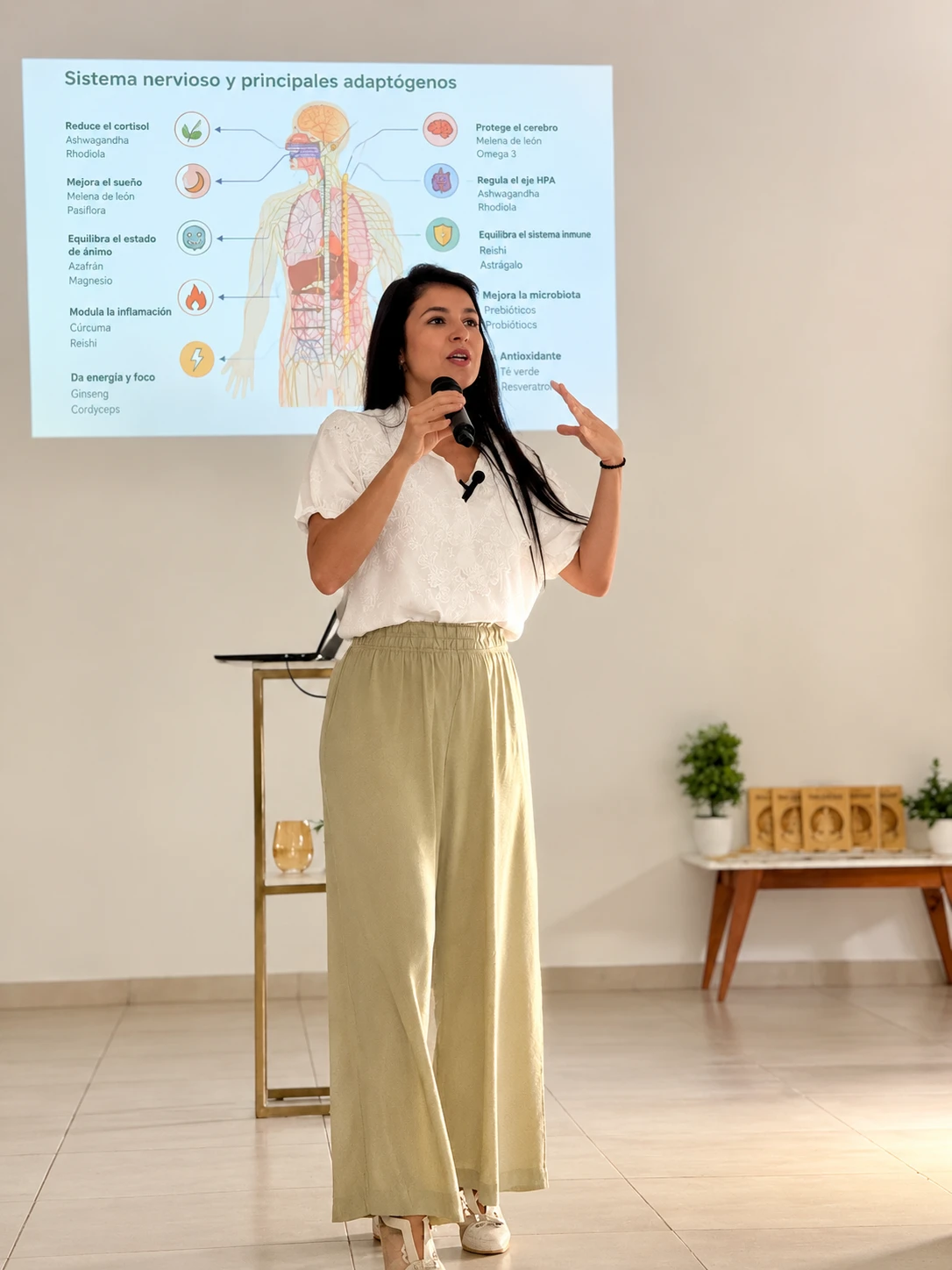
Before incorporating a plant or an adaptogen, ask yourself: What am I trying to treat? Which symptoms do I have? Which medications am I taking? What dosage do I need? For how long? How will I know if it’s helping?
“No adaptogen will compensate for a lifestyle that makes us sick”
-Which medicinal plants or adaptogens have the strongest backing, and what recommendations would you give before incorporating them?
-Among the plants and adaptogens with clinical research and/or substantial evidence are:
Ashwagandha: Excellent for modulating cortisol, reducing anxiety, and improving sleep quality.
Rhodiola Rosea: Ideal for moments of enormous mental strain and fatigue, as it improves energy and concentration.
Lion’s Mane (Mushroom): A marvelous neuroprotector, a great ally to clear the “mental fog,” improve memory, and reduce intestinal inflammation.
Reishi (Mushroom): Historically known as the mushroom of immortality, it is an immune system modulator and a powerful calm for the nervous system, ideal for nighttime use.
Remember one key point: No adaptogen will compensate for a lifestyle that makes us sick.
My recommendation before incorporating any product would be to start with a comprehensive assessment of the person, habits, emotional state, medications, and supplements.
Afterwards we can consider which tool makes sense.
Because if a person sleeps four hours, is glued to their phone until the early hours, uses stimulants all day, and has no recovery moments, chances are the problem won’t be solved by adding a capsule.
Plants can accompany a process. They can be a valuable tool within an integrative protocol, but they do not replace the pillars on which health is built.
From the perspective of stress medicine I’m particularly interested in reframing the question. Not asking merely “what can I take to lower stress?”, but: what is keeping my body in a state of alert, and what does it need to feel safe again?
Sometimes it will be improving sleep. Other times, addressing diet and the microbiota, adding movement, regulating breathing, reconnecting with nature, working on repetitive thoughts, or learning to recognize bodily signals before reaching exhaustion.
And yes: in some cases, a medicinal plant or an adaptogenic mushroom can be very helpful on that path. Because the goal isn’t to live without stress. It’s to regain the ability to go through it without it making us sick.
Evelin Zamorano. MPM05448. Clinical Doctor. Specialist in PNIE and Stress Medicine. Medical Journalist. Communicator and science outreach expert. Author of the book Alquimia: del deber al Ser. @draevelinzamorano