

Although discussions about sexuality are increasingly common, some practices remain surrounded by myths, prejudices, and false certainties. Oral sex is no exception: from the notion of a “correct” way to do it to the belief that it is a risk-free practice, concepts persist that can influence both pleasure and care.
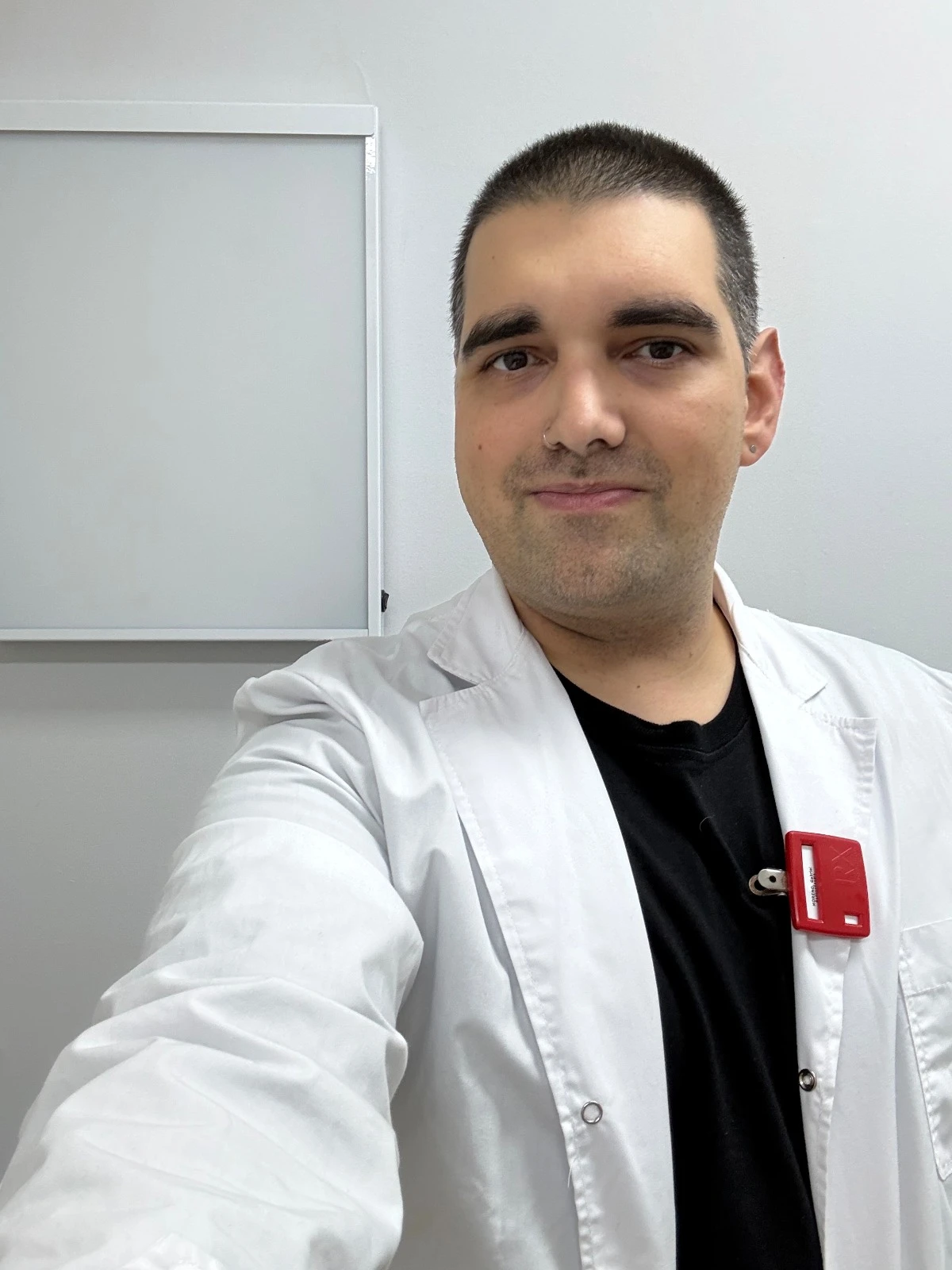
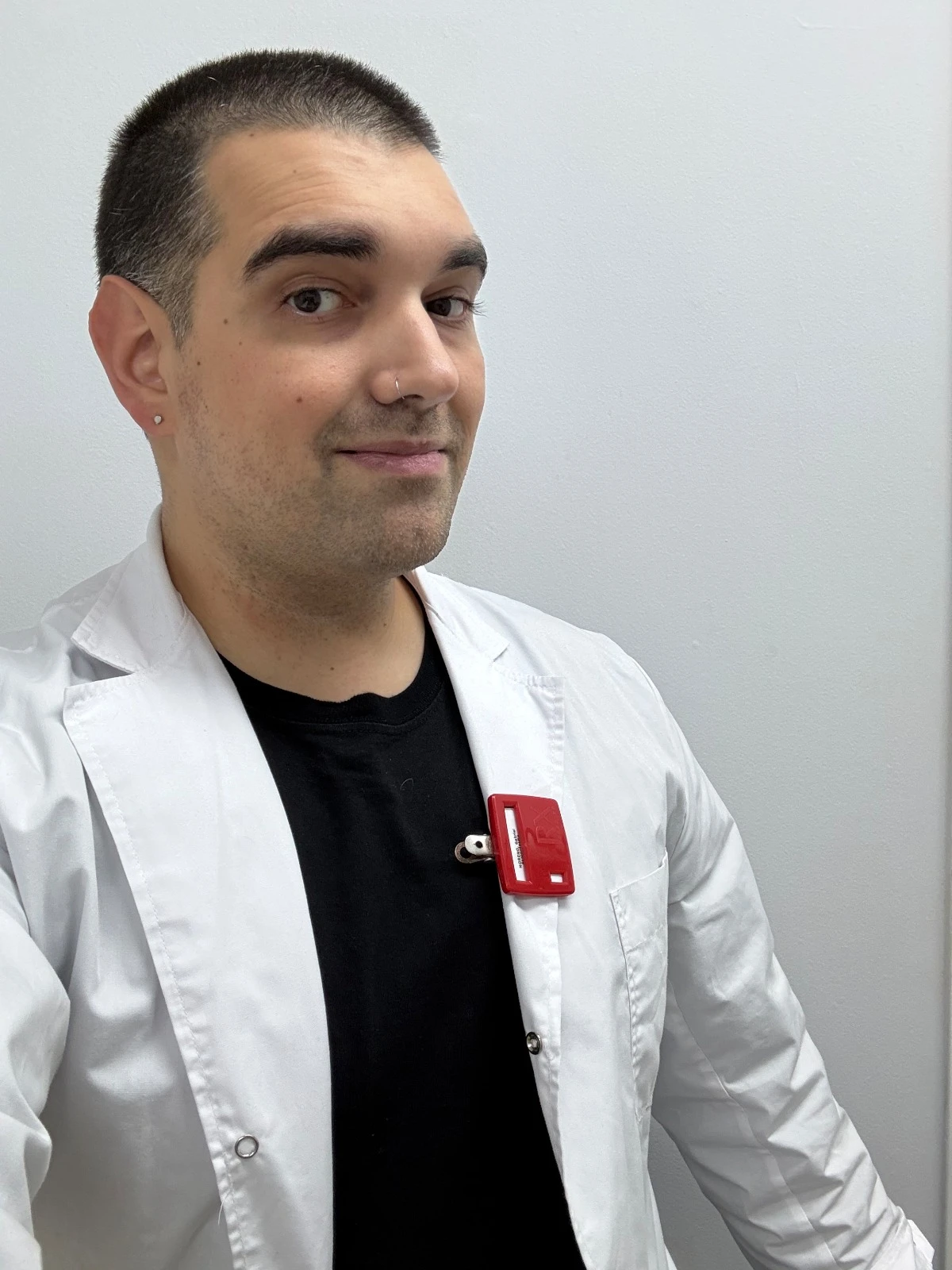
In the context of the World Oral Sex Day, celebrated this September 6, Dr. Gabriel Nahuel Moreno, a physician specializing in Human Sexuality (SASH), spoke with Para Ti about the main myths surrounding this practice, the importance of consent and communication, and health precautions to keep in mind. He also explains why pleasure should not be tied to a single sexual script or necessarily to penetration.
“Oral sex does not necessarily mean sex without risk”
—Why does oral sex continue to be surrounded by so many myths, and what is the first thing one should know to experience it more pleasurably and safely?
—Questioning the myths around sexuality is, almost always, as fascinating as it is complex. Broadly speaking, for a long time we learned to live and talk about sexuality from silence, shame, or the idea of “normal,” as if there were a single “correct” way to have sex.
Very often that “one right way” was accompanied by the idea that sexuality serves a reproductive function, thereby canceling any possibility of thinking and living a sexuality that has nothing to do with having children. In that stance of ceasing to act and live, oral sex exists.
Oral sex has been and continues to be shaped by all kinds of prejudices and misinformation, even today, in the information age. We have access to almost any kind of information, but that also means access to new myths and misbeliefs that are updated and reframed.
Regarding living one’s sexuality, and especially oral sex, more pleasurably and safely, the first thing to know is that there is no mandatory sexual practice nor a universally correct way to enjoy it. There is a wide range of tastes and variety in enjoyment: what pleases one person might not appeal to another.
Even we can say that oral sex can be enjoyable and part of the sexual encounter, or a person may not be interested in it at all, either in general or at a particular moment. The main key is that there must always be desire, consent, and enthusiasm.
Regarding living it more safely, one must raise something that is often overlooked: oral sex does not inherently mean risk-free sex. It is greatly underestimated that unprotected oral sex can allow the transmission of sexually transmitted infections.

It remains essential to raise awareness that pleasure and safety do not have to be opposing or incompatible concerns. It is urgent to deconstruct and discard the idea that “using a condom or latex barrier is a downer” or this trend of “bareback.” I believe in the saying “without condoms there is no party”, and given the vast variety of tastes, flavors, sizes, qualities, textures, and possibilities, there really are no excuses not to use condoms.
“Communication is, probably, one of the most important sexual tools”
—What is the importance of communication during oral sex, and how can a couple express what they like, what they don’t, and what they want to try without it becoming an awkward situation?
—Communication is always extremely important, from the biggest to the finest detail, in any area of life, in every matter related to sexuality and, of course, during oral sex. Communication is, probably, one of the most important sexual tools there is and is, paradoxically, also at the same time one of the least taught, least considered, and least acknowledged.
I also want to be clear: talking about communication does not mean turning a sexual encounter into an interview. You can communicate with words, but also with gestures, movements. Body language matters as much as verbal language and they must be in harmony.
For that, paying attention is essential, and to pay attention you simply have to be present, no more and no less.
Concrete phrases, with intention and presence, such as “do you like it like this?”, “slower please?”, “do you want me to continue?”, “shall we keep going?”, “shall we try it another way?”, can be much more useful and form part of assertive communication in sexuality, even more than the fantasy of trying to guess based on what happens or how the body reacts.
It is also extremely important to be able to say “I don’t like this” or “I’d prefer we don’t do this, or do it differently”. Being able to express what we do not want, what we do not desire, what we dislike, is to establish a safety, comfort, and boundary base.
Setting a boundary is not personal rejection. No one should feel hurt, or feel they are hurting someone, simply for drawing a line.
I think it’s essential to speak about boundaries, safety, and mutual comfort so that communication does not become “that thing that happens when something goes wrong.” Being able to communicate from the outset, during sex, and after sex is, without a doubt, the best way to build intimacy and discover together what brings pleasure and connection.
“The whole issue of coitocentrism strikes me as very problematic from the start”
—Does orgasm depend on a particular sexual practice? Why does the idea persist that penetration is the “goal” of a sexual encounter?
—Does orgasm depend on a specific practice? Short answer: no. Orgasm and pleasure are individual, highly personal phenomena, and the ways of stimulation and arousal that can be truly effective in reaching that orgasm can vary greatly between different people.
It can vary a lot, and there is no “recipe” with steps to follow to achieve an orgasm.
That idea that penetration is “the objective” is linked to a traditional view of sexuality shaped by a predominantly male gaze about pleasure and sexual encounters. It is also connected to a sexuality almost exclusively linked to reproduction.
This whole issue of coitocentrism seems very problematic from the outset. There is a lot of sexuality that isn’t even considered as such and is often labeled as “foreplay”: plans, dates, conversations, dialogues, kisses, caresses, touches, undressing, disrobing.
However, it is often thought that sex begins and is exclusively penetration and ends with ejaculation. If we cling to that view, many things fall outside that script, and often many things that are sexually important and pleasurable end up appearing secondary.

There is no practice that is “more important” than another: a sexual encounter may include penetration, oral sex, manual stimulation, toys, kissing, caresses, something, or even nothing at all.
The only “goal,” if it even makes sense to think of it that way, should be mutual well-being and shared pleasure, not having to fulfill a predetermined sequence or a pre-made script.
“There is no such thing as a ‘best position'”
—In the case of the position known as “69”: what aspects tend to make the experience pleasurable and which can cause discomfort or distract from pleasure?
—The 69 has a key characteristic: it allows both partners to give and receive oral stimulation at the same time. For some couples, this can be highly stimulating due to the sense of reciprocity and the bodily intimacy in that position.
But there are also couples who may feel the exact opposite: giving and receiving oral stimulation at the same time splits attention too much and moves away from pleasure.
Difficulties can arise in inhabiting one’s own sensations, bodily tension, cervical or jaw discomfort, height differences, or simply a position that isn’t comfortable.
That’s why I reiterate: there is no “best position.”
For some people and couples it works: fantastic! But perhaps for someone trying to satisfy everything at once, the expectation of giving pleasure, receiving it, and maintaining a certain posture can end up being, surprisingly, more exhausting than pleasurable and a distraction from what one truly feels.
Sometimes, paradoxically, doing one thing at a time allows for much more enjoyment than trying to do everything at once.
“It is essential to approach oral sex safely, and for that I insist on the use of a condom”
—What health precautions should be kept in mind for oral sex, and what signs should lead to consulting a professional?
—Oral sex is not free of risks and can be a source of transmission of STIs: hepatitis, HPV, herpes, gonorrhea, syphilis, HIV, among many others.
It is true that the risk is not the same for all infections nor is it the same for every practice between people, but I stress strongly that we should not live with the fantasy that “nothing will happen if it’s just oral sex.”
The idea is not to demonize, prohibit, or distance oneself from the pleasure that oral sex can provide. On the contrary, I believe it is essential to approach oral sex safely and pleasurably, and for that I insist on using condoms, latex barriers, or any barrier method.
For oral sex, condoms on the penis and latex barriers, or even the dental dams used in dentistry, can be key for oral sex on vulvas or anuses, as they substantially reduce transmission risks.
As primary prevention, one should discuss vaccination and stay up to date, especially against HPV and hepatitis B, with medical consultations and STI checks when indicated.
Do not underestimate anything. Always consider consulting for any ulcer, wart, blister, lesions, unexplained bleeding, secretions, pain, persistent burning, lesions that do not disappear, or even the conspicuous ones that don’t hurt and that “go away on their own” and give a false sense of cure, as with primary syphilis.
Of course, like everything, it requires context and special attention if something arises around a risky sexual exposure.
Also, let’s highlight something important that often stays out of conversations: if after a sexual practice something appears, do not panic or rely on an internet diagnosis or automatically assume it is an STI.
There can be multiple causes, and, as cliché as it sounds, it’s always wise to consult and receive an evaluation from a trusted professional.
Dr. Gabriel Nahuel Moreno. Radiotherapy specialist (UBA). Specialist in Human Sexuality (SASH). @dr.gabriel.moreno