

Penélope Cruz has once again highlighted the habits she relies on to maintain her well-being and stay active as the years go by. In an interview with InStyle, the Spanish actress spoke about her diet, exercise, and various practices that are part of her routine. Among them is Bikram yoga, a discipline she has practiced for years and that is known for being performed in a very hot environment.
Beyond the routine of a celebrity, the data invites closer examination of a practice that blends yoga poses, breathing exercises, balance, and muscular work in a room heated to around 40 °C.
And there is a particularly interesting aspect when discussing well-being after 50: maintaining strength and muscular function. The progressive loss of mass and strength associated with aging — known as sarcopenia — can affect mobility, balance, and independence. However, this doesn’t mean that Bikram yoga, by itself, is a strategy to prevent it: its potential contribution should be understood within a broader physical activity routine.
So, what exactly is Bikram yoga and what is worked on during a class?
What Bikram Yoga Is
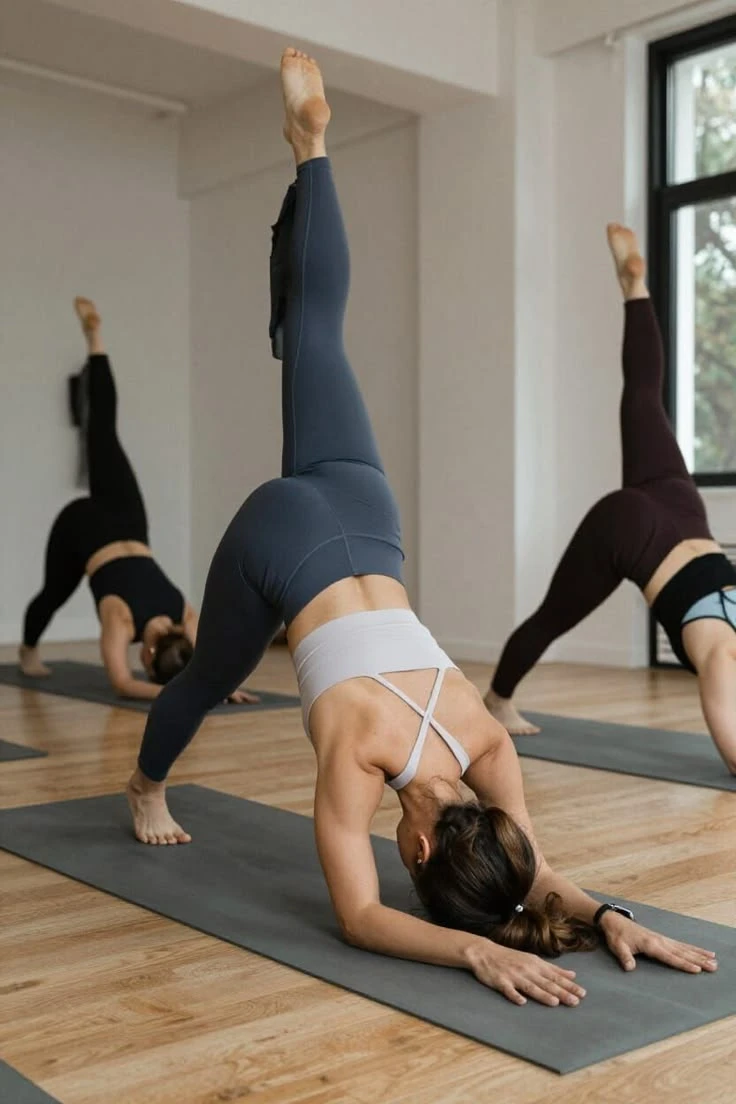
Bikram yoga is a mode derived from hatha yoga that proposes a fixed sequence of 26 postures and two breathing exercises, performed over roughly 90 minutes.
Its most distinctive feature is the setting: the practice takes place in a room heated to around 40 °C, with about 40% humidity. The sequence stays in the same order and combines standing postures, balance work, and various floor positions.
The heat is not a mere accessory but a central part of this modality. Therefore, although it is often grouped under the umbrella of hot yoga, not every hot yoga class is Bikram: there are other heat-based styles that use heat but do not follow this specific sequence.
What Bikram Yoga Is
Bikram yoga is a modality derived from hatha yoga that proposes a fixed sequence of 26 postures and two breathing exercises, performed over approximately 90 minutes.
Its most distinctive feature is the setting: the practice takes place in a room heated to around 40 °C, with about 40% humidity. The sequence remains in the same order and combines standing postures, balance exercises, and various floor positions.
The heat is not a peripheral element but a core part of this modality. Therefore, although it is often categorized within “hot yoga,” not all hot yoga is Bikram: there are other heat-based approaches that use heat but do not follow this specific sequence.
@bikramyogazug Bikram Yoga Class at 40°C Toes Stand Pose 🔥 #bikramyoga #hotyoga #yogapose #bikramyogazug #switzerland ♬ LET ME BE – The Second Voice
What Is Worked During a Class?
A Bikram yoga session requires sustaining various poses, controlling the breath, and maintaining balance while executing movements that engage different muscle groups.
The combination can contribute to working:
- Strength, especially in the lower limbs.
- Balance and body stability.
- Flexibility and mobility.
- Coordination and body control.
- Concentration and breathing.
The available scientific evidence on yoga for older adults is interesting in this regard. A systematic review and meta-analysis of clinical trials found significant improvements in balance, flexibility and muscular strength among practitioners of yoga.
Another review focused specifically on people aged 60 and over found that yoga-based interventions could yield small improvements in balance and moderate improvements in physical mobility.
Bikram Yoga and Sarcopenia: What Is Their Relationship
Sarcopenia is the progressive loss of muscle mass, strength, and function associated with aging. It is a process that can affect independence and increase the risk of walking difficulties, rising from a chair, or maintaining balance.
That’s why, after age 50, maintaining good muscle condition becomes especially important.
But there is a fundamental clarification: there isn’t enough evidence to claim that Bikram yoga alone prevents sarcopenia.
What we do know is that certain forms of yoga can help improve some components associated with physically healthy aging, such as leg strength, balance, mobility, and flexibility.
By contrast, when it comes to prevention and treatment of sarcopenia, resistance or strength training has much stronger scientific backing. A review of studies in older adults with sarcopenia found that resistance exercise, alone or combined with other kinds of physical activity, ranks among the most effective strategies to boost strength and physical function.
Hence, Bikram can be part of an active routine, but it should not be viewed as a substitute for strength training.
Why It Might Be Appealing After 50?
Time does not inevitably translate into a loss of mobility or strength. A key to what is called active aging is to stay physically active and work on different capacities.
In that context, a practice that combines balance, mobility, and muscle engagement can be an interesting addition.
Moreover, the postures held during a class require attention to one’s own body and careful movement control. This can turn yoga into a valuable tool to preserve functionality, especially when combined with other forms of exercise.
In Penélope Cruz’s case, the key point is to consider the whole picture: the actress does not rely on a single discipline for well-being, but blends different habits and forms of physical activity.
The Heat: A Distinctive Feature That Also Demands Precautions
The 40 °C heat makes a Bikram class markedly different from a standard yoga session.
Heat can heighten the sense of effort, promote greater fluid loss, and impose a substantial cardiovascular workload. That is why this is not simply about doing yoga in a hot room.
Hydration, gradual adaptation, and listening to one’s body are essential. If dizziness, nausea, weakness, headache, or faintness occur, the class should be paused.
It is also important to consult with a health professional before starting such a practice if you have cardiovascular disease, temperature regulation issues, a history of dehydration, or other conditions that might be affected by intense exercise in hot environments.
Does Bikram Yoga Help You Lose Weight?
That is one of the arguments often associated with hot yoga, but it should be viewed in context.
During a class, the body works hard and sweats a lot, which can lead to an immediate drop in body weight. However, that initial loss is mainly due to fluids and does not necessarily reflect a reduction in fat mass.
Body composition depends on multiple factors, including diet, energy expenditure, training, and consistency.
Therefore, it would also be misleading to present Bikram as a quick fix for slimming down.
Penélope Cruz’s Routine as Inspiration, Not a Recipe
The popularity of celebrity routines can spark interest in exploring new ways of moving, but there is no universal formula for staying healthy after 50.
In Penélope Cruz’s case, the most interesting takeaway is not only that she practices Bikram yoga, but that her routine blends different tools: strength, cardiovascular activity, mobility, meditation, and dietary habits.
And that holistic approach is probably more important than any single discipline.
The goal should not be to imitate an actress’s exact training, but to find a combination of activities that helps sustain strength, mobility, balance, and autonomy over time.
Bikram yoga can be an interesting complement for working on mobility, flexibility, balance, and strength, but it does not replace resistance training when the aim is to prevent or address the loss of muscle mass and strength associated with aging.
The key, more than chasing a “miracle” practice, is to stay active and combine different types of exercise according to age, fitness level, and individual possibilities.