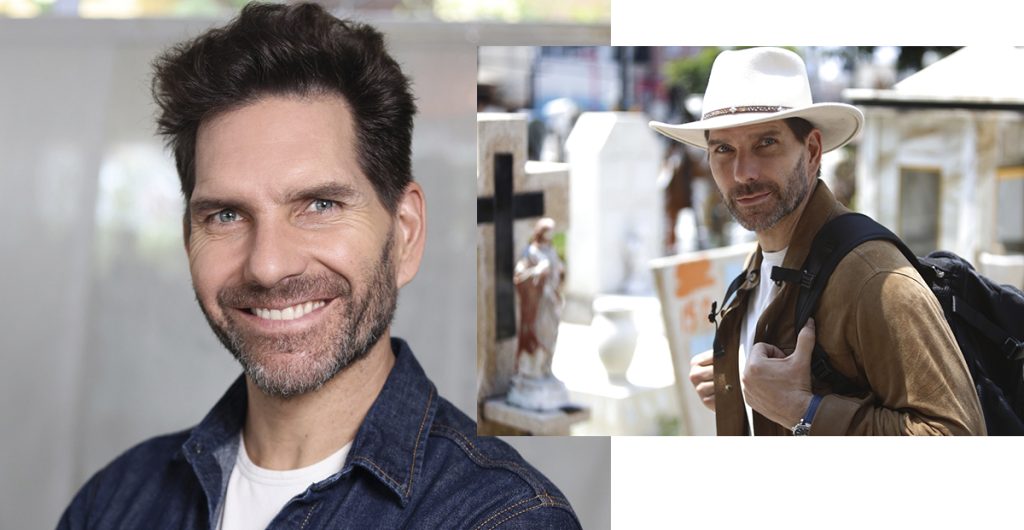
The Day of the Dead is one of Mexico’s most recognizable celebrations. Its altars, the marigold flowers, the sugar skulls, and the pan de muerto are part of a tradition that, over the years, has also captivated audiences in other parts of the world. But what happens behind that colorful image? Who works for months to have everything ready? What do the elements that each family places on their offering mean?
Those are some of the questions that run through Mexico Between Two Worlds, HISTORY’s documentary that features actor Arap Bethke as one of its leads. During the journey, the actor approaches artisans, visits communities that keep their customs alive, and uncovers stories that, even for someone who has known and enjoyed this celebration for years, still had much to reveal.
“One of the things that most interested me is to tell what happens behind the Day of the Dead. We all know this celebration, which in Mexico and around the world has become quite fashionable, but we rarely have the opportunity to see what lies behind it, how people prepare,” he explains in an interview with Para Ti.
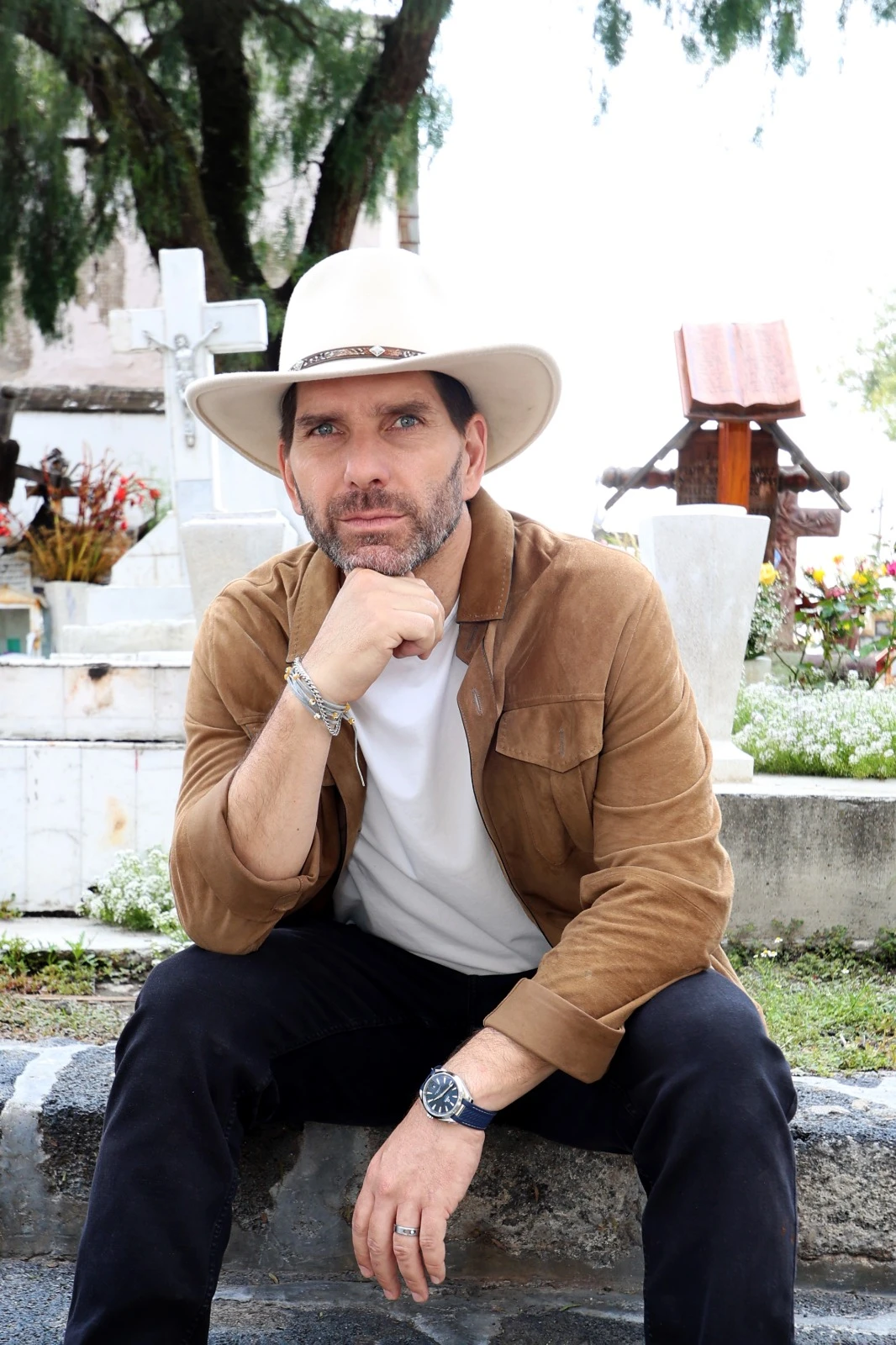
And he immediately points out one of the objectives he enjoyed most about the project: “Give the microphone to the people who spend almost the entire year preparing for this event—the makers of pan de muerto, the cultivators of marigold flowers, the creators of the sugar skulls so famous.”
During filming, Arap discovered that some of those crafts begin practically when the previous year’s celebration ends. “I didn’t know they dedicate months, sometimes from the moment Day of the Dead ends they start preparing for the next one. We got a look at those artisans, at those Mexican hands that, at times, carry out the same work for generations.”
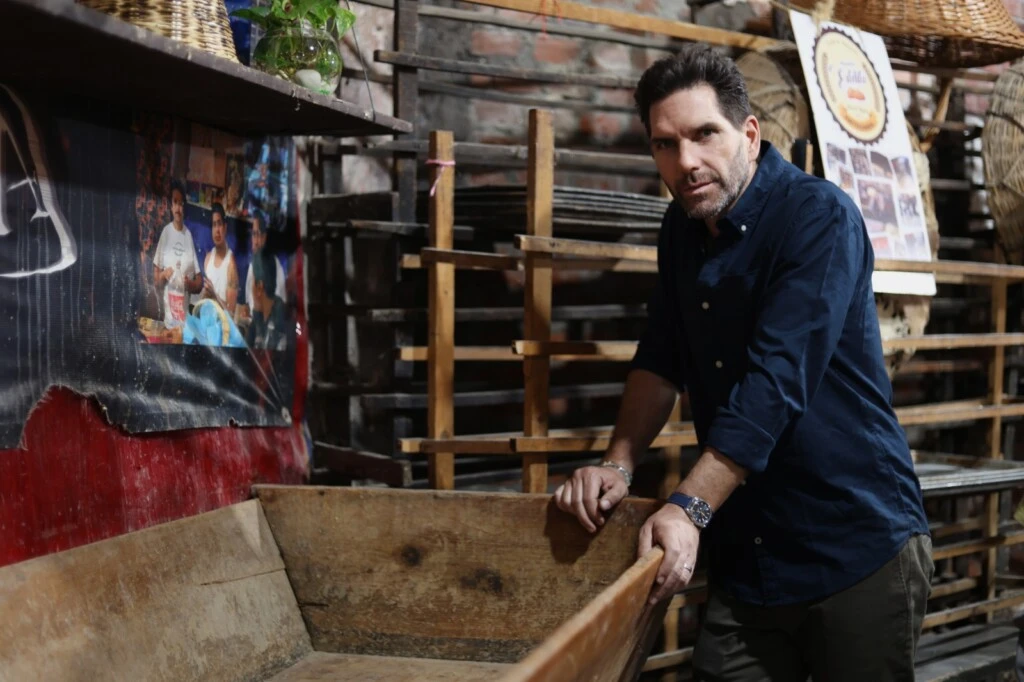
But the learning wasn’t limited to understanding the work behind each element. It also involved understanding what those elements signify. “I have always loved this celebration a lot, but there were things whose meanings I didn’t know. You take them for granted and place them on the altar every year, but now we could explore what happens behind and what each element means. It’s very interesting,” he says.
Arap Bethke and the evolution of the Day of the Dead: “The essence remains”
One of the discoveries that most surprised the actor concerns the monumental parades that today form part of the celebration. Although for many they are an inseparable image of the Day of the Dead, Arap says this is a relatively recent addition.
“Many people think that this parade, which has become so iconic in a short time, has existed for hundreds of years, and, in reality, it is quite recent. It arose under very peculiar conditions: they came to shoot a movie in Mexico, those pieces stayed there and then the workshop artisans said: ‘Why not make this a tradition?’” he explains.
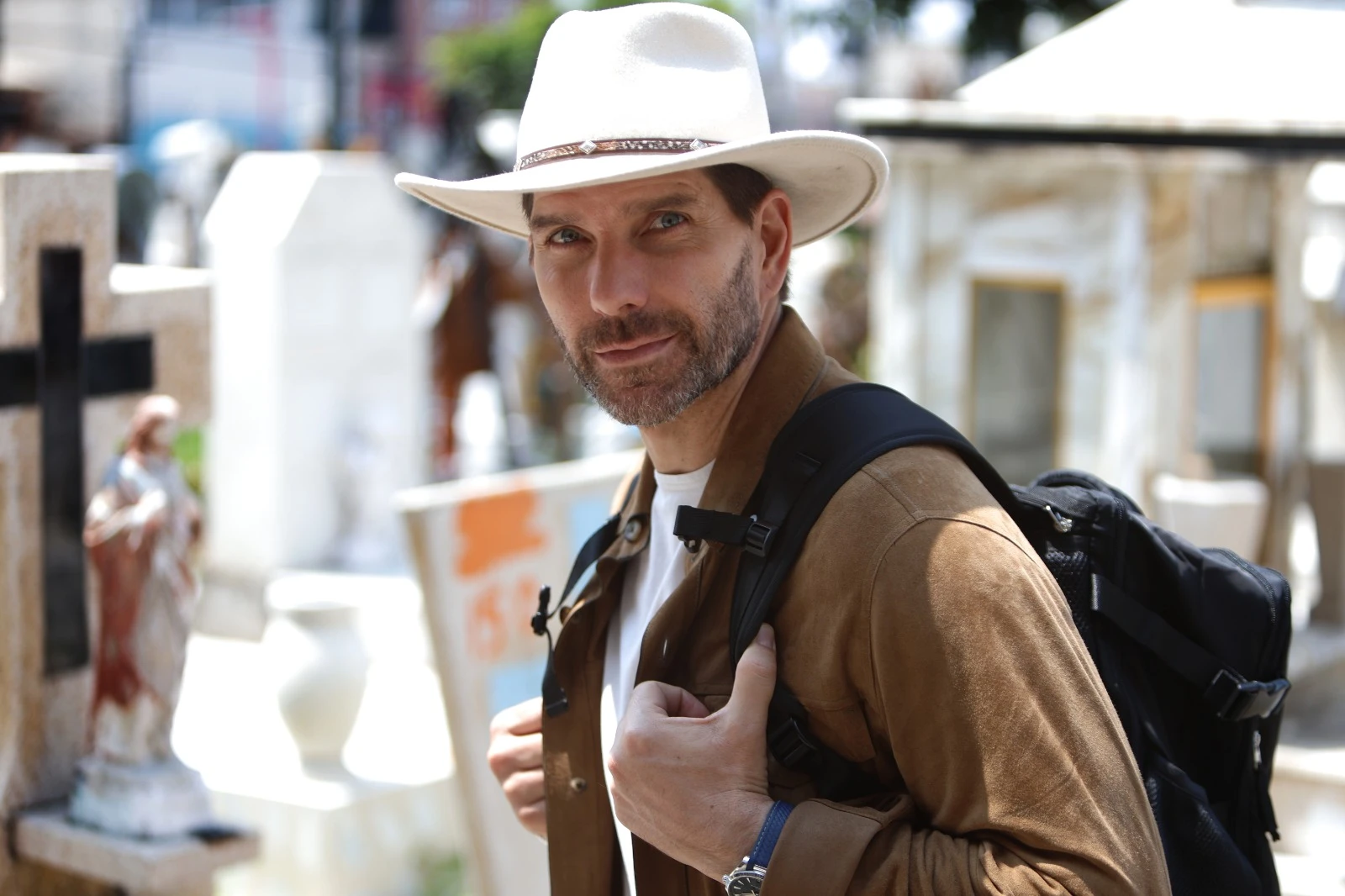
For him, that story helps explain how a tradition can transform without losing its original meaning. “The Day of the Dead, like all traditions, has evolved over the years. The essence remains, the origin endures, and I think the most important ingredient will always be family, unity, communion, being together.”
The journey also allowed him to understand how different elements were incorporated into a celebration with roots in pre-Hispanic times that evolved over the years.
“The Mesoamerican cultures, the pre-Hispanic cultures, had a death cult that was a bit rougher. Skulls were real, bones were real, and this, little by little, with the arrival of the Spaniards, was softened and became a bit more celebratory,” explains.
In that process, sugar skulls, the favorite foods of those who are no longer with us, tequila, music, and visits to the cemeteries were added. “The essence remains that it continues to be a family celebration, in which we remember with affection and respect the people who are no longer with us. But gradually these elements were incorporated: the sugar skull, the foods that that person liked most, then we share a little tequila in honor of those who left, we go to the cemetery with mariachis, with tequila, to sing to them and to watch over them all night.”
That combination of memory and celebration is, for Arap, one of the most special features of the Mexican tradition. “It is a very peculiar view we have in Mexico of honoring death with music, with tequila, with songs, with the pleasant memories of that person.”
And he clarifies that it isn’t about denying the sadness that comes with a loss, but about finding another way to live with it: “It doesn’t become so sad and so morose, but rather it transforms into a matter where the loss of the people we love hurts, but we also open up that space for them to share our company on a very special night.”
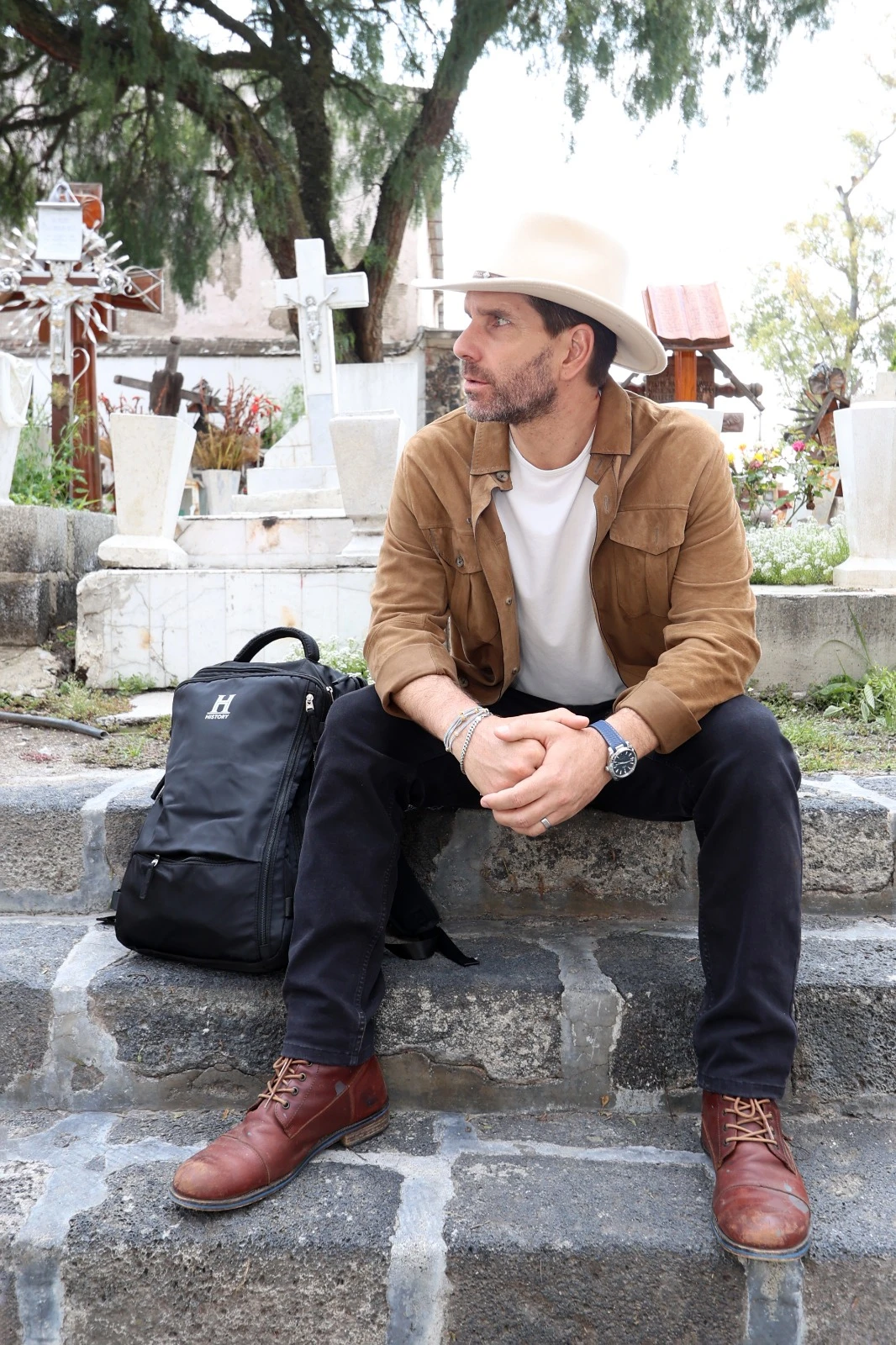
That’s why, when asked whether the Day of the Dead is a party, his answer captures both aspects of the celebration: No es una cuestión lúgubre, pero tampoco es una fiesta por fiesta, por decir ‘vamos de fiesta’. Hay una parte celebratoria, pero también hay una parte de respeto y de recordar. Siento que es una combinación”.
San Andrés Mixquic: five generations dedicated to pan de muerto
Among the most special moments of the shoot, Arap recalls visiting San Andrés Mixquic, a place he describes as one of the epicenters of the Day of the Dead. There he met a family that has been making pan de muerto for five generations and got close to a custom that gathers a large part of the community.
“We went with a family that makes pan de muerto. They’ve been doing it for five generations,” he says.
It’s a very particular sweet bread that is prepared especially for this time of year. “It has cinnamon, orange, they put chocolate chips. It’s a bread that’s very specific to these dates. On top they put the bones, four bones and something like a little head,” he describes.
During the journey, he also learned the meaning attached to that shape. “It represents skulls. Before, it was made with real skulls,” he explains, referring to the oldest practices linked to the death cult.
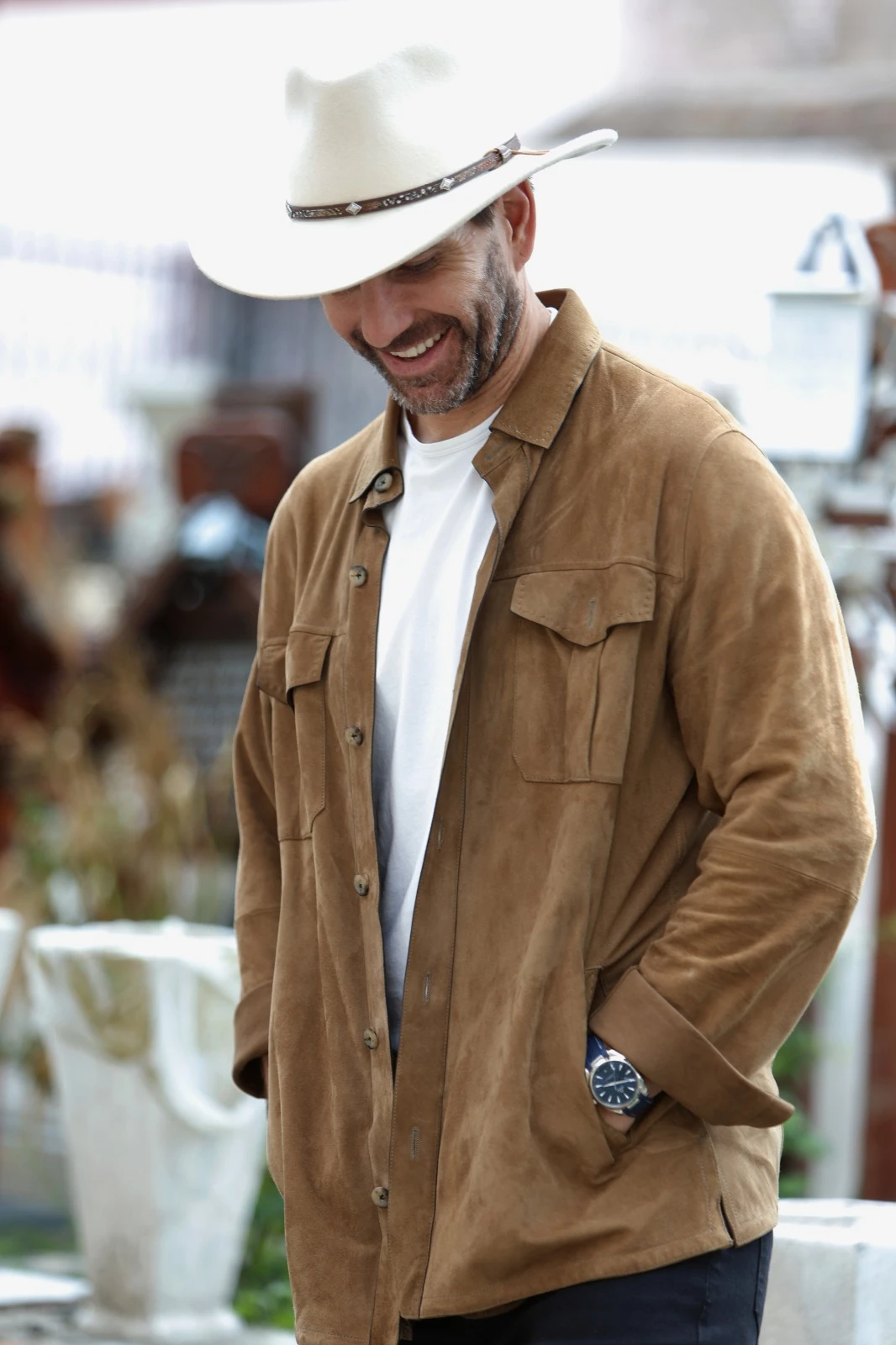
But what moved him most was discovering how the bread-making involves the whole community. “They told us that, from mid-October onward, the whole village comes. They have the same oven for a hundred years, a huge oven where they make the bread.”
Arap explains that families bring their own preparations so that they can bake them there. “The whole village arrives with their mix and they make the bread for them. Then it becomes a matter of a lot of talking, a lot of celebrating, and I found that very beautiful.”
Amid that scene appeared Doña Estelita, a woman of nearly one hundred years who joined in the bread-making. For the actor, that moment summed up a large part of what he had gone to find with the documentary.
“Then Doña Estelita, who is almost one hundred years old, came out to make bread with us. It was an incredible moment. Anthropologically, it’s an amazing sight to see an entire community come together to bake bread for a celebration of the dead. It’s really beautiful,” he recalls.
The experience also led him to reflect on the value of these customs and the work involved in keeping them alive across generations. “It’s unimaginable how much the world has changed in a century and that this endures. It’s really beautiful that they show it this way, with work in which you visit places and talk to people.”
For Arap, the fact that traditions evolve does not mean they lose their value. On the contrary, he finds it especially meaningful that new generations continue to take an interest in them. “They have evolved, like we were saying about the parades, but there’s a strong interest in maintaining and honoring those traditions. I find that very beautiful.”
The Coco phenomenon and the global reach of the Day of the Dead
The Disney and Pixar film Coco helped bring the Day of the Dead to audiences around the world. For Arap, that reach also speaks to the strength of a celebration that blends color, music, memory, and a unique perspective on death.
“Definitely, Disney has that power to globalize things, but it also shows you the power of a celebration. They don’t pick anything and they do thorough research,” he reflects.
And he adds: “I suppose they could have made a film about many other celebrations and chose the Day of the Dead precisely because it has this colorful, festive thing and this very unique, very particular worldview of life.”
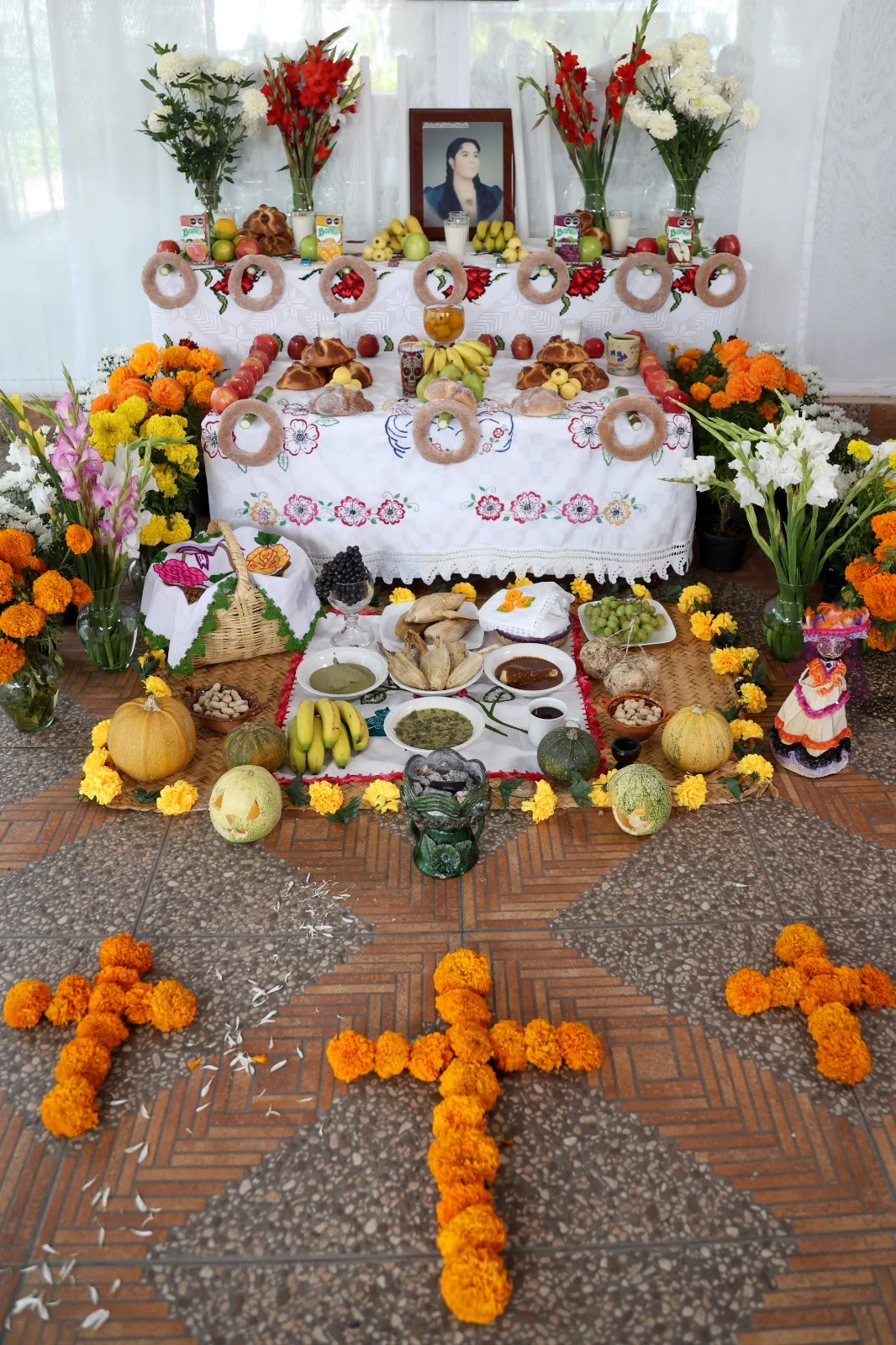
The actor hopes the documentary will also ignite curiosity in those who have yet to get to know the celebration up close. “It gives us the possibility to see what happens in other countries and, perhaps, to become interested and say: ‘Well, next year I will go and see it’.”
That is precisely one of the project’s aims: to bring the public closer to the stories and the people who sustain the tradition. “That’s what we want: invite people to walk this journey with us and, if they feel brave, to come visit it. It would be beautiful.”
Arap Bethke: “My body was born in Kenya, but my heart was born in Mexico”
The actor’s interest in traveling, discovering other cultures, and talking with people who have different experiences is also tied to his family history. Although he was born in Kenya, his bond with Mexico began when he was very young and ended up becoming a central part of his identity.
“My dad was a restless traveler. He worked at the United Nations, but he also loved traveling: he was an adventurer, an explorer. That’s where my side comes from, and why I’ve always dreamed of being an explorer,” he says.
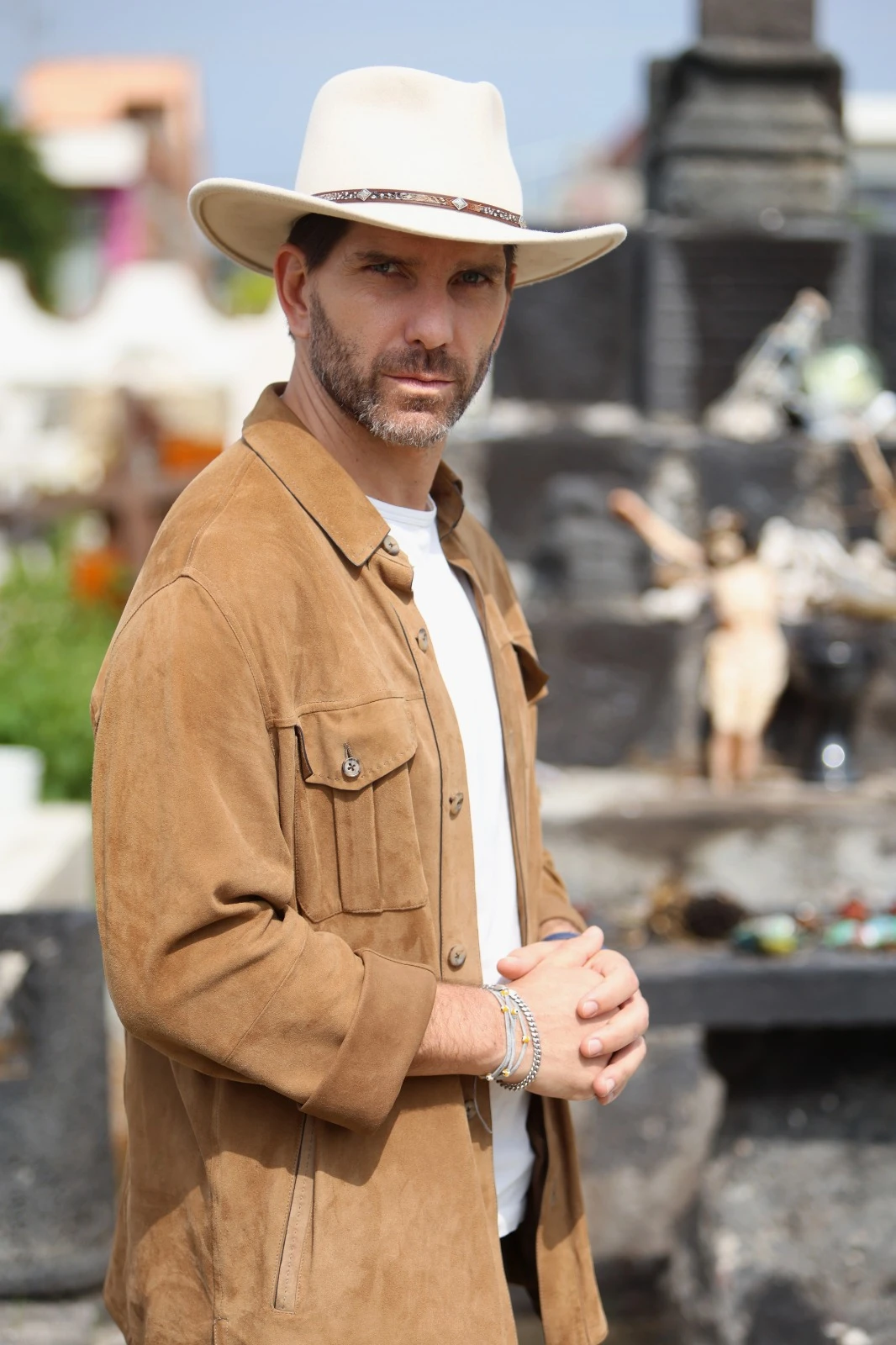
His father was German and his mother Chilean. Because he worked at the United Nations, the family moved from one country to another. “I was born in Kenya because my dad was on a mission there with the United Nations and every seven years he was transferred.”
That’s how he arrived in Mexico, around six years old. His siblings had been born in other places and the possibility of further moves still loomed in the family plans. When he was seven, there was the possibility of moving to Fiji or Brazil.
“My brother and I were fascinated because we wanted to go to Fiji, but my dad said: ‘No, not anymore, we stay in Mexico.’ My sister was a teenager and these big moves were becoming hard for her. My dad liked Mexico and decided to stay,” he recounts.
From then on, the country became his home. “Mexico kind of adopted us as a country. So I always say that my body was born in Kenya, but my heart was born in Mexico.”
Growing up in a family crossed by different cultures also marked his way of looking at the world. Arap recognizes that that diversity allowed him to learn to live with other customs and to take an interest in the stories of those around him.
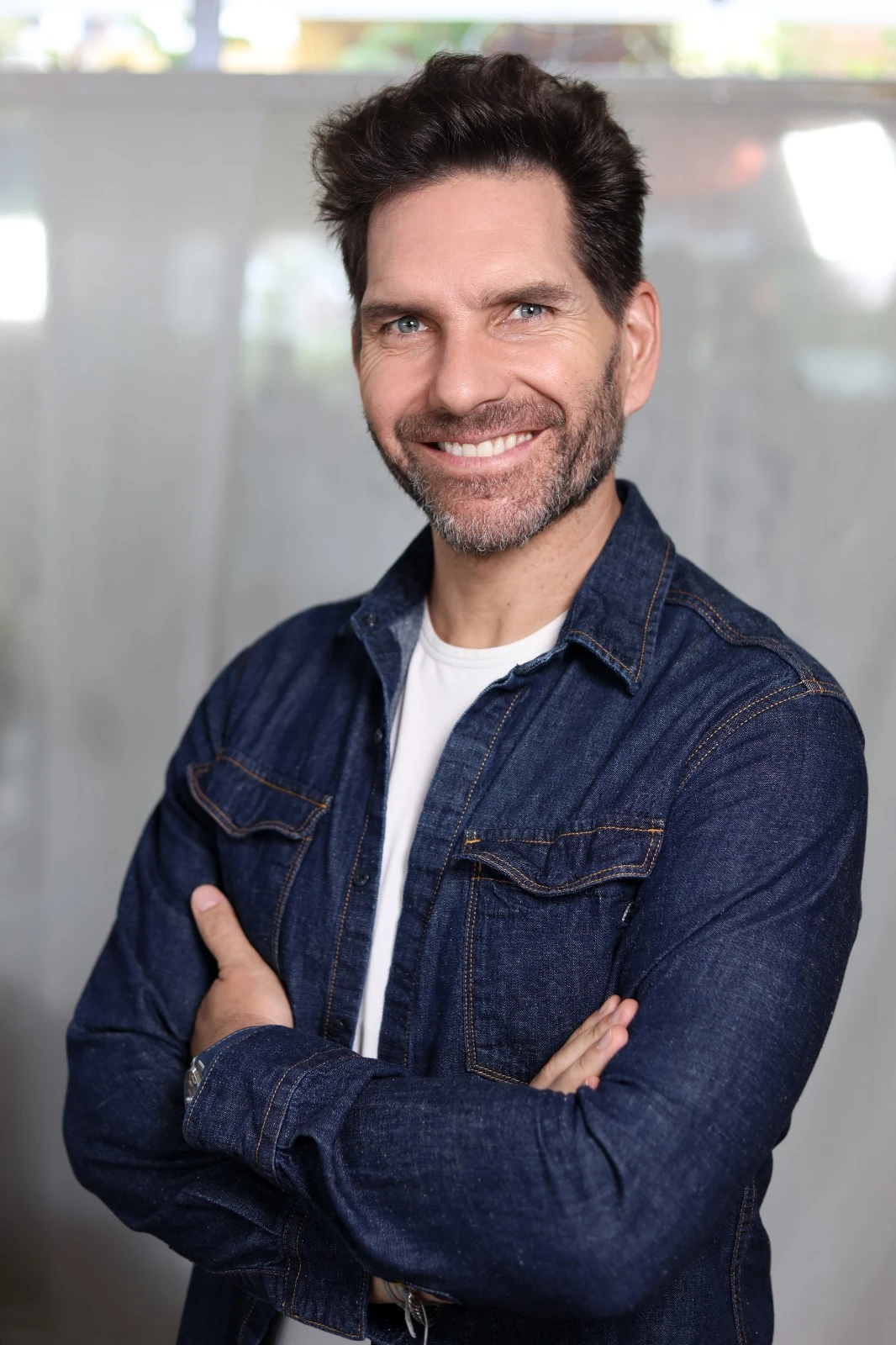
“It has been interesting growing up with that cultural difference. One of the things my dad taught me was precisely to learn from different cultures. The most interesting part of traveling is talking to people, learning from people, and seeing, through those conversations, what you can learn and how you can have a different perspective of the world.”
That is why participating in a project like Mexico Between Two Worlds holds special value for him. It is not only about guiding a journey, but about maintaining a stance of curiosity and learning in every encounter.
“I’ve always loved traveling, exploring, and talking with people. For me, making this kind of content is like a dream come true. And more so with HISTORY,” he says.
That perspective is also what he seeks to convey through the documentary: the possibility of approaching other cultures, learning their customs, and understanding that there’s always something new to discover. “The world is so big, so wide, and so diverse. It fills me a lot to be able to do this kind of thing.”
Arap Bethke’s altar: memories of his father and a tribute to his dog
Arap’s connection to the Day of the Dead extends beyond his work. In his own home, the celebration is linked to a family tradition that began when they arrived in Mexico and his mother decided to set up an altar to remember his maternal grandfather.
“When we arrived in Mexico, the first person who was there was my grandfather, my mother’s father. I remember that, suddenly, my mom decided to make an altar. I didn’t understand it; I was very young and said: ‘Well, this looks nice.’ But I remember that we talked and she told us stories about his father,” he recalls.
Over time, that scene became a tradition that the family repeated year after year. “It was very beautiful to go through that journey and, year after year, it became a family tradition at home.”
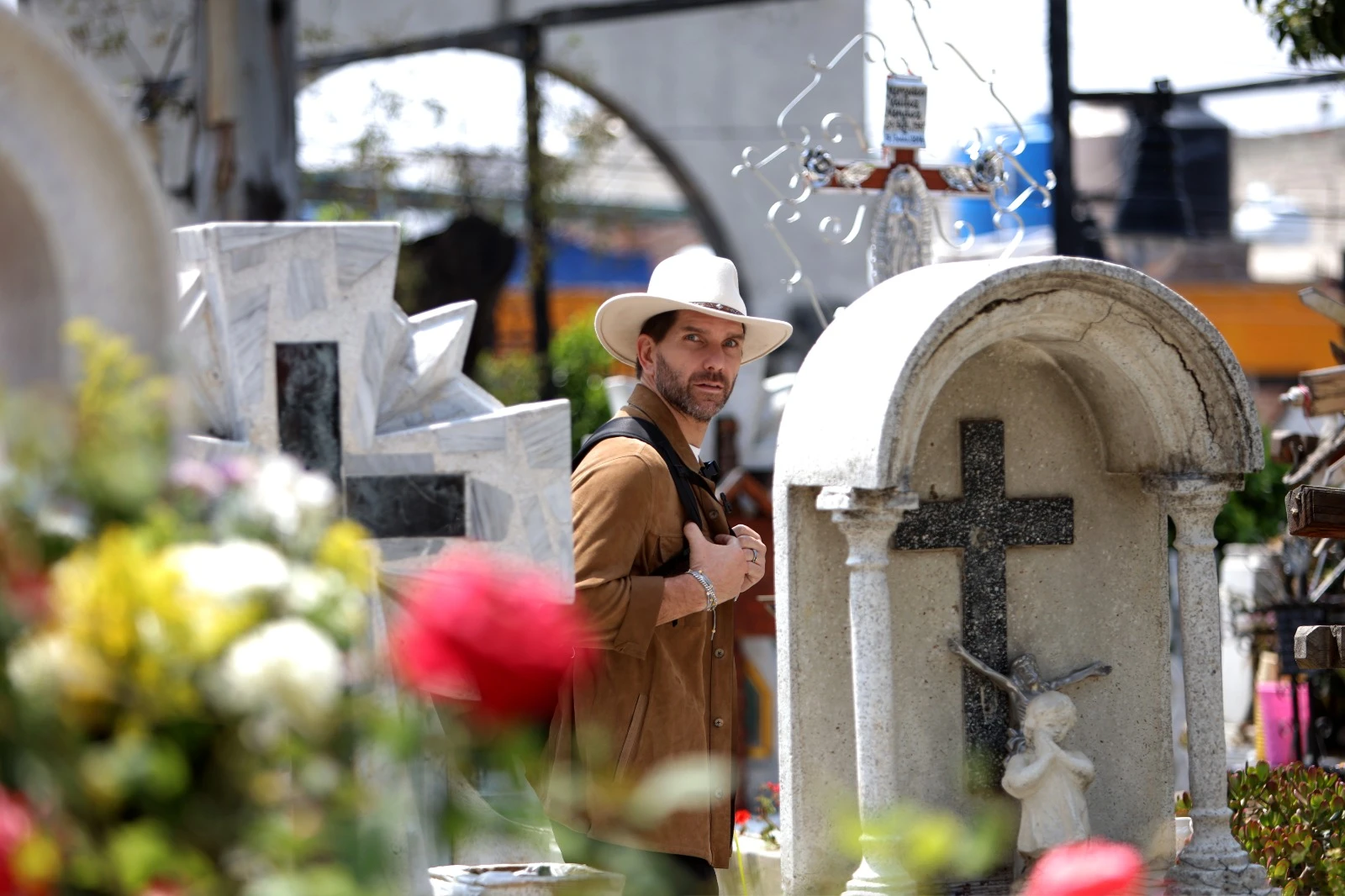
Arap decided to keep it going and include his own father, whom he remembers through small daily gestures. “There I decided that I would also continue with that tradition and include my dad. There’s a moment of sadness, of pain, because he has left and isn’t here anymore. He liked to drink his coffee, so we put a coffee cup there to remember him.”
The altar also serves as a meeting point for the family, around which stories, memories, and anecdotes reappear. Some bring laughter; others, which at the time were painful, take on another dimension with the passing years.
“We start telling stories about my dad and interesting things come out, because suddenly there are things you didn’t remember, things that were festive or that at the time were somewhat tragic but later become comic, like almost everything in life,” he says.
This year, moreover, the altar will receive a new tribute. Arap has just said goodbye to his dog, who had been part of the family for 14 years, and he already knows how it will have a special place in that tradition.
“Just as we were finishing, after 14 years with us, he was already very old. He’s going to have a very special place on the altar this year,” he shares. And, with humor and affection, he previews the offering: “I’ll place a big bone there for him to enjoy.”
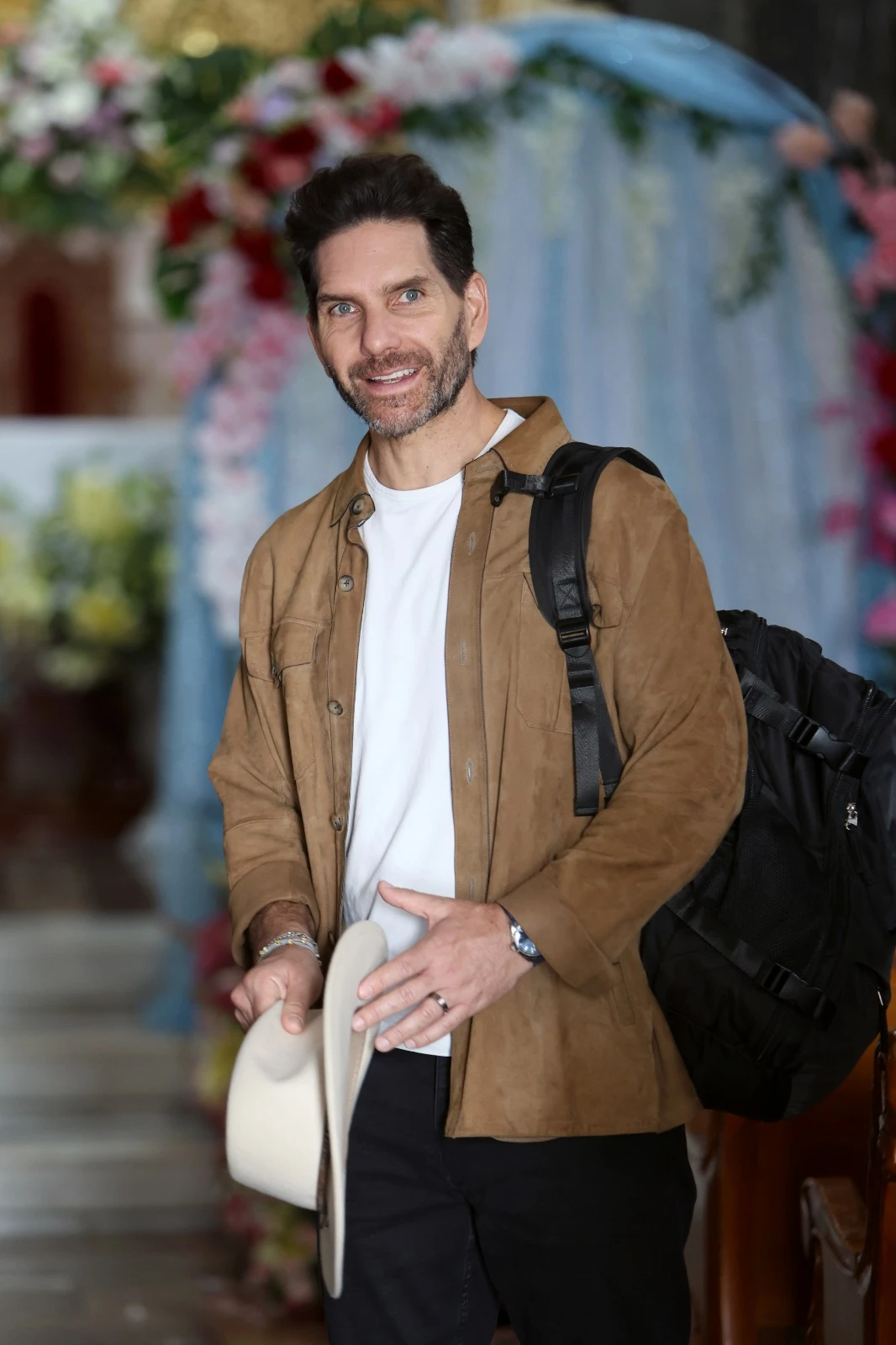
What the elements of the Day of the Dead altar mean
The journey of Mexico Between Two Worlds also allowed Arap to better understand the meaning of the objects placed on the offerings. They are elements that form part of the most recognizable image of the celebration, but they have their own meanings within the tradition.
“You come with food for them, you leave bread and water to quench their thirst. You leave salt to purify the souls,” he explains.
Candles, for their part, have the function of lighting the path, while the marigold flowers bring their characteristic color and aroma.
“It’s a very particular flower, orange, called cempasúchil. It’s native to Mexico and was adopted precisely because it blooms at this time and because it has a scent and a color that are very distinctive, which light up the way to the offering,” he says.
For the actor, learning the meaning of these elements allows him to see the celebration from a different perspective. What might have seemed like a simple array of traditional objects becomes a way to remember, honor, and keep those who are no longer with us close.
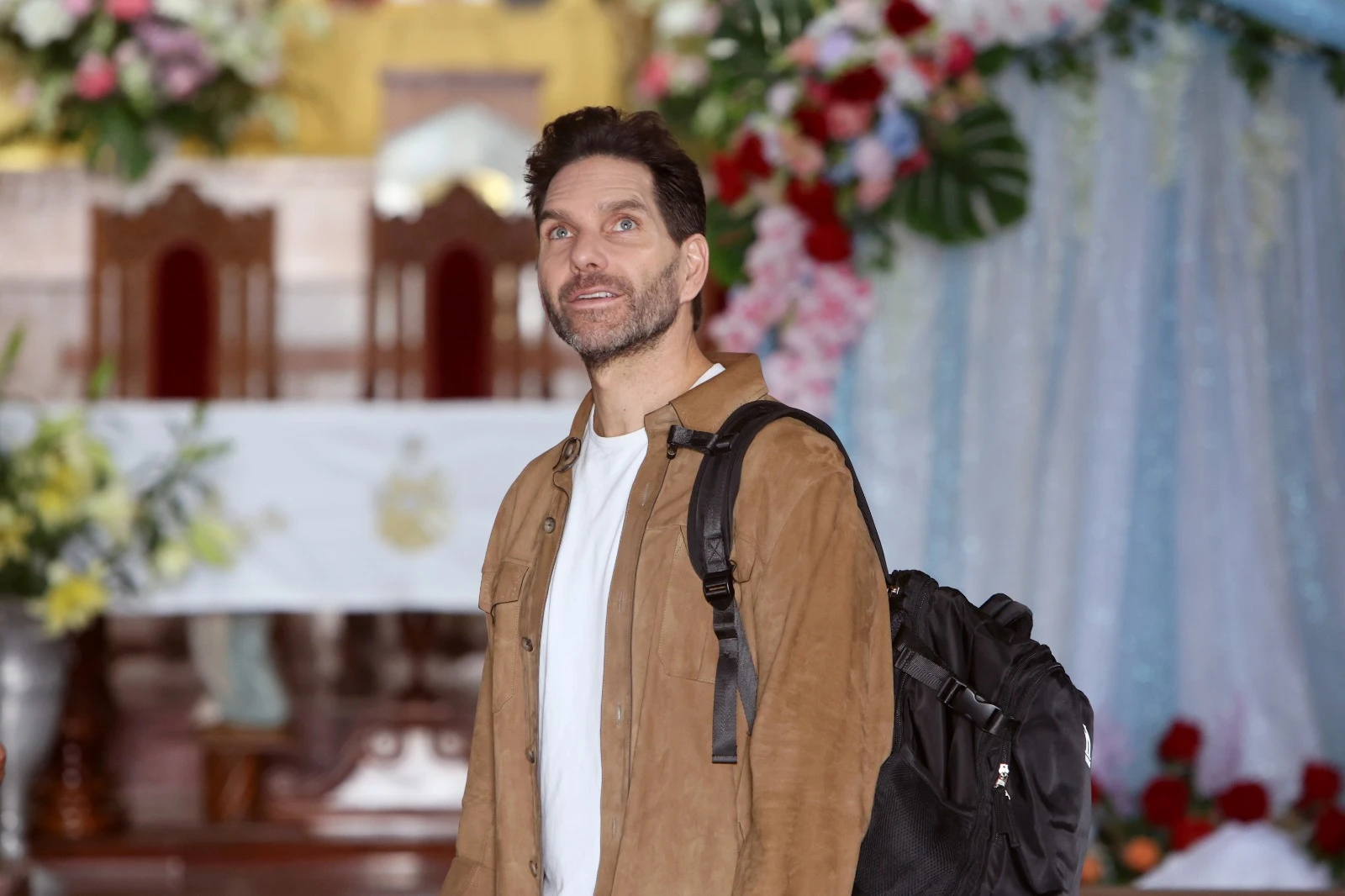
In that sense, the Day of the Dead brings together two feelings that, far from excluding one another, coexist during the celebration: the pain of absence and the joy of sharing stories again.
“I think it would be lovely for this tradition to permeate other cultures so that people can celebrate those who are no longer with them with this respect and seriousness, but also with a bit of celebration and music. Why not a little tequila to ease the sorrows?”, says Arap.
After finishing the HISTORY shoot, the actor began working on a new series for Amazon, a dramedy about which he could not reveal too much during the interview. Meanwhile, Mexico Between Two Worlds left him with the possibility of revisiting a tradition he had known for years and discovering everything there was still to learn.
Because, as he sums up when talking about his experience, traveling is not only about visiting places: it is about listening to those who inhabit them, getting closer to their stories, and letting yourself be surprised by other ways of understanding the world.
“Mexico Between Two Worlds” can be seen on Sundays on History at 9 p.m. and it is also broadcast on Flow. Additionally, a marathon with all four episodes is planned for Sunday, November 1, starting at 8 p.m., exclusively on History Channel.