

Receiving an unexpected diagnosis can transform a family’s life. Questions arise, uncertainty sets in, and the need to find reliable answers becomes pressing. In the case of achondroplasia, a genetic condition that affects bone growth, this experience is especially common: approximately 80% of cases occur in families with no prior history.
Behind that percentage are mothers, fathers, boys and girls who need much more than just a diagnosis. They require information, support, specialized professionals, and a health system that guarantees appropriate care throughout life.
Each October 25, World Dwarfism Day, offers an opportunity to raise visibility of this reality and to remember that talking about achondroplasia does not merely mean discussing height. It also entails addressing health, autonomy, inclusion, and the right to access medical advances.
In Argentina, although scientific research has enabled the development of new therapeutic options, obstacles persist that prevent all families from accessing the checkups and treatments they need.
What is achondroplasia and why can it appear without a family history
Achondroplasia is the most common cause of disproportionate short stature of genetic origin. It is linked to a mutation in the FGFR3 gene, which plays a role in regulating bone growth.
This alteration primarily affects the development of the long bones in the arms and legs.
“Achondroplasia is the most frequent cause of genetically driven disproportionate short stature. It affects the growth of the long bones, particularly those in the arms and legs, while other parts of the body follow different growth patterns,” explains the Dr. Julieta De Victor, medical geneticist (UBA) and specialist in rare diseases (MN 156.245).
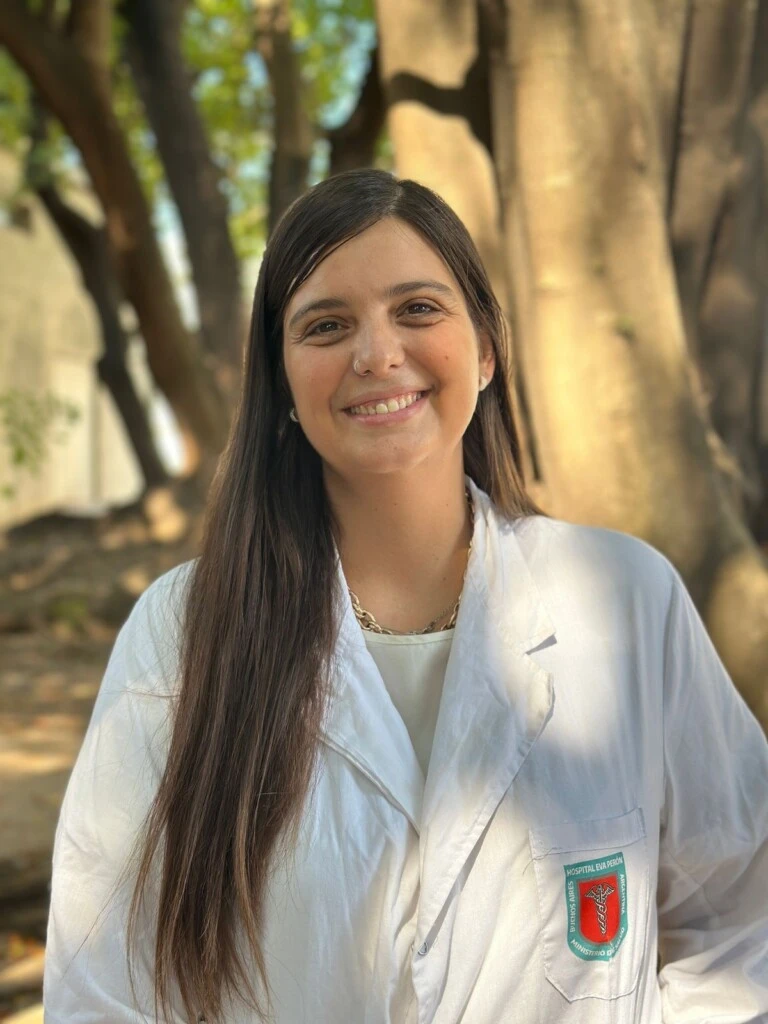
The specialist emphasizes that each person presents particular characteristics and needs, so it is important to avoid generalizations and prejudices.
“People with achondroplasia may have distinctive physical features, but their health needs and life experiences are diverse. The condition does not by itself determine abilities nor does it define who a person is,” she states.
One striking fact is that approximately 8 out of 10 children with achondroplasia are born into families with no prior history of the condition.
“In about 80% of cases, the genetic variant appears de novo, meaning it is not present in the parents. Therefore, the birth of a child with achondroplasia can occur in families without a history of this condition,” De Victor explains.
And she adds an important clarification for families who receive the diagnosis:
“Its appearance is not the result of anything the mother or father did or did not do during pregnancy.”
The importance of early diagnosis and medical monitoring
Achondroplasia can be suspected during pregnancy, through ultrasound checks, or it can be identified after birth via clinical evaluation and supplementary studies.
Genetic analysis of the FGFR3 gene allows confirmation of the diagnosis when appropriate and provides information to guide the family about follow-up and treatment options.
However, the diagnosis is only the beginning of a process that requires care across multiple life stages.
“Achondroplasia requires checkups that anticipate, identify, and promptly address possible complications,” explains De Victor.
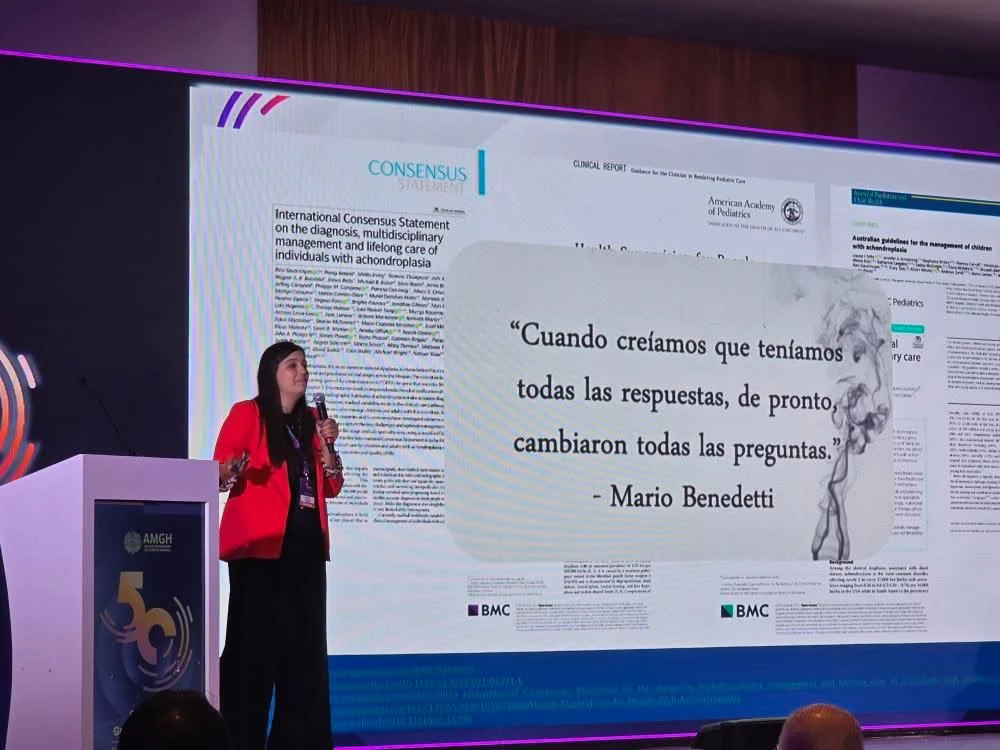
Among the situations that require special monitoring are:
- Respiratory problems and sleep apnea.
- Hearing impairments.
- Complications at the craniovertebral junction.
- Orthopedic and spine-related difficulties.
The physician clarifies that not all people develop these complications or present them with the same intensity. Therefore, each follow-up must be individualized.
The ideal approach requires the involvement of an interdisciplinary team that may include specialists in genetics, pediatrics, orthopedics, pulmonology and otolaryngology, among other areas.
The goal is not only to treat complications when they arise, but to prevent them and to support development, autonomy and quality of life.
New treatments for achondroplasia: what changed with the scientific advances
For many years, medical care for people with achondroplasia focused mainly on managing manifestations and preventing complications.
However, scientific advances in recent years have enabled the development of therapies targeted at biological mechanisms related to bone growth.
These treatments aim to increase the rate of linear growth in children whose growth plates are still open.
This marks a significant shift in management options, though it does not mean there is a single solution for all medical needs associated with the condition.
“The treatment does not replace clinical monitoring, necessary interventions, or supportive measures. The introduction of new therapies altered the possibilities for management but also raised questions about access, continuity of treatment, long-term outcomes, and the need for information that enables shared decision-making,” explains De Victor.
Therefore, specialists emphasize that the new therapies must be part of a comprehensive approach, in which their benefits, risks and limitations are evaluated according to each patient.
The reality of Argentine families: when accessing a specialist is a challenge
Beyond clinical advances, one of the main difficulties remains ensuring that all people can receive appropriate care, regardless of where they live or their financial means.
For many families, the journey begins with finding professionals who are knowledgeable about the condition and continues with the need to coordinate appointments, perform periodic studies, and obtain coverage for indicated services.
“Reliable information and accompaniment are essential so that families can make informed decisions and not face the unknown alone,” maintains the specialist.
From Fundación AcondroSer, it is warned that barriers are not solely medical. Administrative, economic and social difficulties can also affect access to care and quality of life.
Added to these are prejudices and discrimination, which continue to shape the daily experiences of many people with short stature.
“Inclusion and access to health are not opposing goals. People with achondroplasia have the right to participate fully in society and also to access medical advances that can improve their health and quality of life,” says Maria Laura, president of the Fundación AcondroSer.
Her reflection invites us to understand that the real challenge is building a society capable of respecting differences while guaranteeing access to appropriate medical care.
Achondroplasia in Argentina: what families need after the diagnosis
Access to health care is not limited to obtaining a medication. It also means being able to perform checkups, having trained professionals, and receiving clear explanations to make informed decisions.
“Speaking of access does not mean merely having a medication. It also implies having a diagnosis, periodic checkups, specialists, tests when appropriate, and accompaniment to make informed decisions,” reiterates De Victor.
The physician emphasizes that one of the outstanding challenges in Argentina is strengthening clinical research and the production of local information. Patient registries and collaboration between hospitals and specialized centers can help better understand the needs of people with achondroplasia and detect inequalities in care.
“The challenge is that scientific advances translate into concrete opportunities for people, without the access to care being dictated by systemic inequalities,” she reflects.
For families who have just received a diagnosis, the recommendation is to seek specialized guidance and avoid confronting this journey alone.
“To families who receive a diagnosis or have a suspicion of achondroplasia I would say: seek guidance from a health team with experience in clinical genetics and skeletal dysplasias. It is important to carry out the indicated checks, consult when new concerns arise, and ask for information about follow-up and treatment options.”
She also highlights the role of family associations, which can provide support, information and resources to accompany the different stages.
World Dwarfism Day: much more than a date for awareness
October 25 invites reflection on a reality that still requires greater visibility.
Achondroplasia is part of human diversity and does not define the abilities, projects or dreams of those living with this condition.
But recognizing and respecting that diversity also means guaranteeing concrete rights: receiving an timely diagnosis, accessing specialized professionals, having treatments when indicated, and building a full life without barriers or discrimination.
Because behind every diagnosis there is a person and a family with their own story. And because the advances of science only reach their true value when they reach those who need them.