
The cannelloni his grandmother prepared with an incredibly thin dough, the stews, the pascualina, and the Sunday roasts are part of Patricio Negro‘s gastronomic memory. Long before he worked in Europe’s grand kitchens and became a reference in Mar del Plata’s gastronomy, the chef learned that around a table things happen that go far beyond food.
Born and raised in Viedma, he arrived in Buenos Aires to study Economic Sciences. However, he soon understood that his future lay elsewhere. He left accounting, trained as a cook, and decided to devote all his energy to professionalizing himself.
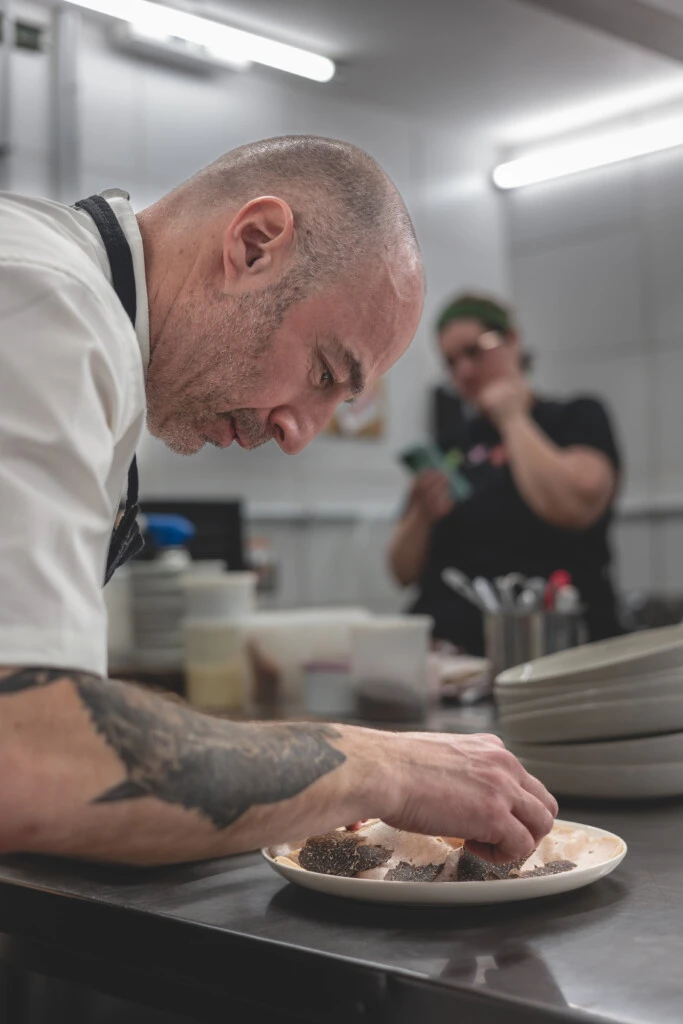
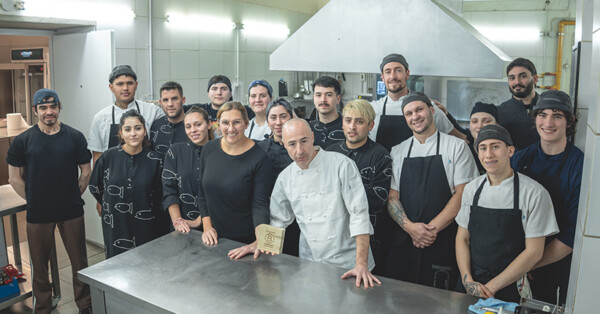
Together with his partner, Fernanda Sarasa, he created Sarasanegro, a restaurant that carries their surnames and was born with the challenge of developing a cuisine with its own identity, linked to the sea and the territory.
The road wasn’t easy. There was uncertainty, financial difficulties, and moments when returning to Europe seemed the simplest option. But they chose to stay, build a family, and consolidate a gastronomic project that today continues to evolve alongside Furia.
In this interview with Para Ti, Patricio Negro reflects on his history, discusses leadership in the kitchen, talks about his new projects, and shares his view on a product he’s passionate about: fish.
Patricio Negro: From the flavors of childhood to the world’s great kitchens
—Your story with cooking starts far from the fine dining restaurants, in Viedma, with your grandmother’s dishes and the flavors of your childhood. What’s the first gastronomic memory that comes to mind? Is there a dish from that time that still moves you today?
—We ate a lot, and very well, at home. Perhaps the most emblematic dishes of that time were the pucheros, the pascualina, a lamb carbonade, Sunday roasts, garlic potatoes, salads, and cannelloni. My grandmother used to make dough that was very, very thin, and it was incredible.
I think all that emotion, all those memories, are also tied to the surroundings. The food of that period was incredibly tasty, superbly delicious.
We didn’t have the habit of eating out. It was something very occasional. There was a restaurant called La Cantina, which an uncle took us to often. I remember having peppered milanesas there.
My mother, who was a language and literature teacher, was someone who loved cooking. In fact, she also did pastries and cake decoration. When we sat down to eat, she asked a lot about the preparations and all the work behind them.
These are memories that obviously mark you. I even think that the dishes that most endure in the cooking we do today have to do with those childhood flavors, or at least with the moments those dishes bring you.
There are things we have done in the restaurants that people have loved, but not because they’re complicated, rather because they emerge from memory, and in some way you can convey them.
—You were studying to be an accountant when you decided to change course and devote yourself to gastronomy. What happened to make you take that decision? Was there someone who pushed you to follow your true vocation?
—I started studying Public Accounting. In fact, studying a degree was the way to leave at 18. You finished high school and you either started working or chose a degree to go study. At that time there weren’t universities there. The places we all went to were La Plata or Buenos Aires.
Our family life took place essentially within one block. My uncles ran supermarkets, small stores, and my grandmother also lived there. We were all very close.
I worked a lot with an uncle who owned a general store. My idea was to study something that would allow me to return to Viedma, apply what I had learned, and keep working with him. But I didn’t like studying. I like working a lot.
My mom had a saying: “Study a career, later, if you don’t use it, it doesn’t matter, but you’ll have the degree for any eventuality.”
I moved to Buenos Aires, started the CBC and really didn’t enjoy studying. I also didn’t know how to do it. By then, one of my best friends’ brother studied at a culinary school and already worked in a restaurant. He told me a lot about what he did.
I went back to talk to my mom and told her I wanted to study cooking because it seemed a career with a light workload and a quick employment outcome. And that was what I wanted: to work.
What I thought would be a way to earn a living at the time ended up being what I would dedicate my life to.
I chose to pour all my energy into learning, traveling, working abroad, training, and becoming as professional as possible as quickly as I could. That also led me to decide not to return to Viedma.
—You worked in some of Europe’s most prestigious kitchens, such as Martín Berasategui’s. What was the most important thing you learned from those great masters? And what did you decide to do differently when you created your own restaurant?
—What marked me most was, above all, the issue of discipline. It was an entirely new world.
While we focused on the customer, there was also something parallel connected to earning a Michelin star, maintaining it, the prestige of the chef and the establishment. You had to work so that the client had an experience worthy of what the guides promised.
I remember Martín Berasategui’s kitchen: a white, immaculate kitchen where no one talked. It felt like a future movie. But I also realized there was an imposed discipline, for certain reasons. There was a stable team, but also a lot of people coming and going.
Perhaps that was what we didn’t want to repeat with Fernanda.
For me, discipline has to be present. It is linked to rigor, to excellence, to good habits and to repetition. But I think it must come from within and be transmitted as culture.
People have to want to come to work, want to be with you, want to be in that place, and at the same time, it must be a disciplined place because the aim is excellence.
That’s a bit what we changed.
I also learned a lot from the kitchens that marked the territory, the place they were in. I find that incredible and it’s something I brought here.
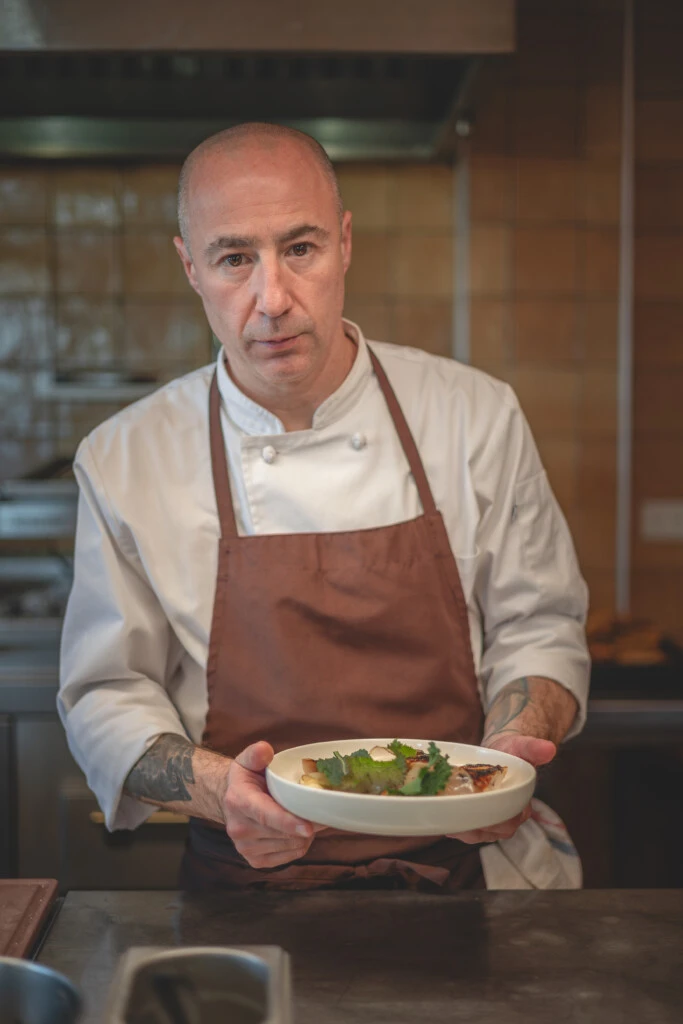
Patricio Negro and Fernanda Sarasa: a story of love, family, and gastronomy
—With Fernanda Sarasa they built much more than a restaurant: a brand that carries their surnames and more than two decades of shared history. What do you think is the secret to working as a couple, growing together, and continuing to choose each other as partners in life and in business?
—When we came here, the restaurant’s name obviously had to bear our surnames.
We had worked in places where one went, in a sense, into the owners’ home. Putting our names on it also carried that meaning.
Beyond dedicating a lot of time and effort to the work, a family was built in parallel. Then Lupe was born. Perhaps I’m not the right person to say it, but I believe Fernanda is the one who does the most to make that happen.
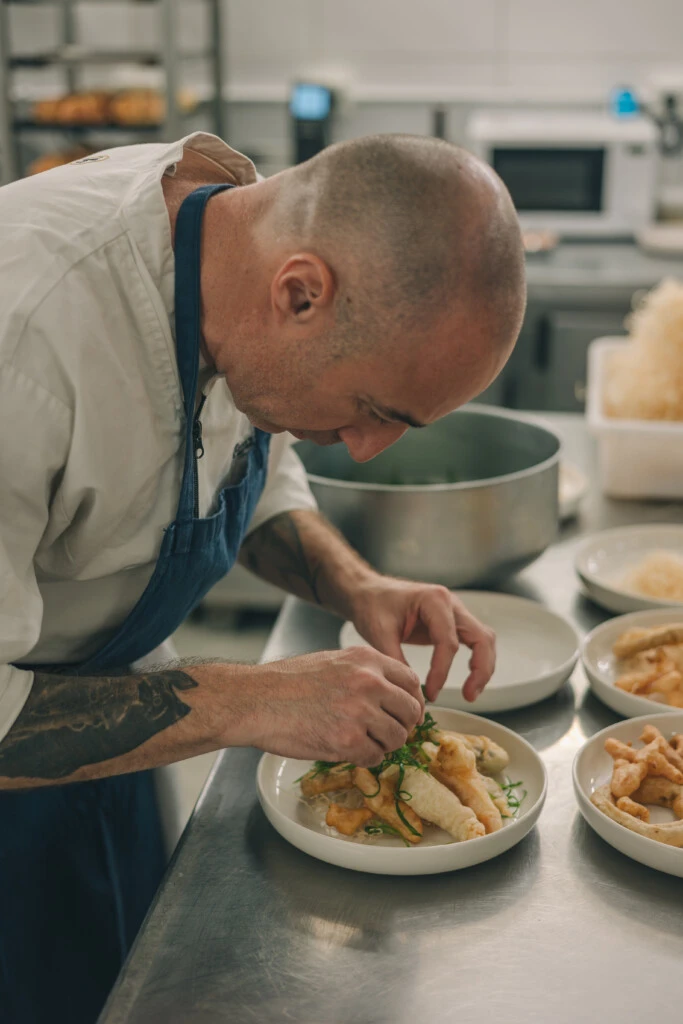
—When Sarasanegro opened in Mar del Plata, you bet on a fish-focused cuisine different from what the city knew. What was the hardest part of those early years? Do you recall a moment when you thought the project wouldn’t work?
—One of the things we learned was that the cuisine we had to create had to connect with the environment and the place where we lived. And Mar del Plata is the sea.
Perhaps the hardest thing wasn’t merely making a fish-focused kitchen, but a kind of cuisine that didn’t exist at that time. Also, back then things couldn’t be communicated or visualized the way they can today.
As people began to understand it, and as we understood the market, we managed to generate an identity of our own that made sense and related to the place where we live.
In the beginning, many of the things we did didn’t fail because people didn’t understand them, but because they were things we had learned and perhaps copied, but they didn’t relate to the place or to us. And you can feel and convey that.
There were many difficult moments. There still are today. The difference is that we have many more tools to overcome them.
Many times we considered returning to Europe because there were several opportunities inviting us back to Italy. But I think it would have been the easiest path, looking back now.
We had assumed a responsibility. Fernanda’s parents had lent us money to open the restaurant, and we had to pay it back. That also made us hesitant to abandon it.
Those were difficult moments and they remain today.
The challenge of changing the way Argentines eat fish
—You are a strong advocate for Argentine fish and artisanal fishing. Why do you think that in a country with so many miles of coastline we still struggle to incorporate fish into our daily diet? Which lesser-known species would you recommend discovering?
—We are a carnivorous country. We have been for years. There is a whole logistics around butcher shops and the accessibility of meat that fish doesn’t have.
I think one of the things that doesn’t help us consume fish is precisely accessibility. These are things that can be changed and we have to work to do so.
No matter how long our coast is, if buying fish is difficult, or when you buy it and cook it, you don’t achieve the success you should have.
The experience of a bad milanesa is not comparable to eating bad fish. That also influences consumption. I think we need to be a little more creative and shed the stigma around fish.
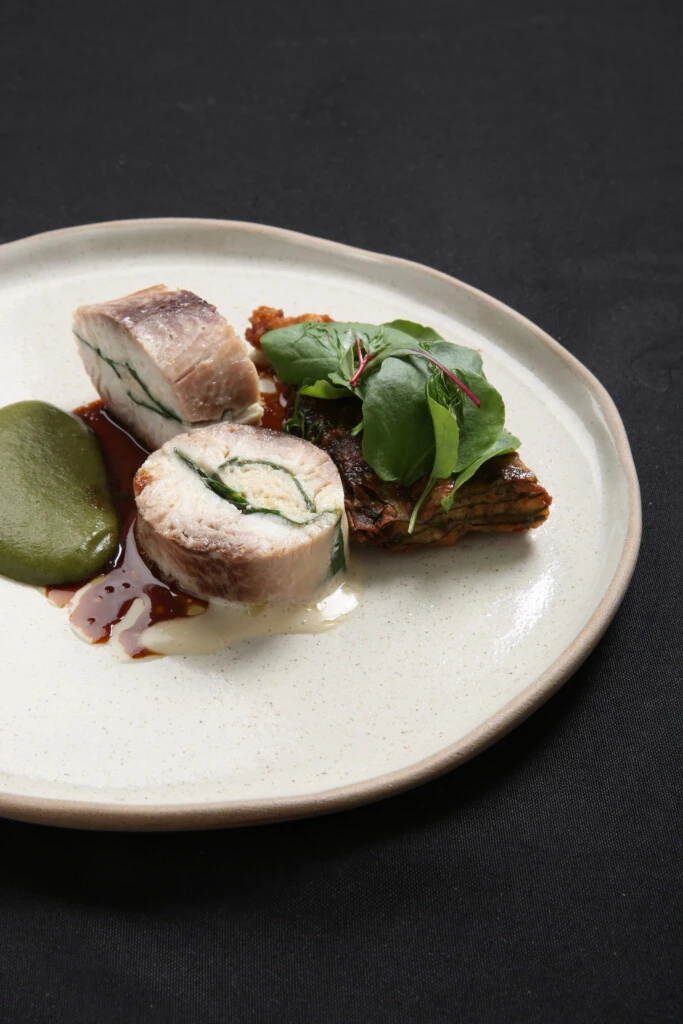
The hake and the squid are the most common because there’s a market for that. But we have a vast variety: sea bream, grouper, white salmon, chernia, croaker.
There are fishes with firm flesh, very tasty, that can be grilled, with sauces, or even used for sandwiches. We have a huge variety worth discovering.
—For someone who wants to start cooking more fish at home but doesn’t know how to choose or prepare it, what tips would you give? What would be a simple recipe to get started?
—Obviously, you have to start with the raw material. Whether it’s hake, sea bream, or grouper, you must consider the cooking method you’re going to use. It can be baked, grilled, or fried, simply dusted with flour.
It can be paired with a fennel salad, greens, salt, pepper, a touch of vinegar and olive oil. That’s really tasty.
Another option is potatoes with green beans. Boil the potatoes and, when there are four or five minutes left, add the green beans. Then toss in a quick sauté of garlic with a little vinegar and parsley, salt, and olive oil. It’s delicious with fish.
If you bought fillets with the skin, even better. Bake it with the skin up, a little olive oil, salt and pepper. When you take it out, finish with a splash of raw olive oil.
It’s super simple.
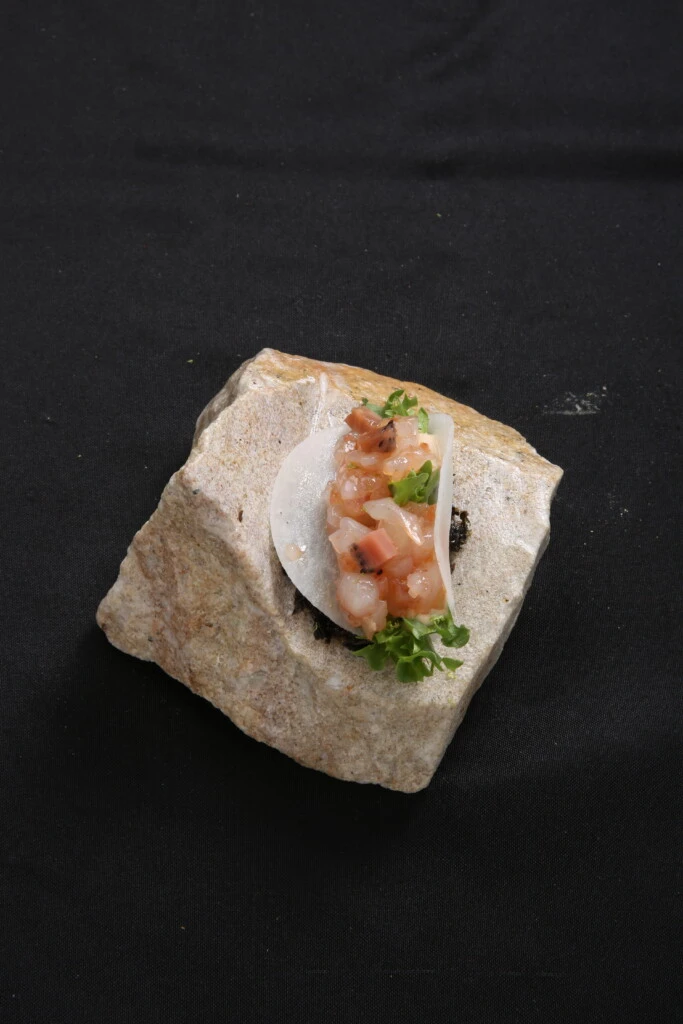
Marine Mortadella: Creativity and Making the Most of the Product
—In your kitchen there is a constant search to make the most of every product, even the parts of the fish that are usually discarded. How did you come to develop such original preparations as marine mortadella? Do you believe the future of gastronomy also lies in learning to waste less?
—Mortadella and sausages arise out of necessity. By using the whole fish, we generate many parts that we cannot sell, but that we can use.
A bit of what we do is look at what the meat industry does and apply it to fish.
Utilizing the product is very important, both financially and in terms of preservation. And there’s something else that’s very interesting: different ways for people to consume fish.
If chicken consumption has increased, for example, I think it’s because today you can eat it in many ways and not just as a whole chicken, as might have happened 15 or 20 years ago.
With fish we also have to break a bit from the usual format of doing things so that people keep or begin to eat it more.
Beyond culture, I think a few things have to change.
The future of Sarasanegro and Furia: a new stage
—Sarasanegro and Furia continue to grow. What can you share about new projects? What experiences do you want to offer that are different from everything you’ve done so far?
—Now Sarasanegro is going to move. I think it’s a very beautiful development because it’s part of the evolution.
The evolution is what keeps us here. If we stay, we disappear.
What I want to continue offering is that, when people speak of Sarasanegro, they think of quality and excellence. Not because we’re going to make this dish or that one, but because we work so that everything is up to standards: the service, the food, the wine, how we welcome you and how you leave.
I also want it not to be just a place for a special occasion. At Furia you can come once a week and I think the same for Sarasanegro.
But for that we have to work, to ensure a good experience any time you want to come.
—After so many years of effort, recognitions and learning, what still excites you about stepping into a kitchen? And when you get home and cook for Fernanda, your family, or your friends, what do you prepare? Are you someone who enjoys cooking in your spare time, or do you prefer to be surprised?
—I really enjoy continuing to work and to create proposals and concepts. Crafting a new dish or creating an experience, a moment for a person, still feels incredibly rewarding.
Also building teams, seeing how people develop and surprise you with dishes that start to come from their own ideas. Seeing all that movement and that world is what continues to excite me.
Not only in the kitchen, but in the whole structure, in the entire group. Working, generating and adding value is what continues to motivate me. I’m excited to wake up in the morning with a very clear purpose and keep working toward it.
I really like cooking at home and cooking for friends. If I have the chance, I’ll cook fish; I also love making pasta. I’m not as fond of meat, although I cook it, and I cook a lot of vegetables.
I like simple cooking. I’m for the simple and tasty. I think that can be the hardest thing sometimes.
The 3 secrets of Patricio Negro for cooking fish at home
When it comes to preparing fish, the chef bets on quality ingredients, simple techniques, and accompaniments that enhance the product’s flavor. Here are three tips drawn from his recommendations.
- 1. Choose a good raw material. The quality of the fish is the starting point. Dare to explore other species beyond the classic hake, such as sea bream or grouper.
- 2. If you cook it in the oven, make use of the skin. The chef recommends buying fillets with the skin on and cooking them with the skin up, brushed with olive oil, salt and pepper. When you take it out, add a splash of raw olive oil.
- 3. Opt for simple and flavorful sides. A fennel and greens salad with vinegar and olive oil, or potatoes with green beans, garlic, parsley and vinegar are two of his favorite pairings to accompany fish.