
Today there is much talk about longevity: about diet, exercise, sleep, and keeping the mind active. However, there is one sense that almost never enters that conversation and that is crucial to arriving well at the years we gain: hearing.
“We have a deeply ingrained idea that hearing poorly is part of aging, something to accept. And that is not the case: hearing loss can be detected and treated, and doing so changes quality of life,” says Silvia Ballester, a licensed speech-language pathologist.
What Science Says
In recent years, research has begun to look at the ear from new perspectives. The Lancet Commission, an international group of experts studying dementia prevention, included hearing loss among the modifiable risk factors of greatest weight in its 2024 report, that is, those factors on which we can act.
“It is important to be precise: it does not mean that someone who hears poorly will develop dementia. What studies show is that untreated hearing loss is associated with a higher risk of cognitive decline, and that treating it could help protect the brain,” explains the specialist.
Why Hearing and Memory Go Hand in Hand
The explanation has three paths. The first is effort: when information arrives incomplete, the brain spends energy deciphering what it hears and has less left to understand and remember. The second is stimulation: if less sound enters, the areas that process it work less. The third, and perhaps the most visible, is the isolation.
“The person gets tired of asking to be repeated, starts staying quiet at the family table, stops attending gatherings. The family usually thinks they’re unmotivated or distracted, and many times what happens is that they’re not hearing well,” Ballester describes. And social life, precisely, is one of the great protectors of mental health.
Signs to Watch For
Age-related hearing loss progresses gradually, and that’s why it often goes unnoticed for years. Some everyday clues: turning up the TV volume more and more, asking others to repeat, understanding worse when there is background noise or several people talking, responding with something that has nothing to do with the question, or avoiding the phone.
When these signs appear, the step is simple: a consultation and an audiometry, a brief and painless test. And even if there are no symptoms, the World Health Organization recommends checking hearing from age 50, and more frequently from 65, just as we do with vision.
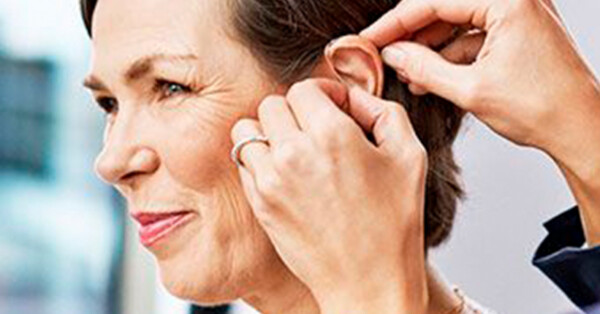
“Today’s hearing aids have nothing to do with those from twenty years ago. They are small, comfortable, and adapt to each person. What is often hard is overcoming the prejudice,” adds.
Caring for hearing is, in short, caring for relationships, autonomy, and the desire to participate. Because listening well is not only about hearing: it is continuing to be part of the conversation.
Source: Licensed Silvia Ballester, speech-language pathologist (MN 4447 / MP 2530). MBA in Health, University of San Andrés.