

The release of Grand Theft Auto VI, the game that took Rockstar more than a decade to deliver, has already shifted work calendars. An American automotive company announced a pause in activities for that day because a large portion of its staff planned to be absent.
In the United Kingdom, an analysis by the BrightHR platform linked the game to 83,000 vacation days requested for November and December. There are also circulating estimates of up to 1.5 million American workers taking time off.
They call it the “GTA virus,” and in households with teenagers it translates into a very concrete question: what to do with the kids and this game?
Dr. Federico Beines is a psychiatrist, teacher, and writer. He has treated children for twenty years and spoke with Para Ti to bring clarity to this phenomenon. To start, he lowers the medical tone: “There is no virus; it’s a meme circulating online. What exists is an expectation built up over more than ten years that gets released in a single day, and teenagers experience it just the same as adults who take the day off work.”
All classifications agree: it is not suitable for those under 18, and the official sheets mention scenes of sex, violence, and drugs. It is available only for PlayStation 5 and Xbox Series X|S, so access depends on having a console. There lies the first potential limit: who has it, in what room it is located, and whether it is played at home or at a friend’s house.
However, the classification does not resolve everything. The teenager aged 14 or 15 does not debate the label, but says, “everyone is playing it.”
Why a firm “no” may be insufficient
Facing this situation, one of the first decisions worried parents tend to make is to prohibit their children from playing.
“Doctors already know—and we discuss this daily with parents and teachers—that a firm no works little and poorly: the kid will play it anyway, but in secret and without talking to any adult about what they saw,” explains Beines.
“It’s not just about forbidding; it’s about caring. And caring starts with knowing what is inside the game, how much time is spent there, and who they play with,” he adds.
The Argentine Society of Pediatrics, in its document on problematic online behaviors, supported by the 2025 UNICEF-UNESCO Kids Online survey, notes that a large number of children aged 9 to 17 play video games almost daily.
What to do when the limit clashes with what friends are doing
Beines proposes that the conversation take place as early as possible.
“If we see that our children are focused on this release—as with any other online game, even casinos advertised during national team football matches—it is essential to ask them what they know, watch the trailer together, and clearly state the house rule and why,” he maintains.
“A boundary born out of fear lasts only until the kid finds a way to bypass it. One that is born from understanding what is happening and knowing someone took the trouble to explain it lasts much longer,” the expert affirms.
If the family rule states that it is not played, parents must know they will have to uphold it even when “everyone” else is doing it.
“We need to look closely, without panic and without naivety. Letting a child miss a weekend of a conversation is a cost that can be supported, and it cannot be compared to what is lost if they learn that home is not a place where they can talk about this,” he adds.
Four decisions to make with teenage children
Dr. Federico Beines shares with Para Ti four guidelines to manage at home the phenomenon of this video game that is already on everyone’s lips.
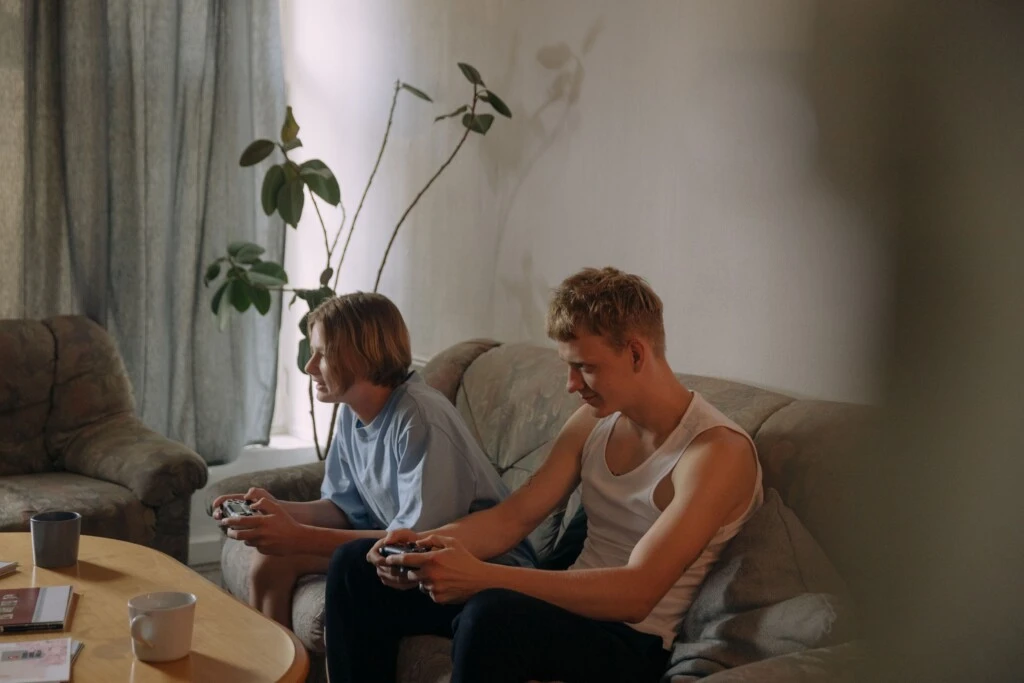
1. State the house rule and explain the reason
The conversation should happen before the teen asks or tries to access the game.
“If the first thing the kid hears is no, they stop listening to what comes after. And what comes after is what’s important,” Beines warns.
The reason must be concrete and verifiable, such as the 18+ rating and the content detailed in the technical sheets.
“A teenager tolerates a rule better when they understand it than when it sounds like a whim. Even if they disagree, they know there is a criterion behind it,” the psychiatrist adds.
2. Decide where the console will be and what happens at a friend’s house
If the console belongs to the family, it is best placed in a common area and not in the teenager’s bedroom. The Argentine Society of Pediatrics suggests, as part of a family plan, to define screen-free spaces around the house.
If the youngster plays at a friend’s house, Beines recommends talking to the friend’s parents before forbidding it blindly.
“You cannot protect what you do not see. Knowing which house they’re in and with whom is more useful than a permissive or abstract prohibition,” he says.
3. Maintain that the launch day is also a school day
With adults announcing they will miss work and companies closing for the day, the teen may feel that taking the day off is reasonable. Parents need to separate these two situations and explain it clearly.
“They may want to play and that can be discussed. What cannot happen is that the launch of an adult game organizes a 15-year-old’s school week,” Beines says.
4. Observe the role the game plays in their life
Alert signals are not limited to the number of hours spent playing, but to what the video game begins to displace.
A marathon weekend after a launch may be understandable and not necessarily a problem. However, you should watch if that behavior persists in the following weeks.
The first sign often appears in sleep: going to bed later and later, waking up exhausted, or playing in the early morning hours. Later, disproportionate reactions can arise when asked to cut back, dropping activities or friendships that were once enjoyed, a decline in academic performance, and hidden spending or gaming time.
“What to look at is what happens two or three weeks later: whether the child returns to their life or the game has eaten into it,” the specialist explains.
“This game offers a parallel life within what gamers know as an open world. The interactions, especially those that would concern us most in real life, such as car theft, raise prestige within the game. That can foster dependence and more hours spent to achieve it,” he notes.
Beines also warns that often the youngster does not play solely for the game: “There he feels competent, supported, and without pressure. If you pull that away without understanding it, you remove the only place where he feels okay.”
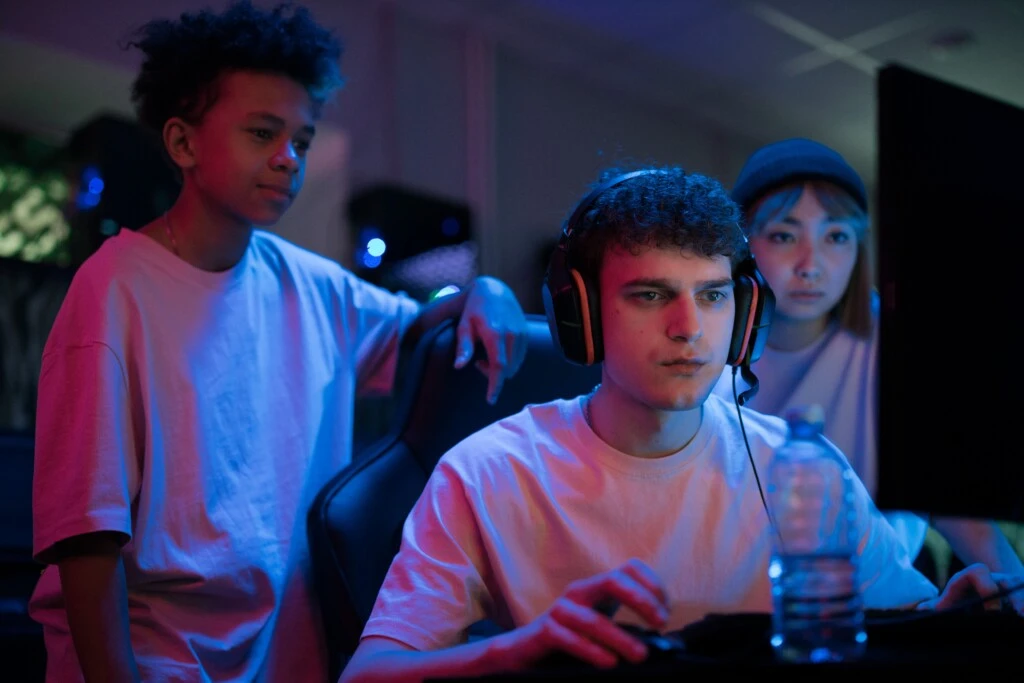
The question is not only how much they play
The question for parents should not be limited to how much their child plays, but also to what sustains them there. Behind the excess there can be anxiety, sadness, or difficulties in forming connections.
When several signals combine and persist over time, it is appropriate to consult a pediatrician or a child–adolescent mental health professional, without waiting for the problem to grow. The consultation should be framed as help to understand what is happening, not as a punishment.
“Generally, there is a situation in the virtual social environment that the child cannot build in a real social setting. This should be a reason to talk with the children,” explains Beines.
The specialist suggests questions like what appeals most about the game, whether they have many friends within that universe, and what aspects of their in-game life they would like to carry into real life.
An alternative Beines tried in his own home
For younger children, Beines chose another path. During the pandemic he began inventing stories together with his son Camilo, who was six years old and was experiencing sleepless nights.
From that experience arose Dardo, the protagonist of a children’s saga that already comprises seven books, the latest titled Dardo designs his carousel. He signs them under the pseudonym Losbei, representing Los Beines: Federico, Camilo, and Lisandro, the younger brother who joined later.
The fifth book, Dardo and the monstrous challenge, includes illustrations by Camilo and a deck of cards to play as a family.
“Technology and children’s literature seem divorced, and they don’t have to be,” he maintains. “What a child chooses at 14 is largely built earlier, with what they played, listened to, and read when they were six.”
“It would be good not to panic when our children become obsessed with the launch of a video game, but to think every day about what options we give them as parents and teachers so that their focus, their dopamine, and their gaze aren’t always on screens,” the professional reflects.
And he leaves a series of questions for adults: “Do we play with them? Are we ourselves always in front of a screen without looking at them? Do we consider other options to accompany their enthusiasm, such as a family game, a visit to a museum, or a getaway outdoors?”
Source: Federico Beines, child and adolescent psychiatrist and writer.