
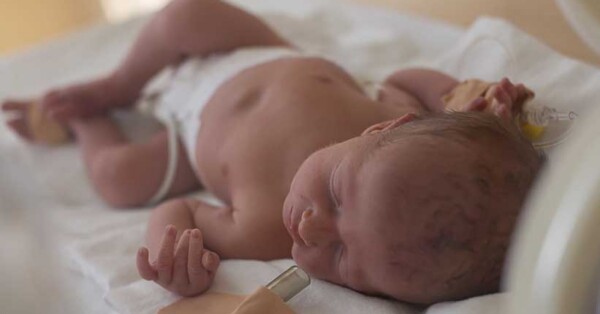
Within the frame of Prematurity Week, it is important to focus not only on the care that babies born prematurely require, but also on how to support their growth and long-term development. Nutrition plays a fundamental role in this process: it provides the nutrients necessary to promote organ maturation, strengthen their defenses, and support brain development.
Dr. Carmen Vecchiarelli (MN 66.176), a pediatrician neonatologist and head of the Neonatology Department at Sanatorio Otamendi, explains why feeding premature babies requires special attention, what options are available, and why nutritional follow-up should continue after hospital discharge. In this column, she shares her view on a key aspect for improving the developmental opportunities of these children.
Being Born Premature: Nutrition Can Also Change the Future for a Premature Baby
- By Dr. Carmen Vecchiarelli, pediatrician neonatologist, head of the Neonatology Department at Sanatorio Otamendi (MN 66.176).
Every year in Argentina, around 29,000 babies are born with low birth weight (less than 2,500 grams), according to official statistics. While not all of them are premature, preterm birth is one of the main causes of low birth weight at birth. Behind each of these cases lies a family that must face an unexpected situation and a health team that works to accompany the first days or weeks of life of a baby who needs special care.
For decades, advances in neonatology focused on improving the survival of these children. And the results have been extraordinary. However, today we face a challenge that goes beyond simply ensuring survival: to offer them the best opportunities to grow, develop, and reach their full potential.
In that journey, nutrition occupies a place far more important than we usually imagine.
A preterm baby is not simply a smaller newborn. They are a child who must complete essential maturation processes outside the uterus. During the last trimester of pregnancy, the brain grows rapidly, nutrient reserves accumulate, and essential organs and systems develop. When birth is premature, part of that process must continue in very different conditions.
Therefore, feeding a premature infant is not only about helping them gain weight. It means providing the nutrients necessary to support brain development, strengthen their defenses, and promote the maturation of their organism. The quality of that nutrition can have consequences that extend well beyond the hospital stay.
The mother’s own milk is the first choice due to its undeniable nutritional and immunological benefits. When it is not available, donated human milk from approved banks constitutes a valuable alternative.
However, there is something that often surprises families: in certain premature babies, especially those with very low birth weight, human milk may need fortification to provide additional amounts of proteins, minerals, and other nutrients.
And when human milk is not available, there exist formulas specially designed to cover the nutritional needs of these children, whose indication must be evaluated individually. Not all premature babies require the same or for the same duration. Feeding should be tailored to their gestational age, weight, clinical course, and growth capacity.
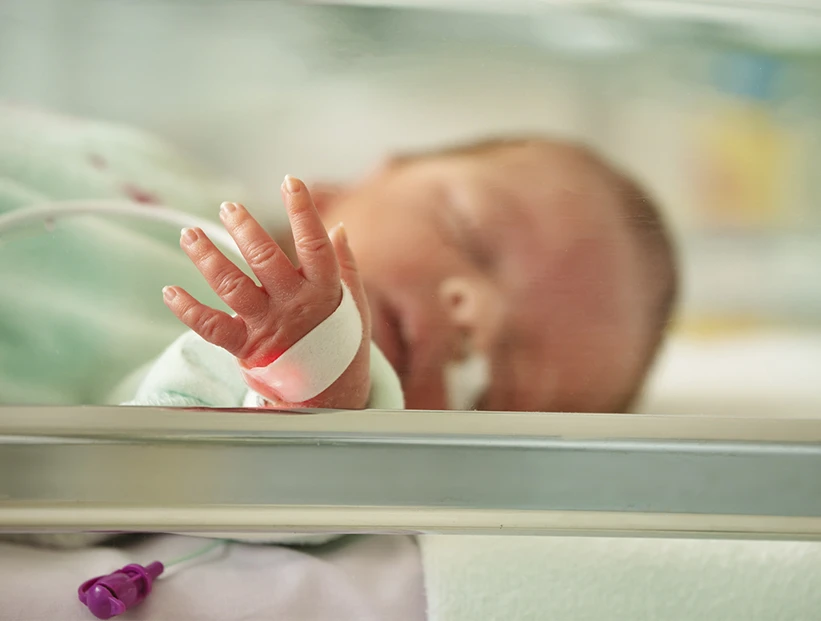
In this context, nutrition is not a supplement to infant care: it is a fundamental part of medical care. Sometimes, special nutritional needs require a specific treatment.
In Argentina, Law 27.305 guarantees comprehensive coverage of therapeutic milks for those who need them, provided there is a health professional’s indication.
Another little-known aspect is that hospital discharge does not mean the nutritional challenge has ended. Many babies continue to require specific follow-up to assess their growth and development, adjust their feeding, and prevent deficiencies, particularly of iron and other essential nutrients.
We also must learn to view their evolution in another way. A premature infant does not always reach the same milestones as a term-born child at the same chronological age. To assess their growth and development we use corrected age, which accounts for the weeks of gestation that were missing at birth. Understanding this difference prevents unfair comparisons and unnecessary worries.
During Prematurity Week, it is worth broadening our perspective. Neonatal care does not end when a baby leaves the incubator nor when their family returns home. It continues with specialized follow-ups, nutritional support, developmental assessments, and support for families who often navigate this journey with uncertainty and fear.
As neonatologists, we know that every gram gained can represent a meaningful advance. But we also know that our true goal goes beyond size, and concentrates on helping them unfold all of their capacities.
Prematurity reminds us that the beginning of life can be fragile, but also that science, care, and timely support can transform that beginning. Because surviving is the first major achievement. Helping them grow and develop fully is the commitment that follows.
