
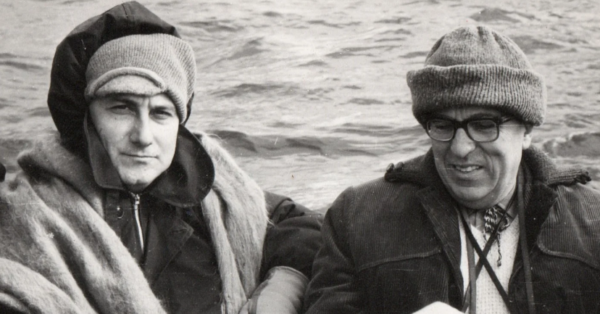
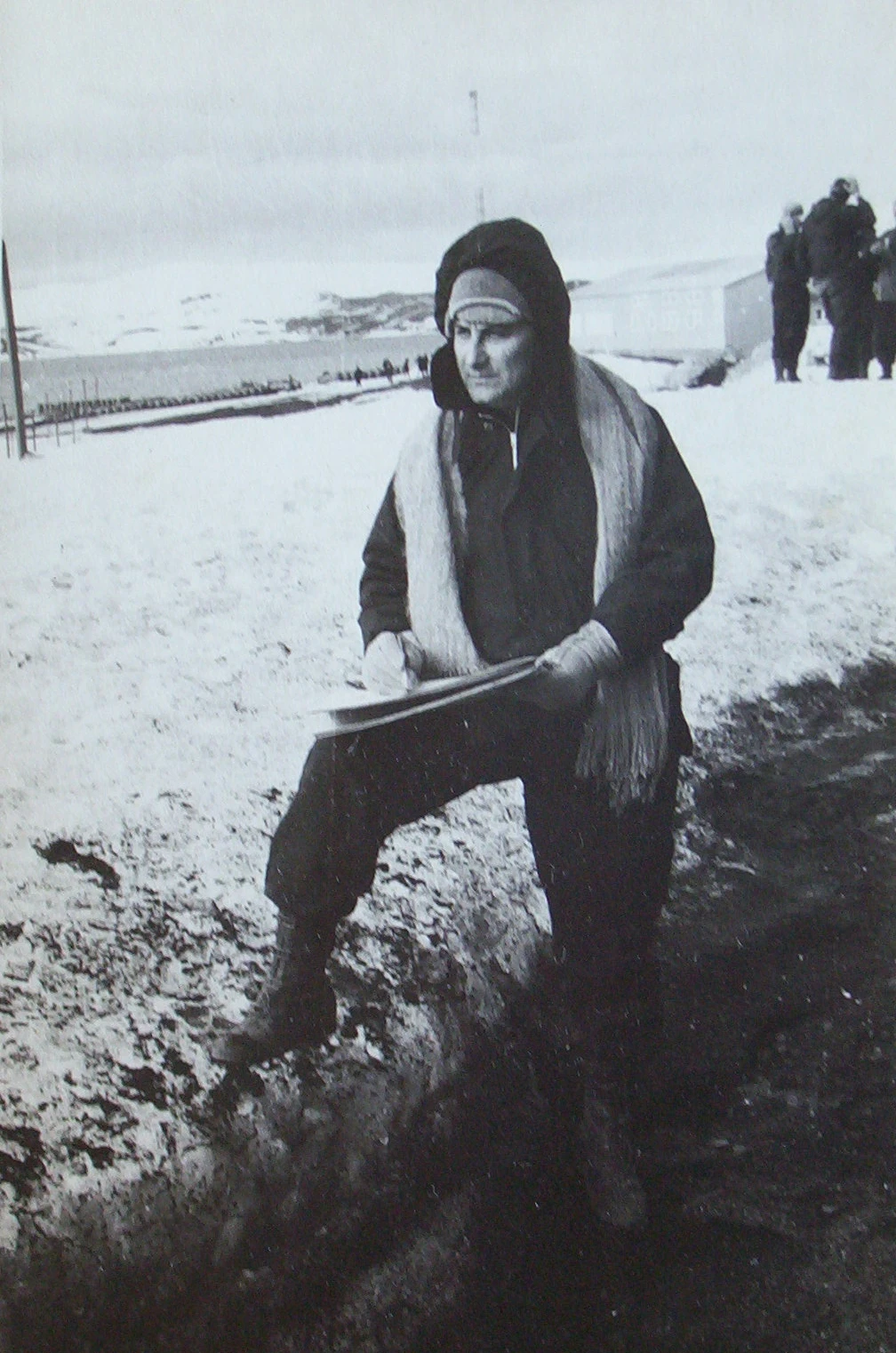
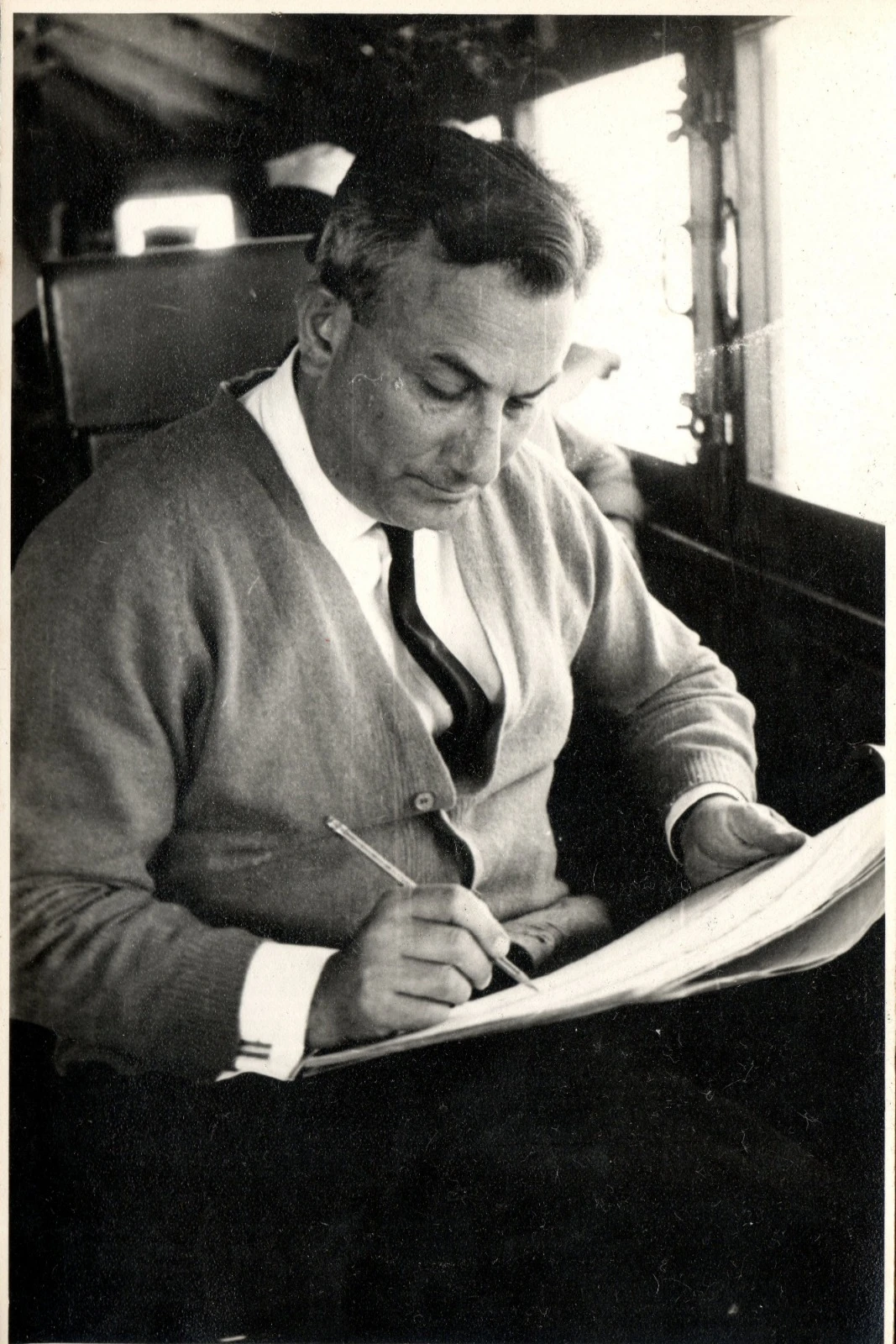
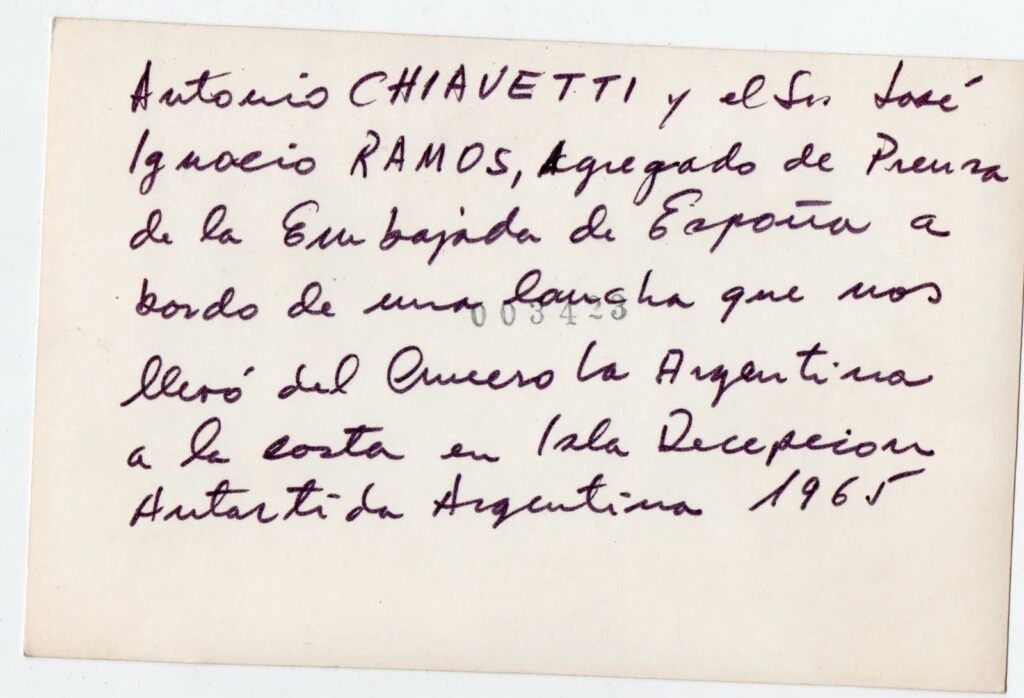
In 1965, when traveling to Antarctica was still an experience reserved for only a few, Antonio Chiavetti set sail toward the southern Argentine region with his painting supplies. There he took direct sketches and worked before the landscape, even as the temperatures were so low that the captain had to remind him to pull his gloves back on to protect his hands.
That experience deeply marked his work and gave rise to an extensive series of ice, ice floes, seas and southern territories. More than six decades later, part of that universe returns to exhibit in “Cosmogony of the Immense Argentina,” a pictorial retrospective gathering 41 works by the artist.
The exhibition will be open to visitors from November 22 to 28, 2026 at the Ernesto de la Cárcova Gallery of the Asociación Estímulo de Bellas Artes, located at Cordoba Avenue 701, Buenos Aires.
Who was Antonio Chiavetti
Antonio Chiavetti was born on November 26, 1916, in San Nicolás de los Arroyos. He came from a family connected with art and music, but his childhood changed abruptly when his family lost its patrimony after the bankruptcy of the bank where they had invested.
They settled in the neighborhood known as “Las mil casitas,” in Liniers, and began a life of extreme austerity. At eleven, Antonio collected newspapers to exchange them for food. Later he worked cleaning a relojería (watchmaking shop) before attending school.
“He had a purpose: he was an artist. He knew he would achieve everything he set his mind to. He simply had to work hard and study a lot,” recounts his daughter, Silvana Chiavetti.
He studied at the National School of Fine Arts and developed a long career as a painter, teacher and cultural manager. He directed the Salón Peuser, founded the Galería Antú and presided over various artistic associations. Since 1935 he held around 120 solo exhibitions and participated in about 200 group shows. His works are part of museums and national and international collections.
The first Argentine painter to embark toward Antarctica
One of the most singular chapters of his career began in 1965, when he became the first Argentine painter to voyage to Antarctica. During that journey he also traversed the Falkland Islands, Tierra del Fuego and various points of the southern extremity.
Chiavetti painted and made sketches before the landscape. The concentration was such that, as his family recalls, he could forget the cold, the passing hours, and even the need to sleep.
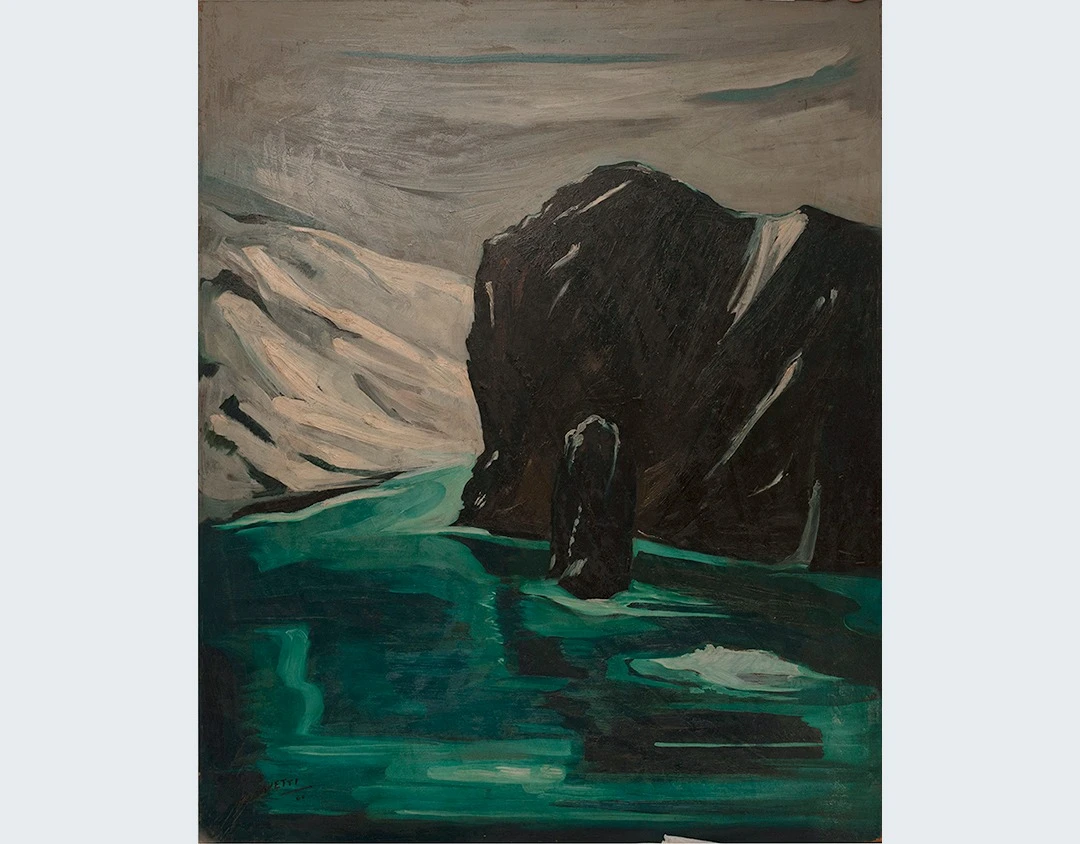
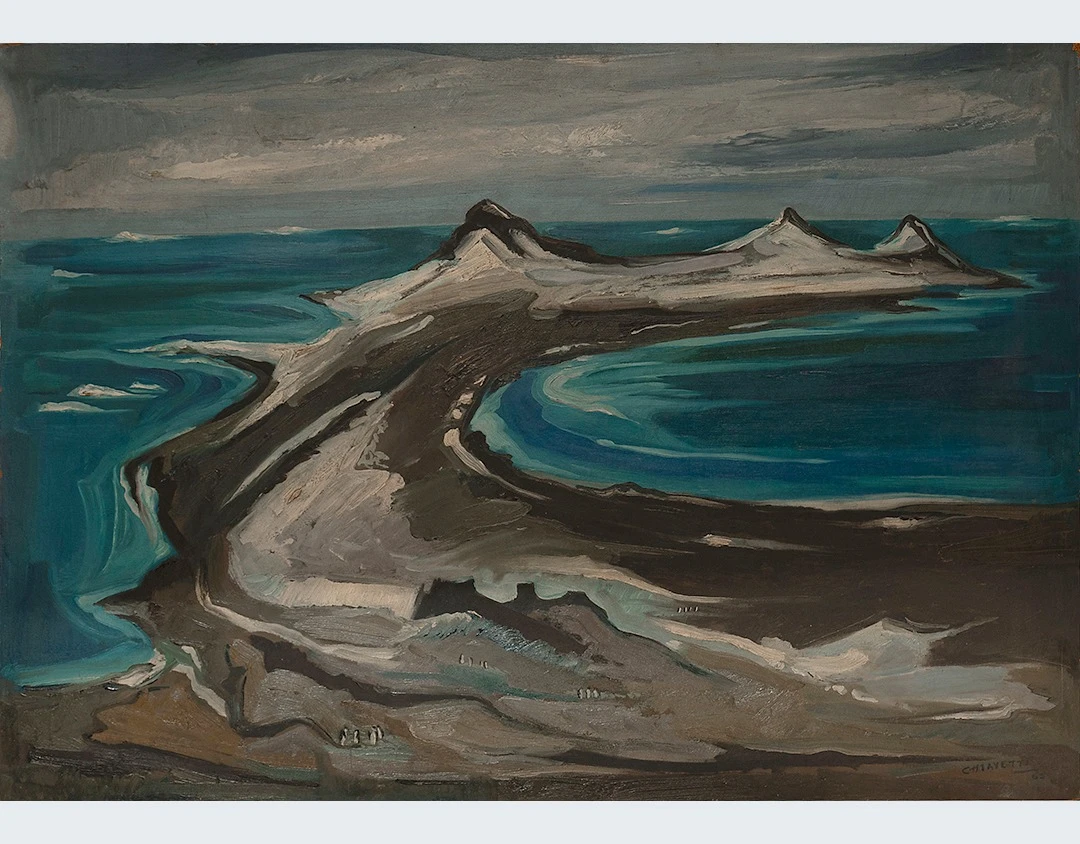
On Deception Island he worked on territories crossed by fumaroles and volcanic activity. Some bases and landscapes that he recorded disappeared after the eruption of 1967, which gave those paintings an unexpected documentary value.
A six-year retrospective
The exhibition began as a personal project of Silvana, who felt it was time to bring her father’s work back to the public eye.
“It’s the moment of my life when I can undertake this project, which I feel as a debt to everyone, because his work transcends the family by representing the country the way he did: from the north to the Antarctic”, she explains.
The project began six years ago. The selection of the pieces and their conditioning required an extensive process: simply cleaning, restoring and preparing the paintings took more than a year and a half.
Ultimately, 41 works were chosen, arranged into three clusters:
- Eleven works from the Ushuaia, Falklands/Malvinas and Antarctica series.
- Sixteen paintings linked to the countryside.
- Fourteen pieces belonging to Buenos Aires Yesterday.
Each work was cleaned according to its needs, respecting its materials and the passage of time. After drying, the paintings were protected with a fresh varnish.
Antarctica, the countryside and Buenos Aires: three landscapes of a life
The selection proposes a journey that is not limited to geography. It also traverses personal experiences, family memories and different ways of inhabiting Argentina.
Antarctica houses landscapes that fascinated him to the point of wanting to settle there. “I wanted to live in Antarctica, but I couldn’t convince my mother,” Silvana says with humor.
The countryside paintings, on the other hand, recover a family phase while they were building a house on land without electricity, gas or running water. After a life filled with galleries, theaters and central Buenos Aires, Chiavetti began to listen to the wind, observe birds and discover other rhythms.
The Buenos Aires Yesterday series preserves the memory of streets, the means of transport, tango and a city that no longer exists in the same way. It offers a nostalgic, yet vibrant, look at everyday scenes.
Three fundamental works by Antonio Chiavetti
Among the pieces selected there are three works Silvana knew from the start could not be left out.
One of them is Neptune’s Fuelle, created from the sea entry to Deception Island. The landscape moved him because he felt he was stepping onto another planet, with the sound of the sea as a backdrop.
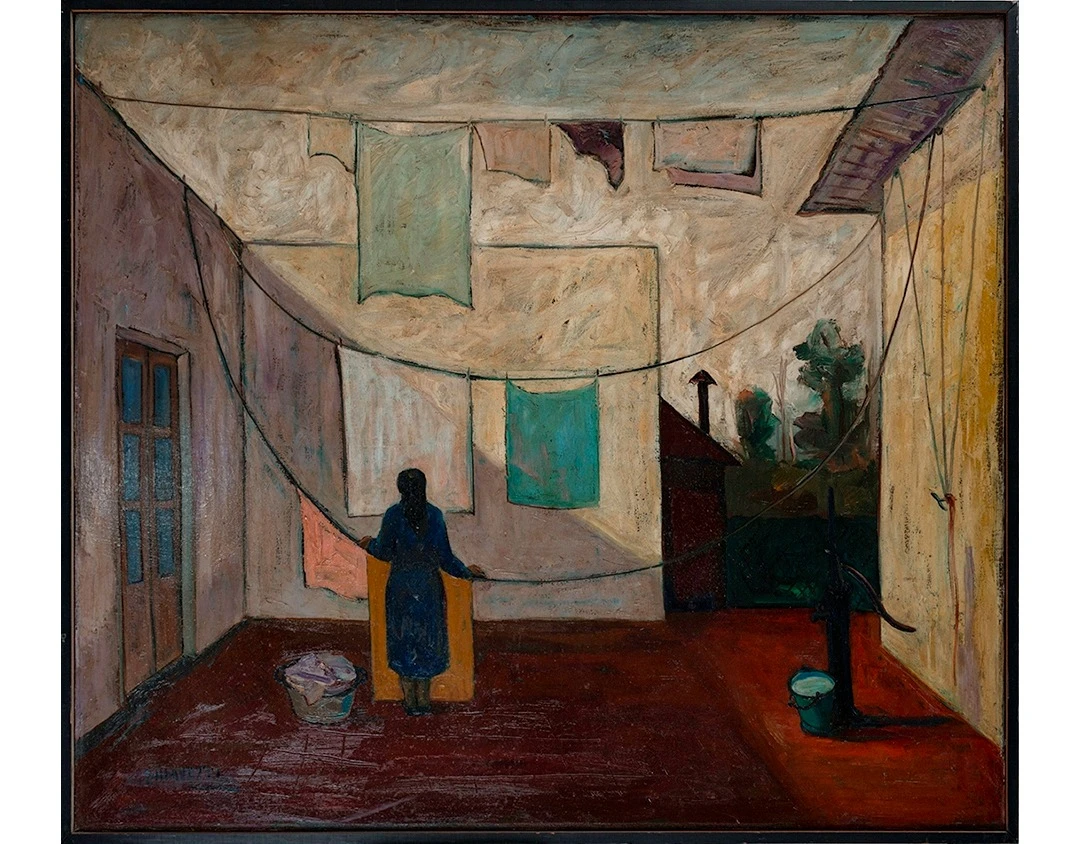
Also on display is The Courtyard, from 1983. In the painting, clothes hanging resemble a set of peace banners, and a woman looks outward while protecting the home. For Silvana, the scene speaks of faith in the future, trust, and the life that water promises.
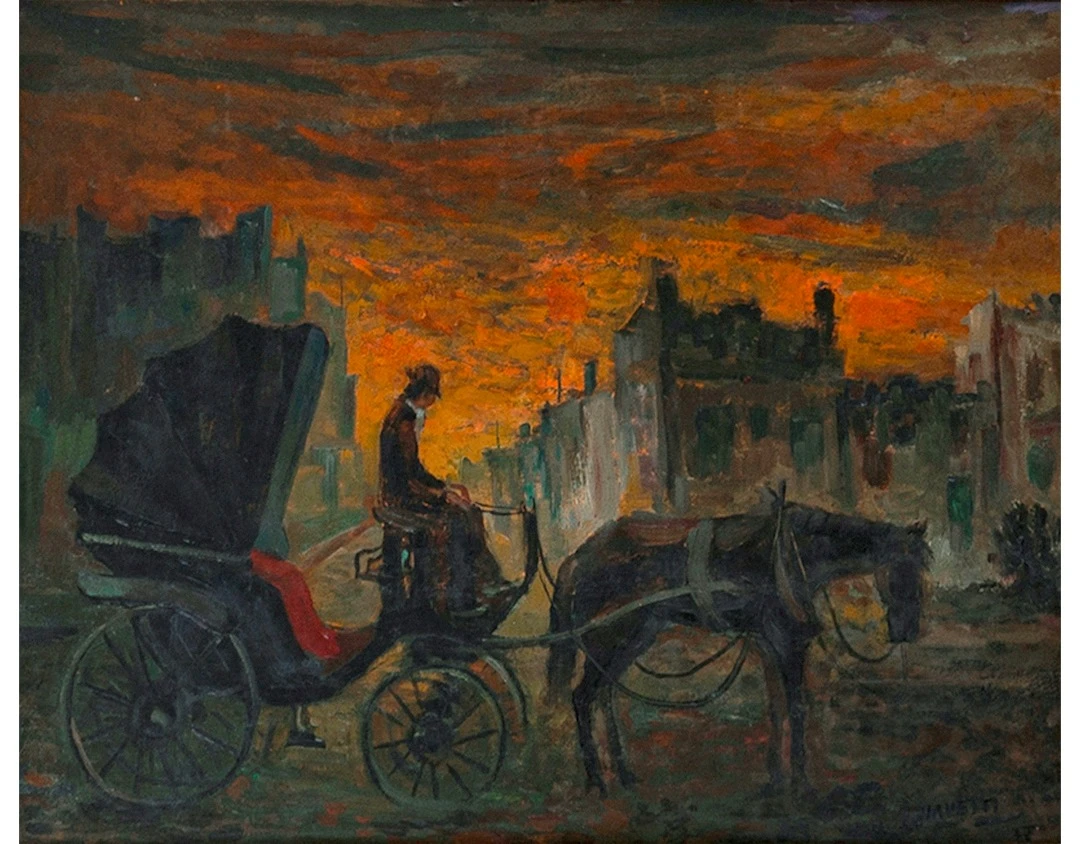
The third is Sunset, from 1978, a work shaped by the weight of the unknown and the sense of an ending. Yet in the background, the sun still struggles to offer light.
A direct, intense painting with no concessions
Chiavetti’s work is recognized for its solid compositions, decisive brushwork and a palette of bold, saturated colors. He could place reds and yellows in the background without visually advancing, a testament to his mastery of color and depth.
“He painted as he lived. He did what he felt, without heed to convenient advice,” says his daughter. He did not choose themes because they would sell more easily, nor did he soften his language to fit a trend.
His painting spoke of what he saw: farm workers, women sustaining their homes, vast landscapes, and people shaped by challenging circumstances. Reality appeared unmasked, yet always accompanied by a possibility of resilience.
The legacy of an artist who made freedom a way of life
Reviewing his father’s work did not reveal unknown paintings for Silvana, because she grew up with them and watched them come to life. What changed was her way of interpreting them.
“It’s like rereading a book at different ages. Time changes us, lets us see from new perspectives, and then discoveries and a deeper connection to the symbol occur,” she reflects.
Through this retrospective, she hopes visitors will encounter the passion of someone who chose to live and create according to his own convictions.
“He taught me to rise after every fall, to believe that art heals and to replace ‘it’s impossible’ with ‘not yet done’. I understood that his work transcended the boundaries of time and that his legacy is for everyone,” she asserts.
The emotion of a daughter reclaiming her father’s legacy
Beyond the selective process, restoration and installation, the exhibition holds an intimate dimension for Silvana. It is an opportunity to reconnect with her father through his paintings and to share with other generations the lessons he taught her.
—With what feeling would you like a visitor to leave after touring the show?
—With the experience of having faced the passion of someone who did what he wanted, who lived freely and was deeply committed to people and to the land he inhabited. A man who said through painting that it is good to fight for ideals, that one can be an artist and work as such without renouncing one’s true self. It’s difficult, but possible.
—What does it mean to you to host this show and help new generations discover Antonio Chiavetti’s work?
—It feels incredibly powerful, because these are my father’s works, with all the emotional weight that carries. I feel him beside me. He’s there, with his mate and his unshakable joy. Nothing could defeat him.
He taught me to rise after every fall, to believe that art heals and to replace “it’s impossible” with “not yet done.” So I breathed, and I did it. I understood that his work transcends time and that his legacy is for everyone.
When and where to visit Antonio Chiavetti’s show
Exhibition: Cosmogonía de la Argentina inmensa
Date: November 22–28, 2026
Venue: Galería Ernesto de la Cárcova, Asociación Estímulo de Bellas Artes.
Address: 701 Córdoba Avenue, Buenos Aires.
Works: 41 paintings from the Antarctica, Countryside and Buenos Aires Yesterday series.