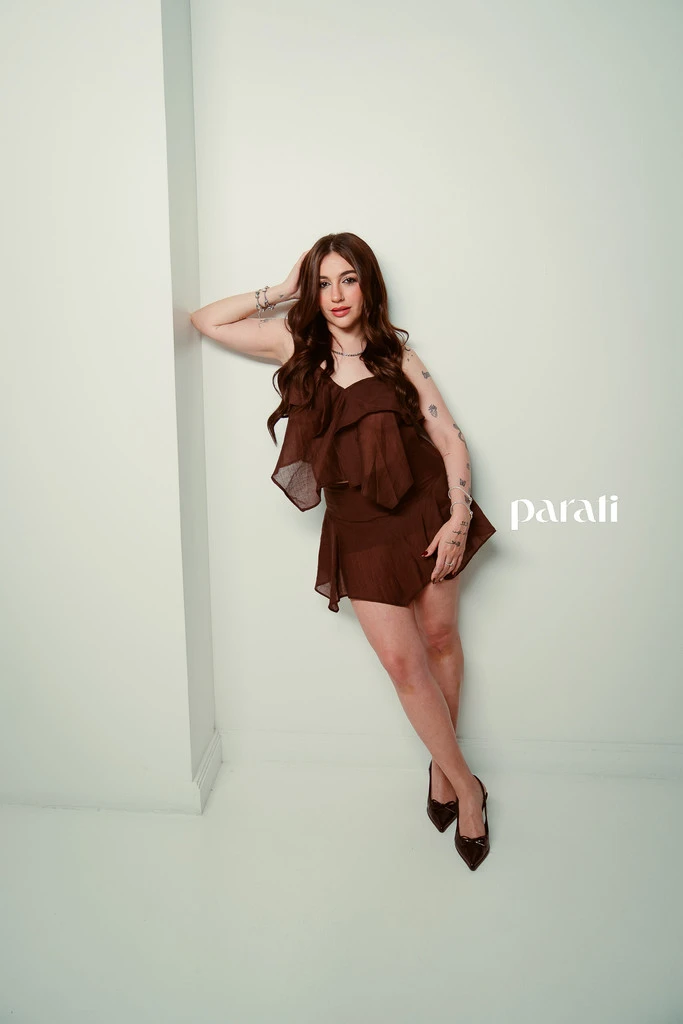

The Current Professional Moment: the Gran Rex, Se Fue Larga, and the Double Shift in Streaming
—You’ve just lived the Gran Rex experience with Se Fue Larga. How are you navigating this moment of so much exposure and work?
—I’m very happy, with a present full of work and overall joy. The Gran Rex gave me a lot of anxiety, I won’t lie. All my life I used to go see Casi Ángeles or Patito Feo; it’s “the” theater of Buenos Aires. There were many hours of rehearsals and meetings to figure out how we’d make our entrance and how we’d surprise, but walking in and seeing all those people there and receiving so much love was absolutely worth it. It’s the best experience of my life.
—How do you manage being on two separate channels, splitting your days between Rumis (La Casa) and Se Fue Larga (Luzu)?
—On Luzu there wasn’t any problem; I asked and they gave me the best. My priority will always be Luzu, at least for now, so the agreement was to leave Rumis a little before it ends to arrive on time for the production meeting before going on air. I don’t want them to doubt my commitment or for me to arrive exhausted; it’s simply about working and putting in twice the effort. On Luzu they give you a lot of freedom and respect what you want to do.
—In Rumis you reconnected professionally with Manu Dons, with whom you shared Entre Nosotros when you were just starting out. How was it to work together again after all you both have grown?
—I love Manu with all my heart. When we started, we were very young, 19 and 20 years old; it was our first job and neither of us really knew where we were headed, so we had our bumps. We had our ups and downs, but today working with him is wonderful. Sometimes he throws out offhand comments and you have to set him straight, but he’s a great guy, always there when you need him and the nicest person in the world. When the camera turns on, the chemistry is undeniable. At the time there was a “shipping” craze for the two guys, and today obviously it’s just friends, but I have so much fun with him and with Eze Katz.
—You’re the only member of the Entre Nosotros team who continued at Luzu and grew within the channel. How did you experience the end of that cycle and what happened to your relationships with your former colleagues?
—To people it seemed like it happened overnight, but we had been discussing it in meetings because we felt stuck and there was a logical lack of commitment in our first project. It lasted more than two years, and I don’t see it as a failure; it was a tremendous success and my door into the networks. When it ended, the connections cooled off: with Martu we weren’t friends, we were colleagues and now we greet each other on birthdays; with Mate we reconnected this year to have coffee and talk about life; and with Manu we see each other almost every day. I’m grateful that Luzu gave me a place in Patria y Familia, then in the summer season and today in Se Fue Larga, where we exist as a true family.
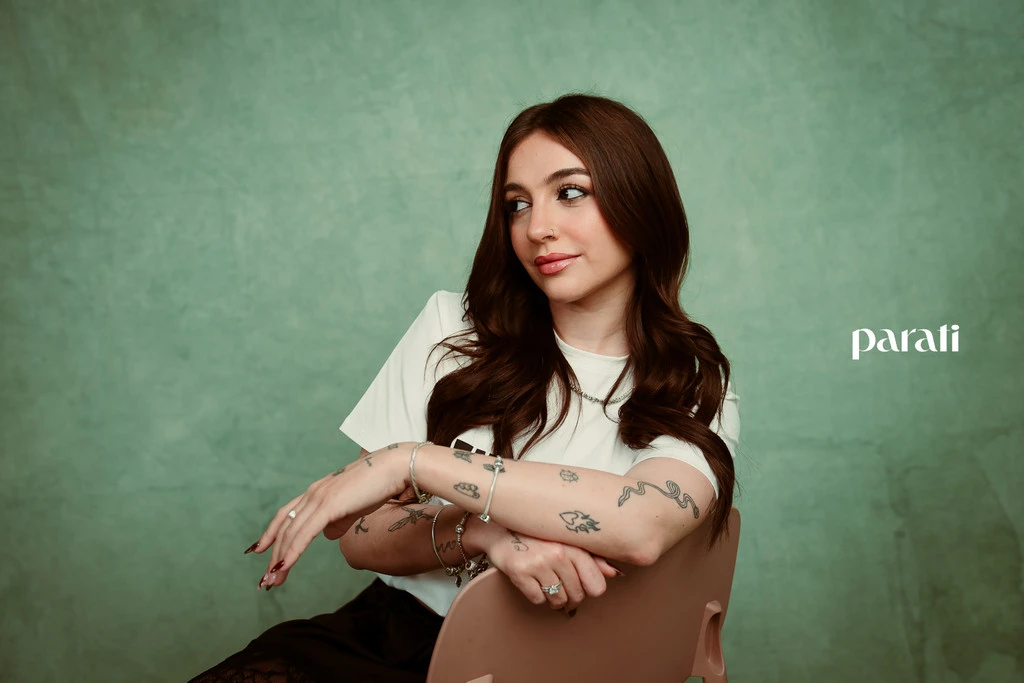
From “domigamia” to Therapy and Mental Health
—When you started, the character of the “toxic one” got very ingrained and you even coined the term “domigamia.” At what moment did you feel that game had spiraled out of control?
—At first it was a character blended with real parts of me. One day I spoke on air about a jealousy scene with my then-boyfriend, and Nico Occhiato saw there an angle to exploit. I’ve always been jealous because of my own insecurities, but I overdid it and believed it: I wore “domigamia” tees and people in the street would stop me to tell me I was “domigamic.” When Entre Nosotros ended, I stopped fueling that and started working on it a lot in therapy. I didn’t want to enter another relationship with control, distrust, and constant vigilance. Today I’m fairly rehabilitated; I’m still jealous, but I’ve loosened up a lot.
—You were very open about taking antidepressants and having panic attacks, something uncommon for such young figures on social media. What prompted you to speak about it unvarnished?
—I don’t overthink what I say on camera, and I feel that’s why I have such a loyal community. When I was really feeling down, between 2021 and 2023, I didn’t have peers on social media who talked about taking antidepressants, and I postponed treatment for two and a half years due to fear of the medication. When I finally started, I decided to share it to help anyone going through the same. I had daily panic attacks to the point of not wanting to leave my house or go on air. Seeing that my testimony helped so many people, even co-workers, confirmed that there was a need to show that serious facet beyond the humor.
—How do you handle anxiety today in the face of this moment of success and stability?
—After the Gran Rex I had a spike of anxiety and a small existential crisis about what I wanted to do with my life. It’s hard for me to feel well: when things are calm, my mind tends to think that something is going to blow up any moment. Fortunately I talked it through in therapy and with my friends. Today I just moved into a house that I’m remodeling from scratch; I have my space, my independence, and my stable job. I’ve learned to ask for help when anxiety hits or when I have a late-night binge: I call my dad or a friend, put the phone away, read, or enter my WhatsApp broadcast channel to chat with my followers, which almost works like a shared therapy.
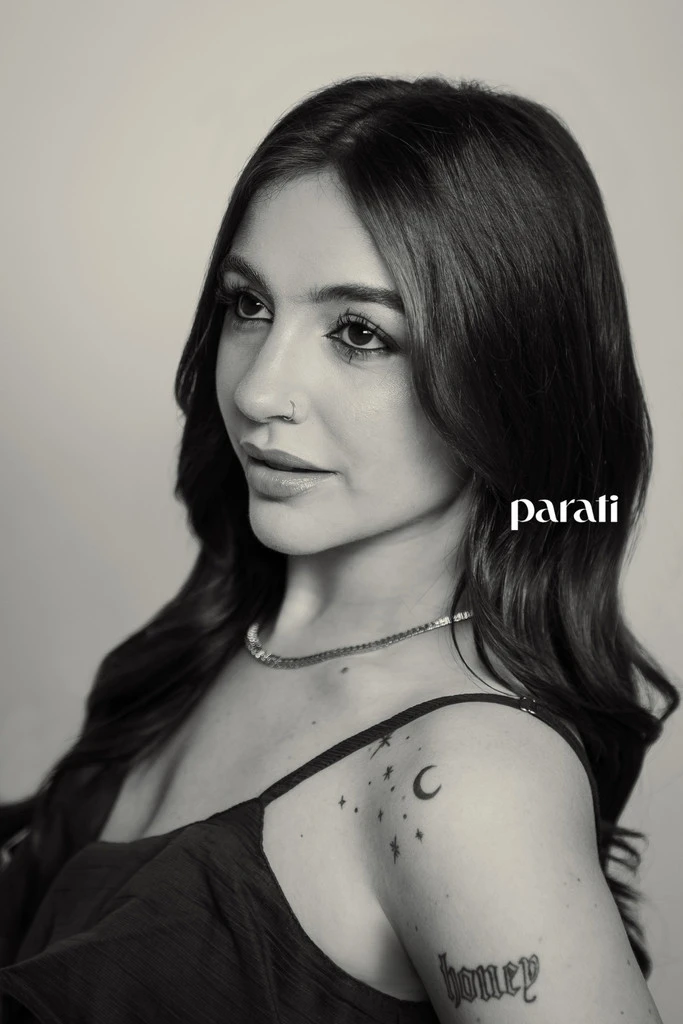
The Bond with Ferbo and the Decision to Stay Single
—In Se Fue Larga you work daily with Fermín Bo, with whom you had a romantic history. How did you manage to separate the personal from the professional?
—We never had the label of being boyfriend and girlfriend, but we dated all of last year and he is my team leader on the show. At first it was incredibly hard to set boundaries because I trusted that we could discuss things at work as if we were at home. It was hard for me to understand my place as an employee, but today we get along wonderfully. He is very much in a relationship and happy, and it made me glad to see him in love because we both suffered in our dynamic. I watched him mature and become more human; before he was a little robot of work, and today he is another person. We are a very close-knit team.
—After intense relationships and public exposures, what stage are you at emotionally today?
—I’m very calm and content. This year I had relationships that moved faster than I usually allow, and I decided to put a brake on it: I need and want to be alone. I found a lot of peace in my own time and space, to the point that I even find it hard to share a bed or a dinner because I really enjoy my independence. Today I choose to stay single to heal my own stuff before bringing someone else into the picture.
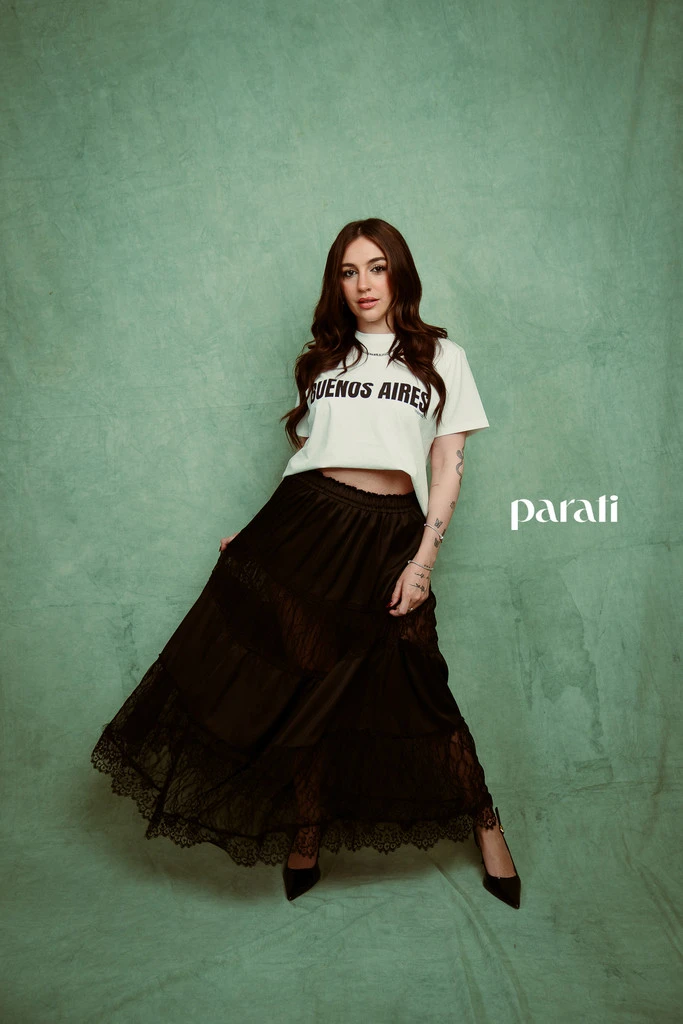
Fashion, Insecurities, and the Intersection with Social Media
—What is your relationship with fashion and with the aesthetic exposure on social networks?
—It’s complicated. I started liking fashion quite a bit about two years ago, when I entered this world, but I’m very self-conscious about my body. I love seeing how clothes look on others, but when I try them on I start thinking that my belly will show or that people will comment if I’m fat or pregnant. I love fashion, but I still struggle to fully enjoy it in myself because of how I look.
—You recently went brunette and on social media you were compared to Ángela Torres for a dress you wore. How do you handle that kind of comment?
—Being compared to Ángela feels like an honor because I’ve loved her since I was a kid; she’s a total diva. But it wasn’t about copying her: I returned to my natural color because my hair was damaged and I wanted to begin a new chapter for my birthday. I had bought the dress a year earlier and finally wore it now — I even shared the chat screenshot to prove it. On Twitter people are bored and look to stir trouble. Sometimes I don’t take it personally and other times, if I’m bored, I enjoy replying.
The Story Behind the Camera: The Children’s Home and the Grief After Adoption
—There’s a very strong facet of you linked to being a support family in a children’s home. How did that story begin and what did it mean to you?
—In 2019 I began studying Social Work because I wanted to dedicate myself to adoptions. I left the degree during the pandemic, but that calling stayed, and in 2022 I signed up as a volunteer at a home. When I met those two siblings, it was an immediate connection; there was a mutual need for love because I was going through the worst moment of my life. It gave me a purpose: I stopped going out to escape my problems and I waited on Saturday mornings to go fetch them and spend the day together. Today I feel they saved me much more than I saved them.
—Did you and your family ever consider adopting them yourselves?
—Yes, we thought about it a lot in 2023 and 2024 because love had become like that of children. But my parents had closed their family business in 2019, then separated, and I moved out on my own; financially and structurally it was impossible to start from scratch with two kids, and the system makes adoption difficult for separated families. We decided to support them from our side on weekends until their permanent family arrived.
—And this year, after four years, they were finally adopted. How did you experience that moment? —It was total emotion and a before-and-after. It’s a beautiful mourning, but a mourning nonetheless: having to stop seeing them every weekend, ending that half-maternal role of taking them to the doctor or to school because now they have their parents. Fortunately we were matched with a wonderful family who wanted us to continue being part of their lives as godmothers and godfathers; they invite us to birthdays and we spend Children’s Day together. At the time it was also hard to handle the online response: people donated a lot of clothes and supplies, but for safety and to avoid hindering legal processes, we couldn’t show their faces. Today I want to return to volunteering, but I need to finish closing this grieving process so I can make space for another child.