
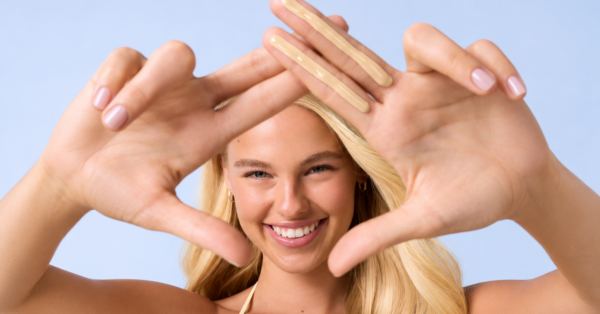
Moisturizing foundations, lip products that care and color-protecting SPF products: makeup skinification is transforming how we think about and choose makeup.
Foundation no longer necessarily arrives after an extensive skincare routine. In many new formulas, color sits alongside hyaluronic acid, vitamin C, peptides and other actives known in the skincare world.
This crossover has a name: makeup skinification. A well-established trend that blurs the boundaries between the two categories and proposes products capable of performing more than one function.
What makeup skinification is
Skinification involves applying to makeup the ingredients, textures, and formulation logic we associate with facial care. Thus appear moisturizing foundations, concealers with actives, creamy blushes, mascaras designed to care for lashes, and lip products that deliver color while supporting hydration.
The shift also reaches how we understand the result. Instead of seeking a coverage that completely hides texture, the trend prioritizes light, natural finishes that let the skin show through. Makeup doesn’t disappear: it adds another function.
Makeup and treatment: what each formula can offer
A hybrid product can simplify the routine and provide a more comfortable experience. However, that a formula includes a known active doesn’t necessarily mean it will deliver the same results as a dedicated treatment.
Its action depends on factors such as concentration, ingredient stability, and how it was formulated. Furthermore, ‘skinified’ is not a regulated category: it’s also a term used by the industry to describe this new generation of cosmetics.
Therefore, more than being guided by a long list of actives, it’s wise to pay attention to what function the product promises, how it fits into your routine, and whether it responds to the needs and preferences of your skin.
Sun protection also integrates into makeup
One of the most interesting crossovers appears in color-tinted sunscreens. These formulas aim to combine protection and coverage to reduce the number of layers and facilitate a step that is often skipped during busy mornings.
But there is an important caveat: to achieve the protection level stated on the packaging, you must apply a sufficient amount. The American Academy of Dermatology recommends using a broad-spectrum sunscreen with an SPF of at least 30 and reapplying roughly every two hours when outdoors.
Thus, a color-tinted sunscreen can serve as both sunscreen protection and makeup, provided it’s used according to the product’s instructions. By contrast, a conventional foundation that merely contains SPF should not automatically be considered a substitute: we often apply less makeup than the amount needed to achieve the protection stated.
A launch that follows the logic of skinification
In line with this cross-category approach, L’Oréal Paris launched in Argentina UV Defender Efecto Make Up, a SPF 50+ sunscreen formulated with makeup pigments.
The product aims to combine protection with a coverage similar to that of a foundation and a natural finish. According to the brand, it is available in three shades: 2.0 light, 3.0 light-to-medium, and 4.0 medium-to-dark.
Beyond a single launch, its arrival reflects where the industry is headed: hybrid formulas designed to reduce steps and support increasingly practical routines.
Skinification doesn’t propose abandoning facial care or turning every cosmetic into a treatment. Its contribution lies in expanding the possibilities: choosing makeup that, beyond color or coverage, also considers how the skin feels during the day.
