
She was on the cusp of global fame, yet still soft‑spoken, almost shy. In a post‑war world hungry for glamour, she chose grace instead. The tale of a star’s unworn gown—quietly diverted from a society wedding to an everyday bride—still feels bracingly modern, and achingly human.
It started with couture and expectation, and ended with generosity and serendipity. The garment never took its first walk down a grand aisle; it took a different journey altogether—toward a life that needed it more.
Rome, a canceled engagement, and a couture secret
In early 1950s Rome, the Sorelle Fontana atelier sketched tulle and dreams for a young actress with luminous eyes. She was engaged, the fittings precise, every seam disciplined, every line lyrical.
Then came doubt, and a decision as clear as a chime. “When I get married, I want to be very married,” she would later say—an elegant way to honor instinct over momentum. The engagement ended; the gown, complete, waited like a kept promise with nowhere to go.
Her request to the couturières was simple, almost startling: “Please give the dress to a girl who couldn’t afford one,” she reportedly said. No press release, no staged handoff, just a quiet instruction and a velvet full‑stop.
The unknown bride who wore a star’s gown
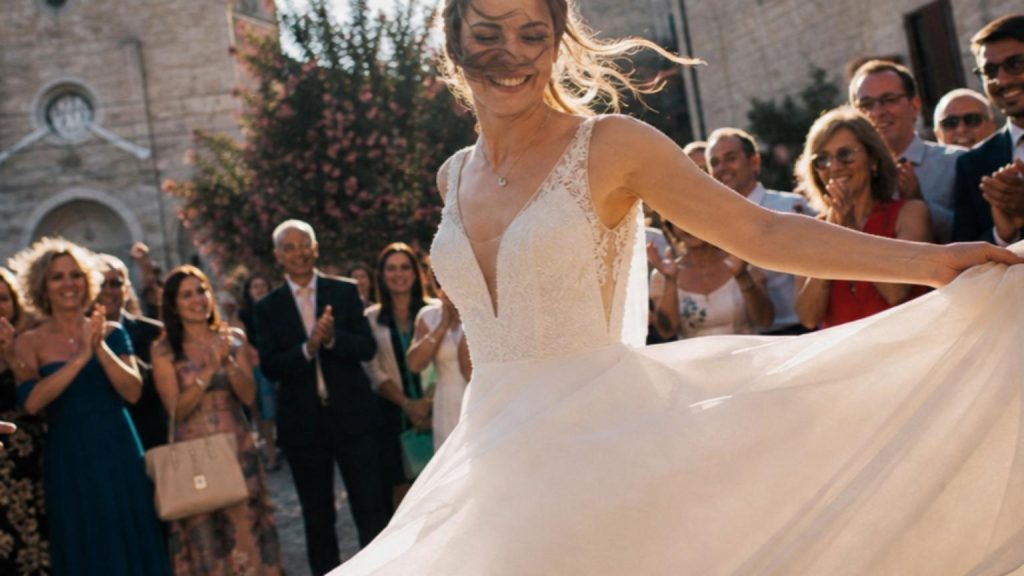
The atelier found a young Italian woman, modest means, steadfast love. On her wedding day, she slipped into the same silk that had brushed a film star’s shoulders in a fitting room, and the air around her changed—no flashbulbs, just village sunlight and ringing bells.
Some stories live in footnotes, but this one lives in the scene you can nearly see: a borrowed veil, careful hands, nervous laughter that dissolves into tears of relief. The dress fulfilled its purpose not as a relic, but as a working piece of joy.
Elegance, in this telling, isn’t a red‑carpet currency; it’s a circulatory system. Fabric moves, meaning moves, and a private act of giving becomes public only because it still teaches us how to live.
A philosophy sewn into tulle
She cultivated a reputation for pared‑back style, but it always carried a halo of kindness. “Elegance is the only beauty that never fades,” the line so often linked to her, reads like a thesis for this moment—beauty as ethic, not ornament.
The choice to redirect a couture gown mirrored the values that later defined her life—humility, usefulness, a bias for action over adoration’s easy glow. Not asceticism, but alignment: wearing what you love, and letting what you love do good in the world.
In an industry built on exclusivity, she practiced a kind of porous glamour. The magic didn’t end at the atelier door; it walked into a small church and said, “I’m yours now.”
What the gesture says about fame
Celebrity weddings are meant to be maximal: announcements, custom lace, spectacle engineered for infinite scroll. This story refuses the script. It swaps the headline for a handshake, the collector’s archive for a living, breathing ceremony.
What, exactly, did the gesture mean?
- Reframing value: a dress is most valuable when it is used.
- Decentering the star: glamour can circulate beyond a single name.
- Redefining luxury: generosity is a luxury anyone can afford to practice.
That reframing feels surprisingly current in a world debating sustainability and waste. Instead of becoming a museum specimen, the gown did what clothing is born to do: witness vows, hold nerves, catch a tremble of happiness.
Threads that still connect us
If this were just an anecdote, it might be charming and done. But it’s also a blueprint. Designers can collaborate with charities; brides can pass gowns forward; stylists can treat provenance as a beginning, not an end. The chain strengthens each time we ask, “Who could use this now?”
There’s also a subtler lesson about knowing when to stop. She stepped back from a wedding she wasn’t ready to enter, then transformed the residue—measurements, muslin, fittings—into someone else’s clean start. That’s more than style; that’s moral editing.
The picture I keep is not the star but the stranger, stepping from shadows into light, the hem lifted an inch above cobblestones, the future bright enough to squint at. A dress meant for one path found another, and in that detour it became more true, more alive.
Stories fade; good fabric doesn’t. It remembers hands, voices, and the warmth of a crowded room where two people say yes—and a third, somewhere else, quietly says, “Take it. Make it yours.”