
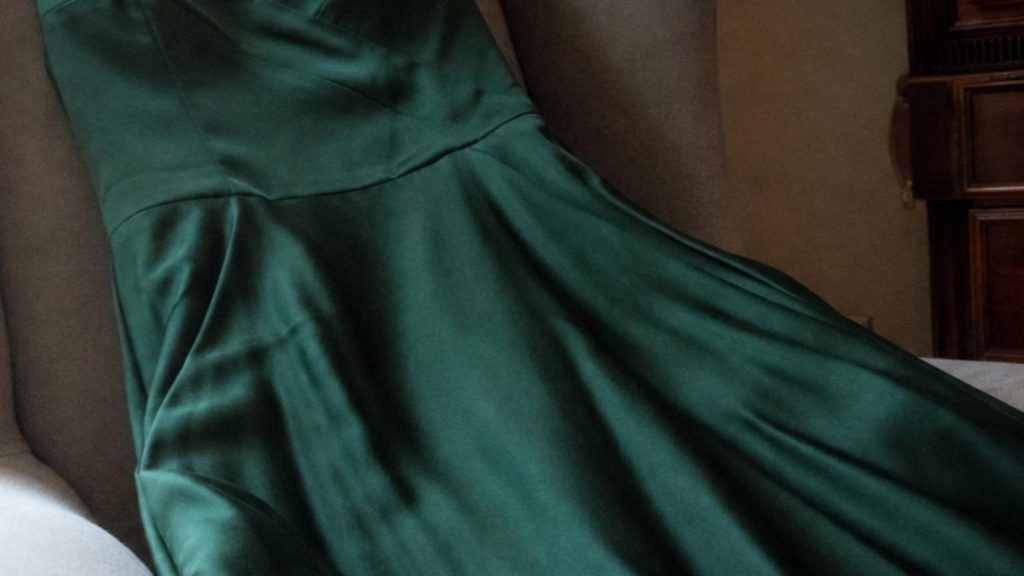
The clothes told a story before a single word was spoken. In Dublin, the Princess of Wales stepped out in a precise palette and purposeful silhouettes that read like diplomacy on fabric. Nothing felt accidental; everything felt considered, and unmistakably warm.
Her wardrobe did what great public dressing always does: it translated etiquette into energy, broadcasting respect, steadiness, and optimism with a few deft choices. The message was clear, yet never loud.
The authority of a Catherine Walker coat
Few labels signal quietly assured power like Catherine Walker. The coat’s clean lines and tailored structure worked as architecture for the day, giving her a confident frame from which everything else could flow. It was the kind of outerwear that says, “I’m here to listen, and I’m here to lead.”
There’s also lineage in that choice. Walker is a house steeped in royal history, and that continuity carries weight. Wearing it in Ireland hinted at diplomatic memory, but also modern clarity—familiar, not stale; ceremonial, not stiff.
“Good tailoring is its own handshake,” goes a line in fashion circles, and the coat made that handshake firm without pressing too hard.
Why green—and which green?
Color was the first bridge, and green the obvious pathway. But the nuance mattered. This wasn’t costume; it was calibration. The shade read as celebratory rather than novelty, respectful without tipping into cliché. On a gray Dublin sky, green becomes signal and smile at once.
Green is a charged color—heritage, land, hope. In a public schedule that pairs handshakes with photo calls, it becomes readable even at a distance. As one stylist might quip, “Color is diplomacy you can see, even if you can’t hear it.”
Texture kept the palette from feeling flat. Thoughtful fabric choice gave light a place to land, softening the coat’s discipline with a touch of movement.
Alessandra Rich and the art of soft authority
Underneath, an Alessandra Rich dress delivered the counterpoint: vintage-inflected ease, modern intent. Rich is known for silhouettes that feel feminine but never fragile, and that duality did a lot of quiet work. The dress moved when she walked, which matters in rooms designed for conversation, not just cameras.
Print and cut suggested approachability: a waist that defines, a skirt that flows. You could hold a speech in it, or kneel to greet a child. That is soft power’s sweet spot—clothes that are polite, but still alive.
There’s also a clever echo: pairing a heritage-leaning coat with a retro-modern dress creates a dialogue between past and present. It’s continuity without repetition.
Accessories as punctuation, not paragraphs
Nothing shouted. Everything punctuated. A streamlined clutch kept the focus on silhouette, while unfussy shoes maintained rhythm between stops. Jewelry stayed mostly in the register of glow, not glare—the kind of pieces that catch light but never steal the scene.
These are the margins where intent becomes legible. You don’t notice the choices until you try to imagine them any other way.
What the wardrobe said
- Continuity: a heritage coat signals stability, not stasis
- Connection: green as an immediate bridge to Irish identity
- Confidence: structure up top, ease beneath—both poise and warmth
- Conversation: fabrics that move, silhouettes that welcome dialogue
Reading the room, wearing the room
Public dressing is a foreign language, and she’s fluent. The coat did the greeting; the dress did the listening. Together, they formed a sentence that read as curiosity and care, rather than pageantry.
This is the new template for royal travel wardrobes: fewer exclamation points, more commas; less theater, more texture. The aim is to look at home without pretending to belong, to honor place without borrowing its costume.
One might argue that clothes can’t do all this. Yet watch a crowd’s posture when a familiar shade appears, or note the temperature shift when tailoring feels trustworthy. Soft power is still power, and fabric is one of its most legible instruments.
In Dublin, the message landed with the ease of a practiced note: steady where it needed to be, open where it could be. A coat to hold the line, a dress to open the door—and a color that said, simply, we see you.