
He’s one of fashion’s most restless minds, a designer who blends craft and concept with uncommon clarity. As rumors surge about a move to Paris’s most storied maison, it’s worth pausing to ask who Jonathan Anderson is, what shaped his singular vision, and why the industry keeps seeing his name at the top of every shortlist. While headlines swirl, it bears noting that Dior’s creative leadership remains with Maria Grazia Chiuri (womenswear) and Kim Jones (menswear); Anderson continues at Loewe and his namesake label. Still, the fascination endures—and for good reason.
Northern Irish roots, London formation
Born in Magherafelt, raised partly in Ibiza, Anderson carries a pan-European sensibility threaded with Northern Irish pragmatism. He trained at the London College of Fashion, then cut his teeth in stage costume, sharpening a feel for silhouette and story. Those early years fostered a belief in clothing as both theatre and utility—“a place where character meets cut.”
Building JW Anderson
He launched JW Anderson in 2008 with a proposition both intimate and subversive: gender-playful basics reassembled with wit. The collections toggled between romance and rigor, splicing fishermen’s knits with pearls, schoolboy shorts with satin, utility with sensuality. He embraced the “unsettling line”—a hem slightly skewed, a familiar shape misplaced—to make the ordinary feel new.
Loewe: craft as a modern engine
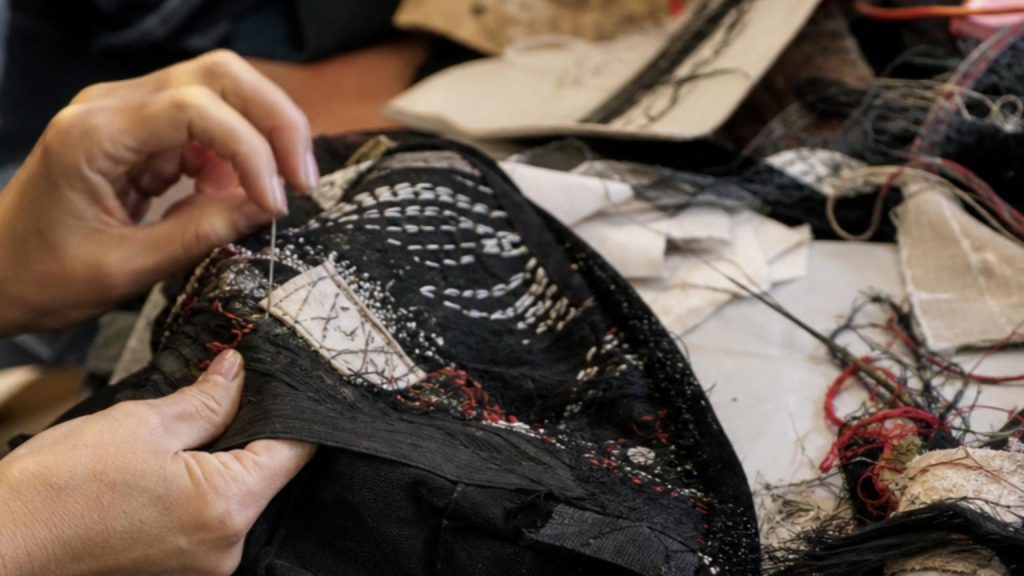
Since 2013, Anderson has led Loewe, transforming Spain’s oldest luxury house into a global culture platform. He championed artisanship as innovation, reframing leather not as legacy but as living technology. “Craft is the true luxury,” became a quiet refrain—more practice than slogan. Under his watch, the Puzzle bag, surrealist knits, and ceramic collaborations turned Loewe into fashion’s most curious laboratory, where museum-grade craft meets meme-age clarity.
Design signatures that travel
- A devotion to craft: hand, material, and the visible process
- Off-kilter proportions: volume shifts, cropped lengths, and gentle distortions
- Playful materiality: leather as fabric, fabric as sculpture
- Cultural cross-pollination: literature, art, and subculture feeding form
- Emotional utility: clothes built to be worn, then remembered as ideas
Why the Paris chatter won’t die down
Anderson sits at the intersection of commerce and culture—one of the few designers who can grow sales while feeding the critical imagination. His shows spark digital conversation without sacrificing tactile substance. For a house rooted in couture, ritual, and archival codes, the combination of material seriousness and modern mischief is a rare fit. As one editor put it, “he makes craft feel urgent, not nostalgic.” In other words, he understands how to keep a century-old language fluent.
Relationship to heritage
He treats archives as living ecosystems—quotes that should be challenged rather than dutifully recited. At Loewe, he didn’t fossilize leather; he turned it into a stage for collaboration with artists like Anthea Hamilton, Joe Brainard, and Sunae Park. The instinct is to ask, “what is the essence we can amplify?” rather than, “what is the rule we must obey?” It’s heritage as verb, not noun.
A curator’s eye, a retailer’s brain
Anderson thinks in exhibitions and activates in shop-floors. He favors slow-burn products—bags and knits with structural memory—but also sharp image moments that travel far beyond the runway. He builds “collectability” through material depth rather than seasonal gimmicks, a strategy that aligns with luxury’s long-game economics: fewer items, stronger desire.
What collaborators say
Those who work with him describe a process that is “rigorously curious.” He’ll interrogate a seam until it reveals a story, or turn a scrap of leather into a proposition for an entire season. His studio culture prizes “clarity through iteration”—making, testing, and trimming until an idea sits with quiet authority. The result looks effortless, but the effort is everywhere.
If he were to lead Avenue Montaigne
The most credible scenario imagines Anderson approaching Parisian codes with respectful friction. Expect sharper tailoring with textural surprises, eveningwear that privileges line over ornament, accessories engineered as tactile icons, and a deeper conversation between atelier craft and contemporary art. Less thunderous spectacle, more simmering intensity—“emotion in the hand,” as he might put it.
The throughline
Across labels and decades, his project is remarkably consistent: make things that feel made, and let intelligence show through material choice. He builds worlds where objects carry memory, clothes carry ideas, and audiences carry the conversation forward. Whether steering a Spanish heritage house, his London-rooted brand, or—someday—another Parisian institution, Jonathan Anderson’s compass points to the same north: craft elevated to culture.