The French manicure is transforming again, but this time it’s not only about replacing the classic white tip. The renewal also extends to the base of the nail, which is painted completely and paired with a thin line in a different shade.
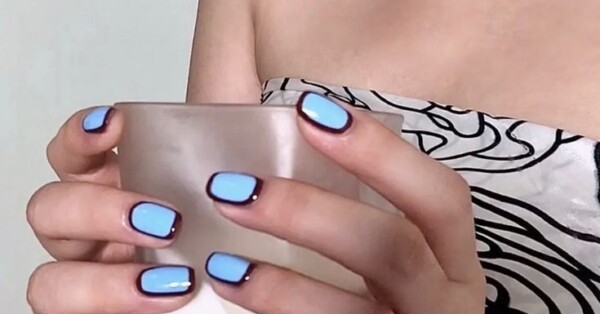
The same logic appears in the outline nails, where the second color traces around the outline and creates a frame. They are minimalist designs due to the simplicity of their strokes, but fully standout thanks to their color combinations.
Colored French: two tones that enhance each other
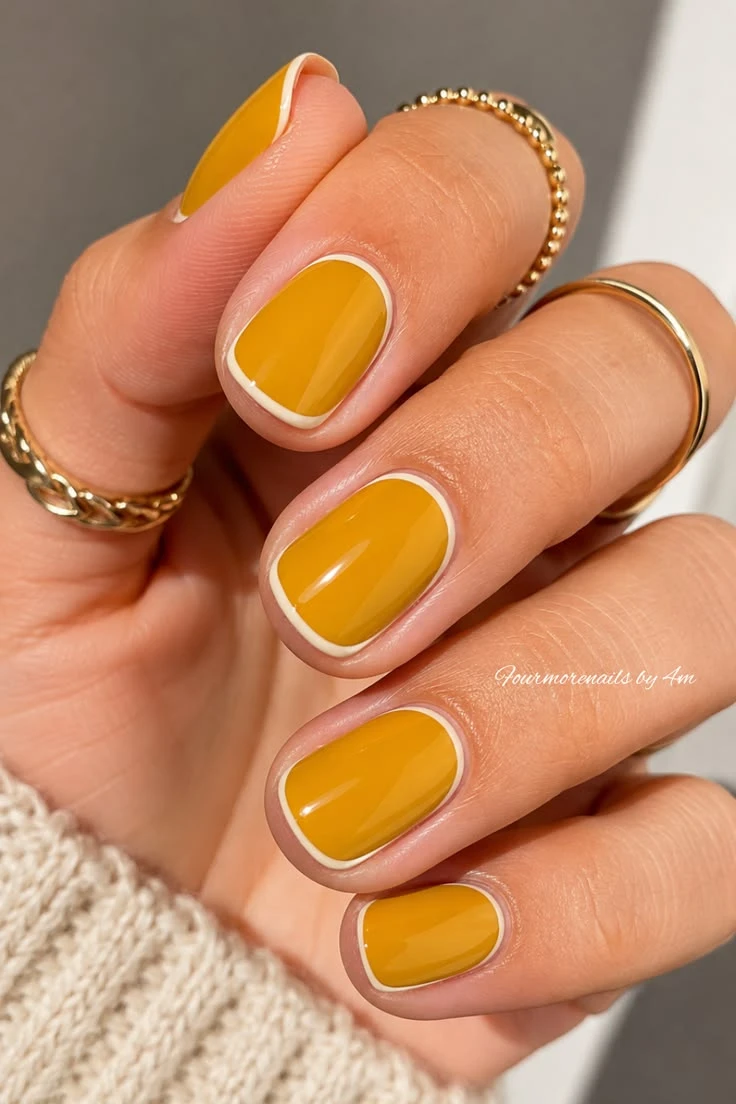
In this new version of the colored French, the nail is covered with a solid color, and the tip is defined with another polish. The result departs from traditional manicures and becomes a more graphic, cheerful, and contemporary proposition.
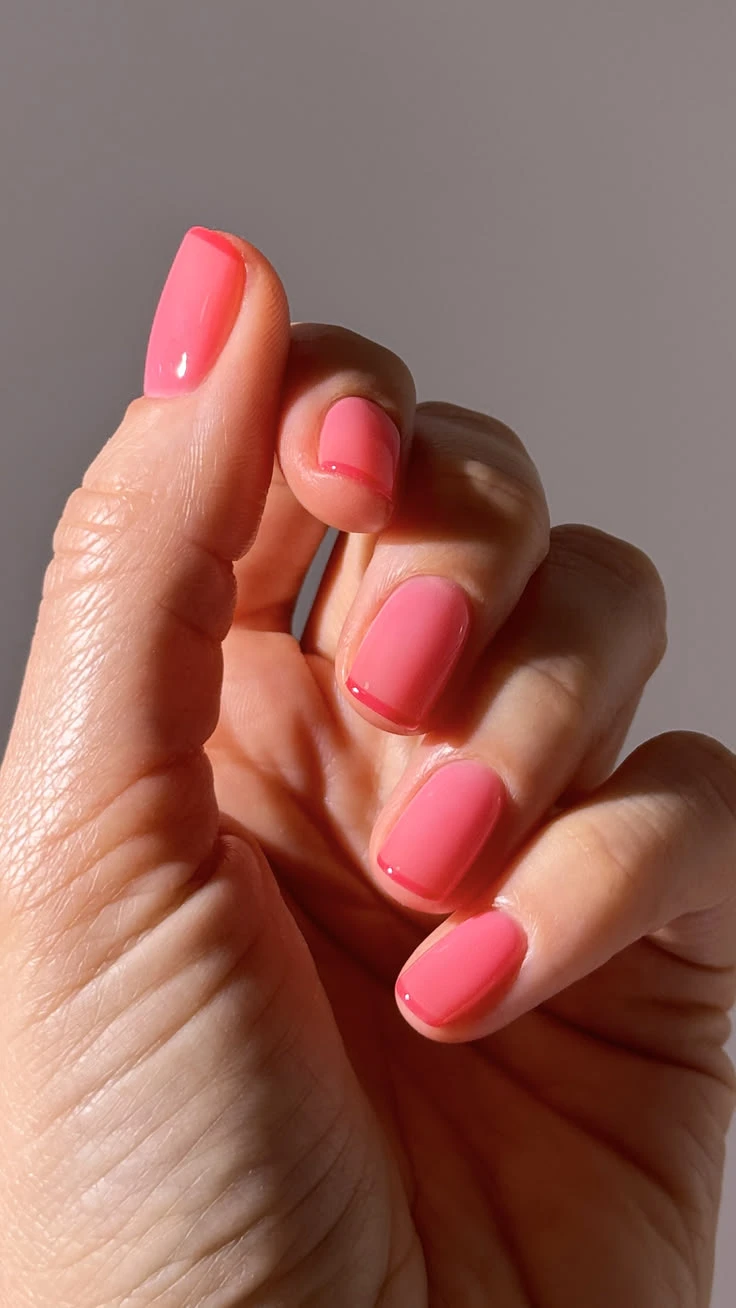
A mustard base can be paired with a white line, while a coral background gains more intensity with a red tip. The trick is to experiment with tones that are close, opposite, or unexpected.
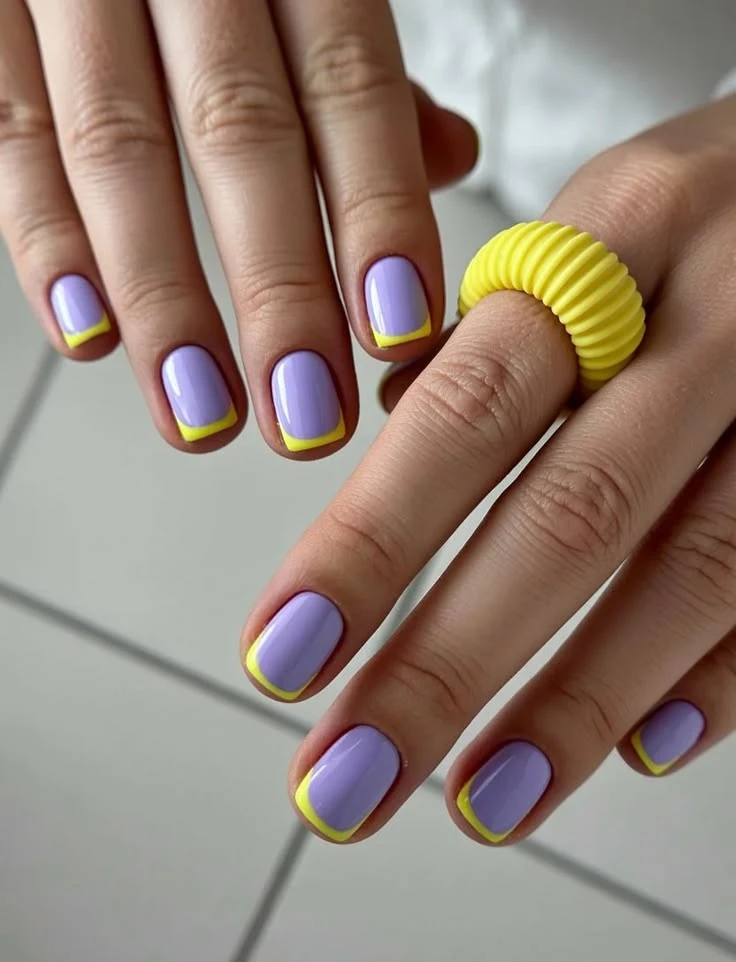
The line can be thin to keep a delicate result or slightly wider if you want the contrast to have greater presence. In both cases, the color combination is the true protagonist.
Outline nails: the frame also wears full color
Outline nails start from the same idea, but they move the line from the tip to the entire perimeter. On a fully polished base, a second tone outlines the shape of the nail and creates a framing effect.
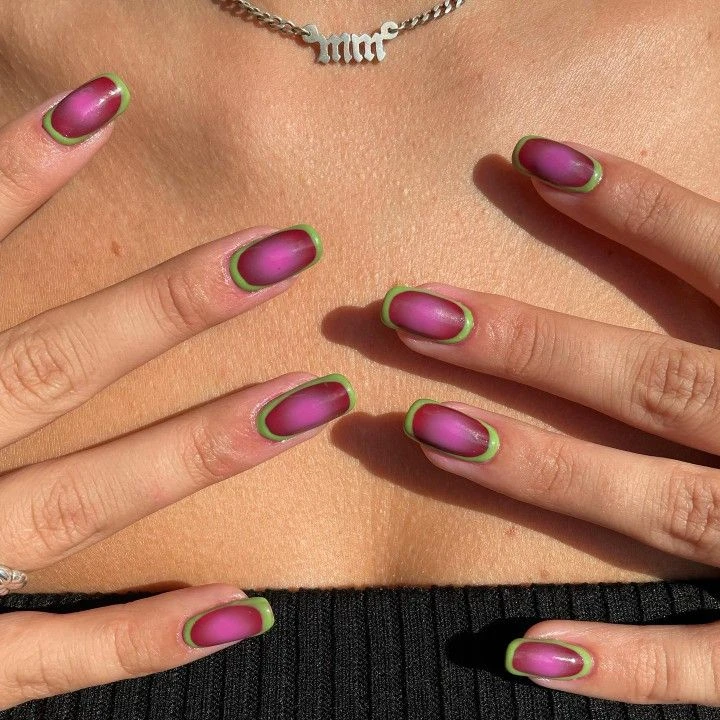
The design is simple, though visually very effective. The outer line can create contrast with the background or belong to the same color family to achieve a more harmonious result.
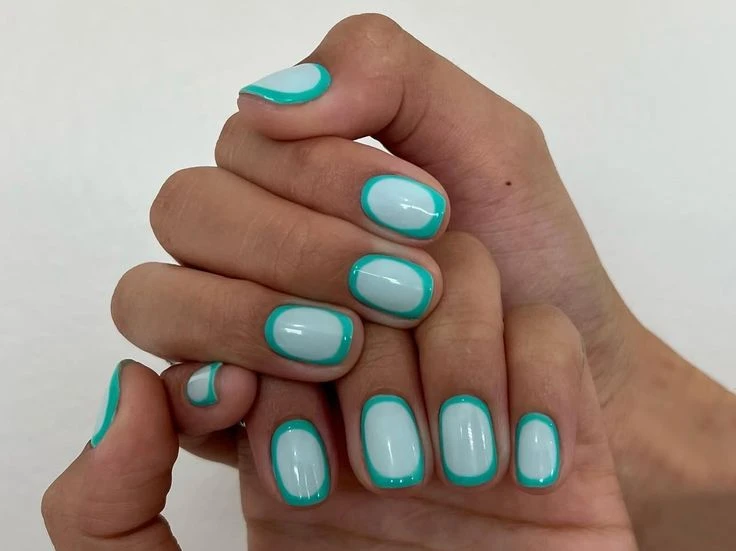
This technique also allows playing with the perception of shape: a fine and precise outline highlights the silhouette, while a bolder line turns the nails into small color blocks of graphical form.
Minimal designs with color at maximum intensity
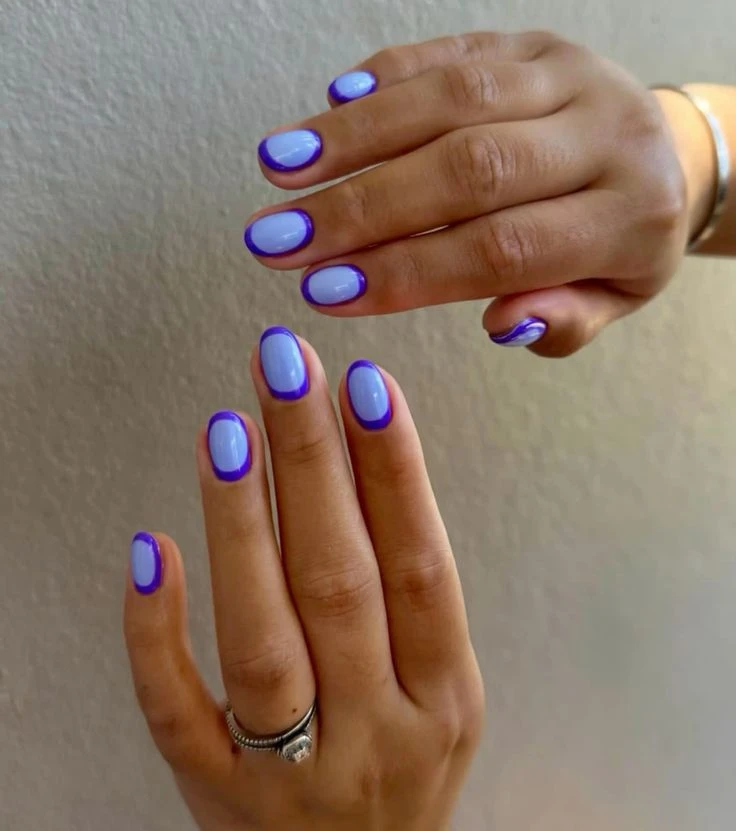
Although the strokes are simple, these manicures do not go unnoticed. Their impact does not depend on complex drawings, embellishments, or reliefs, but on the relationship between the two chosen colors.
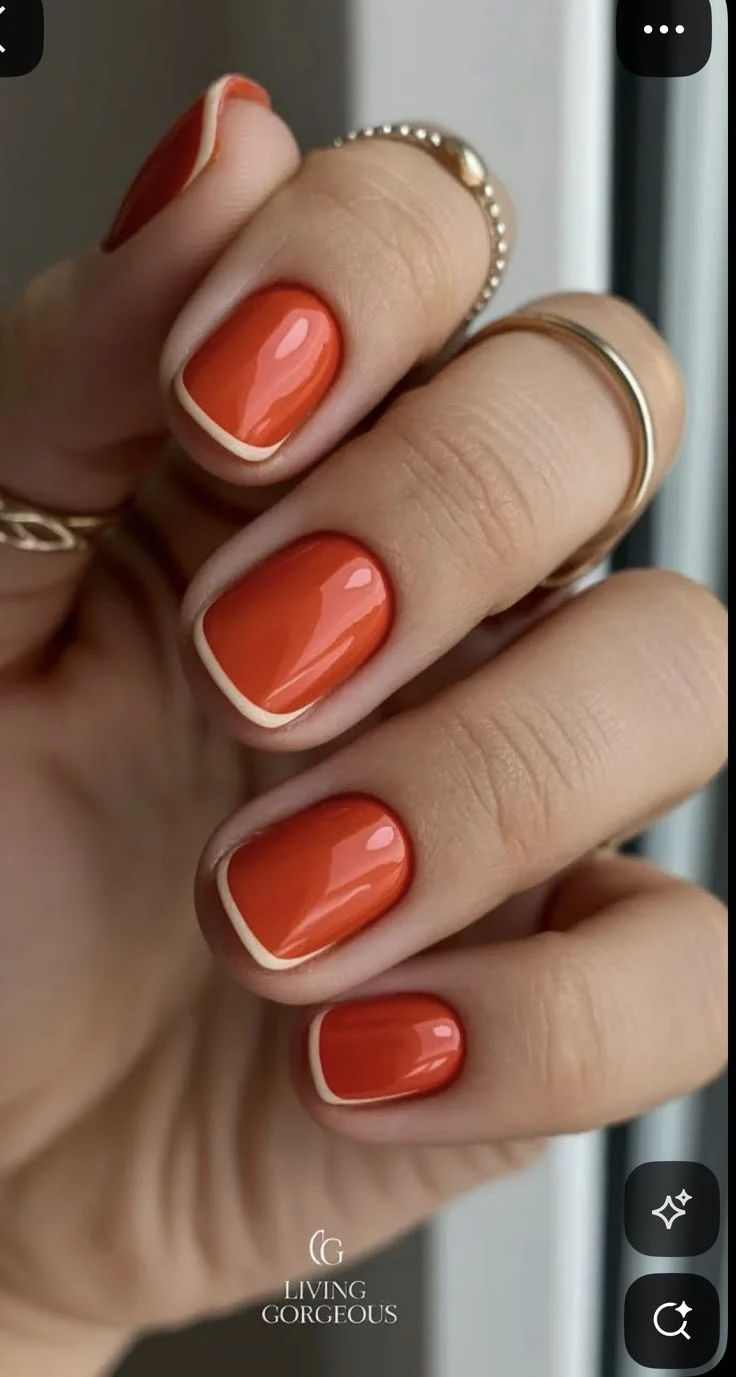
Tone-on-tone combinations offer a subtler version: coral with red, light blue with blue, or pink with burgundy. By contrast, pairing contrasting colors—such as mustard and white, green and pink, or violet and orange—produces a bolder result.
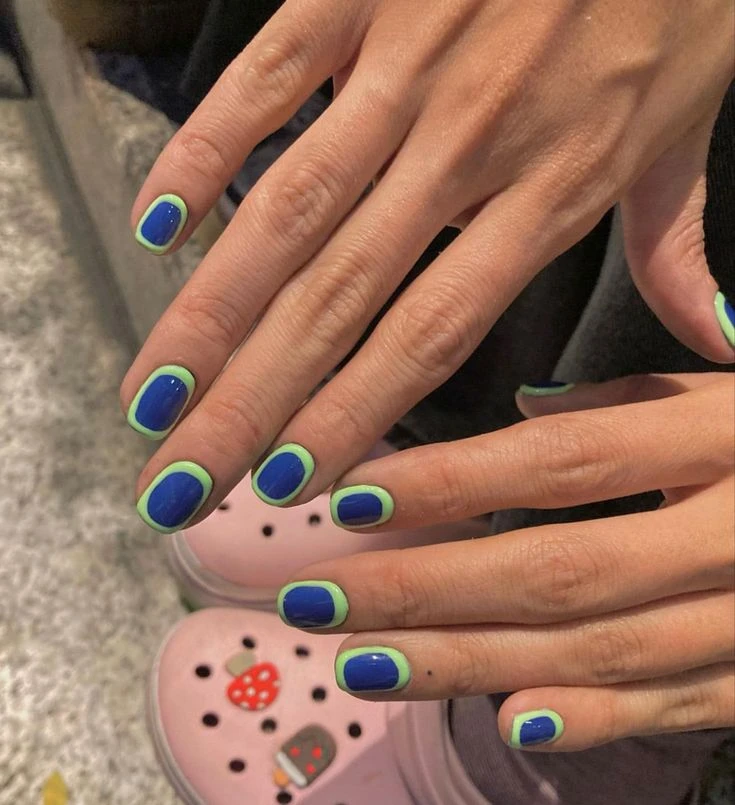
You can also keep the same duo on all the nails or invert it: use a color as the base on some fingers and reserve it for the edge on others. In this way, the design remains cohesive, yet gains movement.
How to choose the color combination
For a balanced manicure, it is wise to decide which of the two tones will have greater prominence. The base covers more surface, while the line functions as an accent capable of illuminating, contrasting, or intensifying the main color.
Pastels combined with each other offer a soft alternative. The vibrant tones convey the full energy of spring, and mixtures with white allow the design to stand out without competing with the background color.
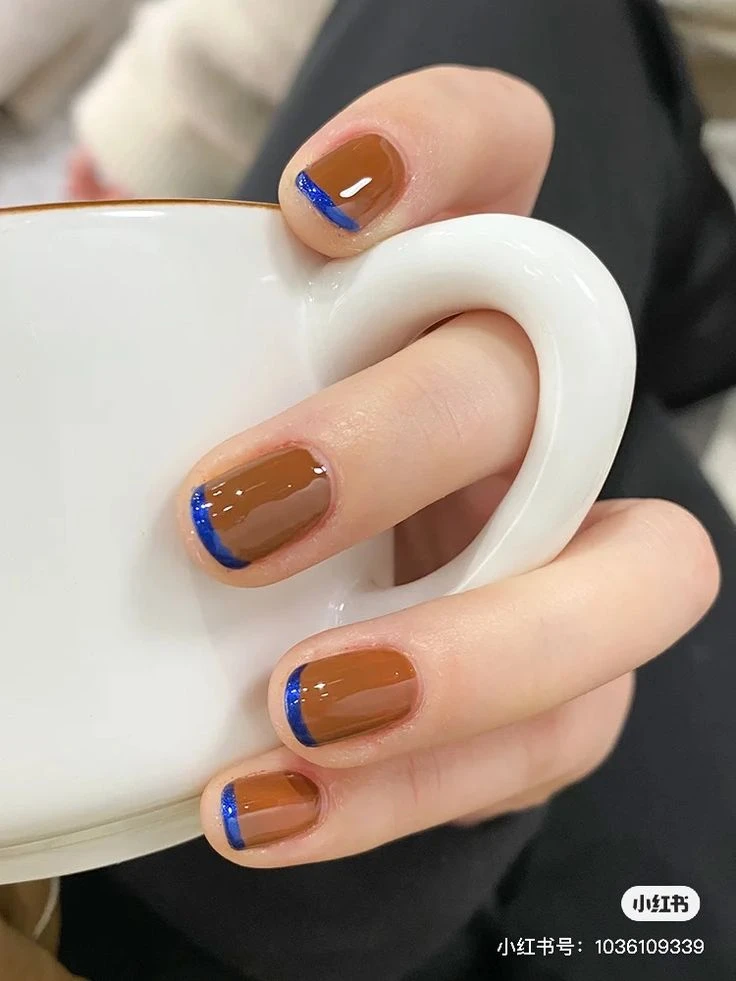
The precision of the stroke is fundamental for both the colored French and the outline nails. A final layer of gloss helps to integrate the two polishes, even out the surface, and protect the design.