
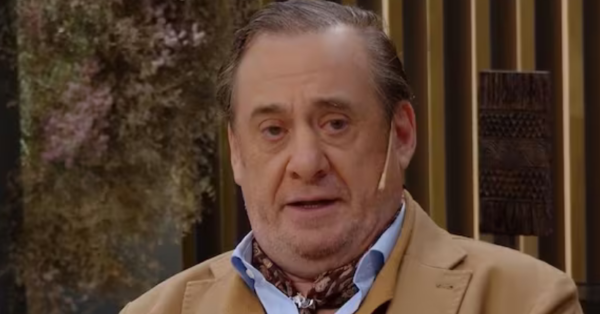
Invited to PH, Podemos Hablar, Telefe’s program hosted by Andy Kusnetzoff, Alejandro Awada recalled one of the most difficult episodes his family endured: the kidnapping of his father, Abraham Awada, which occurred in 2001.
During the program, the actor reconstructed those days of extreme tension and disclosed a detail he had kept private for years: it was he himself who participated in one of the ransom money handovers demanded by the kidnappers. The experience was marked by fear, uncertainty and several failed attempts until his father’s release.
Awada explained that Abraham was a textile businessman close to former president Carlos Saúl Menem. According to him, Menem would often arrive by helicopter at the club where his father played golf, something that, according to the actor’s account, would have led the kidnappers to interpret that there was a connection they could exploit for financial gain.
“One day he leaves the club, a car crosses him and they take him,” he recalled. From that moment, the family began receiving phone calls and threats. After several days of uncertainty, they decided to comply with the kidnappers’ demand and gather the ransom money.
“We agreed, we gathered the money and I went to make the first delivery. I trembled; I had never been so afraid in my life, plus the guys were very rough, they mistreated us and told us ‘Do this, do that!’,” he recounted.
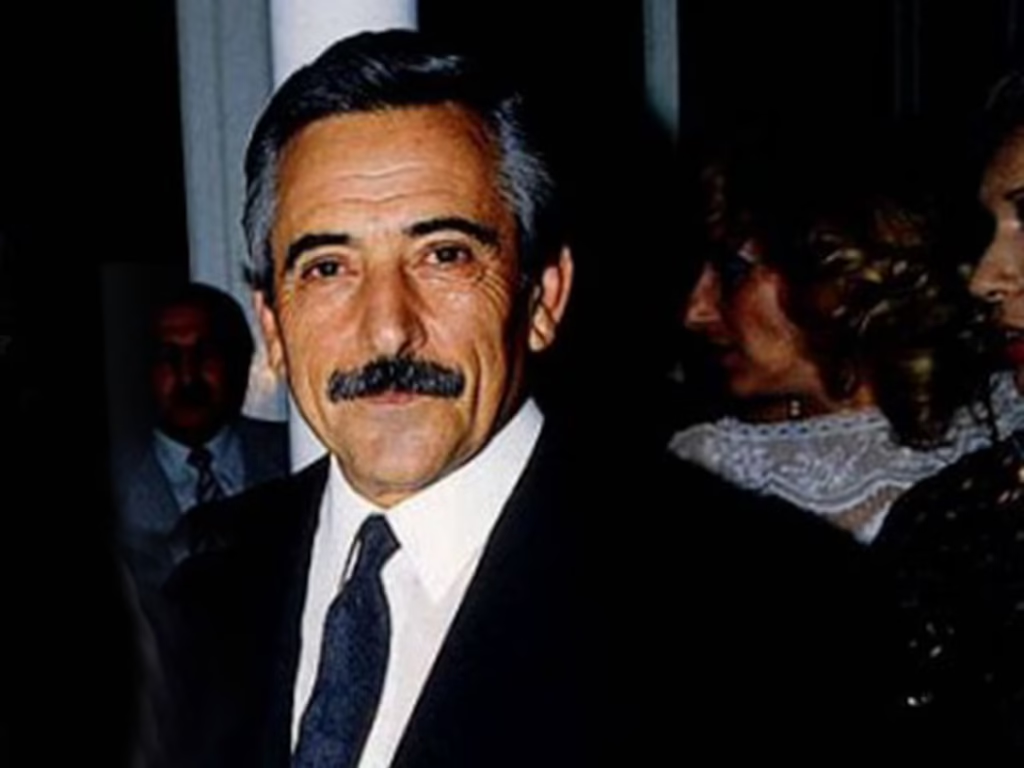
La Policía puso a disposición de la familia a dos especialistas para acompañarlos durante el operativo. Con el seguimiento policial, Awada continuó respetando las indicaciones que recibía de los secuestradores. “Me dicen que hay un tal auto en tal lugar, que me suba y que sigan las instrucciones”, explicó.
The failed ransom handovers
The actor said he received precise instructions on where he should leave the money. Even, at one point during the operation, he believed there was an opportunity for the Police to arrest the criminals after passing by a police station along the route they had indicated.
However, the plan did not go as expected. “They took me, and the two of them went. It turns out I delivered to the wrong place,” he recalled.
According to his account, there were two more attempts. The second also proved unsuccessful and finally a third person, with experience in this kind of negotiations, carried out the final delivery.
After a week marked by captivity and family tension, Abraham was released. Records from the time indicate that he had been kidnapped on August 20, 2001, when the businessman was 78. After the family paid a ransom of $300,000, he regained his freedom six days later.
But the episode did not end with the release. For Alejandro, it also meant a before and after in the relationship with his father.
The hug that changed the relationship between Alejandro and Abraham Awada
Later, Kusnetzoff asked the actor how his bond with Abraham was before the kidnapping. “Distanced, we shared little. I always loved him and he always loved me, that much is true,” he explained.
Awada acknowledged that his father was not a particularly affectionate man. “A man not easy, for lack of a better word. The hugs? No. The kisses? Neither,” he described.
However, everything changed when Abraham regained his freedom.
“I heard the sound of the door, I jumped off the chair and it was my old man. I hugged him and I began to cry, tears, a rain of tears. And from there we started getting along better, he changed a lot. And then he aged, poor thing,” he remembered. Abraham died on August 18, 2012, at 90 years old.
How the kidnapping of his father influenced Alejandro Awada’s work
The conversation also led to one of the actor’s most memorable works: his portrayal of Arquímedes Puccio in Historia de un clan, the fiction based on the real story of the Puccio family clan that carried out extortionate kidnappings.
Kusnetzoff wanted to know how that personal experience had influenced the construction of a character who was on the other side of a kidnapping.
Awada explained that having lived the captivity of his father allowed him to know firsthand the place of the victims and their families. “It helped me to have lived through the experience because it’s no joke, it’s serious,” he explained during the program.
In this way, the actor returned to a experience that affected his family twenty-five years ago and that, in addition to transforming his relationship with his father, ended up leaving an unexpected mark on his professional career. The memory of fear, the uncertainty and that hug after the captivity gained, over time, another dimension in his personal and artistic history.