
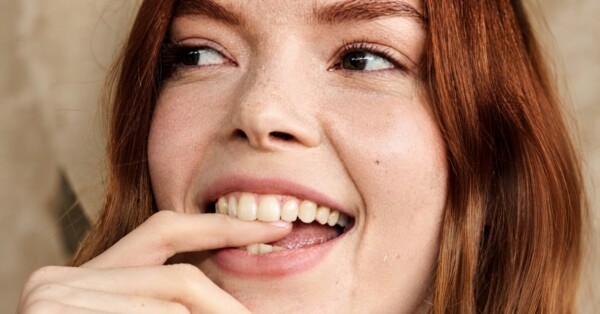
If you bite your nails, you probably do it almost without realizing it: while you’re focused, watching a series, working, or going through a moment of tension. What may seem like a simple habit, however, can also have consequences for your oral health.
This habit is clinically known as onychophagia and, when it becomes frequent, can cause irreversible wear of the enamel, small fractures, sensitivity, and changes to the bite. It can also overburden the jaw joint and increase exposure of your mouth to microorganisms that accumulate under the nails.
Furthermore, it is often associated with anxiety and with other repetitive behaviors related to emotional stress. It can appear at any age and progress quietly: since the damage appears gradually, it is often detected only when the dental structure is already compromised.
Dr. José Daniela Delgado, a dentist and specialist in Stomatology and Forensic Odontology, explains that you should not consider onychophagia solely as an aesthetic habit.
“Nail-biting is a repetitive behavior frequently related to anxiety that occurs unconsciously. It does not reflect a lack of control or weakness, but rather a way some people try to manage certain emotions. The problem is that, when it becomes a frequent habit, it can lead to significant consequences for oral health.”
The enamel on your teeth does not grow back
One of the main risks of nail-biting is the wear of tooth enamel, the layer that protects your teeth and that does not have a natural regeneration capacity.
The constant rubbing between the teeth produced by this habit can accelerate wear and permanently compromise the structure.
“Unlike skin, tooth enamel does not regenerate. Once it is lost, it does not naturally form again. Depending on the degree of wear, the patient may require restorations, veneers, or crowns to restore function and aesthetic appearance,” warns the specialist.
And the problem does not stop at the enamel. Nail-biting can also promote small dental fractures, increase sensitivity, and cause changes in the bite.
What happens to your jaw when you bite your nails
Each time you repeat the movement, you also engage the temporomandibular joint (TMJ), responsible for the movements of the jaw.
The repetitive strain can overwork it and promote pain, inflammation, popping sounds, and functional alterations during chewing. This can be especially relevant if, in addition, you have bruxism or clenching of the teeth.
Your nails can also carry bacteria into your mouth
There is another, less well-known aspect: when you bite your nails, you are also bringing the microorganisms that accumulate under them into your mouth.
Your nails come into daily contact with various surfaces and accumulate a bacterial biofilm. By repeatedly bringing them to your mouth, these microorganisms can enter the oral cavity and increase exposure to bacteria that are not part of your usual oral microbiota.
“Nails accumulate bacteria found on the surfaces we touch throughout the day. By bringing them to your mouth repeatedly, we increase exposure to microorganisms that are not part of the oral microbiota, favoring infections and other health problems,” explains the specialist.
Is it enough to just try to stop?
Not necessarily. According to the specialist, simply trying to stop biting your nails may not be enough if you do not identify what is behind the behavior.
“Stopping nail-biting without addressing the cause is often only a temporary solution. It is necessary to identify the emotional trigger. Depending on each case, treatment may include psychological or psychiatric support, in addition to dental resources to protect the teeth during this process.”
Dr. Delgado also warns that some people replace nails with other habits, such as biting the caps of pens, pencils, or other rigid objects. In this way, the behavior continues and may intensify dental wear.
That is why, besides working on the behavior, dental checkups allow early detection of signs of wear and the accumulation of biofilm.
There are preventive protocols such as Guided Biofilm Therapy (GBT), which reveal the biofilm before removing it, making professional cleaning more precise and helping you understand your condition better so you can participate more actively in caring for your oral health.
If biting your nails has already become part of your routine and occurs automatically, paying attention to its effects can be a first step. Because when a habit starts wearing down your teeth, altering your bite, or causing jaw pain, it is no longer just a habit.
As Dr. Daniela notes: “When a habit begins to wear down the teeth, alter the bite or cause jaw pain, it ceases to be a mere habit and becomes a health problem. The earlier it is identified and treated, the greater the chances of avoiding permanent consequences.”
Source: Dr. José Daniela Delgado, specialist in Stomatology and Forensic Odontology, who can explain the main risks and offer guidance on prevention and early detection of damage.